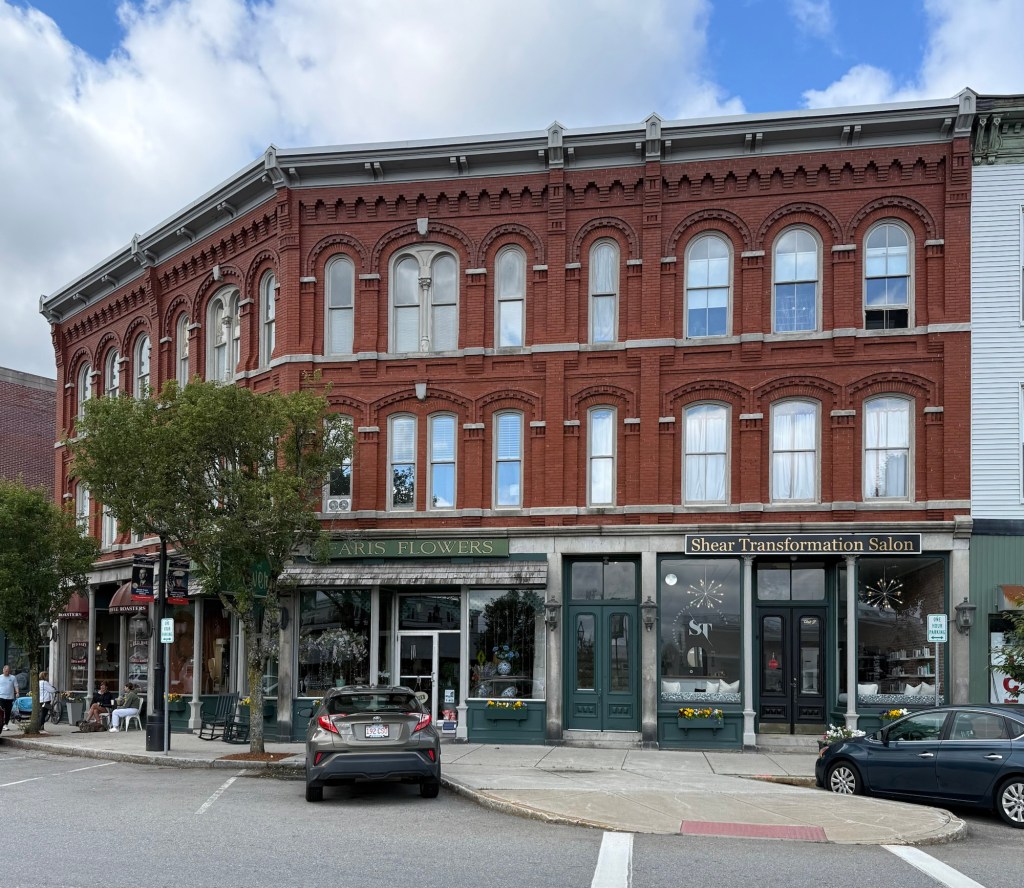
Henry Block // 1873

Mid-late 19th century commercial blocks provide human-scaled density, high quality design, and often contain intimate storefronts providing reasonable rent to local businesses. The Henry Block in Westborough, Massachusetts, is one great example of a historic commercial building that checks all of these boxes. The brick building was constructed in 1873 by its namesake, Samuel Gates Henry (1813-1877), a pharmacist and dentist who rented space in an earlier building on the site. When a fire destroyed the old structure, Samuel Henry had this block erected on the site and leased out spaces in the building to other businesses and tenants in the floors above. The block is Italianate/Italian Renaissance Revival in style with the typical round arched windows and bracketed cornice. The granite storefronts even retain some of the original cast-iron supports.

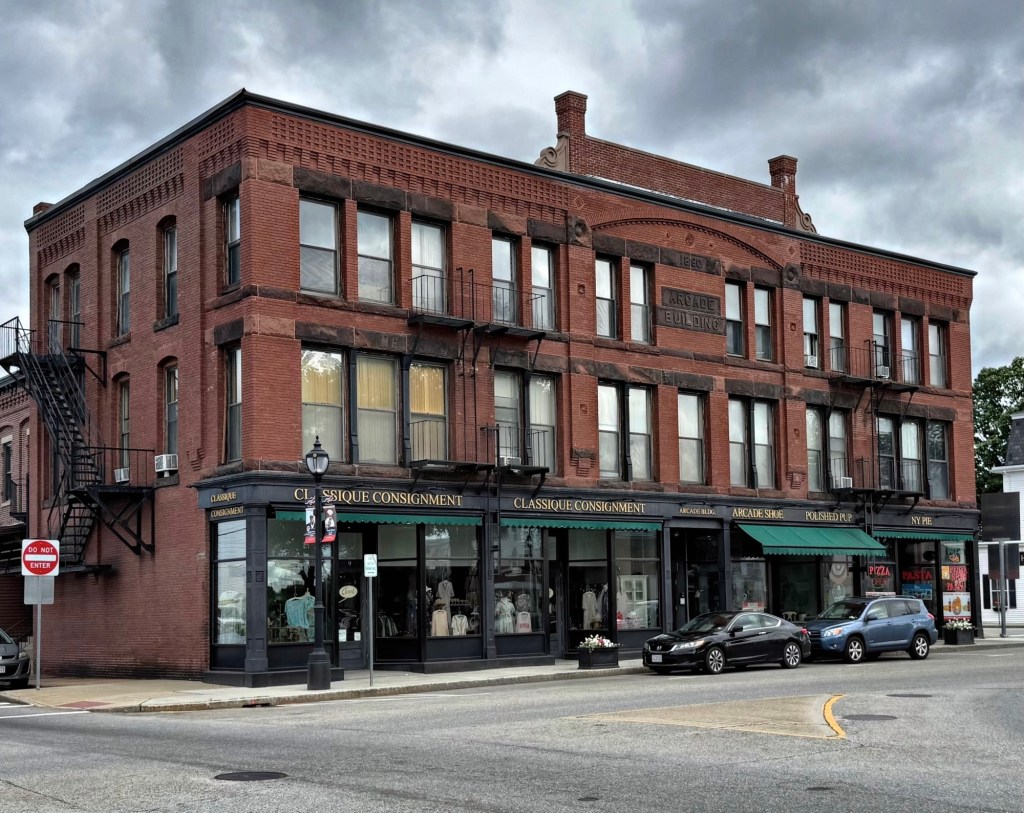
Westborough Arcade // 1890

 The Second Meeting House of Westborough, Massachusetts, was built on this important site in the center of the village in 1749. It was a plain, wooden building and was used for both church services and town meetings, since church and state were essentially inseparable at the time. When a new church was built in 1837, this building was purchased and converted to commercial use. The first floor of the building was raised, and another floor was added underneath. The steeple was also removed. The building then became known as “The Arcade Building,” a kind of mall with small shops opening onto the porch. By the end of the 19th century, the old wooden building was nearing 150 years old and owners decided to demolish the structure, and replace it with a more permanent and stately block. The New Arcade was built in 1890 and is more Romanesque in style. The handsome brick block has retail spaces on the ground floor with residences above, a great example of mixed-use.

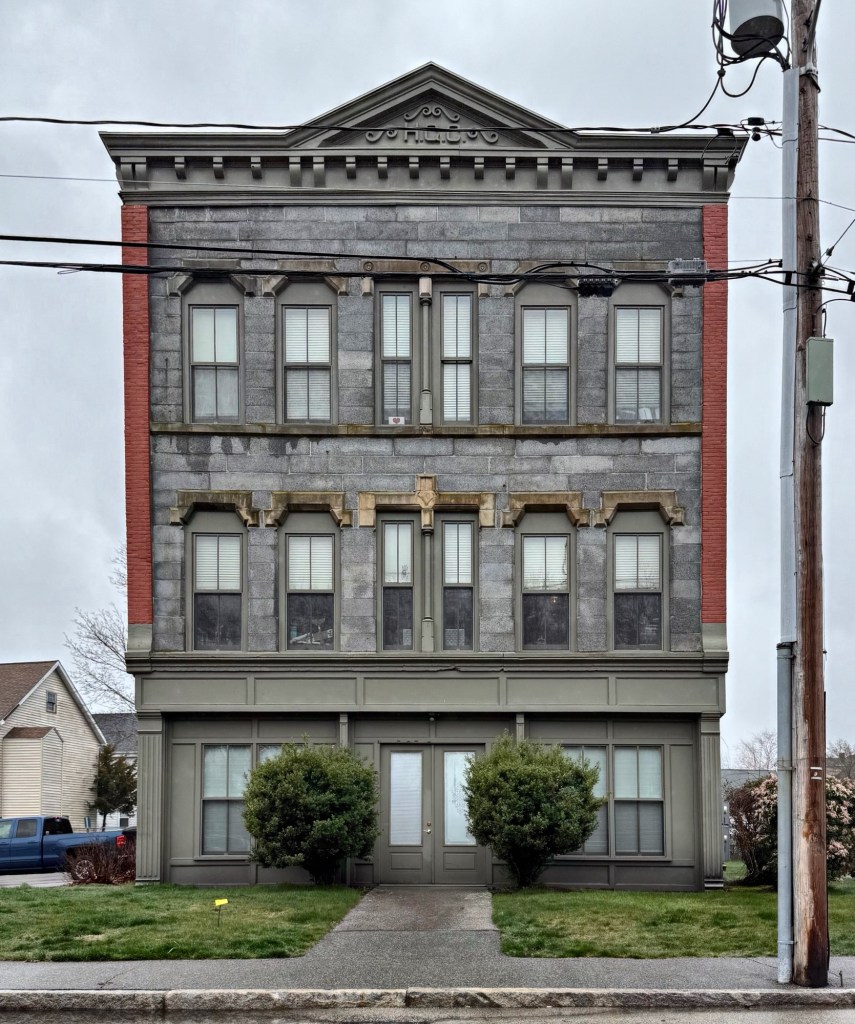
Peerless-Capitol Theater // 1894

Located across from the North Abington Depot, this structure was constructed in 1894 as a leather harness and saddle shop by local businessman, Henry Crossley. The expensive building of cut granite and brick seemed to have overextended Mr. Crossley’s means, as he would soon-after file for bankruptcy. The building would remain as commercial use until 1915, when the property was purchased by the Peerless Amusement Company for use as a 300-seat theater. By the 1930s, the building became known as the Capitol Theater, and was listed to seat 230 customers on the main floor and 70 in the balcony. Due to the more rural nature of the cinema, it closed in the mid-20th century, and suffered from neglect for decades until it was restored and is currently housing apartments. 

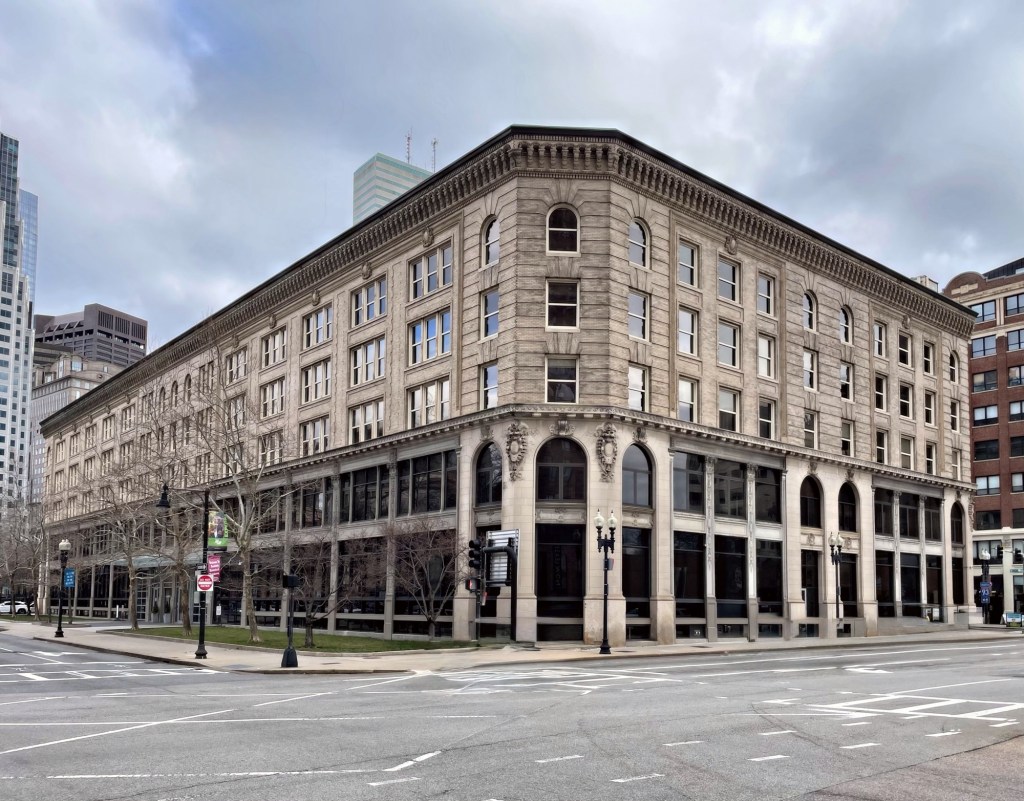
Albany Building // 1899

One of the last major 19th century buildings erected in Boston’s Leather District is also one of the finest examples of Beaux Arts architecture in the city. This is the Albany Building, built in 1899, and fills an entire city block. The Albany Building was designed by Peabody and Stearns and built by Norcross Brothers as the offices for the United Shoe Machinery Corporation. Its two-story base is adorned with swags and cartouches and its fifth floor is topped with a complex cornice. The use of beveled corners and ornate detailing break up the massing of the building which otherwise, would read like a box. The building today serves as an important visual gateway into the Leather District and its context of late 19th century commercial blocks centered around the leather and shoe manufacturing businesses.

Faxon Block // 1886

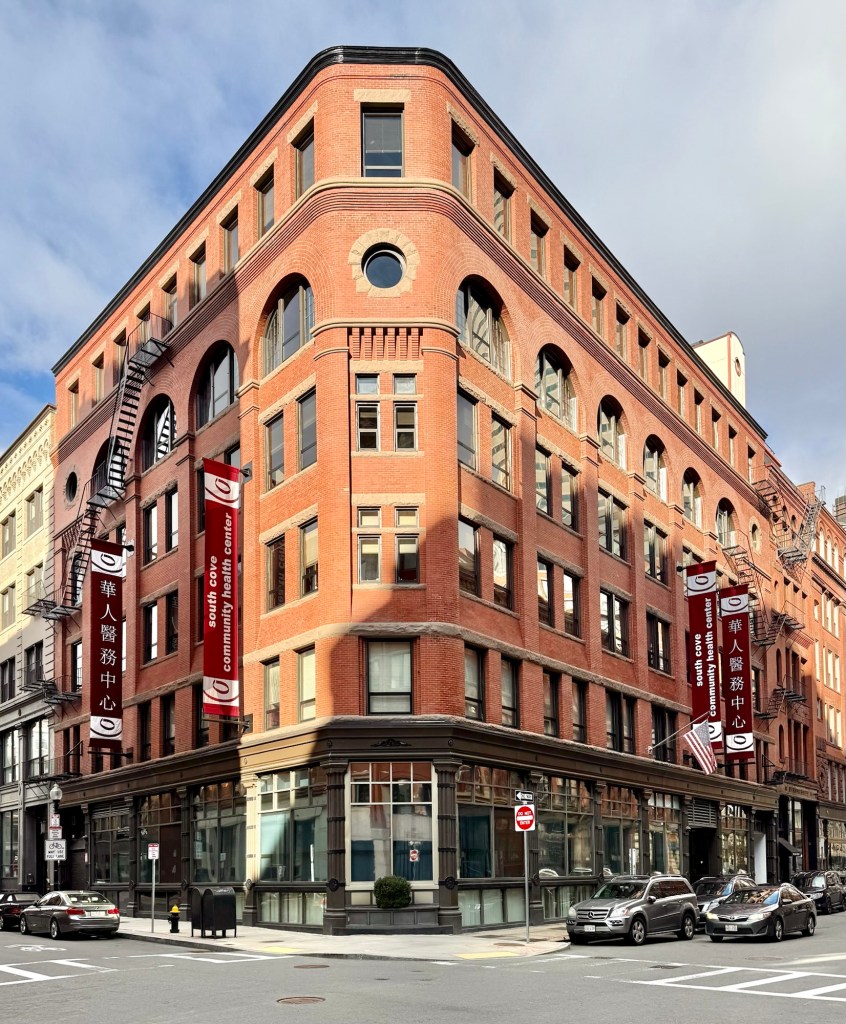
This impressive commercial block is prominently sited at the corner of Beach and South streets in Boston’s Leather District, a wonderful enclave of late 19th and early 20th century mercantile buildings, historically centered around the leather and shoe-making industries. Like many in this block, the building was developed by the Faxon Brothers, some of the major developers of this district and areas of Quincy. Also like many other buildings in the Leather District, the block was designed by 1886 in the Romanesque Revival style, constructed of brick and brownstone with a clipped corner and Syrian arches and an oculus window at the fifth floor. The building was designed by relatively unknown architect, John H. Besarick and today houses professional offices.

Custom House Block // 1853

This stately commercial block is found on Main Street in Rockland, Maine. The block originally housed the local custom house (before a larger, purpose-built custom house was erected nearby in 1873) with other retail and commercial spaces at the ground floor with offices and meeting space above. The block is a great example of the Italianate style with an intricate brick corbeled cornice and cast iron and marble storefronts. The commercial space occupied by the First National Bank also exhibits a stone medallion with deer set within a wreath over the entrance. The detail that stood out to me most was the cast iron lintels over the windows, with the second floor lintels including a man’s face! The building is well preserved and is today occupied by local businesses.

Rankin Block // 1853

The Rankin Block is a significant early commercial building in Rockland, Maine. The brick block was built in 1853 by Samuel Rankin, a descendant of one of the area’s first European settlers. Its location was near the center of the city’s shipbuilding industries, and replaced an earlier commercial building destroyed by fire. Its early tenants included a ship chandlery, shipping offices, and a sail loft. The vernacular Greek Revival style building is constructed of brick and granite, showcasing the no-frill architecture that working Maine sailors preferred. The building is now occupied by a senior living facility. Talk about a great adaptive reuse!

Bray’s Hall // 1893

As Newton Centre’s new railroad station and following development boom transformed the once sleepy village into the main commercial center for the city, landowners capitalized on the opportunity by developing commercial blocks to serve the community and line their own pockets. Mellen Newton Bray (1856-1946) became a major landholder in Newton Centre and would develop the areas directly surrounding the new train station there. On a curving site, he built Bray’s Hall, this three-story commercial block renting out spaces to local banks and stores with a large assembly hall and bowling alley in the building as well. Initially, Bray planned for an eight-story structure, having contracted a solid foundation that could support such a structure, pending the success of the initial construction. That is mixed use before it was “cool”. The building was designed by the firm of Kendall & Stevens, likely led by Henry H. Kendall, who resided in Newton Centre. Kendall would also design the apartment block across the street for Mr. Bray. The building is constructed of light Tuscan bricks and is notable for the bracketed cornice and dormers all in copper. The building was restored in the 1970s by owner David Zussman, and rebranded as Piccadilly Square, following his recent trip to London being impressed with by the atmosphere of Piccadilly Circus.

William L. Lockhart Company Building // 1887

This six-story brick and sandstone building at Causeway and Staniford streets near North Station in Boston was built in 1887 as the headquarters and sales center for William L. Lockhart & Co., manufacturers and wholesale dealers of coffins, caskets, and undertakers’ supplies, which at the time was considered the largest establishment of its kind in New England. The company had its factory in East Cambridge and built this structure as offices and sales rooms. The building is an excellent example of the Romanesque Revival style, which is typified by the use of round arched windows at the top floor and the use of inlaid carved stone panels. Frederick Nason Footman a relatively unknown architect is said to have designed the building for the Lockhart Company, with the building serving as an important piece of the company’s portfolio. Shop space was created on the street level, with the company’s offices, salesrooms and casket hardware department occupying the second floor, show rooms on the third floor, shipping department on the fourth floor and storage on the fifth and sixth floors. While the adjacent parcels have been razed and are still vacant, this building serves as an important visual gateway into what was once the West End, a neighborhood that was almost entirely demolished during urban renewal.

Sylvia Store // 1879

This charming commercial store was built in 1879 as one of five similar commercial buildings constructed on Nantucket as investment properties by Robert McCleave (1809-1878), a retired whaling captain. Located on Orange Street, this store was long occupied as a neighborhood grocery store, before the days of supermarkets with seas of parking. Antoine Sylvia Jr. (1835-1906), an Azorian-born merchant on the island purchased the property 1879 from McCleave and operated a grocery store at this location until his death in 1906. His wife, Elizabeth C. “Lizzie” Sylvia (1850-1929), retained the property and operated a shop where she sold wallpaper. In 2015-16, the façade was restored with the installation of a salvaged façade of nearly identical detail and dimensions built at 106 Main Street in 1869 also by McCleave. This façade was salvaged for re-installation here when that building was demolished in 2001. The Sylvia Store was given a preservation easement after the restoration, preserving it for another 150+ years to come!