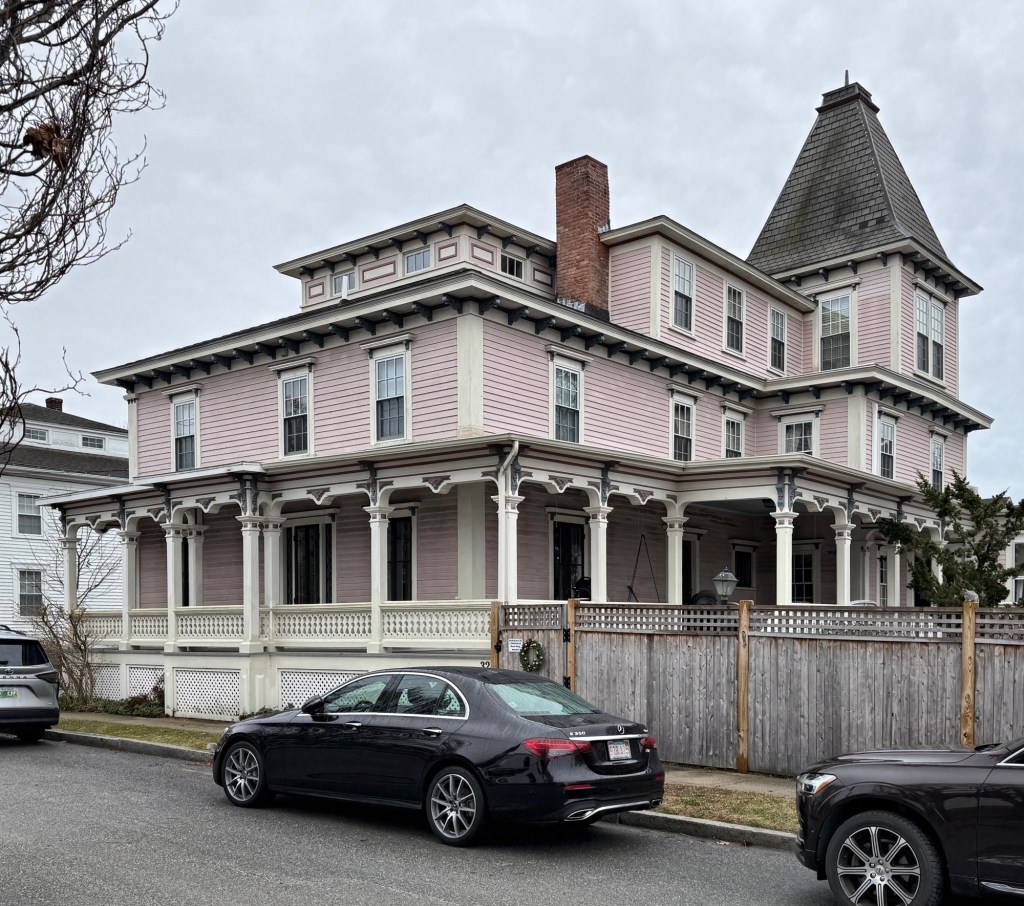
George Risley House // c.1870

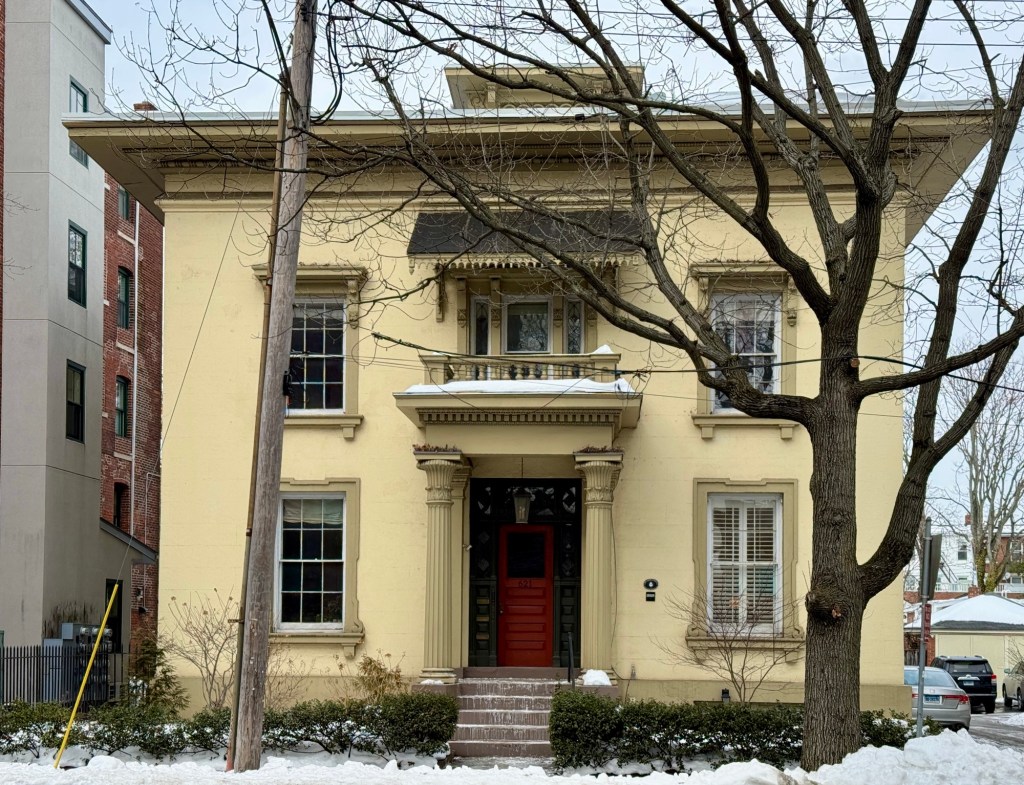
This unique residence in Wayland, Massachusetts, is tucked away on Corman’s Lane, a dead-end street near Snake Brook, a small stream leading into Lake Cochituate. The house was built around 1870 for George William Risley (1836-1913), a shoe manufacturer and Civil War veteran who settled in Cochituate Village and ran a factory there. Risley was active in town affairs and served as Selectman in 1872, the year in which the annual meeting authorized the selectmen to petition the General Court for Cochituate to separate from Wayland. The petition was ultimately never was filed and Cochituate remains a part of Wayland. The Risley House has five bays and a shallow side gable roof with broad, overhanging eaves supported by brackets. A central porch runs along part of the facade and has intricate turned posts and spindlework. The home remains in great shape and is evocative of mid-late 19th century industrial housing built for factory managers.

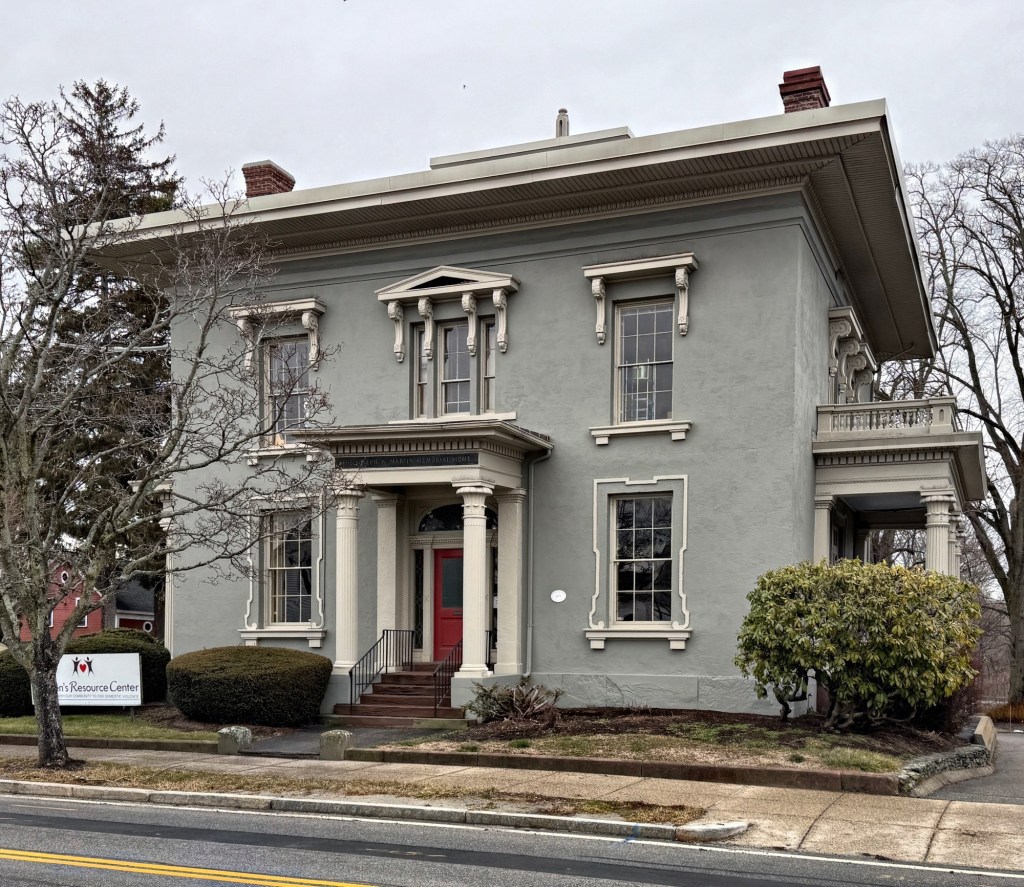
Ousatonic Water Company Offices // c.1880

The Housatonic River (also spelled the Ousatonic) is, after the Connecticut and Merrimac, the most powerful river in New England. Its location in Derby, Connecticut, was seen as a benefit to local businessmen, who after the Civil War, created the Ousatonic Water Company. The new organization made up of industrialists and businessmen, set off to complete the Ousatonic Dam (on the Housatonic River) towards the end of 1870. The dam precipitated the rapid development of the industrial villages of Birmingham (Derby) and Shelton. Aptly built on the corner of Main and Water streets, this handsome Italianate style masonry building was constructed by the 1880s for the Ousatonic Water Company for their company offices. The company was absorbed into the Connecticut Light & Power Company in 1927. The former offices have since been repurposed for a local business.

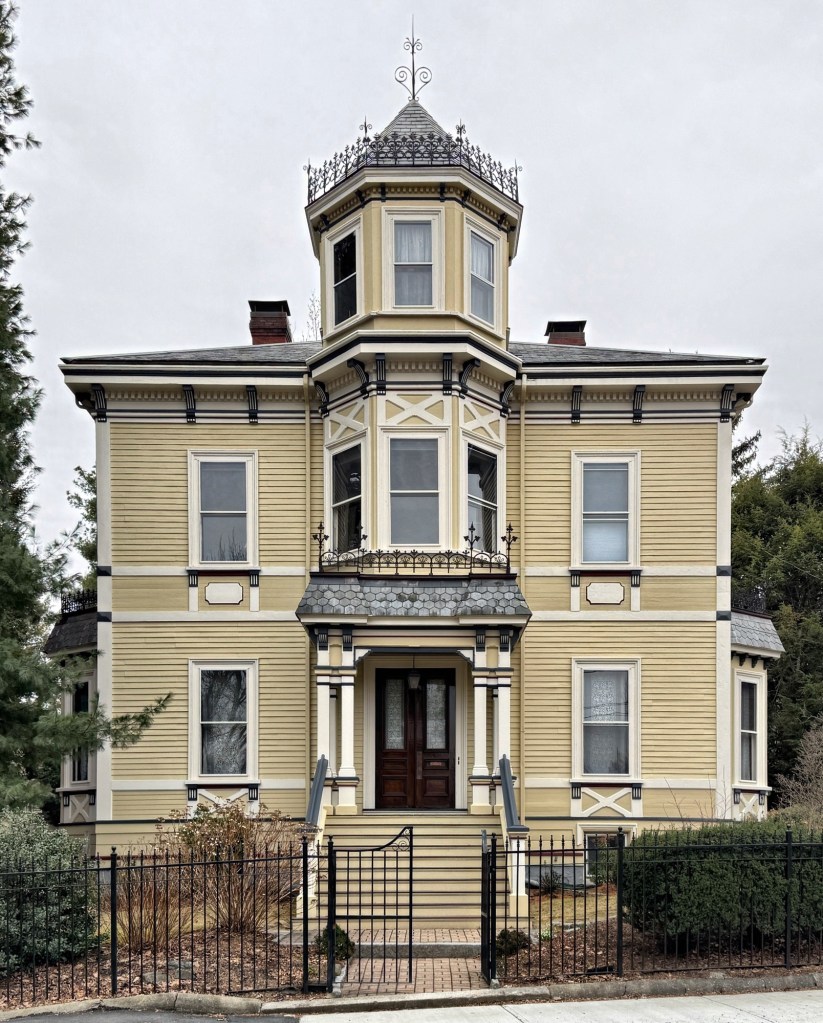
Frederick Fullerton House // 1861

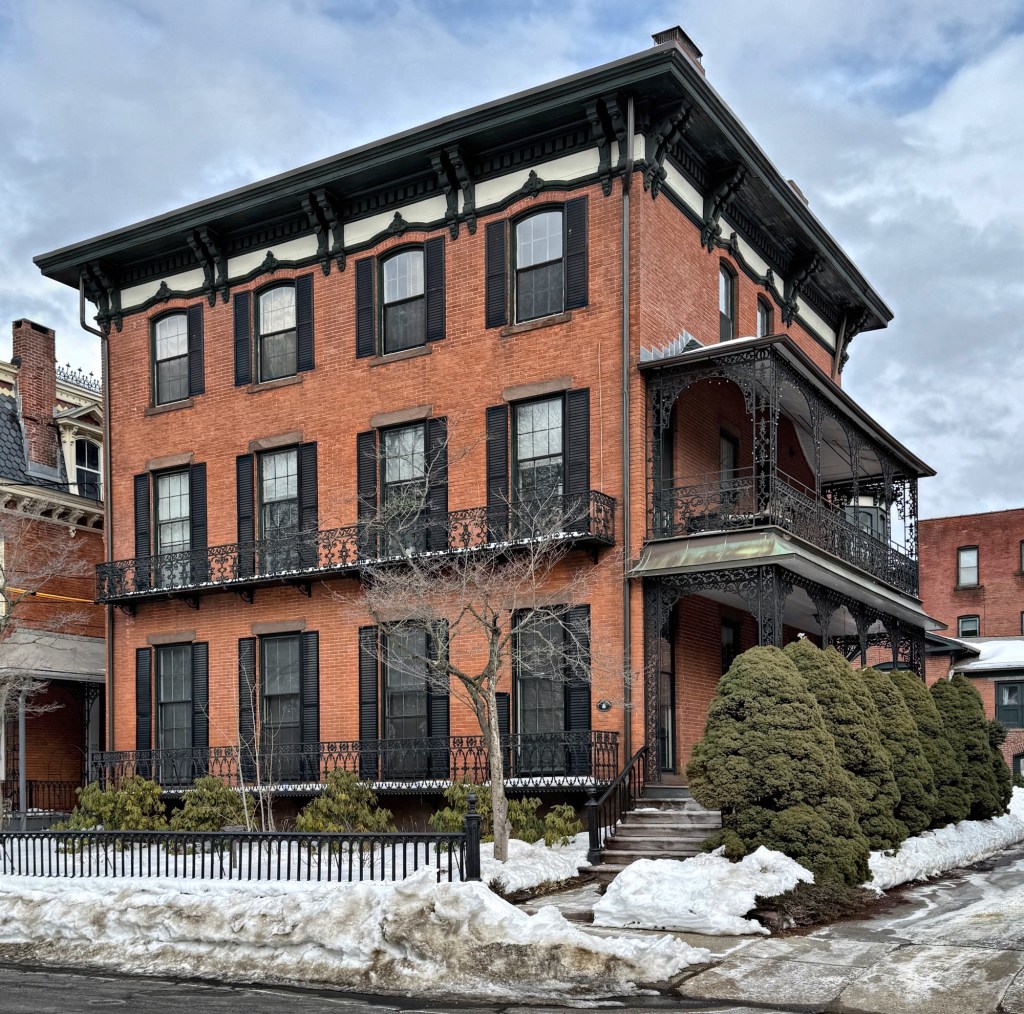
This distinctive Italianate Villa style house in the charming village of Chester, Vermont, was built in 1861 for wealthy merchant, Frederick Fullerton (1817-1869). Mr. Fullerton worked in his family’s mercantile business in Chester, and was involved with cotton manufacture in Springfield and with the Cavendish woolen mill managed by his older brother, Henry, who built an equally distinctive residence in Cavendish called “Glimmerstone“. Basically cubic with asymmetrical gabled corner pavilions, the Fullerton House is an excellent example of an Italianate Villa with bracketed cornice, two-over-two sash windows, a wrap-around porch, and second floor balcony with a bracket-supported hood with decorative valance and an oculus window above. The residence is said to have been designed by architect, William P. Wentworth, who designed the St. Luke’s Episcopal Church across Main Street a decade later.

Robbins & Marsh Store // c.1858

Located in the Chester Depot Village, a commercial and civic assortment of buildings constructed in the mid-19th century between the often feuding North and South villages in Chester, Vermont, this handsome commercial building contributes to the character and history of the once thriving commercial center of town. Built across the tracks of the Central Vermont Railroad from the town’s depot, this Italianate style building dates to about 1858 when a P. H. Robbins opened an all-in-one store, selling everything from groceries to hardware and building products. Mr. Marsh was later joined by Frederick W. Marsh, who entered into the business, then named the Robbins & Marsh Store. The business thrived with the close proximity to the railroad depot with later alterations to the building including the addition of plate glass storefronts and a massive side awning porch. Business slowed after WWII, as rail service slowed and ultimately stopped in town. Today, the handsome building remains as an important visual anchor to the depot village. 

Chester Depot // 1872

The first public train arrived in Chester, Vermont, on July 18, 1849, and in December, the Rutland & Burlington Railroad opened the first rail line across Vermont linking the Connecticut River valley at Bellows Falls and Lake Champlain at Burlington. A fire destroyed the first station in 1871, and the Vermont Central Railroad built the current station within a year. The State of Vermont purchased the line in 1963, leasing it in part to the Green Mountain Railroad. Exceptional in Vermont, this brick station retains its high-style Italianate design and continues in railroad use. The station can be classified as Italianate/Romanesque in style and has a corbeled cornice, windows capped by brick hood moldings, and a projecting trackside awning. It appears that the station is not in active use, does anyone know more?

Chester Academy – Chester Historical Society // 1884

The town of Chester, Vermont, is one of the best small towns in the state for architecture lovers! Don’t believe me? I will prove it in this upcoming series. Located in Chester Village, the town’s center, this handsome brick building set off the main street, was built in 1884 as the town’s high school, replacing an 1814 private academy formerly on the site. The private academy closed in 1881, and the building was sold to the town, who by 1884, demolished the original structure and erected the current Italianate style building. The building served as the town high school until 1911, when a new high school was constructed nearby. The elementary and junior high school operated from here until the 1950s, when a modern school was constructed in town. Since 1950, the former academy building has been used by the Chester Art Guild, and currently is leased from the Town by the Chester Historical Society. The structure retains its architectural character down to the segmental arched windows and cupola.

Tully Bowen House // 1853

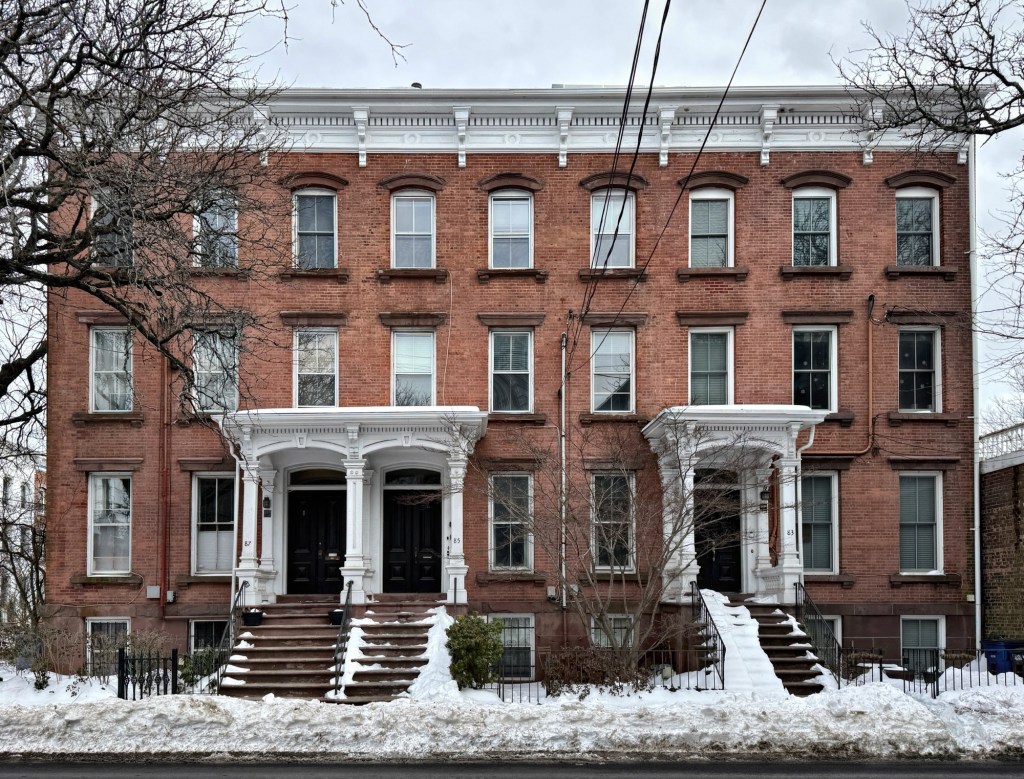
Designed by great architect, Thomas Tefft, this three-bay, three-story brownstone house located at 389 Benefit Street in Providence, was built for Tully D. Bowen, a cotton manufacturer. The house, one of the finest Italianate style mansions in the state, is constructed of brownstone and features a recessed arched entrance surrounded by a flat-headed Doric-pilastered frame, pedimented first-floor windows resting on brackets with the alternation of flat and pedimented heads at the second story, and quoining at the corners. The property also retains its original Tefft-designed brick and brownstone carriage house. Thomas Tefft, who was just 27 at the time of designing this house and corresponding brownstone and iron gate, would become one of America’s finest architects before he died in Florence with a fever in 1859 at just 33 years old. The residence was converted to 12 apartments in 1941 and the carriage house was converted to residential use as well. Even with the subdividing the interior spaces of the residence and carriage house, the Bowen property remains in a great state of preservation and is one of the finest homes in Providence.

William Haven House // c.1807

William Haven (1770-1856) was the youngest son of Reverend Samuel Haven (1727-1806), the Pastor of South Church, and Mehitable Appleton Haven, daughter of Rev. Nathaniel Appleton. William was a merchant that traveled extensively with his brothers, who employed him as their accountant, later working as a cashier of the New Hampshire Bank in Portsmouth, and later an accountant for the Portsmouth Savings Bank. William married Sophia Henderson in 1807, and soon-after, had this large residence on Middle Street built for his new family. By the 1870s, the residence was owned by William H. Hackett, who likely modernized the home with the Italianate style stair-hall window on the second floor, and portico and entry. 

Henry Block // 1873

Mid-late 19th century commercial blocks provide human-scaled density, high quality design, and often contain intimate storefronts providing reasonable rent to local businesses. The Henry Block in Westborough, Massachusetts, is one great example of a historic commercial building that checks all of these boxes. The brick building was constructed in 1873 by its namesake, Samuel Gates Henry (1813-1877), a pharmacist and dentist who rented space in an earlier building on the site. When a fire destroyed the old structure, Samuel Henry had this block erected on the site and leased out spaces in the building to other businesses and tenants in the floors above. The block is Italianate/Italian Renaissance Revival in style with the typical round arched windows and bracketed cornice. The granite storefronts even retain some of the original cast-iron supports.

Zenas Lane House // c.1860

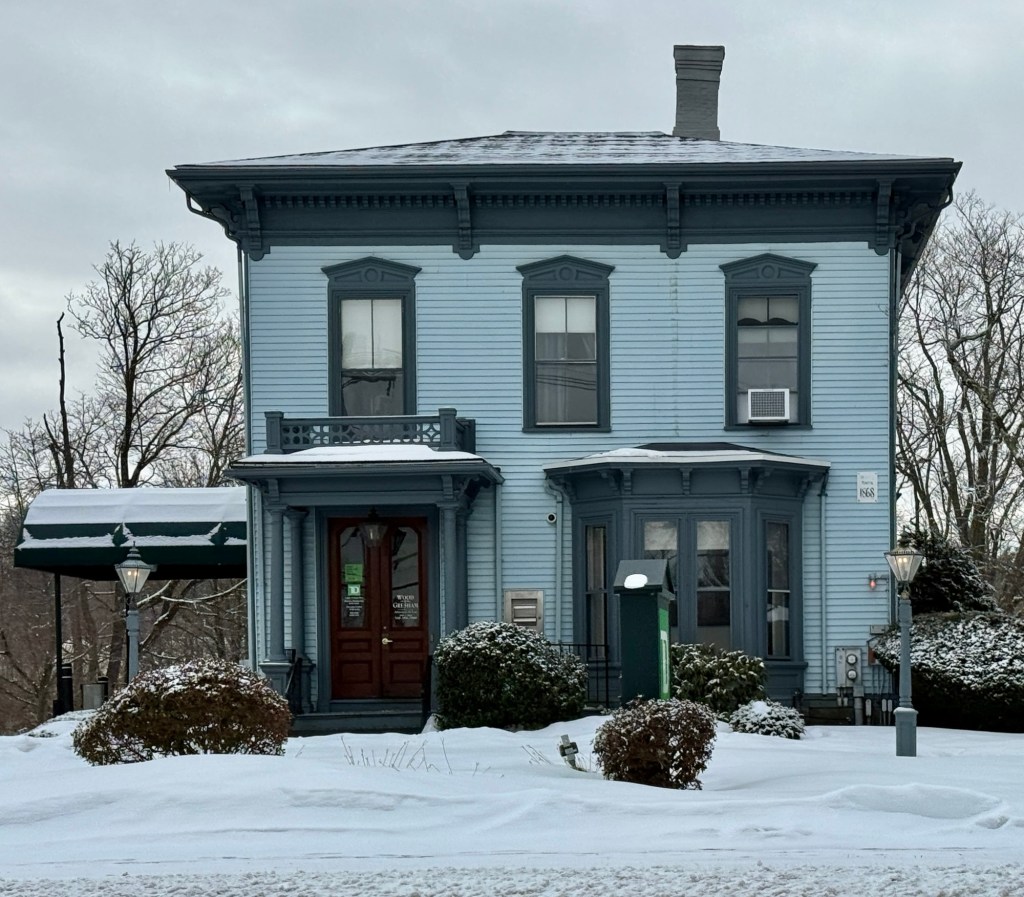
The Zenas Lane House on Union Street in Rockland, Massachusetts, was built circa 1860 for its namesake, a shoe manufacturer who later engaged in real estate and local politics. Zenas Meriet Lane married Emeline Morse and had this handsome Italianate style residence built on the town’s main street. The two-story house is capped with a shallow hip roof with eyebrow window heads breaking the eaves. At the rear of the site, there is a preserved carriage house which echoes design details from the main structure.