New Gloucester Town Hall // 1886

New Gloucester, Maine was established in 1736 under a Massachusetts Bay Colony grant of a 6-square-mile tract of land in the Maine Territory to sixty inhabitants from the Gloucester fishing village on Cape Ann. The first white settlers here built cabins in the forests in the 1740s, which were largely abandoned from 1744–1751 due to the heightened native tribe attacks during King George’s War. As the Native Americans gradually withdrew to Canada, the settlers moved out into their own newly built homes and the town has grown ever-since. New Gloucester was incorporated on March 8, 1774, and was named New Gloucester after Gloucester, Massachusetts, the native home of a large share of the early settlers, as Maine was still a territory of Massachusetts until 1820. Previous to 1886, the First Baptist Church was used for a town meeting house, but in that year the new Town Hall, this building, was dedicated. The building is Queen Anne in style with varied siding, applied ornament in the gable, with a more Classical portico at the entrance.
Morrill House // c.1830

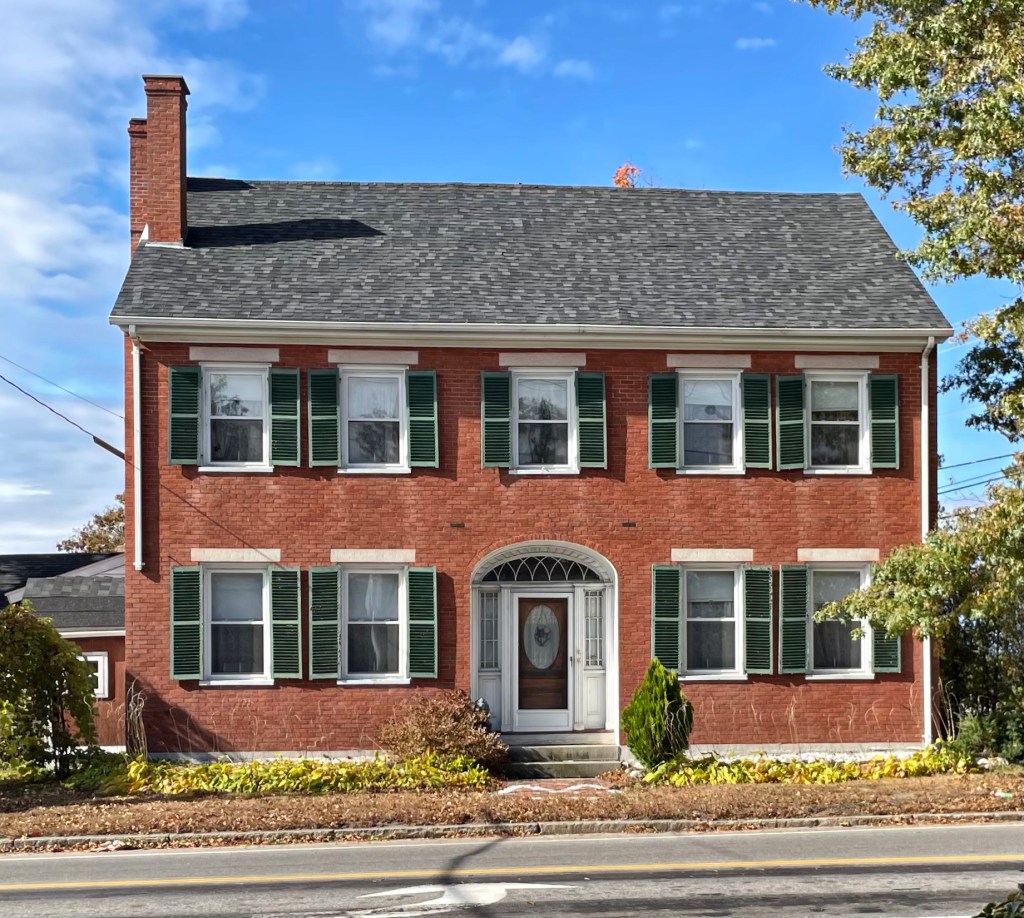
This stunning brick Federal style home sits in the center of Gray Village in Maine. The house dates to the early 19th century and was long-owned by members of the Morrill Family, seemingly first by William C. Morrill and remaining in the family for generations. The residence is a high-style example of the Federal style with recessed elliptical entrance with fanlight transom and sidelights with a Victorian-era front door. The house was likely built by a local mason or housewright who employed the designs of a Federal style plan book for the architectural detailing at the entry.

Dry Mills Schoolhouse // 1858

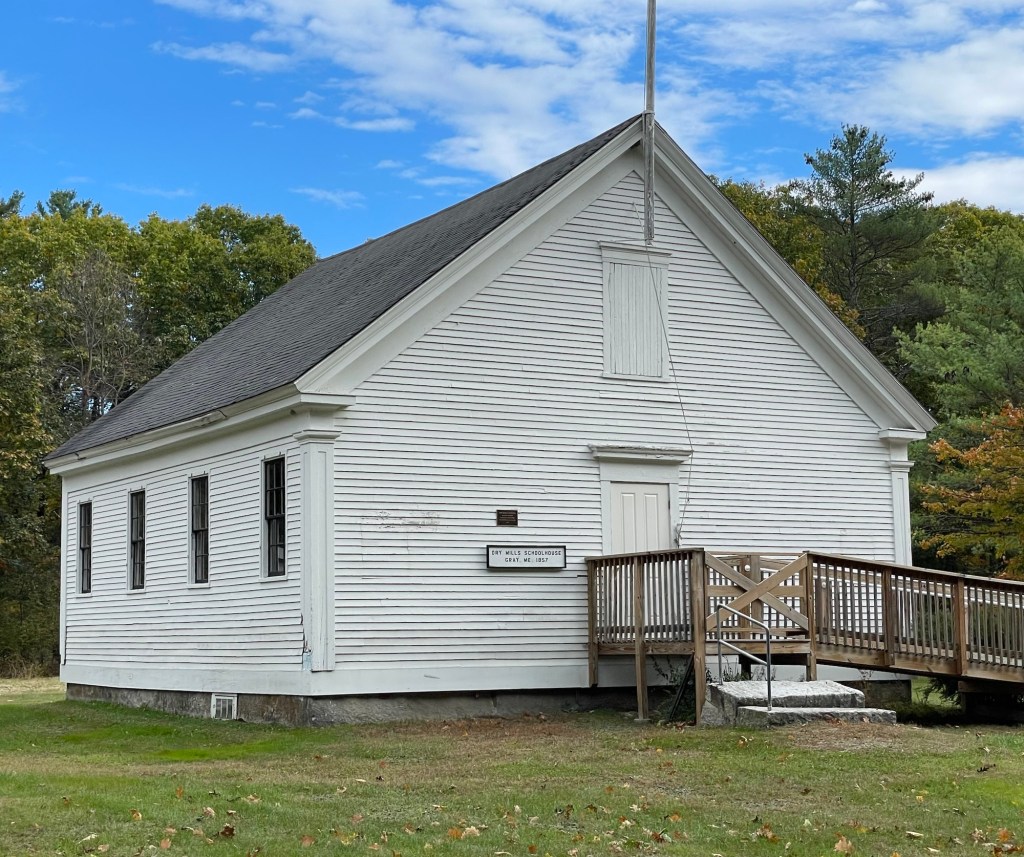
Before the use of automobiles for everyday use, the winding roads in towns all over New England were once lined by charming one-room schoolhouses, to educate children without forcing them to travel too long of distances (like many of our parents and grandparents who had to walk to school uphill both ways!) The Dry Mills School was built by 1858 and is the last one-room schoolhouse of twelve that were built in Gray, Maine. All of the others have  been sold by the town, converted into houses, and/or torn down.  The school was in operation from before the Civil War until it closed its doors to public education in 1958.  In the early 1990’s, at a cost of $12,000, the building and the original granite slab foundation were moved to their current location on the Maine Wildlife Park Road and has been restored to its original appearance thanks to local residents who advocated for the preservation of the building. The interior retains an original chalkboard, period wood stove and furnishings. Today, it is a living museum, attesting to the educational environment in the mid 1800’s and was listed in the National Register of Historic Places.

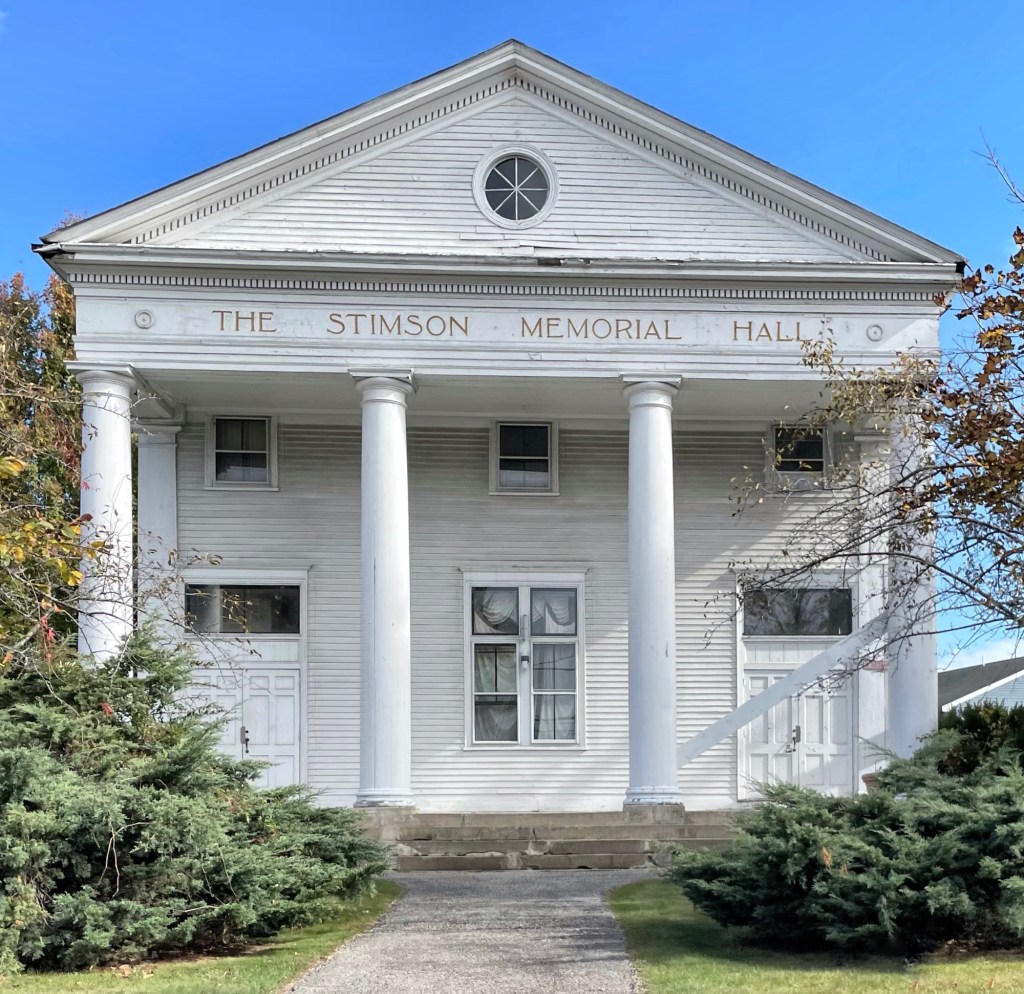
Stimson Memorial Hall // 1900

Stimson Memorial Hall is a historic, Neo-Classical building on Shaker Road in the center of Gray, Maine. Built in 1900, it served for many years as the town’s main public meeting space, and is a prominent landmark in the town center. The hall was built as a gift to the town, primarily through the efforts of Abbie Stimson Ingalls, who had moved to Cincinnati, Ohio with her husband, as a memorial to her late parents, Theophilus and Mary Stimson. The memorial hall was designed by Elzner and Anderson of Cincinnati, Ohio, and was built on land originally purchased by the local Universalist congregation. The upper level house the town library until the 1950s. The building was threatened in recent years, and as one of a handful of significant buildings remaining in the center of town, its preservation was important. It has some deferred maintenance but remains in good shape! Does anyone know what the building is/will be used for?

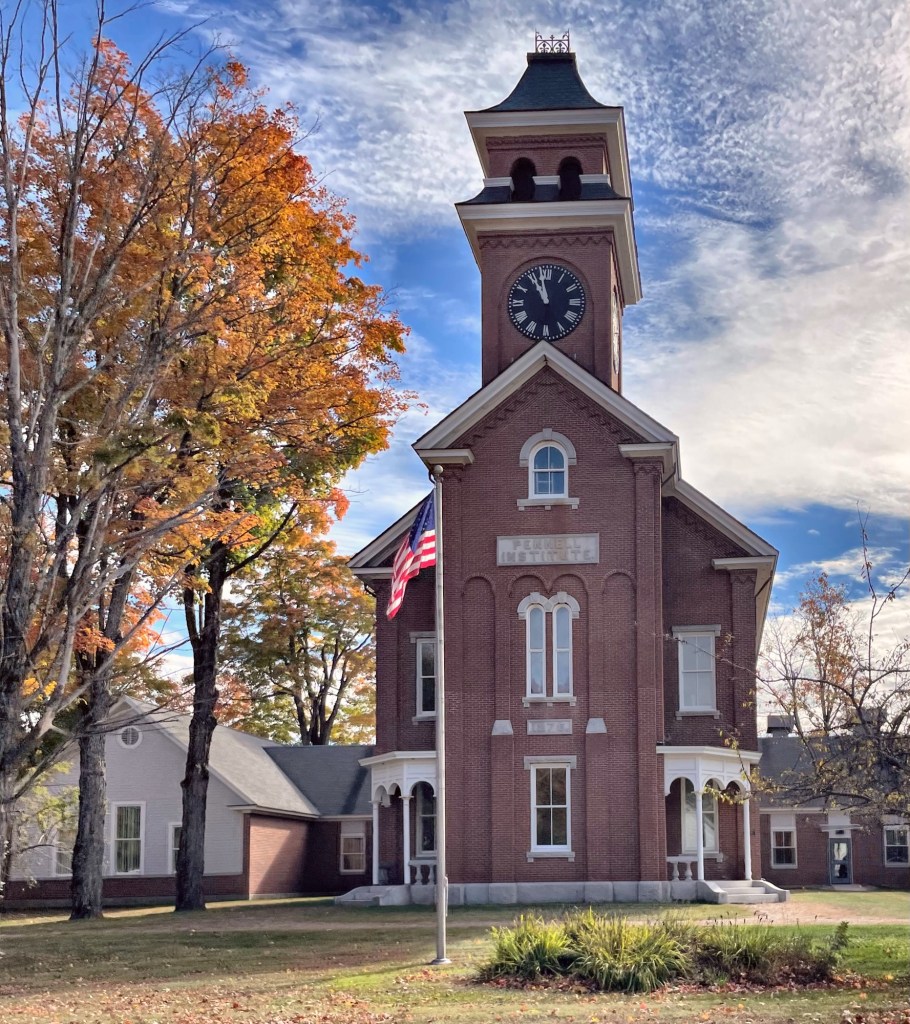
Pennell Institute Building – Gray Town Hall // 1886

The Pennell Institute was built in 1886 as a privately funded, public school for the town of Gray, Maine. By 1870, Gray High School was located in the former Town Hall, and due to increased enrollment and ever-cramped quarters, demand for a standalone school was of grave importance. As a result, local resident Henry Pennell decided he would help his hometown. Henry Pennell (1803-1884) as a young man, worked as a butcher and traveled to Portland to sell his cuts of meat, later buying and selling livestock. After the Civil War, he dealt in real estate and mortgages, was sheriff of Cumberland County (1857-1858) and served in the State Senate (1872-1873), and became the richest man in the town of Gray. Mr. Pennell, who himself, never had received much formal education, saw the value in it for the youth of the town. Construction started on the school in 1876, where the foundation was laid, but it would take ten years until after the death and bequeathing of his estate in his will, that the building would be completed in 1886. Henry Pennell left the town the school building, the lot it stood on, a trust fund of $25,000 for the school’s general expenses, and a special fund of $5,000 for the library and for laboratory equipment and supplies. The school closed with students educated at a larger, modern building. After disputes between the Town of Gray and the local school district, the building has now been home to the Gray Town Hall, with the town clearly showing pride in their Italianate style building.

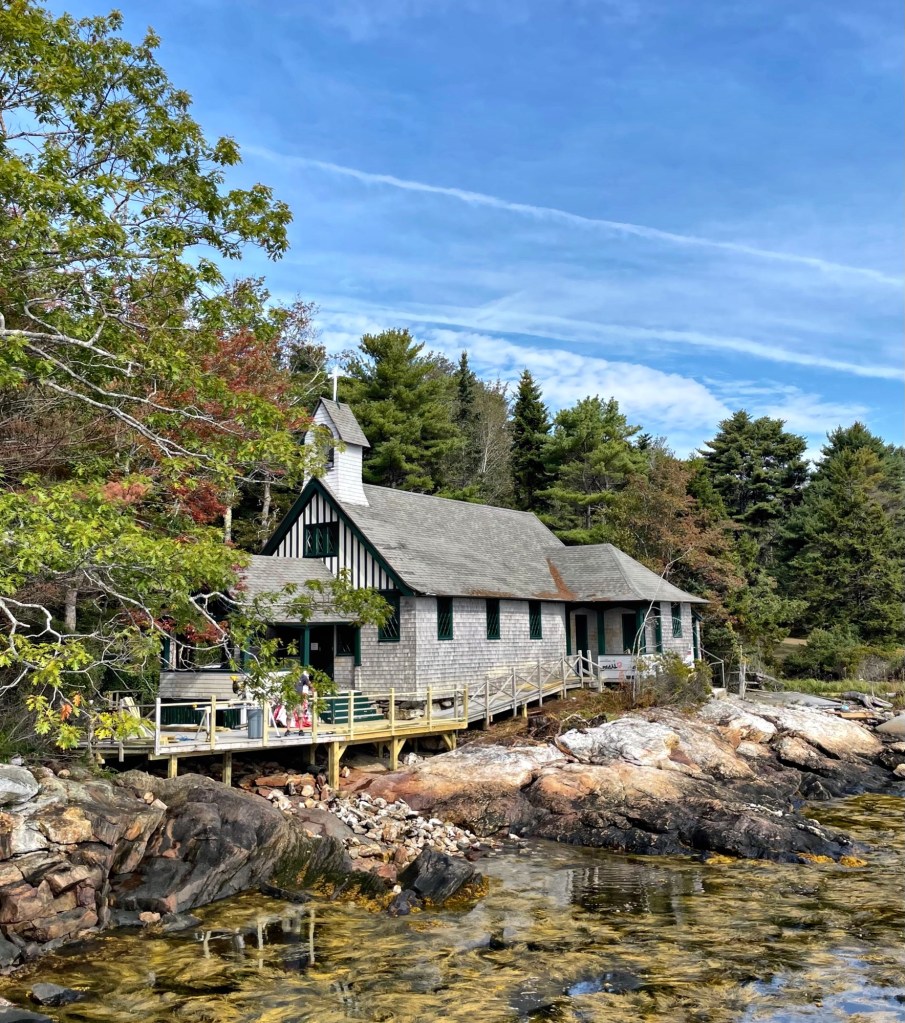
All Saints by-the-Sea Episcopal Church // 1905

Possibly my favorite type of building in Maine are the historic Episcopal summer chapels that sprouted up along the coast in the late 19th and early 20th centuries. This is the All Saints by-the-Sea Episcopal Church of Southport, Maine, an island community with many summer residents. This church had its beginnings when Reverend John Thomas Magrath of Gardiner, Maine, would visit Southport in the summers and hold services for rusticators under the oak trees or in the cottage living room if the weather was poor. Eventually, a member of the congregation purchased a lot on the east side of Southport on the rugged coastline, and planning began for a chapel. In 1905, the chapel was designed by architect, Albert Hall in a rustic blending of the Shingle and Tudor styles. The building exhibits shingle siding with half-timbering, the original diamond-pane windows, and a large entry porch off the entrance.

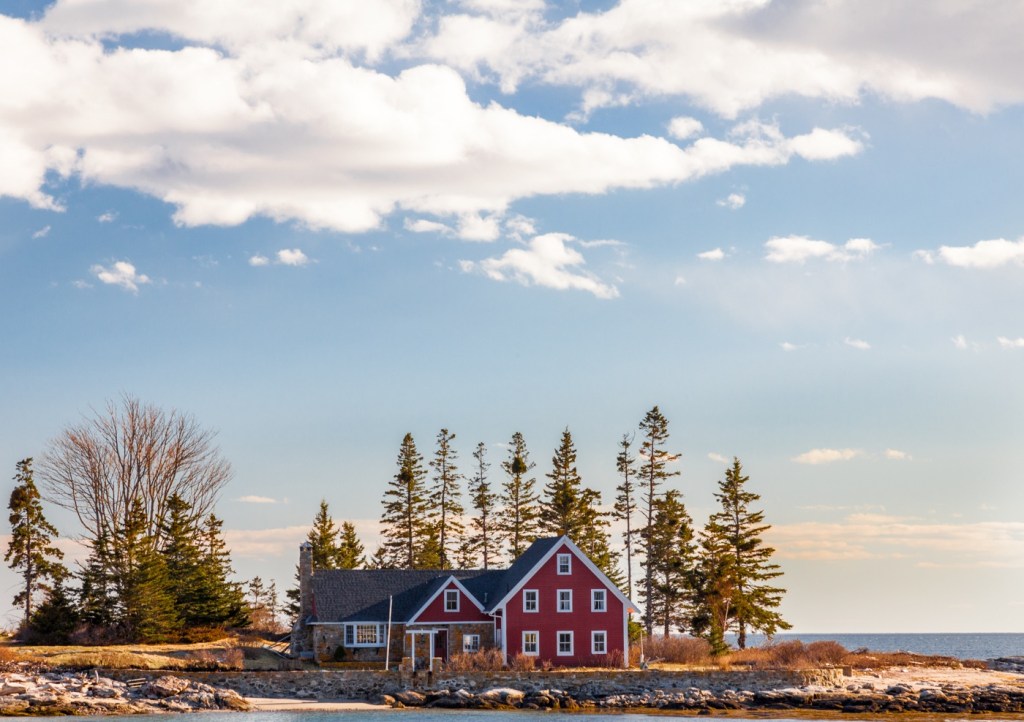
Margaret Hamilton House – Witch’s House // 1852

Photo by Paul VanDerWerf

This house sits alone on Cape Island off the southern tip of Southport, Maine and has been known as the “Witch’s House” for decades. The island was purchased by actress Margaret Hamilton and her son, Hamilton “Ham” Meserve in 1961. The 20-acre island is about 900 feet from the mainland and includes this adapted farmhouse, originally built in 1852. Margaret Hamilton, best-known for her role as the Wicked Witch of the West in the 1939 movie, The Wizard of Oz, spent her summers in this house until her death in 1985. The island to this day is lovingly referred to as the Witch’s Island, a nod to a great actress and woman, Margaret Hamilton.

Southport General Store and Barn // 1895

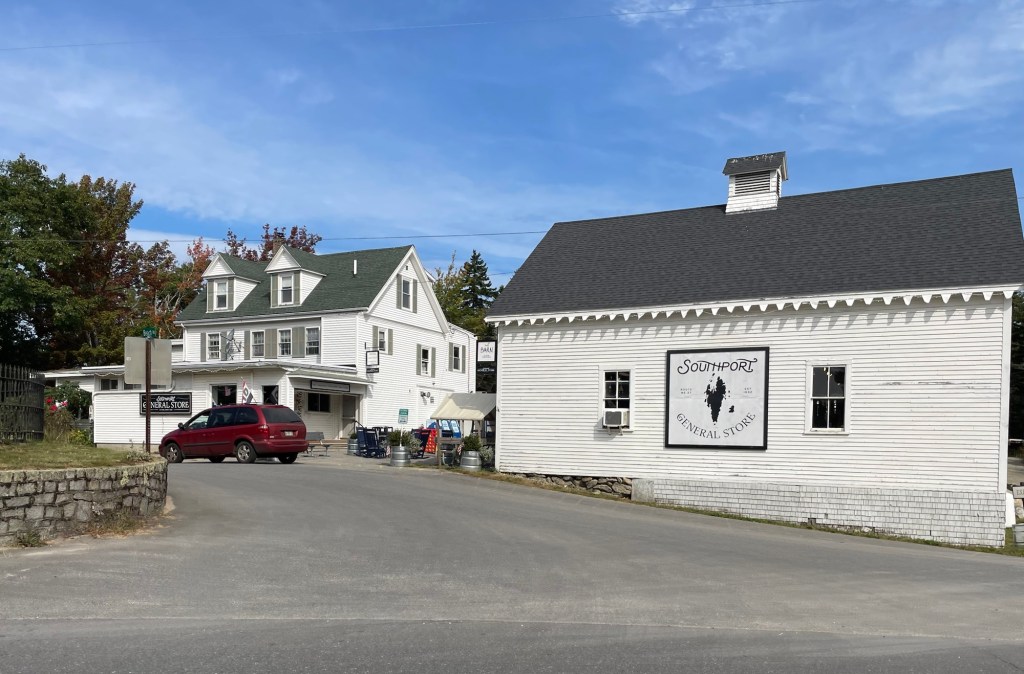
In 1882, Edward Everett Pinkham, known as Everett, opened a new store in one side of his house on Hendrick Hill in the island community of Southport, Maine. The store was known for years as E. E. Pinkham and Son. Everett soon built a proper store adjacent to his house. He served the Town of Southport in many capacities: Postmaster, Town Clerk (1887-1905) Treasurer (1883), and Selectman (1888-1893). Sadly, on May 21, 1895, the store and house burned along with all of the old town records inside. The community helped Everett rebuild the present general store before the busy summer season. Edward’s son “Charlie”, would take over the business and the building has served as the town’s social center ever since. Year-round and summer residents bump into eachother at the store, catch up, and share local news, like every general store should be! Sadly, in so many communities, the “general store” has been replaced by big box retailers or convenience stores, removing the sense of community or place, so these businesses are more important than ever!

Southport United Methodist Church // 1904

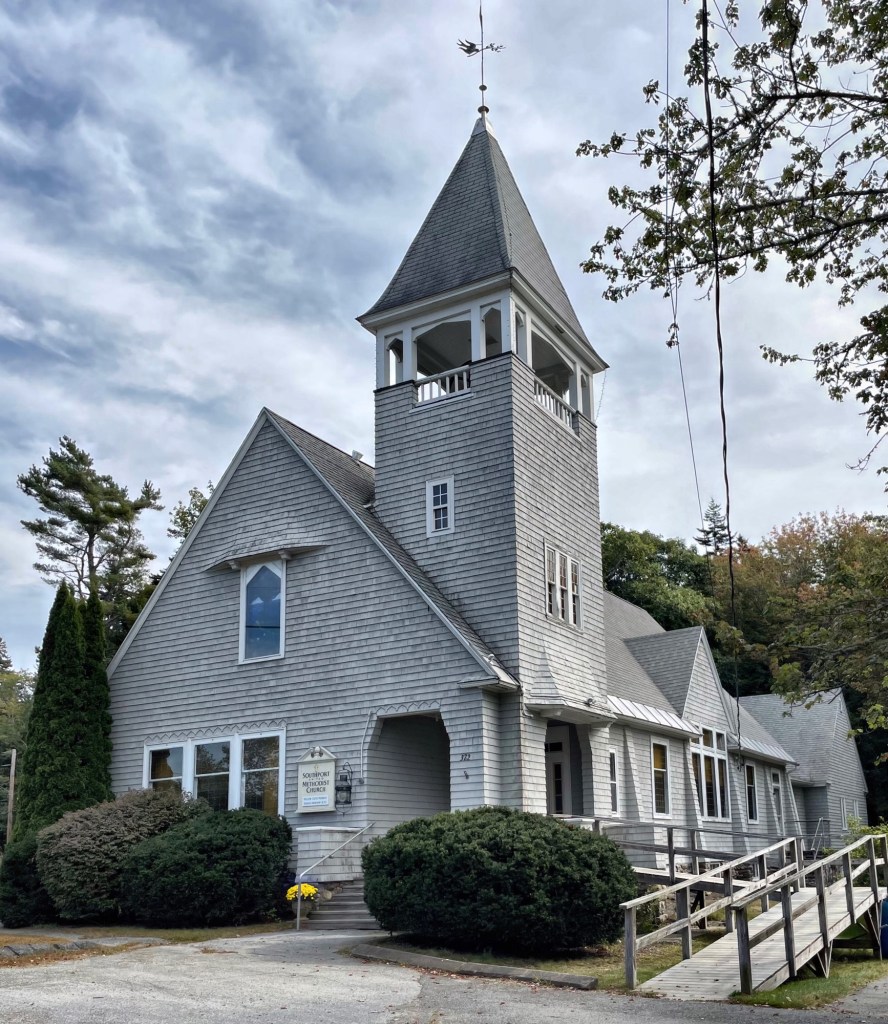
The Southport United Methodist Church of Southport sits cross the street from the Town Hall of Southport, Maine, and is one of the best examples of a Shingle style church in the state. The modestly sized church was built in 1904, shortly after a fire destroyed the local Methodist congregation’s former church building. Members hired the great Maine architect, John Calvin Stevens, who had just joined in a professional partnership with his son, John Howard Stevens, to design the new church. It remains as one of the more notable architectural landmarks in the town of roughly 600 year-round residents.

Southport Town Hall // 1866

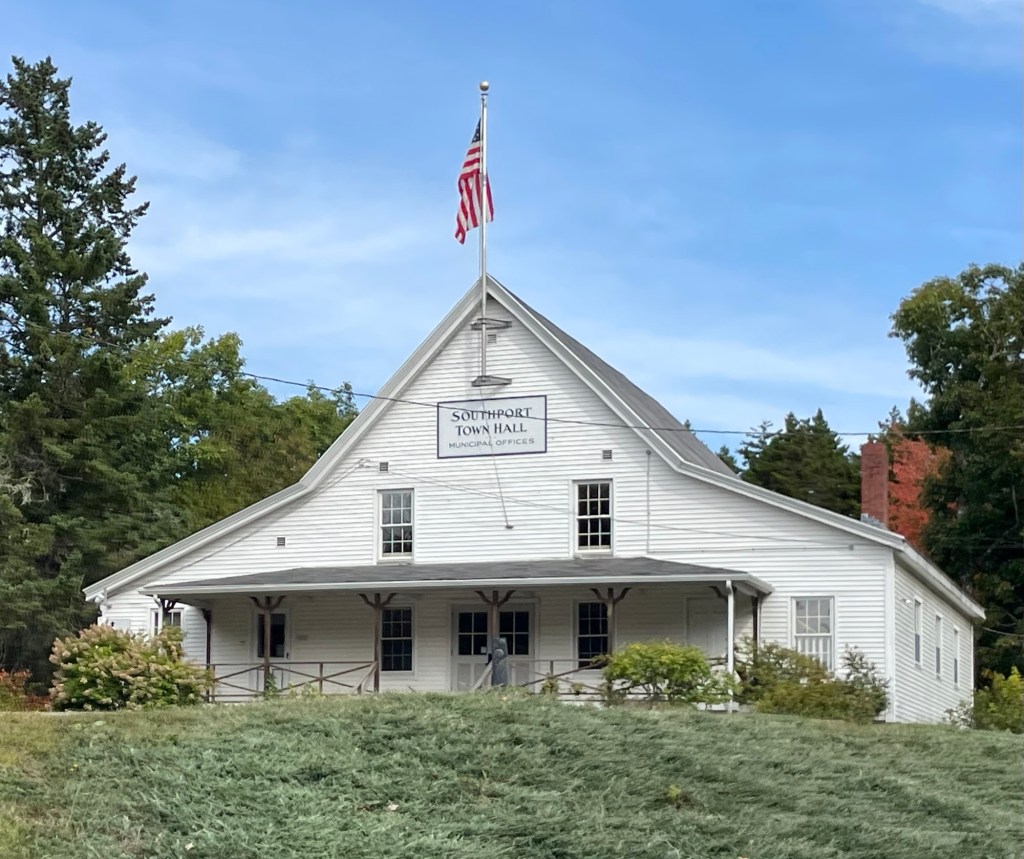
While staying at the Spruce Point Inn in Boothbay Harbor, Maine, I took the chance to visit the nearby island-town of Southport! The town of Southport incorporated in 1842 when it separated from Boothbay and became known as Townsend, Maine. Just eight years later, in 1850, Townsend changed its name to Southport, after SouthportEngland. The town has a population of just over 600, which grows in the summer months as the island and nearby Squirrel Island (also a part of Southport) has many summer homes dotted along the coastline. The present-day Southport Town Hall was built in 1866 by the Ladies Sewing Circle of the Southport Methodist Episcopal Church as a meeting place for the women of town to meet and socialize, it also was rented to the town for town meetings. Eventually, the town purchased the building in 1900, where it has remained the town hall ever since.

Boothbay Harbor Opera House // 1894

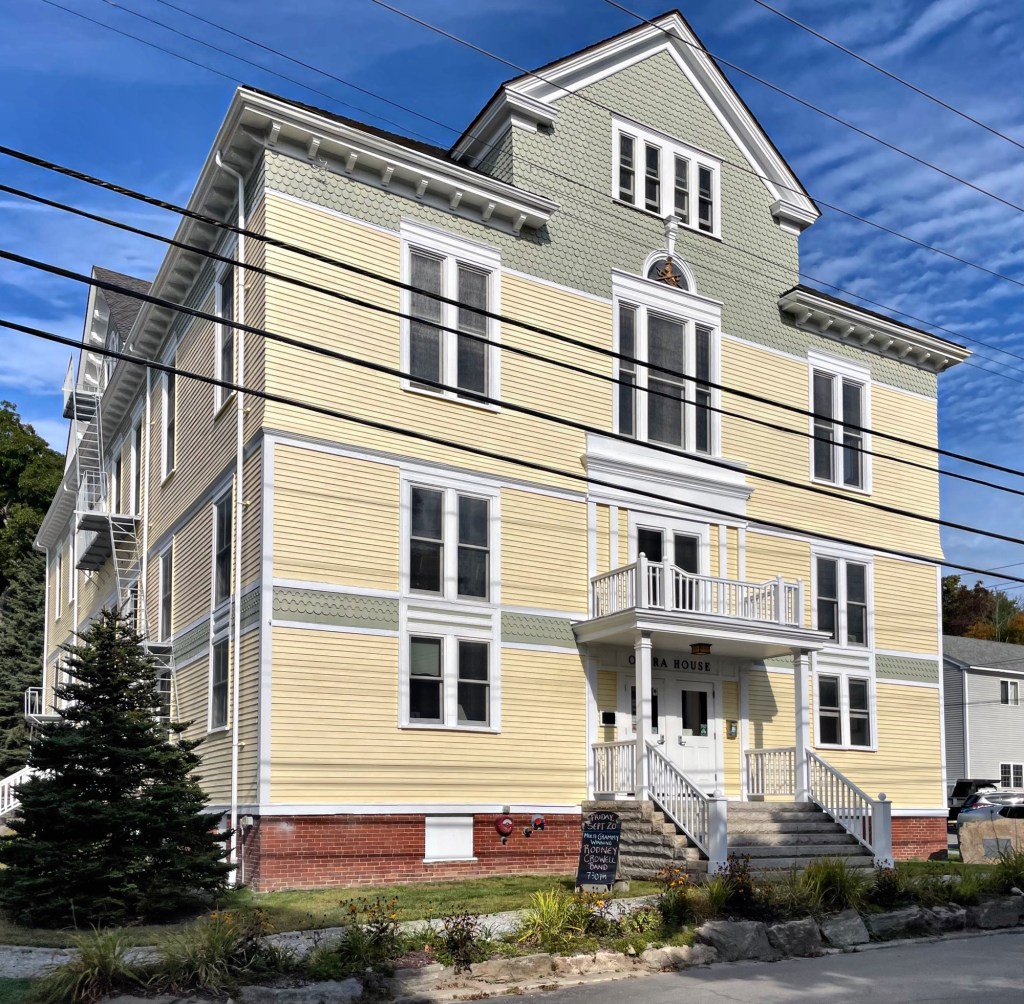
Historic meeting halls can be found in nearly every town and city in Maine. The Boothbay Harbor Opera House was built in 1894 to a design by the prominent Portland architectural firm of Francis H. Fassett and his son, Edward F. Fassett. The wood-frame building was built as a multi-functional space by the local Knights of Pythias Lodge who hired local shipwrights, who constructed the building in just 70 days. The Queen Anne style building was converted to a local opera house and has been a cultural institution for the region ever-since!

Auld-McCobb House // 1807

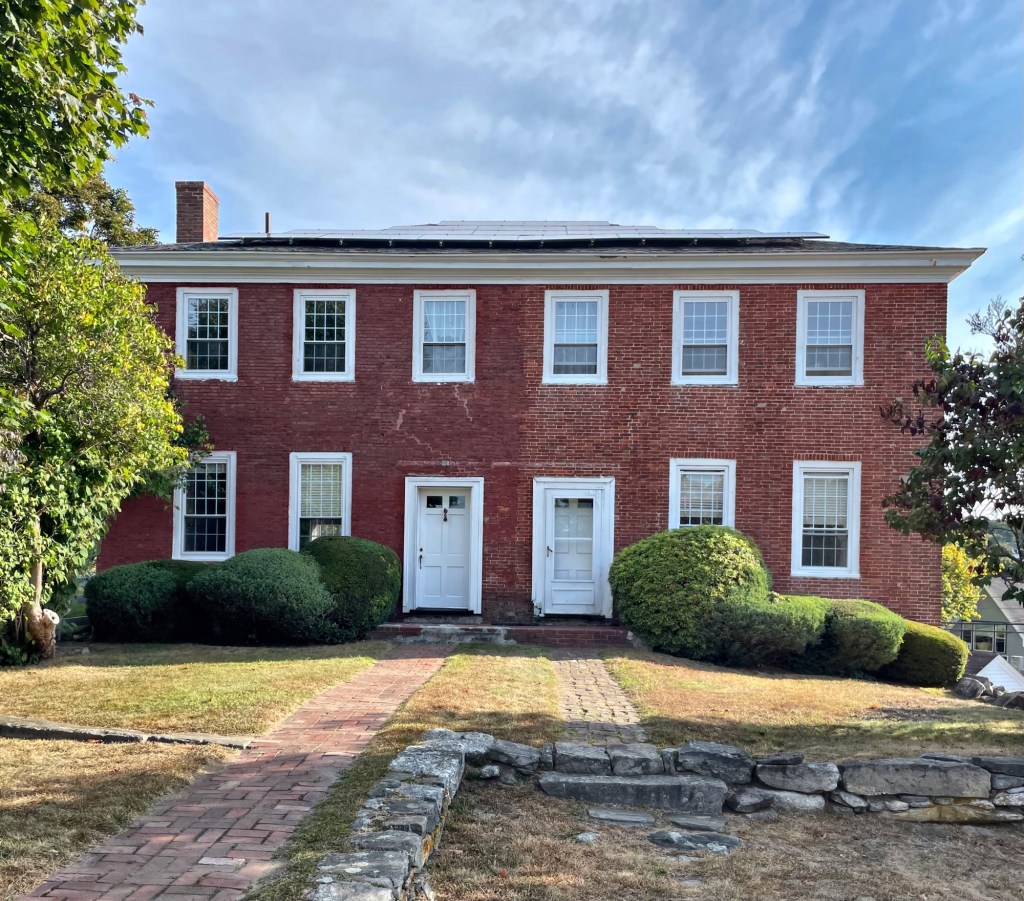
The Auld-McCobb House is set on a rocky ledge overlooking the absolutely charming downtown Boothbay Harbor, Maine. The brick, Federal-period double-house was built in 1807 for Jacob Auld and Joseph McCobb, two prominent local merchants. The two were engaged in a business partnership that included fishing, shipbuilding, and general mercantile pursuits, and were a dominant force in the local economy in the first quarter of the 19th century. The duo owned a good bit of land in town, eventually selling the five-acre Burnt Island to the Federal Government for a new lighthouse. McCobb married Auld’s sister in 1807, and it is thought that this is what necessitated the house’s construction at the time. The house is interesting, not only as a rare example of a double-house of the period, but also as one of the first (and only) brick homes in Boothbay Harbor.

Burnt Island Light // 1821

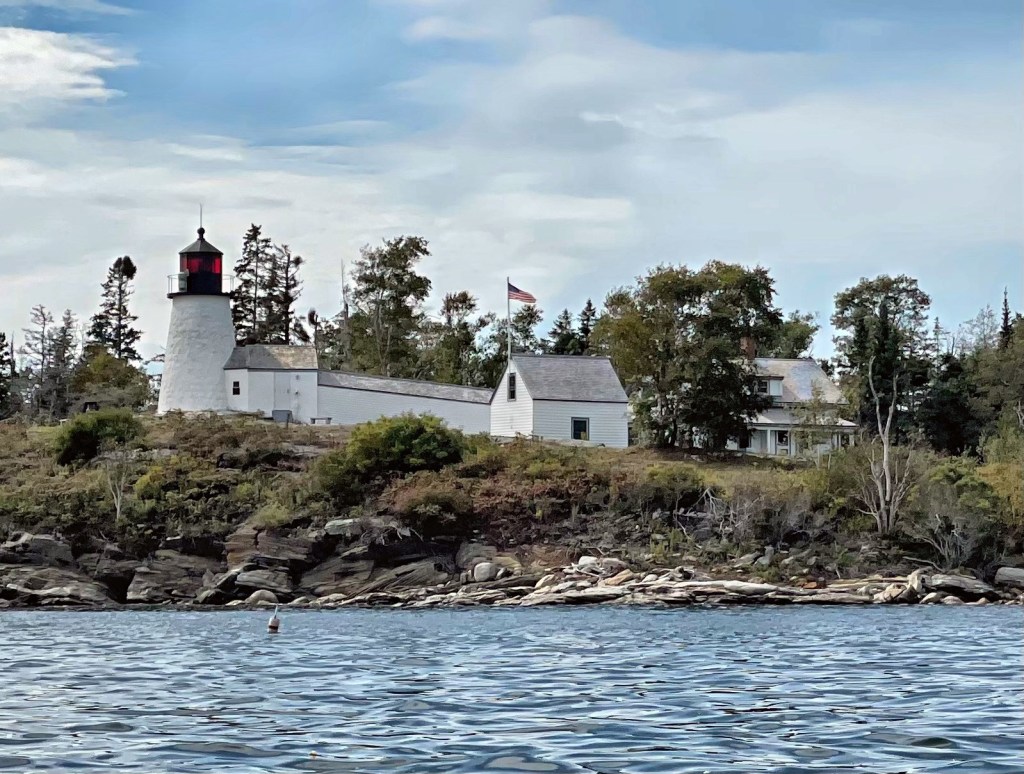
The Burnt Island Light Station was built in 1821 on the west side of the entrance to Boothbay Harbor, opposite the Spruce Point Inn (which I kayaked from to get a better view of this lighthouse). The federal government purchased the island for $150 from local businessmen Jacob Auld and Joseph McCobb. The government’s builders constructed a stone lighthouse and keeper’s dwelling using granite blocks cut from the island. The lighthouse was built on Burnt Island, which took its name from the historic practice of burning the island’s vegetation in order to keep the land clear for sheep grazing. Its purpose was the guidance of ships, the carriers of cargo destined for the development of industry and commerce, into Boothbay Harbor over a mile away. Built just one year before Maine became a state, the Burnt Island Light Station has served mariners for over 200 years. In fact, it’s considered the state’s oldest unaltered lighthouse, and it was manned until 1988 when the light was automated. In 1998, the island and light station were transferred to the State of Maine Department of Marine Resources as part of the Maine Lighthouse Program.

Spruce Point Inn // c.1892

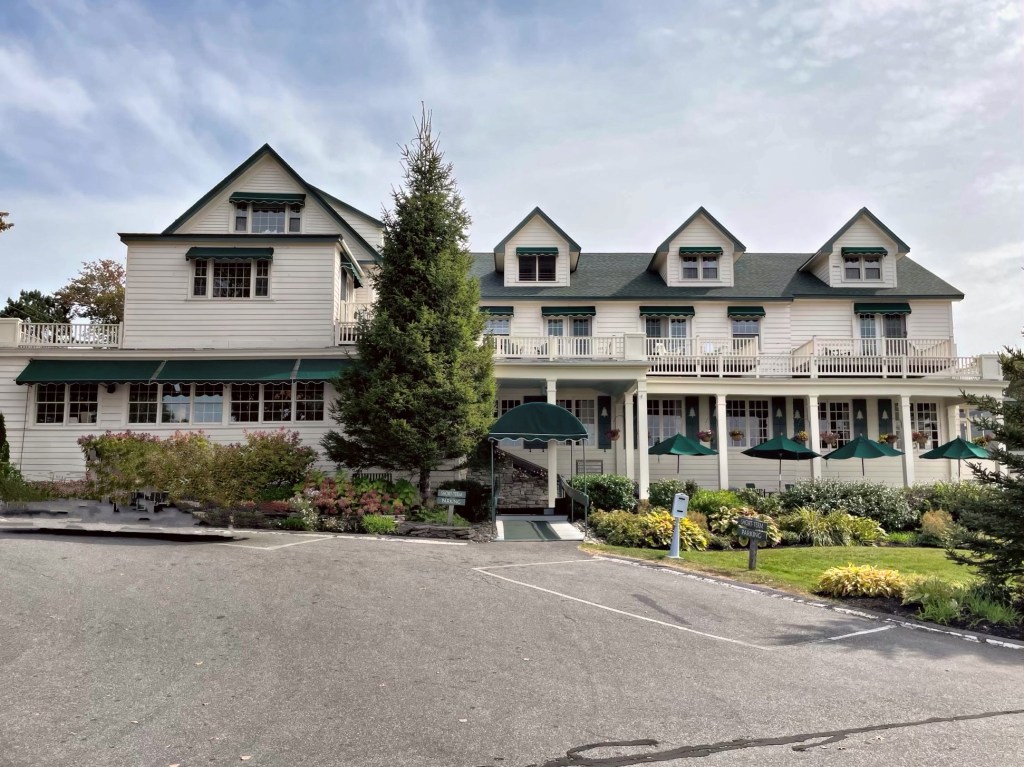
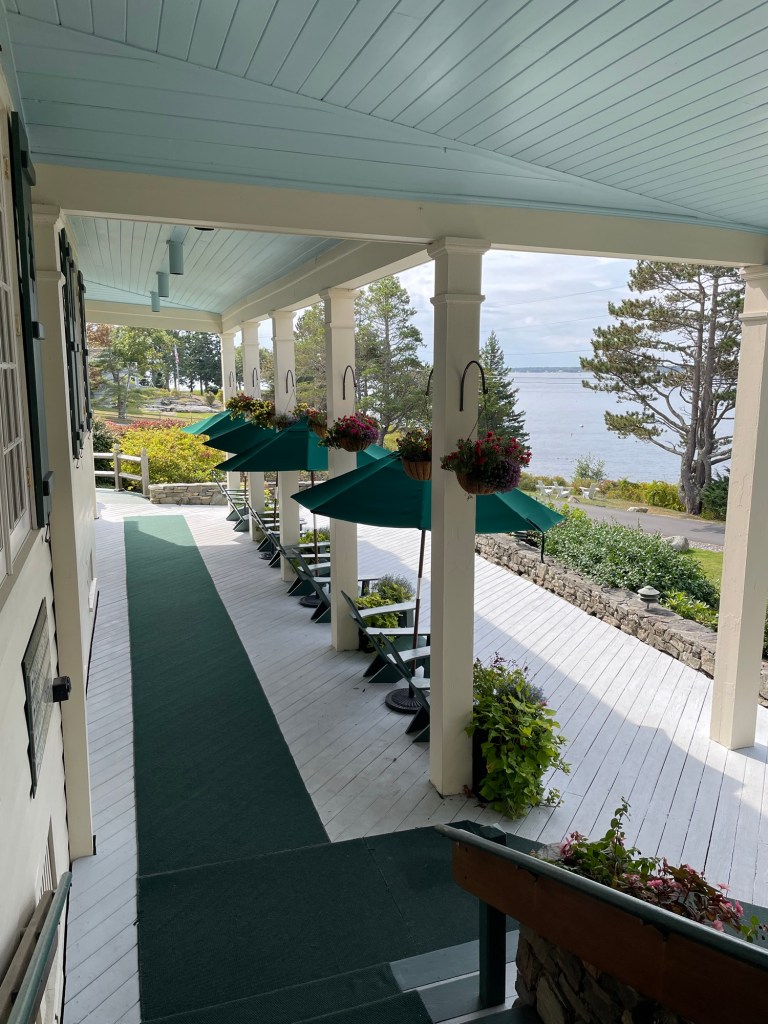
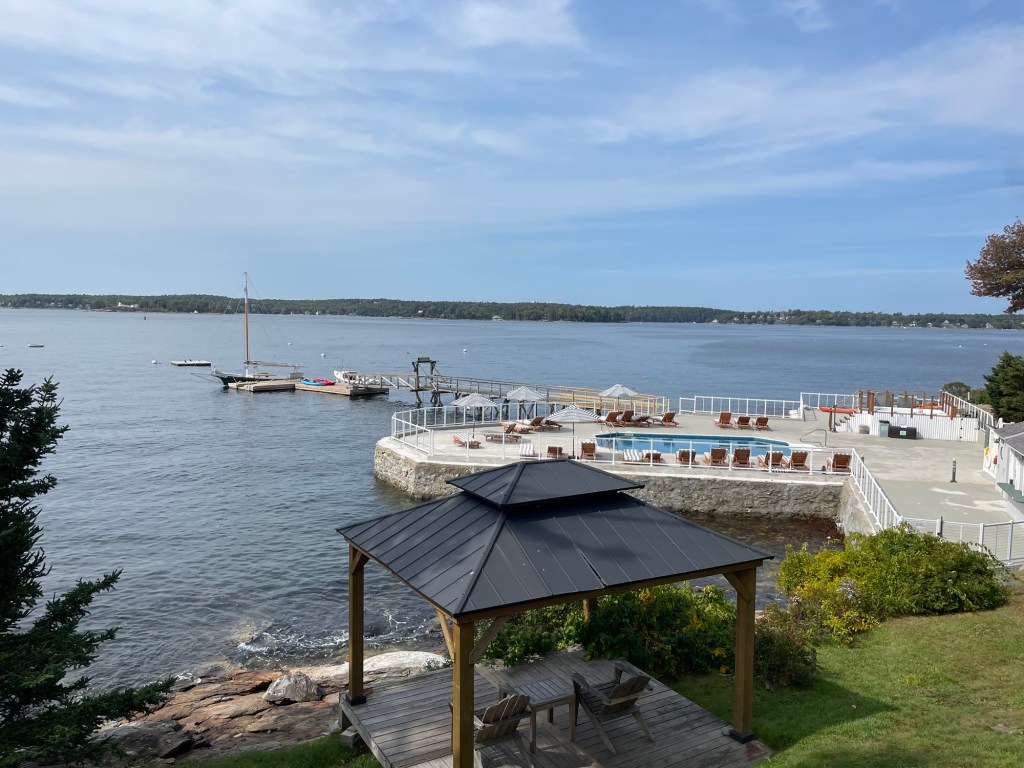
Spruce Point Inn sits amongst acres of pristine pine forests on the shore of the rugged coastline in Boothbay Harbor, in Mid-Coast Maine. The Inn had its beginnings in the 1890s as a hunting and fishing lodge when the peninsula was an undeveloped and remote point on the outer edge of Boothbay Harbor. The enchanting location off the beaten path attracted rusticators, who sought to escape the hot and polluted air of Boston and other cities, for the coastal breezes on Spruce Point. Private cottages were built nearby the old lodge, and frequented by summer rusticators year-after-year. By the 1940s the lodge was converted to an inn and many of the private summer cottages surrounding were acquired and rented out for summers. The buildings exhibit the warm, natural materials typical of the region, with weathered shingles and expansive porches that invite guests to take in the ocean breeze. Inside, the beadboard walls, wood floors, and fireplaces paired with period-appropriate furnishings really provide an authentic historic feeling. The resort’s first saltwater pool was constructed in a rocky outcropping right at the coastline and was recently restored, providing visitors a unique experience to swim in a historic saltwater pool just over the ocean! Over the years, the inn has undergone several renovations and expansions, ensuring that it continues to meet the needs of modern travelers while preserving its historical significance. The Spruce Point Inn is more than just a place to stay; it is a part of the rich history of Boothbay Harbor and ongoing legacy, a historic getaway that blends both luxury and history in a setting unlike any other.

Atlantic Hall // 1920

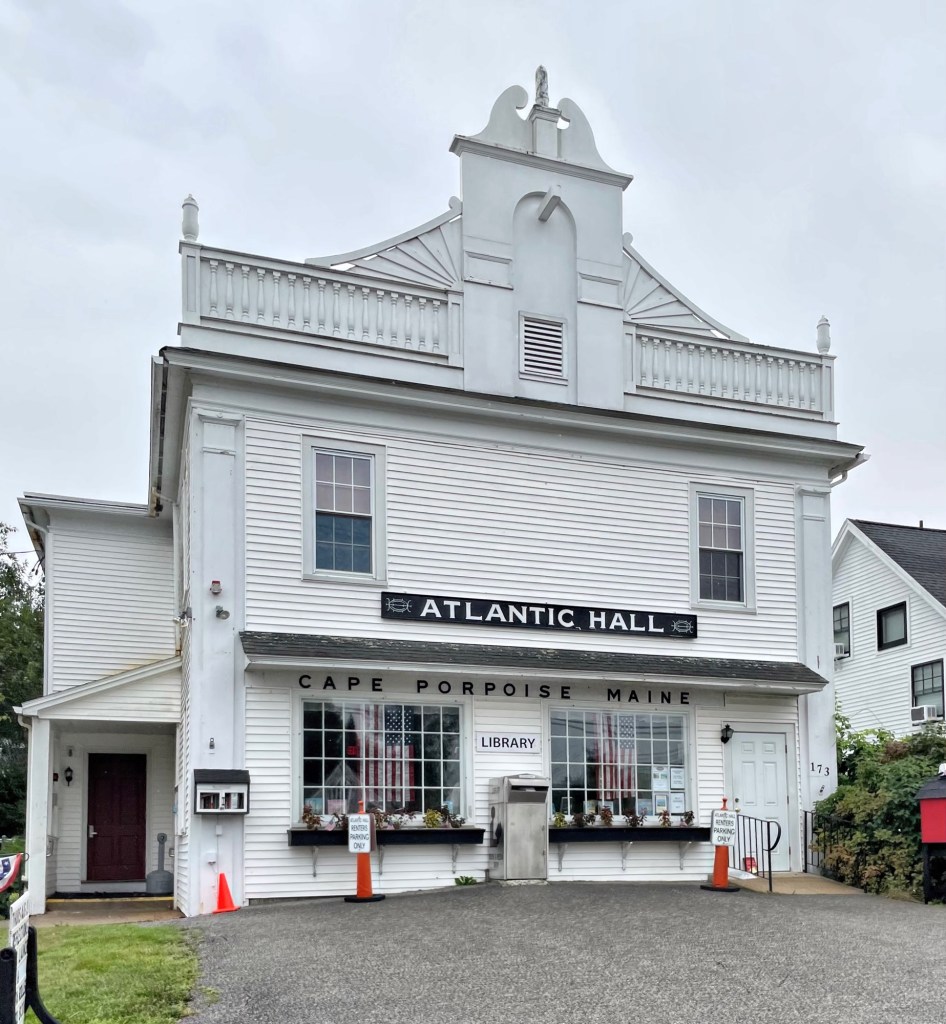
Atlantic Hall is one of the most iconic buildings in the well-visited town of Kennebunkport, Maine. The landmark structure was completed in 1920 as a volunteer fire station, by the Atlantic Hose Company. The volunteer fire-fighting company was founded in April 1906, and different members kept different parts of fire fighting equipment in each of their barns without a consolidated station. With the advent of the automobile, the community raised funds and purchased a Chevrolet hose truck, but had no station to put it. Without having the town pitch in money, residents (both permanent and summer “rusticators”) donated funds and a central location in Cape Porpoise was selected as a site for the new station. Construction started on a modest building in 1914, but was halted during WWI. After the war, local resident, Marion Goodall Marland hired the well known firm of Kilham, Hopkins and Greeley to furnish updated designs for the station, in a more elaborate version of the Colonial Revival style, fitting for the charming town. The building opened in 1920 with an engine room at the first floor and a meeting hall on the second floor. It was in 1958 that the Atlantic Hose Company outgrew its station at Atlantic Hall, and a new fire house was built across the street. Atlantic Hall was renovated for library and event use and has remained a significant piece of Cape Porpoise ever since!