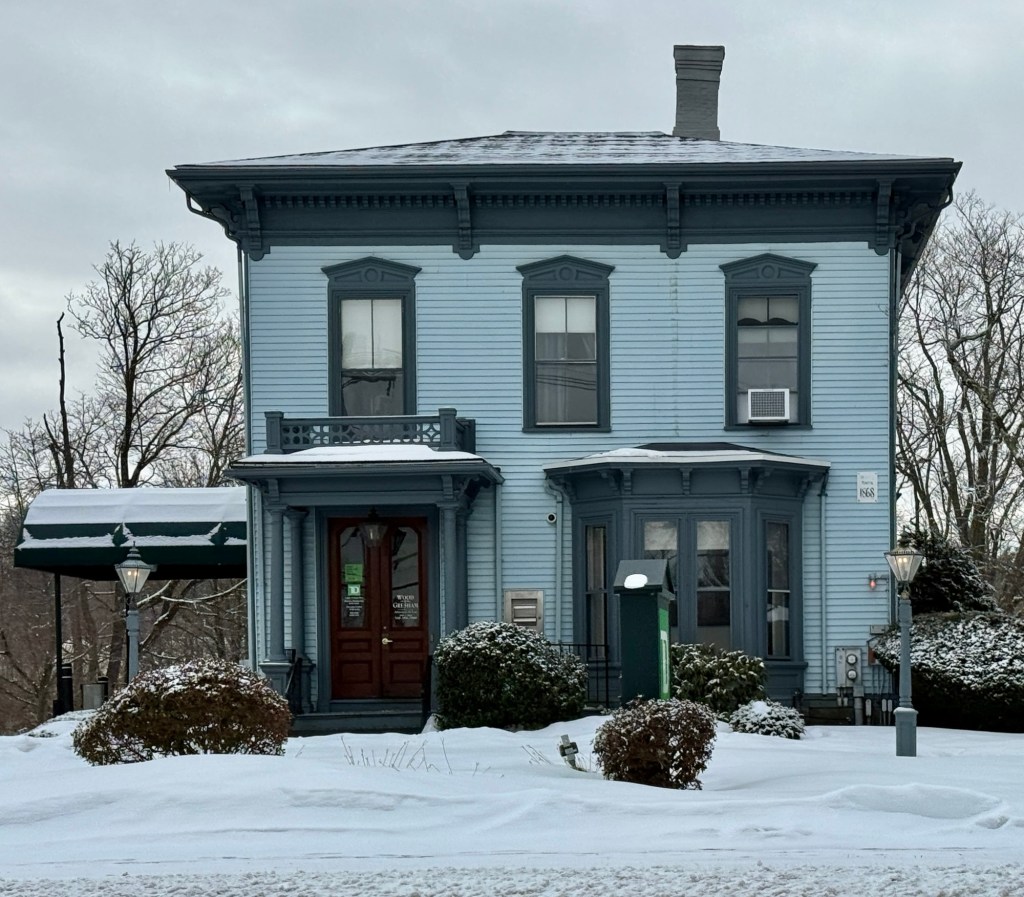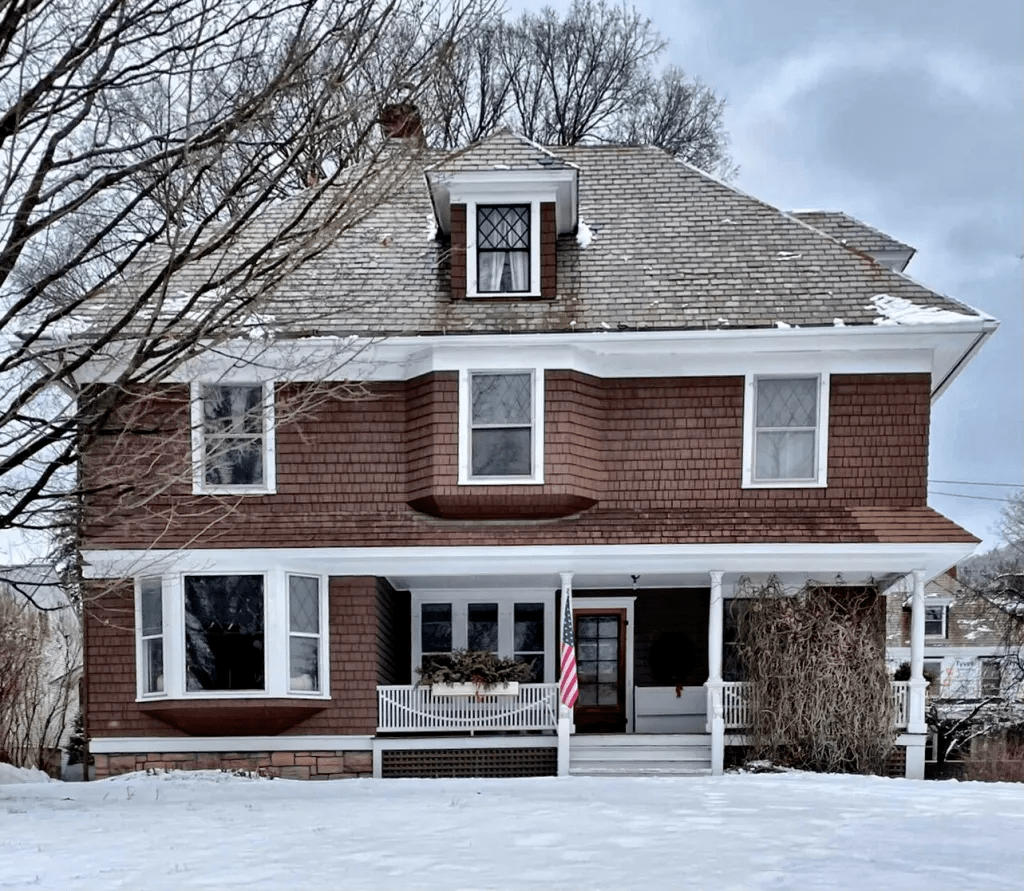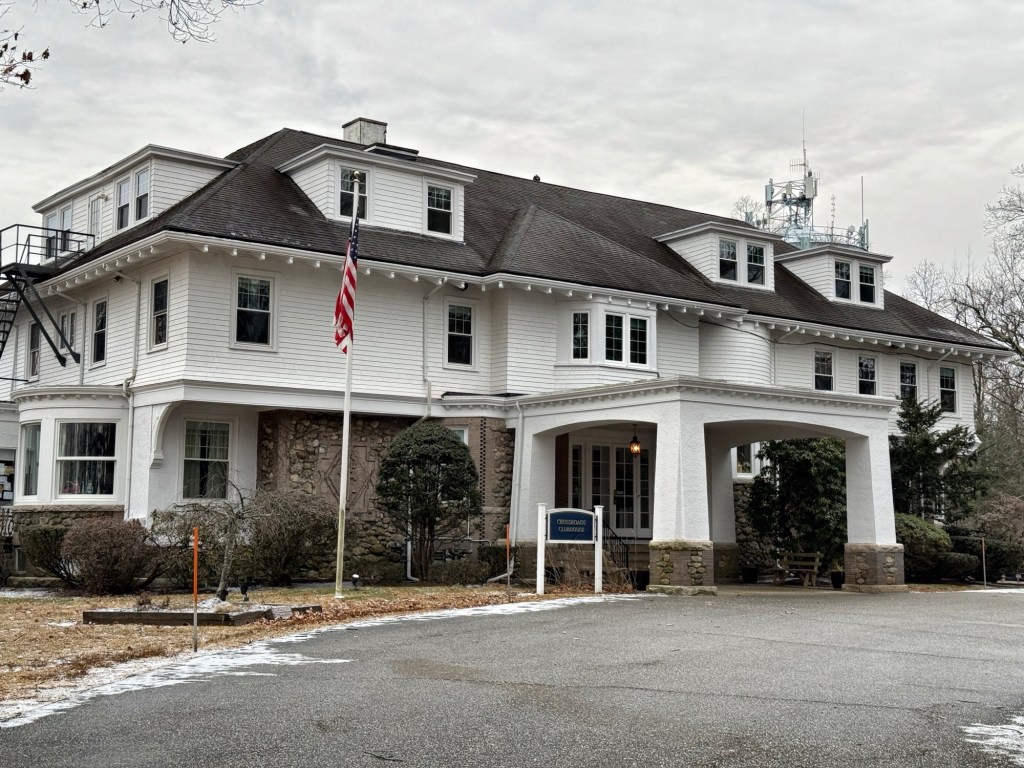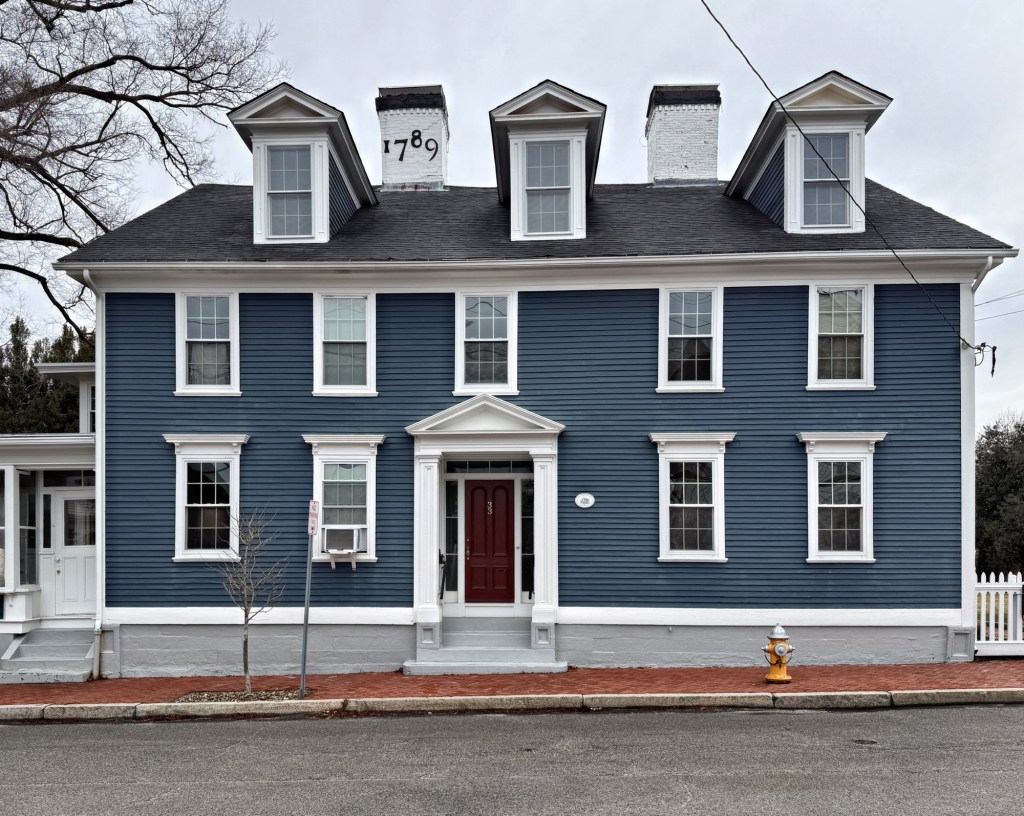
Leet-Ely House // c.1787

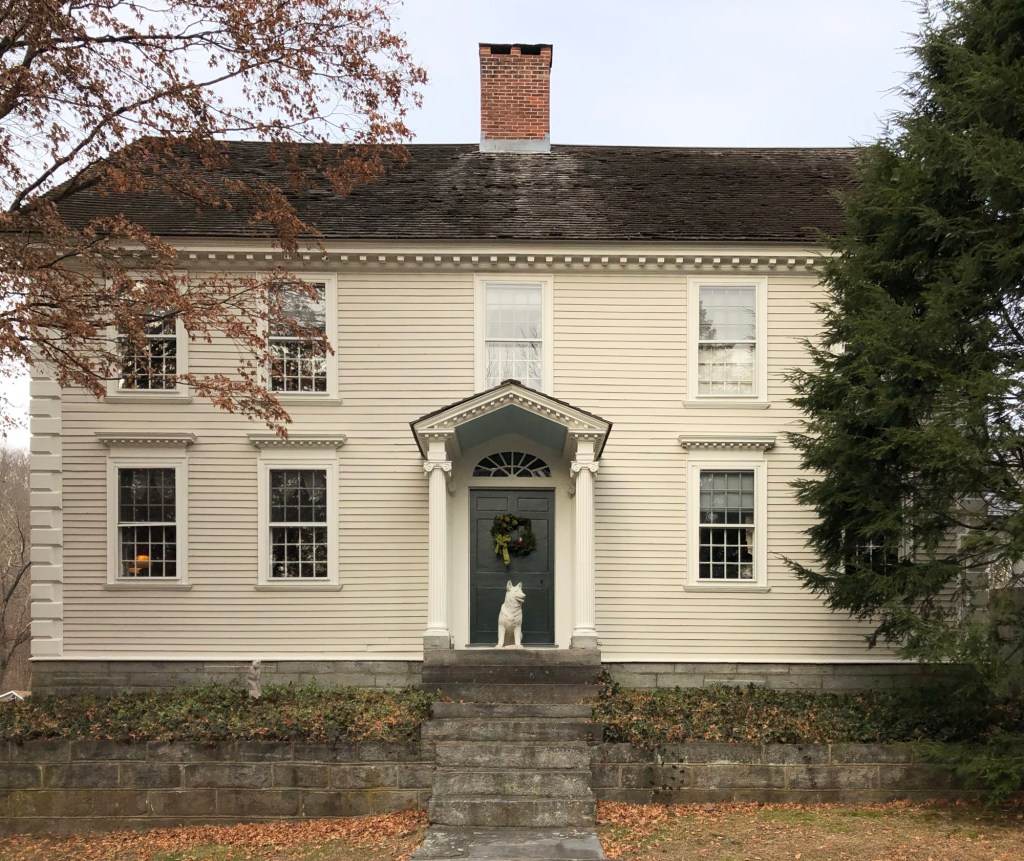
One of the finest homes in Chester, Connecticut, can be found on Liberty Street, a short distance to the village green. The Federal style house dates to about 1787 and was built by Gideon Leet, a Revolutionary War veteran and joiner as his own residence. After Gideon’s death, the property was purchased by Dr. Richard Ely (1765-1816), who may have expanded the residence, and worked locally as a town doctor. The property remained in the Ely familyfor generations and minimal changes have occured to the exterior as a result of this. The modillon cornice, corner quoins, and fanlight transom sheltered under a columned portico add to the charm of this great house. 

Southworth House – Deep River Historical Society // 1842

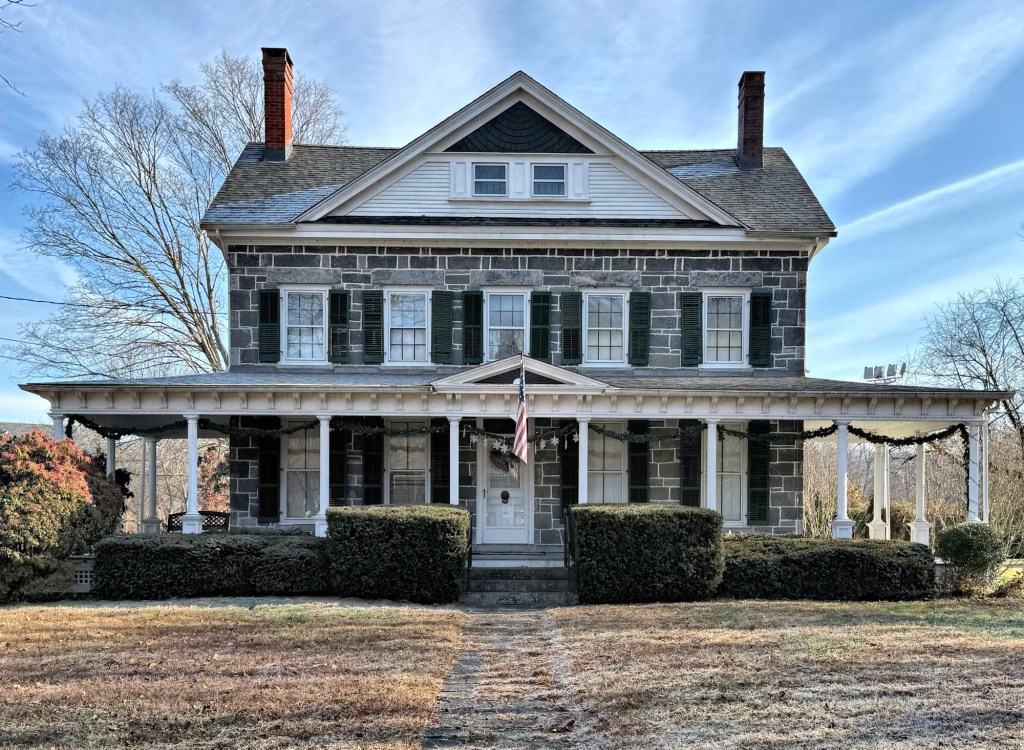
The Southworth House, also known as the Old Stone House, in Deep River, Connecticut, is a significant example of a stone, Greek Revival style house built for an important local family. The Southworth House was constructed in 1842 for Deacon Ezra Southworth (1803-1859) from stone harvested from one of the Southworth family’s quarries. Ezra was the son of local shipbuilder, Job Southworth who began building ships at the Deep River landing in the 1790s. Ezra Southworth branched off into manufacturing, becoming a partner and patent holder producing ink wells. His son, Ezra Job Birney Southworth (1844-1919), went into business with his father-in-law in shipping and served as a member of the State Legislature twice. In 1882, Ezra Jr. added the wooden ell onto the rear of the Stone House along with the wrap-around veranda and likely the rear barn as well. Ada Gilbert Southworth Munson was Ezra J. B. Southworth’s only child to live to adulthood and inherited the family home. She was a founding member of the Deep River Historical Society and bequeathed her family home to the Society in 1946, who have maintained the significant home here ever since. 

Captain Calvin Williams House // c.1820

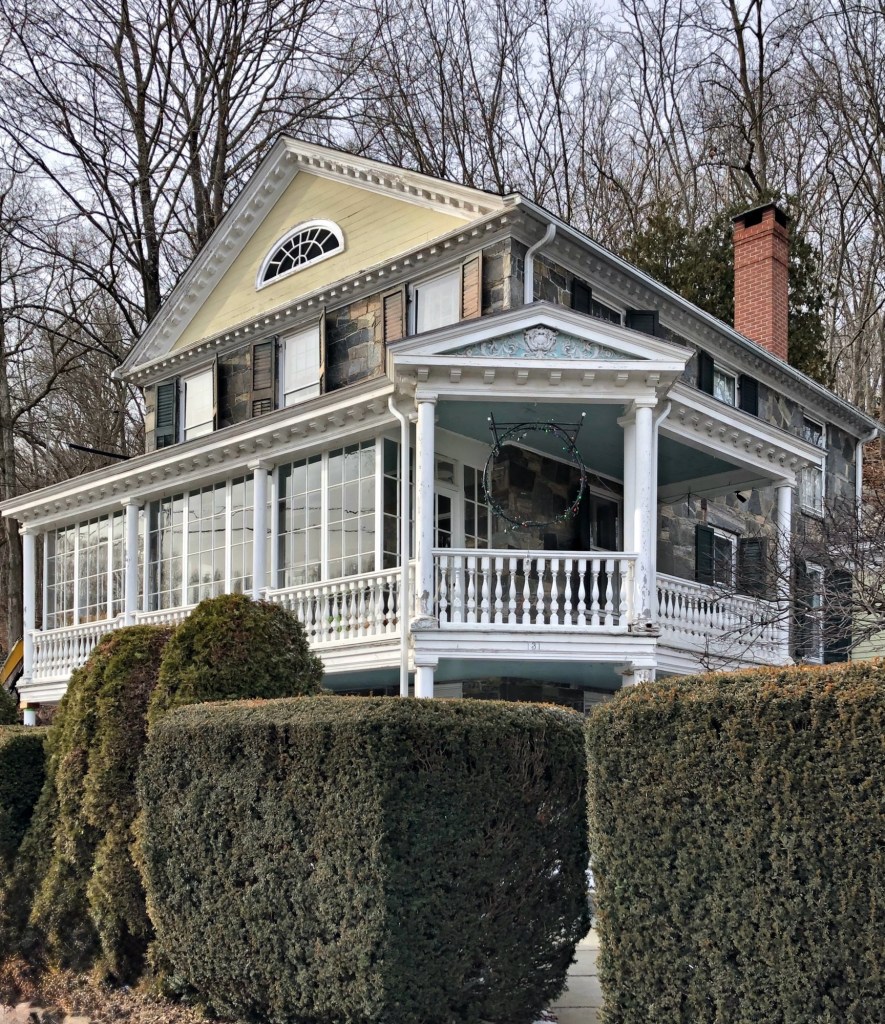
This Federal period stone house with a later Victorian-era porch, is located on Kirtland Street in Deep River, Connecticut, an area dominated by homes built for sea captains and ship builders in the 19th century. Calvin Williams (1785-1833) married Eunice Southworth of Deep River in 1809, and in 1820, built this stately home from granite from the Southworth family quarry. Captain Williams did not get to enjoy his home much as he was often out at sea commanding shipping vessels out of New York. Likely due to failing health, in 1832, Capt. Calvin Williams retired from the sea and returned to his home on Kirtland Street before he died in August of 1833. Federal style features of the house, like the elliptical fanlight and modillons in the gable and a fanlight over the main entry remain, while later alterations after his death include the spectacular enclosed porch from the late 19th or early 20th century. 

Hopestill Bent Tavern // 1710

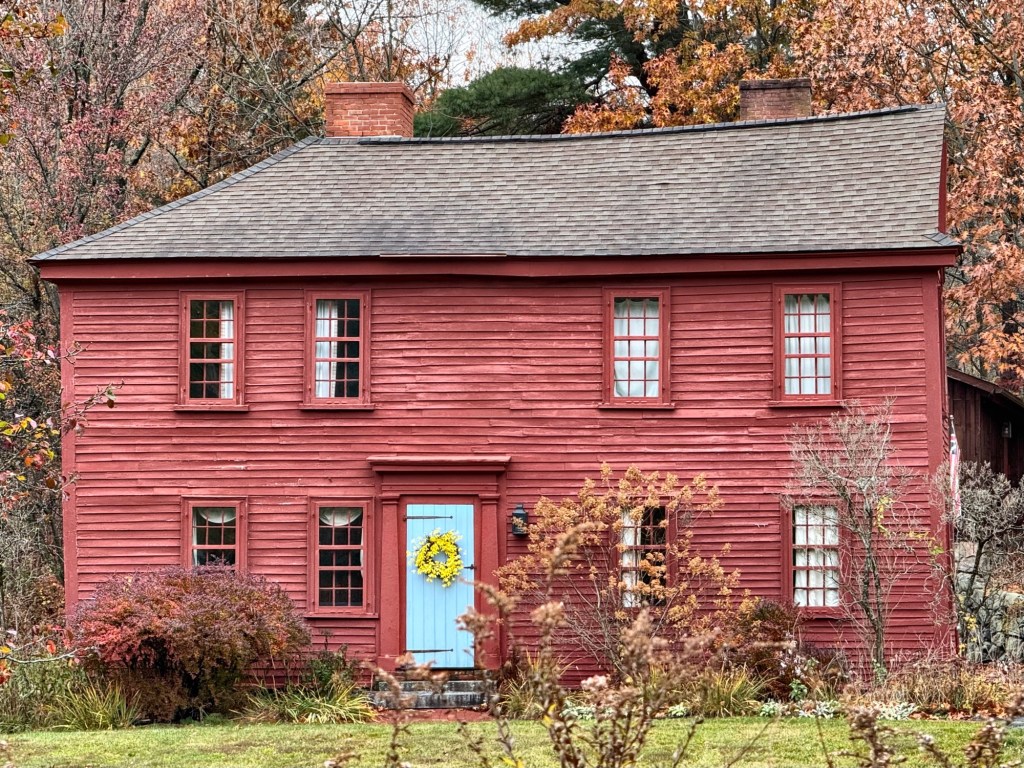
The Hopestill Bent Tavern is a historic First Period tavern, now a private residence, in Wayland, Massachusetts, on the Old Connecticut Path, a Colonial postal road. The tavern was owned and occupied by Hopestill Bent (1672–1725), a veteran from the King William’s War (one of the French and Indian Wars). Hopestill Bent was the great-great-grandfather of Charles Bent, a fur trader and first territorial Governor of New Mexico during the Mexican-American War, who was later scalped and killed by Pueblo warriors, during the Taos Revolt. The Bent Tavern served as a tavern until about 1780, was moved to the present site farther back from the street in 1800, and enlarged to the current size.

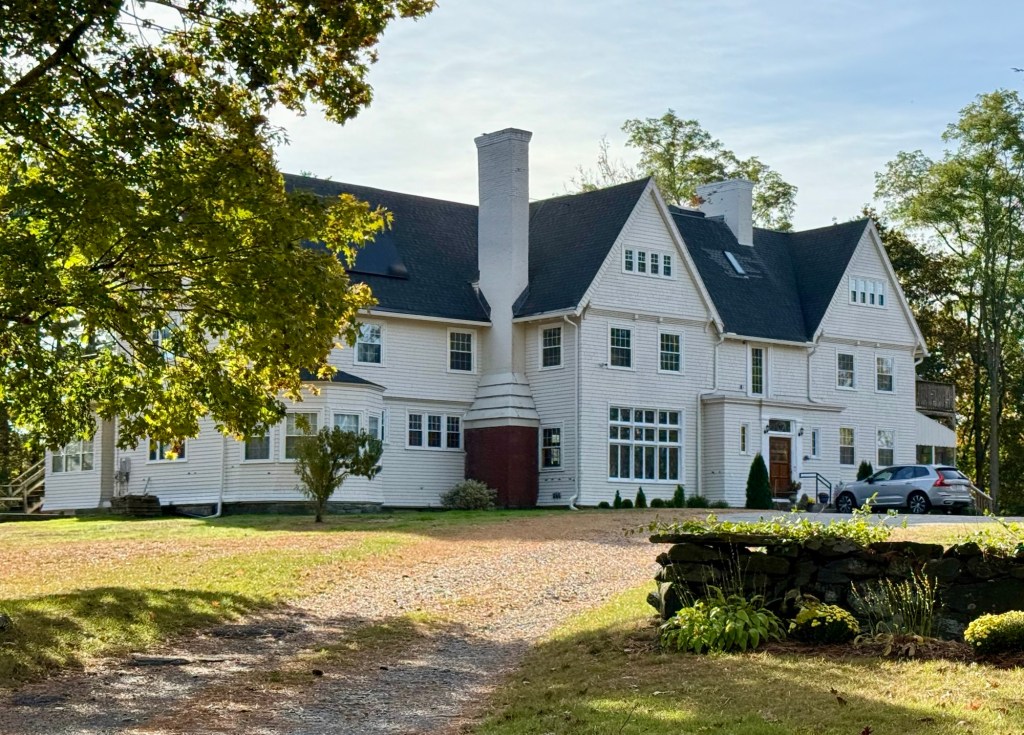
Fairlawn Mansion // 1883

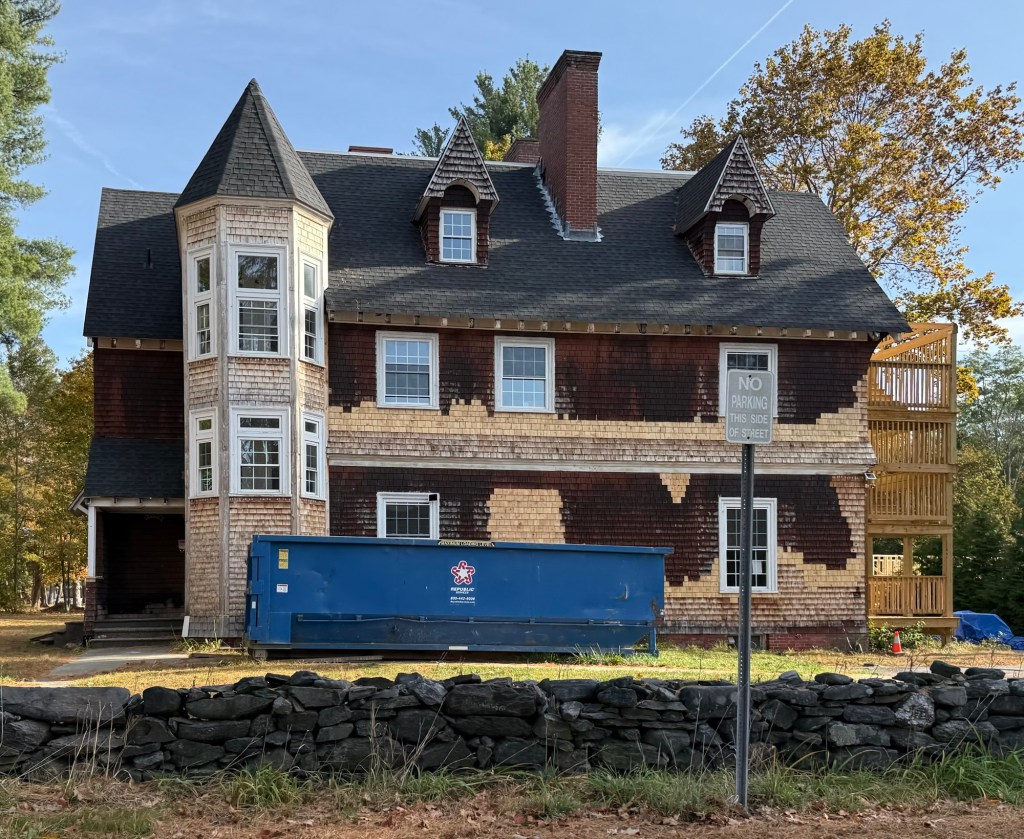
One of the great mansions built for the wealthy Thayer Family, “Fairlawn” stands as one of the finest Gilded Age homes in Lancaster, Massachusetts. This home was built for Eugene Van Renssalear Thayer (1855-1907), a financier and businessman, and his wife, Susan Spring Thayer. The gracious Richardsonianeque Shingle style house was designed by the Boston architectural firm of Andrews & Jacques as one of their first commissions after leaving the office of H. H. Richardson to establish their own practice. After the deaths of Eugene and Susan, the property was inherited by Susan Thayer Bigelow, the youngest daughter of the couple, and her husband, architect, Henry Forbes Bigelow. Under the ownership of Henry and Susan Bigelow, a massive renovation occurred, where Henry F. Bigelow oversaw in 1923, the removal of the south wing of the house, which was relocated to the south and became a detached residence, painted the brown-stained shingles white, and removed the Richardsonian arches to create a 20th century country house more in the Tudor Revival mode. From 1965, the property was owned by the former Atlantic Union College, and was colloquially known as the White House, but has since been sold to private owners. The former south wing, now a detached house, is under separate ownership. 

Detached portion of original house.

William Sever House // 1755

The William Sever House is an architecturally and historically significant residence in the town center of Kingston, Massachusetts. A prosperous merchant, owner of ships involved in coastal and international trade and member of the colony’s House of Representatives, William Sever (1729-1809) was prepared to erect a home of appropriate status when he married his cousin, Sarah Warren, in 1755. Sever joined his father Nicholas Sever’s commercial shipping business after graduating from Harvard College in 1745 and in 1754, was elected to the Massachusetts Bay Colony’s House of Representatives. In 1769, Squire Sever was elected to the Governor’s Council, a position he held until 1774 when he joined the Provincial Congress. Due to his experience and seniority, Sever was appointed to head the Congress and was declared “President of Massachusetts” and endowed with the governor’s executive powers. After his death in 1809, the house remained in the Sever family for generations, including as a summer residence for James W. Sever, the namesake of Sever Hall at Harvard University. The residence is well-preserved and showcases the telescoping nature of some of these early Colonial-era properties, with the main house adjoined by a barn and carriage house and diminutive ells and was thoroughly documented in the 1930s through the Historic American Buildings Survey, with detailed drawings, plans, and photographs of the exterior and interior spaces. 

Thomas Gerry House – Hearth and Eagle House // 1717

This house has a lot of history! Originally built around 1717 by Ephraim Sanders, this house on Franklin Street in Marblehead was later purchased by Thomas Gerry (1702-1774), a merchant who operated ships out of Marblehead, and father to Elbridge Gerry, the fifth Vice President of the United States. The home was likely a three-bay, side hall Georgian house and expanded to the current five-bay configuration by Thomas Gerry around 1750. Thomas Gerry was born in Derbyshire, England, but came to Marblehead by around 1730 and was active in local politics and had a leading role in the local militia, later speaking out against the Crown and sought independence. Thomas Gerry died in 1774, and did not get to see the Revolution nor his son become a Founding Father. The property was later the home of one of his granddaughters, Sarah Gerry Conklin, and her husband, Frederick Conklin, an infantry captain, who housed officers in command of nearby Fort Sewall during the War of 1812. In the 1940s, historical novelist Anya Seton after researching her genealogy, led her to base her 1948 novel, The Hearth and Eagle, on the history of the seaside town. She set the novel in the Hearth and Eagle Inn, based on the Gerry House here.

Warren Homestead // 1727

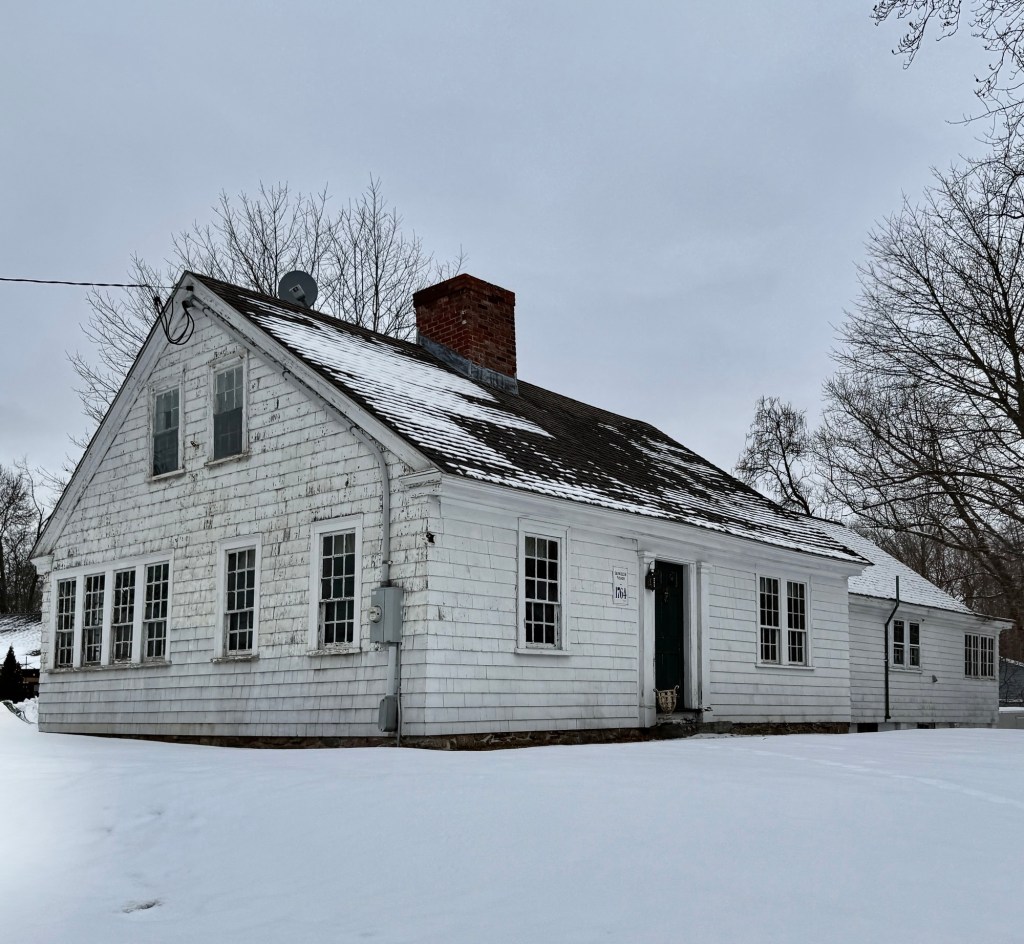
The old Jonah Warren Homestead of Westborough, Massachusetts, was built in 1727 on the Old Connecticut Path, a former Native American trail, and is among the earliest and best-preserved examples of 18th-century domestic architecture in Westborough. The Colonial-era house was built for Jonah Warren (1700-1780) and his wife Elizabeth Seaverns (1700-1775), who moved from Watertown to Westborough in 1720, the couple would have 13 children. The home remained in the family for generations. Jonah was a tanner by trade, but also sold wooden shingles, cut from nearby cedar swamps. In 1778, the couple’s son, Aaron, owned the house, as he returned home to take care of his aging father. The property was later owned by Aaron’s son, David Warren, and later passed to his only child, a daughter, Mary Waterman Warren (1799-1858), who married Josiah Fay (1797-1869) in 1838. The home was inherited by Hercules Warren Fay, a Harvard-educated reverend and author. The homestead remained in the family until the last of Hercules’ children died in 1957. The Warren Homestead remains as one of the finest and best-preserved Colonial-era residences in Central Massachusetts.

Parker-Maynard Homestead // 1777

Hidden away on a quiet country road in Westborough, Massachusetts, the Parker-Maynard Homestead sits as one of the best-preserved and significant properties in town. Revolutionary War veteran Isaac Parker (1750-1798), after the war, acquired land in town and built a farmhouse here around 1777. Upon the time of his death in 1798, his property listed in his will included: a homestead farm, grist mill, saw mill, a small dwelling house, a horse stable, and a pew at the town meetinghouse. The property was acquired by brothers Ebenezer and Ephraim Maynard, who lived in the house together with their respective families. The Maynard brothers worked as wheelwrights and had their shop on the property for years. Ephraim Maynard’s eldest son, Horace Maynard (1814-1882) was born here and after graduating from Amherst College, moved to Tennessee to teach law at East Tennessee University before getting into politics. Horace served in Congress between 1858-1873 as a representative from Knoxville. He spent much of his first two terms in Congress fighting to preserve the Union, and during the Civil War, he consistently urged President Abraham Lincoln to send Union forces to free East Tennessee from its Confederate occupiers. After the war, he was appointed minister to Constantinople by President Grant in 1875. In 1880 he returned to the United States and was appointed Postmaster General by President Rutherford B. Hayes. Horace owned the family homestead following the death of his father and uncle, and often returned to Westborough to see family and get away from politics.

John A. Turner Cottage // c.1875 

One of the most charming houses in Westborough, Massachusetts, can be found on Central Street, in the commercial village of town. The house was built around 1875 as a Mansard cottage, a style that was beginning to wane out of style by this point. The cottage was built for John Addison Turner (1833-1900) and his wife, Mary Ann Fiske. John worked as a superintendent at the National Straw Works factory, a local manufacturer of straw hats and other goods. The Turner House remains one of the best-preserved Victorian-era homes in Westborough and is even painted to highlight the many intricate details.