Boston Young Men’s Christian Union Building // 1875

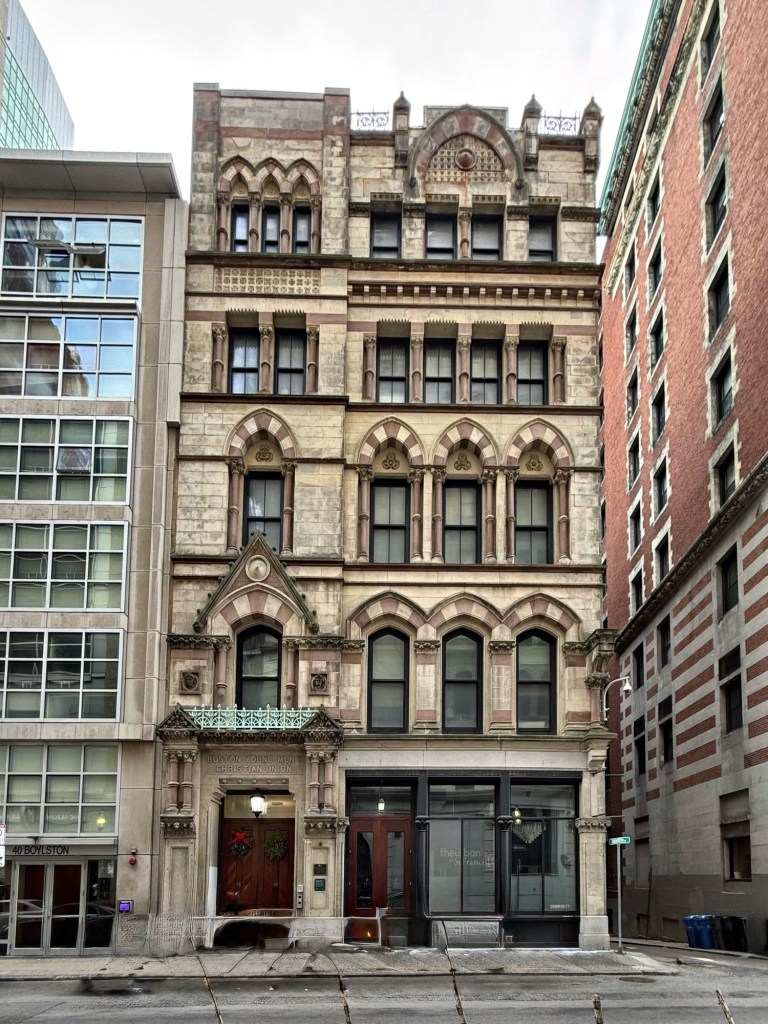
The Boston Young Men’s Christian Union was founded in 1851 by a group of Harvard students as a biblical and christian literature discussion group, which incorporated the following year. First located on School Street, the organization’s activities were to provide a focal point for the intellectual, religious, and social life of primarily middle-class, well-educated Christians. The organization grew to the point that a new building was needed, and in 1873, a site on Boylston Street was acquired as a perfect central location for the group. Architect Nathaniel J. Bradlee of Bradlee and Winslow was hired to design the structure, principally because Mr. Bradlee by then a prominent architect and public figure, was also a life member of the Union and the brother of one of its founders. The building was completed in 1875 and included ground floor retail with an auditorium, gymnasium, library, social and game rooms, and offices for the Union above and behind. Designed in the High Victorian/Ruskinian Gothic style, derived from a mixture of English, Italian, French, and some German Gothic precedents, the style emphasized complicated, asymmetrical massing, polychromy, ornate details, and lancet or Gothic arched openings, in this building a sandstone facade was used. The building became a City of Boston Landmark in 1977. In 2016, the building was converted to an affordable housing development by The Architectural Team Inc., and called “The Union”. The development provides 46 units of affordable housing, including 25 targeted to those who have experienced homelessness. What a great rebirth of the building. Historic Preservation and Affordable Housing can work together and create great projects.

Blaisdell-Carter House // 1890

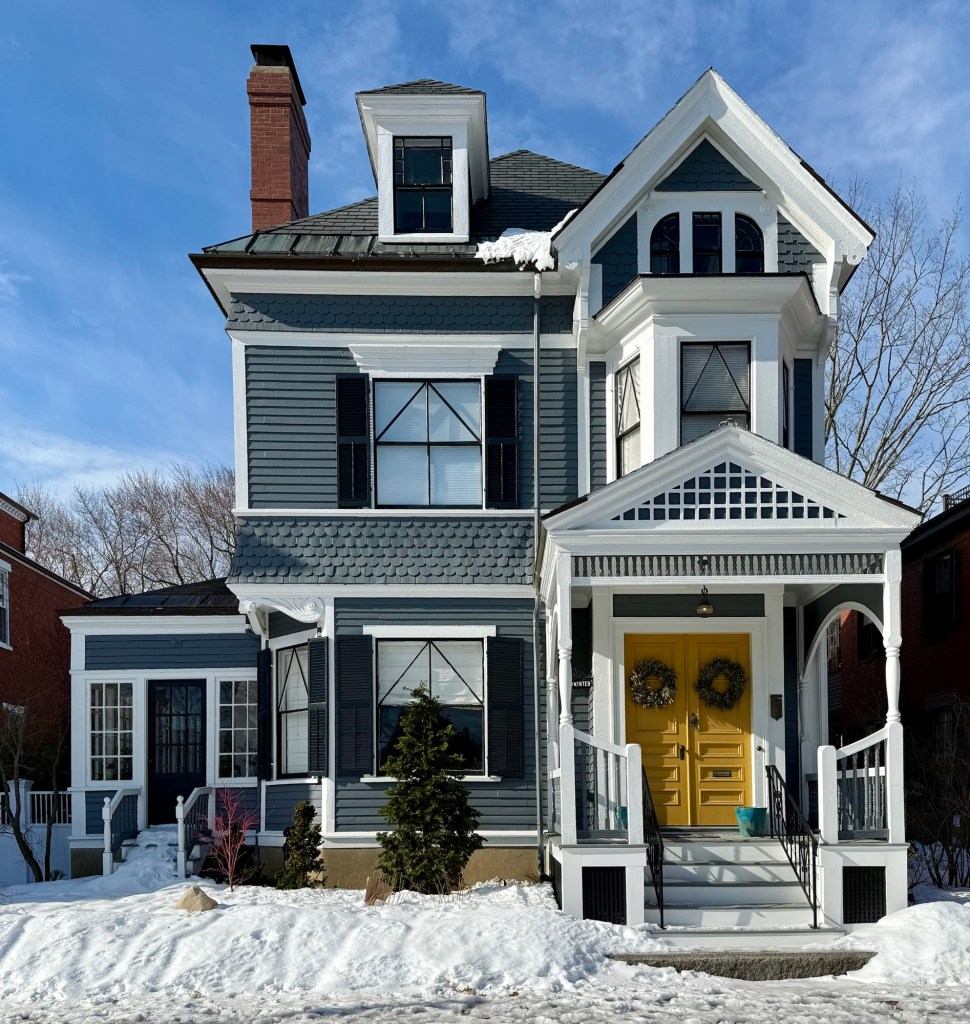
The Blaisdell-Carter House is a great example of a Queen Anne style home in Chicopee, Massachusetts. The house was built in 1890 for Harriet P. Blaisdell following the death of her husband, Samuel Blaisdell, a cotton broker, in 1888. Mrs. Blaisdell hired David B. Griggs, a builder in Chicopee under the firm D. B. Griggs & Sons, to design and build the residence, which sat across the street from Griggs’ own home. Harriet would pass away just three years after her home was built, and the property would eventually be sold to Nathan P. Ames Carter (1864-1959). The residence sits on a large lot and exhibits varied siding, asymmetrical plan with porches, additions, and steep gable roofs, and the use of irregular windows of varied sizing and locations. While the second floor porch has been enclosed, the house retains much of its original fabric and has not been covered by vinyl or aluminum siding, a rarity in Chicopee.

Boston & Albany Depot // 1881-1958

Courtesy of Digital Commonwealth

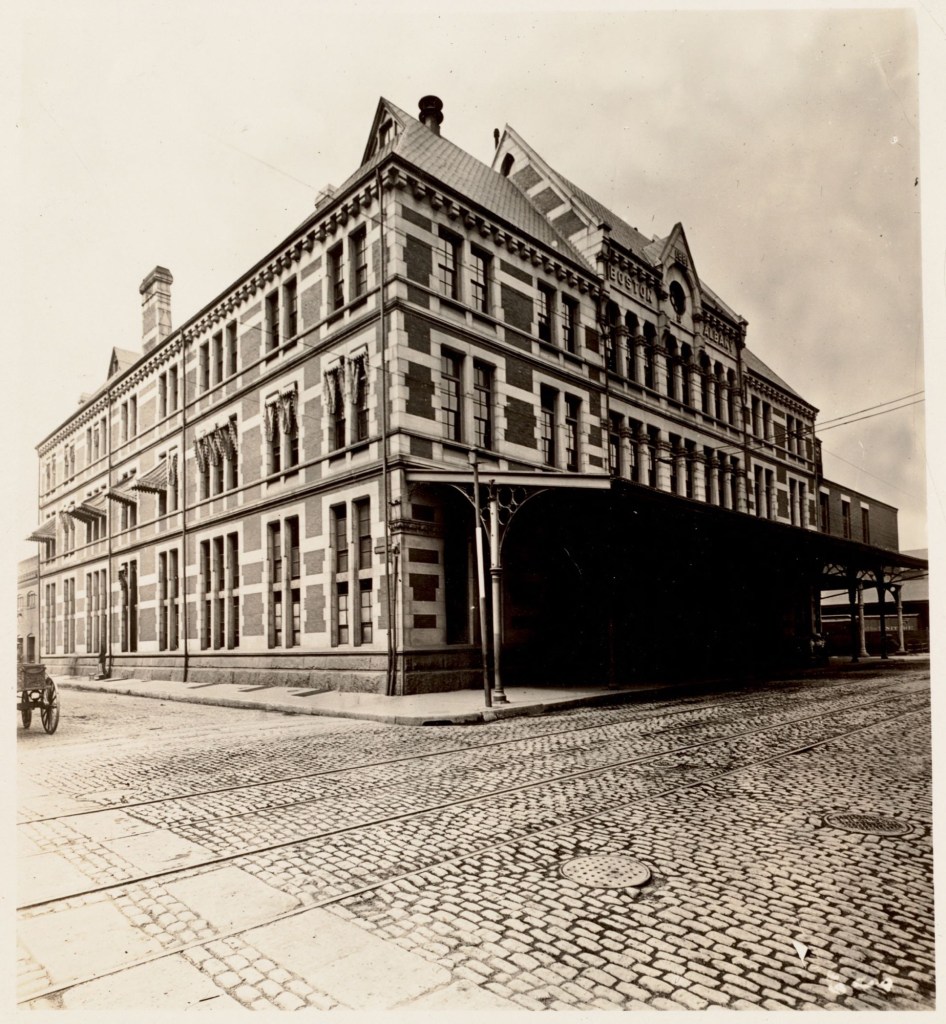
When the Erie Canal opened in 1825, New York City’s advantageous water connection through the Hudson River threatened Boston’s dominance as a historic trade center. Since the topography of the Berkshires in Western Massachusetts made construction of a canal infeasible, Boston turned to the emerging railroad technology for a share of the freight to and from the Midwestern United States. The Boston and Worcester Railroad was chartered in 1831 and construction began the next year. Stations and rail lines were built westward of Boston and would eventually reach the Berkshires and the Hudson Valley with three existing lines merging in 1867 as the Boston and Albany Railroad, becoming the longest and most expensive point-to-point railroad yet constructed in the United States. The B&A undertook a significant program of improvement and beautification in the 1880s and 1890s, when the railroad hired architect Alexander Rice Esty to design this building, the Boston passenger station which was completed in 1881, the year of Esty’s death. That same year, the B&A hired architect Henry Hobson Richardson to design a series of passenger stations, connecting suburban villages west of Boston to the city. This station was located on Kneeland Street and serviced passenger service from Boston until the new South Station, a consolidated train station of various lines, was completed in 1899. This station later became a freight and storage warehouse for the railroad until the 1950s when the building was razed for the Central Artery, signaling the death of train travel as we knew it for decades to come. The site of the former station has remained undeveloped since then.

John T. Andrew Carriage House – Cornwall Historical Society Building // c.1865

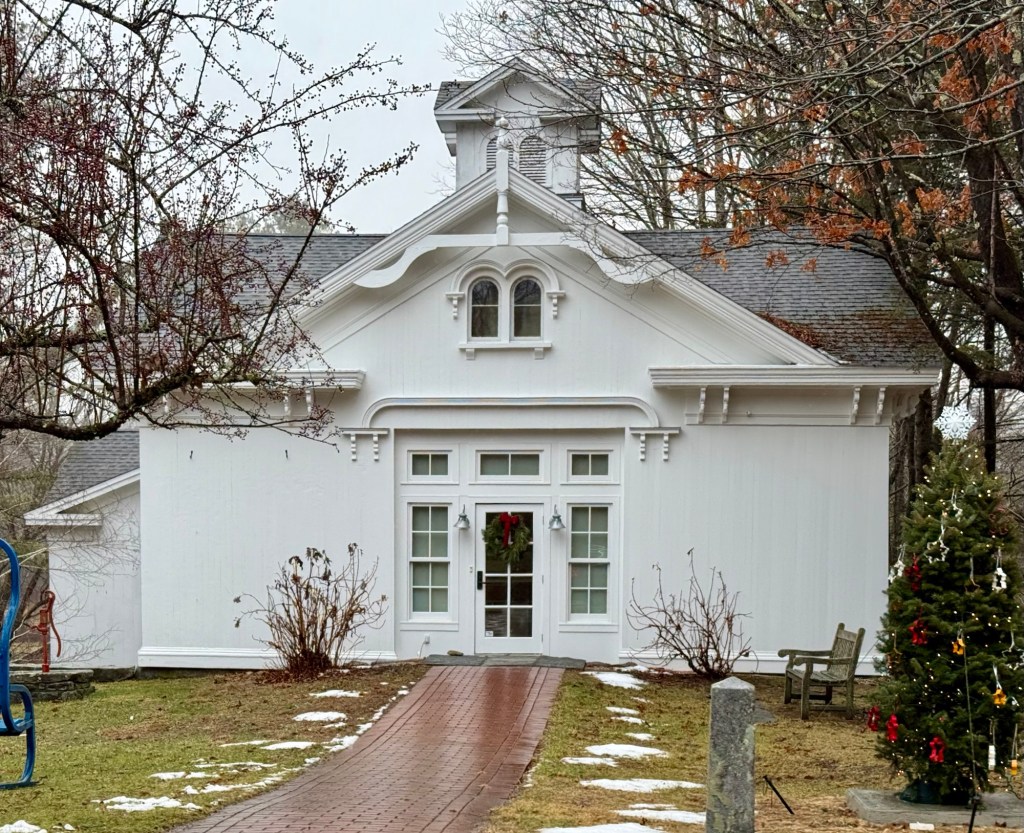
This ornate carriage house on Pine Street in Cornwall, Connecticut was built by John T. Andrew around 1865 adjacent to his late 18th century home in the village. Andrews was born in Bethany, Connecticut in 1811, graduated from Yale College in 1839, becoming a minister and later a teacher. For health reasons he left both professions and turned to farming and stonework. After Andrews’s death the property was purchased in 1890 by Charles Marsh, a local undertaker, and his wife Inez. In 1954 the barn was converted to a home by their daughter, the town librarian Emily Elizabeth Marsh, a charter member of the Cornwall Historical Society. In 1966, the Society raised funds to buy the building from her estate, but could do little to adapt it for their specific exhibit and storage needs. The Society restored the exterior to its original appearance, down to the brackets, round arched windows and cupola.

Cornwall Bridge Railroad Station // 1886

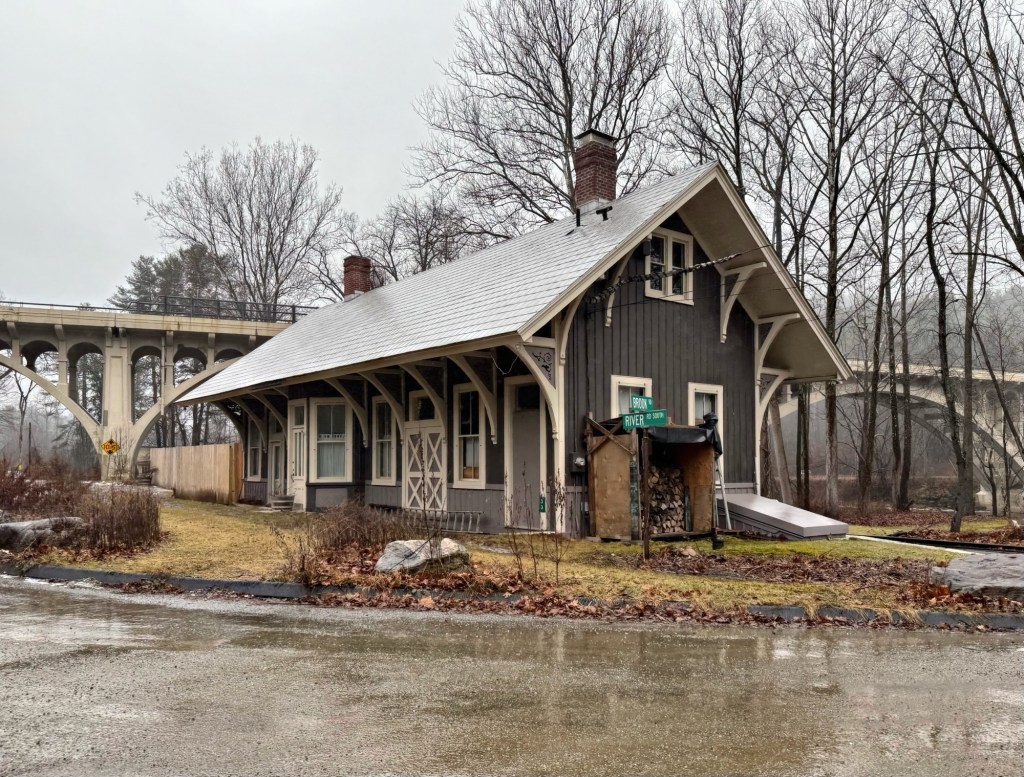
One of the most attractive railroad depots in Connecticut, the Cornwall Bridge Railroad Station exists in almost complete originality. Its siding is board and batten and its slate roof with a wide overhang supported by the original brackets, showcases the attention to detail railroad companies paid to design and appoint these important landmarks. Built in 1886, the building can be classified as Stick Style and is one of a few buildings in town of the style, adding to its significance. The station was built by the Housatonic Railroad to replace an earlier station on the site. The Housatonic line was acquired by the New York, New Haven and Hartford Railroad in 1892 and later by the Penn Central Railroad in 1969, which went bankrupt by 1970. This station was subsequently sold to private ownership and listed on the National Register of Historic Places as a tool to bring awareness to its significance and threatened status. Luckily, the building was preserved and has been converted to a private residence.

Porphyry Hall // 1880

The Jacob E. Spring Mansion, also known as Porphyry Hall, is a high-style estate house located in Danvers, Massachusetts, that is one of the finest and most unique in the state! The house was built in 1880 for Jacob Evans Spring (1825-1905), who was born in Brownfield, Maine, and at the age of twenty, he went to Argentina and amassed a fortune in the wool business in Buenos Aires between 1845 and 1865, when he returned to the United States. Jacob and his wife, Sara Duffy, would purchase a large farm in Danvers and began planning for their family country home. Their residence was built on a high hill over two years and constructed of over 40 types of stones of irregular size and color with door and window sills of Nova Scotia freestone with arches of the doors and windows and corners of brick. The mansion was designed by architect George M. Harding of Boston, and built by several skilled masons over many months. Mr. Spring named his estate, “Porphyry Hall” with Porphyry meaning an igneous rock with large crystals in a fine-grained matrix; suitable for the walls of their mansion. The Spring’s lived lavishly at this home and spent nearly all of their fortune, selling the property after just ten years to the Xaverian Brothers, who opened it as Saint John’s Normal College. In 1907, the compound was re-organized as a Catholic boys prep school. In 1915, a chapel was added to the rear of the building, constructed from gray fieldstone to blend with the main house. Have you ever seen a building like this?

Old New Gloucester Public Library – New Gloucester Meetinghouse // 1895

The original New Gloucester Public Library is located in the central village of New Gloucester, Maine, and is one of the finest architectural buildings in the town. The library was established in 1888 when voters passed a resolution to establish a public town library as before this, a private, social library existed here. A committee was chosen to purchase books and make decisions for expenditures and staff. The library was originally located in the town hall building, and was supported by an annual poll tax of 50 cents. The first librarian was Helen A. Moseley, with a salary of $50 a year, she remained the town’s librarian until 1920. By 1895, the library had grown to more than 2,100 volumes and it was decided a new, purpose-built library was needed. That next year, a lot was purchased and this Victorian style building was constructed adjacent to the Town Hall. The wood-frame building has a decorative central section with recessed, arched entry and gable with decorative Stick style ornament. Additionally, a tower protrudes from the roof, giving the building additional whimsy. The library was eventually outgrown and relocated in the former High School, two buildings down the street. The old library has ever-since been the town’s meetinghouse.

Former Boston & Lowell Railroad Depot // 1871-1927

Courtesy of Boston Public Library collections

The Boston and Lowell Railroad was established in 1830 as one of the first rail lines in North America. The first track was completed in 1835, and freight service began immediately connecting Boston to the newly established town of Lowell, which had just 6,400 residents at the time (compared to Boston which had 10x that). The original Boston depot was a modest structure, but after the Civil War, it was decided that a new station connecting two of the most important industrial cities in Massachusetts, should be built. Architect Edgar Allen Poe Newcomb and his father’s firm, L. Newcomb & Son, was selected to design a new station on Causeway Street. The French Second Empire masterpiece was built between 1871-1878. Inside, the concourse was lined with oak walls and marble flooring. The depot was added onto in 1893 and incorporated into a Union Station of multiple former lines, and ultimately demolished in 1927 for the first North Station.

Former Arlington House Hotel // 1870

The Bulfinch Triangle area just south of the TD Garden in Boston is a cohesive and historically preserved district of similar commercial and industrial buildings of the 19th and early 20th centuries. Somehow, the area has been preserved largely intact besides some sites serving as surface parking lots and some incompatible infill developments. Historically, the area was a tidal flat, before the land here was filled beginning in 1807, with Causeway Street as the northern boundary. The area’s namesake, architect Charles Bulfinch, designed the street layout for the landowners, and the area was filled with material taken by lowering Beacon Hill and Copp’s Hill. Development was fairly slow until railroad companies built depots in the area around present-day North Station, many of which connected the area to cities north of Boston. These new train lines boosted the value of the surrounding land, with manufacturers and developers building factories and hotels in the area. This handsome structure on Causeway Street was built in 1870 by William G. Means, a manufacturer who also invested in real estate in Boston. He commissioned architect Samuel J. F. Thayer to furnish plans for the apartment hotel in the Second Empire style with a mansard roof and window lintels of diminishing detail as the floors increase. In later years, the Arlington House Hotel changed hands and names, later known as the Eastern Hotel and Hotel Haymarket. Stay tuned for more Boston history in this series highlighting the North Station and Bulfinch Triangle district!

United Church of Norwood // 1886

Located across from the church-like Norwood Town Hall, the United Church of Norwood is a landmark example of the Victorian Gothic architecture style and an important historical landmark for the town. The cornerstone of this present church was laid in 1885 and was completed and consecrated by December of 1886. Boston architect J. Williams Beal, got his start at the firm of McKim, Mead & White, designed the church here for the local Universalists, who lost their previous church to fire in 1884. In 1934, the town’s Universalist and Methodist congregations merged and they joined together in this, as a Union Church. Built of Milford granite and pressed brick, the United Church of Norwood features a side chapel and clock in its steeple which are unique and add charm to the historic church.