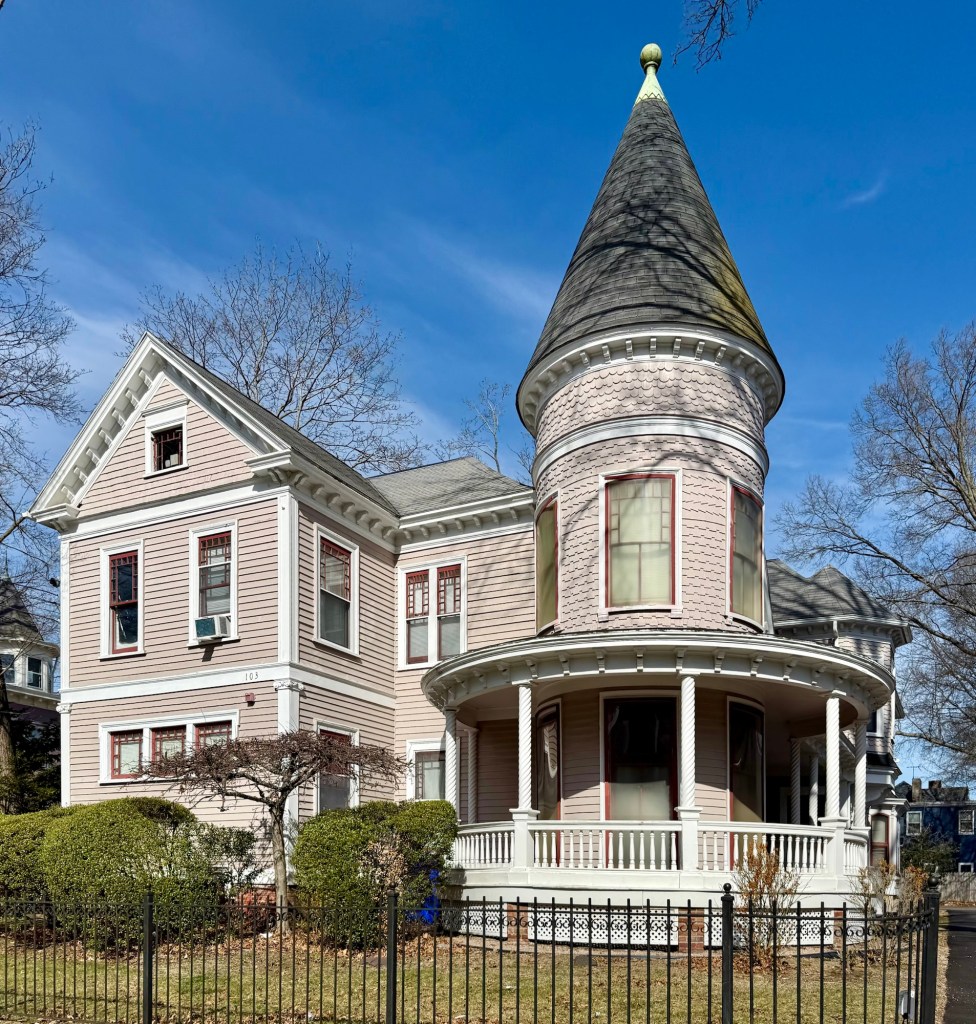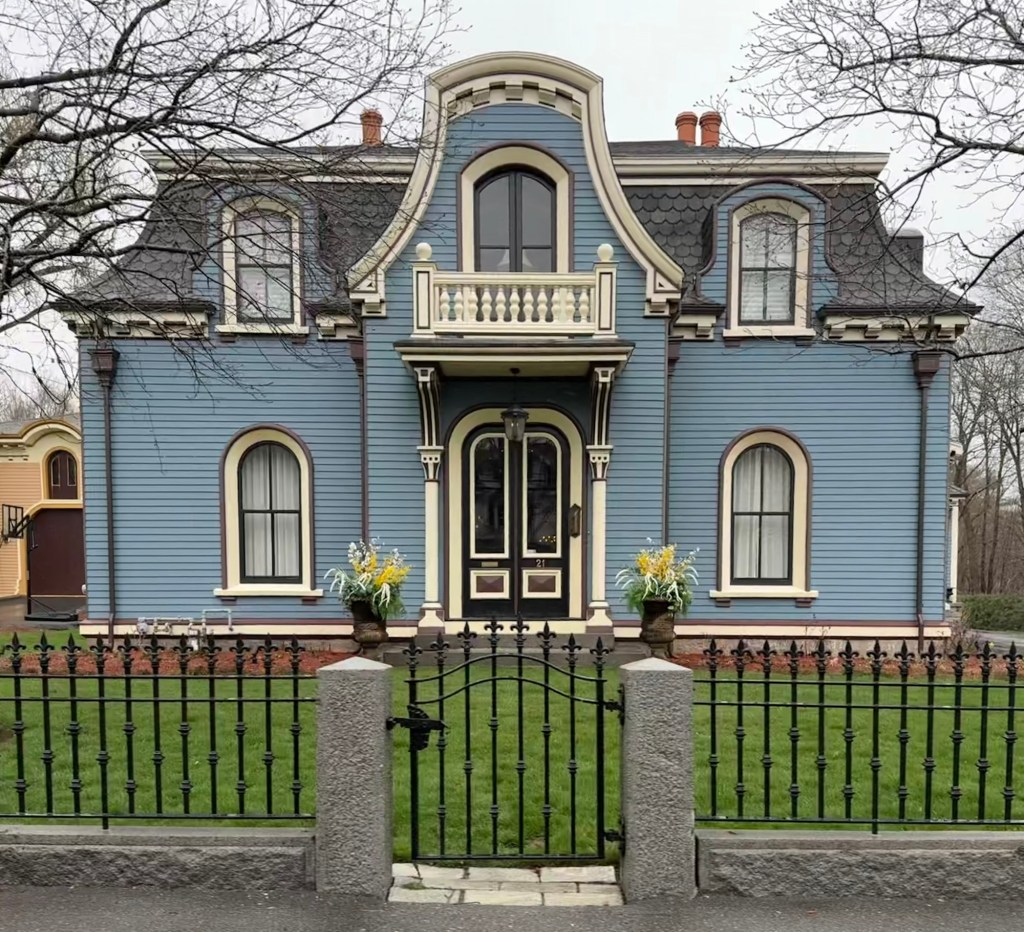
Griggs House // 1891

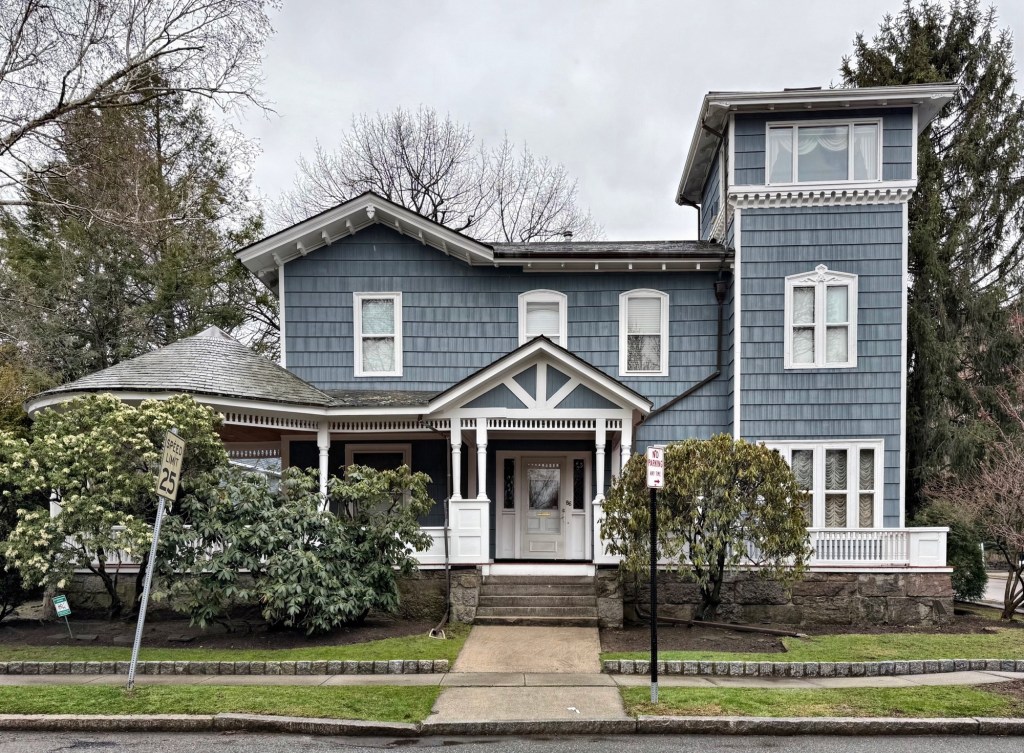
This fancy Queen Anne Victorian residence can be found in Chicopee Falls, Massachusetts, and is one of the most unique houses in the industrial city. This property was built and occupied by David B. Griggs, a builder in Chicopee under the firm D. B. Griggs & Sons. The firm was very busy in the late 19th and early 20th centuries, as Chicopee saw rapid industrial prosperity followed by a population boom, growing in population from over 9,000 residents in 1870 to 36,000 in 1920. Builders like David Griggs were able to grow to upper-middle class and buy property on desirable house lots and build large homes for their family, as was the case here. David Griggs died in 1896, five years after his home was built, and the property was inherited by his son, Millard Griggs. While the residence is covered in vinyl siding (original siding and trim is likely underneath the present siding), the house retains much of its original fabric including the brackets, delicate open friezes at the porches, and four-story tower.

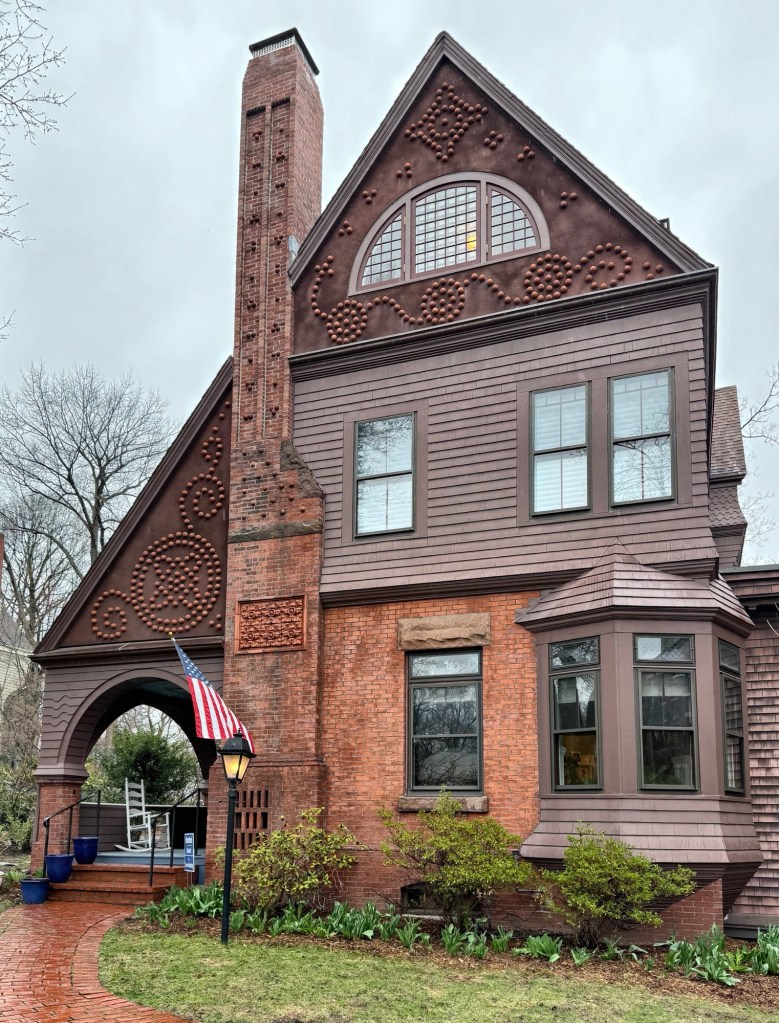
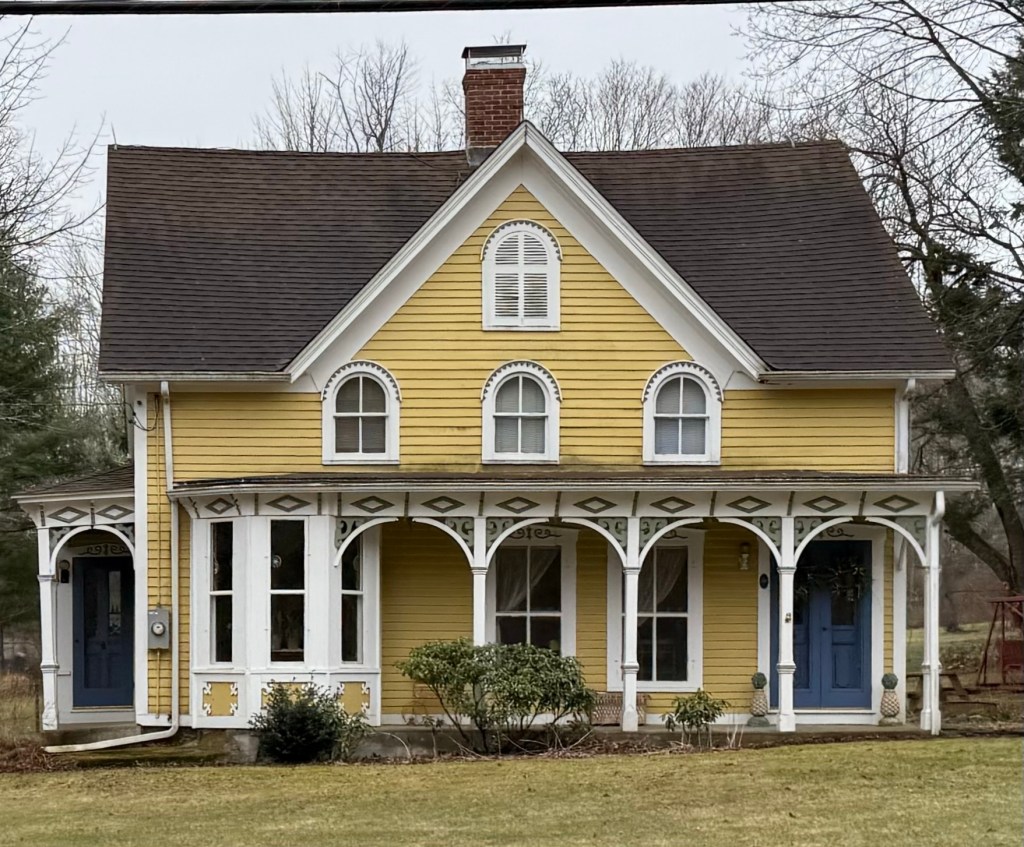
Justin and Sarah Spaulding House // 1886

Justin Spaulding and his wife, Sarah (Cooley) Spaulding erected this house on Springfield Street in Chicopee, Massachusetts, in 1886, and would later be known for their philanthropic gifts to their home city. Justin Spaulding (1838-1906) was a wealthy grocer who amassed a small fortune operating stores in the industrial Lower Pioneer Valley. The Spaulding House is one of the finest Queen Anne style buildings in Chicopee, and is notable for its asymmetrical form, tower, ornate gable detailing, porches with original balustrade, and the chimney with inlaid terracotta tiles. Justin Spaulding died in 1906, and Sarah C. Spaulding (1840-1907) would pass away a year later. They had no children. In her will, Sarah bequeathed funds for the first purpose-built library in Chicopee and money for a memorial chapel in a local cemetery. The Spaulding House was acquired by the Academy of Our Lady of the Elms (now Elms College), moved to its present location in 1920, and was converted to the Office of Admissions for the College. Besides the need for a new coat of paint, the house is lovingly preserved!

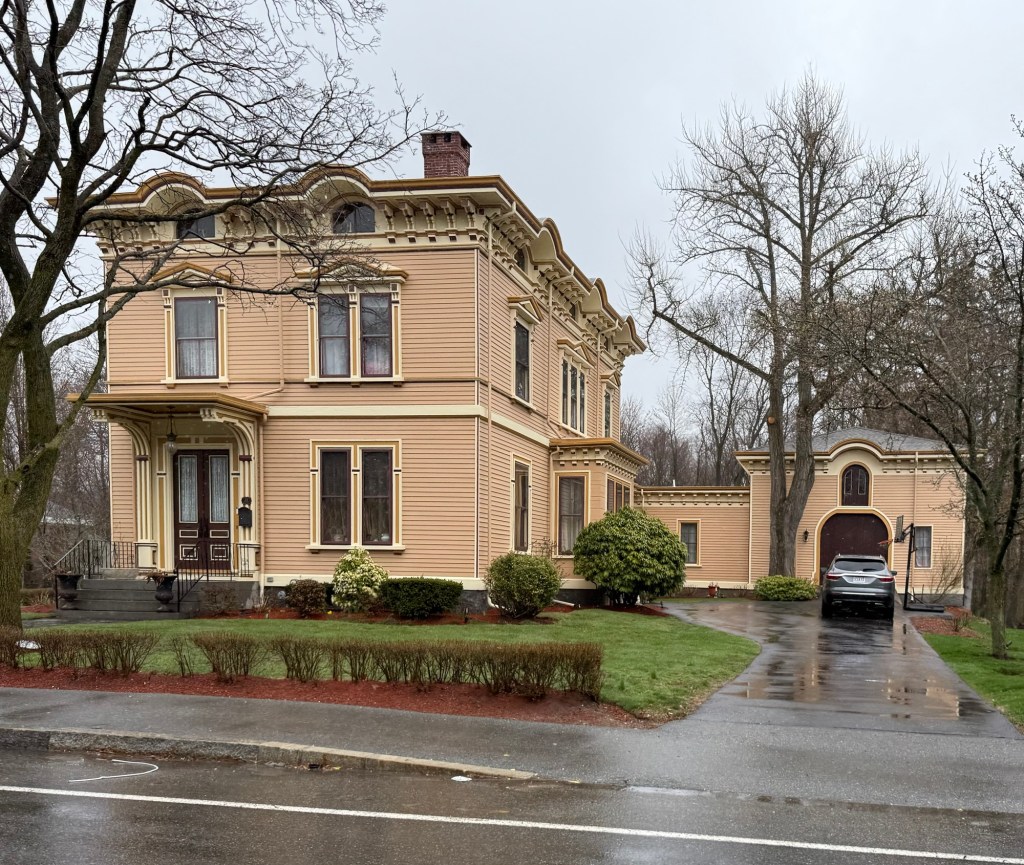
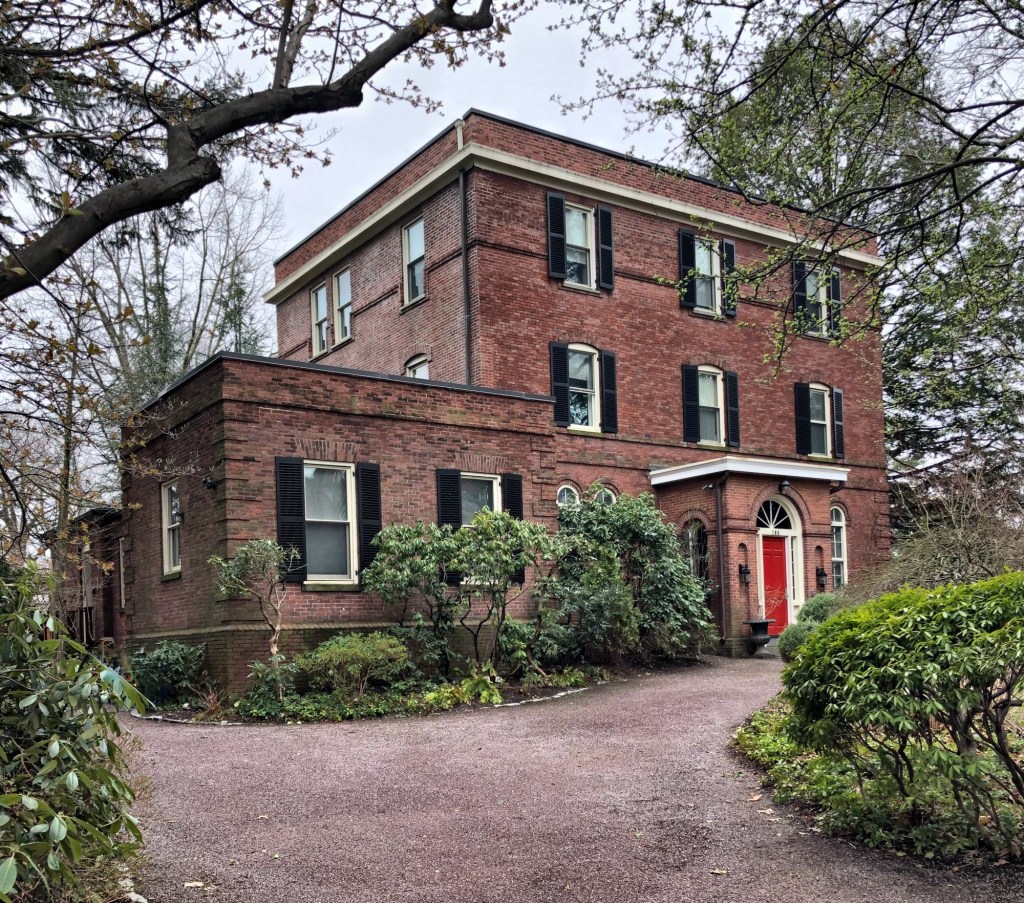
Foster Mansion // c.1860

This large, Italianate style mansion is located at 417 Sharon-Goshen Turnpike, the main street through West Cornwall Village, Connecticut. The house was built around 1860 for Stephen Foster (c.1816-1863) a merchant and railroad contractor who had constructed a portion of the Housatonic Line railroad near West Cornwall. He and his wife, Helen, previously lived in a Greek Revival style house across the road until they moved into this stately residence. Mr. Foster would not get to enjoy his mansion long as he died in 1863. Helen Foster remained at the home until her death in 1875. The high-style Italianate residence was likely built by master-carpenter C. W. Marsh, and features all the hallmarks of the style: overhanging eaves with decorative brackets, elaborate window and door moulding, two-over-two windows, and a shallow hipped roof with dormer.

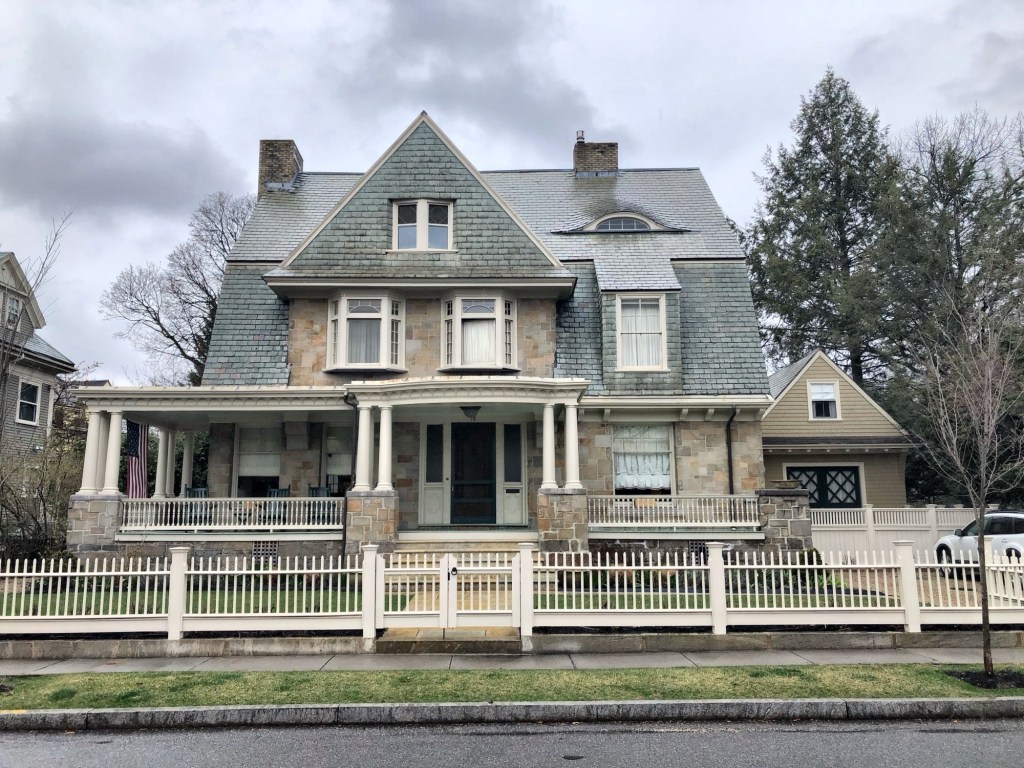
Thurston-Gladding House // 1886

One of the finest Victorian-era houses in the College Hill/East Side area of Providence is this stately residence at 30 Stimson Avenue, known as the Thurston-Gladding House. The house was built for newlyweds, John Russell Gladding and Ellen (Thurston), on land given to the couple by Ellen’s father, attorney and judge, Benjamin Thurston. John Gladding was originally from Connecticut and the couple split their time between their Providence home and a country retreat in Thompson, Connecticut. Architects Thomas J. Gould and Frank W. Angell (Gould & Angell) furnished the plans for the home, which features a ground floor faced with textured brick and walls adorned by continuous wood shingle siding above. A rounded tower, projecting bays and dormers, and a elongated front porch break up the massing into a pleasing composition.

Newton D. Arnold House // 1888

Behold, a Queen Anne Victorian house in all her majesty! This residence, the Newton D. Arnold House, is located at 24 Stimson Avenue in Providence, and is one of the finest examples of its style in the city. Newton Darling Arnold (1843-1916) was employed at the Rumford Chemical Works serving as Treasurer for the company and from this position, accepted additional roles in banking and fraternal organizations, like the Freemasons, where he served a term as Grand Master of the secret society. Newton and his wife, Caroline, purchased a house lot on Stimson Avenue and set out to build one of the finest homes in Providence. To achieve this, they hired local architect, Edward I. Nickerson, to furnish designs. The Arnold House is covered by clapboard and shingle siding beneath a complex, cross-gabled roof of slate, with an ornate gable end and two-story corner tower.

Goodwin House // 1886

Queen Anne style buildings are a favorite as they are all so different and interesting to look at with all the ornate details, asymmetrical forms, varied siding, and rooflines. This example on Stimson Avenue in Providence is a great example of the style. The house was built in 1886 for William P. Goodwin (1852-1921), a banker, insurance executive, and author, who never married and lived in the house with his sister, Sarah Jane Goodwin. Keeping it in the family, William hired his brother, architect, John Bray Goodwin, to design his residence, with little expense spared. Interestingly, the house is built right at the street with its front door accessed up a stair and a brick base adjacent to enclose the property from the sidewalk, creating a high garden wall with gate. There is so much to look at here, it is spectacular.

Joseph Fletcher House and Stable // 1889

With red brick and slate siding and all the finest trimmings, this house looks like a present wrapped under the Christmas tree! The Joseph Fletcher House is located at 19 Stimson Avenue in Providence, Rhode Island, and is an excellent example of a Queen Anne residence with the innovative use of siding types often found in the style. The residence was built in 1889 for textile manufacturer, Joseph Edward Fletcher (1866-1924), the son of wealthy, English-born manufacturer, Charles Fletcher. The Fletcher house and adjacent stable were designed by Stone, Carpenter & Willson, one of the most prestigious architectural firms in New England at this period. It is believed that the site was developed by Charles Fletcher, as a wedding gift to his 23-year-old son and daughter-in-law following their marriage. The home was recently sold, and the interiors are as stunning as the exterior!

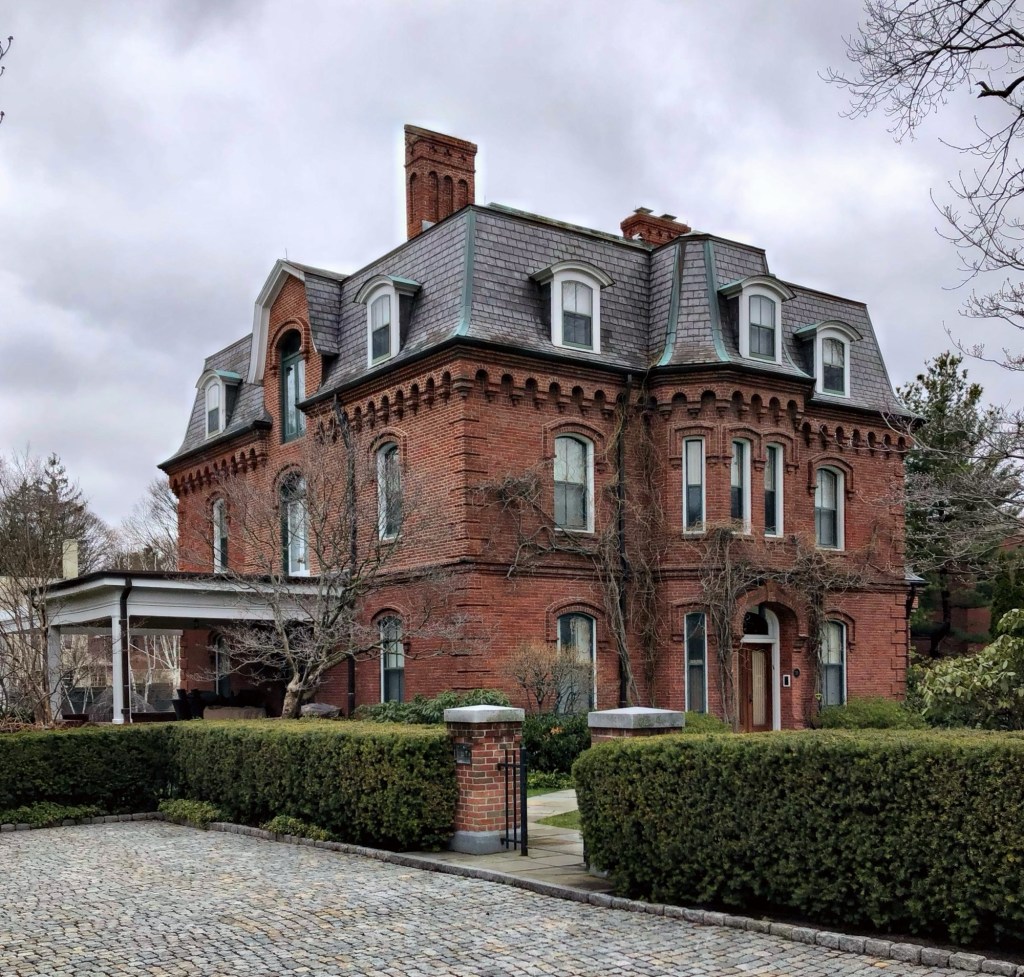
Byron Thomas Potter House // c.1896

The Byron Thomas Potter House is located at 8 Stimson Avenue in Providence, Rhode Island, and is one of the city’s few examples of the Beaux Arts architectural style in a single-family residence. The Beaux Arts style uses an Italian Renaissance form and materials (Roman bricks), classical Greek and Roman decorative elements like columns and balustrades, and a steep mansard roof punctuated by large dormers, to create a grand and imposing architectural statement. The house was designed by 1896 by local architect, Edward I. Nickerson, who was known for his use of traditional forms in an unconventional manner, with emphasis on ornament and differing materials; with this house being a great example of his work in his later years. The residence was built for newlyweds Helen Sheldon Potter and Byron Thomas Potter, a real estate and insurance broker. The residence is now occupied by the International House of Rhode Island, a non-profit that provides a “home away from home” for international students, scholars, professors, researchers, and their families by providing a venue for folks of different backgrounds, ethnicities, and life experiences to celebrate our similarities and differences and envision a world in which friendship and understanding beat anonymity, isolation, and ignorance. The world needs more of this.

Crandall-Peirce House // 1890

Talk about a statement! This pink, Shingle style house is located at 140 Brown Street in the fashionable College Hill section of Providence, Rhode Island. Built in 1890 for William and Katherine Crandall, the Shingle style residence stands out for its cantilevered two-story tower and corner rounded porch at the corner, and of course the continuous shingled facades. William T. Crandall was the president of the Union for Christian Work, a religious charitable institution which provided aid to needy children in Providence. Augustus R. and Ida W. Peirce would board in the home for decades, and were likely family, inheriting the property upon Katherine’s death in 1932. The architect could not be located.

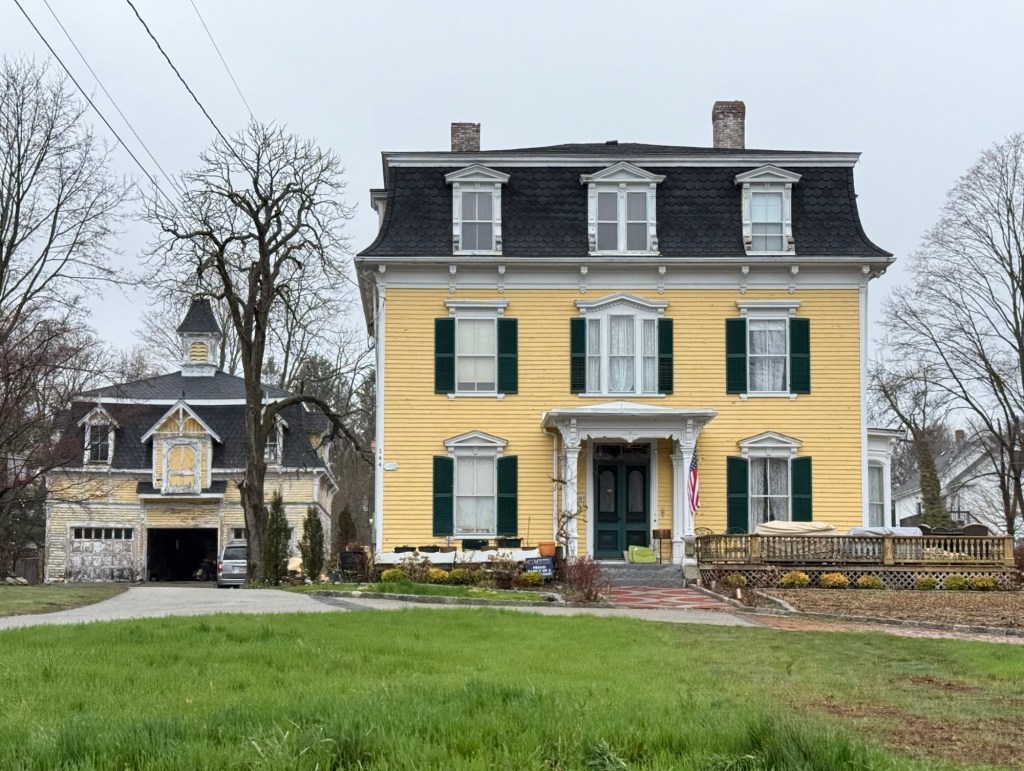
William H. Glover House // 1873

William Hurd Glover (1834-1910) was a prominent lumber dealer and builder in Rockland, Maine, and would built this house as his residence on Talbot Avenue. Mr. Glover hired architect Charles F. Douglas, to furnish the plans for the Second Empire style mansion. While covered in vinyl siding, the handsome residence features a slate mansard roof, central tower, delicate projecting portico over the entrance, and decorative window hoods and brackets. The house is one of the best examples of the style in Maine, even with the later siding.