Unitarian Universalist Association Headquarters // 1926

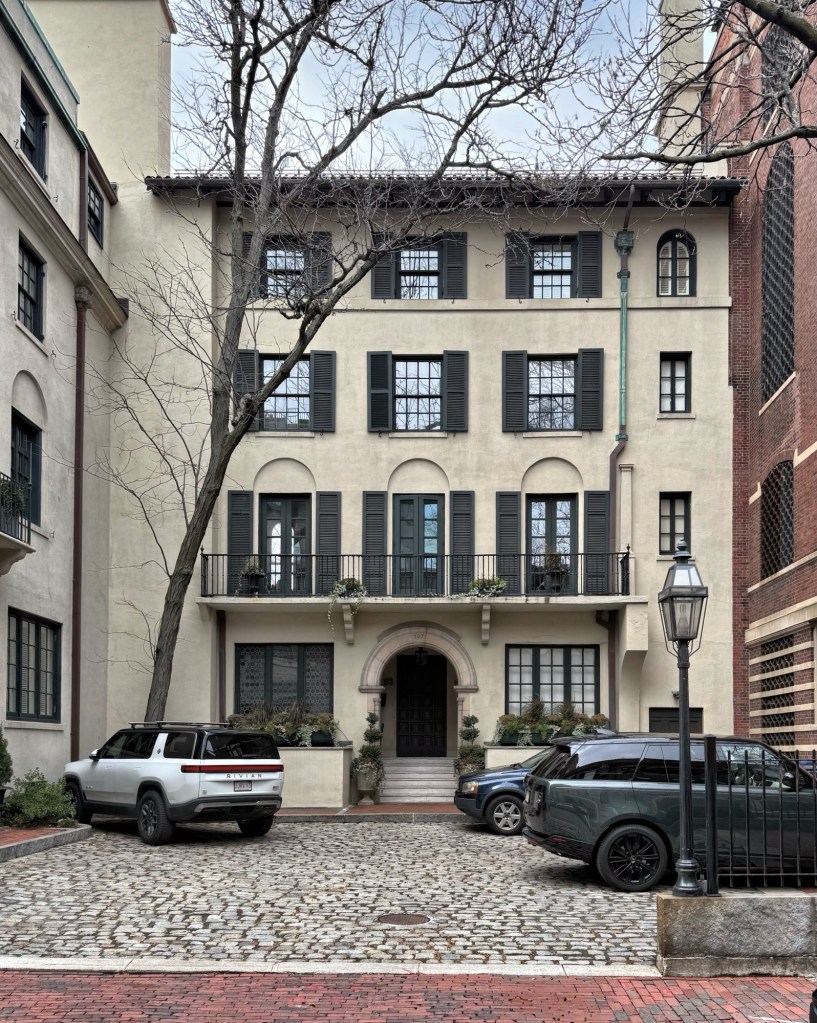
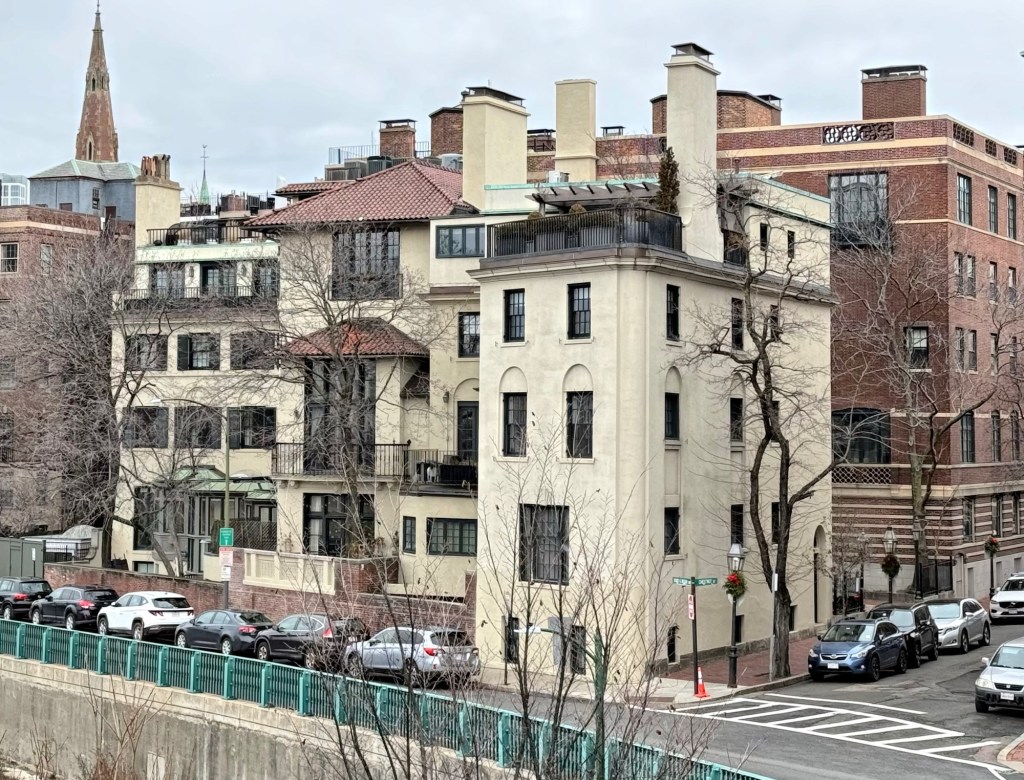
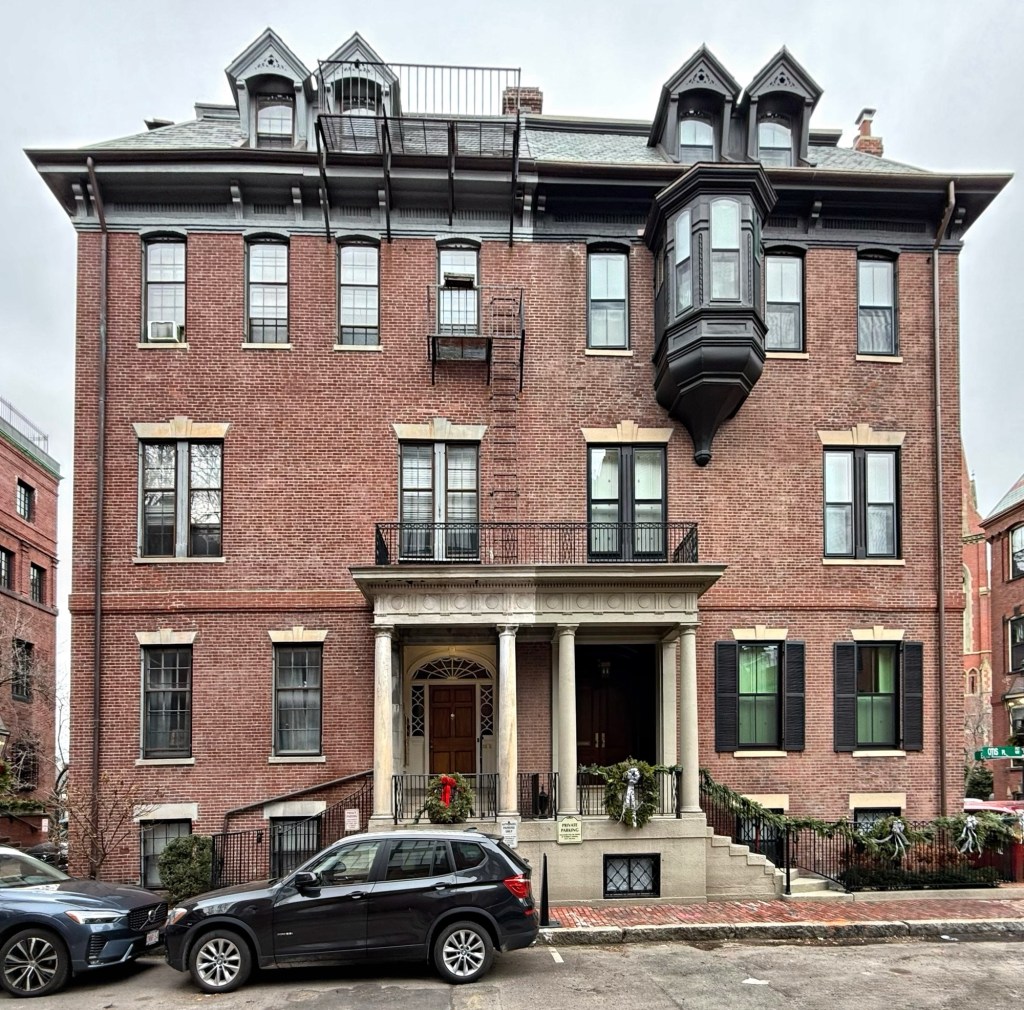
The American Unitarian Association (AUA) opened its first headquarters in Boston in 1865, forty years after the organization was founded. Since its founding in 1825, the AUA occupied several locations but eventually took residence in a Richardsonian Romanesque style building constructed in 1886 at the corner of Beacon and Bowdoin streets. The handsome structure, designed by Robert Swain Peabody of the firm, Peabody and Stearns, served as the headquarters for the association until it was demolished in the 1920s for the expansion of the Hotel Bellevue. In 1926, the AUA purchased an 1840s townhouse and demolished it, replacing the former residence with their new building to serve as a church headquarters office building. The American Unitarian Association hired the Boston architectural firm of Putnam and Cox to design their building, which employed architectural similarities to the adjacent 1820s townhouses designed by Cornelius Coolidge. The six-story building is constructed of red brick with a two-story granite base with piano nobile with a balcony, all under a mansard roof with dormers. The American Unitarian Association sold their Beacon Street building and relocated to a new headquarters on Farnsworth Street in the Seaport/Fort Point area of Boston in 2014. The 1926 building was converted to high-end luxury condominiums.

Tuckerman-Parkman Mansion // 1825

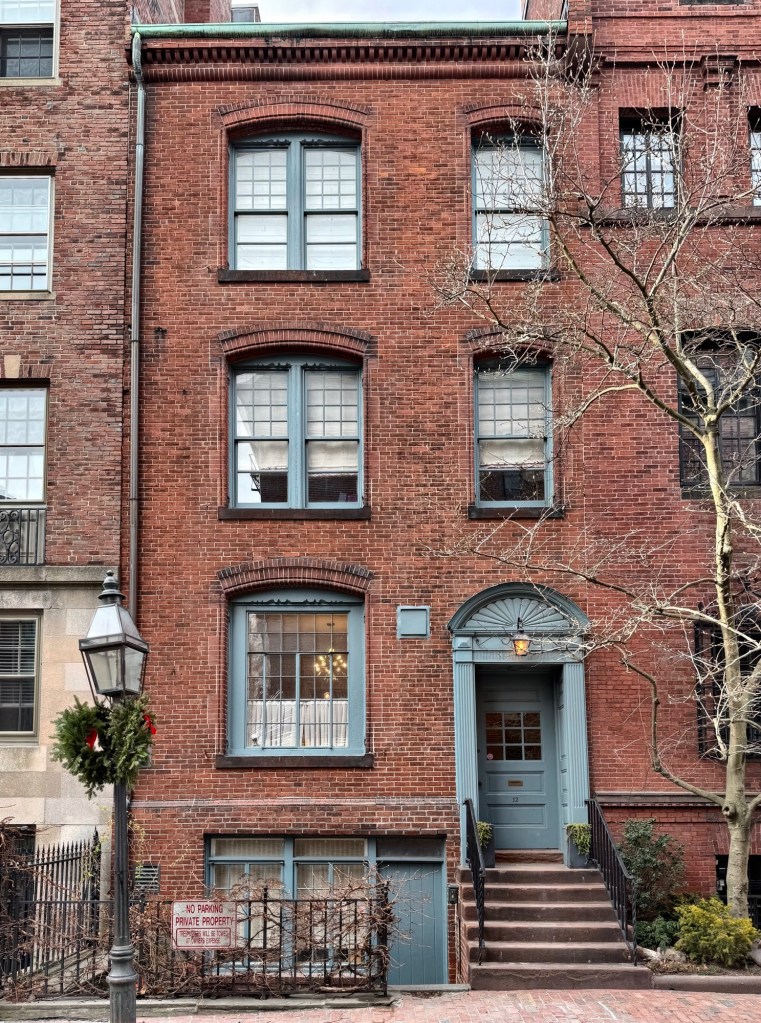
The Tuckerman-Parkman Mansion at 33 Beacon Street, like its neighbor, was built in 1825 from plans by architect, Cornelius Coolidge, in the Greek Revival style. The residence was originally purchased by Edward Tuckerman, a wealthy merchant and father of Professor Edward Tuckerman, a prominent lichenologist for whom Tuckerman Ravine on Mount Washington was named. Tuckerman Sr. lived here at 33 Beacon Street until his death. The next owners, Mrs. Eliza Parkman and her son, George Francis Parkman (1823-1908) moved here after the brutal murder and following sensational trial of her husband, Dr. George Parkman (1790-1849). The 1849 trial of Parkman’s murderer, Professor John White Webster of the Harvard Medical School, was called the “case of the century”. Professor Webster owed Dr. Parkman a substantial sum of money. The professor lost patience with Parkman’s constant reminders that his payment was long overdue and killed Parkman in a rage, dismembered his tall, lanky frame and concealed the body parts in a wall of a Harvard Medical School laboratory. With the help of a janitor, Dr. Parkman’s body was discovered. A murder trial ensued, and Professor White was found guilty and subsequently hung. The murder trial has been widely cited as one of the earliest uses of forensic evidence to identify a body. Seeking refuge from the attention and pain from the loss of the family patriarch and trial, Ms. Parkman and her son, George, moved to this home in 1853. Widow, Eliza Parkman died in 1877 and George F. Parkman lived in this home until 1908. In his will, Mr. Parkman bequeathed his mansion and over $5 Million to the City of Boston for the maintenance of the Boston Common. The Tuckerman-Parkman Mansion was restored by the City of Boston in 1972 and used almost exclusively as the Mayor’s residence until 1984. The house is now the official reception hall of the Mayor’s office and appears much as it did when built 200 years ago.

Russell-Bradlee Mansion // 1825

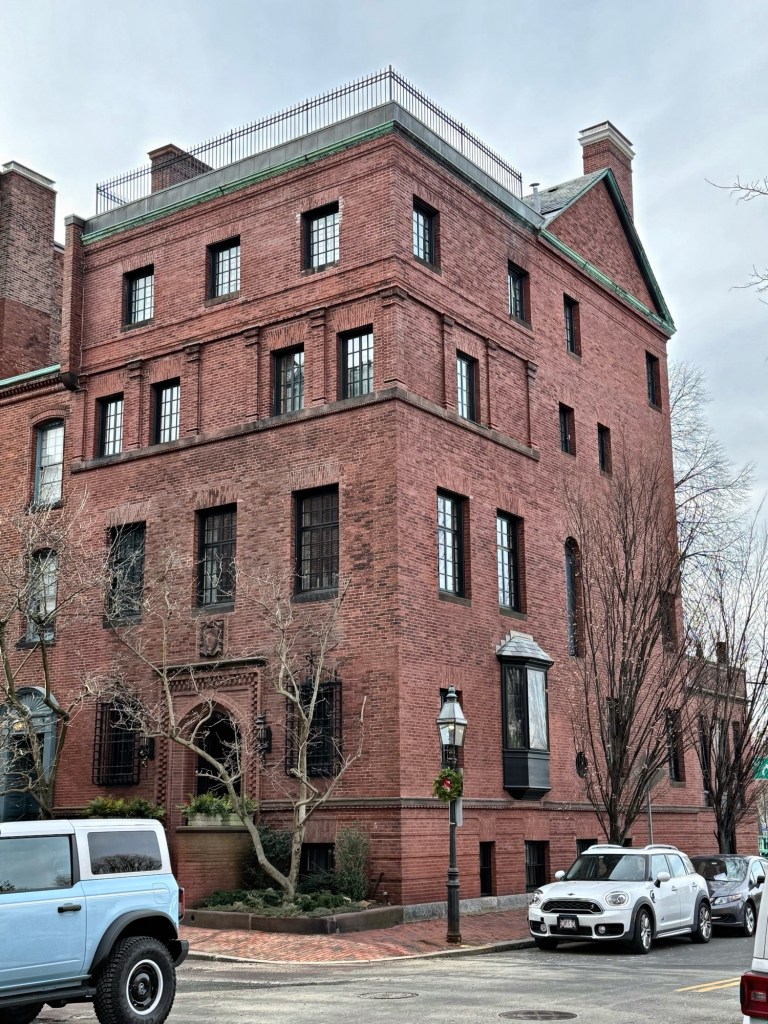
The land at the corner of Beacon and Joy streets in Boston’s Beacon Hill neighborhood was once John Hancock’s west pasture for his grand manor (razed in 1863) until 1819, when subdivision of the Hancock estate began following his death. In 1821, Israel Thorndike, one of the leading land speculators of early nineteenth-century Boston, began buying out the Hancock heirs and house lots overlooking the Boston Common were sold to John Hubbard and George Williams Lyman, who hired architect Cornelius Coolidge, to build some stately Greek Revival townhomes for wealthy Boston elites. The house at the corner of Beacon and Joy streets, 34 Beacon Street, was built in 1825 for Nathaniel Pope Russell, a leading Federal period China Trade merchant. By 1850, James B. Bradlee, a wealthy merchant, had acquired the property. Bradlee’s grandson Ogden Codman Jr., the influential late nineteenth- and early twentieth-century architect and interior decorator, was born in this house in 1863. Codman later collaborated with novelist and tastemaker Edith Wharton on ‘The Decoration of Houses‘, a book that had an enormous impact on the direction of interior design when it was published in the 1890s. Little, Brown and Company, a publishing company founded in 1837, purchased the former residence and moved their headquarters here in 1909. The publishing company sold the property in 1997, and it converted to a single-family home. In 2007, the residence was purchased by Northeastern University and has since been the President’s House.

George P. Davis House // 1893

This Colonial Revival style single-family house on Emerson Street in Brookline Village, was built in 1893 on the former Emerson Estate, that was subdivided by the heirs of Elijah Emerson as Brookline Village filled in during the late 19th century. This house was seemingly built for Elijah’s daughter, Sarah C. Emerson Davis, and her husband, George Peabody Davis from plans by Boston architect, Olin Wesley Cutter. Of particular note, the Davis House features a symmetrical facade with round entry portico, Palladian stairhall window with leaded glass, and pedimented dormers, with the center dormer in a swan’s neck pediment. The oddly proportioned pilasters with tiny Ionic capital on the corners of the house were great to see as well!

Charles H. Rutan House // 1889

In 1889, prestigious architect Charles H. Rutan, purchased a house lot from the heirs of Elijah Emerson on the family estate and oversaw construction of his own residence in Brookline Village. Charles Hercules Rutan (1851-1914) was born in New Jersey and moved to Brookline in 1874, where he worked in the office of famed American architect, Henry Hobson Richardson. After Richardson’s death in April 1886, at the height of his career, Rutan and two other senior employees, George Foster Shepley and Charles Allerton Coolidge, took charge of the studio and its uncompleted work. Soon after, the three formed a formal partnership, Shepley, Rutan & Coolidge, to succeed to Richardson’s practice, and in 1887 moved the office to Boston. From his new position as head of a prominent firm, Rutan designed this handsome Queen Anne/Shingle style mansion for his family, where he lived until he suffered from two debilitating strokes in 1912, when he and his wife moved to an apartment on a nearby street. Besides the blue color, the house retains so much of its original architectural integrity and is one of the most significant residences in the Brookline Village neighborhood.

Emerson-Arnold Double-House // c.1875

Elijah Carleton Emerson (1807-1888) was a wealthy Boston merchant, making his fortune as Director of the Second National Bank and President of the Middlesex Horse Railroad. In his late 30s, he purchased land in Brookline Village and established his estate on the land that is now Emerson Park in 1846. The bucolic setting of his estate included a pond, boathouse and adjacent cottage, but as the surrounding area continued to develop with easy access to Downtown Boston, Elijah Emerson began to develop his estate. Emerson began to build residences on his land for supplemental income. This handsome Stick style double-house was built around 1880 and rented by Mr. Emerson and was eventually occupied by his granddaughter, Tirzah and her husband, George Francis Arnold. The residence features a mansard roof, decorative brackets and applied stickwork, and a handsome porch with turned posts.

Elijah Emerson House // 1846

Elijah Carleton Emerson (1807-1888) was a wealthy Boston merchant, making his fortune as Director of the Second National Bank and President of the Middlesex Horse Railroad. In his late 30s, he purchased land in Brookline Village and established his estate on the land that is now Emerson Park in 1846. The bucolic setting of his estate included a pond, boathouse and adjacent cottage, but as the surrounding area continued to develop with easy access to Downtown Boston, Elijah Emerson began to develop his estate. Emerson began to build residences on his land for supplemental income. After his death in 1888, Emerson’s two daughters, Sarah Davis and Tirzah Snell Arnold, maintained the property but sold it to the Town of Brookline in 1907. Brookline officials originally sought to build a new library on the site, but ultimately built it on Washington Street in 1910. The Emerson house and carriage barn were moved across Davis Street from their original site and Emerson Park was established. Emerson’s granddaughter, Mrs.Katharine Snell and her husband, inventor, Cullen B. Snell moved into the relocated house. The Elijah Emerson House (and carriage house at the rear) is a great, well-preserved example of a suburban Boston residence designed in the Gothic Revival style.

Graham Apartments // 1904

This handsome, and unique example of a three-decker in the English Revival style is located on a corner lot at 128 Davis Avenue in the Emerson/Brookline Village neighborhood of Brookline, Massachusetts. Built in 1904 from plans by architect and genealogist, J. Gardner Bartlett, whose work focused on colonial New England and the English origins of colonial families. Trained as an architect at MIT, he gave up architecture for genealogy, but still occasionally designed buildings in the Boston area. The building here was developed for Richard Graham, an Irish immigrant, who along with his wife, operated a laundry business in the village. The use of a shingle and stone entrance porch and entrance bay with stucco half-timbering and diamond-pane casement windows stand out architecturally as one of the few examples of a three-decker built in this style in New England.

Brookline Village Fire Station // 1908

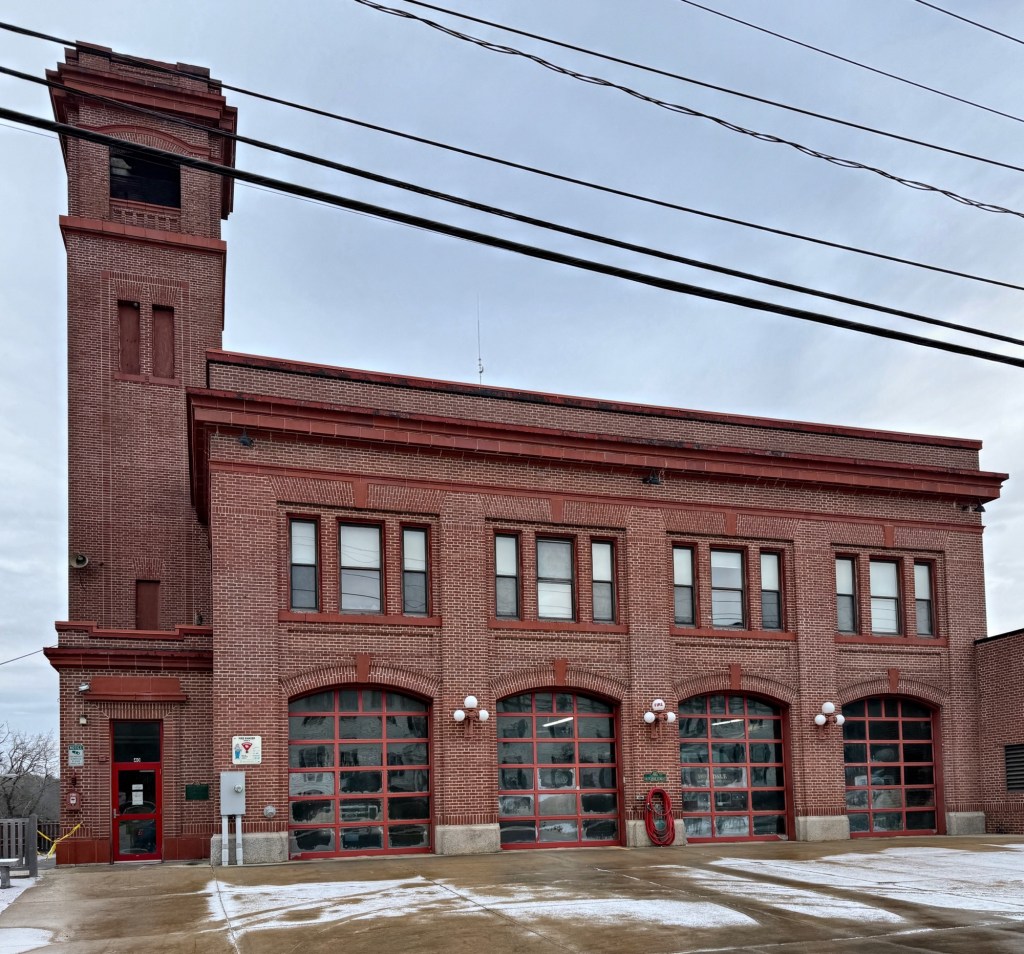
Built in 1908 from plans by the architectural firm of Freeman, Funk and Wilcox, the Brookline Village Fire Station is a massive, red brick structure with white sandstone trim and a copper cornice. Located on Washington Street in Brookline Village, the station stands out for its high-style Italian Renaissance style, notable for the use of brackets and off-center hose-drying tower with arched openings. The station replaced an earlier hose house, and was built before the fire department shifted to fire trucks, but was adapted later for larger fire apparatus. The station is one of the finest in the Boston area, and the Town of Brookline have done a great job preserving this significant structure.

John D. Sturtevant Double-House // 1892

John Dean Sturtevant (1816-1889) was born in New Hampshire and became engaged there in local woolen mills, quickly growing into advanced management positions. He operated woolen mills in New Hampshire, Maine, Connecticut, and Massachusetts, and settled in Brookline where he had access to other states via excellent rail service. When he died in 1889, John’s heirs inherited their late-father’s properties, and began to develop them as Brookline filled out in the last decades of the 19th century. This handsome double-house at the corner of Cypress and Waverly streets was built in 1892 by the Sturtevant Estate, who rented the property to two families of wealthy residents. The Sturtevant Double-House is a landmark and exceptionally preserved example of the Queen Anne style, with varied siding, asymmetrical forms, complex roofline with dormers, and applied ornament in the form of carved panels.