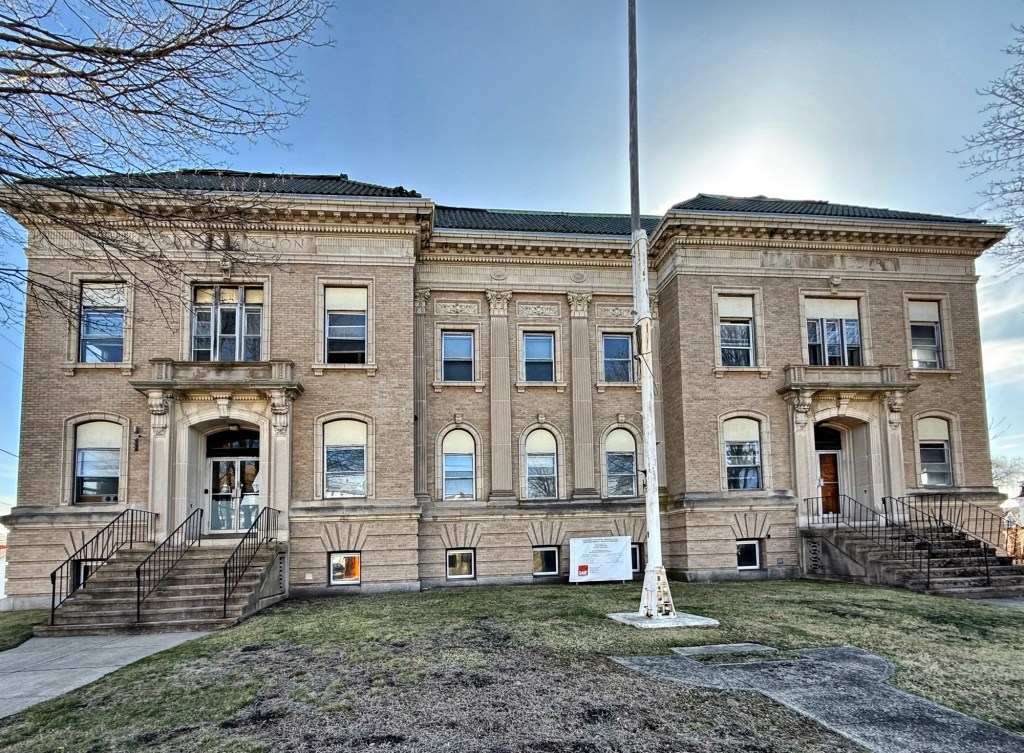
Central Falls Police Station and Courthouse // 1914

Built jointly by the city of Central Falls and the state of Rhode Island, this Classical Revival style building originally contained both the local police station and a district court house. The symmetrical building was designed by William R. Walker and Son, a Providence design firm, who specialized in large, civic and commercial buildings. The gray brick building is trimmed with limestone and stands three-stories under a hipped tile roof capped by decorative cresting. In the 1970s, the courthouse moved out and the entire building came into the ownership of the City of Central Falls and is today owned by the Central Falls Redevelopment Agency, which frankly worries me about the future of this important building. Does anyone know about plans for the building? 

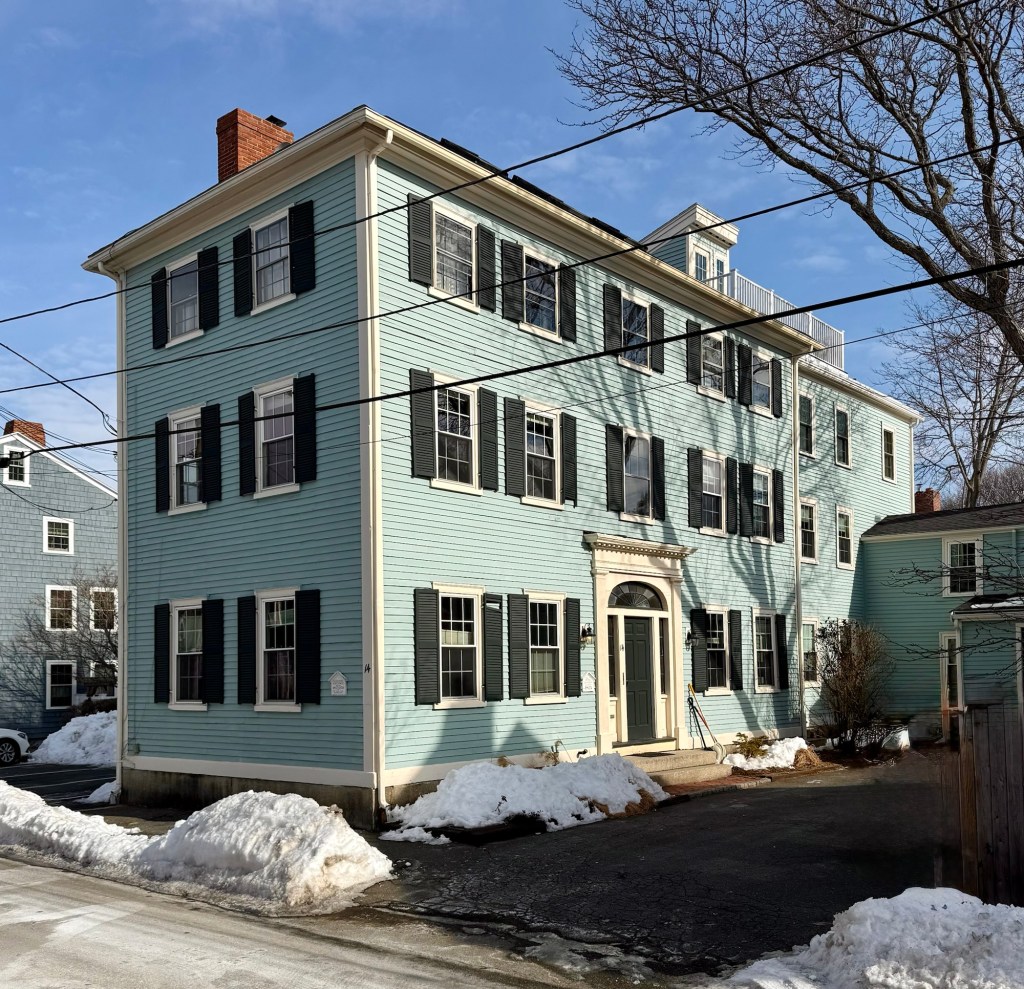
Edgerly-Hawthorne House // 1824

The Edgerly-Hawthorne House on Mall Street, near the Salem Common, is one of the most significant residences in Salem, Massachusetts. The Federal style residence was built in 1824 for Peter Edgerly, who ran a teamster/trucker or distribution company in Downtown Salem. After a decade, Peter became insolvent and the property was sold to Joseph Leavitt, a wealthy property owner in Salem. This house is best-known as the place where Salem-born Nathaniel Hawthorne and his family, lived from 1847 to 1850, and where he wrote The Scarlet Letter. It was in the room closest to the street, on the third floor, that Hawthorne sat at his desk and wrote the American masterpiece of fiction. After publishing The Scarlet Letter, Hawthorne moved to the Berkshires and then back to Concord, Massachusetts, never to live in Salem again. In c.1906, the Edgerly-Hawthorne House was photographed by the Detroit Publishing Company highlighting some landmarks in town. The house looks nearly identical from when it was built over 200 years ago!

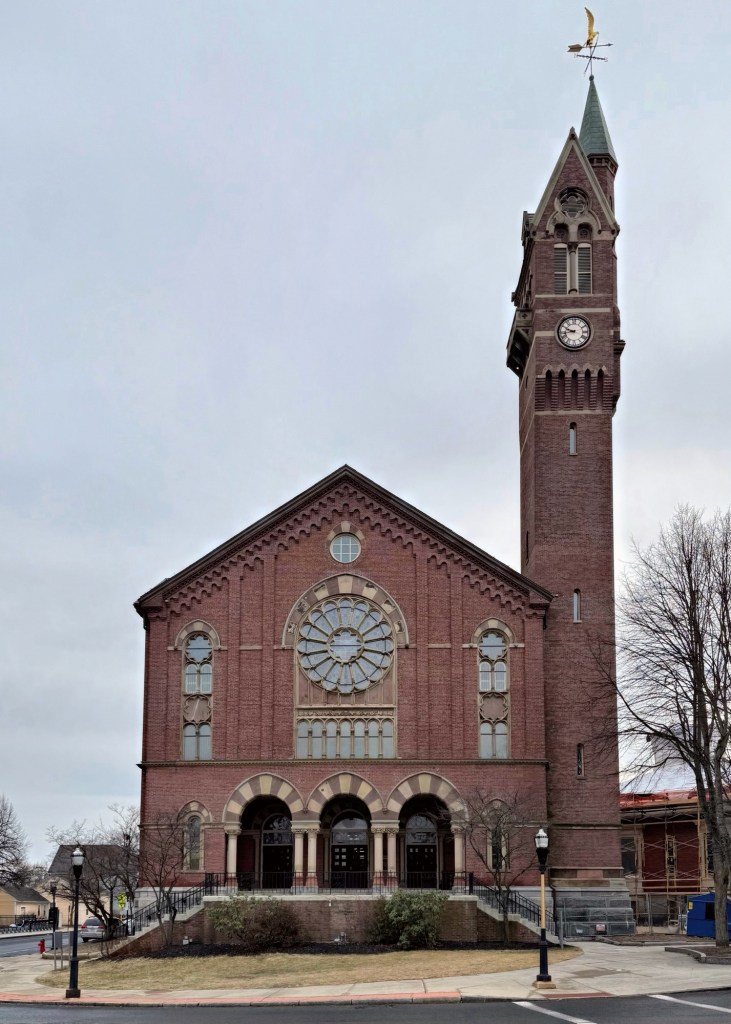
Chicopee City Hall // 1871

Chicopee, Massachusetts, was first settled in the early 17th century and incorporated as a town in 1848. Originally part of Springfield, Chicopee grew rapidly in the 19th century, fueled by industrialization and following immigrants arriving to the city to work in factories there. Many of these ethnic groups established cultural centers and built churches, creating the diverse and architecturally unique city we see today. Sadly, like many other 19th century industrial cities, many of the factories closed or relocated in the mid-late 20th century. While the loss of industry harmed the local economy, Chicopee is poised for growth and rebirth as the second largest city in Western Massachusetts, and anchored by its great architecture. The Chicopee City Hall, built in 1871, is one of the region’s finest buildings and one of a handful built in the Romanesque Revival style. The present building was constructed on land the City purchased in 1869 from the Ames Manufacturing Company, a major employer in town with mill buildings nearby along the river. Architect, Charles E. Parker of Boston, was hired to design the new building which is said to have been loosely modelled after the Palazzo Vecchio, the historic town hall of Florence, Italy. The City of Chicopee have been great stewards to their historic City Hall, undergoing numerous restoration projects in the past decades.

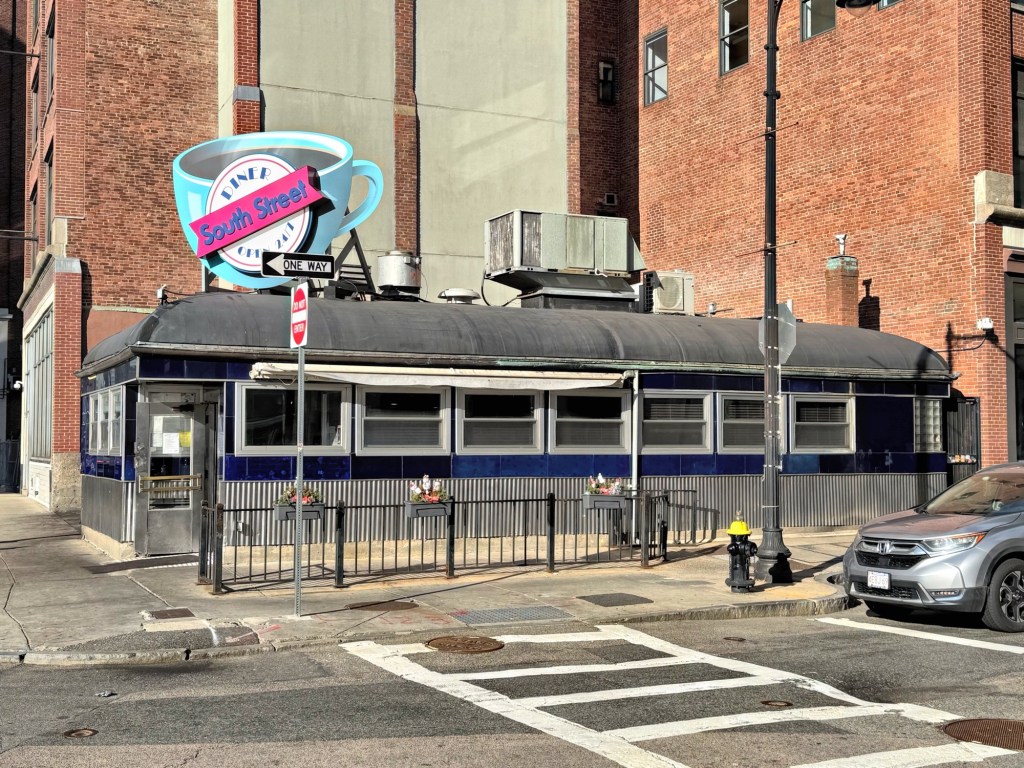
South Street Diner // c.1947

One of the hidden gems of Boston can be found tucked away in the Leather District, one of the last remaining diner cars in the city, this is South Street Diner. At this site, at the corner of South and Kneeland streets, a diner car has existed since about 1935. In 1947 the present diner car was built by the Worcester Lunch Car Company and moved on this site as the Blue Diner opened, possibly named after its patrons, largely blue-collar workers. The diner would be renamed the South Street diner in 1992, a name that has stuck ever-since. The diner attracts tourists, nearby workers, and drunken college students, serving as a much-needed melting pot for people of different backgrounds to grab a good bite to eat.

John E. Calhoun House // c.1912

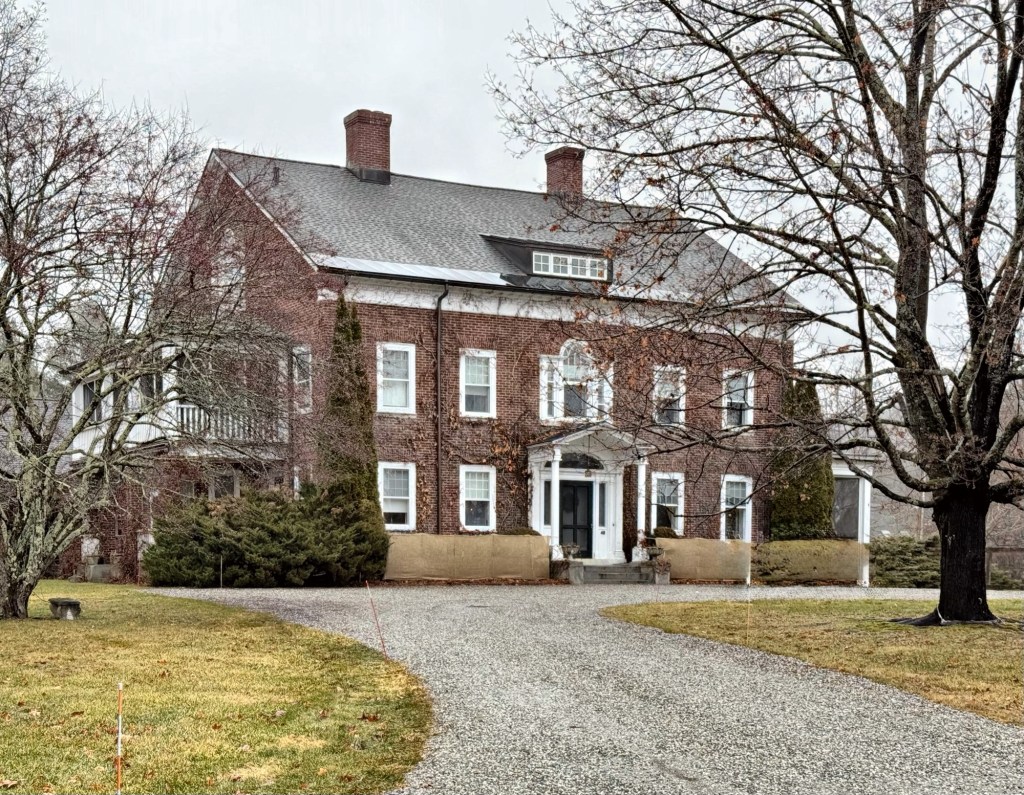
This site, in the heart of Cornwall village, was once occupied by an early 19th century Federal style residence, built by the wealthy Pierce family in town. The Pierces’ large home was acquired by John E. Calhoun (1859-1940), a successful New York businessman, who retreated to his father’s hometown for summers away from the city. In 1911, a fire destroyed the home, which was wood-frame construction. This event mobilized Mr. Calhoun, who was untrained but interested in architecture, to begin planning a new summer residence, but of fireproof construction. Calhoun is said to have designed (and funded) the town’s library just years before, and modeled his home in line with the Colonial-era residences in the village, just larger and of brick. From the 1950s through the 1990s, the house was occupied by the headmaster and administration of the local Marvelwood School, but was re-established as a private home, a use that remains today.

Yale University – Yale Art Gallery Building // 1928

One of the most visually stunning and unique buildings in New England is the 1928 Yale Art Gallery building, which is connected to Street Hall (last post) via a skybridge over High Street. Completed in 1928, the Yale Art Gallery was designed by relatively little-known, but significant 20th century architect, Egerton Swartwout. Swartwout graduated from Yale College in 1891 with a B.A. degree and with no formal architecture training, was hired as a draftsman at the illustrious firm of McKim, Mead & White in New York before running his own office, Tracy and Swartwout. Built in a Gothic Renaissance style inspired by Italian buildings such as the Bargello in Florence, the sandstone masonry structure commands the prominent site with a corner tower and facade fronted by five gothic arched windows. Inside, visitors are transported to a historic Italian art museum within the Gallery Wing, with the full-height Gothic windows with walls, floors and ceilings restored and lined in stone.

Yale University – Chittenden Hall // 1889

As Yale’s 1842 Old Library was outgrown by larger class sizes and a growing college library collection, overseers began planning for a new library annex which could support the programming. Architect J. Cleaveland Cady was commissioned to design the Chittenden Memorial Library, this underappreciated structure, which is today hemmed into a cramped space in the yard between a later addition (Linsly Hall) and McClennan Hall. The Chittenden Memorial Library was a gift to the college by U.S. Representative Simeon Baldwin Chittenden in memory of his only daughter, Mary Chittenden Lusk (1840-1871) nearly two decades following her untimely death. The handsome Richardsonian Romanesque style library building also retains its original stained glass window titled, “Education” by Louis Tiffany which today is in the building’s former reading room, now a large classroom. When the library moved to a new building in the 1930s, Chittenden Memorial Library became Chittenden Hall and is classroom space.

Pope-Barron Townhouse // 1871

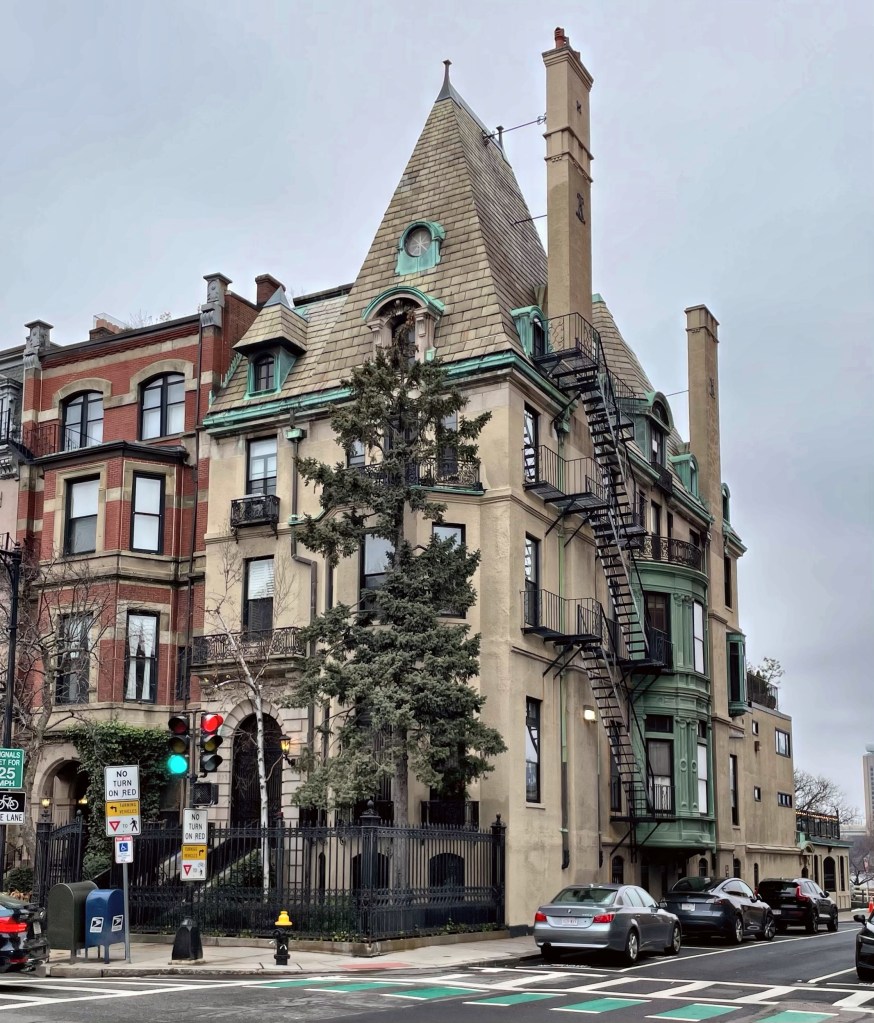
Merry Christmas to those who celebrate! As there is no snow on the ground in Boston, I wanted to share a house with a prominent pine tree, which resembles an oversized urban Christmas tree on Beacon Street. This house at the corner of Beacon and Fairfield streets was built in 1871 by architect and builder Frederick B. Pope on speculation. It did not sell as quickly as he would have hoped, and it took two years for it to finally sell at public auction in 1873. The relatively modest brick Second Empire style house was bought and sold numerous times until March 1905, when the residence was purchased by Clarence Walker Barron, a prominent publisher and journalist. In 1903, he purchased Dow Jones & Company and from 1912 until his death in 1928, he was its president. During this period, he was also de facto manager of The Wall Street Journal, he expanded its daily circulation, modernized its printing press operations, and deepened its reporting capabilities. In 1921, he founded Barron’s National Financial Weekly, later renamed Barron’s Magazine. Barron pushed for the intense scrutiny of corporate financial records, and for this reason is considered by many to be the founder of modern financial journalism. In 1920, he investigated Charles Ponzi, inventor of the “Ponzi scheme”. His aggressive questioning and common-sense analysis helped lead to Ponzi’s arrest and conviction. For his Boston townhouse, Barron hired the firm of Cram, Goodhue & Ferguson to completely renovate the dwelling with an extra floor, limestone facades, and more bold roof design.

Skinner Mansion // 1886

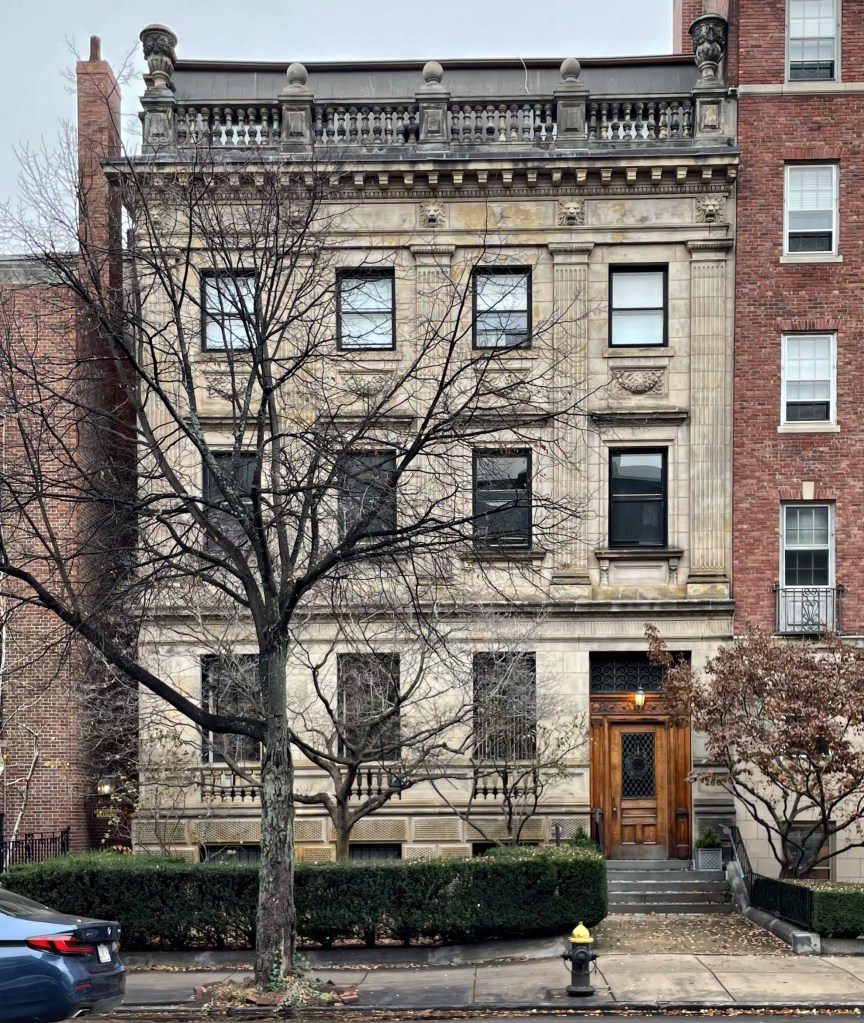
One of the best early examples of Classical Revival residential architecture in Boston can be found on Beacon Street in the Back Bay, at the Skinner Mansion. Built in 1886 for dry goods merchant Francis Skinner (1840-1905) and his wife, Eliza Blanchard (Gardner) Skinner (1846-1898), the house exhibits a light stone facade with carved detailed panels and fluted pilasters, stone parapet with urns at the corners and a decorative wooden entrance with ironwork. Eliza was the sister-in-law of Isabella Stewart Gardner who herself lived on Beacon Street until erecting what is now the Isabella Stewart Gardner Museum, in the early 1900s. The Skinners hired architects Shaw & Hunnewell to furnish plans for their Boston townhouse, and they did not disappoint! Today, the mansion is occupied by medical offices, but retains the residential charm and character as it is located in a local historic district.

Sturges House // 1855

One of the finest examples of Italianate residential architecture in the state of Connecticut can be found in Fairfield in the Sturges House. This property was built in 1855 for Henry Sturges Thorp a New York City merchant from a Fairfield family and his wife Julia Ann Thorp, likely as a summer home away from the city. Both Henry and Julia died in 1869 and the property was acquired by Frederick Sturges, the son of Jonathan Sturges a wealthy businessman and philanthropist who had a stunning early Gothic Revival mansion nearby. The Sturges House as it is now known, is a landmark example of the Italianate style with broad overhanging eaves, massive belvedere at the roof, round arched windows, and the tripartite blind windows capped by an elaborate cornice.

Tudor Barn // c.1845

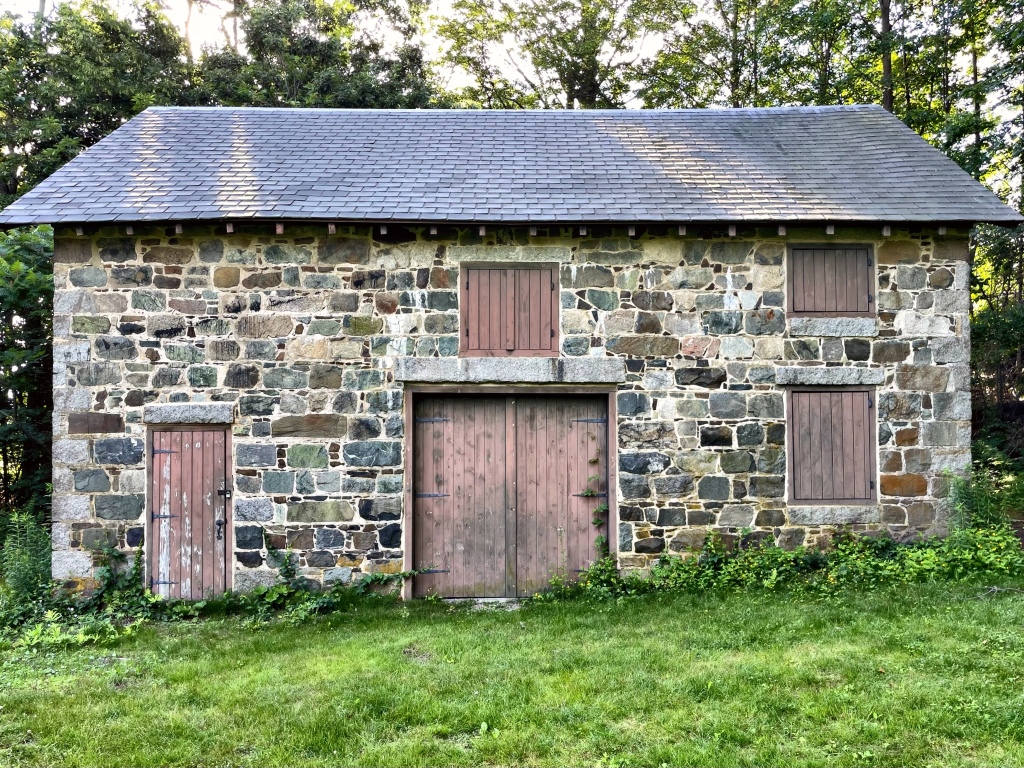
Built in the 1840’s as a carriage barn, and once attached to a nearby mansion now gone, this barn sits near the eastern shores of Spot Pond, a major feature in the Middlesex Fells Reservation, just north of Boston. The barn sits in Stoneham, Massachusetts, and was a part of Frederic Tudor’s rural estate out in the “country”. Frederic Tudor is best known as Boston’s “Ice King”, he was the founder of the Tudor Ice Company and a pioneer of the international ice trade in the early 19th century. He made a fortune shipping ice cut from New England ponds to ports in the Caribbean, Europe, and as far away as India and Hong Kong. After the turn of the 20th century, many of the buildings surrounding Spot Pond were razed as to secure the watershed, protecting the surrounding town’s drinking water. Frederic Tudors large estate was razed, but the barn survived. Years of deferred maintenance and lack of preservation by the late 1990’s made the old barn threatened with demolition. This was exacerbated by a fire damaging the roof and in 2003, a wall collapsed. Local preservationists rallied together to acquire funding (both private and public grants) to restore the building. It remains a highlight on the walks around Spot Pond and Middlesex Fells Reservation, and is a visual link to the earlier days in what was once remote “Boston”.

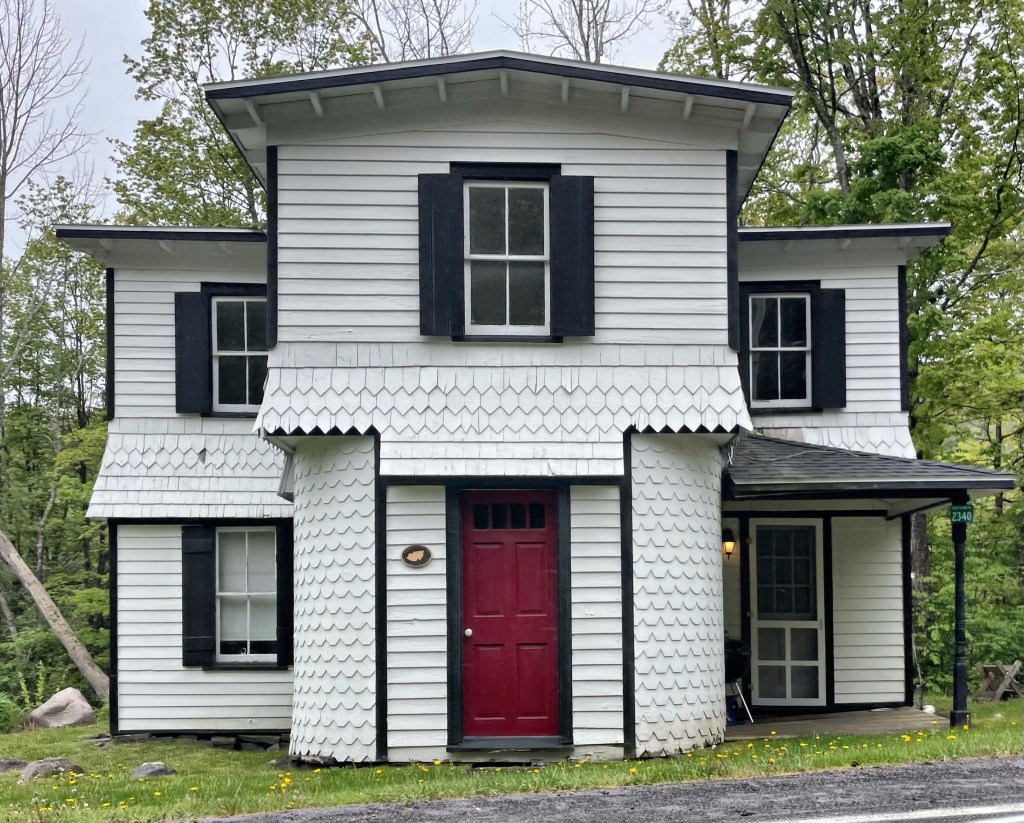
Old Platte Clove Post Office // c.1885

Believe it or not, but I occasionally venture out of New England, and a favorite place of mine to explore is Upstate New York. On a recent trip, I ended up driving through the tiny town of Hunter, New York, located in the middle of the Catskills. This charming little building was constructed c.1885 as the Platte Clove Post Office. The building was constructed to serve a rural portion of the town and was built as an early mixed-use building with the post office at the ground floor and small residence upstairs for the postmaster to live. The exterior cladding features both shingle and clapboard siding with overhanging eaves. The post office here ceased by 1911 and the use reverted solely to residential.

Oliver Walker House // c.1809

The Oliver Walker House in Kennebunkport Village is one of the better examples that shows how overlapping architectural styles can work really well on an old house (when done right)! The original house was constructed around 1809 for Oliver Walker (1788-1851), a sea captain who later accepted the call and became a deacon for the South Congregational Church in Kennebunkport. Walker died in 1851 and the Federal style property was inherited by his only surviving child, daughter Susan, who had married Portland native, Captain John Lowell Little. Under their ownership, the traditionally designed Federal house was modernized with fashionable Italianate style modifications of the decorative brackets and an enclosed round arched window in the side gable. A later Colonial Revival projecting vestibule adds to the complex, yet pleasing design. I have a feeling the interiors of this house are just as spectacular as the exterior.

William Binney House // 1859

Another of Providence’s stunning monumental Italianate mansions on College Hill is this, the William Binney House, which was built in 1859 from plans by local architect Alpheus C. Morse. In the mode of an Italian Renaissance palace, it features a strong, symmetrical facade, molded string course, classic trim detail at the windows and doors in brownstone, and a shallow hip roof. The original owner, William Binney (1825-1909) was born in Philadelphia and became a prominent attorney and became involved on various boards, building more wealth. Additionally, he was elected as member of the Rhode Island Assembly and the Providence City Council continuously 1857 to 1874. The house’s rear ell and wooden bay would provide sweeping views to Downtown Providence even today from the aptly named Prospect Street.

Jethro Coffin House // 1686

Here it is… The oldest house in Nantucket! The Jethro Coffin House dates to 1686, and when it was built, Nantucket’s English population totaled several hundred, and the native Wampanoag outnumbered them by at least three to one. The home was built seemingly as a wedding gift from twenty-three-year-old Jethro Coffin (1663–1727) to his new sixteen-year-old wife Mary Gardner (1670–1767). The marriage merged two of the old Nantucket families and was built on Gardner family land out of lumber transported to the island from Exeter, New Hampshire, where Jethro’s father, Peter Coffin, owned timberland and a saw mill. The First Period house has small windows of small panes of glass as the material was shipped from England at high cost. The large central chimney would heat the entire home on cold winter nights. Mary and Jethro sold their Nantucket dwelling to Nathaniel Paddack in 1708 and moved to Mendon, Massachusetts, when Jethro inherited property there. By the late nineteenth century, the house was abandoned (for some time it was used as a barn) and had fallen into disrepair. A Coffin family reunion held on the island in 1881 renewed interest in the property and off-island members of the family bought the old Coffin House. The Nantucket Historical Association acquired the house in 1923, and four years later, Historic New England), commenced an extensive reconstruction in an attempt to return the house to its historic appearance. It remains a location of pride for residents and visitors to the island to this day.