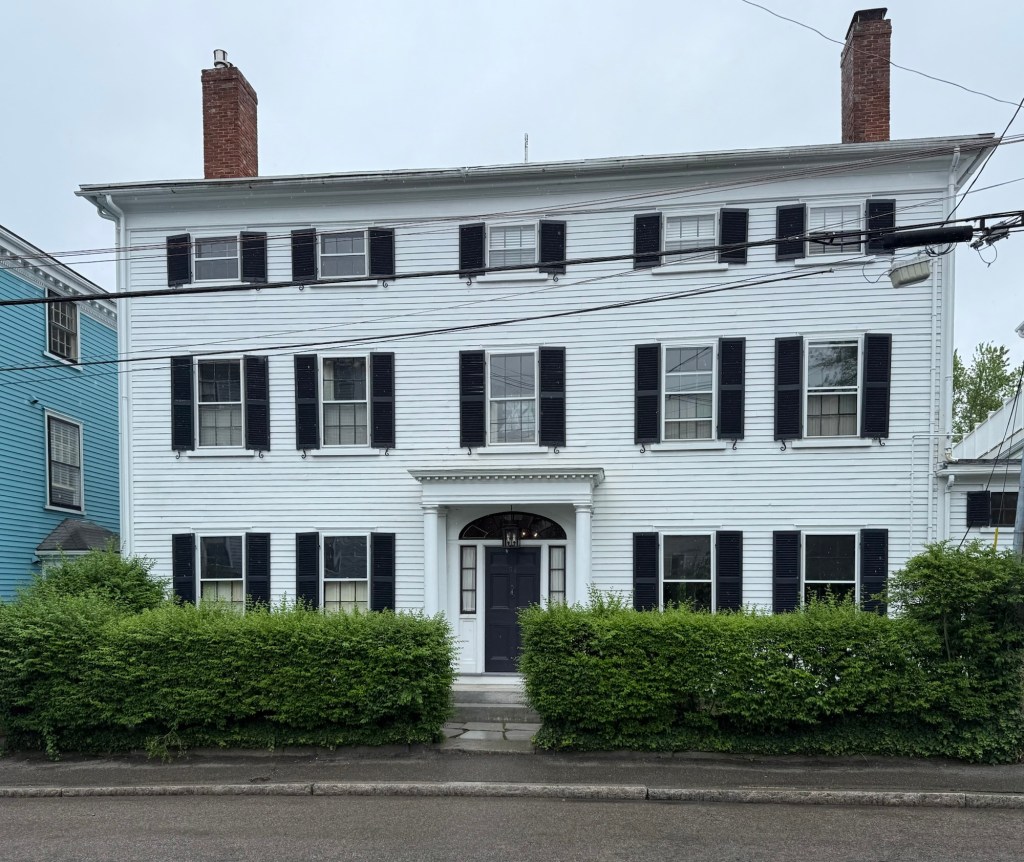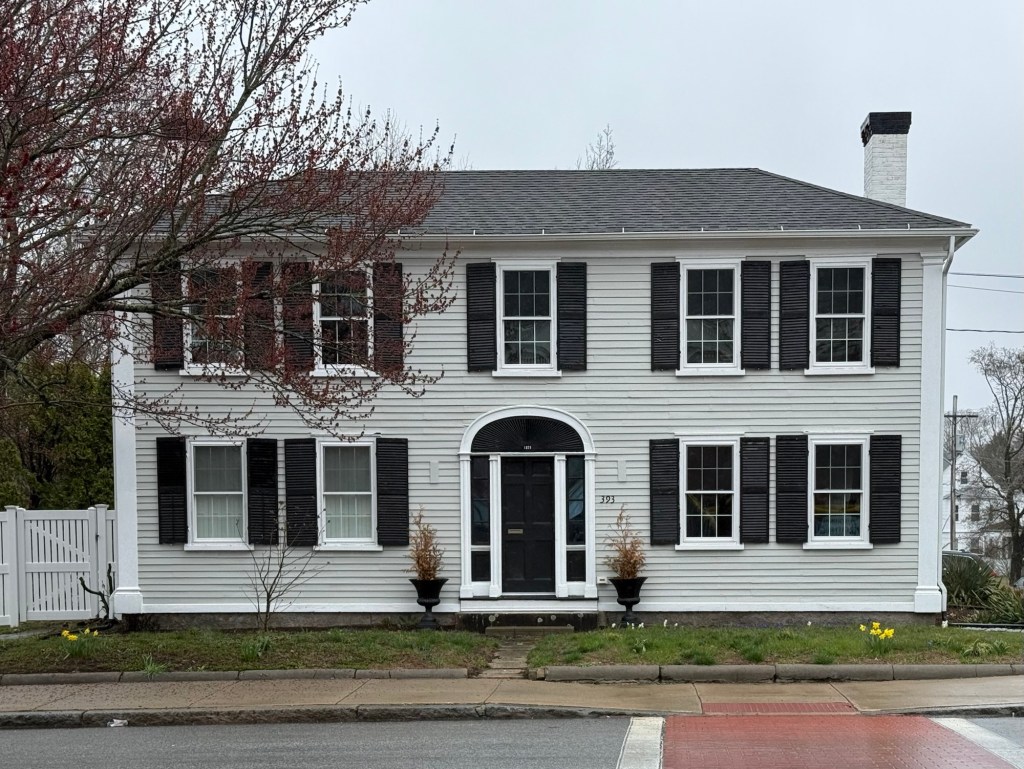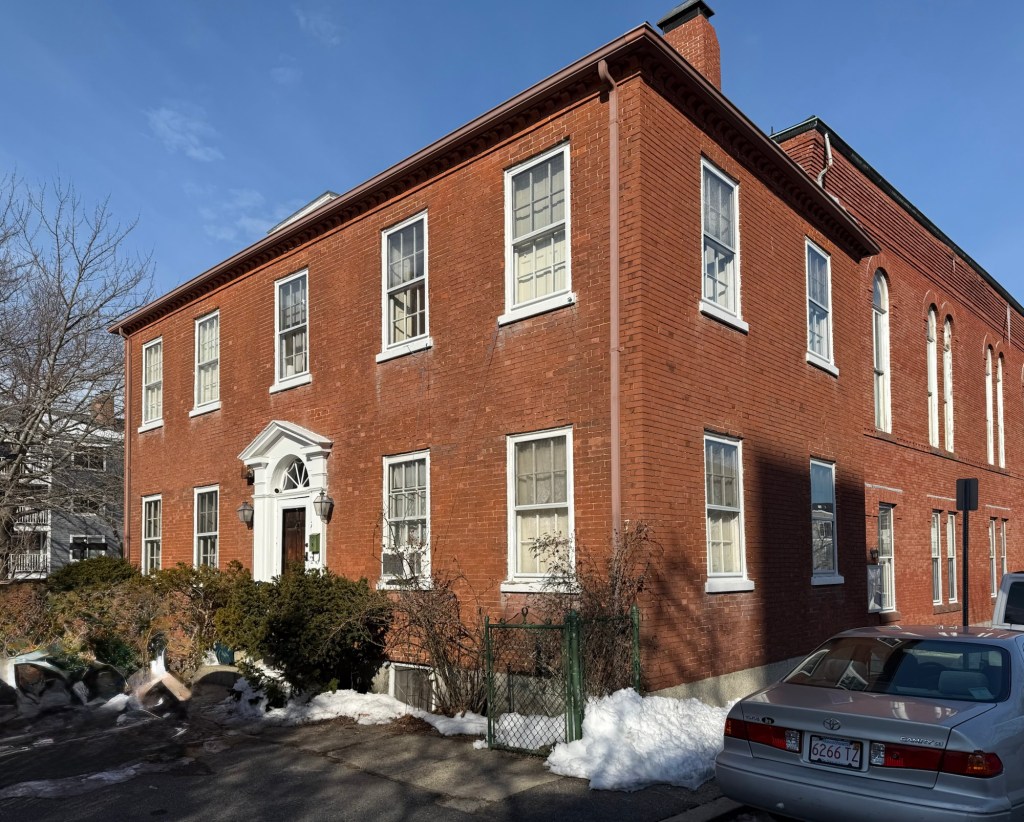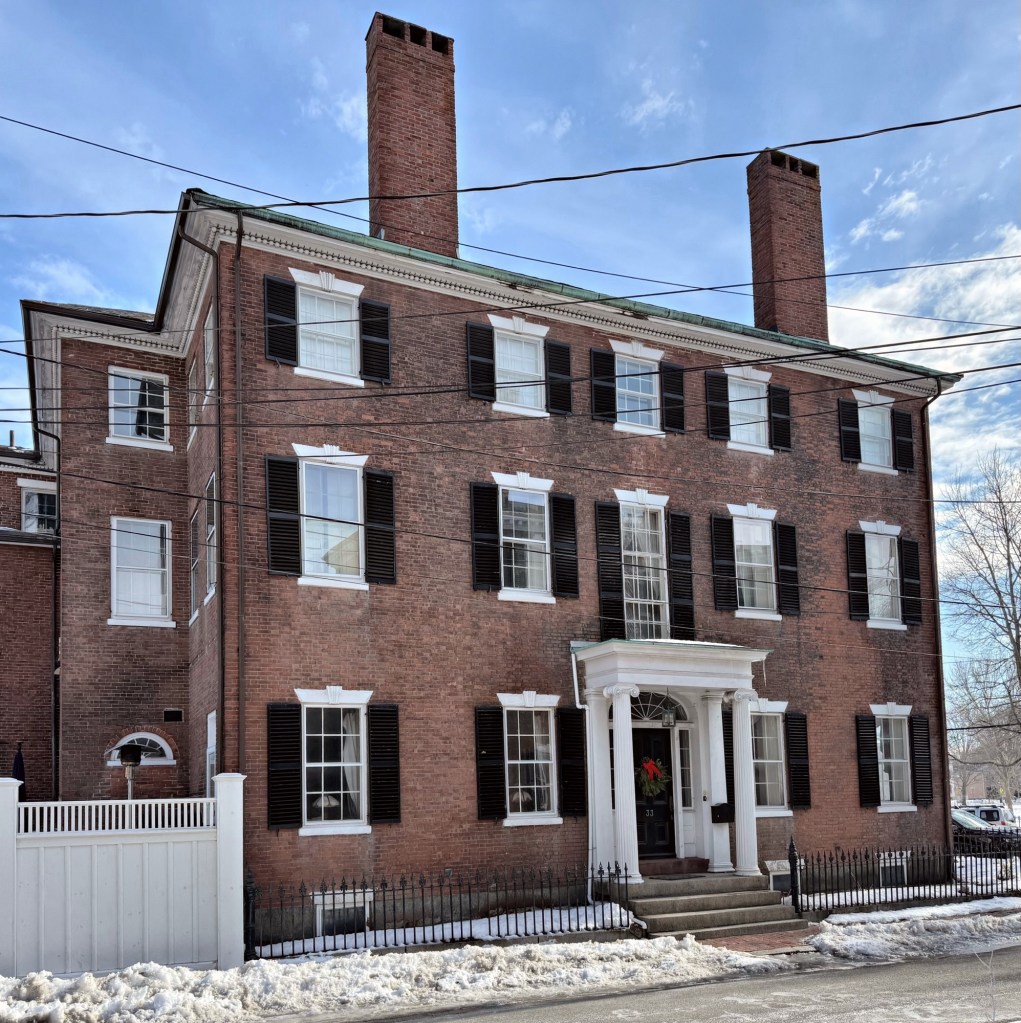
Tavern Club // c.1819

This is your reminder to get lost and explore your city or town. Tucked off Boylston Street sits Boylston Place, a short, dead-end way that is passed by thousands every day, many not knowing about the little enclave of surviving 19th century buildings there. This Federal period house was built in the 1810s for Beza Tucker (1771-1820), who rented the home to boarders until his death in 1820. Tucker bequeathed the house to the American Society for Educating Pious Youth for Gospel Ministry, a nationwide association formed in 1815 with the goal of providing financial support to men seeking a theological education. The Society sold the house in 1834 to Reverend Nehemiah Adams, when he became pastor of the Essex Street Church in Boston. Since 1887, the building has been the home to the Tavern Club, a venerable Boston social and dining club that was invite-only. Presidents in the early years included William Dean Howells, Charles Elliot Norton, Henry Lee Higginson. Inside, the eclectic English pub/Colonial interior with its cozy atmosphere included dining rooms, sleeping accommodations for guests, and a small theatre for annual club productions. The Tavern Club is still in operation and maintains the building today. I can only imagine how great the interior is!

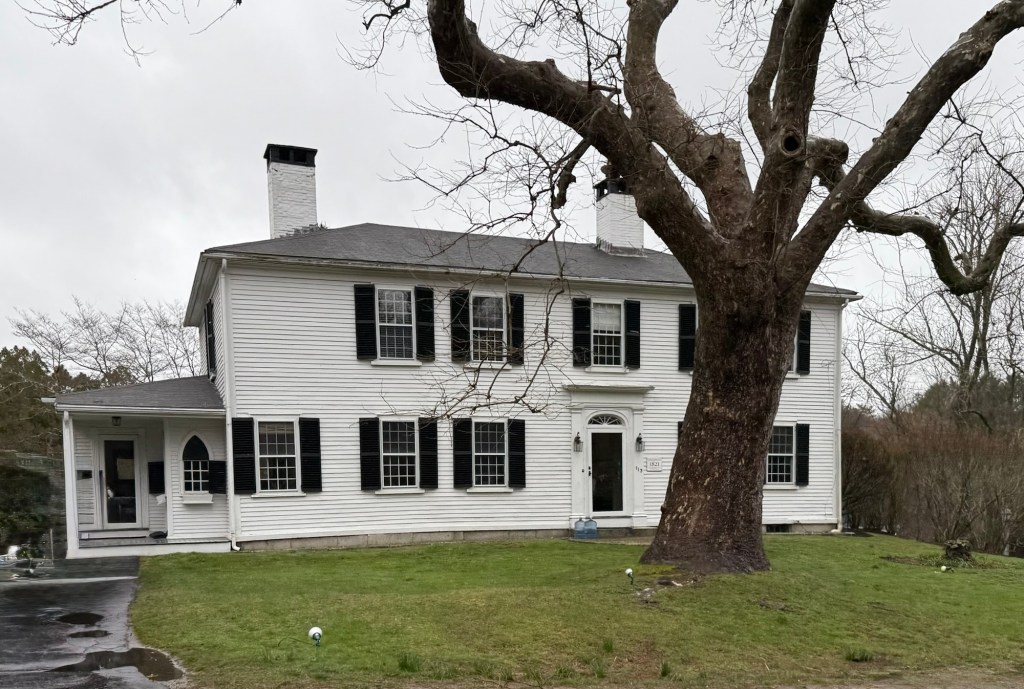
Barnes-Kellogg House // 1809

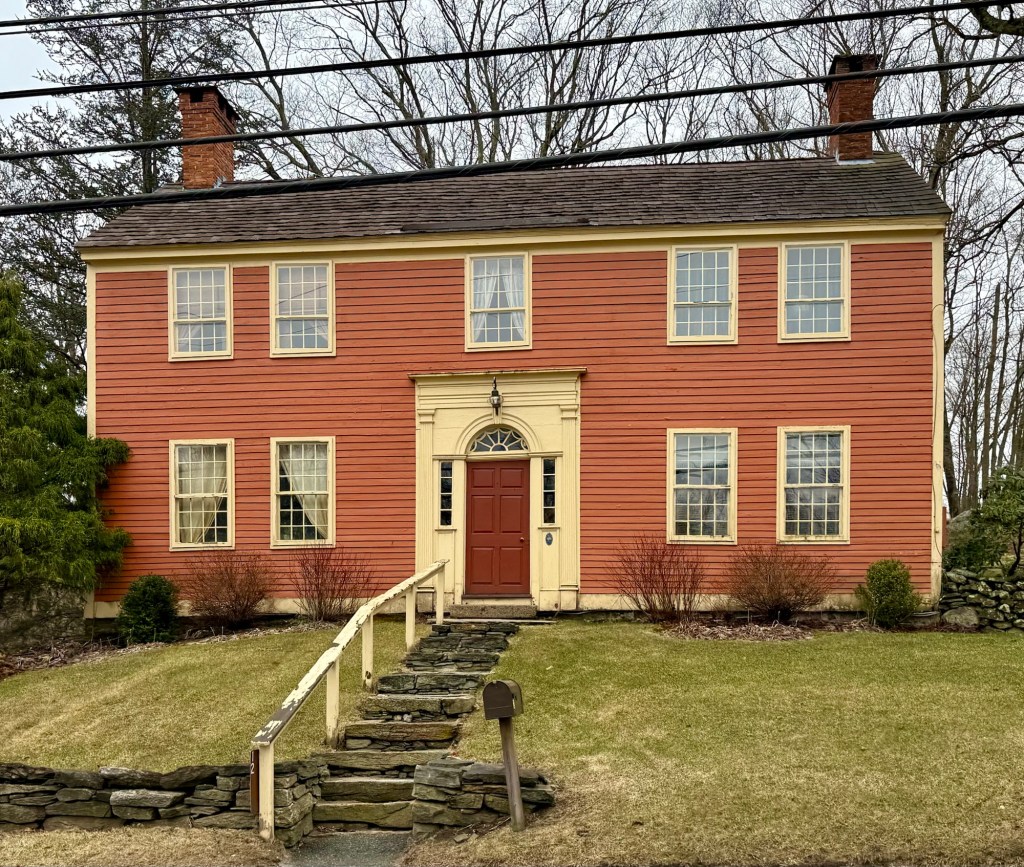
The main village in Cornwall, Connecticut, looks like a postcard. Mature trees and beautiful, historic homes line the bucolic streets with sweeping views of the Litchfield Hills in the distance; it is what many envision when they think of “New England charm”. This stately Federal style mansion is sited deep on its lot beyond a field and dates to the first decades of the 19th century, it is the village’s grandest early home. The house was built for Amos Barnes, but supposedly remained unfinished when he died suddenly. Barnes’ widow sold the property to the local Foreign Mission School as a dormitory for students. The school’s (in my opinion, problematic) mission was to educate students of non-Christian cultures, including Native Americans, East Asian, and Hawaiian pupils, for them to become missionaries, preachers, translators, teachers, and health workers in their native communities in the Christian faith. These types of programs furthered the erasure of other cultures and promoted Christianity in all corners of the world, but I digress. In 1826, this home was acquired by Frederick Kellogg, the long-time town clerk and Judge of Probate, who owned the property
until his death in 1891.

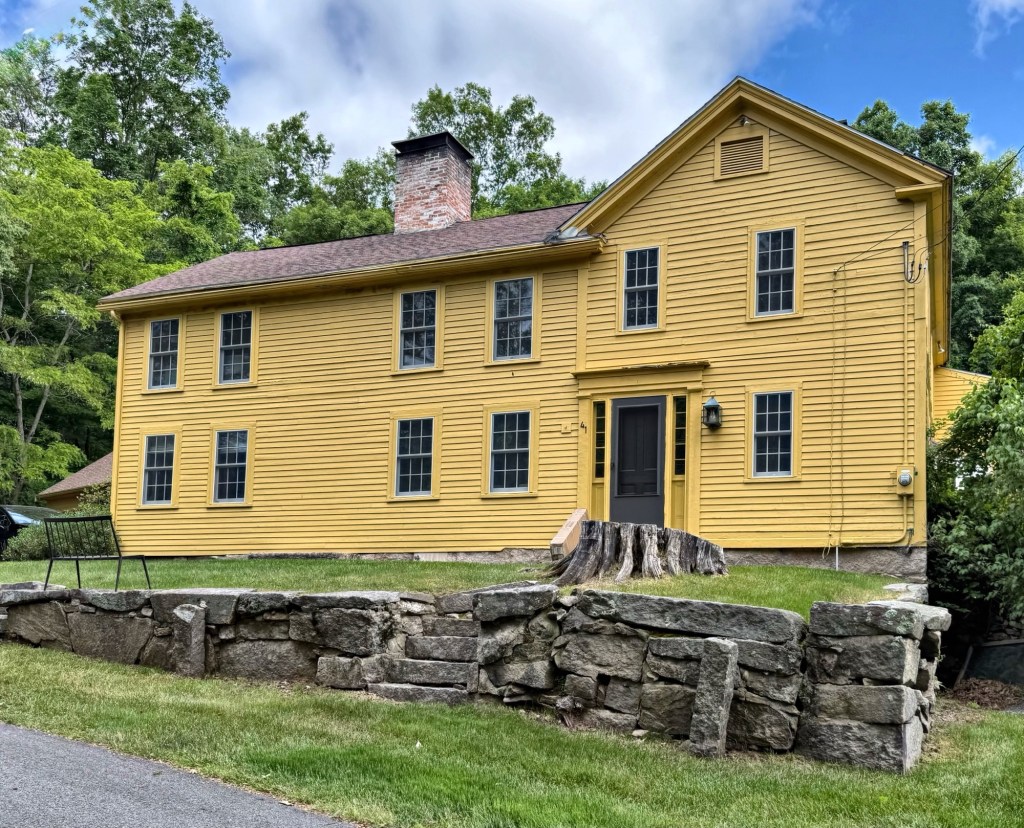
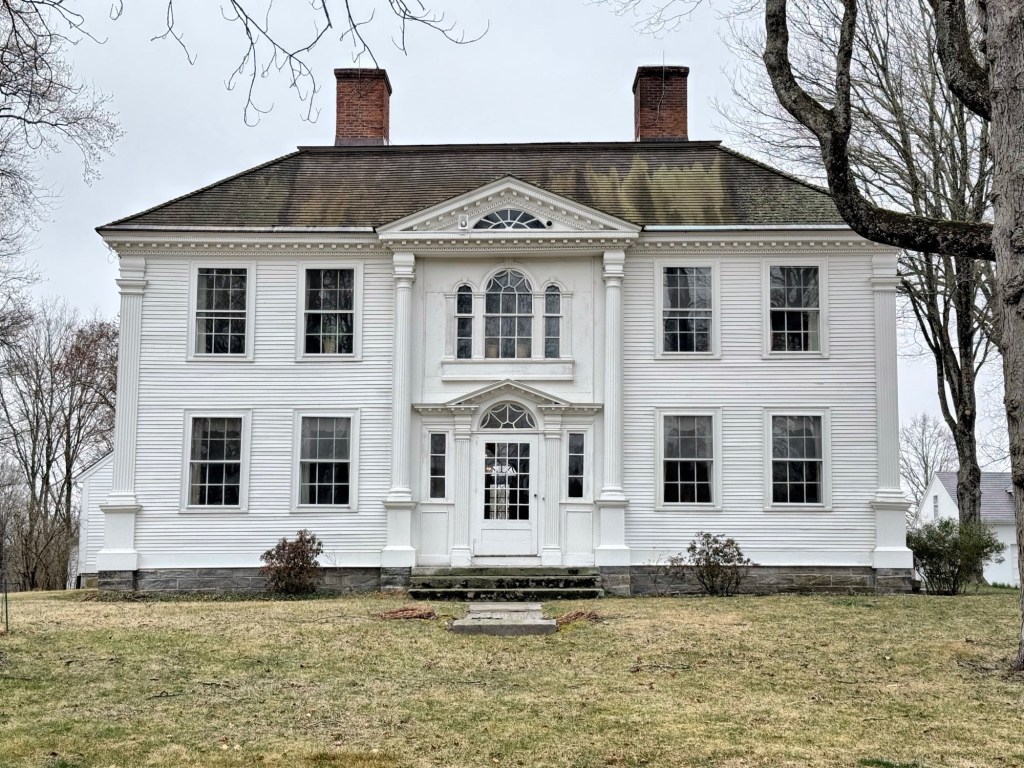
John Northrop House // c.1814

Cornwall’s Foreign Mission School, which began operations in 1817, was virtually unique in the United States, educating both Native Americans and young men from around the globe, including Hawaiian, Bengali, and Japanese. The school was created for the purpose of educating youths of “heathen” nations, to convert them to Christianity, educate them, and train them to become preachers, translators, and teachers back in their native lands. The problematic nature of the school’s seemingly forced assimilation, causing the erasure of cultures, paired with the disdain for foreign students in town lead to much animosity towards the school in Cornwall. The tension reached a head when in 1824, John Ridge, a student at the Foreign Mission School and the son of a Cherokee leader, began a courtship with Sarah Northrop, the white daughter of the school’s steward. A year later they married. Additionally, in 1826, another Foreign Mission School student, Elias Boudinot (John Ridge’s cousin), fell in love with a young Cornwall girl named Harriet Gold, they married in 1826. These marriages were generally opposed to and racism caused support for the school to dissolve, closing by 1827. This c.1814 house was the home of John Northrop, the father of Sarah Northrop, and steward to the Foreign Mission School. The family home, seen here, was also used to house some students while they attended the school. The Northrop House remains one of the few extant buildings with direct ties to this school. The house is one of 65 National Historic Landmarks in Connecticut.

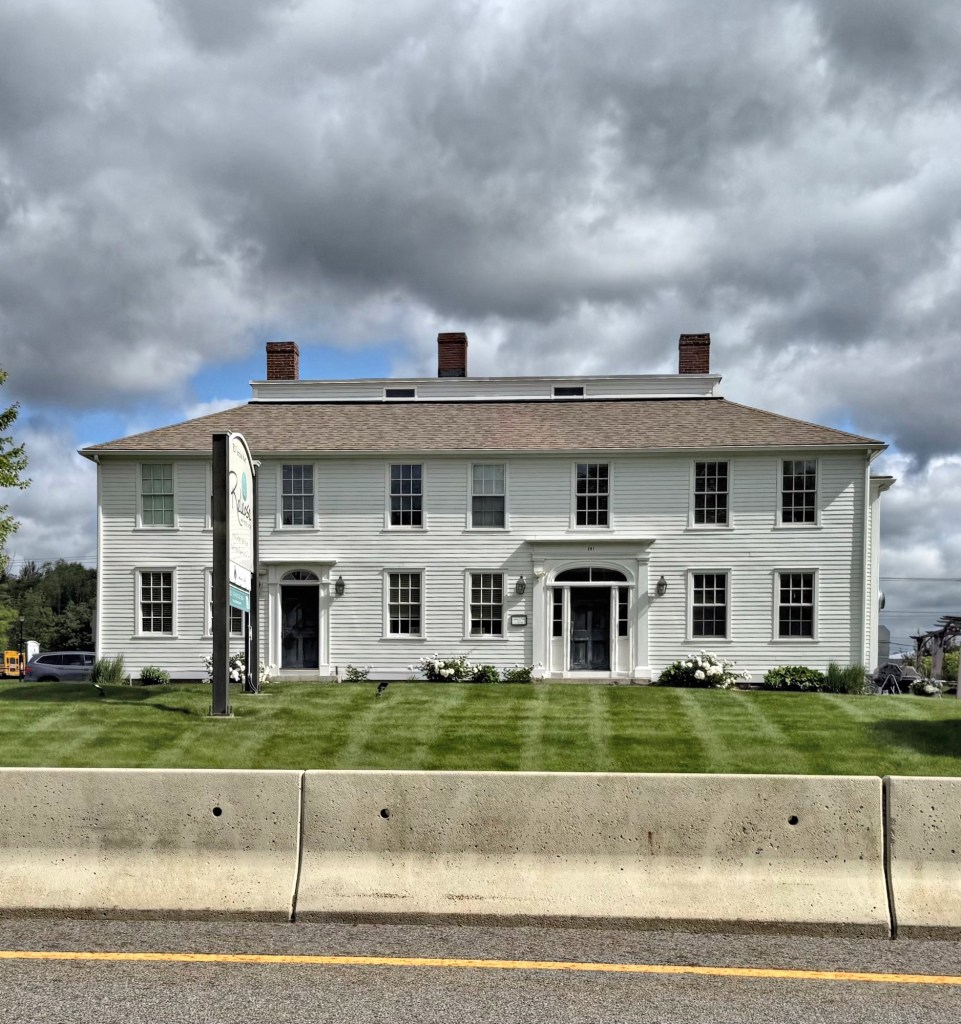
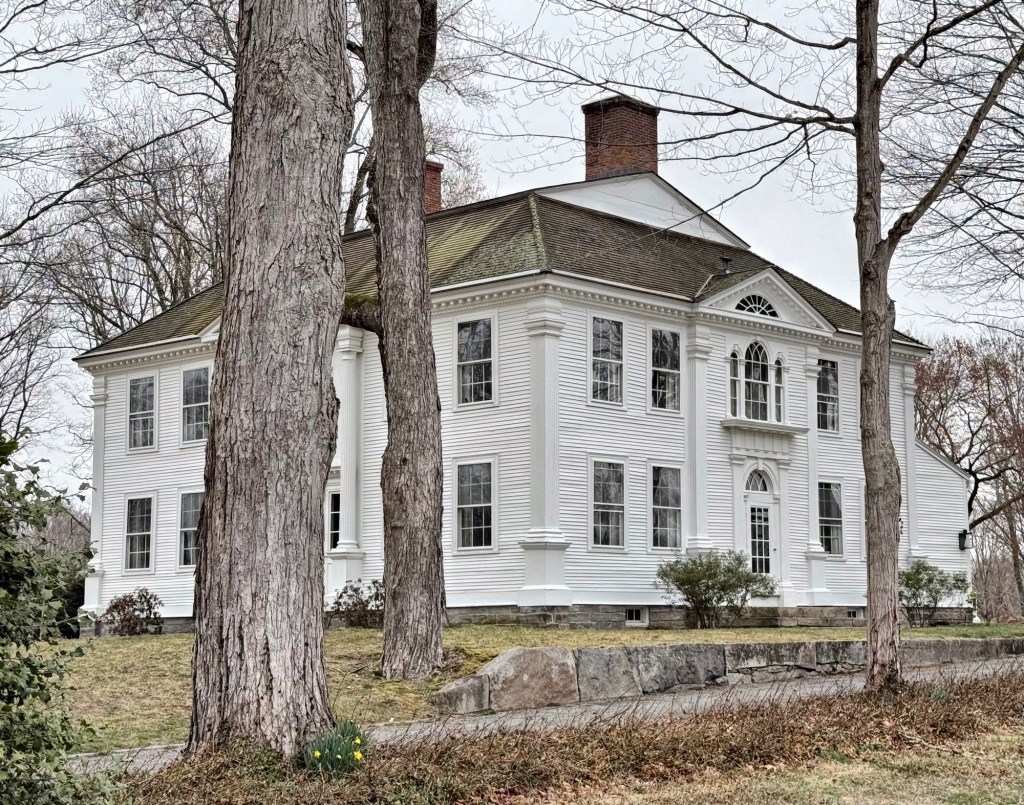
Thompson-Sperry House // 1803

In 1803, General David Thompson (1766-1827) and his wife, Sybil (Norton) Thompson, moved into this recently completed Federal style residence on North Street, the main road through Goshen Village, Connecticut. David Thompson was a merchant and partner in the firm Wadhams & Thompson, occupying a store nearby the Congregational Church. Business partners David Thompson and David Wadhams built near-identical houses across the street from each other, though the Wadhams house has since been gut renovated and lost much of its original fabric. The Thompson House stands out for its Palladian second-story window, glazed with interlacing arcs. The property was owned at the end of the 19th century by Albert Sperry, a Civil War veteran.

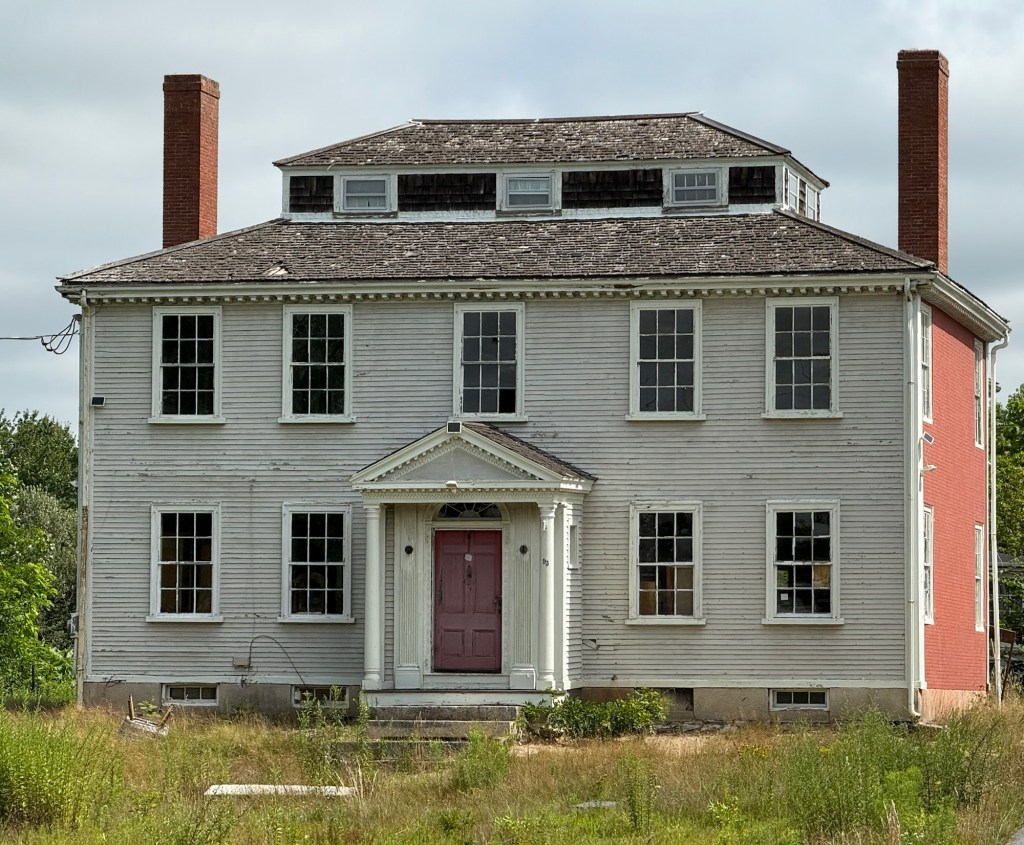
Rose Farm – Ebenezer Knight Dexter House // 1800

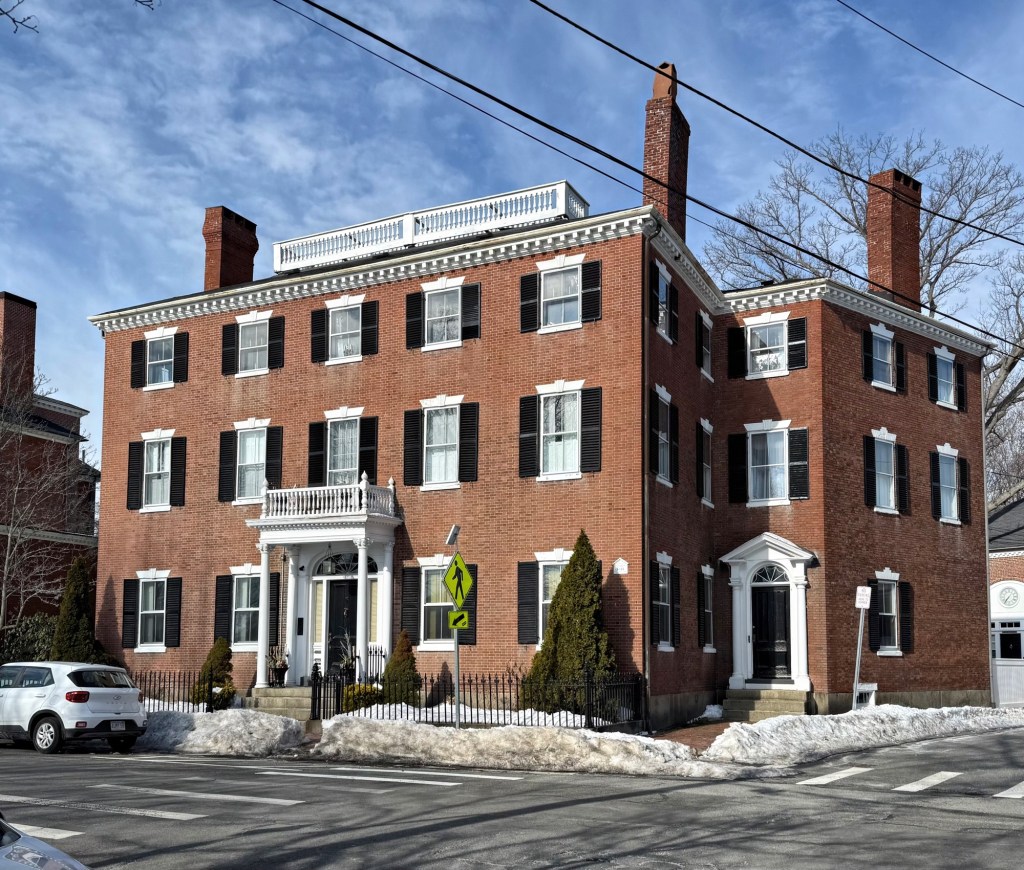
When Ebenezer Dexter built this country retreat in 1800, it stood at the eastern edge of settlement in Providence, Rhode Island. Several of the city’s wealthy residents maintained country seats on the then rural outskirts of the city, but Rose Farm is the only remaining gentleman’s farmhouse from the period in this part of the city, surviving over two centuries of development pressure and economic recessions. The house stands out amongst a neighborhood of mid-to-late 19th century residences, for its refined form and simple symmetry. Rose Farm is a wood-frame dwelling with brick end walls and exceptionally tall chimneys at the hipped roof, which once had two levels of a decorative balustrade. Ebenezer Knight Dexter (1773-1824), was a businessman and philanthropist, who left the bulk of this farmland to establish a home for the poor, Dexter Asylum, on land to the north. John Stimson bought the farmhouse and surrounding land in 1837 and the property directly surrounding the farmhouse was later subdivided with large residential lots, with the neighbrohood filling-in by the late 19th century.

Fowler House // 1809

Photo courtesy of Wikimedia commons.

The Fowler House is located in the Danversport section of Danvers, Massachusetts, and is one of the town’s few brick Federal period homes. The residence was built in 1809 by builders Levi Preston and Stephen Whipple for Samuel Fowler Jr., an early Danvers industrialist and landowner in this part of town. The property was passed down through generations of the Fowler family and ultimately acquired by the Society for the Preservation of New England Antiquities (SPNEA, now known as Historic New England) as their second property acquisition in 1912. Uniquely, Historic New England granted life occupancy of the house to the two unwed Fowler sisters, who had resided here, even as it was converted into a museum. When bought by SPNEA, some members were concerned that the Fowler house was not grand or architecturally interesting enough to warrant its acquisition, Samuel Appleton, the founder, stated, “As might be expected, the Fowler home reflects the simple tastes of its owner. As seen from the square the house is as severely simple as it could be. It depends for its effect on its very simplicity and admirable proportions. The principal features of the house may be said to be simplicity, good taste, solid construction, splendid preservation, and homogeneity.” The property was eventually sold by Historic New England to a private owner, but a preservation easement by the Society ensures its preservation for the future. The Fowler House was recently listed for sale, and the property retains many historical features, including original ca. 1810 wallpaper in the main two-story entry hall and a large hearth in the main kitchen, its original floors, plaster, woodwork and other features.

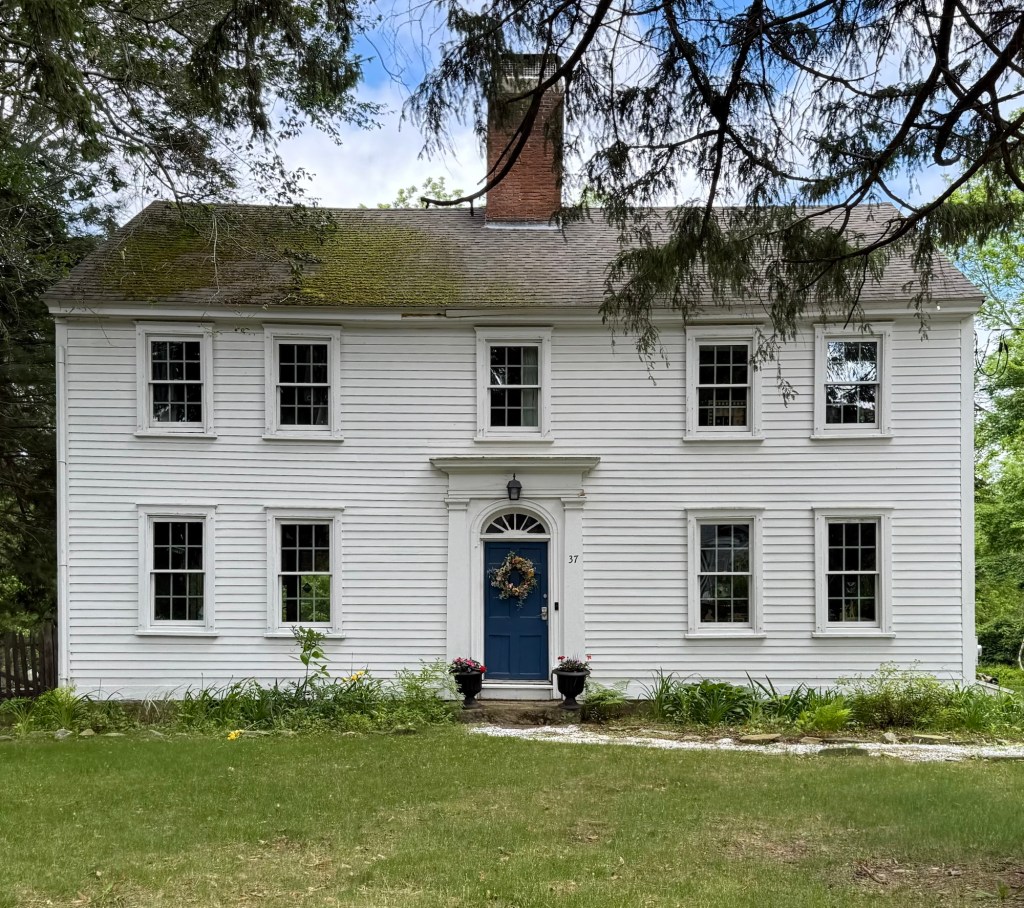
Spofford-Root House // c.1830

The Spofford Family was one of the earliest to settle in present-day Georgetown, with the earliest enclave of homes built along Andover Road in the western part of town. A few generations later, subsequent family members would built in the town center, taking advantage of the growing commercial and business community. This Federal period home (with later alterations) was built around 1830 for Greenleaf Spofford (1801-1887) the same year as his marriage to Emily Willmarth. The couple would move out of town and sold the home to Dr. Richmond Barbour Root (1846-1930),  the second of a highly respected, three generation family to practice medicine in Georgetown. The overlay of machine-sawn Stick Style decorative porch, bracketed cornice and bay windows were likely added by Root sometime after the Civil War. Unlike most owners of Federal and Greek Revival-style dwellings, Dr. Root may have held a valid professional interest in appearing as up-to-date as possible with a “modernized” home that also served as the site of his office and consulting rooms.

Moody-Hall House // 1830

Transitional Federal/Greek Revival style houses are among my favorite. You can see the emergence of Classical architecture blending with American architecture with features of both styles, which work well together. This example can be found on Elm Street in Georgetown, Massachusetts. The dwelling appears to have been built for Dr. George Moody, one of four physicians in Georgetown in 1840, who began his practice in town in 1830. In his first years there, he oversaw patients during Typhus and Dysentery outbreaks and was credited with having determined that a high sulphur content in the local water supply accounted for the increased cases. Dr. Moody died in 1866, and his widow continued to live in the house until her death in 1880, after which it was sold to Mrs. Charlotte Sawyer Hall, the widow of local shoemaker Seth Hall.

Jacob Randall House // c.1796

The Jacob Randall House on Lawrence Road in Pownal, Maine was built about 1796 and is a fine example of Federal period architecture executed in brick in the town. Built for Jacob Randall (1771-1829) a native of Weymouth, Massachusetts, who purchased over 100 acres of land in town, and had this house built sometime after. His property spanned the nearby Chandler River, upon which he established a sawmill and gristmill. When Pownal was incorporated in 1808, Randall was one of its first town selectmen, a seat he held nearly continuously until his death in 1836. The house is five bays wide, with its entrance in the central bay, recessed with a fanlight.

Samuel Perley House // c.1784

Built around 1784 for Reverend Samuel Perley, this Federal style home is one of the finest in the town of Gray, Maine. Samuel Perley (1742-1830) was educated at Harvard College and while there, met and befriended John Adams, who would later become the second President of the United States. The two maintained a lifelong friendship. Perley came to Gray in 1784 as a pastor of Gray’s first church. He likely had this house built at the time or purchased an existing house and updated it and the house is said to have Moses Eaton stencilling inside. At one point, Rev. Perley and his wife lived on one side of the house while his son Isaac, his wife, and their twelve children lived on the other.

Barrett House // 1800

The Barrett House (also known as Forest Hall) is a Federal style mansion located in New Ipswich, New Hampshire and one of the finest buildings in the entire state. The mansion was built around 1800 by Charles Barrett Sr. for his son Charles Jr. and daughter-in-law Martha Minot as a wedding gift. Its grand scale was encouraged by Martha’s father, who promised to furnish the house in as lavish a manner as Barrett Sr. could build it. The interiors are elegantly furnished, and numerous reception rooms were designed for entertaining in a cosmopolitan manner. An elaborate allée was later added to the landscape, with a flight of stone steps flanked by maples rising up the hillside behind the house and leading to an elegant summerhouse. After Charles and Martha died, the estate remained in the family. However, after the railroad bypassed New Ipswich, the town entered into a decline. Charles Barrett’s descendants stayed on, but today Forest Hall remains essentially a relic of the Federal era. After 1887, the family used the house only in the summer-time. It was donated to Historic New England in 1948. Historic New England has ever-since opened up the property to those who want to see one of the best examples of a rural, Federal style estate in New England and its well preserved interior and grounds.

Gould-Goodnough-Lyman House // 1816

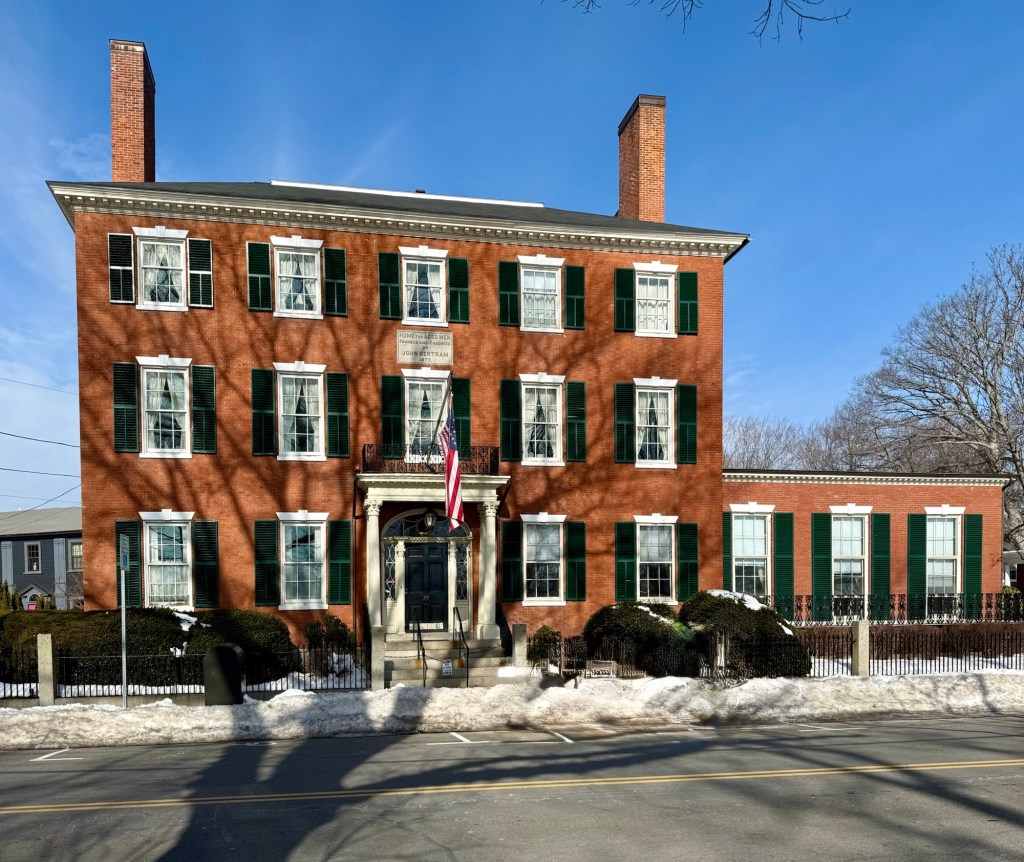
The largest house in the smallest town (in Middlesex County) of Ashby, Massachusetts, is this towering, three-story Federal period home on South Road. Local history states that the home was originally a two-story Federal style home with shallow hipped roof. The Goodnough’s “modernized” the home by the 1870s, adding a mansard roof and built a stable on the property. Lastly, the third major owner, Jesse P. Lyman, and his wife, Mary Chapman Lyman, had the home “modernized” again, in 1898, but in the Colonial Revival style, harkening back to the house’s original Colonial-inspired roots. Fitchburg-based architect Henry M. Francis converted the old mansard roof to a full third-floor, updated the carriage house, and added side wings to flank the main block of the house (similar to his design at the old Lyman School in town). The house recently sold for over $600,000 in 2020, which may be the best steal ever! This house is a stunner!

Wellington-Sears House // c.1810

One of the many Federal period houses in Ashby Center is this lovely c.1810 residence on Main Street. The house is known as the Wellington House, and was possibly built by Darius Wellington, a carpenter who assisted with building the town’s First Parish Church in 1809. The house exhibited a symmetrical facade with stunning fanlight transom over the main entrance and eight-over-twelve sash windows. In the latter half of the 19th century, the property was owned by Cyrus Sears, a prominent sea captain, who sought a life inland with his family. He would serve in the Civil War, but had the half-decade house “modernized” with new bay windows and an entry porch. He would later move to Baltimore and serve as a port captain and consul to Cuba. In the past few years, the owners have restored the home to its original Federal design, re-emphasizing the stunning fanlight transom and sidelight details.

Asa C. Everett House // c.1824

The Asa C. Everett House on Allen Road in Ashby, Massachusetts, was built around the time of the wedding of Asa Cutter Everett, a saddle- and harness-maker, and Rowena Spaulding in 1824. The house was built of brick and in the Federal style with a shallow hipped roof and symmetrical facade, and was “modernized” in the late 19th century. Victorian-era alterations include the entrance porch with turned posts and spindle frieze and two-over-two sash windows. Blending of vastly different architectural styles can be tough to pull off, but this example really looks great! What do you think?

Asa Kendall House // c.1790

The Asa Kendall House is a significant Federal period house from the late 18th century on Richardson Road in Ashby, Massachusetts. The house here is actually believed to be the second built on this location, the first being the John Fitch House and Garrison. John Fitch was one of the earliest settlers in present-day Ashby, which in the mid-1700s, was sparsely developed and threats of attack by Native peoples limited development for decades. Due to raising tensions in the years leading up to the French and Indian War, Fitch petitioned the government for a garrison manned by three soldiers, which was approved. In 1745, the garrison was attacked and Fitch with his family, were kidnapped by Native Americans, held hostage for six months and brought up to Canada. The homestead and garrison were burned. He and his family were ransomed and would later return settling elsewhere in town. The former location of the garrison was purchased by Asa Kendall and this house was built around 1790 for him. The brick house with sloping wings was extensively documented as part of the Historic American Building Survey in 1936 and has been preserved by later owners ever-since!