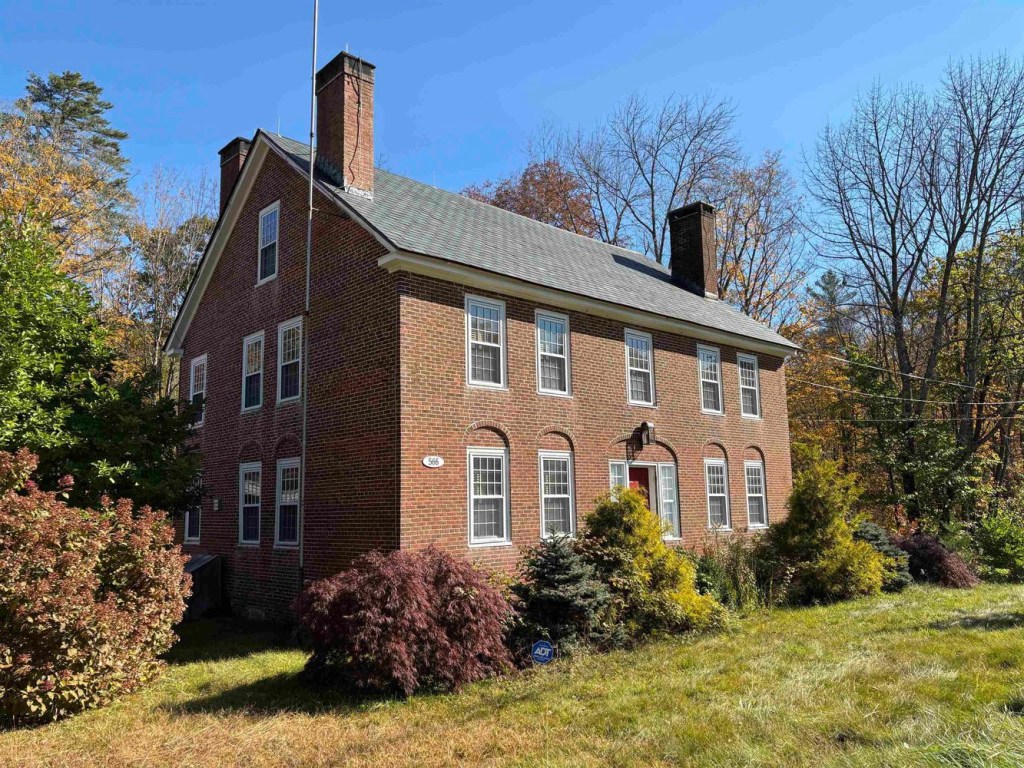
Erected in the 1820s by Joshua Jaquith, a prosperous mill owner who operated a sawmill and grist mill on the river directly behind his house, this residence in Andover, Vermont, exemplifies vernacular Federal period residential architecture in rural New England. The residence is said to have been carved up inside into apartments in the mid-1800s but was restored by Alden Jaquith, the third generation of the family later in the 19th century back into a single-family residence. The handsome brick home is symmetrical with a five-bay facade, 12-over-12 sash windows, and large end chimneys. Of particular note are the relief arches above first floor windows and above the door and the attached sidelight windows.
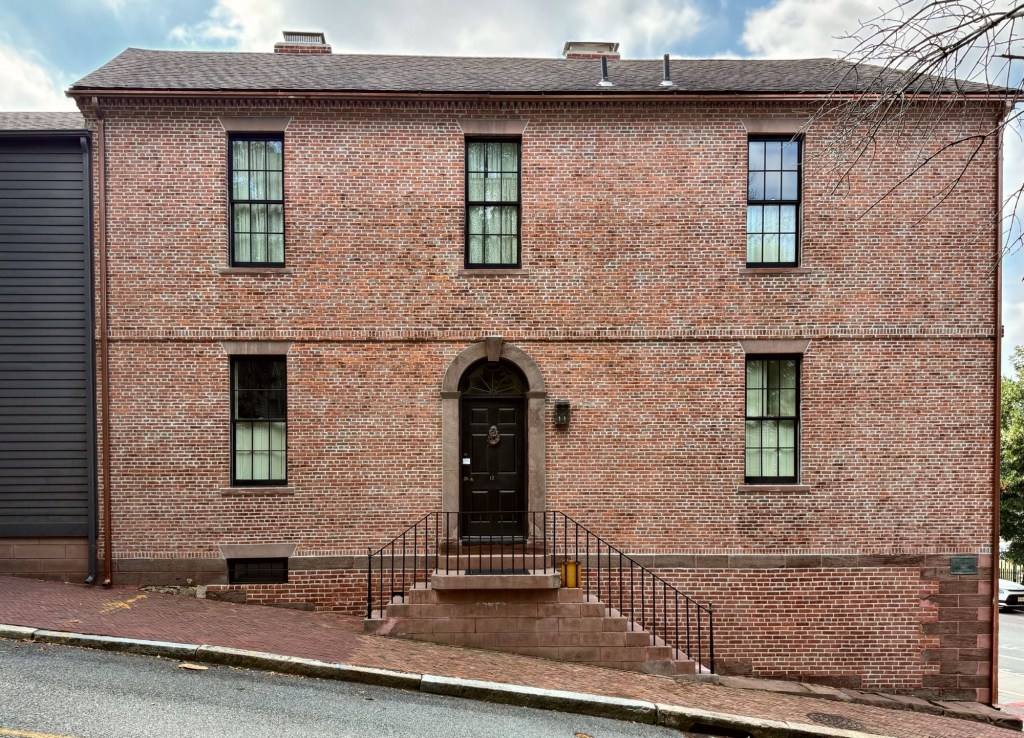
The Tillinghast House at 10 James Street in Providence, Rhode Island, was built around 1800 by Captain Joseph Tillinghast (1734-1816), and it was occupied by a number of his children in the early 19th century. By 1818, with Joseph already deceased, the Federal style home was owned by two of his daughters, Mary, and Amey Tillinghast, who operated a small store from the basement. The two-and-a-half-story, brick Federal house is set on a high basement all with brownstone trim at the stringcourse (between first and second stories) and at the entrance. The house was restored in the late 1970s, along with a new clapboard addition by designers, Luigi Bianco and Georgia Patterson Boomer, of Bianco/Boomer. Without nearly as much ornate detail as many other Federal style homes in the East Side area of Providence, this residence proves that high-quality materials and strong proportions can make a home truly stand out!
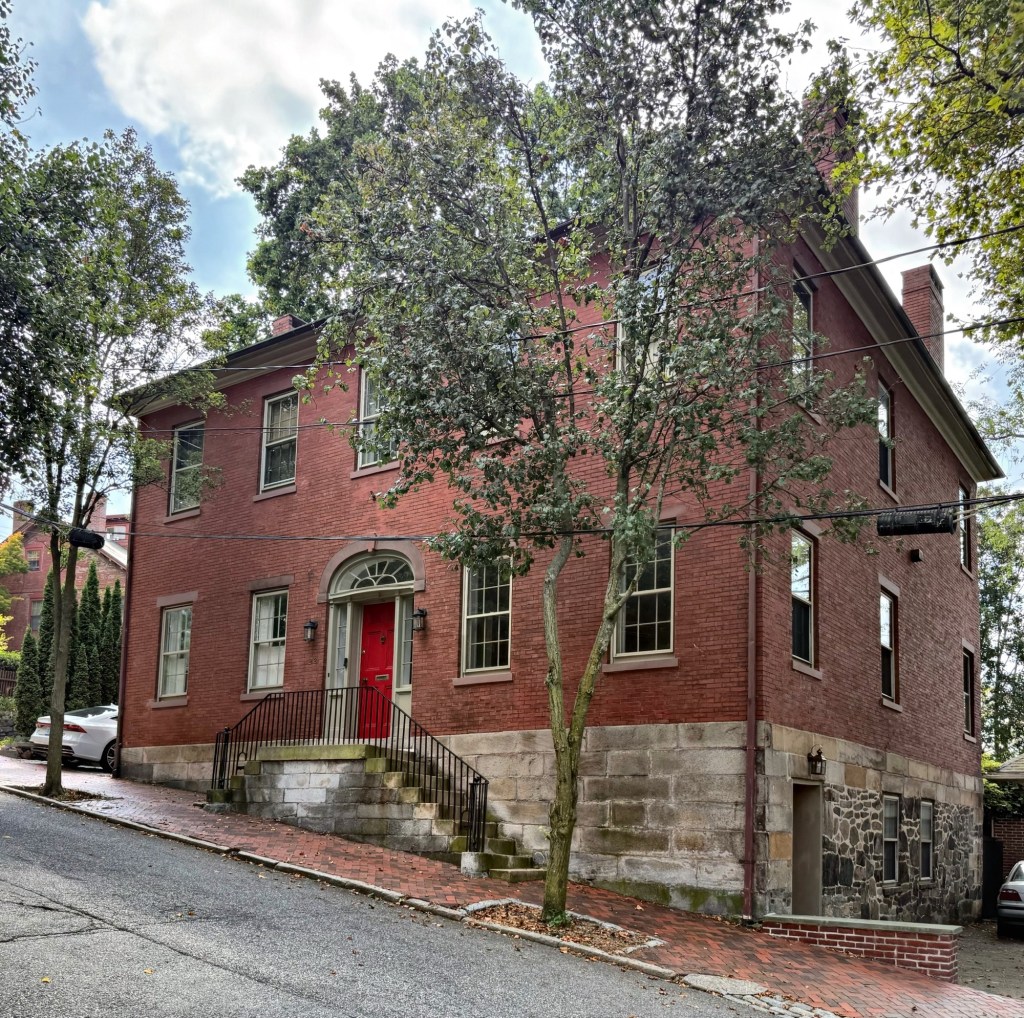
Providence has some of the finest 19th century housing in New England; from the early Colonial and Federal residences to Victorian mansions, you can find hundreds of architect-designed showpieces that tell the full story of American architecture, sometimes on the same street! This is the William Woodward House at 22 James Street in the Fox Point/East Side area of Providence, built sometime between 1826-1828. The Woodward House is a landmark example of the Federal style, likely designed or inspired by local architect, John Holden Greene, which characteristic features including the hip roof with monitor, fanlight transom, and center hall plan. William Woodward Jr. (1791-1861) worked as a grocer, with a market nearby, and clearly did well for himself to afford such a home.
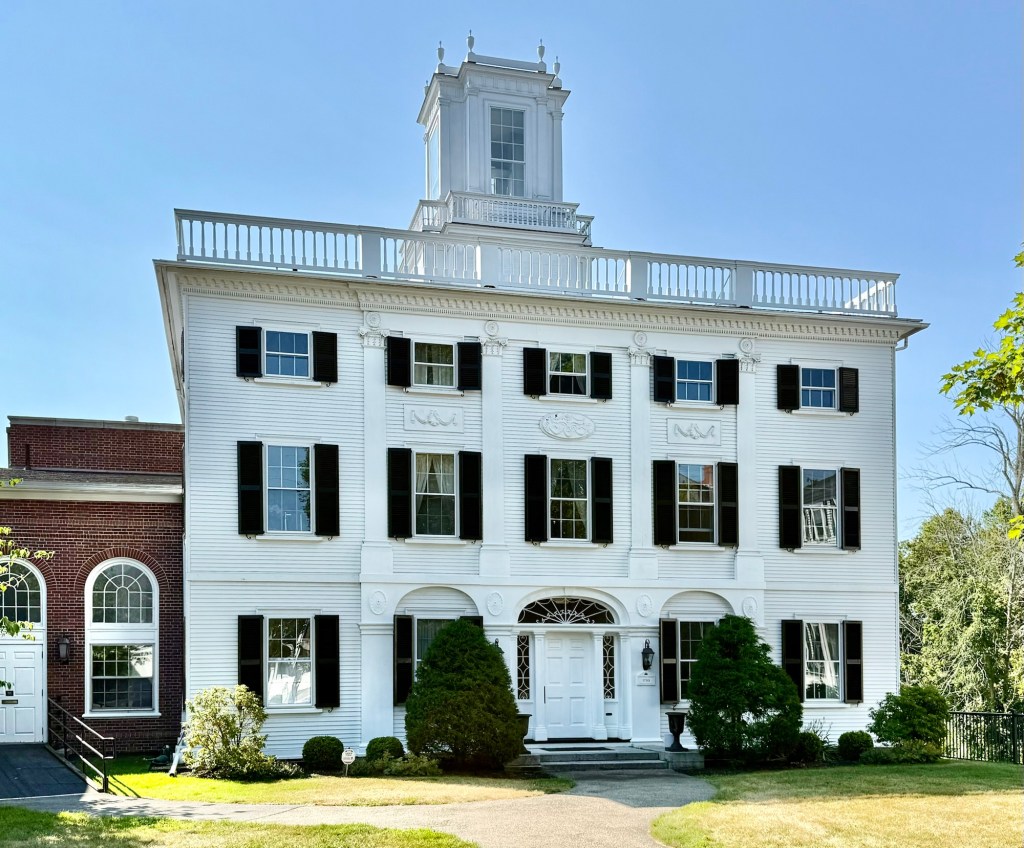
The Peirce Mansion on Court Street in Portsmouth, New Hampshire, is one of the finest, high-style Federal period homes in the United States. Built in 1799 for John Peirce (1746-1814), the residence is said to have been designed by Bradbury Johnson, a local carpenter and builder who was inspired by the designs of Charles Bulfinch. John Peirce began his career in the counting room of Daniel Rindge and worked in business and banking in Portsmouth. Peirce opposed the American rebellion against England but did not serve either side during the war. After the Revolution, in 1789, John Peirce was one of the leading citizens appointed to escort President George Washington around Portsmouth. The Peirce Mansion remained in the family over 150 years until it was sold by his descendants to the Middle Street Baptist Church in 1955, who extensively modified the residence to serve as a vestry and meeting space for church activities. The building was moved back from the road with the four tall chimneys were removed. Architecturally, the Peirce Mansion stands out for its massing, hip-roof with cupola adorned by a balustrade and urns, and the facade with elliptical arches, molded medallions, pilasters, and the Federal style entry treatment with fanlight transom and sidelights.
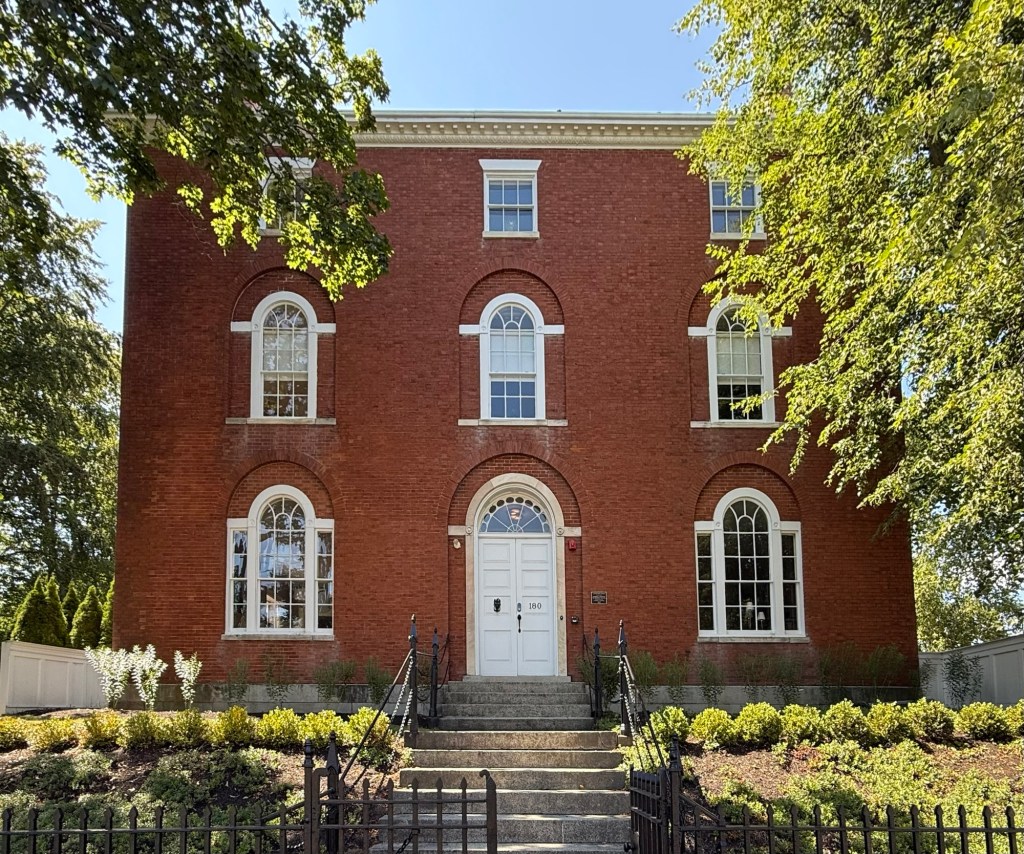
The Larkin-Ladd House at 180 Middle Street in Portsmouth, New Hampshire, is a three-story, masonry Federal-style residence with symmetrical facade, built for one of the city’s wealthiest merchants. Samuel Larkin (1773-1849) was born in Charlestown and moved to Portsmouth, marrying Ann Jaffrey Wentworth, a daughter of Col. Joshua Wentworth. During the War of 1812, Samuel Larkin made his fortune as an auctioneer, selling the contents of English ships captured by local privateers. It is believed that fourteen privateers and their crews worked out of Portsmouth Harbor and are said to have captured an estimated 419 British ships! With the profits from stolen goods from these British ships, Larkin purchased lots on Middle Street and began construction of this stately residence. He (and mostly his wife), had twenty-two children, although roughly half of them died before reaching adulthood. By the late 1820s, financial hardship fell on Larkin and he sold this property, moving into his house next door, which before this was his original residence and later rented to boarders. The Federal style mansion was later owned by Henry H. Ladd, a prosperous Portsmouth shipping merchant, who also served as President of New Hampshire Bank and Portsmouth Savings Bank. The Larkin-Ladd House is undoubtedly one of the finest Federal style residences in New England, and stands out for its entrance, flanked by Palladian windows and the slightly recessed elliptical surrounds at the first and second floor windows. Additionally, the historic stable, also from the 1810s, maintains much of its architectural integrity.
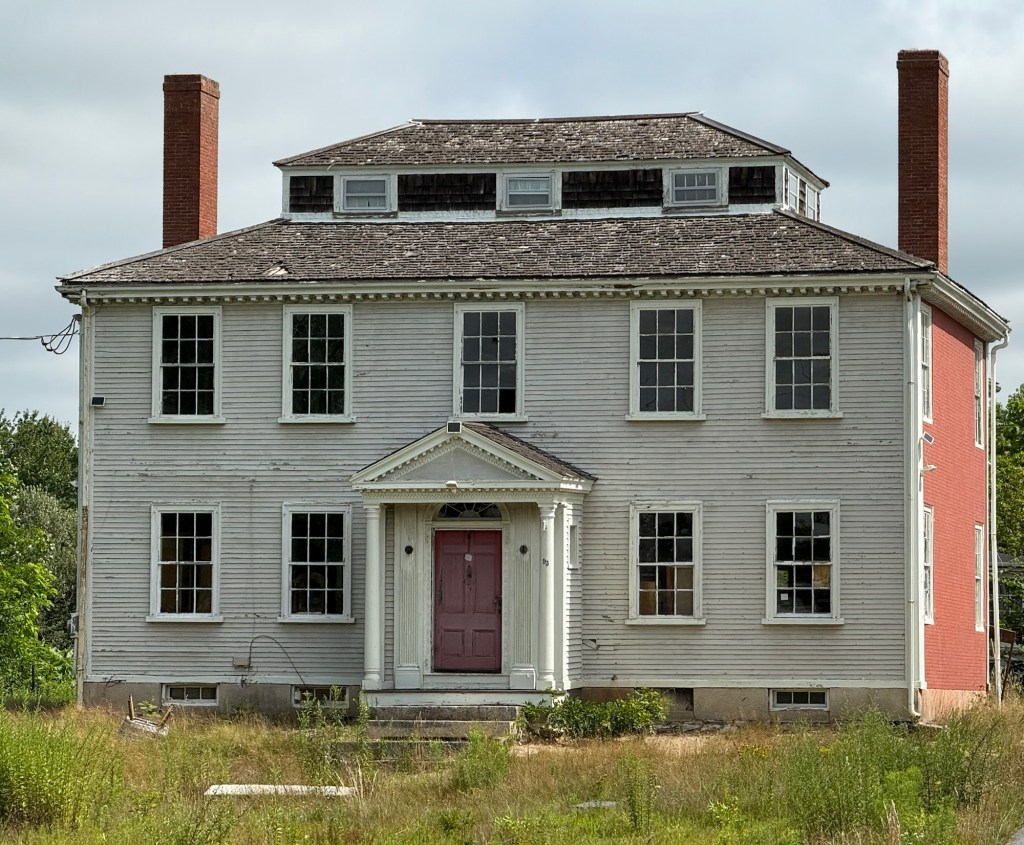
One of the finest Federal period houses in Kingston, Massachusetts, a town full of amazing Federal homes, can be found at 93 Main Street, set away from the street on a sizable lot. The residence here was likely built in the 1780s or 1790s as one of a series of Delano Family houses near Rocky Nook, a peninsula at the end of the Jones River, where many new ships were built and traversed their way to Plymouth Bay and ports in the Indies and beyond. The Delano Family had built the Delano Wharf and Warehouse and operated extensive salt works just north of the wharf on the Nook, along with owning many seafaring vessels, many of which were built by Kingston shipbuilders. This house was seemingly built for Joshua Delano and is architecturally unique with brick end walls, hip roof with a monitor which projects in the center of the hip, and a classical entry portico sheltering the projecting door surmounted by a fanlight transom. The property has recently been purchased. Hopefully the new owners treat this architecturally and historically significant residence with the care she deserves.
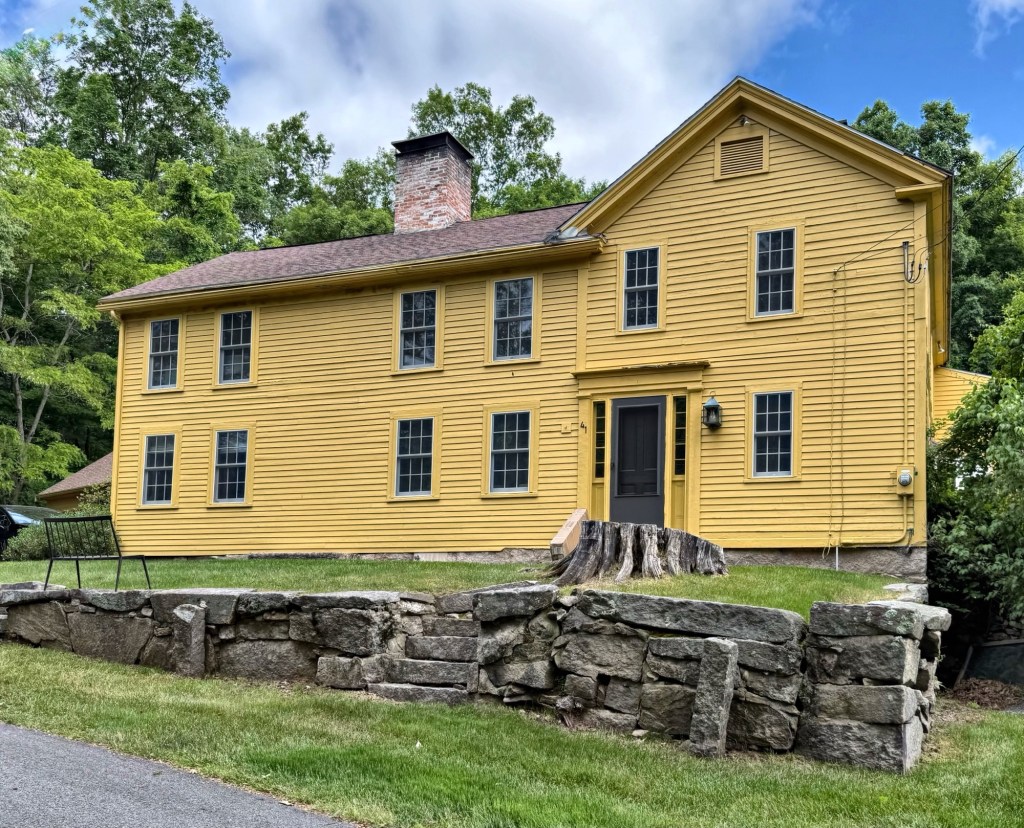
The Corbett House is a charming Federal-period house in Westborough, Massachusetts, and was the birthplace of Henry W. Corbett, an important figure who helped develop Portland, Oregon in the 19th century. This house was built around 1789, the year that Henry’s parents, Elijah and Malinda Corbett, married. The property was farmed for years until Elijah Corbett began an axe manufacturing company here, becoming the first edge-tool manufacturer in Westborough. The rear ell was likely added in 1815 for this purpose. Elijah retired and the family sold the property in 1831 to Lawson Harrington, who continued the business until around the time of the Civil War. The Corbett family settled in New York, where Henry would engage in business. By the mid-19th century, westward expansion and opportunity took hold, and the Oregon Territory became a U.S. territory, leading Henry to establish business there, followed by many of his siblings. Corbett set sail from New York on the long voyage through the Straits of Magellan around Cape Horn up the Pacific Coast to Portland with $25,000 worth of goods to establish business in this new territory. Henry would become City Treasurer of Portland, member of the city council and chairman of the Republican Oregon State central committee. In 1867, he was elected as a Republican to the United States Senate, serving until 1873. Who would have guessed that this house in Westborough would have connections to the growth of Portland, Oregon!?
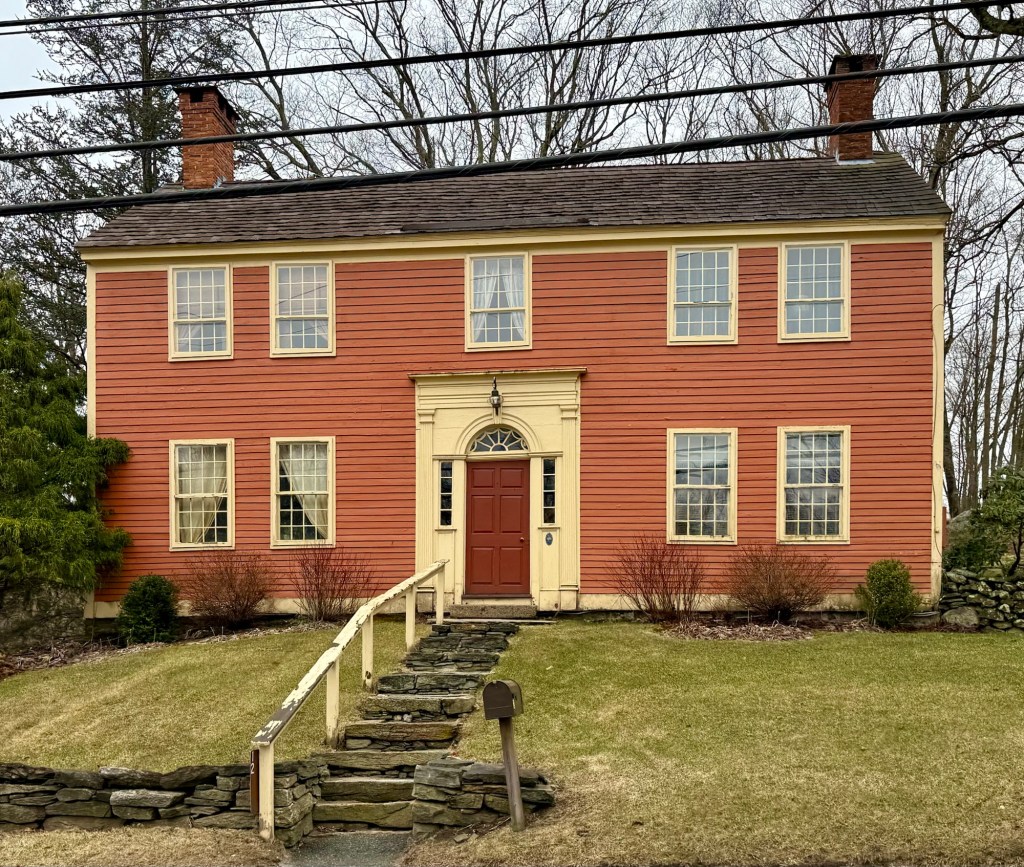
This house in Canterbury, Connecticut, is known as the Turnpike House and dates to the early 19th century. A great example of a Federal style residence, the symmetrical, five-bay home exhibits pair chimneys, multi-light double-hung windows, and an elaborate center entry with sidelights and fanlight transom. The house was built along the Windham Turnpike (now Connecticut Route 14), which was an early toll road established in 1795. Behind the main block of the house is a squat gambrel-roofed ell, that is believed to be made from an older house that previously stood on this site, perhaps dating as early as 1745. According to tradition, this early house, which was also at one time supposedly used as a jail, was the home of Rev. Dr. James Coggswell when he ran a school for boys in Canterbury. One of his pupils at that school was Benedict Arnold, the infamous turncoat.
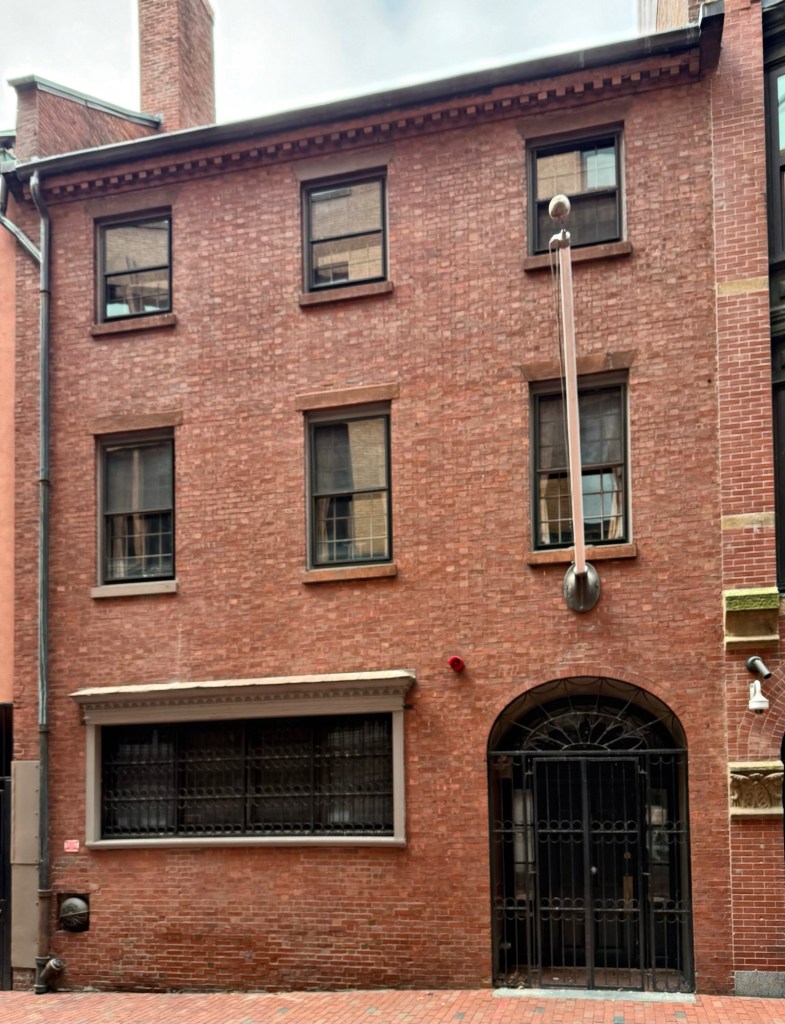
This is your reminder to get lost and explore your city or town. Tucked off Boylston Street sits Boylston Place, a short, dead-end way that is passed by thousands every day, many not knowing about the little enclave of surviving 19th century buildings there. This Federal period house was built in the 1810s for Beza Tucker (1771-1820), who rented the home to boarders until his death in 1820. Tucker bequeathed the house to the American Society for Educating Pious Youth for Gospel Ministry, a nationwide association formed in 1815 with the goal of providing financial support to men seeking a theological education. The Society sold the house in 1834 to Reverend Nehemiah Adams, when he became pastor of the Essex Street Church in Boston. Since 1887, the building has been the home to the Tavern Club, a venerable Boston social and dining club that was invite-only. Presidents in the early years included William Dean Howells, Charles Elliot Norton, Henry Lee Higginson. Inside, the eclectic English pub/Colonial interior with its cozy atmosphere included dining rooms, sleeping accommodations for guests, and a small theatre for annual club productions. The Tavern Club is still in operation and maintains the building today. I can only imagine how great the interior is!
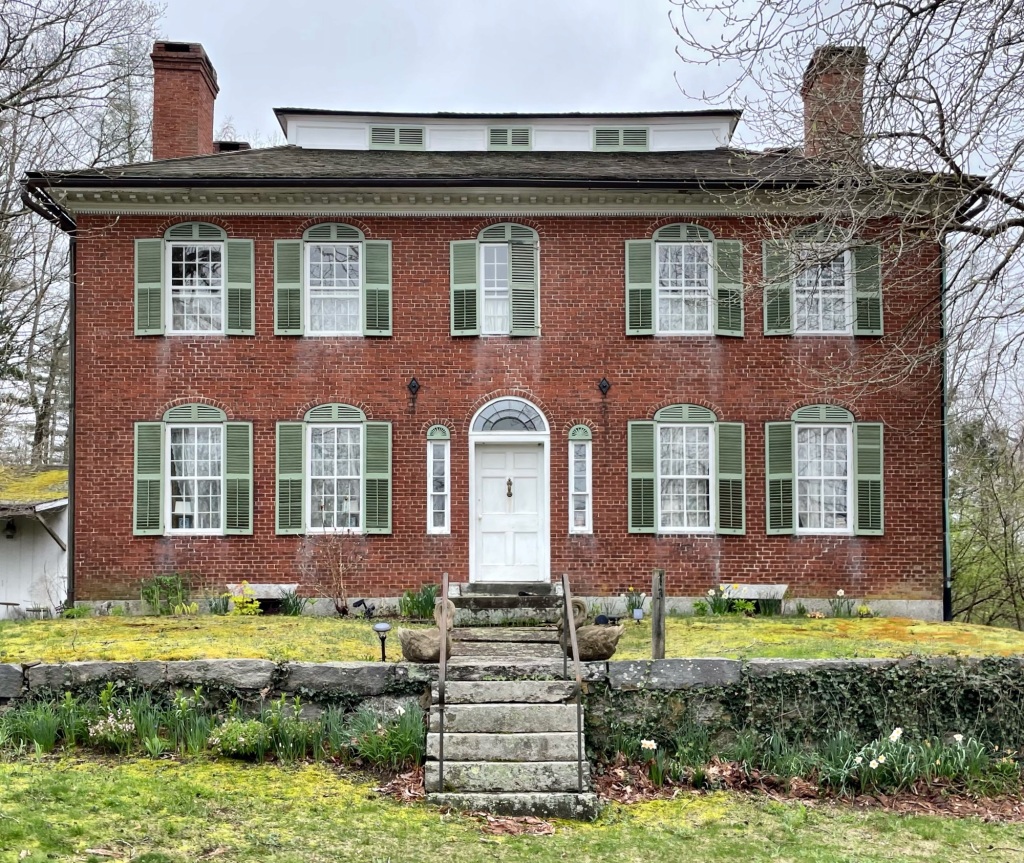
The Witter House of Chaplin, Connecticut was built in 1821 and owned by three generations of medical doctors all named Orin Witter. The Witter House stands on Chaplin Street and is among the finest Federal style residences in this part of the state. Orin Witter had the house built just before the town was incorporated in 1822 and would also serve as the town’s first Clerk. The Witter House is five bays wide, with paired chimneys at the ends of the hip roof. The centered entrance is flanked by arched sidelight windows and has a fanlight above. The fanlight detail is echoed by semi-elliptical fan louvers above each window. The roof has a monitor section at its center. Due to its architectural merit and state of preservation, the house was individually listed in the National Register of Historic Places.
 Buildings of New England