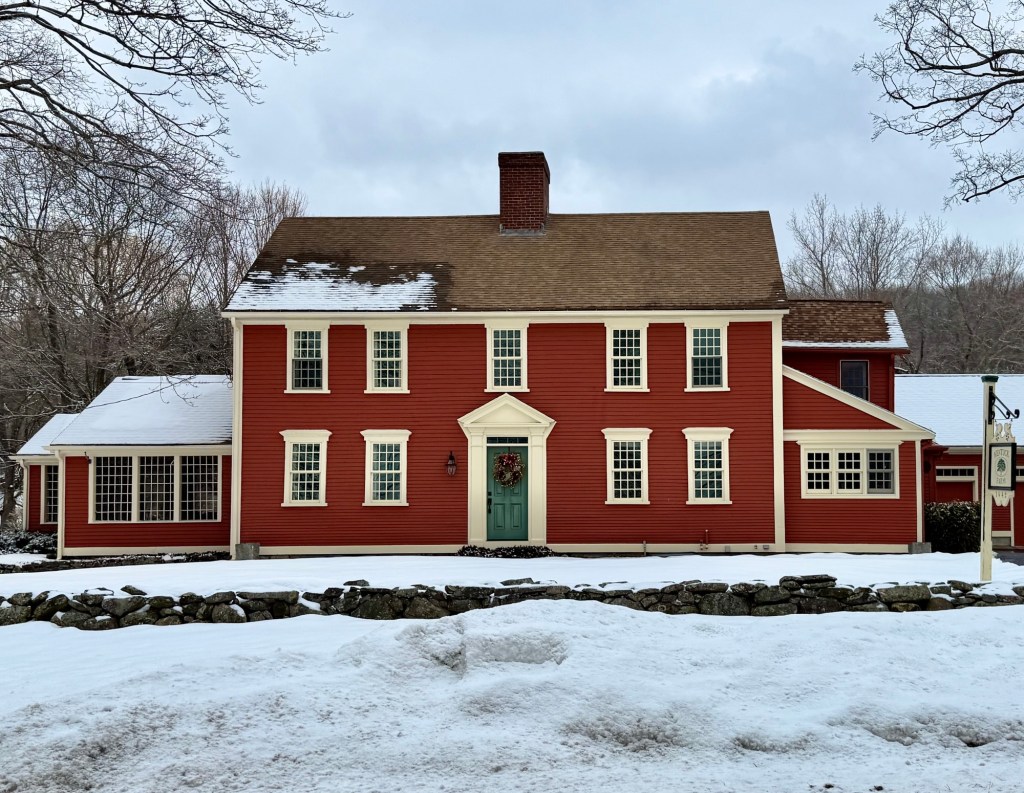
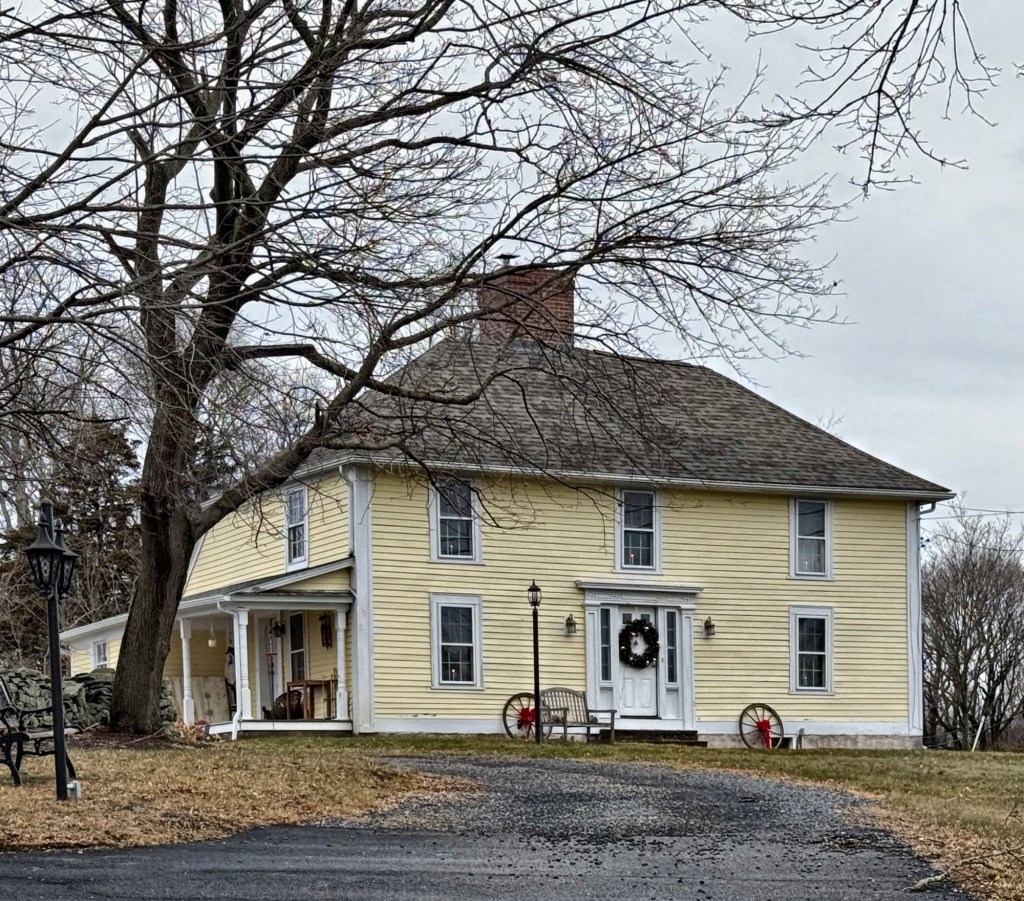
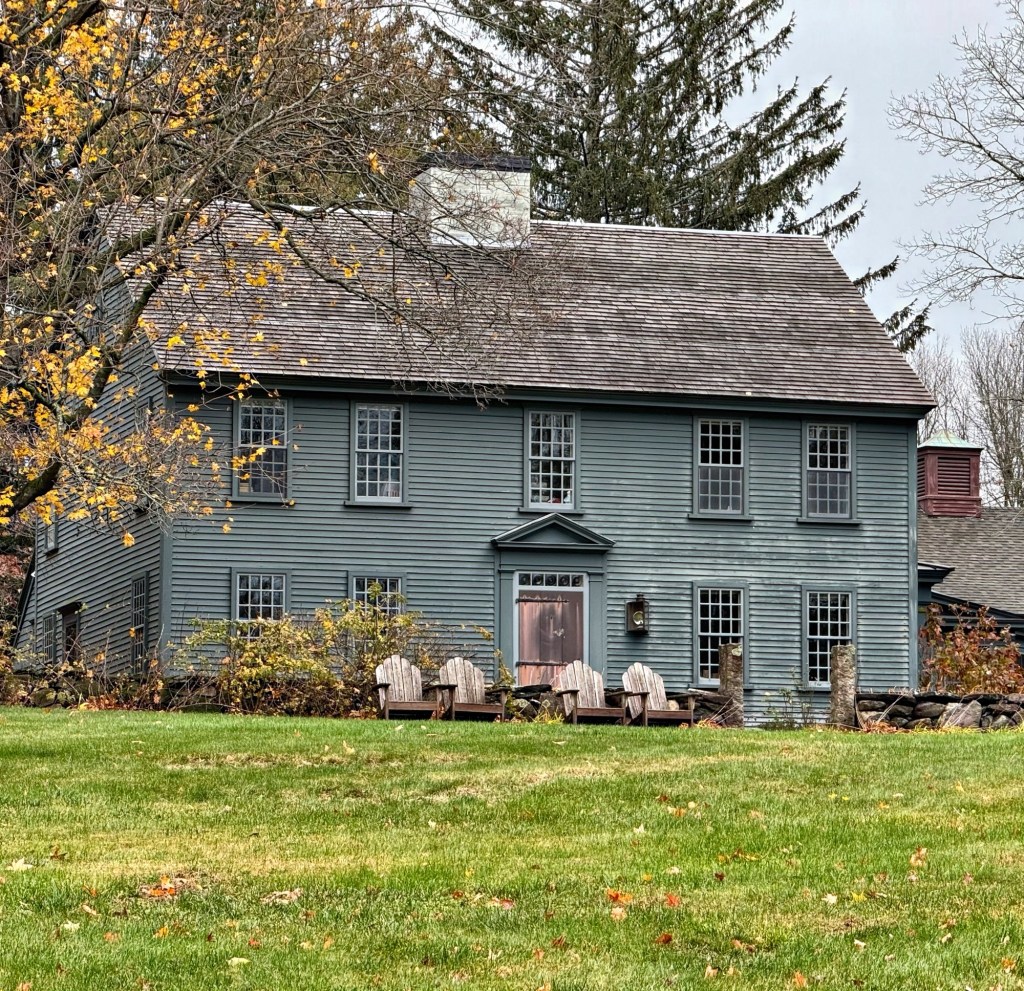
Located on West Street in the rural part of Wrentham, Massachusetts, this historic farmhouse is among the finest homes in the community. Early records are sparse, but the dwelling appears to have been built in the first half of the 18th century by Joseph Grant and later expanded and inherited by other members of the Grant Family who owned the property in the mid-19th century and other nearby farms. Through the 19th century, the farm was owned by George Grant and later by his son, Charles Albert Grant. In the 20th century, the farm was owned by Wentworth and Anne Massie, who operated the property as an apple orchard, known as Kentuck Farm. The home has been restored by current owners and retains its large, central chimney, classical door surround, siding and windows.
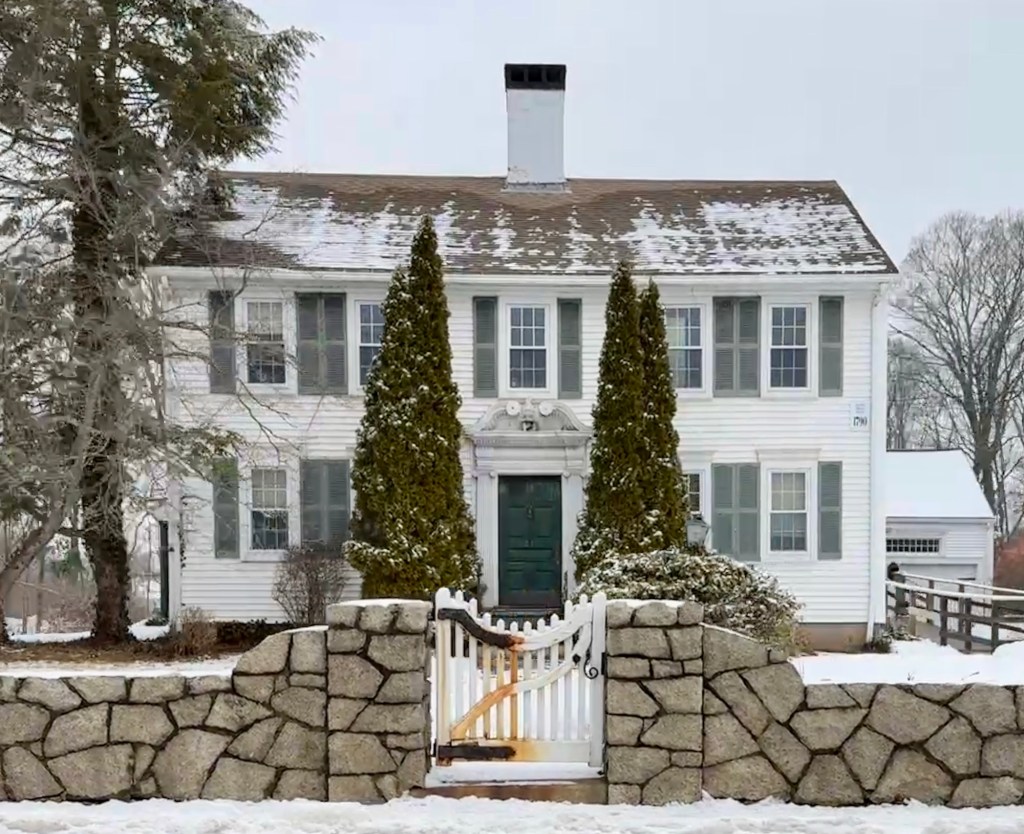
In 1787, Oliver Druce (1760-1797) married Sarah “Sally” Kollock (1764-1789) and had this large residence built overlooking the Town Common in Wrentham, Massachusetts. The young couple raised one daughter here until Sarah died in 1789 at 25 years old, followed years later by Oliver, who died in 1797 at 37 years old. By the turn of the 19th century, the late-Georgian residence was owned by John Francoeur, a French Huguenot. The Druce-Francoeur House is one of the finest Georgian style residences in Wrentham, which retains its magnificent doorway framed by fluted Ionic pilasters with broken scrolled pediment above.
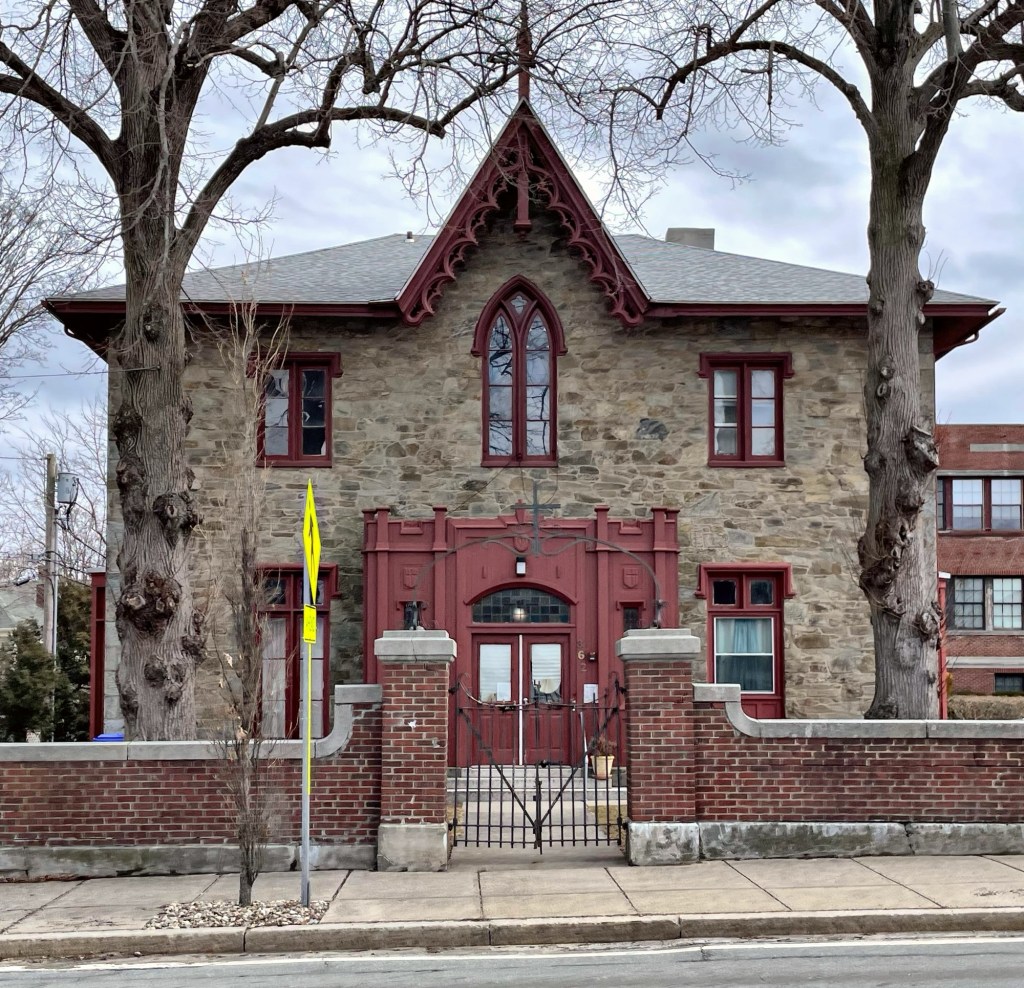
A big departure from the less ornate, yet classically proportioned Georgian and Federal style homes in Warren, Rhode Island, this Gothic Revival beauty on the town’s Main Street stands out for its detail and materiality. Built as a quintessential Gothic “cottage,” the facade of the Dow-Starr House in Warren has also been graced by a three-sectioned Gothic Revival porch as illustrated in Alexander Jackson Downing’s plan books from the 1840s. As completed, this house followed almost exactly Andrew Jackson Downing’s Design II as illustrated in Cottage Residences 1842 ; it differed only in its use of speckled fieldstone over coursed ashlar. The house was later acquired by and used as a convent for the St. Jean Baptiste Church in Warren, who also built a school building behind. The house has seen some alterations, but remains an important architectural landmark of the town.
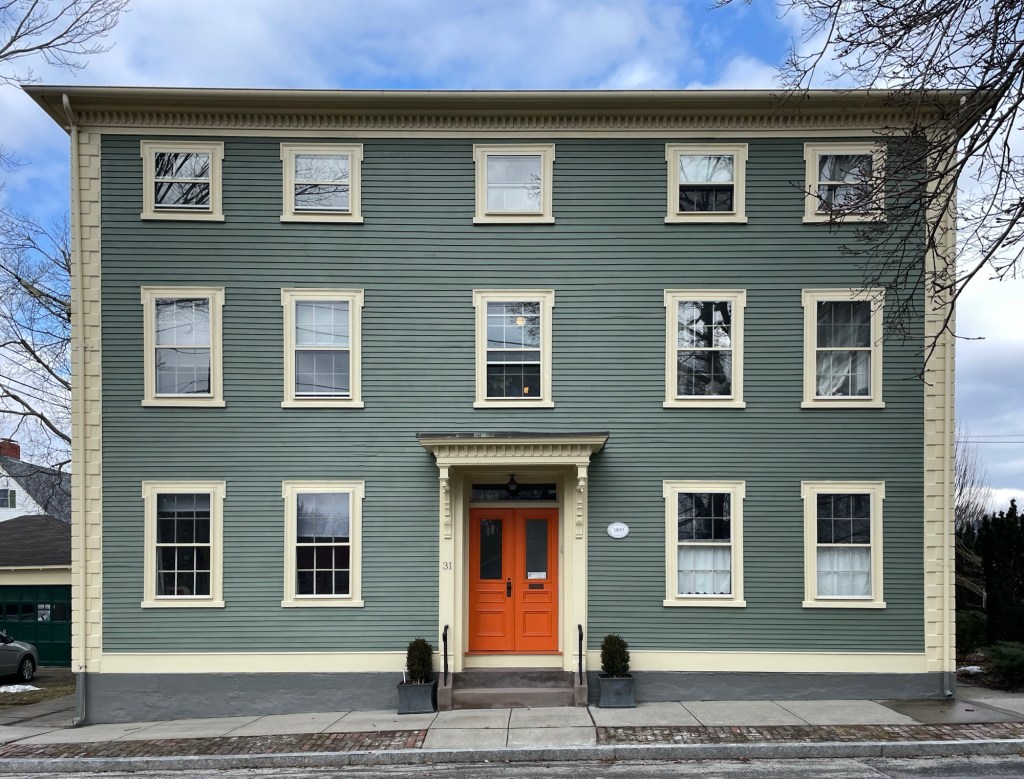
This stately three-story Federal style mansion on Baker Street in the lovely town of Warren, Rhode Island, was built in 1809 as a gift from a father to his daughter as a wedding gift. The house was funded by James Maxwell, of the local family of merchants and slave traders, for his daughter Martha “Patty” Maxwell and her soon-to-be husband, Samuel Randall. Judge Randall operated a school in town and published three local newspapers, the Telescope, the Clarion, and the Telegraph, all rather short-lived. In 1822, he was appointed judge of the court of common pleas for Bristol County, Rhode Island, and served in that capacity until 1824, when he was made justice of the supreme court of the state. The pop of color at the entry and the bracketed, Victorian era door hood complete the facade to give it some serious curb-appeal.
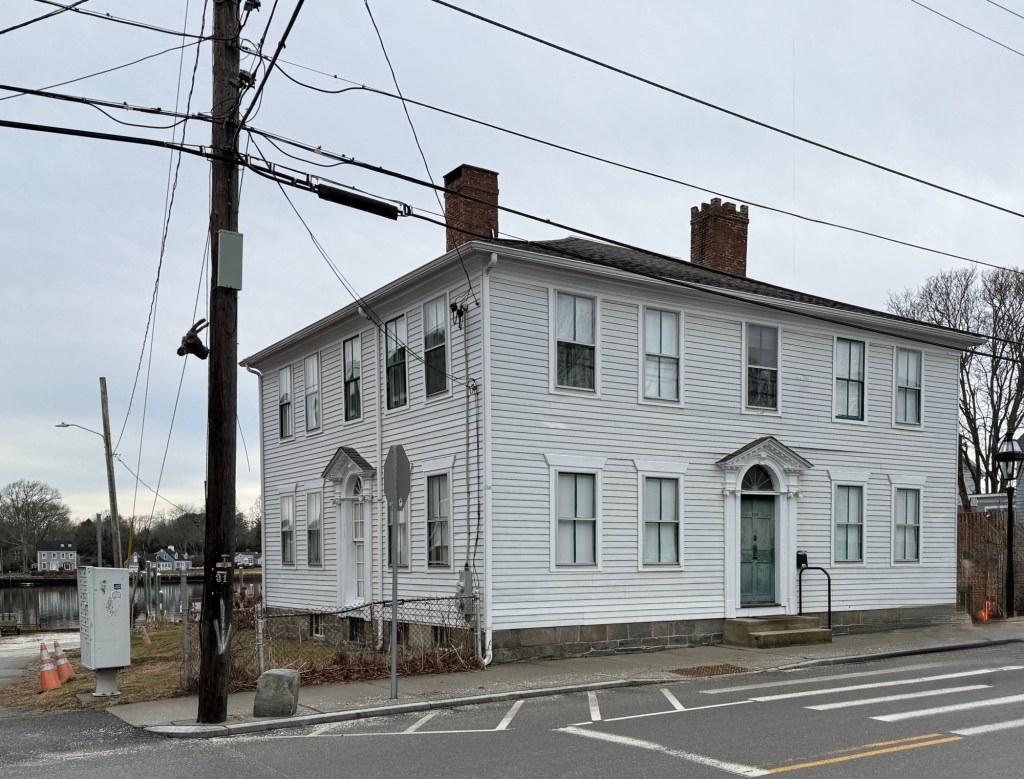
This house, located on Water Street in Warren, Rhode Island, is said to have been built in the 1760s, but its present appearance in the Federal style is credited to owner, Caleb Carr (1768-1853). In around 1790, Caleb fully renovated the property in the Federal style for his residence and as a tavern, with an elegant fanlighted door put on each facade—one for household use, the other for tavern customers. The property was inherited by his son, Captain Caleb Carr Jr., who continued as a tavern owner, but was also an important shipbuilder and operator of the ferry to Barrington, which docked at the end of the street. The Carr Tavern is today covered with later aluminum siding and has Victorian-era two-over-two windows but if restored, would shine as one of the best Federal style homes in town!
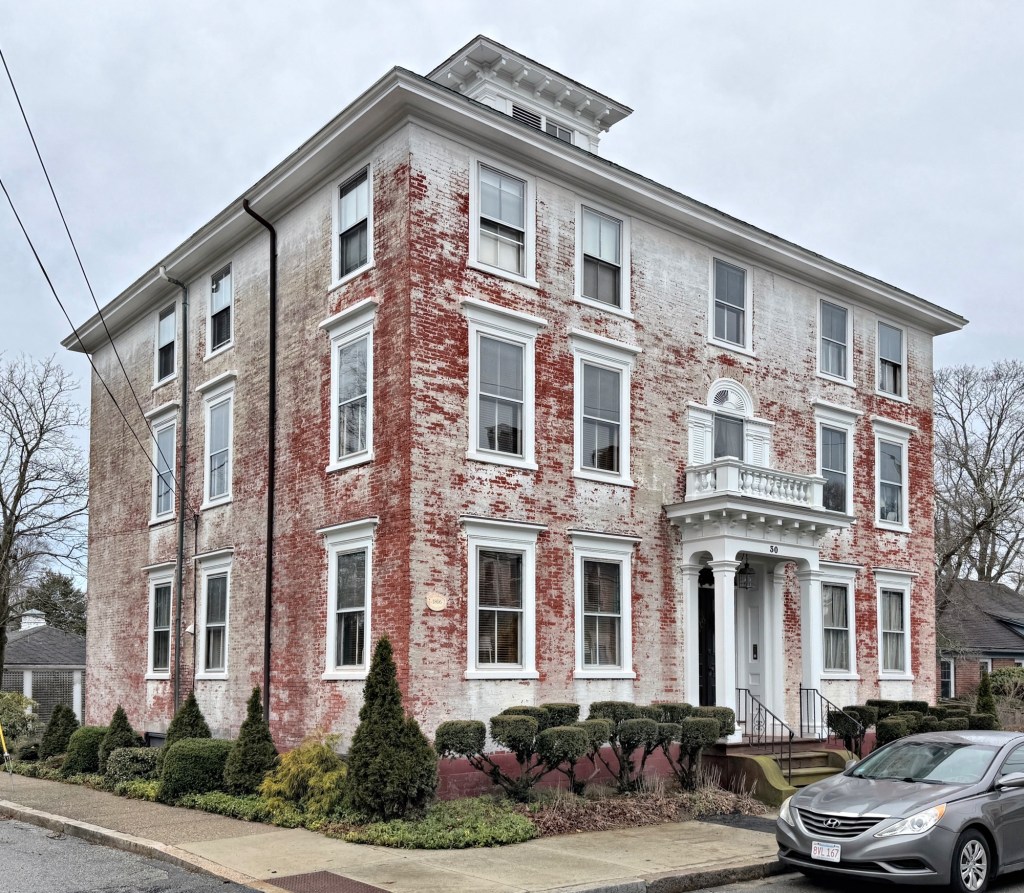
Located next door to the Rebecca Maxwell Phillips House on State Street in Warren, Rhode Island the Eddy-Cutler House remains as one of the finest Federal style residences built of brick in the charming waterfront town. Warren merchant and slave trader Benjamin Eddy purchased this desirable house lot in 1806 from John Throop Child, a town councilman and slave owner in 1774 who built slave ships before the Revolutionary War. Benjamin Eddy began construction on his mansion by 1806, and it was completed sometime before the War of 1812. Like many of the town’s wealthiest residents, Benjamin Eddy was engaged in the slave trade. Captain Benjamin Eddy was captain of at least three slave voyages, delivering 139 captives to docks in Charleston, South Carolina, in June 1806 alone. In 1808, just before the “Act Prohibiting the Importation of Slaves” he purchased and imprisoned 176 Africans – the largest number ever carried on a Warren slave ship. Nineteen died during the return voyage. When he reached Charleston, South Carolina the remaining 157 people were sold into slavery. At the time, the sale would have returned nearly $33,000. He would return home to this mansion on money profited from human suffering, a story as American as apple pie. In 1871, the Eddy Homestead was sold to Charles R. Cutler, a ship master and whaler who had many successful voyages to the Indian Ocean before working in the manufacturing of cotton cordage. The three-story, five-bay Federal style mansion of brick features a Victorian-era porch, but retains its Palladian window with blind fan and lights over the entry and belvedere at the roof. Once painted, the brick is now slowly being re-exposed, a great sight to see.
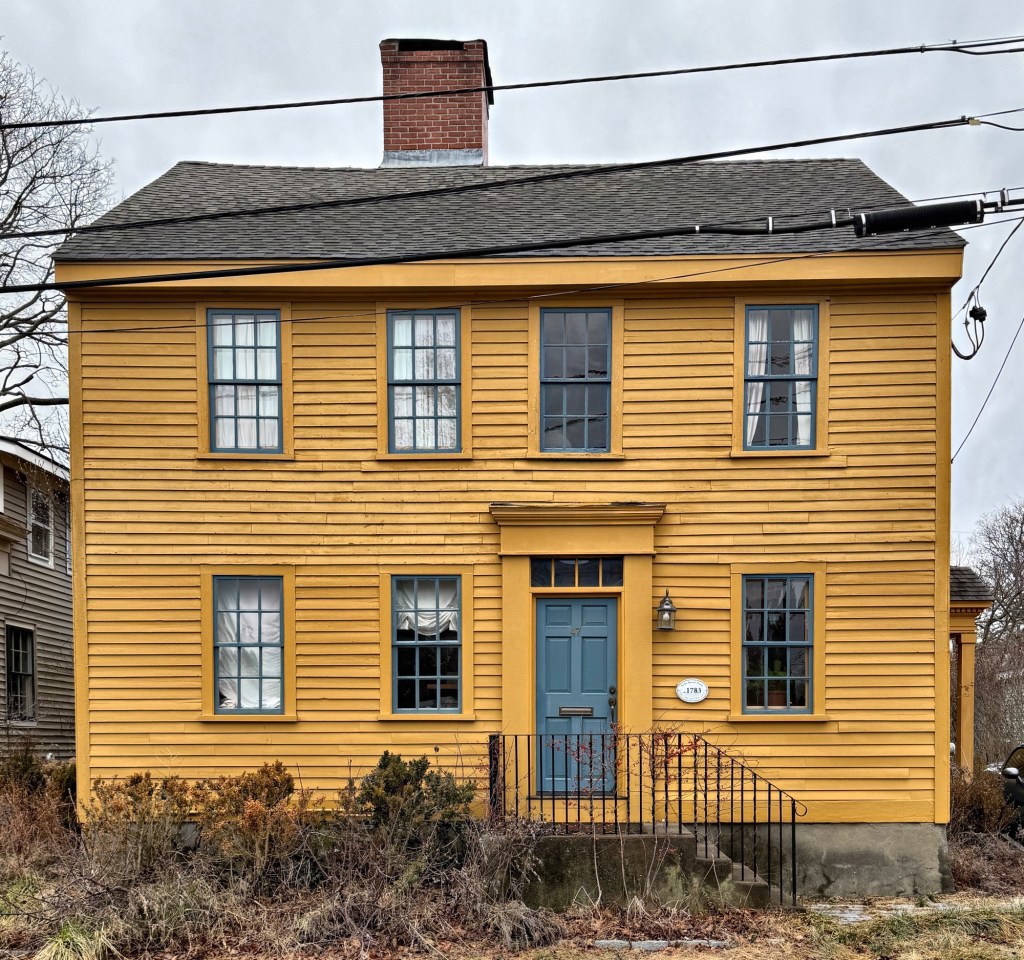
This charming house on Broad Street in Warren, Rhode Island, was built by 1783 for Rufus Barton and his wife, Prudence Cole. Rufus Barton and his family moved to New York and sold the property to Nathan Burr for $775 in 1797, who . Nathan Miller Burr sold the home to William Eastabrook two years later. Captain Eastabrook/Easterbrook had just returned from an illegal slave voyage on the “Betsey” to Africa that resulted in the enslavement of 79 Africans who were sold into slavery in Havana. He would go on to captain at least two more illegal voyages on the “Little Ann” (1806) and the “Hannah” (1807) from Bristol. These three voyages accounted for the death or enslavement of 229 people. The home has been lovingly restored by later owners, who removed the vinyl siding and replaced the cheap, vinyl windows with historically appropriate windows.
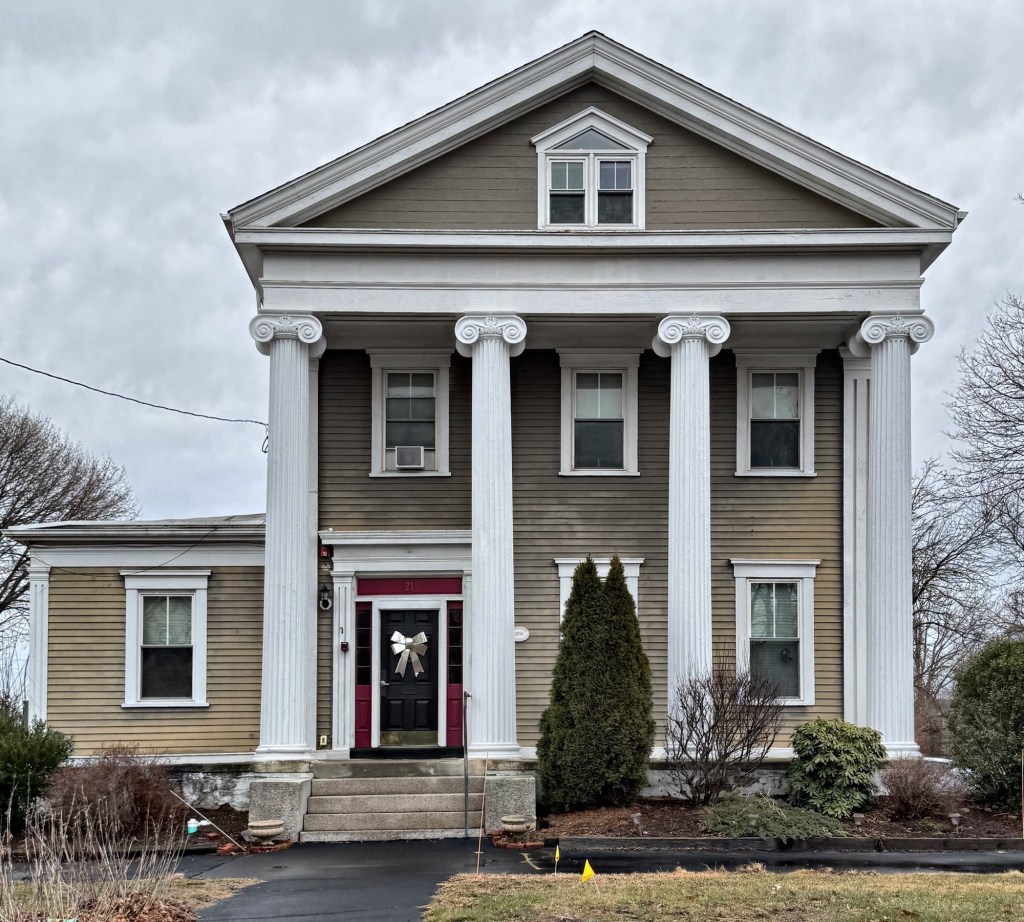
The only two-story temple-front Greek Revival style house in Warren, Rhode Island, the Judge Alfred Bosworth House on Federal Street, is believed to be the work of great architect Russell Warren. Alfred Bosworth (1812-1862) ran a law office in Warren and Providence and represented Warren in the General Assembly from 1839 until 1854 and then served as a justice on the Rhode Island Supreme Court. Bosworth was of counsel for Rhode Island in suits growing out of the boundary question between Rhode Island and Massachusetts, specifically around Fall River. Judge Bosworth died at home in 1862 and his widow, Anne, lived here afterwards. At the end of the century the Bosworth House was converted to an ice cream parlor, named Maxfield’s, which became a very popular attraction in town. The company, owned by Nathaniel and Julia Maxfield, attracted throngs of local residents every summer who would eat ice cream on the front yard of the house. Maxfield’s was even frequented by Providence writer, H. P. Lovecraft, when he was a young man. During the mid-1900s, the house served as a nursing home until 1988, when owners restored the house back to a residence and removed the asphalt siding that was added to the exterior around the time of the Great Depression.
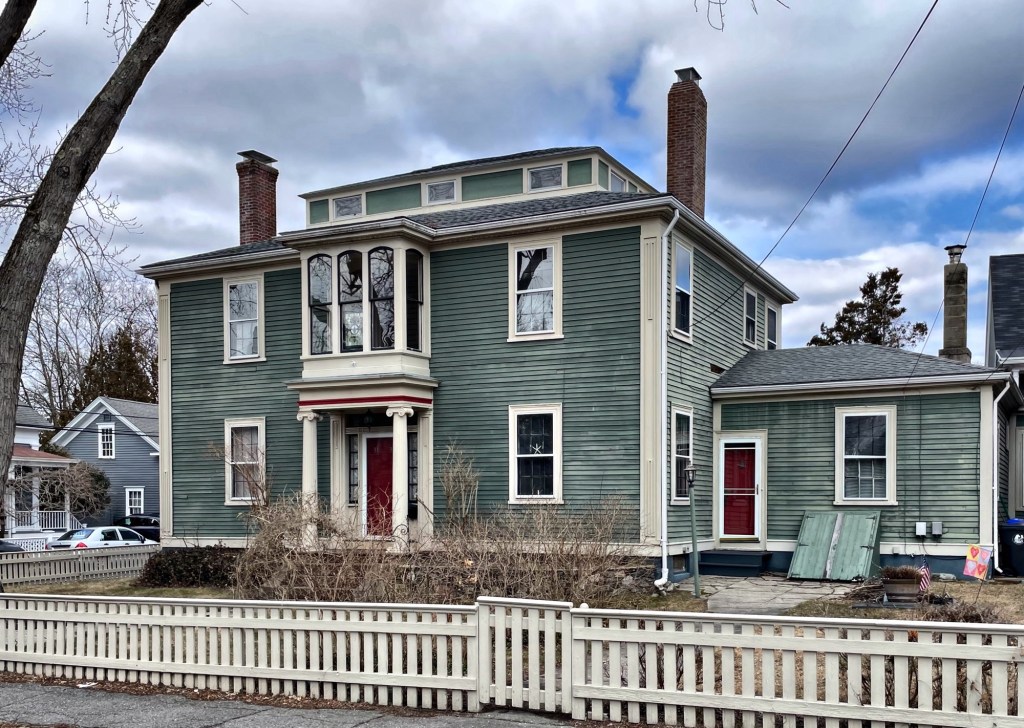
Charles Wheaton (1761-1863) enlisted in the his local militia at just 14 years old and served in Colonel Robert Elliott’s Regiment of Artillery to protect Narragansett Bay. After the war, Charles settled in Warren, Rhode Island, and married Abigail Miller. They would have at least nine children, with one of their children, Charles Wheaton, Jr., (1791-1863) marrying Abiah Goodwin Turner in 1815, the daughter of a wealthy sea captain. Around the time of their marriage, they built this house on Liberty Street in Warren in the Federal style with a three bay facade, monitor on hip roof, and portico at the entrance with Ionic columns. By the end of the 19th century, the house was enlarged and a bay window was added over the entry portico.
Possibly the oldest building in Warren, Rhode Island, this historic farmhouse on Market Street, near the state line, has framing that possibly dates to the 1680s! After Sachem Massasoit and his oldest son, Wamsutta, sold land to Plymouth Colony settlers what is present-day Warren, Barrington, Swansea and Rehoboth, Massachusetts, the town of Swansea was established in 1667. Obadiah Bowen (1627-1710) was an original proprietor of Swansea and was listed as number 23 in the order to draw lots for the meadows on the northside of town. By 1679, he received a ten-acre house lot of uplands and salt meadow, reaching from the Palmer River inland and across Market Street to the Birch Swamp. He built a farmhouse on the rocky highland where he farmed the property until his death. His son, Thomas Bowen (1664-1743), later purchased the farm and added to it another 70 acres making the property a total of 170 acres. The old Bowen property was sold to Richard Haile in 1708 and remained in the Haile family until the late 19th century. After successive ownership in the Haile Family, the property became known as the “Judge Haile farm,” after owner, Levi Haile (1797-1854), a justice of the Supreme Court of Rhode Island, he served on the court that tried Thomas Dorr, the leader of the Dorr Rebellion, a struggle to extend voting rights in Rhode Island to non-property owners. Levi Haile made improvements on his house and farmed the land, as did his two sons. The property sold out of the Haile family in the late 19th century and remained a farm until the 1980s, when part of the property was subdivided for development and part donated to the Warren Land Trust, who maintains the property as the Haile Farm Preserve. While the farmland is protected, the old farmhouse is not protected as a town landmark nor through the community’s demolition delay bylaw.
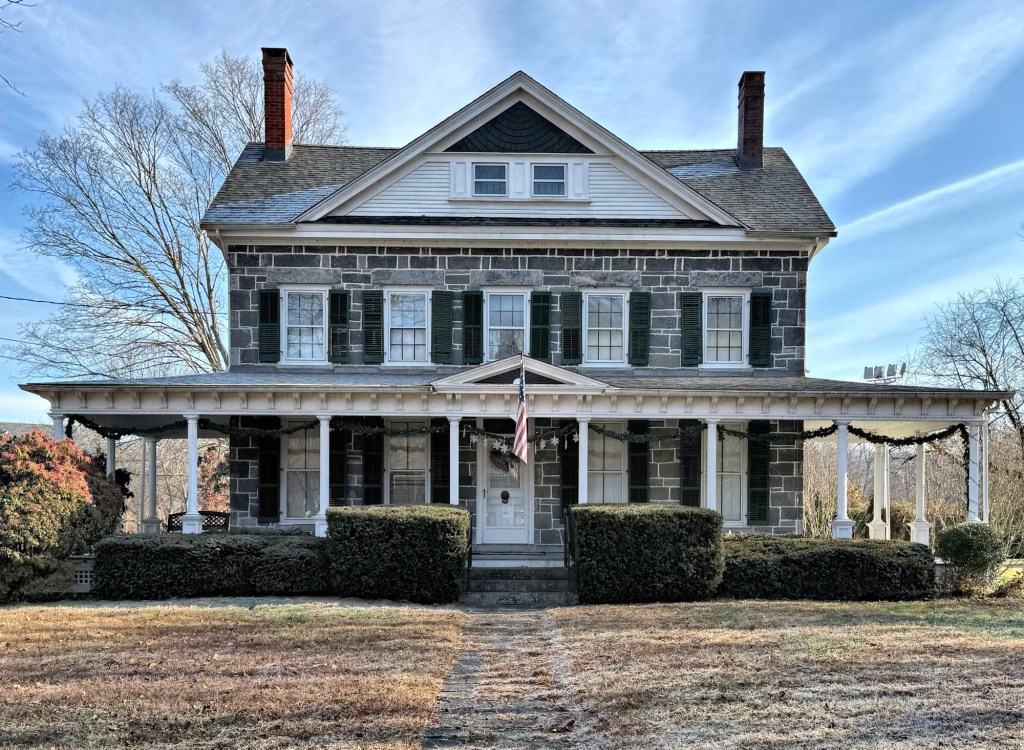
The Southworth House, also known as the Old Stone House, in Deep River, Connecticut, is a significant example of a stone, Greek Revival style house built for an important local family. The Southworth House was constructed in 1842 for Deacon Ezra Southworth (1803-1859) from stone harvested from one of the Southworth family’s quarries. Ezra was the son of local shipbuilder, Job Southworth who began building ships at the Deep River landing in the 1790s. Ezra Southworth branched off into manufacturing, becoming a partner and patent holder producing ink wells. His son, Ezra Job Birney Southworth (1844-1919), went into business with his father-in-law in shipping and served as a member of the State Legislature twice. In 1882, Ezra Jr. added the wooden ell onto the rear of the Stone House along with the wrap-around veranda and likely the rear barn as well. Ada Gilbert Southworth Munson was Ezra J. B. Southworth’s only child to live to adulthood and inherited the family home. She was a founding member of the Deep River Historical Society and bequeathed her family home to the Society in 1946, who have maintained the significant home here ever since.
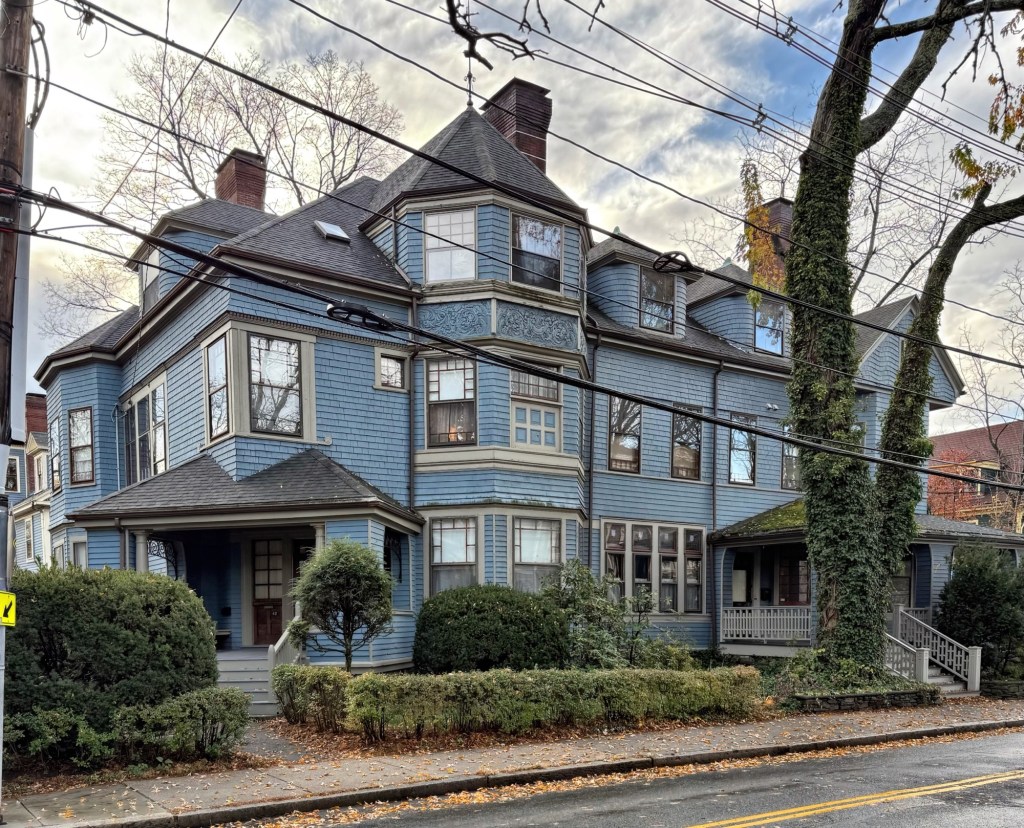
John Dean Sturtevant (1816-1889) was born in New Hampshire and became engaged there in local woolen mills, quickly growing into advanced management positions. He operated woolen mills in New Hampshire, Maine, Connecticut, and Massachusetts, and settled in Brookline where he had access to other states via excellent rail service. When he died in 1889, John’s heirs inherited their late-father’s properties, and began to develop them as Brookline filled out in the last decades of the 19th century. This handsome double-house at the corner of Cypress and Waverly streets was built in 1892 by the Sturtevant Estate, who rented the property to two families of wealthy residents. The Sturtevant Double-House is a landmark and exceptionally preserved example of the Queen Anne style, with varied siding, asymmetrical forms, complex roofline with dormers, and applied ornament in the form of carved panels.
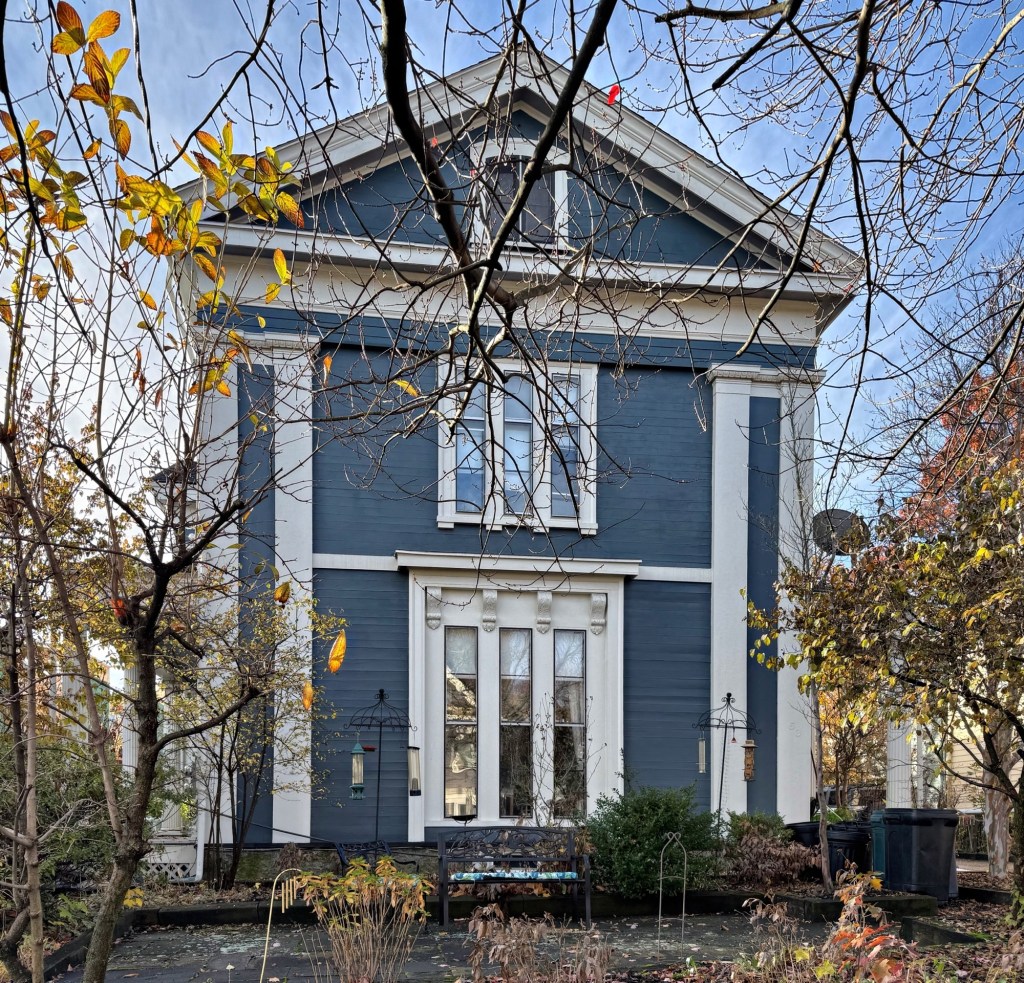
The Lindens neighborhood, located just east of the civic and commercial core of Brookline Village, was long an apple and cherry orchard known as Holden Farm. Beginning in 1843, the area became the earliest planned development in the town and was laid out as a “garden suburb” for those wishing to escape the growing congestion of Boston. As originally conceived in 1843, it reflected the latest ideals of planned residential development for a semi-rural setting on land owned by Thomas Aspinwall Davis. The streets, parks, and house lots here were laid out by civil engineer, Alexander Wadsworth, who two years earlier, laid out plans for Mount Auburn Cemetery in Cambridge, the first “Rural Cemetery” in America. Early homes were built on speculation by John F. Edwards, an architect-builder, for Davis, who was strict about high-quality designs in the Greek and Gothic revival styles in his newly laid out neighborhood. This house, at 53 Linden Street, was built in 1844 by Edwards, and sold soon-after to John G. Faxon (1793-1861), a lumber merchant who made his fortune in Lubec, Maine until he moved to Brookline. Faxon sold the house in 1851 to Thomas Howe, who likely added the Italianate style tripartite windows with the lower having scroll brackets.
This large First Period house in Wayland dates to the early 18th century and was originally located in Kingston, Massachusetts, and moved to its present location in the 40s. The historic home was built by 1713 for Jonathan Bryant (1677-1731). After 250 years in Kingston, the house was threatened with demolition, and was ultimately saved by Wayland resident, Allan Finlay. Allan was a member of the town’s Planning and School boards, and was active in overseeing the Modern expansion of Wayland’s schools in the 1950s and 60s. In 1941, Finlay had this house disassembled and rebuilt on land on Old Sudbury Road for his family. The house, with its expansive setback, overlooks preserved wetlands.