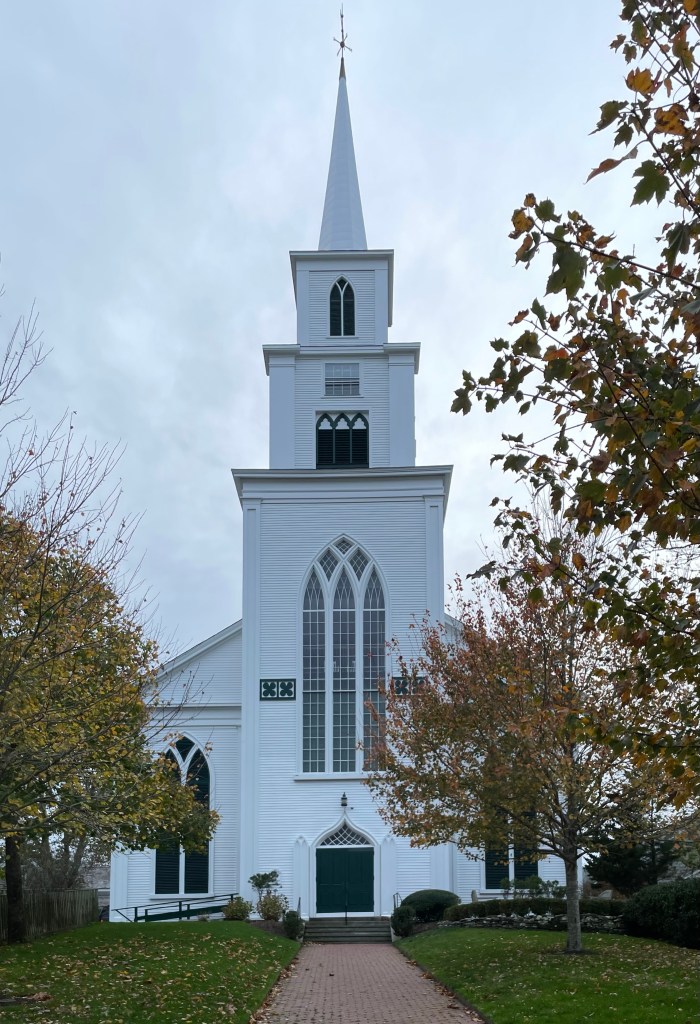
The First Congregational Church is one of Nantucket’s most prominent historic landmarks and is prominently located on a hilltop, being one of the first buildings you’ll see when arriving to the island by ferry. Constructed from a design by Samuel Waldron, a Boston housewright, the present church blends the Greek and Gothic Revival styles elegantly into a single composition. The interior of the church was painted with architectural trompe l’oeil paintings by E.H. Whitaker of Boston in 1852. The steeple was removed in 1849, likely from engineering concerns and high winds on the island. In 1968, the steeple was reconstructed from historic drawings by Philip Graves of Ames & Graves.
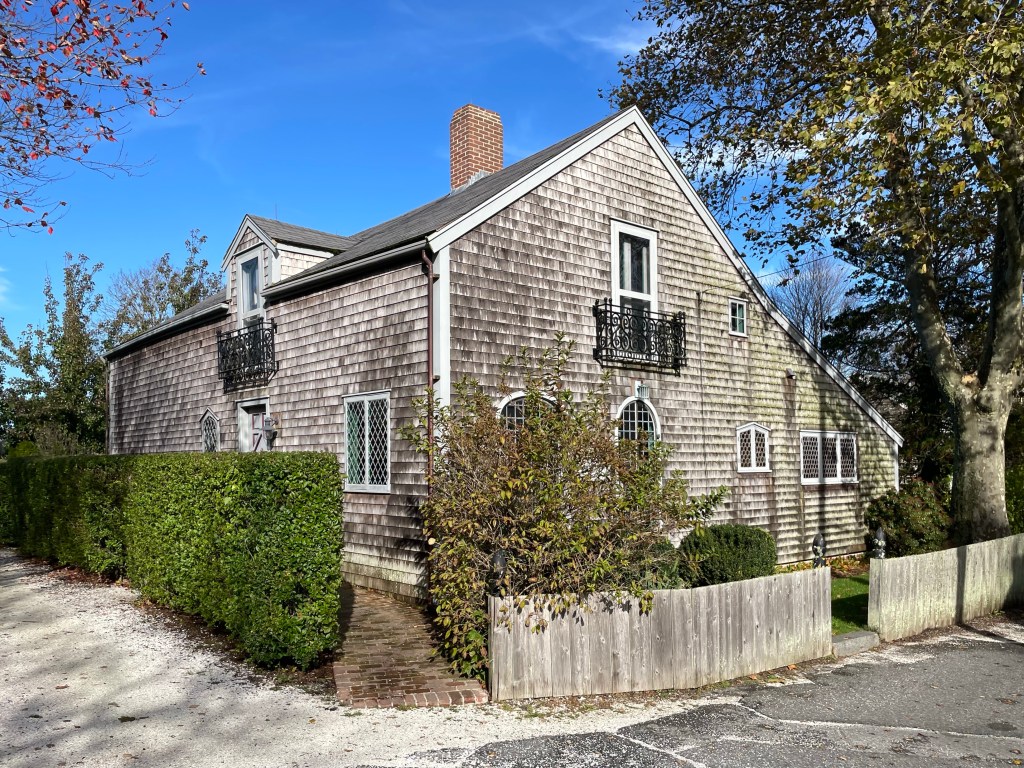
Located on the island of Nantucket, this barn, now known as Greater Light was built circa 1790. Although the exact date of construction is unknown, historic research indicates it was built sometime during the ownership of two early Macy family members who held the property between 1748 and 1814. The barn remained in the Macy family until 1866, when Zephaniah Macy (then in his eighties) sold the property with the barn to their neighbor David Folger. Folger most likely used the barn for his herd of milking cows. In the summer of 1929, Hanna and Gertrude Monaghan, two Quaker sisters, discovered the barn and saw it as a perfect structure to become their home and art studio when vacationing on the island. The sisters began working on the dilapidated building and set about transforming it into their own summer oasis, adorning it with cast-off architectural elements, decorative objects, and eclectic furniture. Hanna Monaghan, the surviving sister, bequeathed Greater Light and its contents to the Nantucket Historical Association in 1972. The building is open in the summers for visitors who can catch a glimpse at the spirit of Nantucket as an artist’s colony in the 1920s and beyond.
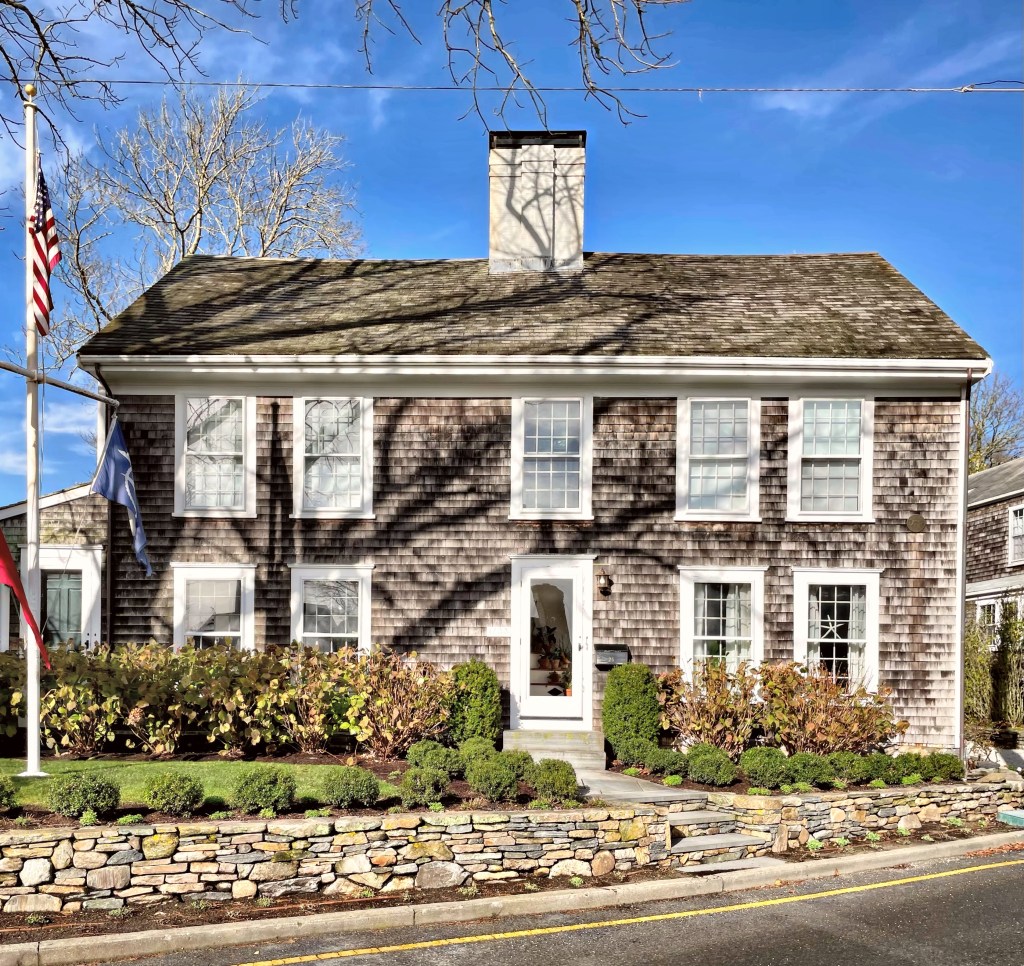
There is so much to love about this house! The lot here was purchased by Paul Macy and Gideon Folger in 1807, and they had this house built on the site that year. Paul Macy and, Gideon Folger were two major shareholders in the ill fated whaling schooner “Essex”. In 1820, while at sea in the southern Pacific Ocean under the command of Captain George Pollard Jr., the ship was attacked and sunk by a sperm whale. Thousands of miles from the coast of South America with little food and water, the 20-man crew was forced to make for land in the ship’s surviving whaleboats. The men suffered severe dehydration, starvation, and exposure on the open ocean, and the survivors eventually resorted to eating the bodies of the crewmen who had died. When that proved insufficient, members of the crew drew lots to determine whom they would sacrifice so that the others could live. Seven crew members were cannibalized before the last of the eight survivors were rescued, more than three months after the sinking of the Essex. This ordeal was inspired Herman Melville to write his famous 1851 novel Moby-Dick. The Folger House was owned for some time by Walter Folger, a lawyer who served in the state senate.
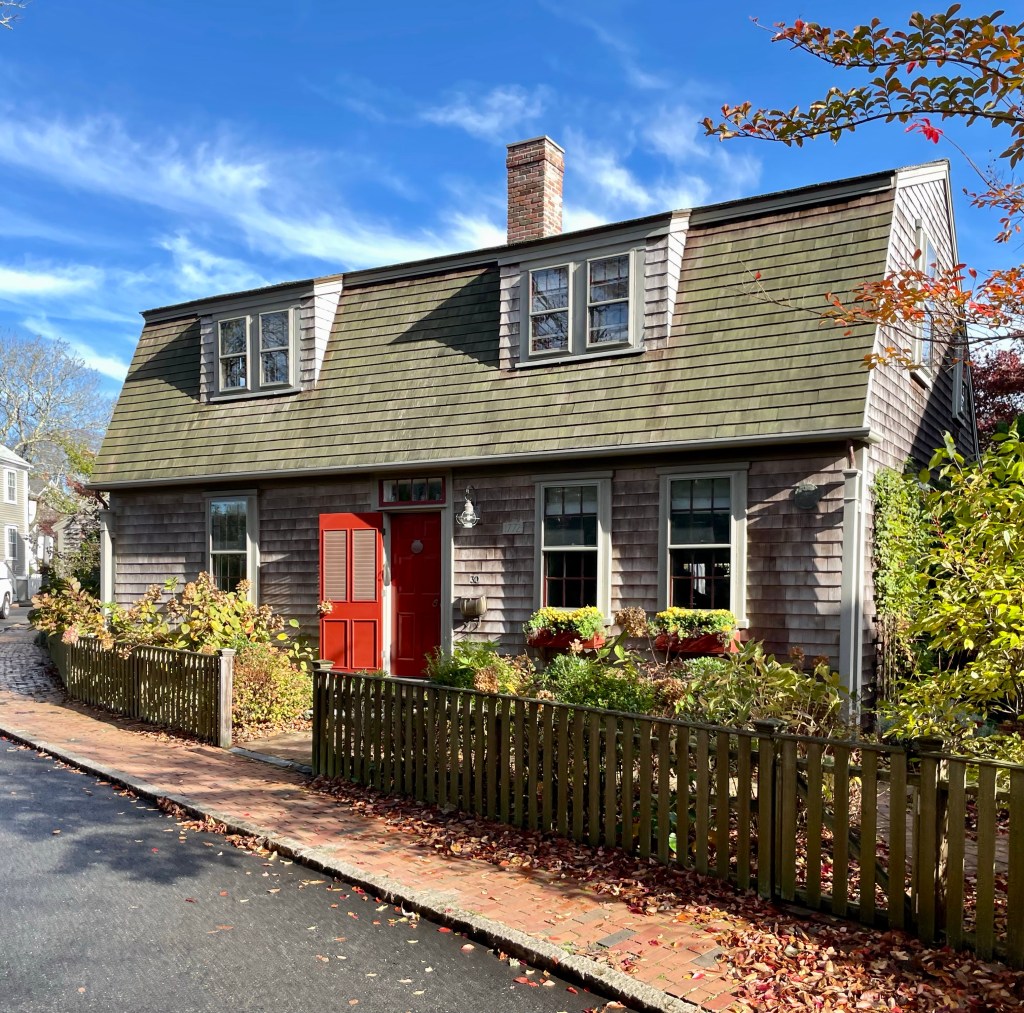
Colonial-inspired homes on Nantucket never will go away, and that is because the entire island is a local historic district! New construction, demolitions, and alterations to existing structures all need to be reviewed and approved on Nantucket, no easy task! This home was built in the inter-war period (before the historic district), when New Englanders still harkened back to the classics, Colonial homes. The house was built in 1939 for Annie Robb, and it was later purchased by artist couple Vladimir Kagan and Erica Wilson. Vladimir had a really interesting life. A cabinetmaker’s son, Mr. Kagan came to the United States at 11 after fleeing Nazi Germany with his family. He trained at his father’s New York workshop and by the 1940s was producing his own designs. One of his first orders was a set of tables and chairs for a delegate lounge at the fledgling United Nations! Meanwhile, across the English Channel, a young woman named Erica Wilson came into the world in 1928 in the town of Tidworth, England. Her father was in the military and the family moved to Bermuda soon after Erica’s birth. A drawing prodigy, Wilson “translated her drawing techniques into needlework,” Illya said. Needlework became her artistic focus and she graduated from the Royal School of Needlework in London. The duo lived in this home as a summer respite, where they could hone their artistry and skills. Their son, Ilya Kagan (also an artist, of course) also stayed in the home and still resides on the island. Love it!
Another of Nantucket’s old Colonial homes is the Abel Gardner House, which was built in 1733 by its namesake. The saltbox Georgian house was constructed on a large plot of land which was farmed for some time by the Gardner family. Decades later, a portion of the estate was subdivided for the erection of a home for Abel’s grandson, Grindell. The Abel Gardner House was eventually owned by Caleb Gardner and became known as Wisteria Lodge for the climbing wisteria vines up the facade and on arbors. I can only imagine how glorious this colonial would be covered in purple!
In 1772, Grindell Gardner built this Georgian gambrel-roofed house on land which was part of a large tract formerly owned by his grandfather, Abel Gardner, whose own home sits a stone’s throw away. The charming Cape house is of an unusual type, having the gambrel on the front side only which slopes to a sort of saltbox at the rear, which originally contained the summer kitchen and a water closet. The house was altered in the 1890s with the addition of dormer windows and the removal of the original large central chimney, which was removed prior to the new dormers. By the 1960s, the house had only been owned by four families.
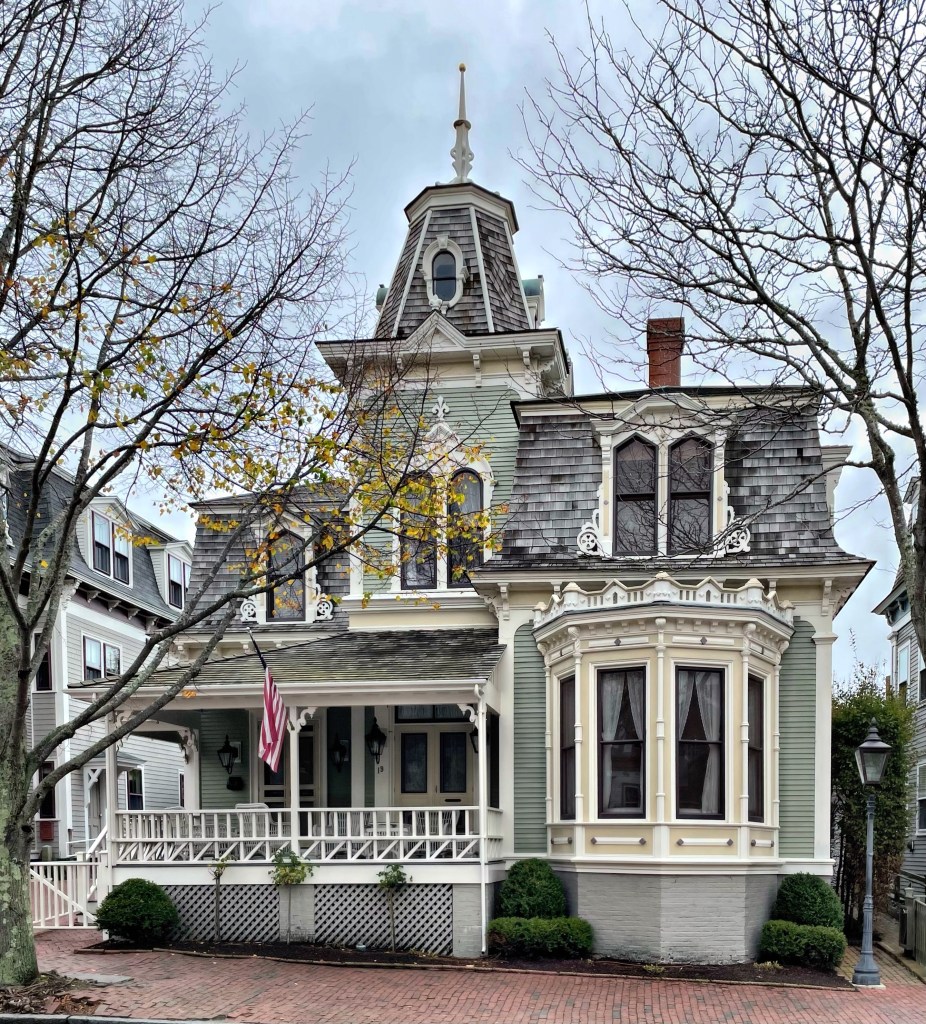
When one thinks of architecture on Nantucket, many would think of old Colonial-era capes and stately Federal and Greek Revival whaling captains mansions. There are Victorian-era houses on Nantucket, but building on the island tapered off by the mid 1800s after the mid-1700s to the late 1830s when Nantucket was the whaling capital of the world. In December of 1877, Nantucket coal dealer Andrew Hunt purchased a vacant lot on Broad Street to erect a new home for his family. Mr. Hunt hired local builder Charles H. Robinson to design and construct the Second Empire cottage, which today, remains one of the best-preserved and high-style Mansard residences on the island.
Here it is… The oldest house in Nantucket! The Jethro Coffin House dates to 1686, and when it was built, Nantucket’s English population totaled several hundred, and the native Wampanoag outnumbered them by at least three to one. The home was built seemingly as a wedding gift from twenty-three-year-old Jethro Coffin (1663–1727) to his new sixteen-year-old wife Mary Gardner (1670–1767). The marriage merged two of the old Nantucket families and was built on Gardner family land out of lumber transported to the island from Exeter, New Hampshire, where Jethro’s father, Peter Coffin, owned timberland and a saw mill. The First Period house has small windows of small panes of glass as the material was shipped from England at high cost. The large central chimney would heat the entire home on cold winter nights. Mary and Jethro sold their Nantucket dwelling to Nathaniel Paddack in 1708 and moved to Mendon, Massachusetts, when Jethro inherited property there. By the late nineteenth century, the house was abandoned (for some time it was used as a barn) and had fallen into disrepair. A Coffin family reunion held on the island in 1881 renewed interest in the property and off-island members of the family bought the old Coffin House. The Nantucket Historical Association acquired the house in 1923, and four years later, Historic New England), commenced an extensive reconstruction in an attempt to return the house to its historic appearance. It remains a location of pride for residents and visitors to the island to this day.
In around 1800, Baker Turner built this beautiful Federal period home on Nantucket. It typifies the best parts of Nantucket architecture: gray weathered shingles, charm and simplicity. Over 100 years after the house was built, the property became significant as a facility for saving lives. The Nantucket Cottage Hospital was founded in 1911, conceived by the visions of Dr. John S. Grouard (who lived nearby) and Dr. Benjamin Sharp, to provide centralized high-quality medical services to the residents on the island. There had been no hospital on the island beforehand. The duo bought the former Turner homestead in 1912 and moved in. The hospital was eventually outgrown, and the hospital relocated to a modern building on available land in the 1950s. This building was sold and now appears to be a home, full circle.
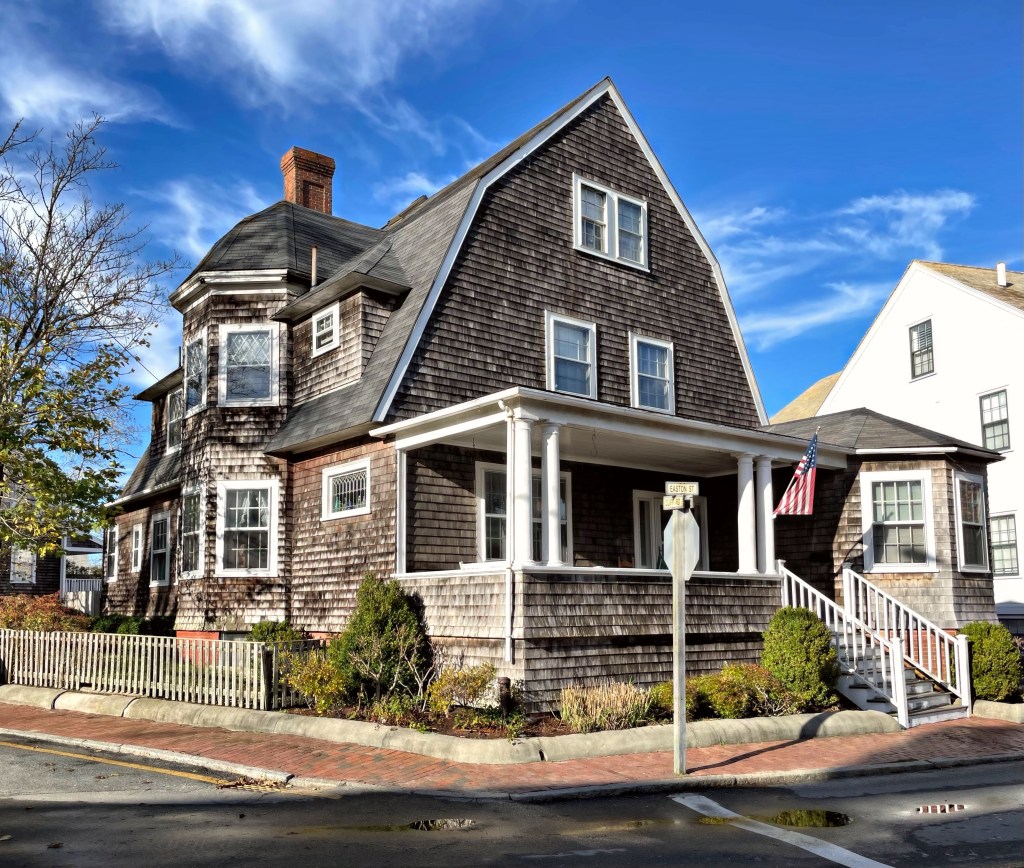
Dr. John Shackford Grouard (1867-1927) was a physician and surgeon born in Allegheny County, Penn. He attended Phillips Exeter Academy, and earned an M.D. from Harvard Medical School in 1889. In 1891, he moved to Nantucket, Massachusetts, where he established his own general medicine and surgical practice. Years after establishing his practice, he built this beautiful Shingle/Queen Anne style cottage that is dominated by a massive gambrel roof and is located adjacent to the Nantucket Hotel. He served as the Town Physician and medical examiner, on the Nantucket School Board, and as president of both the Nantucket Civic League and Citizen’s Gas, Electric, and Power Company. Dr. Grouard also co-founded the Nantucket Cottage Hospital in 1911, but more on that later. Dr. John Shackford Grouard died in Boston in 1927, one week after surgery for a gallbladder inflammation.
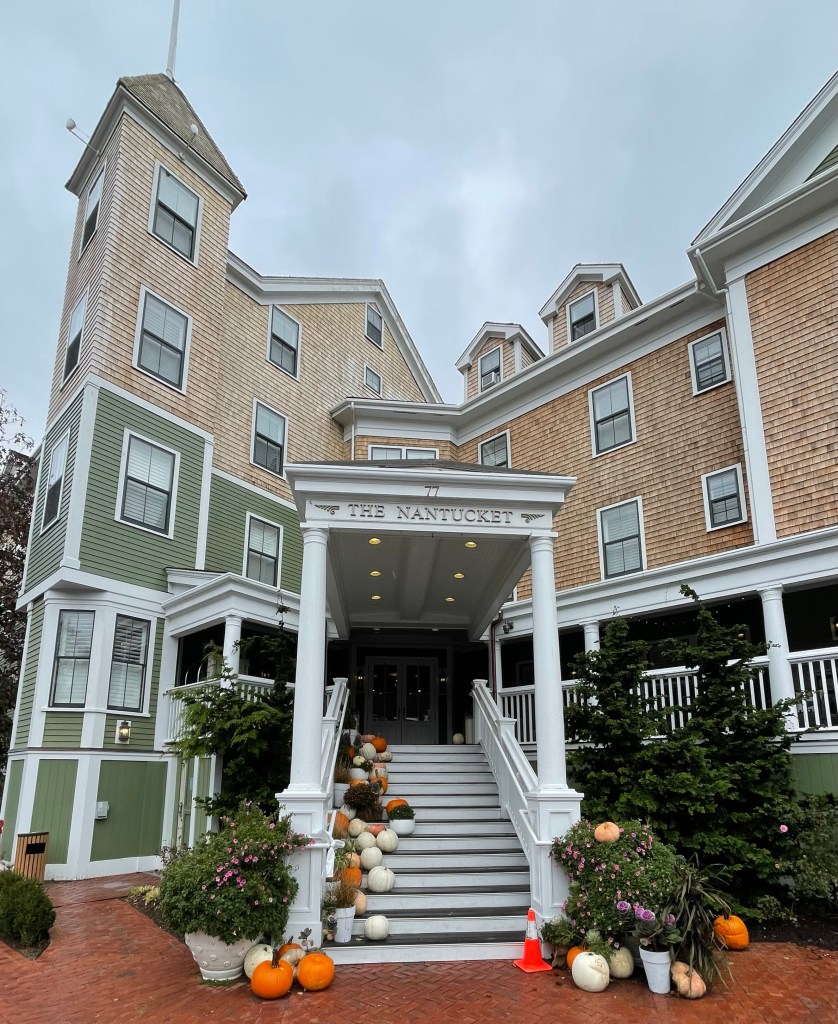
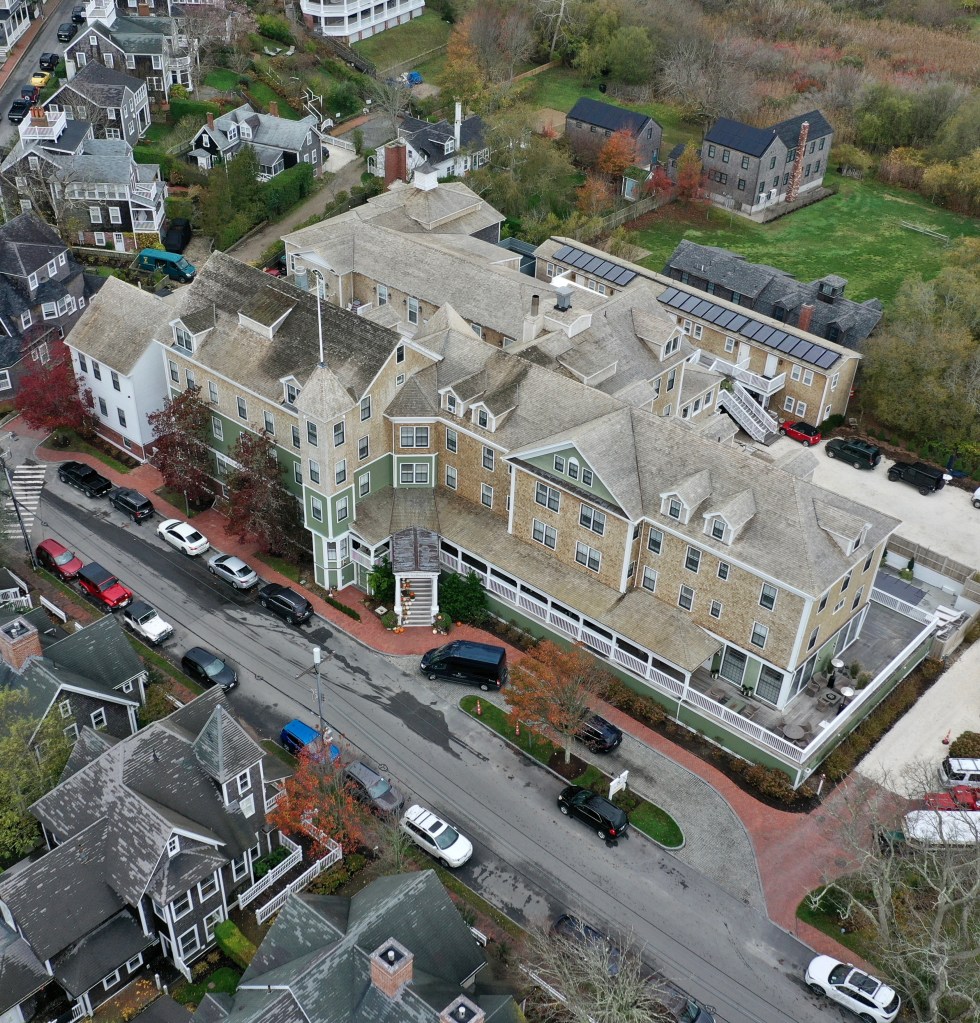
In 1888, Charles F. Folger of Philadelphia purchased the former Elijah Alley house on Easton Street, just north of the main village of Nantucket. Folger hired carpenter Edwin R. Smith to design and build a new grand hotel for summer residents of Nantucket. Originally named the Point Breeze Hotel, the grand resort opened in the summer of 1891. The Queen Anne style hotel contained forty sleeping apartments in the upper floors and was dominated by a corner tower with billiards rooms and a bowling alley in the raised brick basement. Business was booming, and by the early 20th century, Folger expanded the hotel adding the east wing in the Colonial Revival style. In 1925, a fire destroyed the original Point Breeze Hotel, leaving just the East Wing. By this time, the days of the grand, wooden hotels was coming to a close. The Nantucket Institution for Savings acquired the hotel during the Great Depression, until 1936 when Gordon Folger Jr., grandson of the Point Breeze’s original proprietor, purchased the hotel and renamed it after himself, as the Gordon Folger Hotel. By the end of the 20th century, the building sat underutilized, the early 2000s when Little Gem Resorts purchased the hotel, seeking to restore this historic property back to her former glory. The original 1891 hotel was rebuilt in 2012, even down to its iconic corner tower, and the hotel was renamed The Nantucket. The hotel is open year-round and is lavish inside and out, providing you with a sense of home even when on vacation in the middle of the Atlantic!
The Hyde-Richardson House is one of roughly twenty remaining pre-Revolutionary War homes in Newton. The home was built for Timothy Hyde (1689-1756) after he inherited the property including 36 acres and a house from his father John Hyde. Timothy had two wives: Rebecca Davis who he married in 1718 and died in 1724 (seemingly in childbirth); and his second wife Sarah Whitmore, whom he married in 1727. The home was likely built soon after his second marriage. It is possible that parts of the original home on the site were reused for this structure. He served as Surveyor of Highways and Constable and in 1710 was drafted to serve with the militia in the successful siege of Port Royal in Canada. In 1761, Jeremiah Richardson bought the property and married his wife Dorcas Hall that same year. Richardson was a deacon and like Timothy, served as Surveyor of Highways. The property remained a farm until the 1930s when the automobile and suburban expansion reached the Oak Hill section of Newton. The farmland was ultimately was subdivided to create the surrounding neighborhood in the mid 20th century.
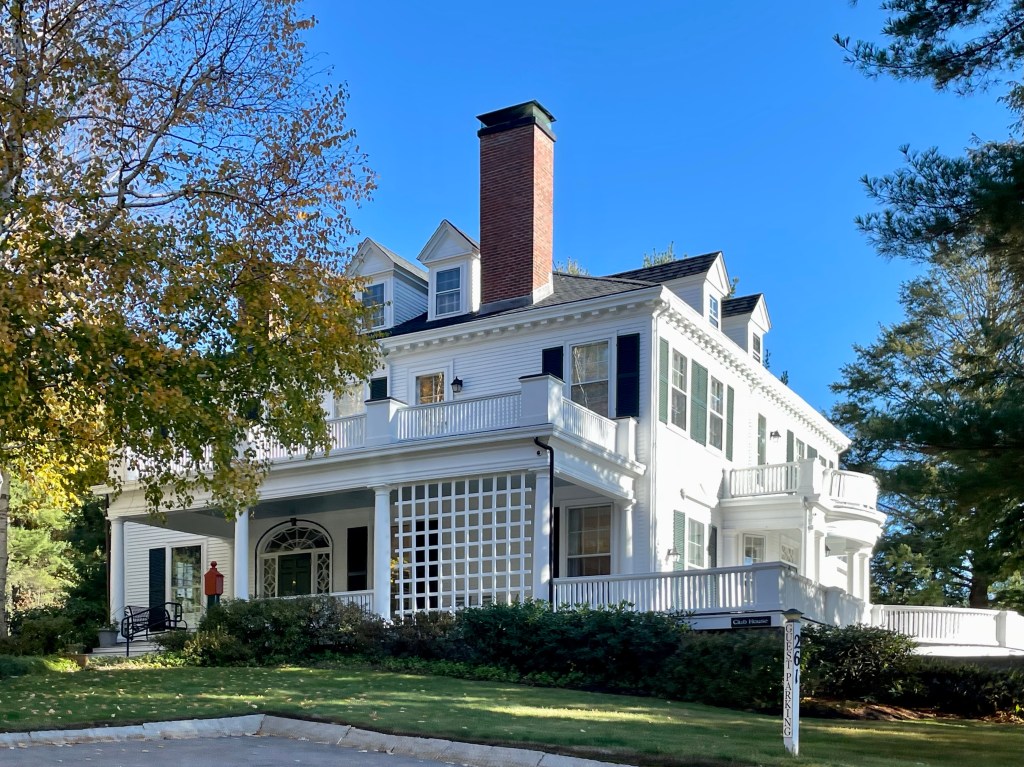
Ellen Banning Ayer (1853-1918) of Minnesota married Frederick Ayer in 1884 and her life completely changed. Frederick Ayer was one of the richest men in New England and he was involved in the patent medicine business, but is better known for his work in the textile industry. After buying the Tremont and Suffolk mills in Lowell, Massachusetts, he bought up many textile operations in nearby Lawrence, combining them in 1899 into the American Woolen Company, of which he was the first president. The couple had at least three houses in Lowell, Boston, Pride’s Crossing and had three children (one of whom Beatrice, later married the famed general George Patton). As the Ayer Mansion on Commonwealth Avenue was being built, the family was looking for a country house near the city. One year, Frederick asked Ellen what she wanted for a gift and she said “roses”. Frederick purchased an old farmhouse on Nahanton Street in Newton and had greenhouses and a stable built immediately, followed by a Colonial Revival country house for his wife Ellen. The mansion held lavish parties for the Ayers, who loved to entertain and it was passed down to their eldest daughter Katharine Ayer Merrill. The property was purchased in the 1920s by Clive and Mona Lacy for decades until it sold in the 1980s. The large site was eyed for redevelopment. The architectural firm of Dimella Shaffer was hired, and they restored the Ayer House, and designed forty residential units on the site, all tucked into the woods gently peering out here and there. The old Ayer House remains as the clubhouse of the Ledgebrook Condominiums Association.
After the Quabbin Reservoir was filled (more on the history in my last post), the cleared land and body of water, with its over 181 miles of coastline, was seen as not only an engineering marvel, but a place of natural beauty and splendor. Upon a rise in the land and the edge of the reservoir, they saw a perfect location to build a tower that could serve many purposes. The Metropolitan District Water Supply Commission hired the firm of Densmore, LeClear & Robbins to design a tower that would serve as a radio tower, fire station and observation tower to view the reservoir. The structure, while designed in the Arts and Crafts mode, is of modern construction and is comprised of two main parts. The lower portion, is constructed of stone and concrete, with metal casement windows, granite lintels and sills and bronze doors. This section was used for radio equipment. The interior has glazed tile walls and cement floors. The six-story tower has five floors of metal and concrete stairs. At the top is a two-level, glass enclosed observation tower.
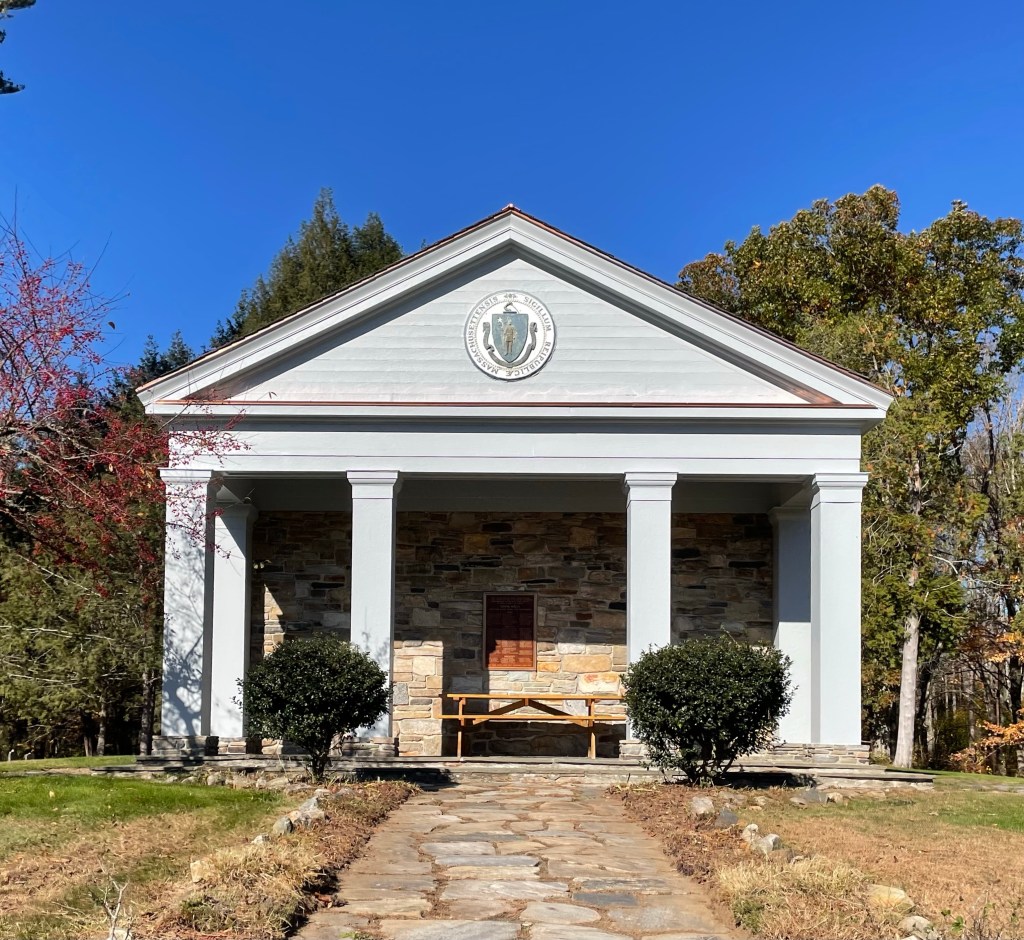
By the early 1900s, metropolitan Boston’s demands for freshwater began exceed its supply, causing the state legislature to look for other sources of water to supply the metro’s population growth. A 1922 study endorsed the Swift River Valley (Quabbin area) as the best location for a new reservoir that could supply Massachusetts with fresh water, but there was one issue, there were towns and people living there. To create the Quabbin Reservoir, the depressed land would need to be flooded, this required over 80,000 acres of land to be purchased or seized by eminent domain by 1938. Four towns: Dana, Enfield, Greenwich, and Prescott were disincorporated and their excess land not flooded was added to surrounding municipalities. In total, an estimated 2,500 residents lost their homes as part of the flooding. Not all elements of the towns were destroyed, however. Town memorials and cemeteries in the four towns were moved to Quabbin Park Cemetery, in Ware, a short distance from the Quabbin Reservoir. Many other public buildings were moved intact to other locations (like those in Dorset, Vermont featured previously). In the over 80,000 acres that were flooded, the Commonwealth had to relocate an estimated 7,500 burials in over 35 cemeteries in these flooded towns. Bodies were removed from their respective locations, and intered in the new Quabbin Park Cemetery, built by the Commission in 1932 with grounds designed by landscape architect Arthur A. Shurcliff. An area for unknown graves and a memorial area at the entrance to the cemetery also contains public war monuments from the abandoned towns. This service building was added to the cemetery from designs by architect Frederick Kingsbury who died during its construction.