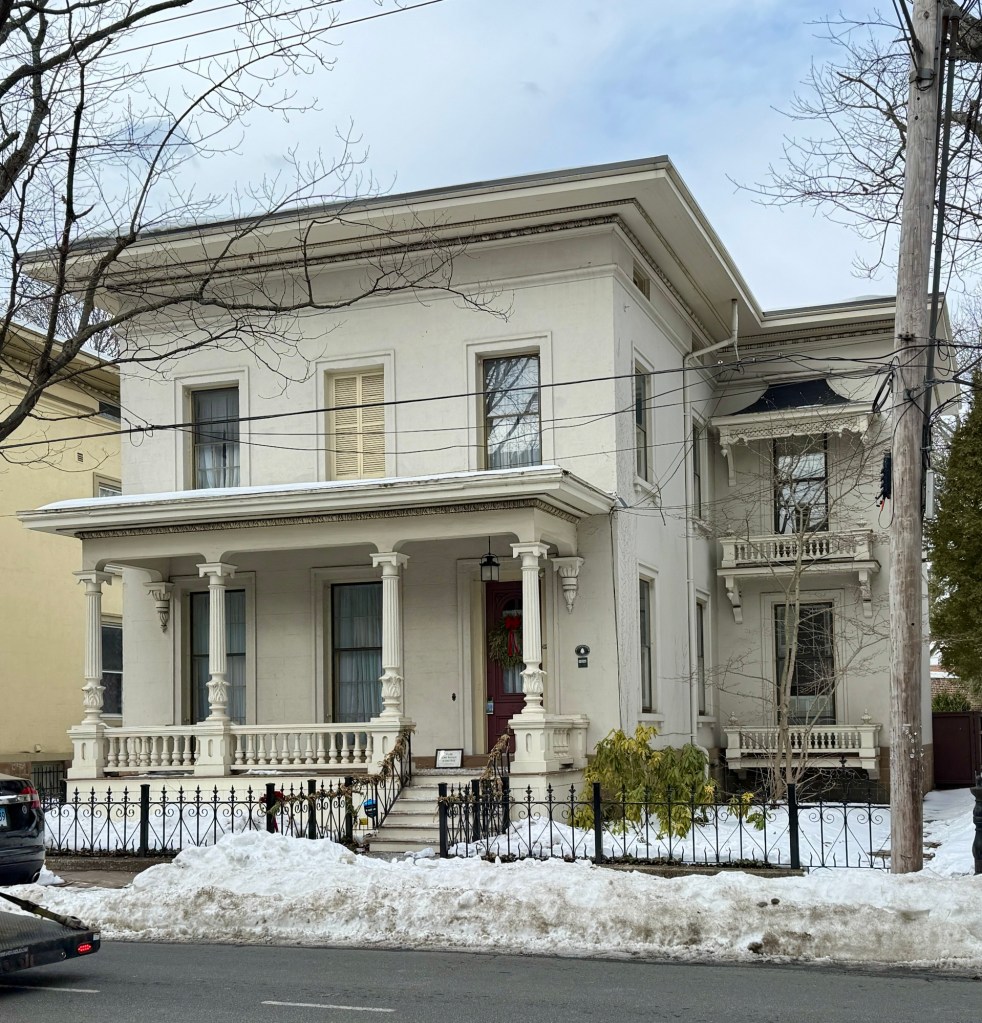
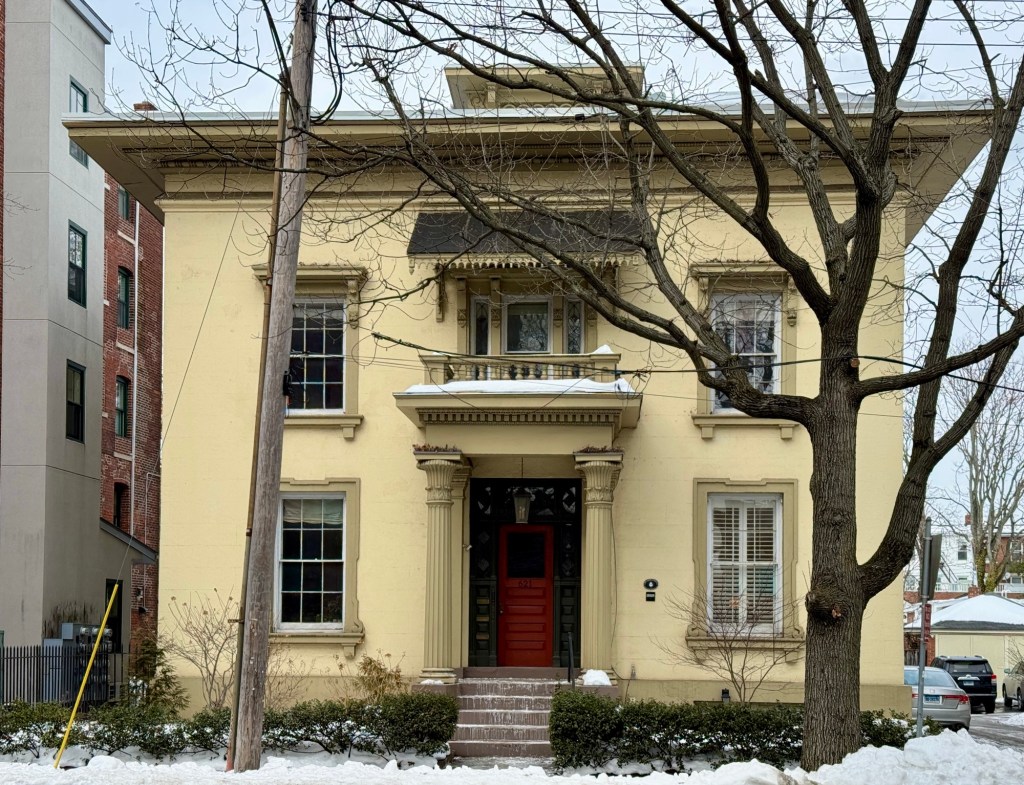
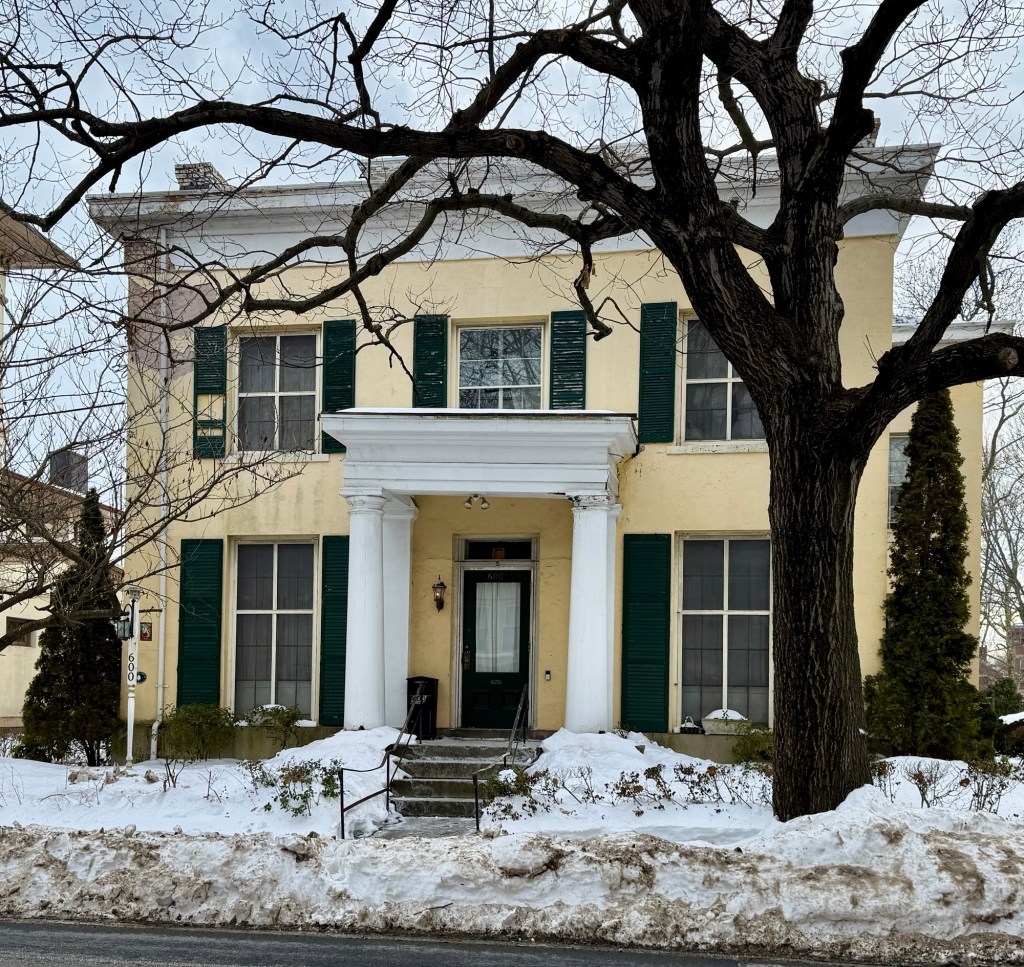
William Lewis was a lumber dealer and business partner of Nelson Hotchkiss, who managed the firm in their name. The partners purchased house lots on Chapel Street in the Wooster Square district of New Haven and are said to have worked with architect, Henry Austin, on furnishing designs, with this residence built for Mr. William Lewis. Square in plan, the two-story residence is built of brick with stucco walls, broad overhanging eaves, and a front porch with Indian style columns on bases.
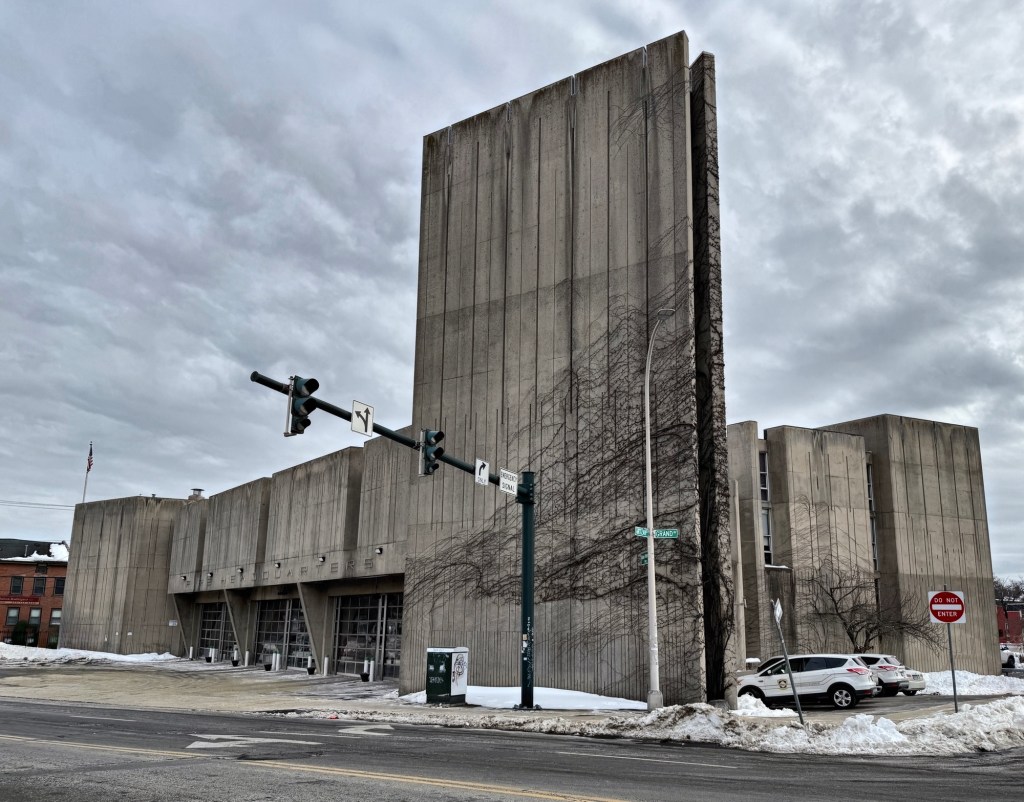
New Haven’s Central Fire Headquarters at 952 Grand Avenue, was constructed in 1961 as part of the Wooster Square Redevelopment Project, a targeted urban renewal plan to revitalize the historic neighborhood. Architect Earl Carlin and his associates, Peter Millard and Paul Pozzi, were hired to design a functional yet streamlined and powerful municipal building to serve as a symbolic gateway into a neighborhood the City wished to revitalize. The fortress-like structure is built of exposed cast-in-place concrete and features strong geometric forms with four corner towers that anchor the main block and vary in height. The fire station’s smooth concrete flanks are scored with subtle vertical grooves which help to provide additional intrigue and depth. Inside, the first level holds space for fire trucks and equipment while the second floor contains office space and the firefighters’ residences. The New Haven Fire Department Headquarters is significant as an early and well-designed example of the often maligned Brutalist style, and as a visual landmark that tells the story of the period of Urban Renewal in New Haven post-war and is holding up quite well!
Nelson Hotchkiss was a New Haven lumber dealer and developer in the Wooster Square district and had this stately home on Chapel Street built for his family. While the architect is not confirmed, it is probable that the residence (along with neighboring homes also developed by Hotchkiss) was the work of Henry Austin, who partnered with Hotchkiss on developments in New Haven and Trenton, New Jersey. The Nelson Hotchkiss House was built in 1850 and is an excellent example of Italianate style with boxy form, broad overhanging eaves, brick walls covered with stucco and Austin’s signature Greek Doric columns with fluted shafts and foliate capitals. The house maintains a window hood over the upper floor window with delicate carved wood bargeboard.
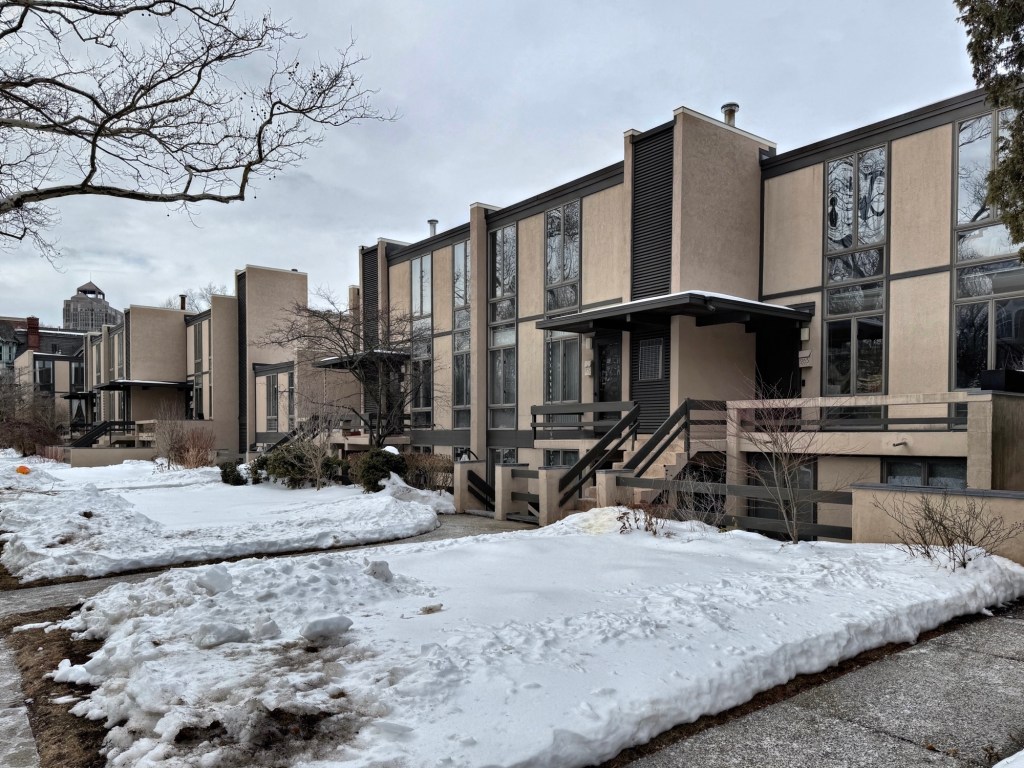
By the turn of the 20th century, the growth of industry around Wooster Square neighborhood of New Haven, Connecticut, forced out the wealthy residents which had lived there, to be replaced by recently arriving Lithuanian, Italian, and Italian-American families who established a thriving immigrant community here, which still exists today. After WWII, suburbanization saw families leaving urban centers, and to attempt to draw back in tax dollars, city officials began to plan for urban renewal areas, where “slum clearance” would redevelop areas with new and modern housing and offices with federal tax dollars. Strong neighborhood support for preservation of the area, paired with a sympathetic Planning Department, saved much of the core of the Wooster Square neighborhood with a few exceptions. The former Greene Street School and a number of residences along Greene Street and Hughes Place were razed in the 1960s and replaced by Town House on the Park, a Mid-Century Modern townhouse development. The project is comprised of thirty-six, three-story dwellings in a rowhouse configuration designed with their ground floor below grade as so to reduce their scale from the street. The development was designed by architect William Mileto and was given an award by House+Home Magazine in 1964 and featured in other publications as a good example of infill housing in a dense urban environment. What do you think about Town House on the Park?
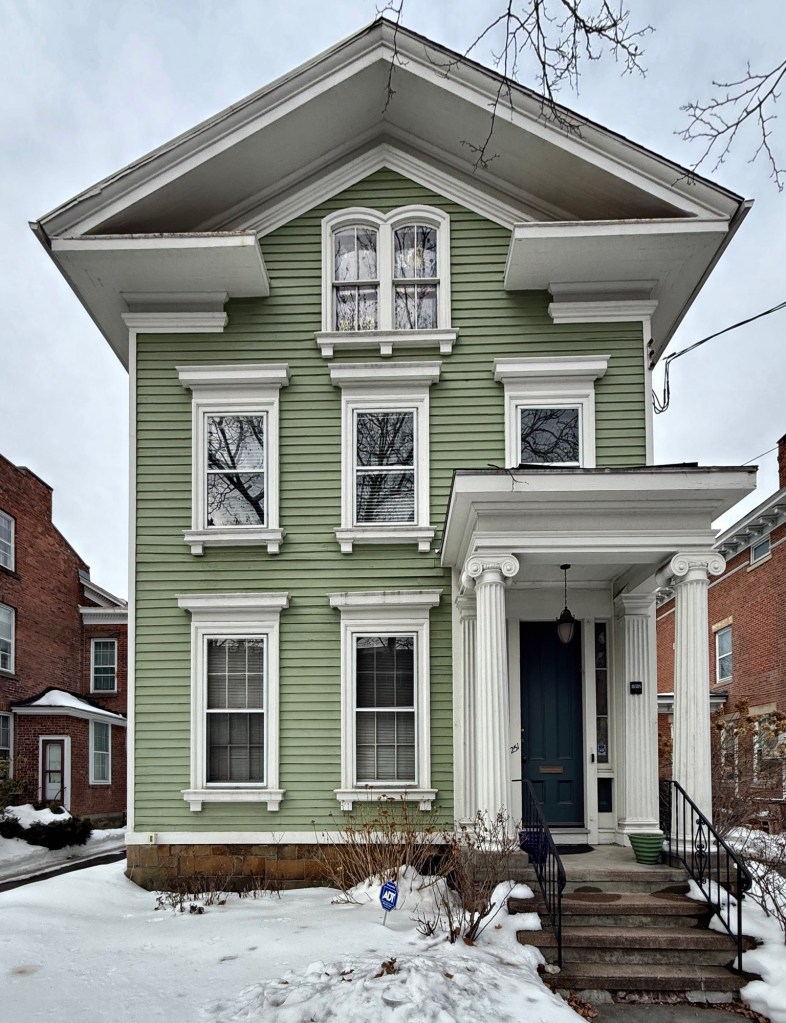
The Phebe Wallace House on Greene Street in New Haven, Connecticut, at first glance, may appear as a typical mid-19th century house, but some of the architectural features and details make it stand out! The residence was built in 1854 for Phebe Barney Wallace (1792-1872), a widow of William B. Wallace who died decades earlier. Phebe lived here with her daughter, also named Phebe, and a servant. The house exhibits a traditional Greek Revival form with gable roof oriented towards the street, with an off-center entry with Ionic portico, but the massive overhanging eaves without brackets with paired arched windows in the gable and balcony off the side of the house showcase the emerging Victorian influence in American residential architecture.
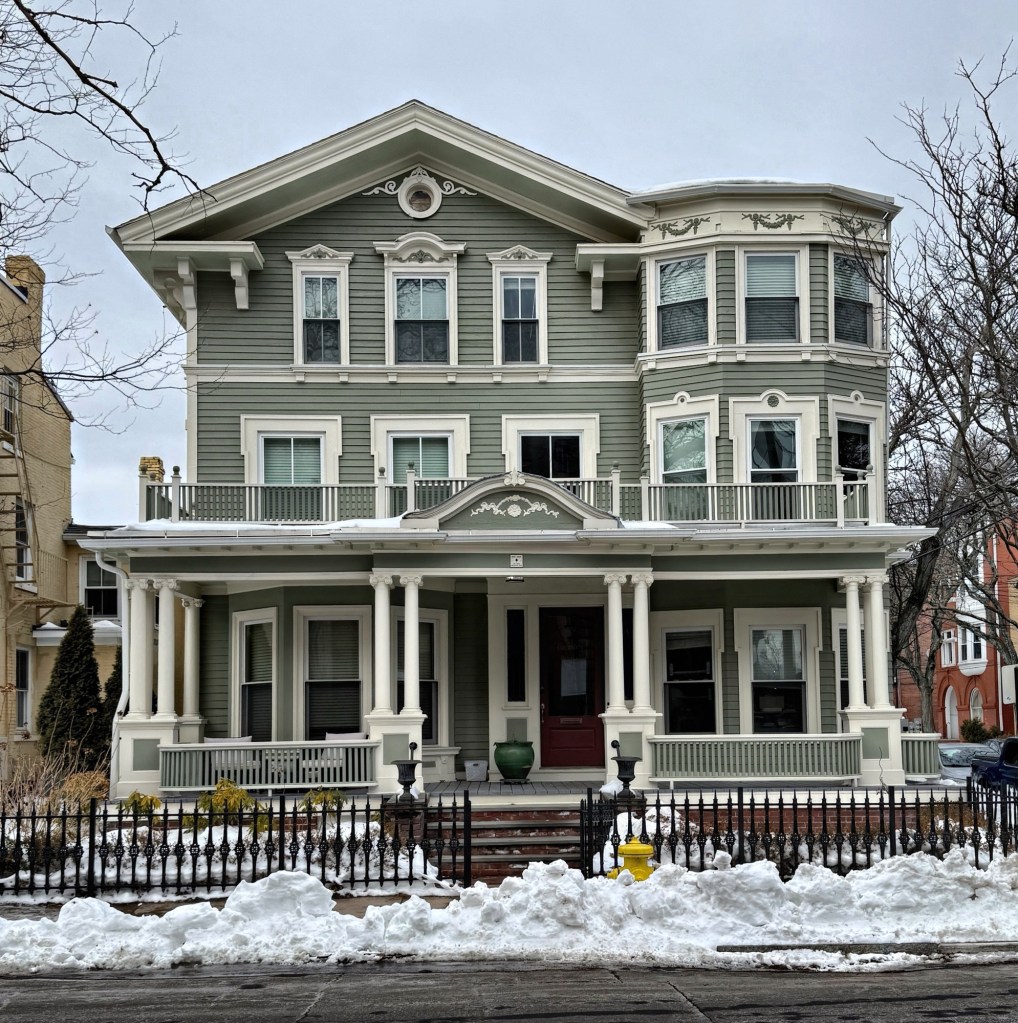
One of the eclectic mid-19th century residences in New Haven’s Wooster Square neighborhood is the Bromley House, an exuberant blending of architectural styles that have been lovingly preserved. The history is a little murky on this residence but from research, the home was built around 1850 and was possibly a two-story flat-roofed Italianate style design with three-bay facade and off-center entrance. The home was acquired by Joseph Bromley, who appears to have added a third-story with gable roof. After the Civil War, the property was purchased by Lyman Erving Bradley, a veteran of the war who was employed as a police officer and later as private security for an area factory. It appears that Mr. Bradley, before his death in 1901, had the property expanded with a whimsical front porch, three-story side addition, and applied ornament in the Queen Anne style. The home is today a three-unit condominium, similar to the three-deckers found in cities all over New England.
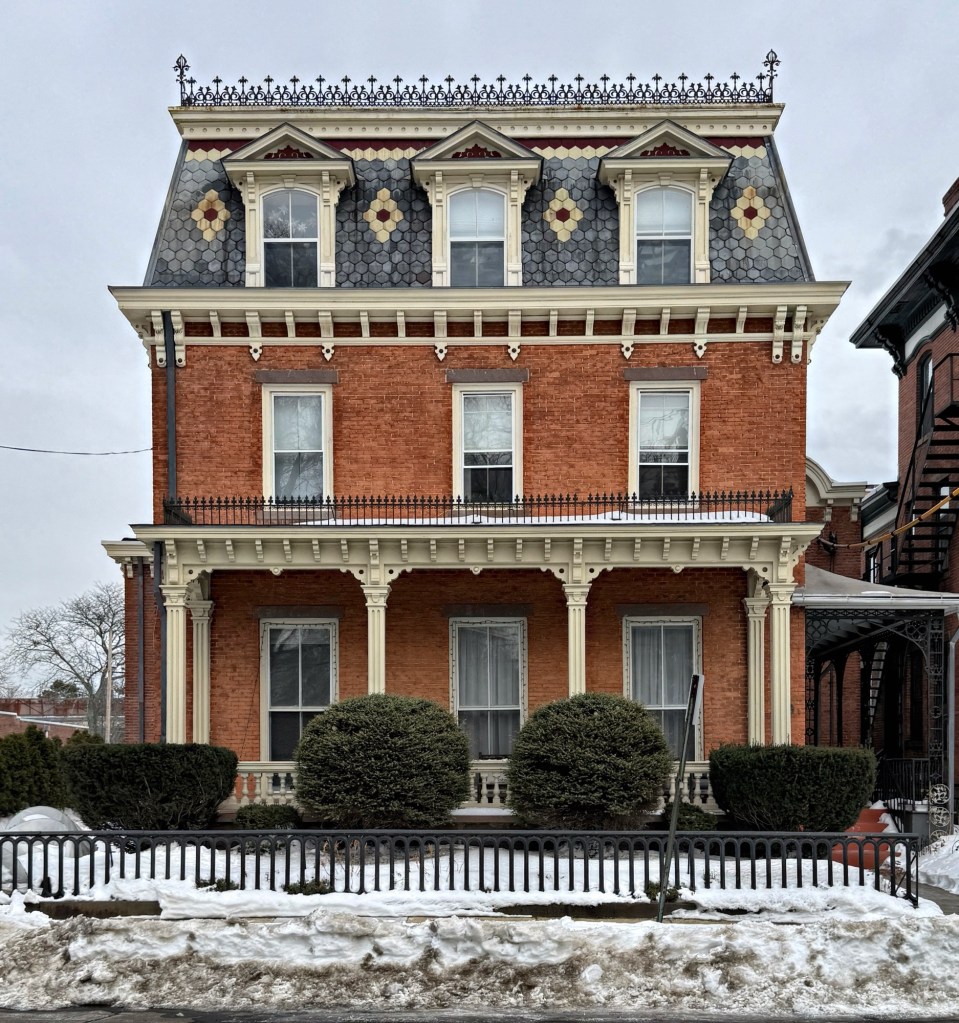
This handsome Second Empire style residence on Wooster Place in New Haven was built in 1833, but in the Greek Revival style and later renovated to its current appearance. The house was one of the earliest properties built fronting Wooster Square and constructed for merchant Theron Towner, who then sold it to Rev. Stephen Jewett (1783-1861), an Episcopal minister of a nearby church. The house was designed and constructed by James English, who later became a successful manufacturer and politician. It is unclear what the original house looked like, but after the Civil War, the house was renovated with the addition of the slate mansard roof with iron cresting and side porch.
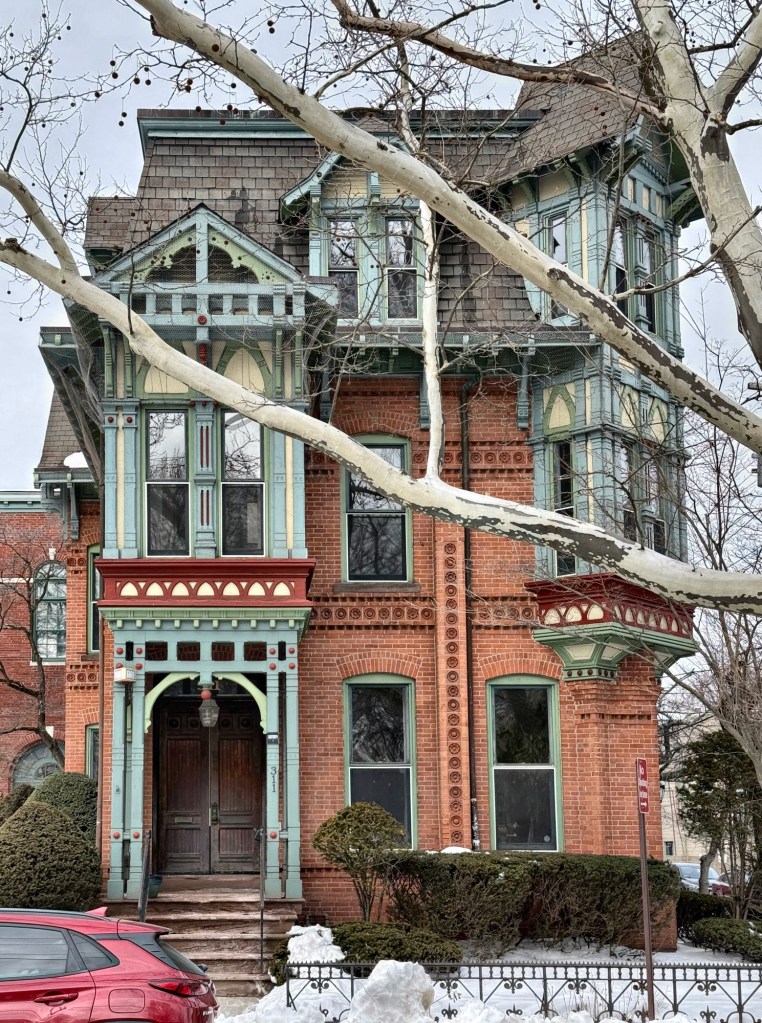
The Max Adler House on Greene Street in New Haven’s Wooster Square neighborhood is a flamboyant example of Victorian-era residential architecture that is hard to classify as an architectural style. The residence was constructed in 1879 for Max Adler (1841-1916) a German-born Jewish immigrant who grew up in New Haven and became a leader in industry at a young age. Max founded the Strouse & Adler Corset Company, which is said to be the first corset factory in the United States. The company did very well and he was able to erect this residence overlooking Wooster Square park for his family. Architecturally, the house has a mansard style roof, a feature of the Second Empire style; applied stickwork in the wooden bays, porch and dormers, a feature of the Stick style; and embroidered panel brickwork and terra cotta, elements of the emerging Queen Anne style. The Adler House has been lovingly preserved and is one of New Haven’s finest Victorian-era residences.
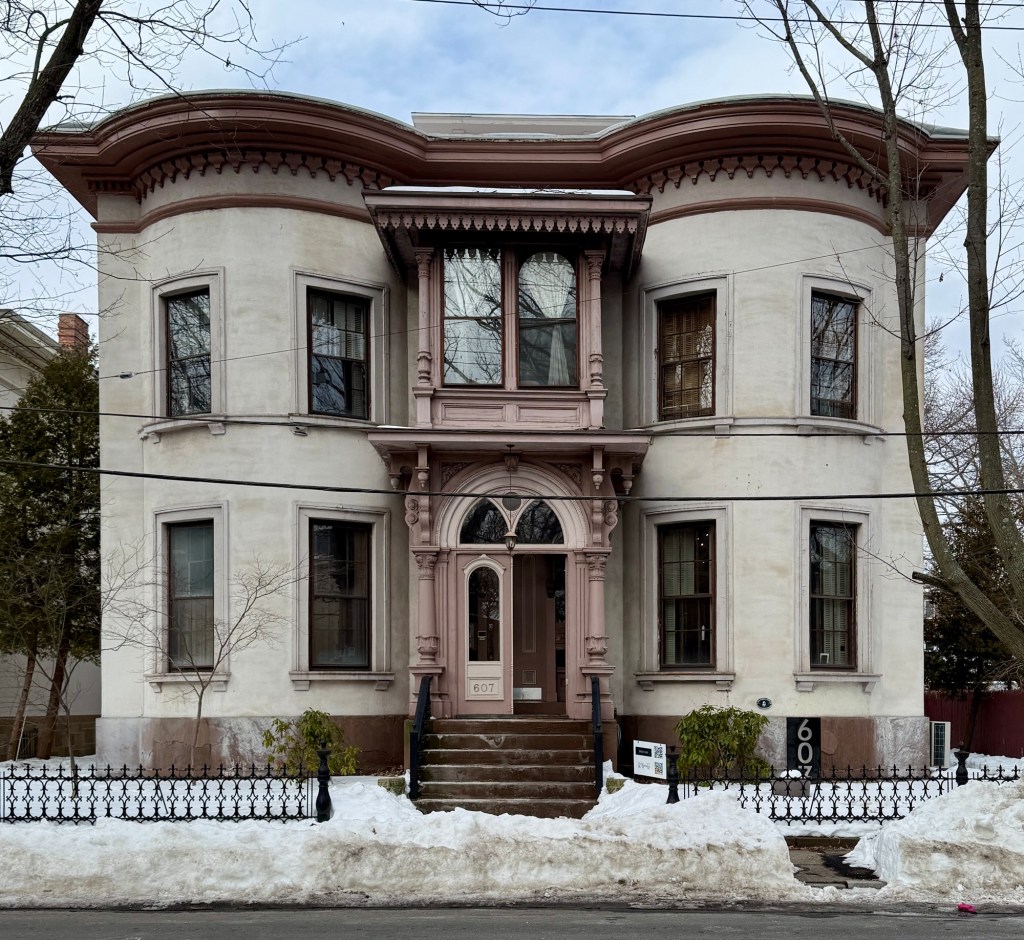
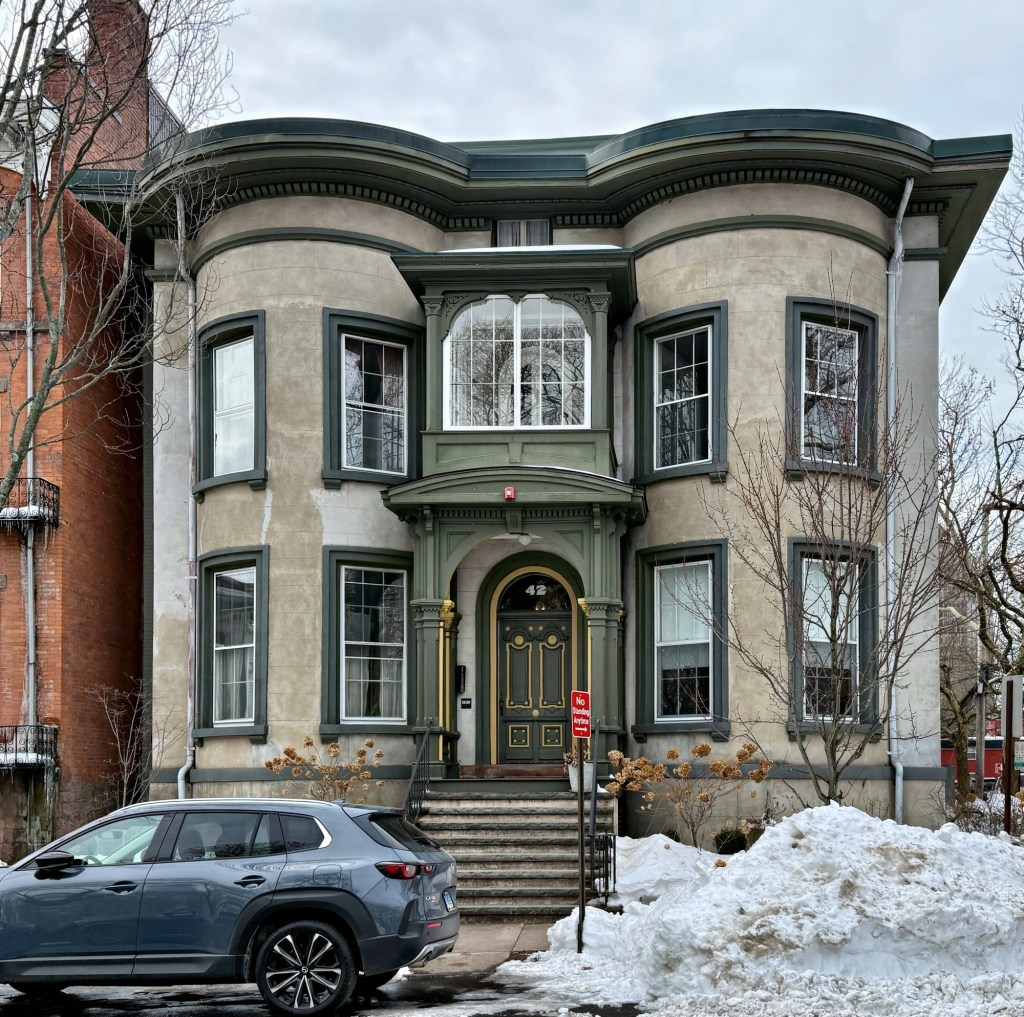
The Edward Rowland House on Academy Street in New Haven’s Wooster Square neighborhood is among the many great mid-19th century residences in the city and a rare example of a bowfront form. The residence was built for Edward Sherman Rowland (1812-1882), a prominent grocer, real estate developer, and Assistant U.S. Assessor and his family. The home is an example of the Italianate style with double-bow facade and is built of brick covered in stucco. The property was converted to condominium units and now houses six families.
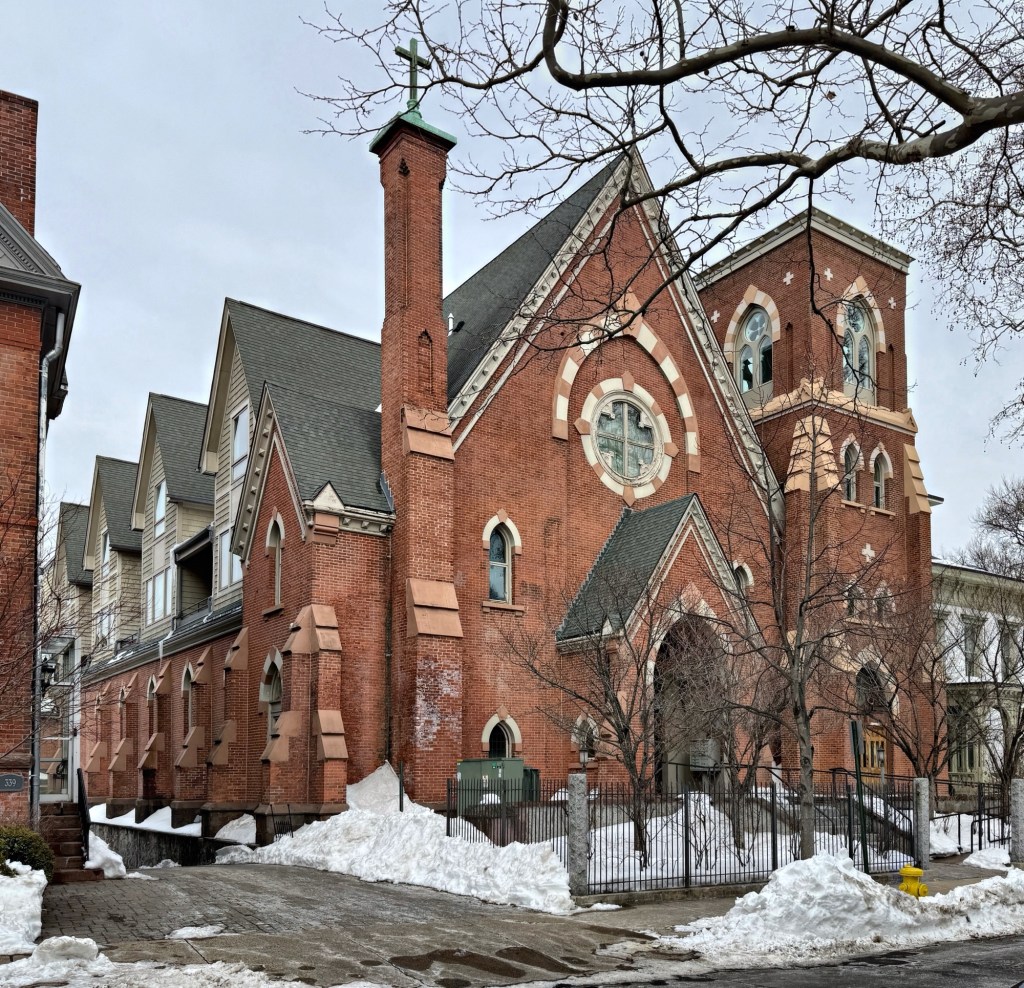
Built in 1872, this Victorian Gothic style church on Greene Street in the Wooster Square area of New Haven, Connecticut, has had a varied history that tells the full story of its neighborhood. The church was originally constructed as the Davenport Congregational Church and was designed by New Haven architect, Rufus G. Russell, who formerly worked many years for Henry Austin, the city’s leading architect, before opening his own firm. In the early 20th century, the neighborhood demographics shifted to a more diverse area of recently arriving immigrants who worked in nearby industry and the edifice was occupied by an Italian Baptist church. 1927, the church was purchased by a local Lithuanian congregation, who re-established the building as the St. Casimir Catholic Church. For nearly 100 years, the church remained an active use anchoring the iconic Wooster Square park until the congregation closed, leaving the building’s fate unclear. Luckily, developers purchased the property, which is located within a local historic district, and converted the church into residential units.
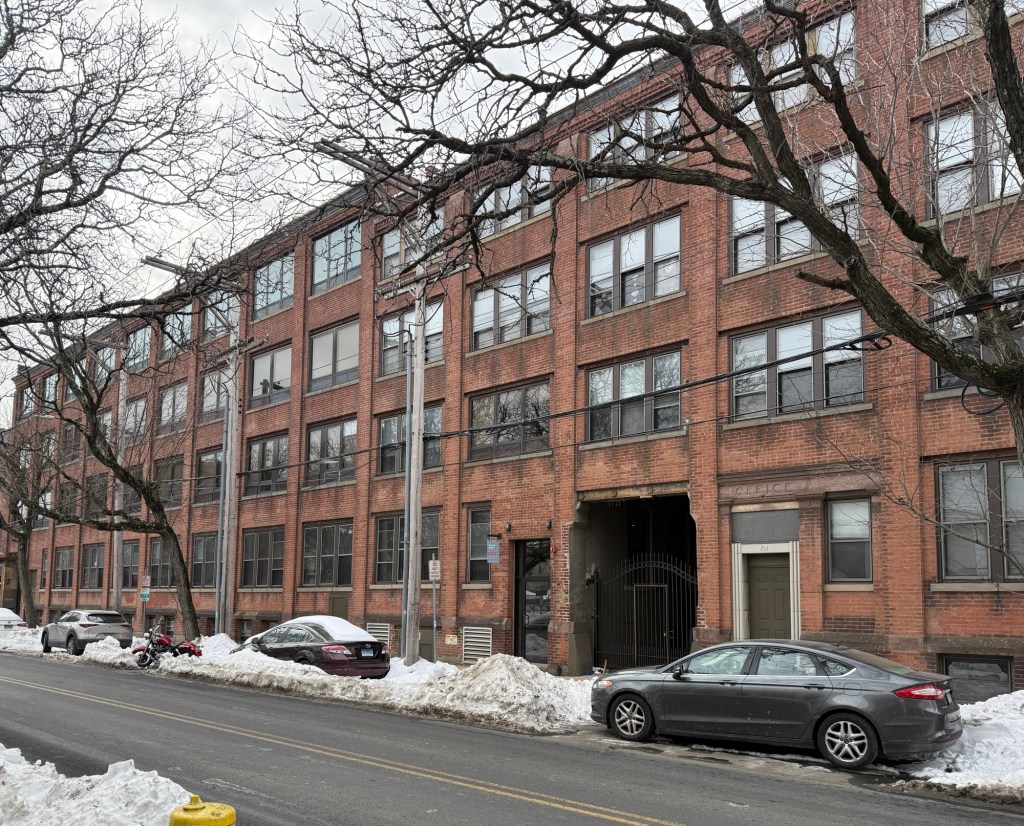
The Strouse, Adler Company Corset Factory is a historic factory complex at 78-84 Olive Street in New Haven, Connecticut that has been adaptively reused into apartments, serving an important second life. Developed between 1876 and 1923, the complex was the largest and oldest of New Haven’s several corset manufacturers, and remained in continuous operation for that purpose until 1998. The company was originally founded in 1861 as J.H. Smith and Company, and was the nation’s first manufacturer of corsets. The business was purchased the following year by Isaac Strouse, who took on Max Adler, a local dry goods retailer, as a partner. The company adopted the name Strouse, Adler in 1899 and was incorporated in 1927. The complex eventually closed and was converted to apartments, serving an important need for housing in the region.
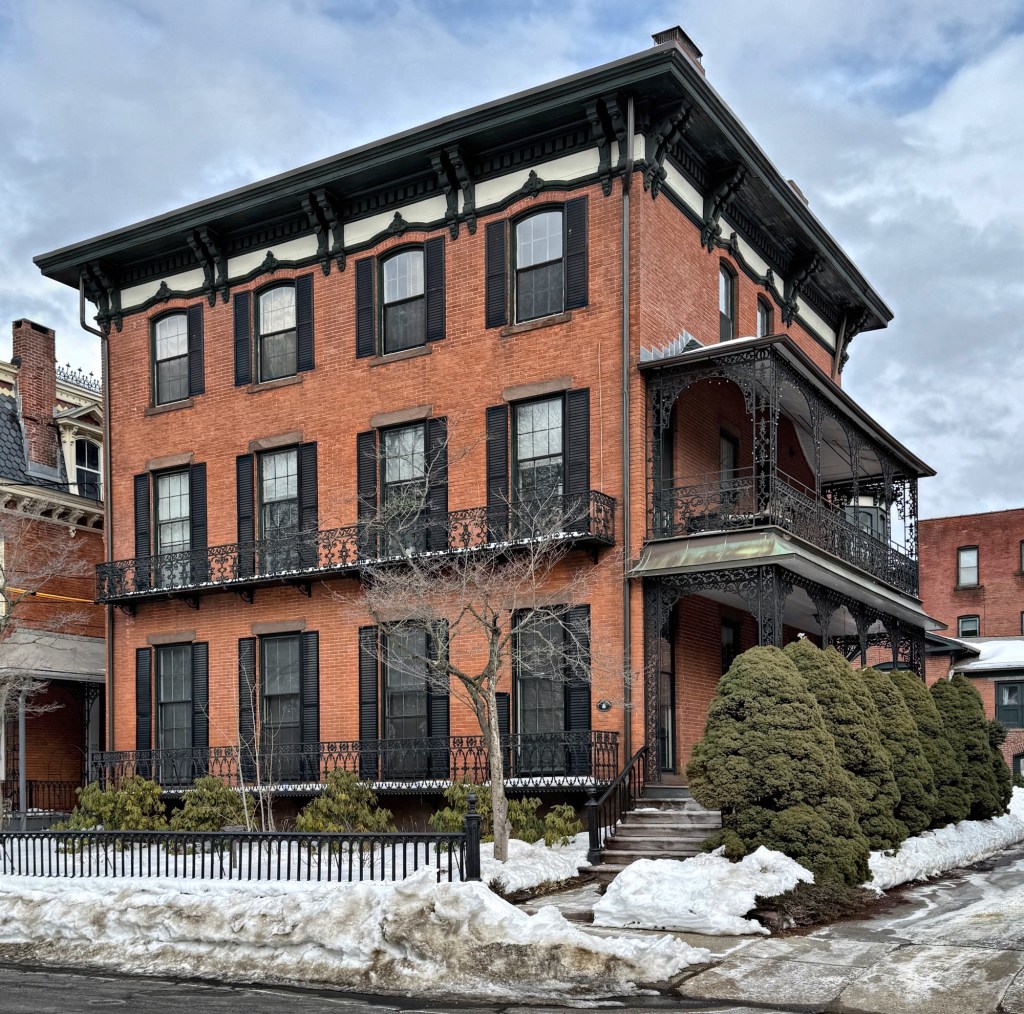
The Hotchkiss-Stephens House on Wooster Place overlooks the iconic Wooster Square park in New Haven, Connecticut, and is significant as an early neighborhood residence altered after the Civil War in the fashionable Italianate style. The brick residence is said to have been originally designed by Ithiel Town for Russell Hotchkiss (1781-1843), an early merchant in the neighborhood. Hotchkiss lived in the home just a year before his death in 1844. His second wife remained in the home for some years after his death, along with children and two Black female servants according to census records. The property was later purchased by Edward Stevens (1824-1884), a manager at the New Haven Clock Company, who had the property modernized with a full third floor with bracketed cornice, iron balconies and garden fence, and its stunning two-story castiron side porches.
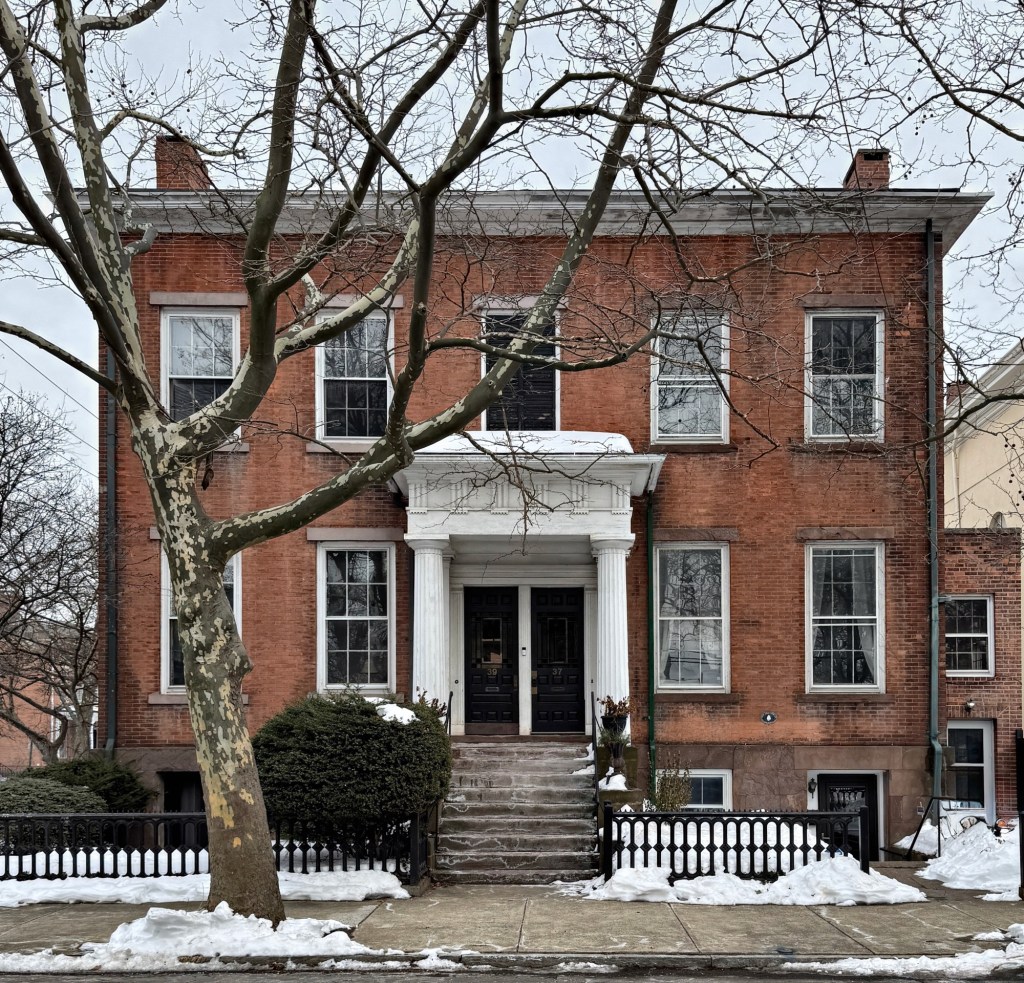
This large, brick, Greek Revival style residence sits on the corner of Wooster Place and Greene Street in New Haven’s iconic Wooster Square neighborhood, and stands as an important example of the style along with its significance of its early owner, who became a prominent local politician. In 1836, Dr. John Brownlee Robertson (1809-1892) married a second time to Mabel Heaton, following the death of his first wife, Mary, a year prior. Mabel’s father Abram Heaton, was an early investor who helped develop Wooster Square into the high-quality neighborhood in the early-mid 19th century, and upon this prominent corner lot, had this residence built for his newlywed daughter and son-in-law. The five-bay, two-story house features its original fluted column portico and a shallow hipped roof and was converted to a two-family around the turn of the 20th century.