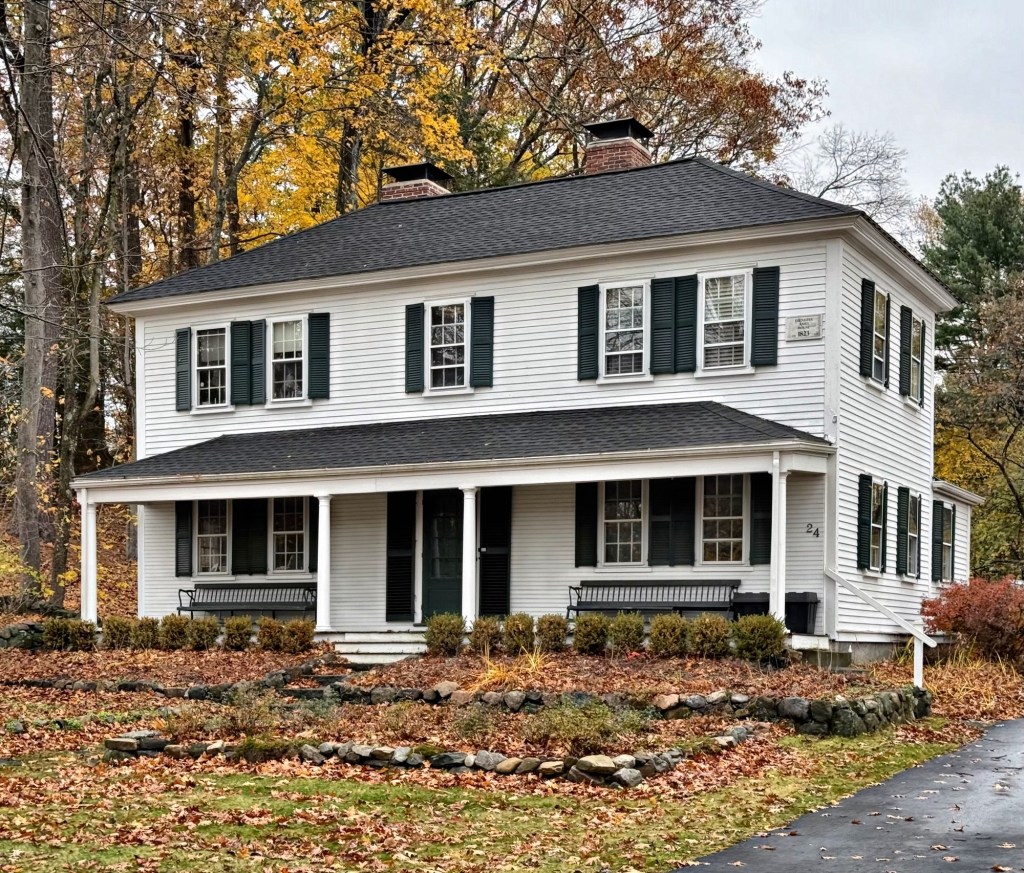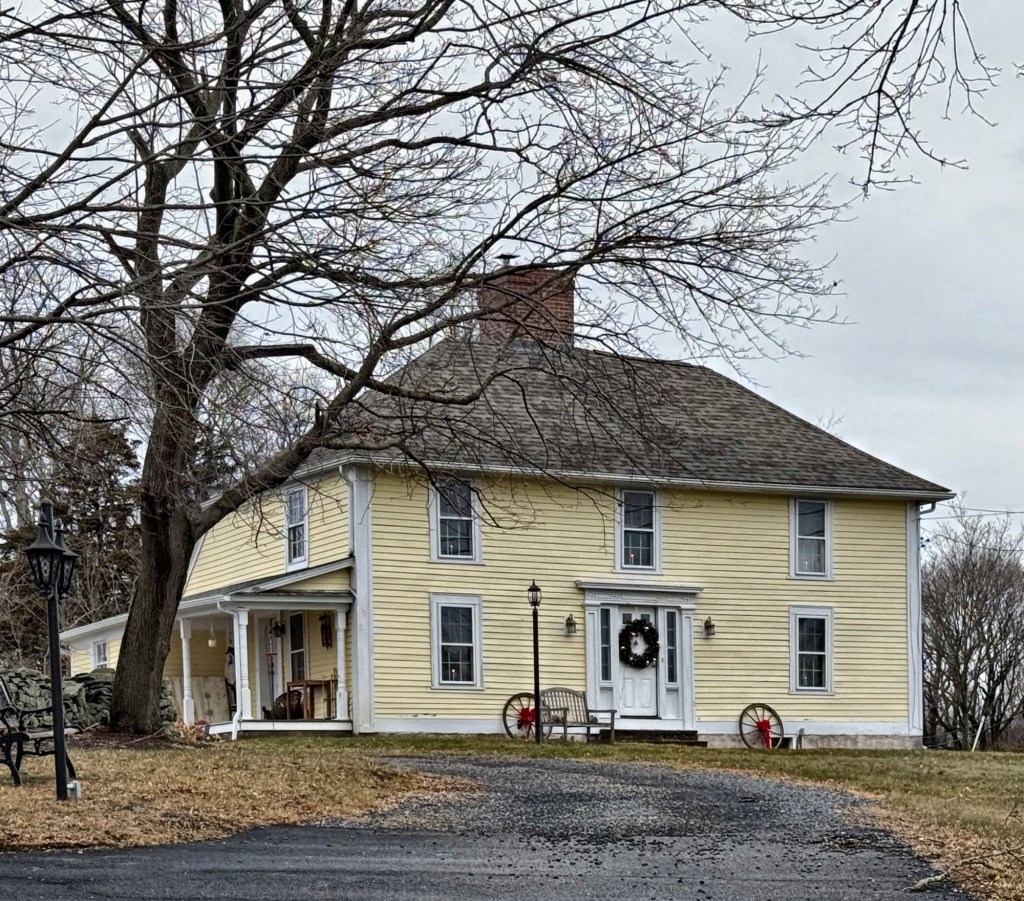
Ames-Mellen House // c.1823

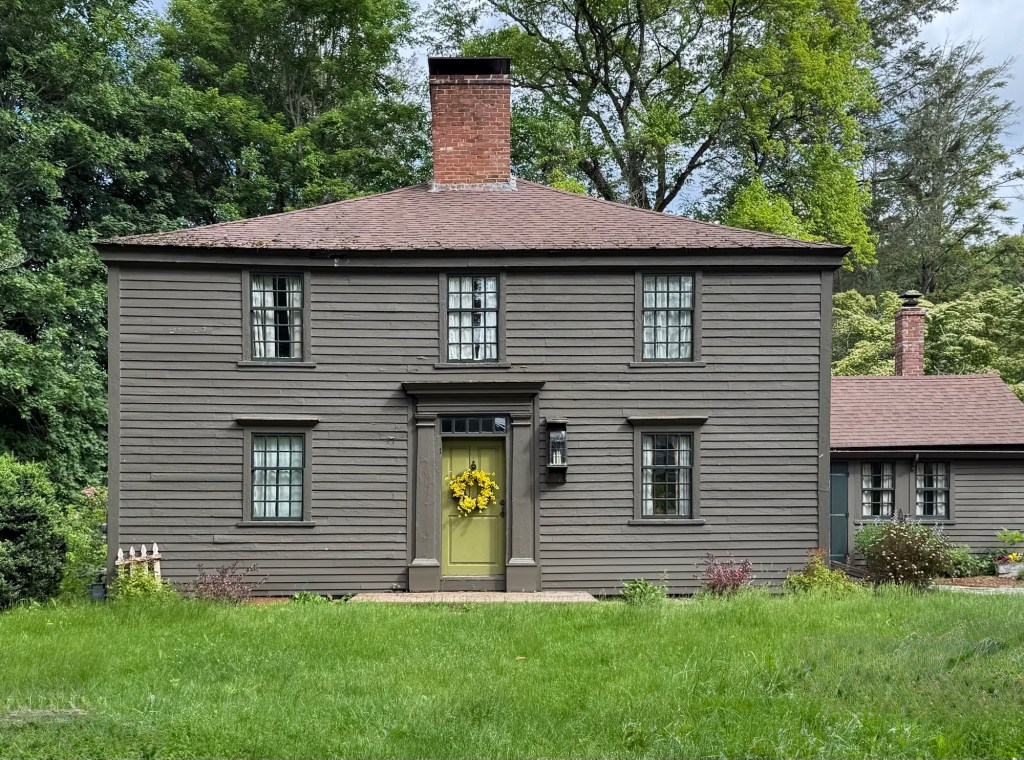
This house in Wayland Center was built for Dr. Ebenezer Ames (1788-1861) who had a medical practice treating patients in East Sudbury (later named Wayland) and other surrounding communities. Dr. Ames is believed to have built this house in about 1823, which is a five-bay, two-story Federal style house under a hipped roof. Dr. Ames moved to another home in the village by 1830 and this old residence was purchased by Judge Edward Mellen (1802-1875) who lived in the house from 1831 until his death in 1875. Judge Mellen was appointed Chief Justice of the Massachusetts Court of Common Pleas in 1855, and practiced law in Wayland from a small office that still stands in the center of the village. Mellen’s widow Sophia Mellen remained here after her husband’s death in 1875 until her death in 1893. The front porch was likely added in the early 20th century, but does not at all detract from the architectural significance of the 200 year old residence.

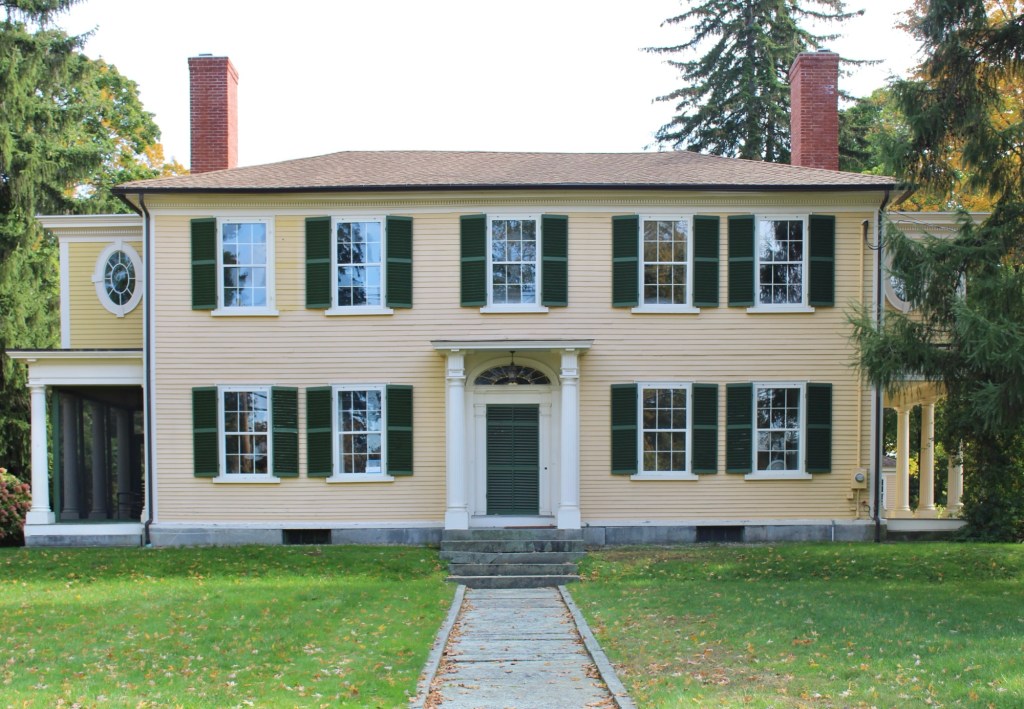
Rice-Carter House // 1796

In 1796, attorney Merrick Rice (1764-1819) built this stately Federal style farmhouse on Main Street in Lancaster. The house exhibits a symmetrical facade with hipped roof and twin chimneys and portico at the entrance sheltering the front door with fanlight transom. The house has end porches which may have been added sometime in the 19th century. The property was later purchased by Rev. Asa Packard, who rented the residence to his daughter, Ann, and her husband, James Gordon Carter, a state representative and education reformer who wrote Influence of an Early Education in 1826, and in 1837, as House Chairman of the Committee on Education, contributed to the establishment of the Massachusetts Board of Education, the first state board of education in the United States. The Rice-Carter House is excellently preserved both inside and out.

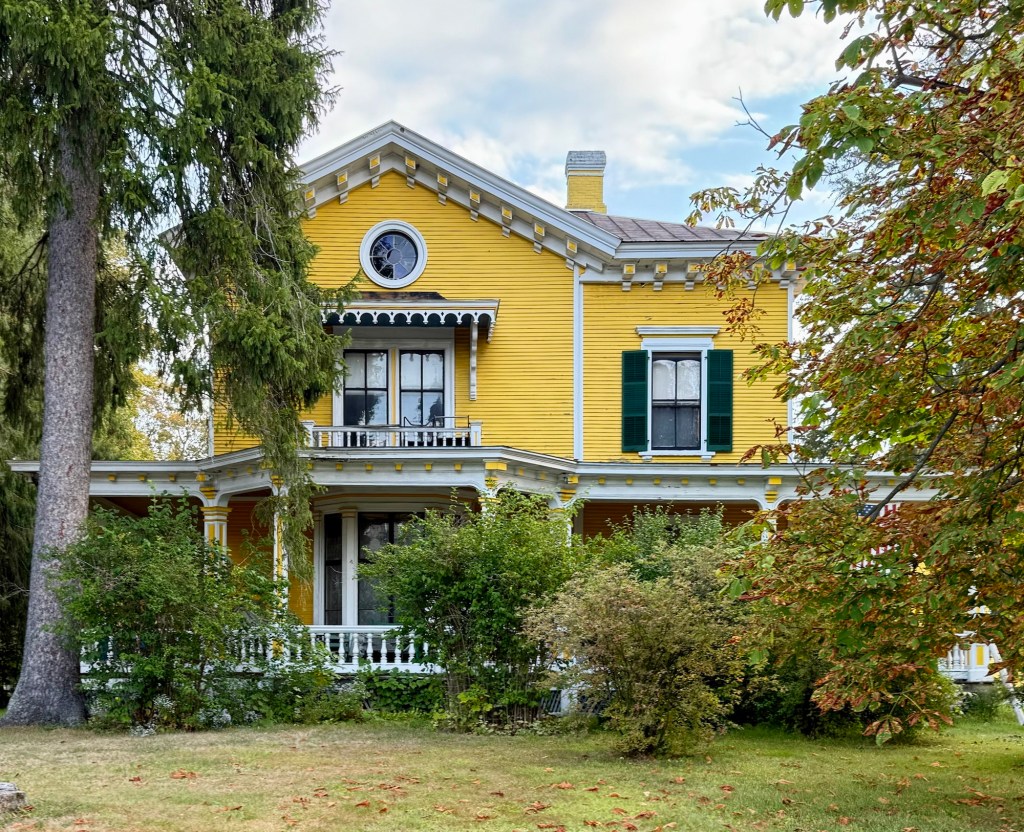
Frederick Fullerton House // 1861

This distinctive Italianate Villa style house in the charming village of Chester, Vermont, was built in 1861 for wealthy merchant, Frederick Fullerton (1817-1869). Mr. Fullerton worked in his family’s mercantile business in Chester, and was involved with cotton manufacture in Springfield and with the Cavendish woolen mill managed by his older brother, Henry, who built an equally distinctive residence in Cavendish called “Glimmerstone“. Basically cubic with asymmetrical gabled corner pavilions, the Fullerton House is an excellent example of an Italianate Villa with bracketed cornice, two-over-two sash windows, a wrap-around porch, and second floor balcony with a bracket-supported hood with decorative valance and an oculus window above. The residence is said to have been designed by architect, William P. Wentworth, who designed the St. Luke’s Episcopal Church across Main Street a decade later.

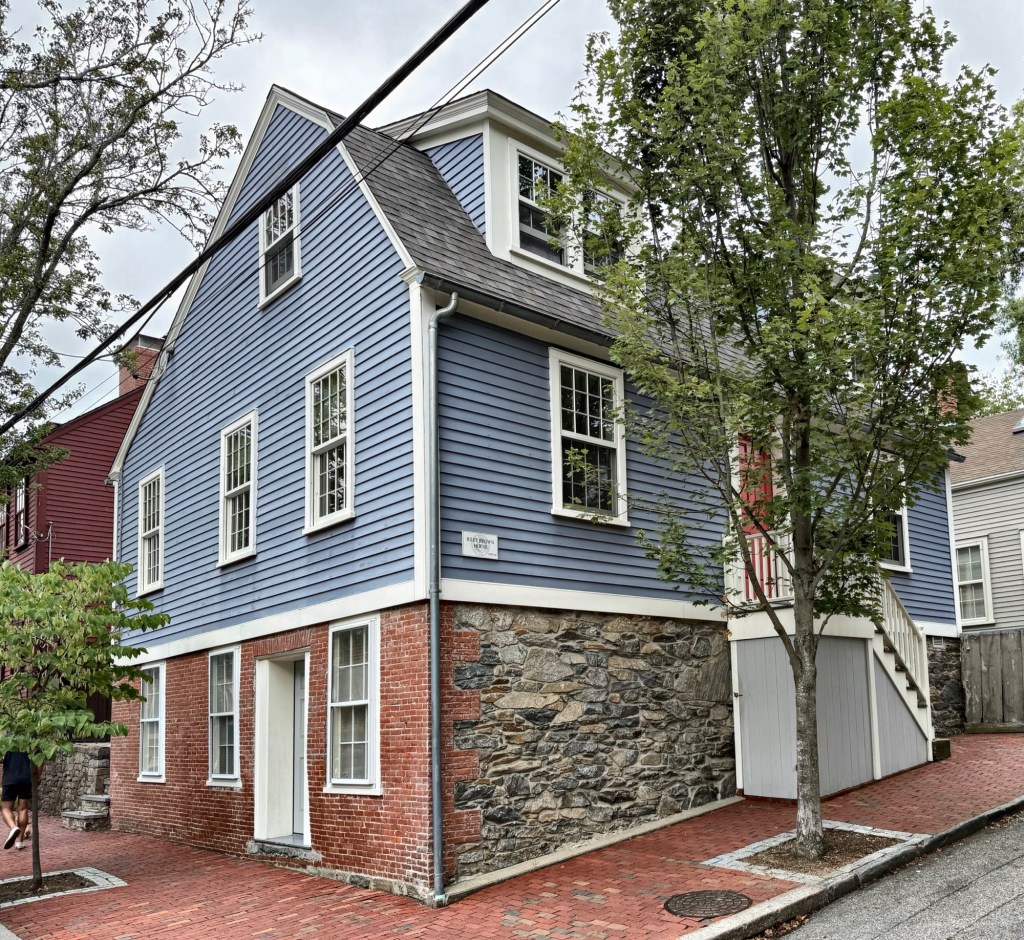
Brown-Crocker House // c.1836

In 1829, Riley Brown, a housewright, purchased a house lot at the corner of Thayer and Transit streets in Providence, and by 1836, built this charming gambrel-roofed cottage, which is one of the most charming in the city. Riley Brown lived in the house next-door at 6 Thayer Street (1829) and on available land, built this 1-1/2-story dwelling on a full-height raised basement on speculation. It is possible that the house could have dated to the 18th century, and was possibly moved to the site from a nearby location, given the distinct gambrel roof and Georgian qualities. The residence here was sold in 1836 to John Crocker, who resided here with his family until his death in 1865. The Brown-Crocker House stands out for its unusually high basement of brick and stone, with a stair ascending up to the central entry and the gentle saltbox roof off the rear. Two shed dormers were likely added in the 20th century to make the house’s second floor more liveable.

William Mason House // c.1812

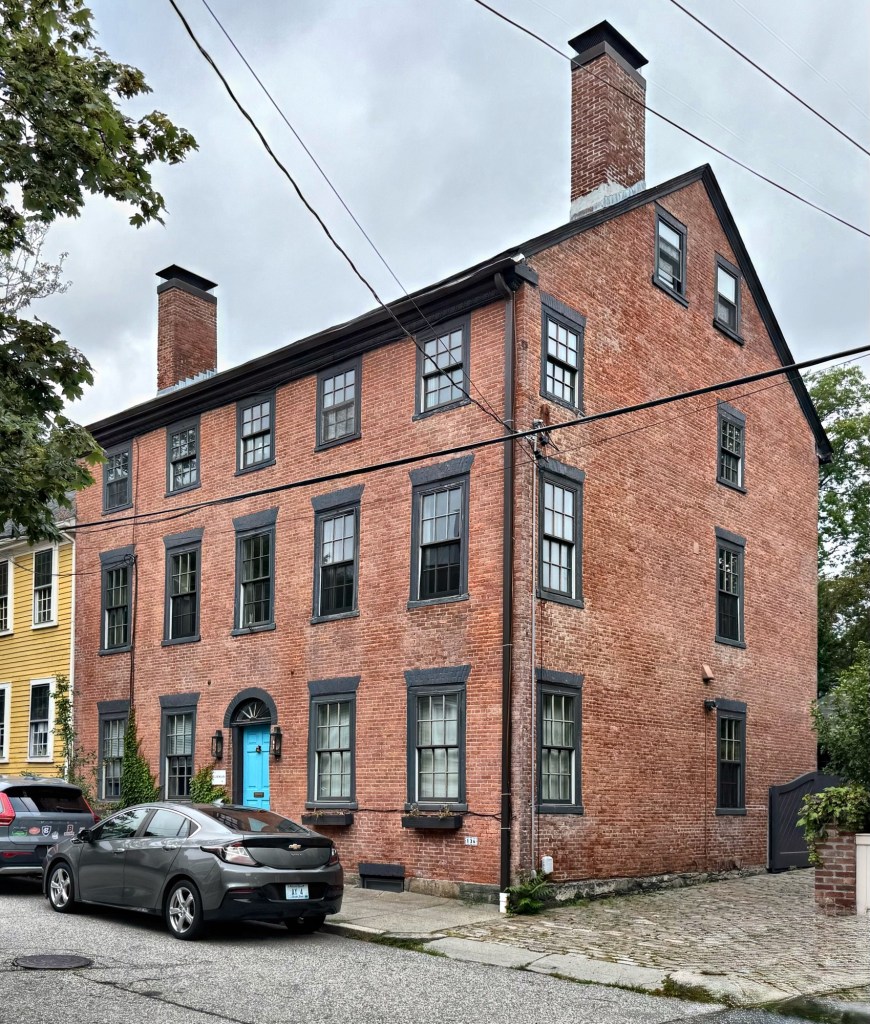
This oversized brick Federal style house in Providence looks like it belongs more on the iconic Benefit Street rather than a quieter side street like Transit Street, but its history informs us as to why. Located at 136 Transit Street, the Benjamin Mason House stands as one of the finest (and largest) brick houses in the Fox Point neighborhood of Providence. The residence was built around 1812 by William Mason, who appropriately worked as a bricklayer and builder in 19th century that put his talents to work to build his own home seen here. The large brick residence was not only a family home, but marketed his abilities as a mason to area residents who were in need of his services. Benjamin Mason lived here until he moved to a new house down the street with his wife, Ann. Benjamin died by 1828 and the brick residence was purchased at auction and later sold to Reverend William Phillips. The house retains much of its original fabric, and even includes a stunning courtyard garden bounded by – you guessed it – a brick wall. 

Larkin-Ladd House // c.1813

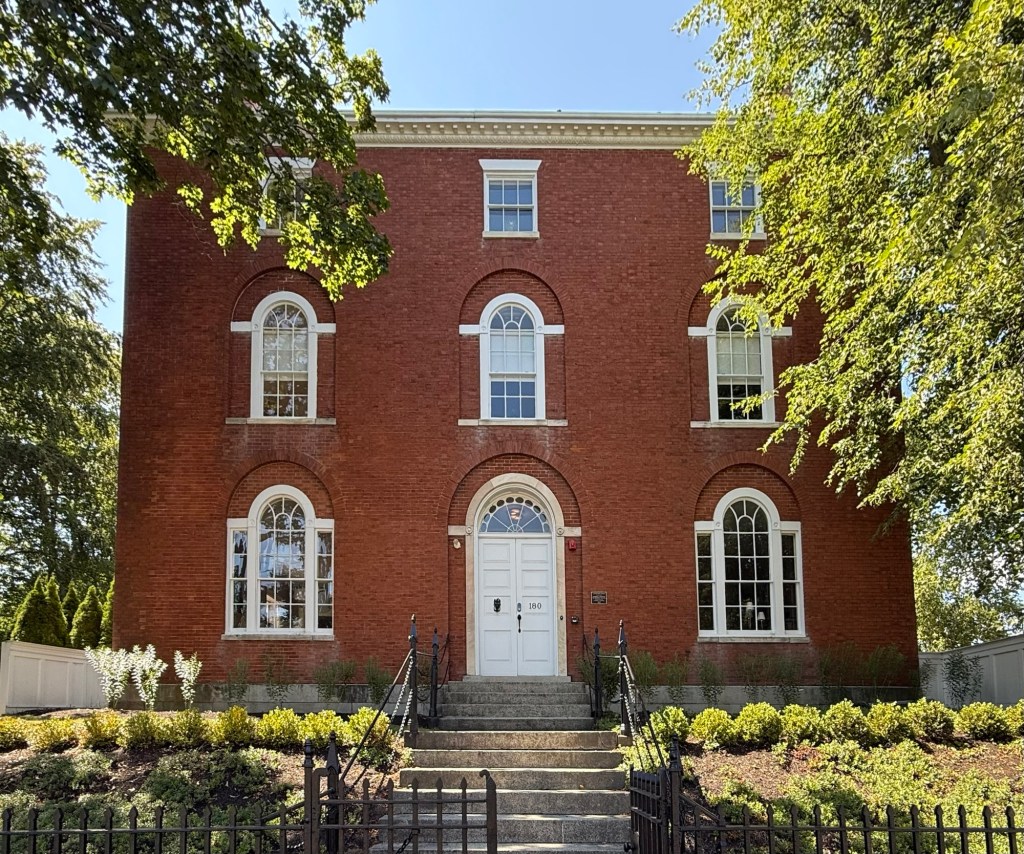
The Larkin-Ladd House at 180 Middle Street in Portsmouth, New Hampshire, is a three-story, masonry Federal-style residence with symmetrical facade, built for one of the city’s wealthiest merchants. Samuel Larkin (1773-1849) was born in Charlestown and moved to Portsmouth, marrying Ann Jaffrey Wentworth, a daughter of Col. Joshua Wentworth. During the War of 1812, Samuel Larkin made his fortune as an auctioneer, selling the contents of English ships captured by local privateers. It is believed that fourteen privateers and their crews worked out of Portsmouth Harbor and are said to have captured an estimated 419 British ships! With the profits from stolen goods from these British ships, Larkin purchased lots on Middle Street and began construction of this stately residence. He (and mostly his wife), had twenty-two children, although roughly half of them died before reaching adulthood. By the late 1820s, financial hardship fell on Larkin and he sold this property, moving into his house next door, which before this was his original residence and later rented to boarders. The Federal style mansion was later owned by Henry H. Ladd, a prosperous Portsmouth shipping merchant, who also served as President of New Hampshire Bank and Portsmouth Savings Bank. The Larkin-Ladd House is undoubtedly one of the finest Federal style residences in New England, and stands out for its entrance, flanked by Palladian windows and the slightly recessed elliptical surrounds at the first and second floor windows. Additionally, the historic stable, also from the 1810s, maintains much of its architectural integrity.

Joshua Orne House // c.1750

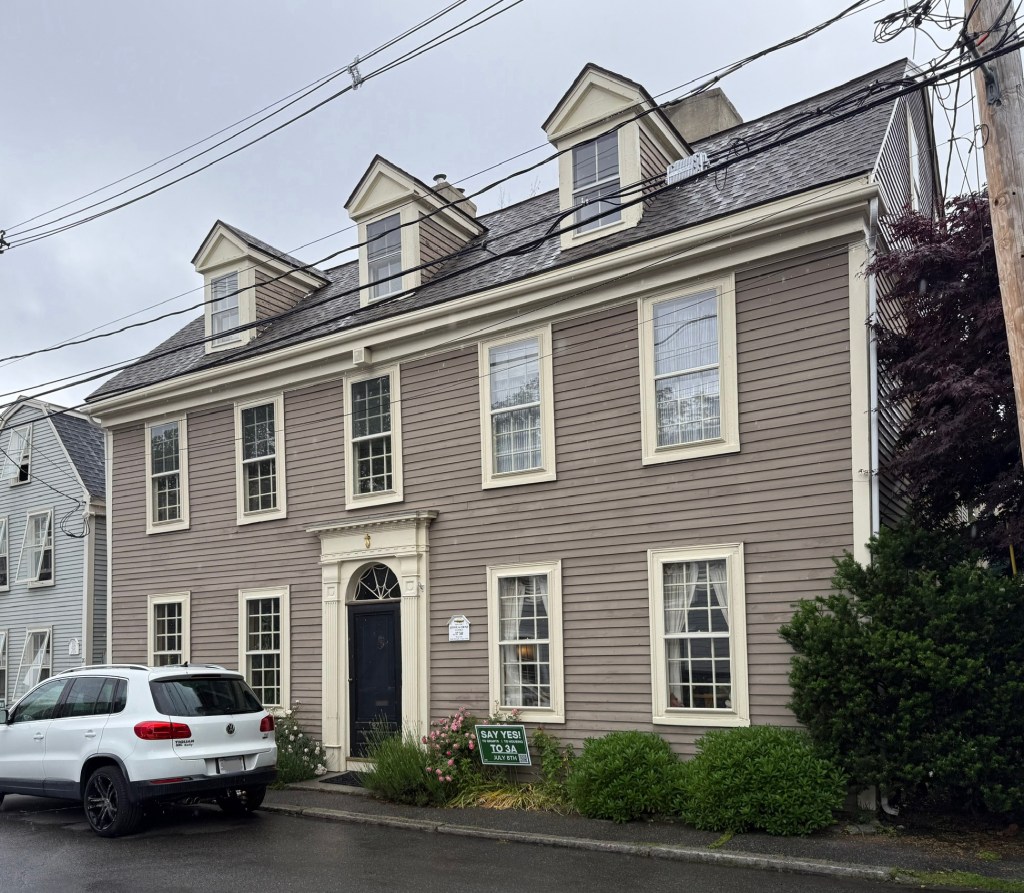
Joshua Orne (1708-1772) was born in Marblehead and attended local schools there. He would marry Sarah Gale, and they had one son together, Azor Orne, who would become a merchant, politician and patriot, fighting in the American Revolution. Sarah Gale died in 1743 and Joshua would remarry to Annis Stacey, having one child together, Joshua Orne Jr., who was a Patriot and fought in the Revolution, fighting alongside his half-brother, Azor. Joshua Orne and Annis owned a c.1663 house on this site and appear to have completely rebuilt the house or greatly modernized it around 1750. Joshua was a cordwainer and shipowner and later got involved with discussions of revolution and liberation from England. He likely inspired his sons to follow-suit and shared the same beliefs and values, though Joshua Sr. would die in 1772, not seeing the beginning of the War, nor freedom from tyranny. The house would be inherited by Joshua Jr. and later deeded to his son-in-law, John Bubier Prentiss, a shipmaster, who likely added the Federal period doorway and pedimented dormers.

Parker-Maynard Homestead // 1777

Hidden away on a quiet country road in Westborough, Massachusetts, the Parker-Maynard Homestead sits as one of the best-preserved and significant properties in town. Revolutionary War veteran Isaac Parker (1750-1798), after the war, acquired land in town and built a farmhouse here around 1777. Upon the time of his death in 1798, his property listed in his will included: a homestead farm, grist mill, saw mill, a small dwelling house, a horse stable, and a pew at the town meetinghouse. The property was acquired by brothers Ebenezer and Ephraim Maynard, who lived in the house together with their respective families. The Maynard brothers worked as wheelwrights and had their shop on the property for years. Ephraim Maynard’s eldest son, Horace Maynard (1814-1882) was born here and after graduating from Amherst College, moved to Tennessee to teach law at East Tennessee University before getting into politics. Horace served in Congress between 1858-1873 as a representative from Knoxville. He spent much of his first two terms in Congress fighting to preserve the Union, and during the Civil War, he consistently urged President Abraham Lincoln to send Union forces to free East Tennessee from its Confederate occupiers. After the war, he was appointed minister to Constantinople by President Grant in 1875. In 1880 he returned to the United States and was appointed Postmaster General by President Rutherford B. Hayes. Horace owned the family homestead following the death of his father and uncle, and often returned to Westborough to see family and get away from politics.

Benjamin and Almira Pitman House // 1900

Benjamin Franklin Keolaokalani Pitman (1852-1918) was born in Hilo, Hawaii, to parents Benjamin Pitman, a Salem businessman, and Kinoʻoleoliliha, high chiefess in the Kingdom of Hawaii. After the sudden death of Kinoʻoleoliliha, Benjamin Pitman Sr. remarried and sent his children to attend schools in Boston. Benjamin F. K. Pitman would meet and marry Almira Hollander Pitman (1854-1939), a suffragist who was instrumental in working for women’s suffrage in Hawaii. The couple purchased a house lot in the exclusive Cottage Farm neighborhood of Brookline, and hired architect Edwin J. Lewis, to design a home for their family. Early atlas maps and photos show that the house was originally clapboarded on the front and rear elevations with large brick end walls containing the chimneys. The facade was given a brick veneer sometime in the 20th century. After Benjamin died in 1918, Almira had a small gambrel-roofed cottage built in the rear yard for her son to live in. The residence is one of the finest Colonial Revival style homes in the area.

John L. Sullivan House // c.1812

This modified Federal style cottage in Abington, Massachusetts, is known locally as the last home of World Heavyweight Champion bare knuckle boxer, John L. Sullivan. John Sullivan (1858-1918) died in this house on February 2, 1918, of heart disease, but left behind a legacy that will last forever. The house was originally constructed around 1812 for Jacob Cobb, a Deacon of a local church and after successive ownership, the house was purchased by boxer John Sullivan, to celebrate his retirement. As a professional fighter Sullivan was nicknamed The Boston Strongboy, and was one of the first great American boxers and was the last world champion bare-knuckle boxer. He had a record of 47 wins, 1 loss and 2 draws, with 38 wins by knockout in his career. Sullivan’s blustering personality and fabled strength gained him a great following, and he would be inducted into the International Boxing Hall of Fame as part of its original class. As champion he earned more than $1 million but squandered it. A hard drinker during his ring career, he later became an advocate of prohibition and delivered many lectures on the subject. His brick Federal house in Abington was modernized by him, adding the dormer and full-length front porch supported by rubblestone columns.