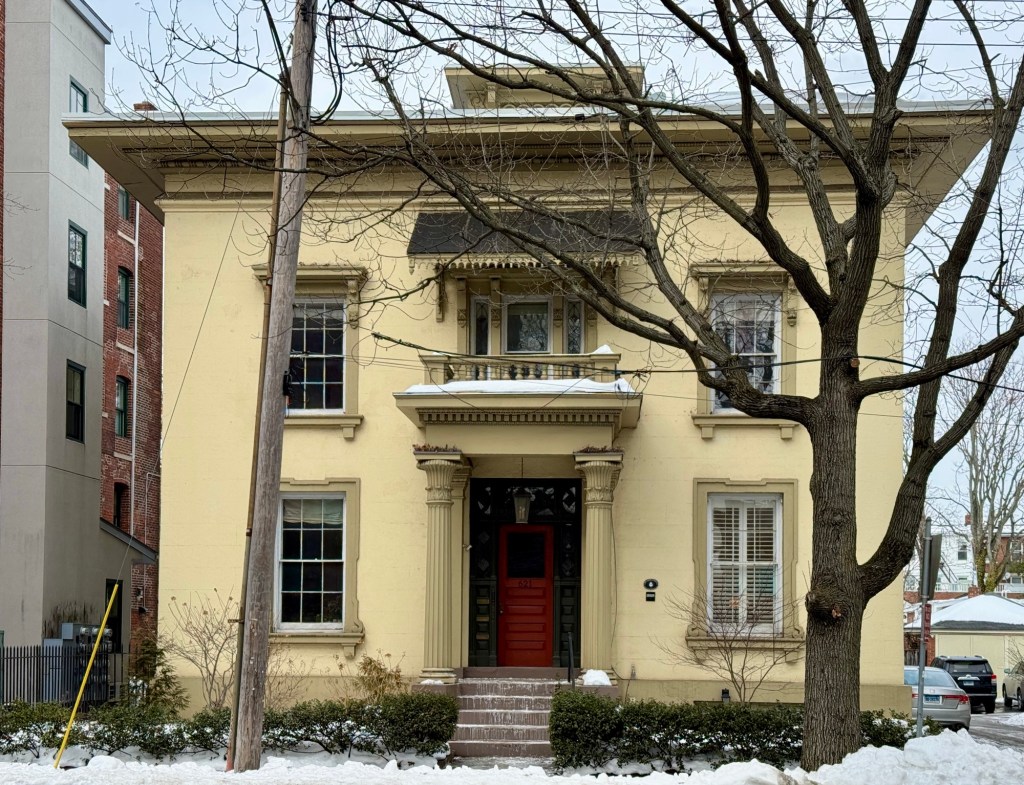
Nelson Hotchkiss was a New Haven lumber dealer and developer in the Wooster Square district and had this stately home on Chapel Street built for his family. While the architect is not confirmed, it is probable that the residence (along with neighboring homes also developed by Hotchkiss) was the work of Henry Austin, who partnered with Hotchkiss on developments in New Haven and Trenton, New Jersey. The Nelson Hotchkiss House was built in 1850 and is an excellent example of Italianate style with boxy form, broad overhanging eaves, brick walls covered with stucco and Austin’s signature Greek Doric columns with fluted shafts and foliate capitals. The house maintains a window hood over the upper floor window with delicate carved wood bargeboard.
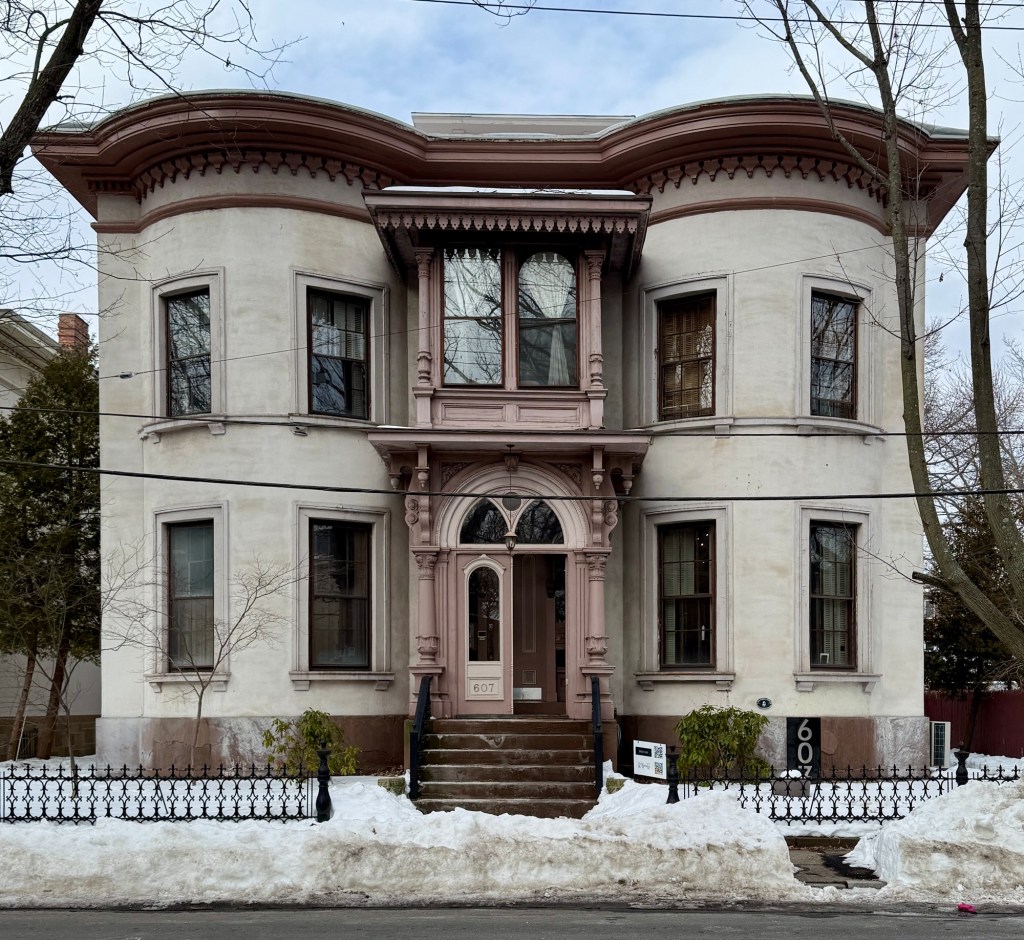
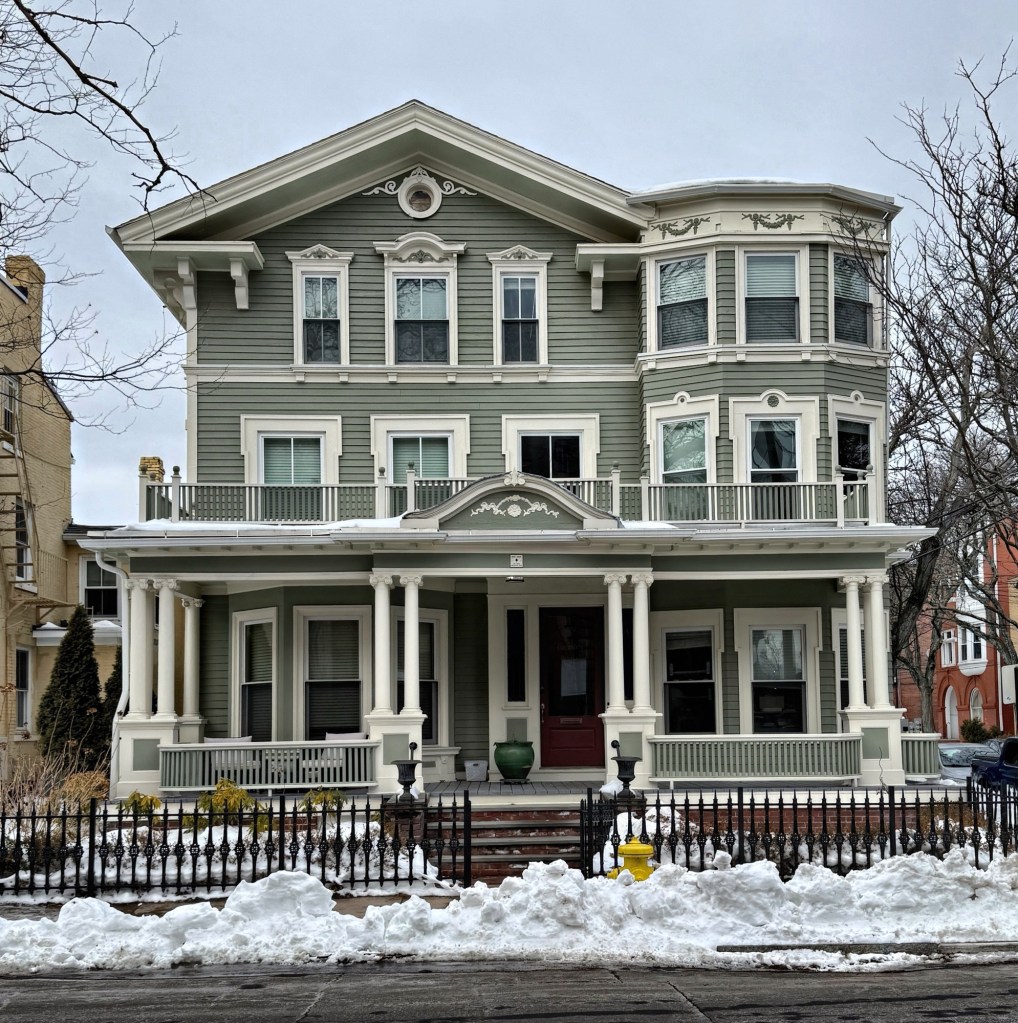
One of the eclectic mid-19th century residences in New Haven’s Wooster Square neighborhood is the Bromley House, an exuberant blending of architectural styles that have been lovingly preserved. The history is a little murky on this residence but from research, the home was built around 1850 and was possibly a two-story flat-roofed Italianate style design with three-bay facade and off-center entrance. The home was acquired by Joseph Bromley, who appears to have added a third-story with gable roof. After the Civil War, the property was purchased by Lyman Erving Bradley, a veteran of the war who was employed as a police officer and later as private security for an area factory. It appears that Mr. Bradley, before his death in 1901, had the property expanded with a whimsical front porch, three-story side addition, and applied ornament in the Queen Anne style. The home is today a three-unit condominium, similar to the three-deckers found in cities all over New England.
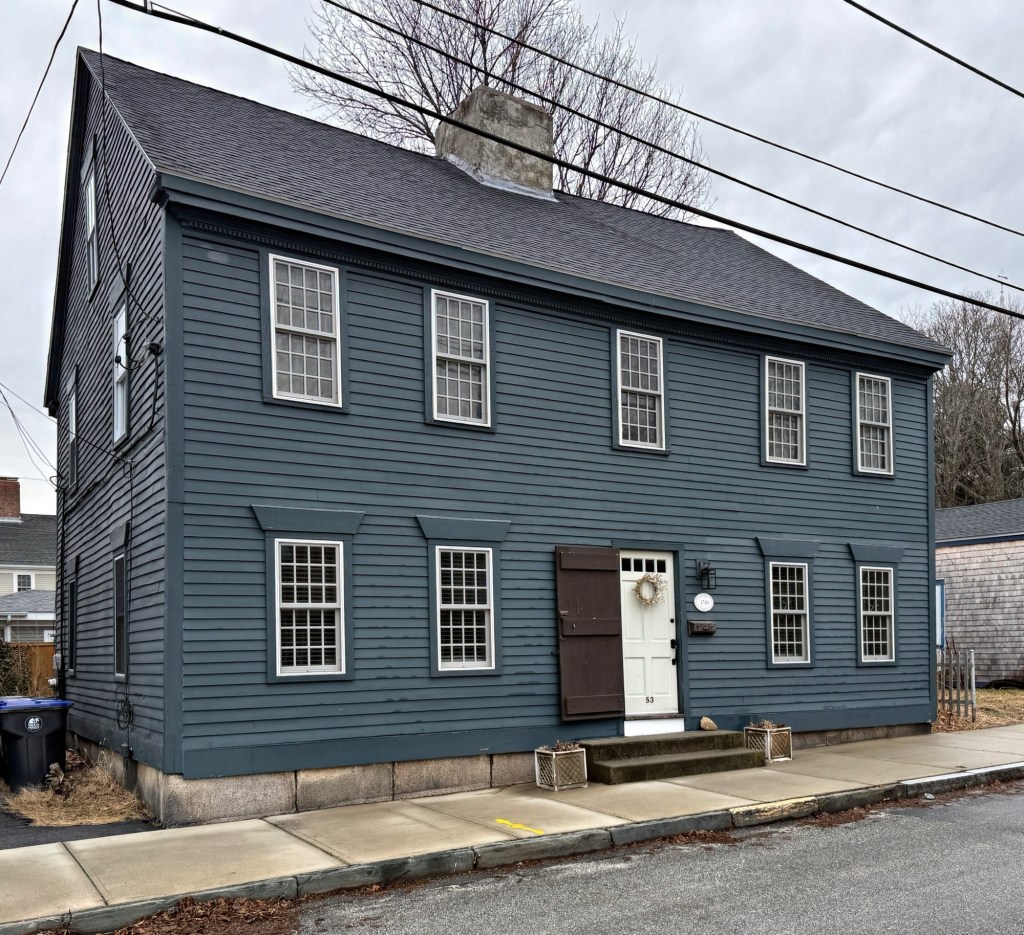
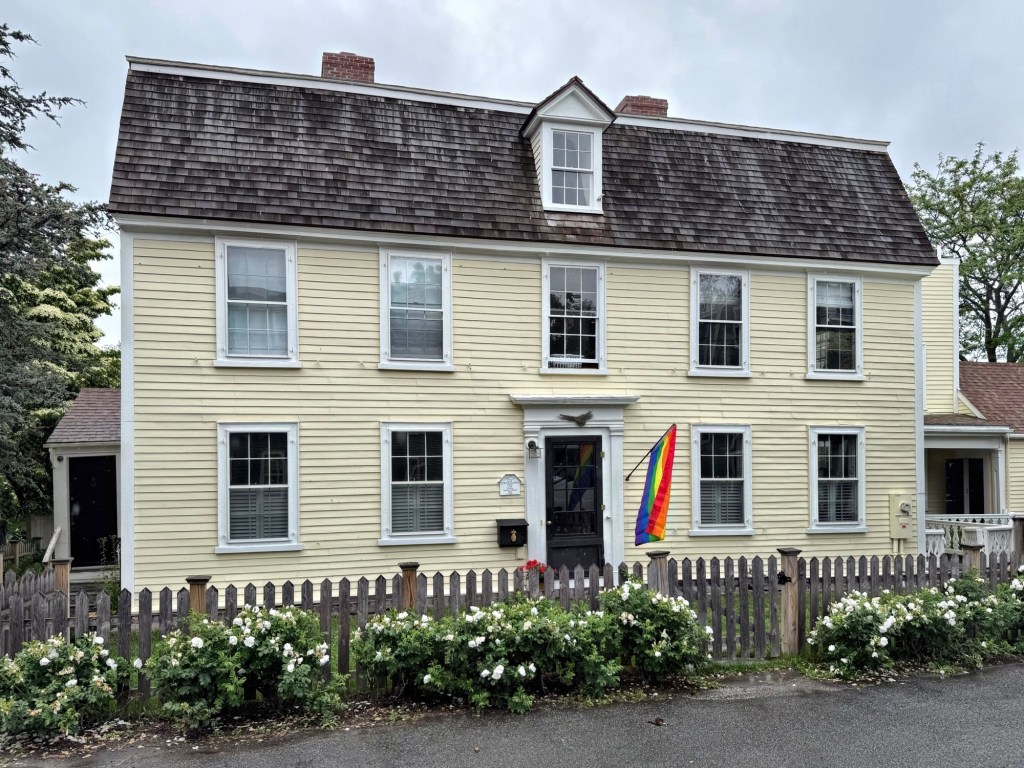
This large house on State Street in Warren, Rhode Island, has a plaque that dates it to around 1740, but it must have been relocated to this site or been built later as the street it is located on was initially laid out in 1790. The large, two-story, Federal style house exhibits a large central chimney and five-bay facade and has recently been restored. It looks great! According to sources, the property was owned by members of the Cole Family, a prominent local family who engaged in the sale and transportation of enslaved Africans in the 18th and 19th centuries. The house was eventually owned by Charles Richmond in the mid-19th century and is typical of the many great historic homes in Warren.
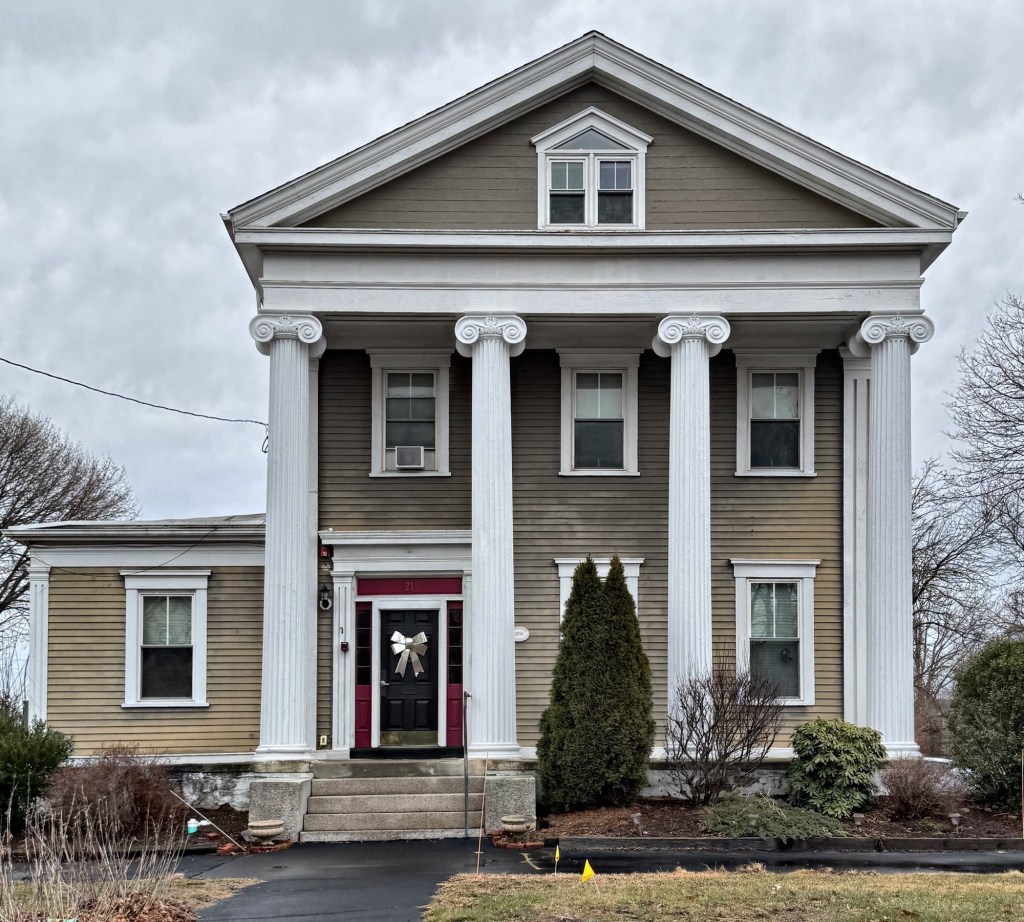
The only two-story temple-front Greek Revival style house in Warren, Rhode Island, the Judge Alfred Bosworth House on Federal Street, is believed to be the work of great architect Russell Warren. Alfred Bosworth (1812-1862) ran a law office in Warren and Providence and represented Warren in the General Assembly from 1839 until 1854 and then served as a justice on the Rhode Island Supreme Court. Bosworth was of counsel for Rhode Island in suits growing out of the boundary question between Rhode Island and Massachusetts, specifically around Fall River. Judge Bosworth died at home in 1862 and his widow, Anne, lived here afterwards. At the end of the century the Bosworth House was converted to an ice cream parlor, named Maxfield’s, which became a very popular attraction in town. The company, owned by Nathaniel and Julia Maxfield, attracted throngs of local residents every summer who would eat ice cream on the front yard of the house. Maxfield’s was even frequented by Providence writer, H. P. Lovecraft, when he was a young man. During the mid-1900s, the house served as a nursing home until 1988, when owners restored the house back to a residence and removed the asphalt siding that was added to the exterior around the time of the Great Depression.
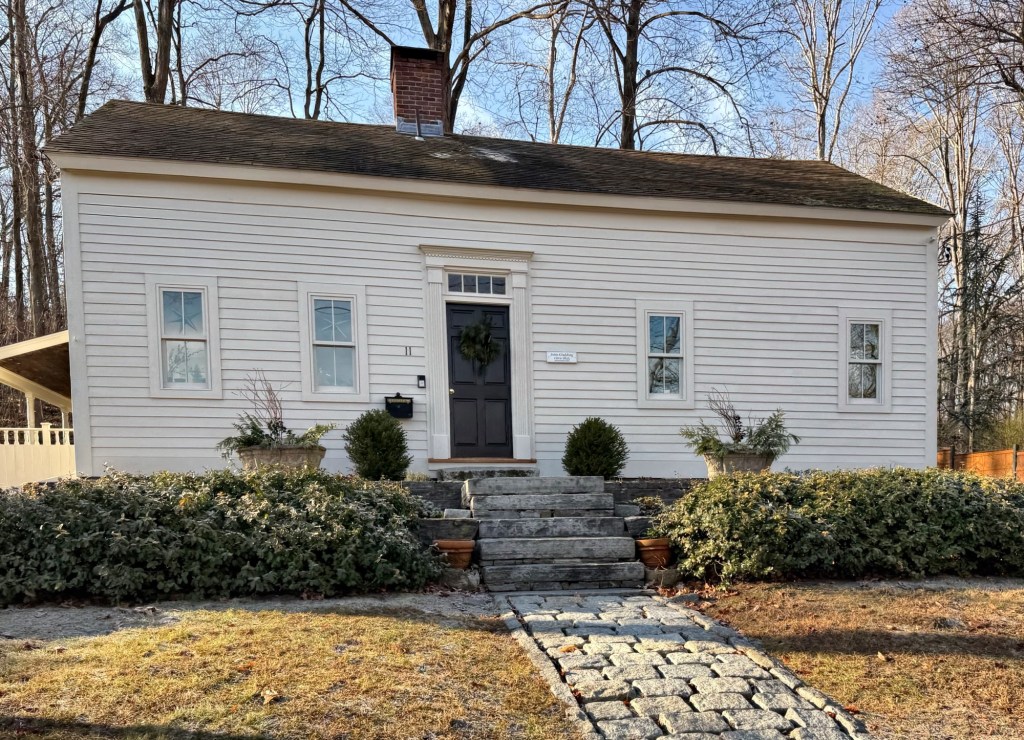
This vernacular, Federal period house on Union Street in Deep River, Connecticut, was built around 1825 for (and likely by) John Gladding. John worked in town as a joiner, a historic carpenter/woodworker, who either built houses or ships in the nearby Connecticut River. The Gladding House was likely originally built as a half cape, with a side hall entry and the two window bays to its left. As the family grew, the house was probably added onto to the right of the entry with the irregularly spaced bays. Houses like these that modestly grow and adapt to modernizations over time are what makes many New England villages great.
This house has a lot of history! Originally built around 1717 by Ephraim Sanders, this house on Franklin Street in Marblehead was later purchased by Thomas Gerry (1702-1774), a merchant who operated ships out of Marblehead, and father to Elbridge Gerry, the fifth Vice President of the United States. The home was likely a three-bay, side hall Georgian house and expanded to the current five-bay configuration by Thomas Gerry around 1750. Thomas Gerry was born in Derbyshire, England, but came to Marblehead by around 1730 and was active in local politics and had a leading role in the local militia, later speaking out against the Crown and sought independence. Thomas Gerry died in 1774, and did not get to see the Revolution nor his son become a Founding Father. The property was later the home of one of his granddaughters, Sarah Gerry Conklin, and her husband, Frederick Conklin, an infantry captain, who housed officers in command of nearby Fort Sewall during the War of 1812. In the 1940s, historical novelist Anya Seton after researching her genealogy, led her to base her 1948 novel, The Hearth and Eagle, on the history of the seaside town. She set the novel in the Hearth and Eagle Inn, based on the Gerry House here.
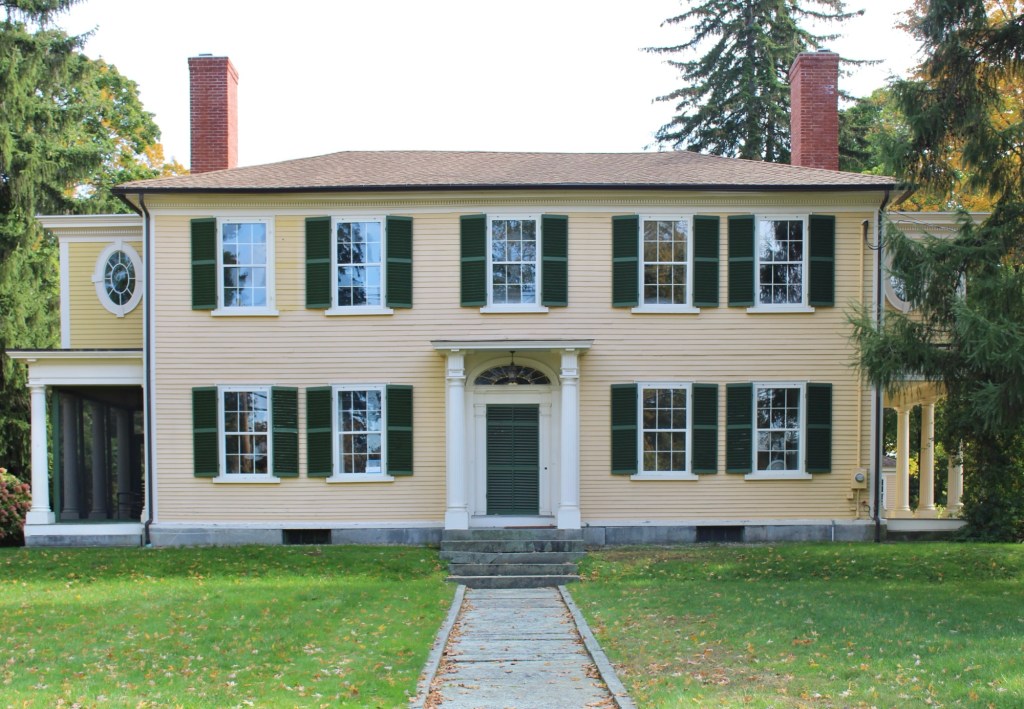
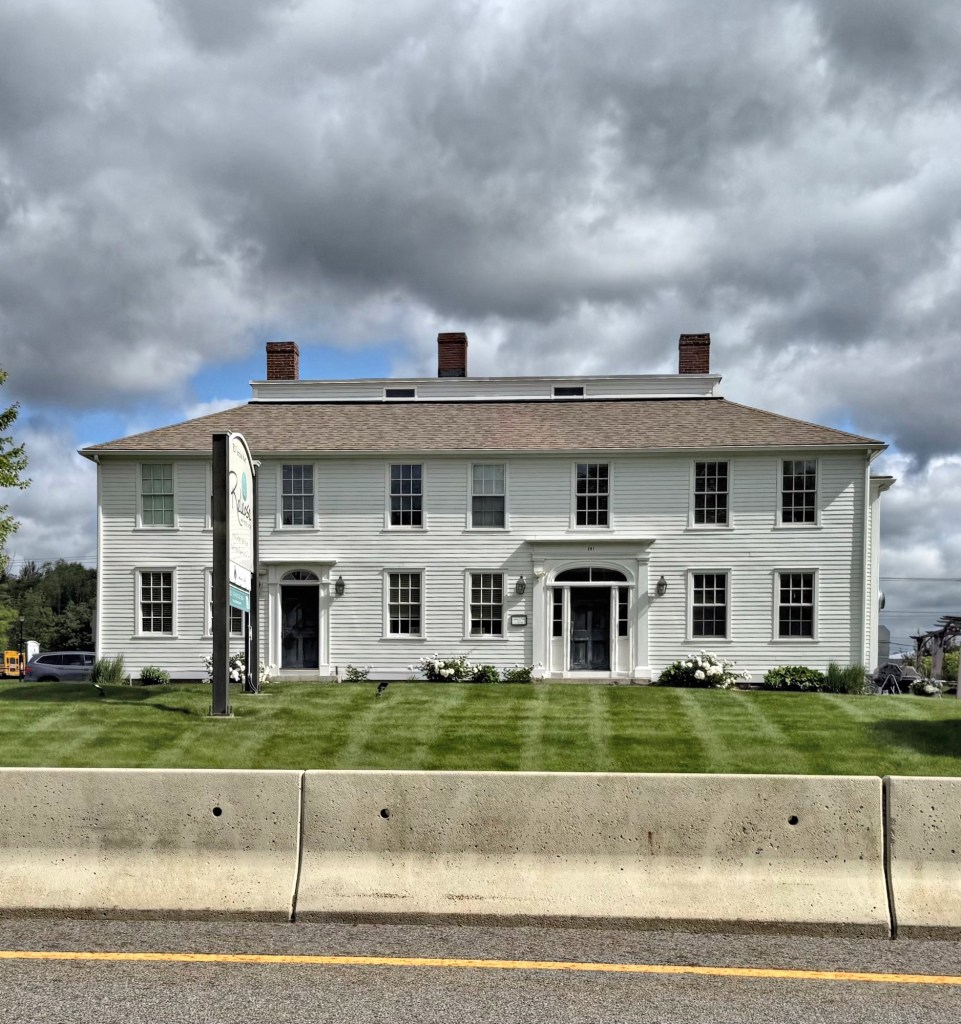
In 1820, Nathan Austin Fisher (1796-1851) purchased land along the Boston-Worcester Turnpike in Westborough, Massachusetts with the aim to build a home for his new wife, Susan T. Lothrop. By 1822, he had built a five-bay, center-hall Federal style estate house on the property and the couple began to raise their family. By 1826, Nathan and his brother-in-law, Joseph Lothrop, had opened a store in a section of Fisher’s house, which had been added for that purpose, presumably the western (left) three bays of the structure. Joseph Lothrop would build a Federal style residence on the opposite side of the turnpike that same year. When the railroad came to Westborough, turnpike traffic slowed, and the new rail line went through the center of town, bypassing the Fisher House and store, causing it to fail. Fisher and Nothrop would eventually leave Worcester County, and the property was sold numerous times until 1919, when this property was purchased by the Lyman School. The Fisher House became a residence for younger, special-needs boys to insulate them from the main population of Lyman, a reform school for the education and vocational training of wayward boys. In 1938, the house was converted back to a two-family home and used by families of Lyman School employees until the Lyman School closed in 1972, leaving the iconic Nathan Fisher House vacant for decades. After a failed attempt to convert the property into a house museum, the property was purchased by a local business, Release Well Being Center, and has been lovingly restored and maintained ever-since!
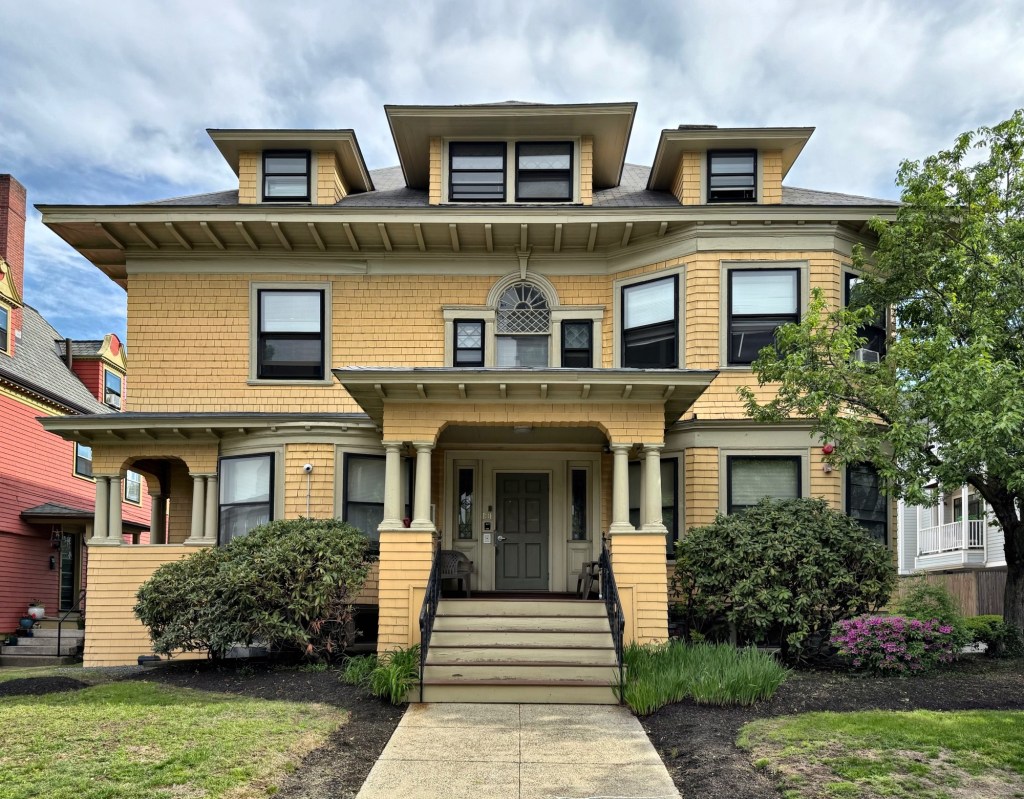
Located next to the colorful Wadleigh-Friend House on Highland Avenue in Somerville, the Dr. Thomas M. Durell House stands as a more academic example of the Colonial Revival style, but leaning more towards Arts and Crafts style than Queen Anne like its neighbor. This residence was built in 1897 for Dr. Thomas M. Durell, a Harvard-educated doctor and surgeon who, at the formation of the Tufts Medical School, was appointed Lecturer on Legal Medicine, and in 1895, was made Professor of that subject. Architects (and brothers) Edwin King Blaikie and William Everett Blaikie designed the residence for Dr. Durell along with a stable at the rear. While the house exhibits Colonial Revival detailing from the Palladian window and proportions, there are some Arts and Crafts style influences including the shed dormers, shingled siding, inset porches, and broad overhanging eaves with exposed rafters.
 Buildings of New England
