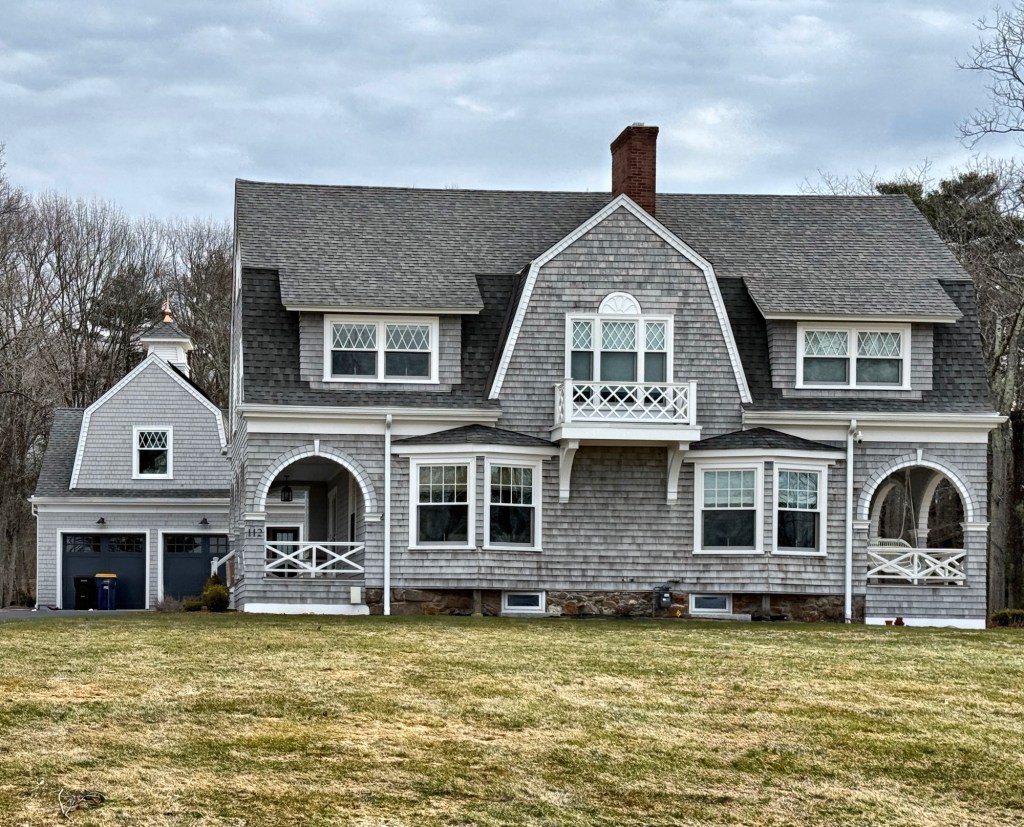
On the eastern shore of Lake Massapoag in Sharon, Massachusetts, the George P. Lawrence Summer House is an excellent and rare preserved example of a late 19th century Victorian summer house in the suburban town. The residence was built in 1897 for George Pelton Lawrence (1859-1917) and his wife, Belle, as a summer retreat from their primary residence in North Adams in Western Massachusetts. George P. Lawrence was an attorney who was appointed as a district court judge before entering the political arena where he became a state senator. The couple spent summers at this beautiful Shingle/Colonial Revival style residence until Congressman Lawrence’s death in 1917. On November 21, 1917, Lawrence jumped out of his eighth-floor New York City window at the Hotel Belmont , committing suicide. In his room, he left a note saying that he “could not stand the pressure anymore”. The Sharon property remained in the family until the 1940s and has been modernized, while maintaining its character.
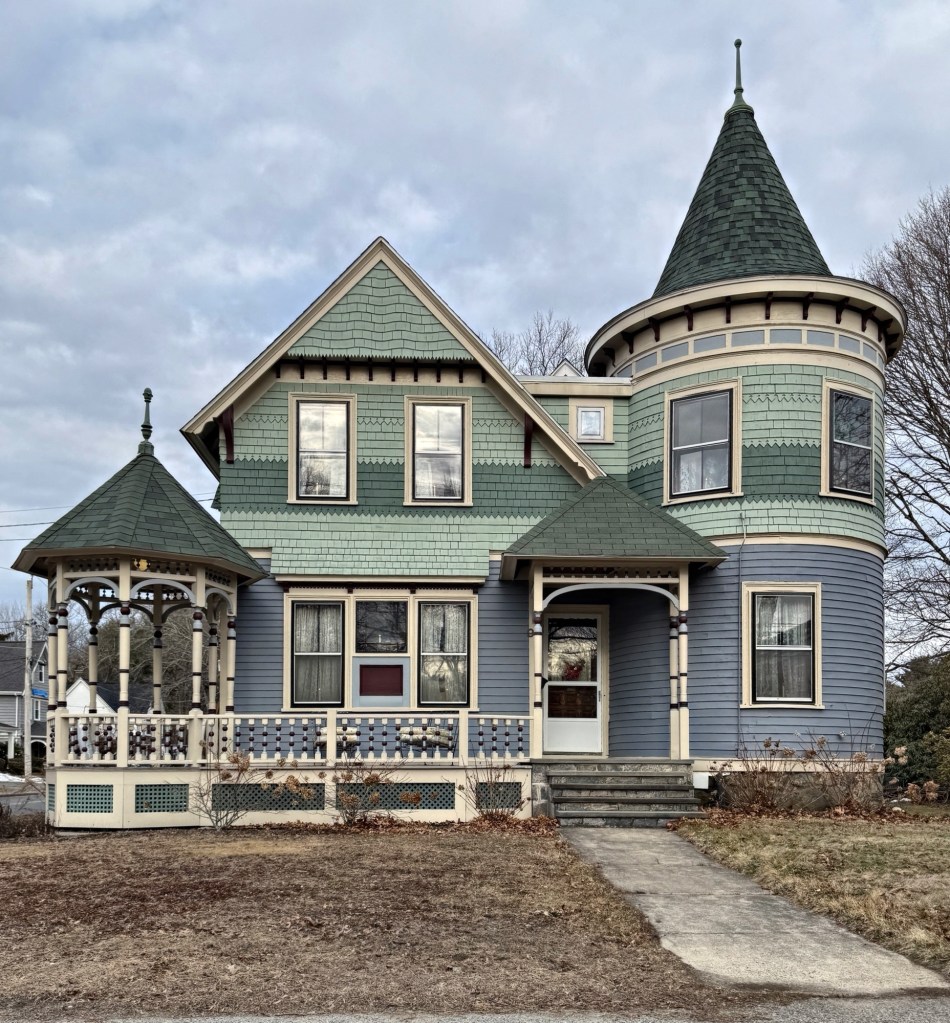
The Timothy Quinn House on South Main Street in Sharon, Massachusetts, is an extravagant example of the Queen Anne style that maintains its flourish and ornate details. The residence was built in 1892 for Timothy Francis Quinn (1863-1934), a first-generation Irish resident who owned and managed a shipping business with his brother, John. Timothy Quinn was active in local affairs and with the local Catholic church and historical society. After his death in 1934, the property was inherited by his wife, Elizabeth, and later by their daughter, Esther. Architecturally, the Quinn House has an irregular plan and features varied siding, brackets, a tower capped by a conical roof, and elaborate porch, all painted to highlight the many unique details.
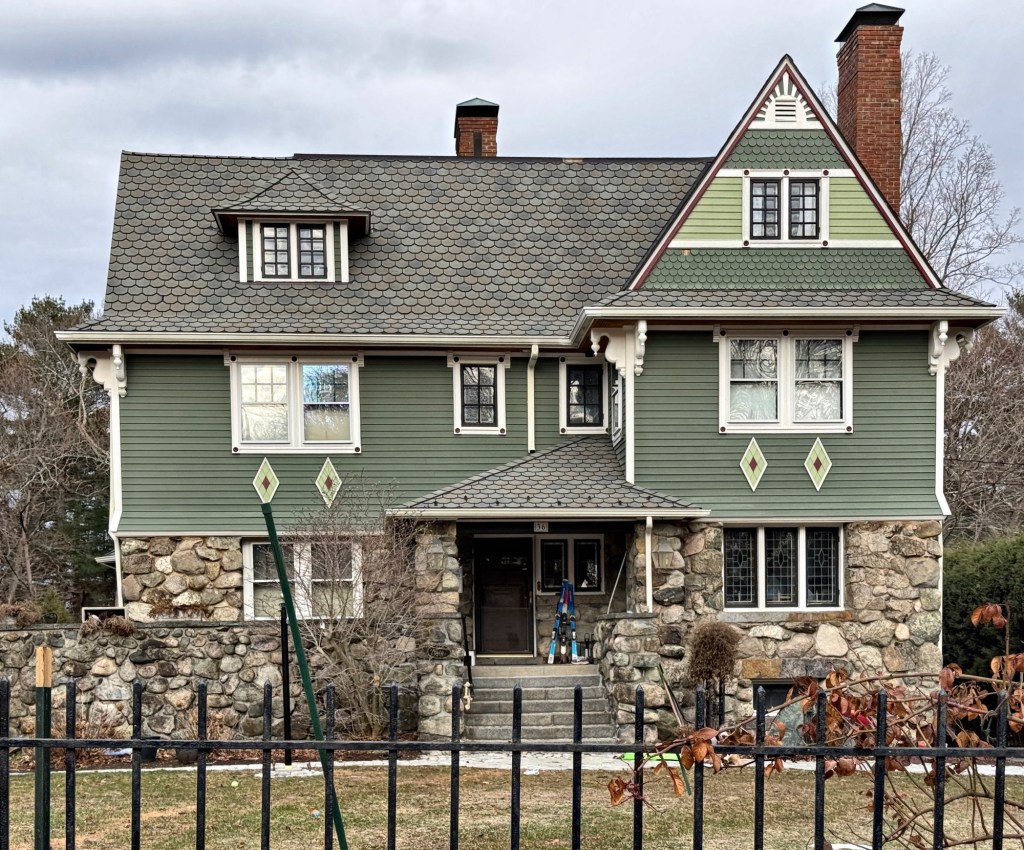
The John G. Phillips House on Pleasant Street in Sharon, Massachusetts, is a playful and eclectic example of early 20th century residential architecture showcasing the blending of many styles into a single composition. The house was built in 1901 for John Goddard Phillips, who moved to Sharon from Boston to retire in this large home, and serve as President of the Sharon Historical Society. The house blends typical Queen Anne and Shingle style forms but with interesting brackets common in styles popular a half-century earlier.
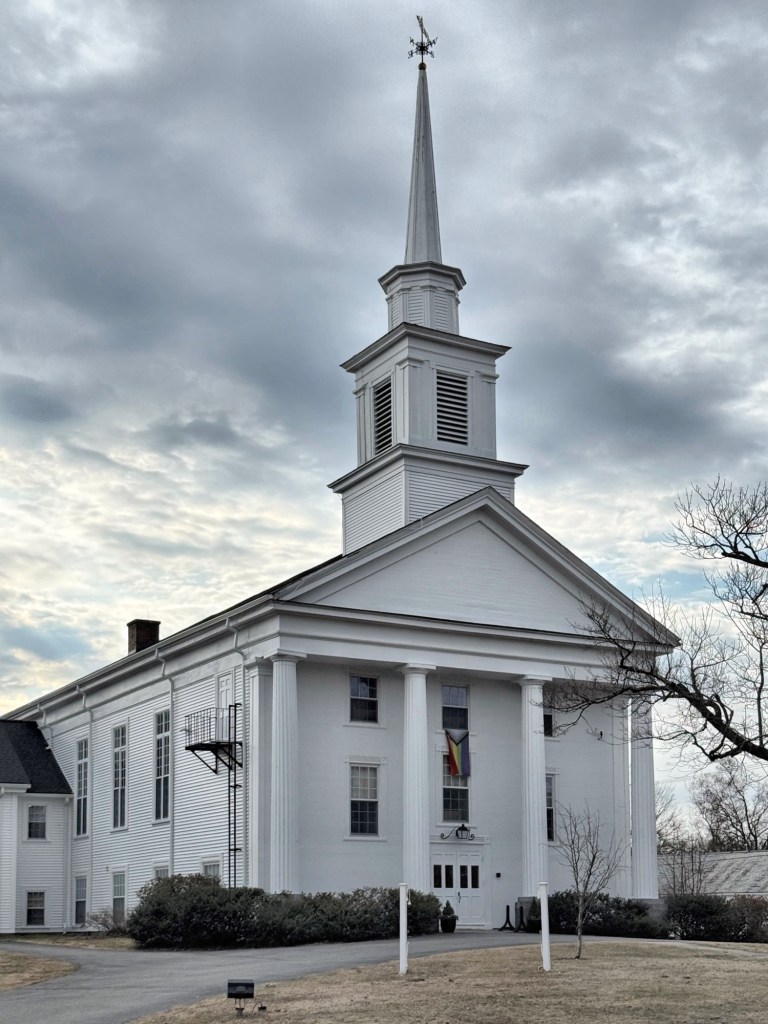
Sharon, Massachusetts, is a small suburban community south of Boston that is lesser known than its neighbors, but the community has some great old buildings! The Town of Sharon was originally part of a 1637 land grant given by the Dorchester Proprietors to encourage new settlement in areas southward. In 1726, the lands of the present towns of Sharon, Canton and Stoughton, were separated from Dorchester and called the Stoughton Territory. Settlers in present-day Sharon found it difficult to attend mandated church services centered around present-day Stoughton and petitioned the General Court in 1739 to set off as a separate precinct. The request was granted and the Second Precinct was established, and incorporated as Stoughtonham in 1765, changing its name in 1783 to Sharon, named after the Sharon Plain in Palestine. In 1813, the local congregationalists split due to theological differences and some formed a Unitarian church. The Congregationalists moved down the street and built a new church in 1822 which was destroyed by fire in 1838 and replaced a year later by this edifice. Built in 1839 the First Congregational Church of Sharon is a vernacular and well-preserved example of a Greek Revival church building in the Doric order with towering pilastered steeple, monumental portico supported by four fluted Doric columns, and flushboard siding. The Congregational Church retains an original bell cast by the The Revere Copper Company of nearby Canton.
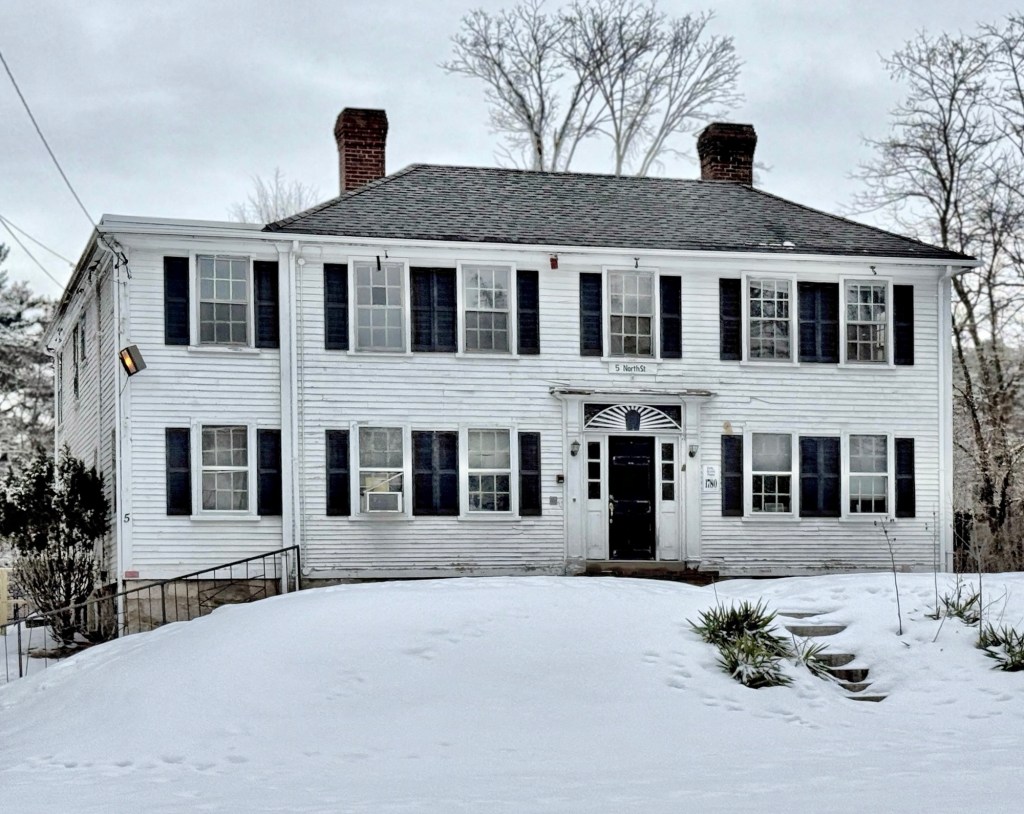
This Federal period house in Wrentham, Massachusetts, has had quite the history from the residence of a Revolutionary War veteran to the superintendent’s house for a school for the insane. This five-bay Federal style house was built for Oliver Pond (1737-1822) in about 1790. General Pond commanded one of the five militias in Wrentham that marched on Boston in 1775 to fight in the Revolution. Pond fought in at least two battles in Princeton and Trenton New Jersey under Washington. After the War, Oliver Pond got involved with politics and became General of the local militia granting him this important title. His heirs remained in the house into the second half of the 19th century. In the early 1900s, the property was purchased by the Commonwealth of Massachusetts as part of the new Wrentham State School, a facility to treat and educate children with disabilities. The Pond House was occupied by the superintendent of the school and is still owned by the State.
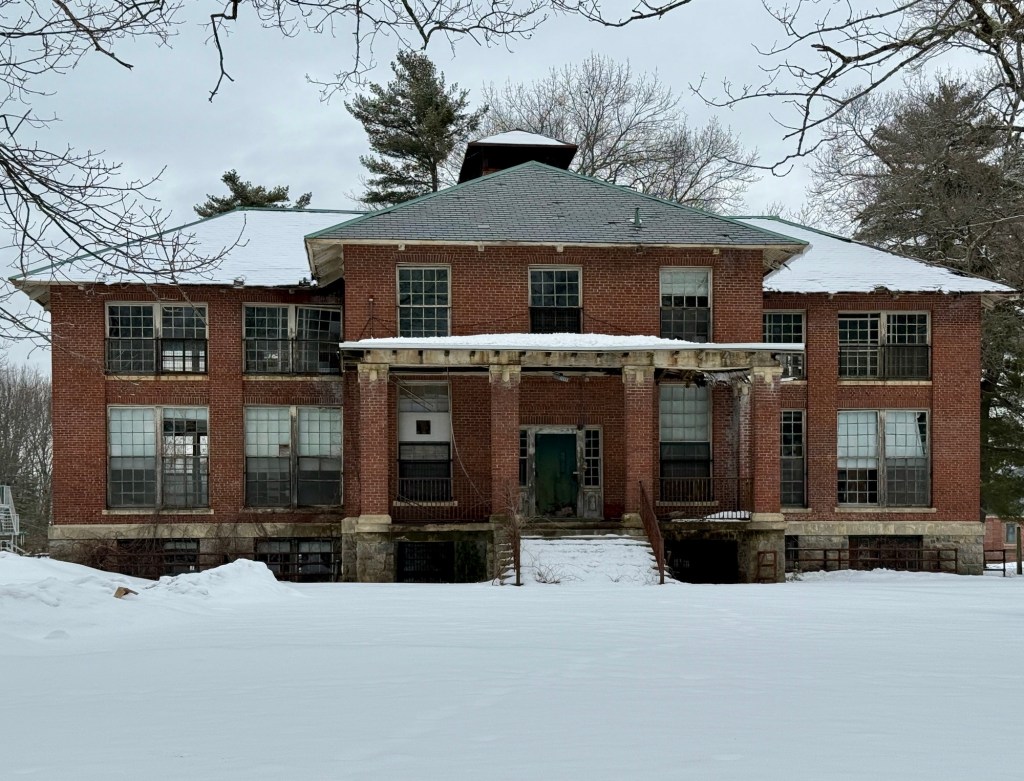
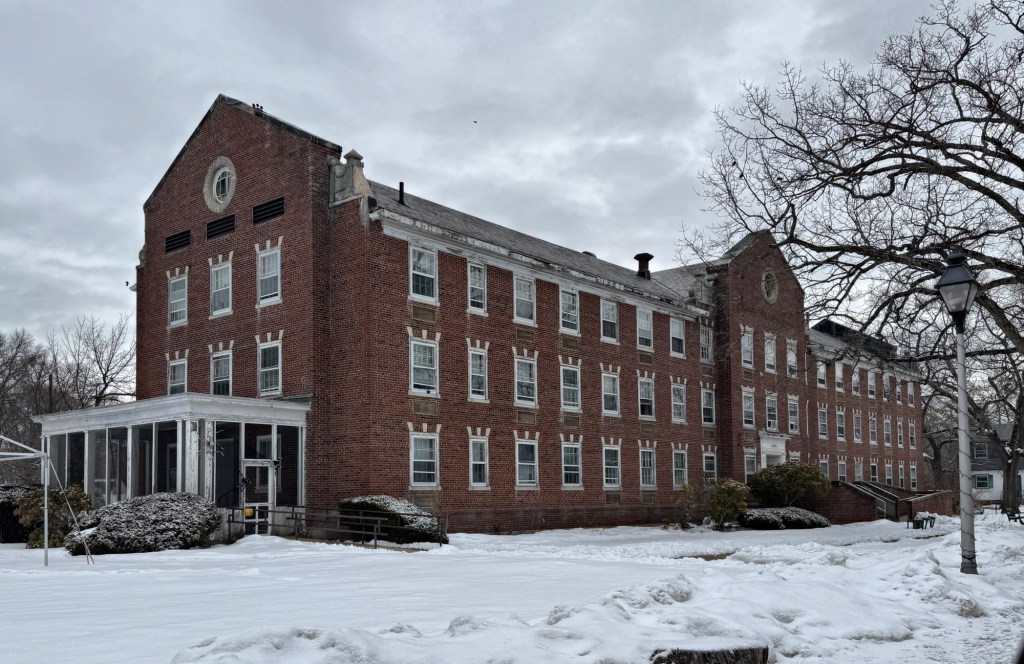
The Wrentham State School (also known as the Wrentham State Hospital) was authorized in 1906 as a school for the “feeble-minded”, and the campus is comprised of a few dozen buildings largely from the early to mid 20th century. The school was founded to house and treat developmentally disabled children and was the first in the state of Massachusetts to employ a standardized plan for wards and employee housing. A site occupied by farmhouses just north of Wrentham Center was selected and purchased by the Commonwealth of Massachusetts. The school officially opened in 1910 and brick structures were built to house students and workers. In its first year, 217 pupils were admitted to the facility, roughly half boys and girls. A majority of the early ward buildings were constructed in the early years of the school, with most designed by the Boston architectural firm of Kendall, Taylor & Stevens, who also designed many other similar facilities around the country in the early 20th century. Most buildings are examples of the Arts & Crafts and Colonial Revival styles built of brick. Today, the campus is comprised of roughly half, deteriorating historic buildings and half are used as part of the Wrentham Developmental Center, which continues the important (and under-funded) work of treating psychiatric and developmental disorders of patients.
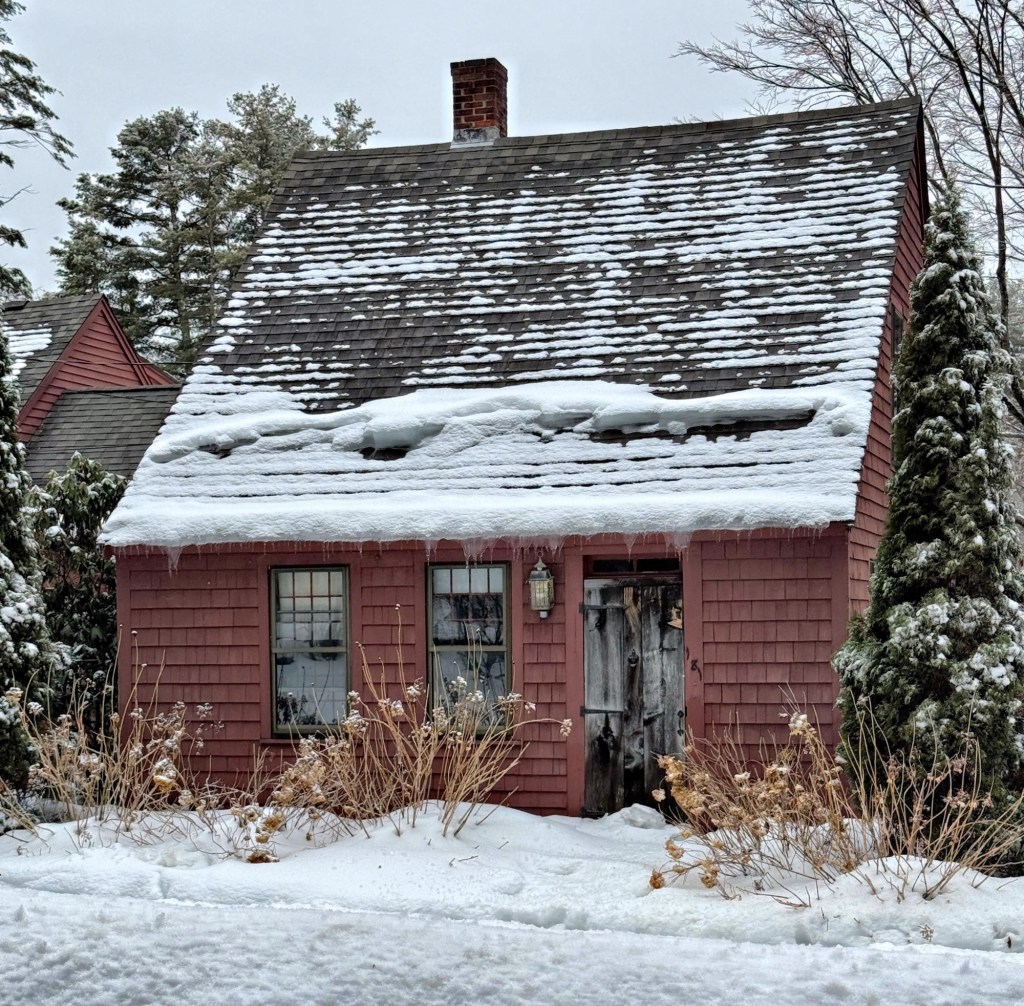
A rare surviving half-cape dwelling, the Follett House on Chestnut Street in Wrentham, Massachusetts, has been lovingly preserved by generations of stewards as a private home. Given its form and vernacular style, the house could date to the mid-18th century, but available early records show it was owned by members of the Follett family in the 19th century. The home was owned by Amorous Follett (1792-1863) and his wife, Huldah Mason Follett who operated a farm on the property and raised their children in the small residence. The property was later inherited by the couple’s son, Alonzo Follett and his wife, Tryphena. The half cape is just three bays wide with a steeply pitched side gable roof, shingled siding, and later wings, expanding the original house.
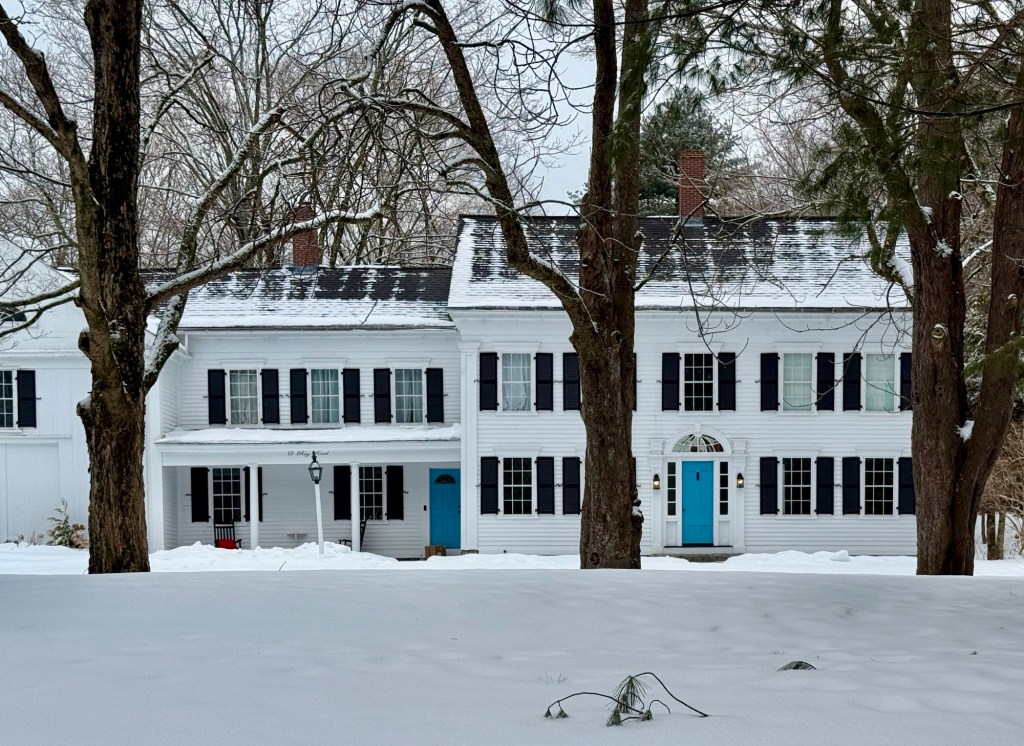
Built in 1847 as a residence for local Postmaster and storeowner, Philander P. Cook, this historic house off West Street in West Wrentham, Massachusetts, showcases the evolution so many New England farmhouses have experienced, from working farm, to country retreat, to suburban residence. Philander Perry Cook (1816-1880) purchased this land in 1845 from prominent Massachusetts State Senator and local government official, Alan Tillinghast, and shortly after purchase, he began construction of this Greek Revival style, two-story residence with attached stable. At the turn of the century, wealthy Wellesley College graduate, teacher and published author named Lucy Freeman, purchased the property from Cook’s heirs (as well as a residence nearby where she took up residence) and she rented the Philander P. Cook House to friends during the course of her ownership. In 1910, she modernized the house, likely adding the fanlight transom in the Colonial Revival mode, and had the grounds landscaped as a country retreat. Throughout the 20th century, a number of owners have preserved and modernized the home, while retaining its unique charm and character, and it now is a large, single-family home.
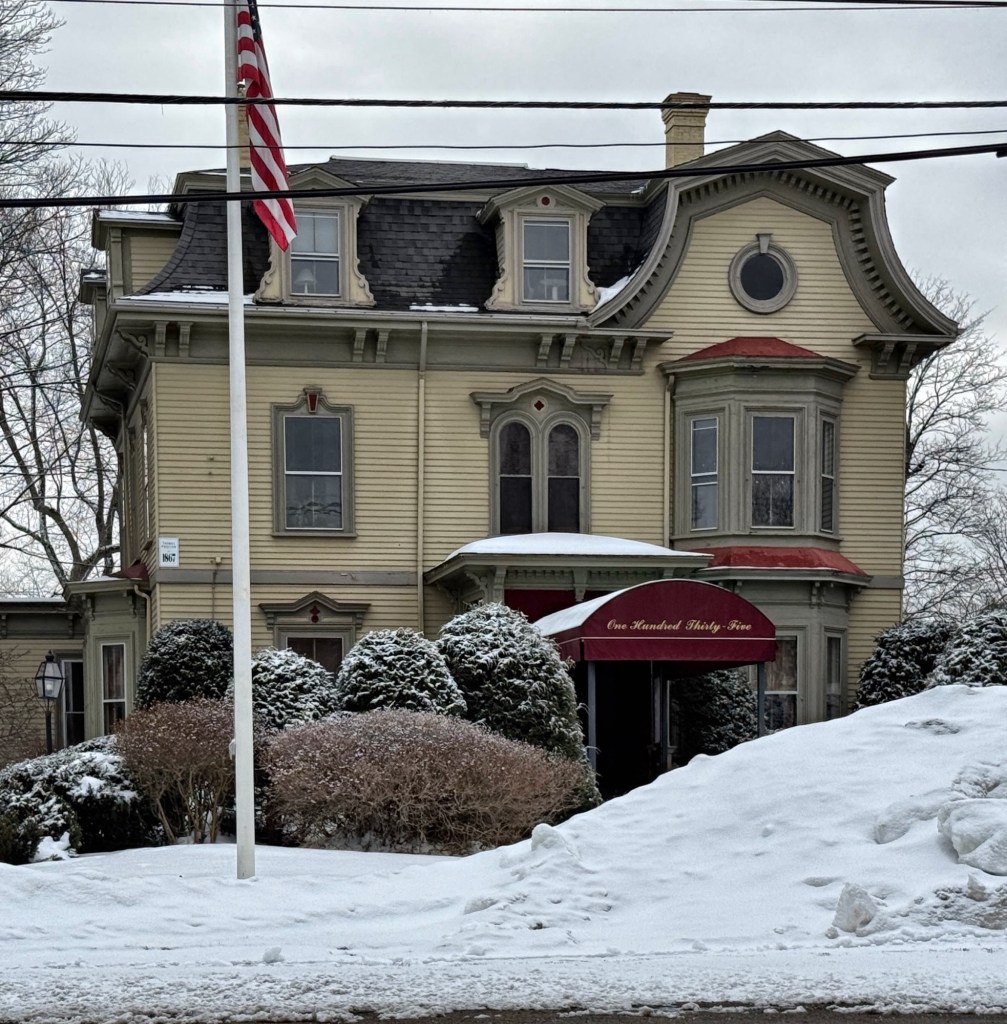
The Fisher-Mason Mansion on South Street in Wrentham, Massachusetts, is among the town’s finest and well-preserved Victorian-era homes. The house is said to have been funded and built in 1868 by Thomas Proctor (who lived in a large Mansard house overlooking the town common) for his daughter, Emma Proctor as a wedding gift upon her marriage to husband, Henry Kollock Fisher, a shoe manufacturer. The couple lived in the home, raising four children here until 1910, when the Proctors sold the property to Otis N. Mason of Providence. Today, the Fisher-Mason Mansion is known as the R. J. Ross Funeral Home, who have operated a funeral home from the residence since before WWII. The mansion features a mansard roof with unique mansard gable at the side sheltering an ocular window.
 Buildings of New England