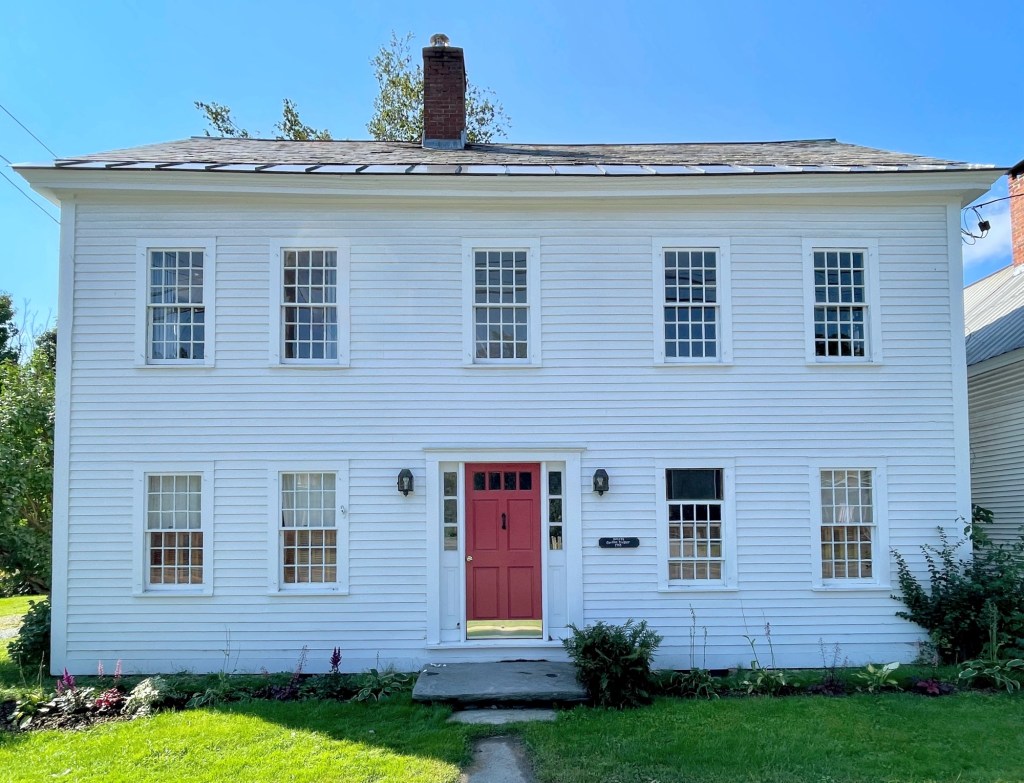
Samuel J. Nutter House // c.1750

The Samuel J. Nutter House on Indian Pond Road in Kingston, Massachusetts, is a fairly rare example of a half-cape Georgian-era home in New England. Local history states that the house dates to before the American Revolution and was constructed as an early half-cape, with an off-center door flanked by two bays of windows. The small house form would allow the owner to add on additional bays to make it a 3/4- (has a door with two windows on one side and a single window on the other) or full-cape (with a central door and two windows on each side) as the family and prosperity grew. This house was built as a half-cape and has not changed in its over 275-year existence, besides the addition of a barn and one-story connecting addition to it. The house was originally located elsewhere in town, but was relocated to the site in about 1830 by Samuel Nutter (born Nutt and changed his name in 1825), who married Mercy Washburn that year. The Nutter Family farmed here until the early 1900s.

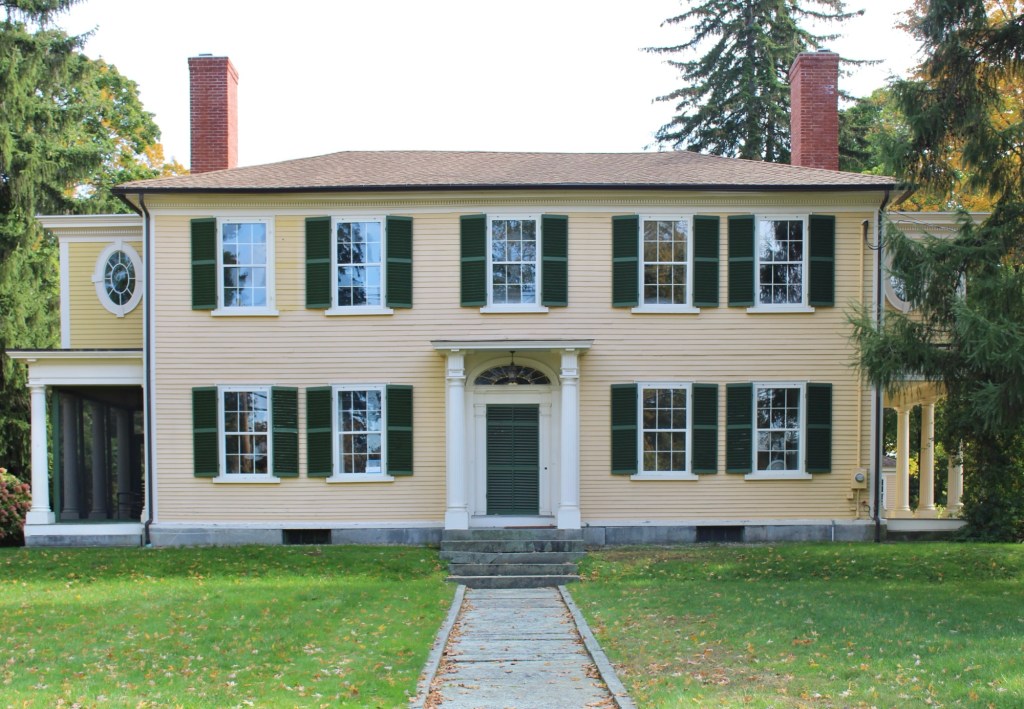
Bildad Washburn Tavern // c.1774

This stately Georgian style house on Main Street in Kingston, Massachusetts, was originally built in nearby Marshfield and later moved to its current location just decades later. The house was built on the Winslow estate in Marshfield in about 1774 by either Dr. Isaac Winslow or his brother, Maj Pelham Winslow. In 1796, the property was purchased by Bildad Washburn, a noted gravestone carver, and the house was moved to its present site. Reports state that the house was moved by boat and oxcart to its current location, where it became a tavern and residence of Mr. Washburn. In 1804, the house was sold to Major George Russell, a merchant and town clerk, who later served in the War of 1812, who converted the ell into a store where he sold, East and West India goods from his ships. After his death, his daughter ran a dame’s school from the house. The Washburn Tavern is significant as a large Georgian-era house that remains in a great state of preservation.

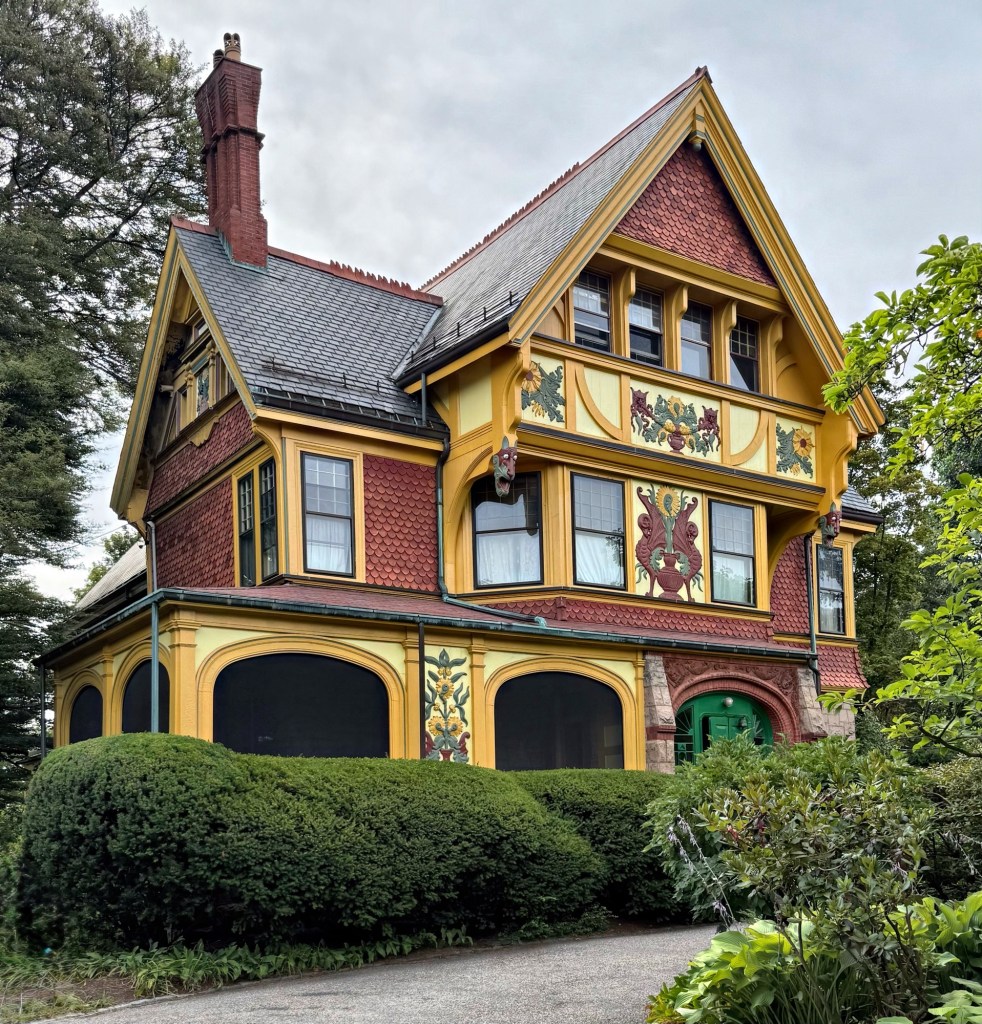
Higgins-Little House // 1890

This “painted lady” on Roslin Street is one of the many fine Queen Anne Victorian houses in the Ashmont Hill neighborhood in Dorchester, Massachusetts. The residence was built in 1890 for original owner, Lewis H. Higgins, a master mariner who was born in Wellfleet before moving to Boston. Higgins seemingly resided here with his family for a short time until the house was sold in 1893 to Samuel and Grace Little. The house is perched on a hill and features a prominent rounded corner tower. The original porch with turned posts and gable detailing stand out with the intricate paint scheme used to highlight all of the amazingly preserved ornamentation. While paint schemes like these are not historic, they do bring joy to owners and passersby, and help viewers appreciate the care that these stewards take in maintaining their old homes.

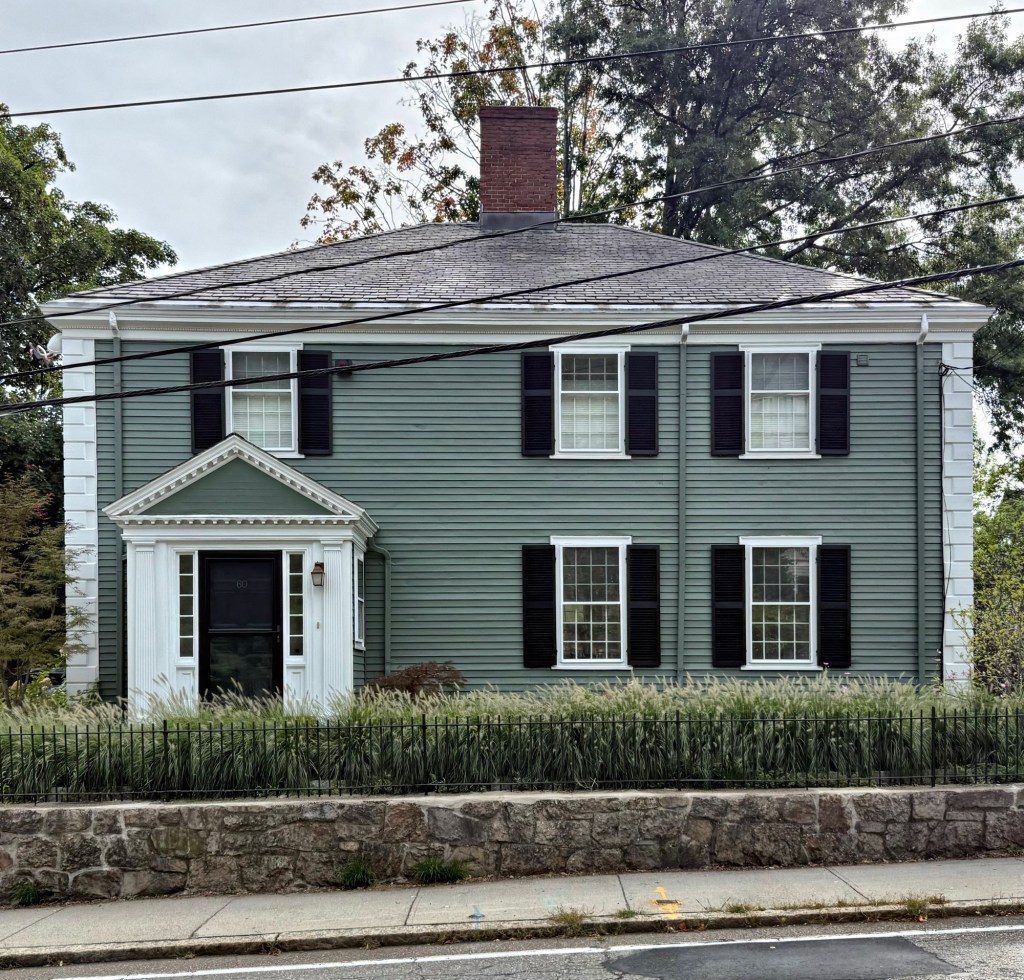
Mary E. C. Bates House // c.1894

One of the many spectacular Queen Anne style houses in the Ashmont Hill neighborhood of Dorchester (Boston) is this c.1894 residence at 53 Ocean Street. The house was built for Mary Elizabeth (Cushing) Bates and her husband, Henry L. Bates. Henry worked as a bookkeeper and the couple was able to afford a house lot in the fashionable Ashmont area of Dorchester, and had this home built. In the early 20th century, the couple purchased a then-vacant lot next-door at 57 Ocean Street, and had the current house there built, renting it out for years for supplemental income. Hallmarks of the Queen Anne style seen in the Bates house include: varied siding types, large porch supported by turned posts, asymmetry, projecting bay window, and applied ornament seen here in the gable.

Hattie Furbush House // 1888

Located next to the Harrison Henry Atwood House on Alban Street in the Ashmont Hill neighborhood of Dorchester, this stately home with a broad, gambrel roof oriented to face the street was also built by the architect and neighbor, Harrison H. Atwood. Appointed City Architect of Boston in 1889, Atwood designed schools, firehouses, and other public buildings, and just before this, designed a number of homes, primarily in the Shingle and Queen Anne styles in Ashmont. While he specialized in Victorian styles, Atwood was well-versed in the Colonial Revival style, as evidenced here. Built in 1888, this stunning house was constructed for owner, Harriett “Hattie” Dinsmore Furbush (1862-1950), who was an active member in a local organization, the Ashmont Tourists Club, a women’s social club devoted to talking books, travel, and life. The club often met in the library of Ms. Furbush’s home, which likely migrated out to the gorgeous enclosed porch with its multi-light windows.

Mumford House // 1877

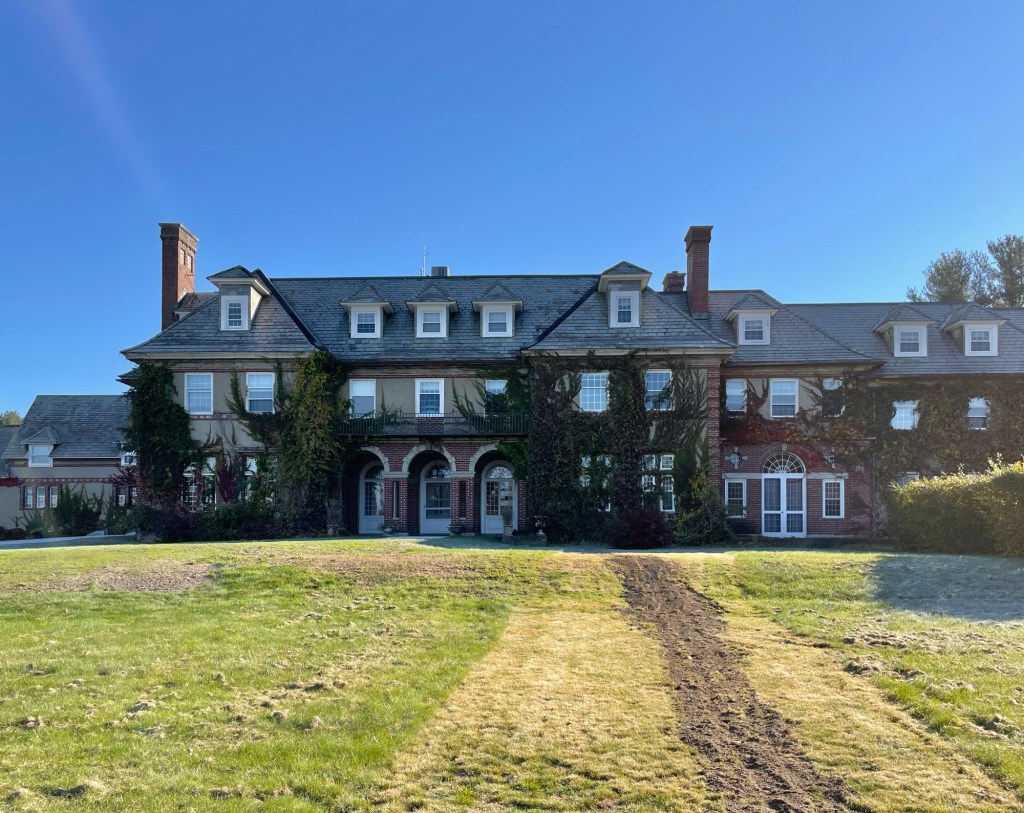
Set back behind a manicured lawn on the charming Alban Street in the Ashmont Hill neighborhood of Dorchester, this Victorian era residence was both a family home as well as a finishing school for young ladies. The house at 35 Alban Street was completed in 1877 for the Reverend Thomas James Mumford, pastor of the Third Church of Dorchester and anti-slavery advocate, who died the year his home was completed. His widow, Elizabeth Goodrich Warren Mumford (1834-1897) would inherit the home from her husband and for supplemental income to maintain the home, she opened the Mrs. Mumford’s Finishing School for Young Ladies, a school to educate and teach young girls manners and religion. Elizabeth Mumford would also publish books on how to conduct classes for Sunday School, Kindergarten, and the home. The Mumford House is a great example of a Stick style residence with less exuberance than some other examples. The picket frieze, applied stickwork on the siding, and more ornate porch are all typical of the style. 

Mary S. Hartford House // 1890

This charming Shingle style bungalow at the corner of Harley and Walton streets in Dorchester’s Ashmont Hill neighborhood, was built around 1890 for Ms. Mary S. Hartford. Mary Hartford (1840-1910) was the mother of famed American painter, Edmund Charles Tarbell, and the wife of Edmund Whitney Tarbell, who died in 1863 after contracting typhoid fever while serving in the Civil War. After the death of her husband, Mary sent her son to live in Groton, Massachusetts with his grandparents to raise them as she remarried to David Francis Hartford, a shoe manufacturer. David and Mary lived nearby on Alban Street, and rented this and other houses to tenants for supplemental income. Local architect Edwin J. Lewis furnished plans for the house as a prototypical example of the Shingle style. Mary died in 1910 and in 1917, David Hartford, as his wife’s executor, deeded this property at 17 Harley Street to Emma C. Rich, the wife of George M. Rich, a Boston banker. The house is excellently preserved, even down to the appropriate brown stained shingles.

Captain John Stacey House // 1731

In 1731, Captain John Stacey, a merchant and shipowner in Marblehead, had this gambrel-roofed house built on family land. Due to its orientation from the main street, a passageway allowed access to the rear of the property where other buildings were constructed by the family. By 1850, the house was jointly owned by Hawkes and Brown, with Mr. Hawkes operating a store in the first floor corner room. Eventually, by 1912, Brown had bought the whole building and moved his meat market into the store in this building. The property was later purchased and restored by Donald Mackenze Stacey (1916-1998), a contractor and descendant of the home’s original owner, John Stacey. Donald was a veteran of the U.S. Navy and served in World War II, before moving back to Marblehead and worked in the building trade. In town, he restored antique clocks, furniture, and buildings, including the Old Town House and Abbott Hall, the current town hall

Richard Trevett House // 1730

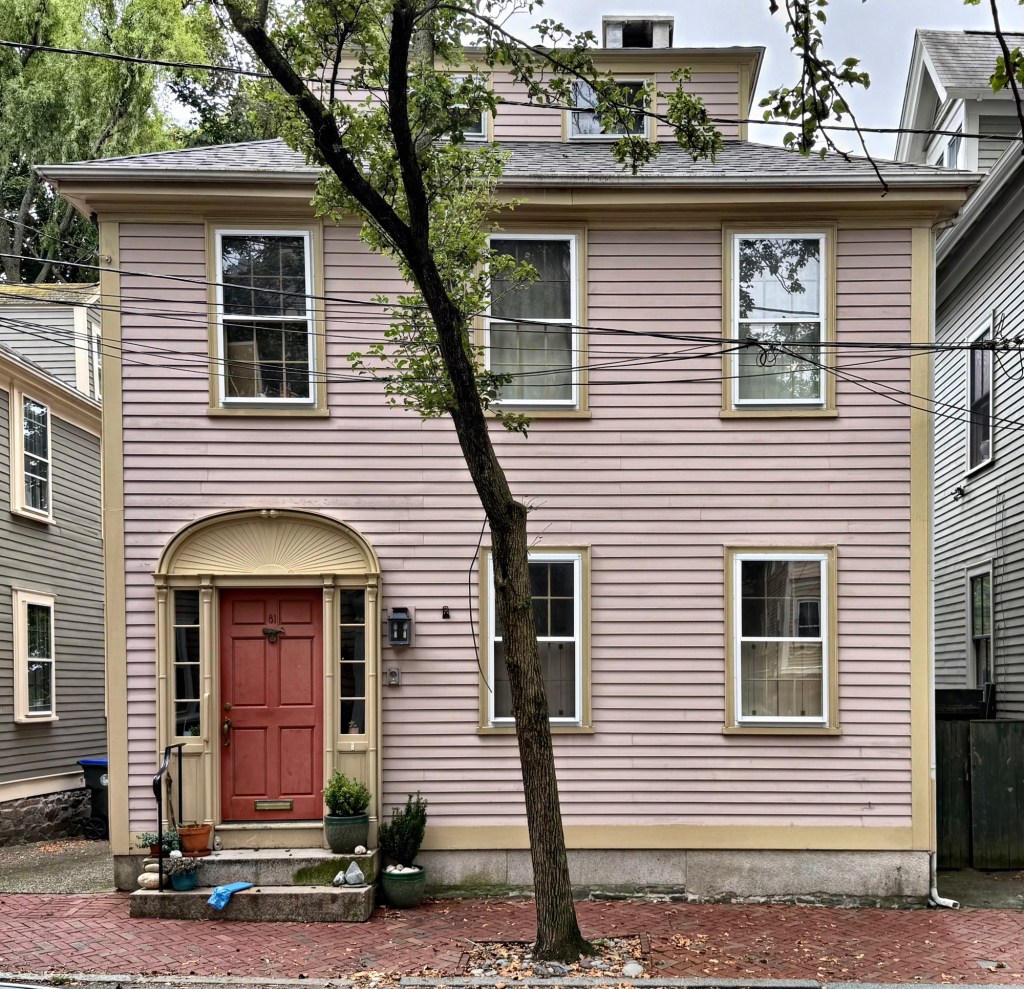
Richard Trevett Jr. (1690-1749) was a wealthy shipwright and sparmaker (a carpenter who finishes and installs spars, masts, and cargo booms) in Marblehead, and part of a wealthy shipowning family. He would build this house on Washington Street (originally named King Street before the Revolution) and reside here with his family. Trevett lived here for just a few years until the death of his father, and he sold the property, which was later purchased by Joseph Pedrick, a wealthy ship owner, who’s son, John Pedrick, built an even larger mansion down the street. By the turn of the 19th century, this house was owned by Captain Samuel Horton, a commander in the Revolution under General John Glover. After the war, Samuel Horton engaged in mercantile pursuits, importing goods from all over the world. He likely brought home pineapples similar to the pineapple motif over the doorway from plantations in the Caribbean and South America as well.

Pedrick Mansion // c.1756

One of the great Colonial-era houses of Marblehead is this stately residence, the John Pedrick Mansion on Washington Street. The house dates to about 1756 and was built for John Pedrick (1733-1780), a wealthy shipping merchant. According to ‘The History and Traditions of Marblehead’, Pedrick’s “ships sailed to nearly every port in England, Spain, and the West Indies, and his transactions were with some of the largest mercantile houses of Europe. At one time, it is said, he owned twenty-five vessels engaged in the foreign trade.” The Revolutionary War, which proved so disastrous to the merchants of Marblehead, bore with especial severity upon Major Pedrick, as several of his vessels were destroyed by British cruisers in Massachusetts Bay, and many others rotted in port from blocades and engagements. The property was likely modernized after John Pedrick’s death in 1780 with a more Federal form, possibly adding the third floor and shallow hipped roof. The building’s facade is scored to resemble ashlar masonry, giving it a more stately appearance, but the bright blue really diminishes the feature, which should typically be colored a natural stone.