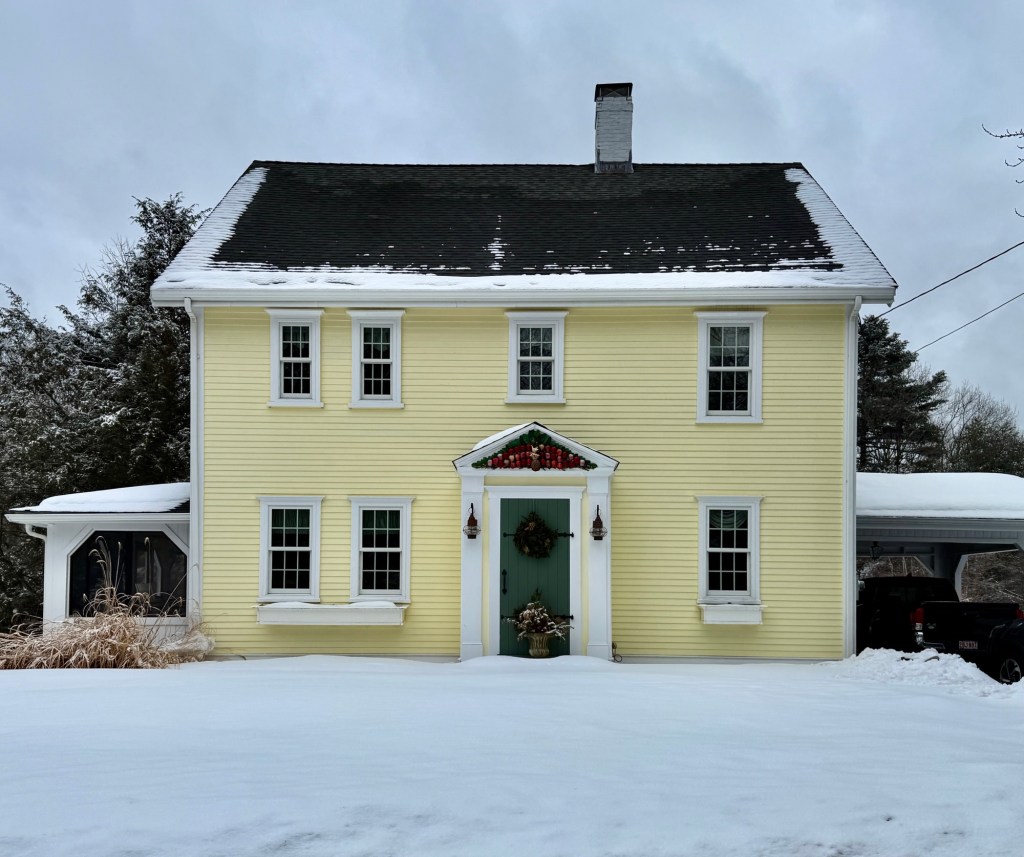
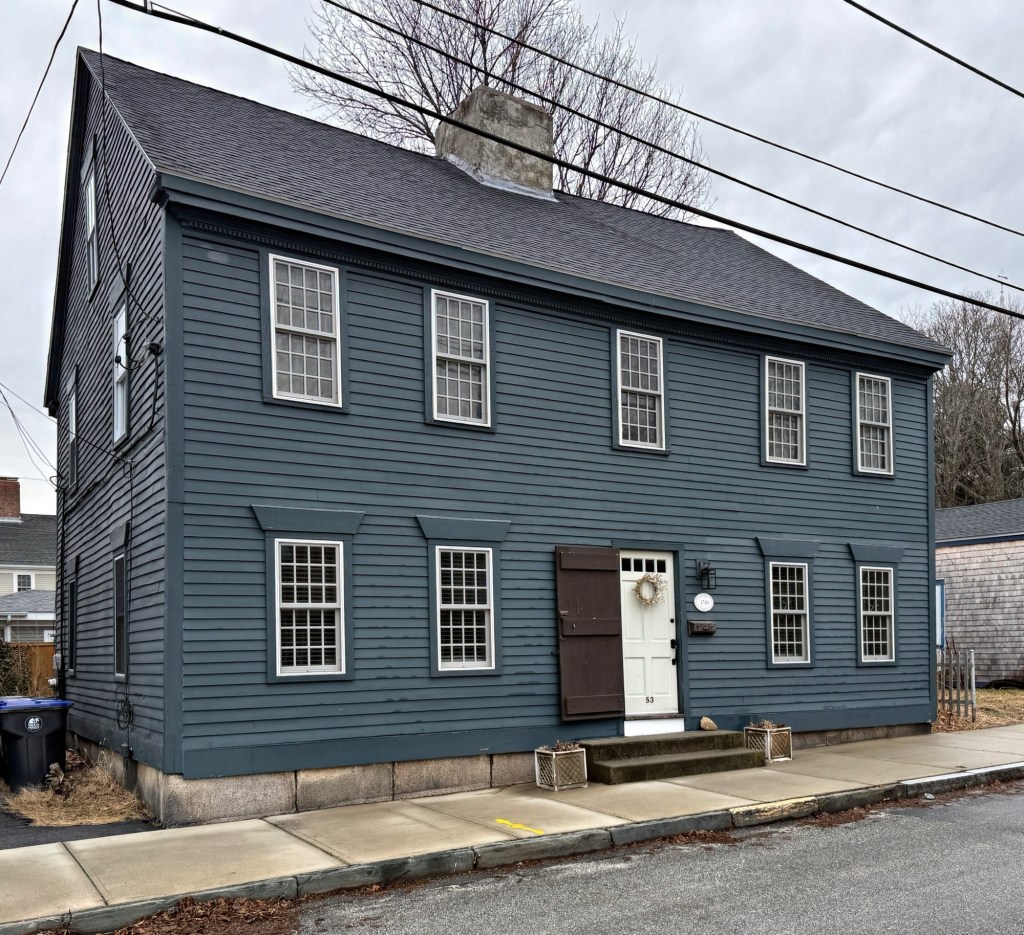
One of the earliest extant homes in western Wrentham, Massachusetts, the old Hawes Homestead on Williams Street stands as an important Georgian style farmhouse in what was once a more pastoral part of the community. The house likely dates to the mid-18th century (or earlier) and was possibly built by Daniel Hawes, who farmed the land here. Due to the varied sizes of the upper windows, the residence was most probably a three-bay house with central chimney, and the right-most bay and modern chimney were added later. The residence was later inherited by his son, and later by other heirs before the property sold out of the Hawes family in the mid-19th century.
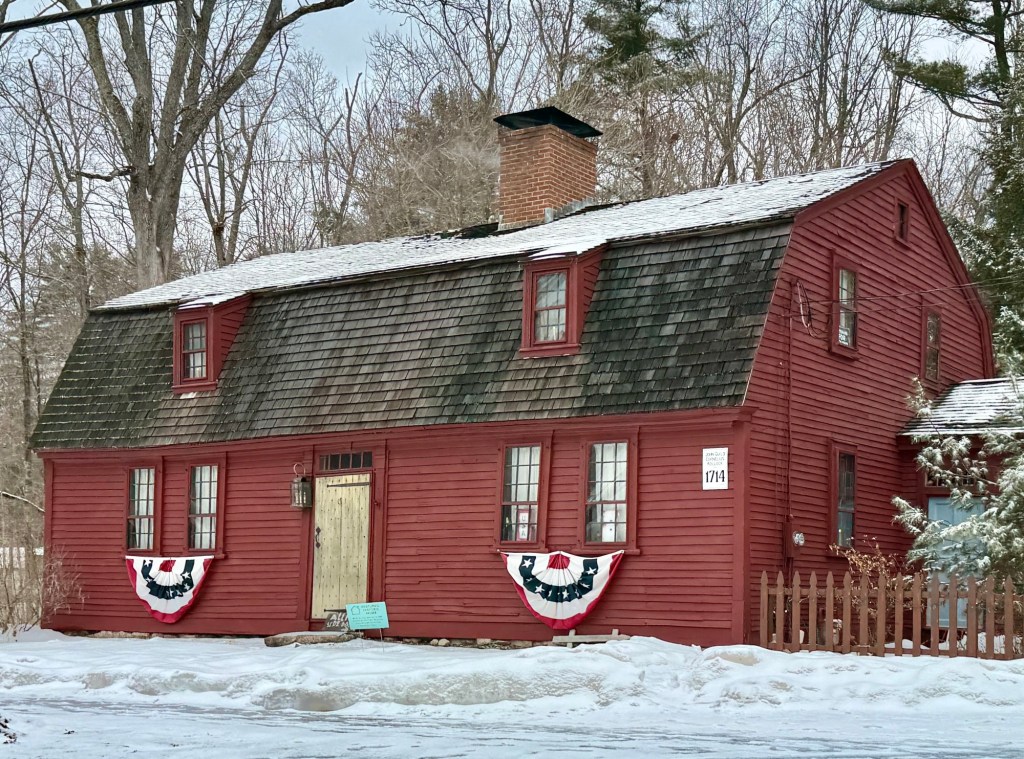
The Guild-Kollock house on East Street in Wrentham, Massachusetts, is one of the oldest and best-preserved historic homes in the suburban community. In 1674, John Guild of Dedham, was granted this lot by the proprietors and later willed the property to his son, Deacon John Guild Jr. (1649-1723). John Guild Jr. had the home built between 1682 and 1714, the first recorded document that acknowledges the existence of this dwelling, giving the home a definitive “built by” date. The Colonial farmhouse remained in the Guild family until 1804, when it was purchased by Cornelius Kollock, a Revolutionary War veteran, surveyor, Justice of the Peace, Town Clerk, Town Treasurer, and Representative to the General Court. The significant early Guild-Kollock House was documented inside and out as part of the Historic American Buildings Survey (HABS) in 1962 and has been lovingly preserved for over 300 years since its construction.
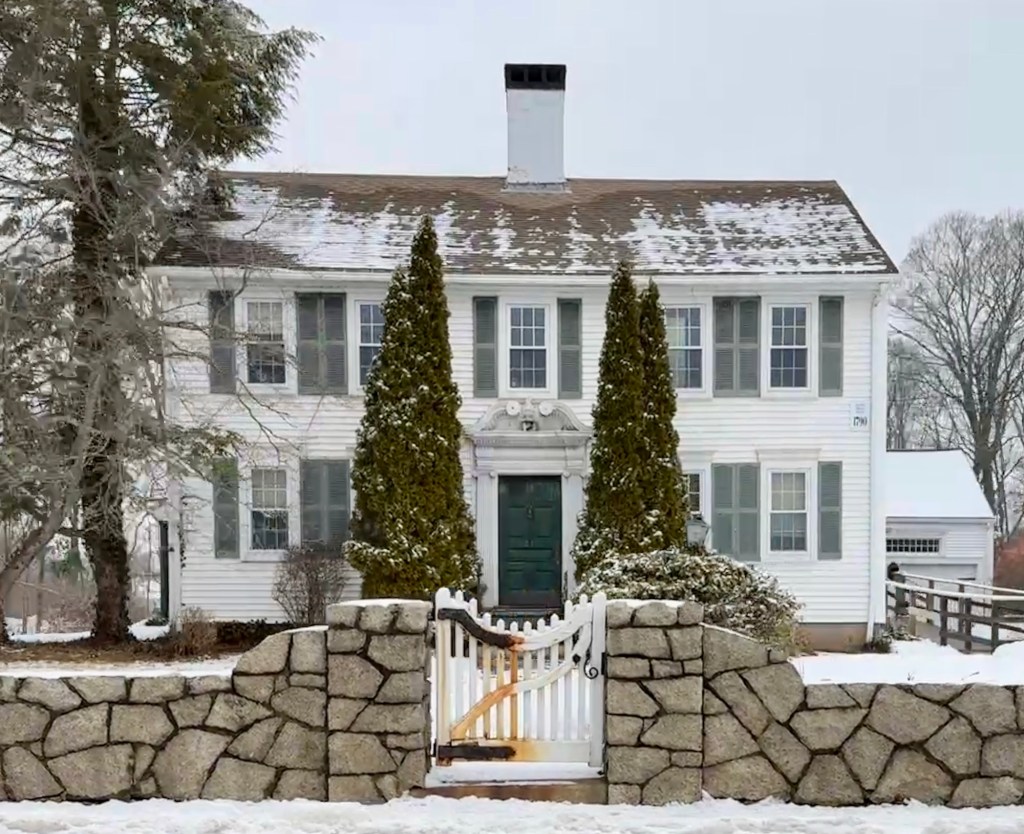
In 1787, Oliver Druce (1760-1797) married Sarah “Sally” Kollock (1764-1789) and had this large residence built overlooking the Town Common in Wrentham, Massachusetts. The young couple raised one daughter here until Sarah died in 1789 at 25 years old, followed years later by Oliver, who died in 1797 at 37 years old. By the turn of the 19th century, the late-Georgian residence was owned by John Francoeur, a French Huguenot. The Druce-Francoeur House is one of the finest Georgian style residences in Wrentham, which retains its magnificent doorway framed by fluted Ionic pilasters with broken scrolled pediment above.
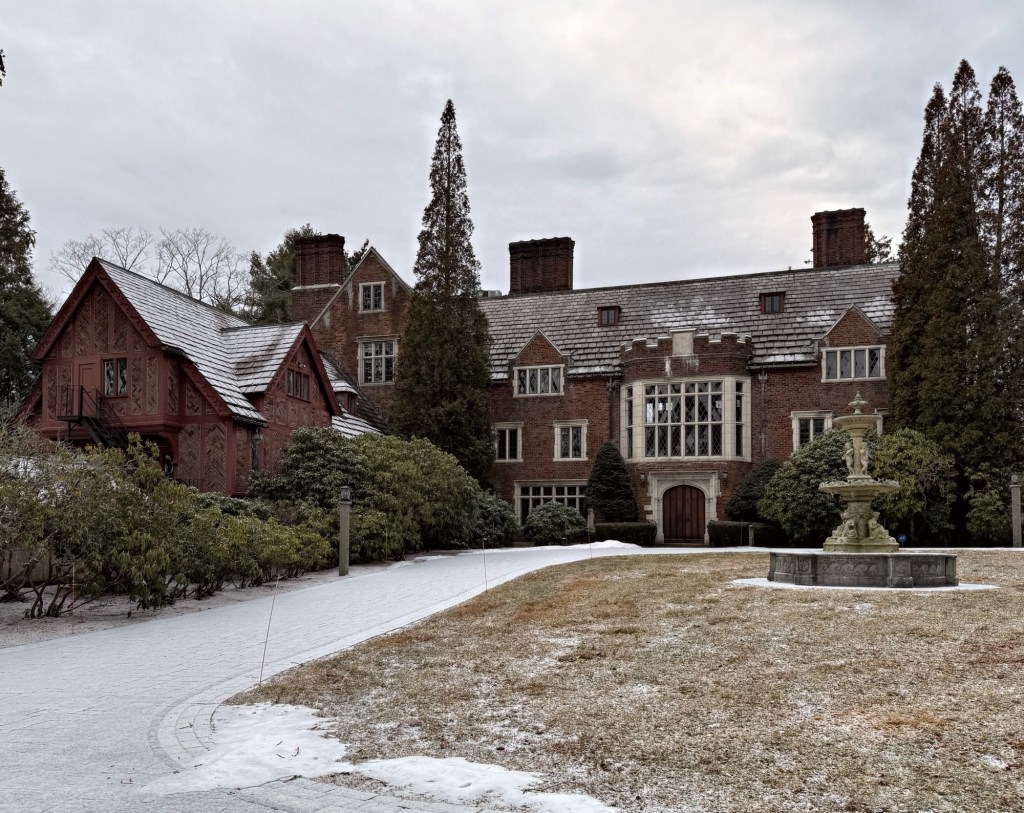
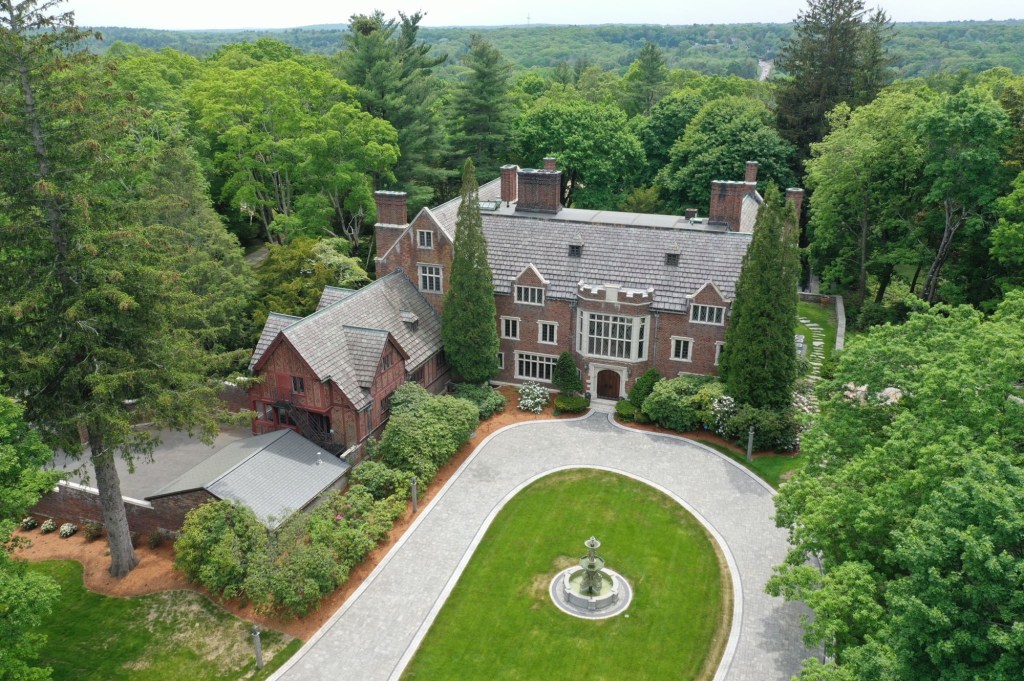
Built in 1926 for Eben Sumner Draper Jr. (1893-1959), the son of Massachusetts Governor and Draper Corporation executive, Eben Sumner Draper, this massive Tudor Revival style mansion in Hopedale, provided a secluded country estate for the wealthy industrialist. The home was designed in 1926 by Boston architects Bigelow & Wadsworth, and replaced Eben’s father’s Shingle style country mansion “The Ledges“. The new Draper mansion was highlighted in numerous architectural magazines shortly after it’s construction, which highlighted the amazing brickwork, layout, and interior finishes, all of which remain to today! This spectacular home is over 14,000 square feet and has 17 bedrooms, several located in the staff wing, 10 full-baths and four half-baths, an in-ground swimming pool, gazebo, tennis court, and landscape design attributed to the notable landscape architect Warren Manning. In the 1960s, the home sold out of the family and was used as a home for adults living with developmental disabilities, mental illnesses, physical disabilities, the facility has since sold the Draper mansion and occupies the former carriage house on the grounds.
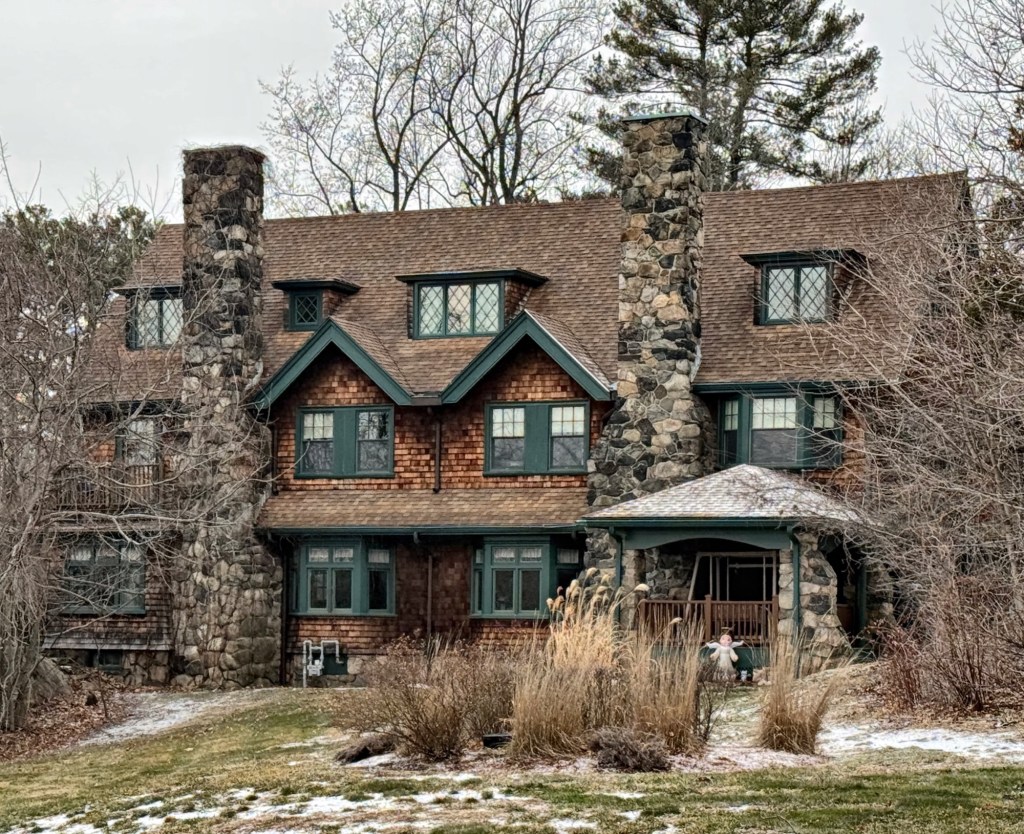
Located on Adin Street in Hopedale, this excellent turn-of-the-century mansion was built for Frank Jerome Dutcher, a manufacturer who worked for his father’s company before selling it to the Draper Corporation, later becoming a wealthy salesman. Blending Shingle, Queen Anne, and Arts and Crafts styles, the Frank J. Dutcher home sits atop a rock ledge and was designed by architect, Robert Allen Cook, who designed other buildings in town for the Draper Corporation and community, behind his original home that burned in 1903. The home features two massive fieldstone chimneys, shingled siding, and a series of dormers and bays that provide a rich dialogue along the long street-facing facade. In the mid-20th century, the property became a nursing home, known as Oakledge Manor. The building was recently bank-owned and it is unclear if the building was converted back to a single-family home, or remains a housing facility.
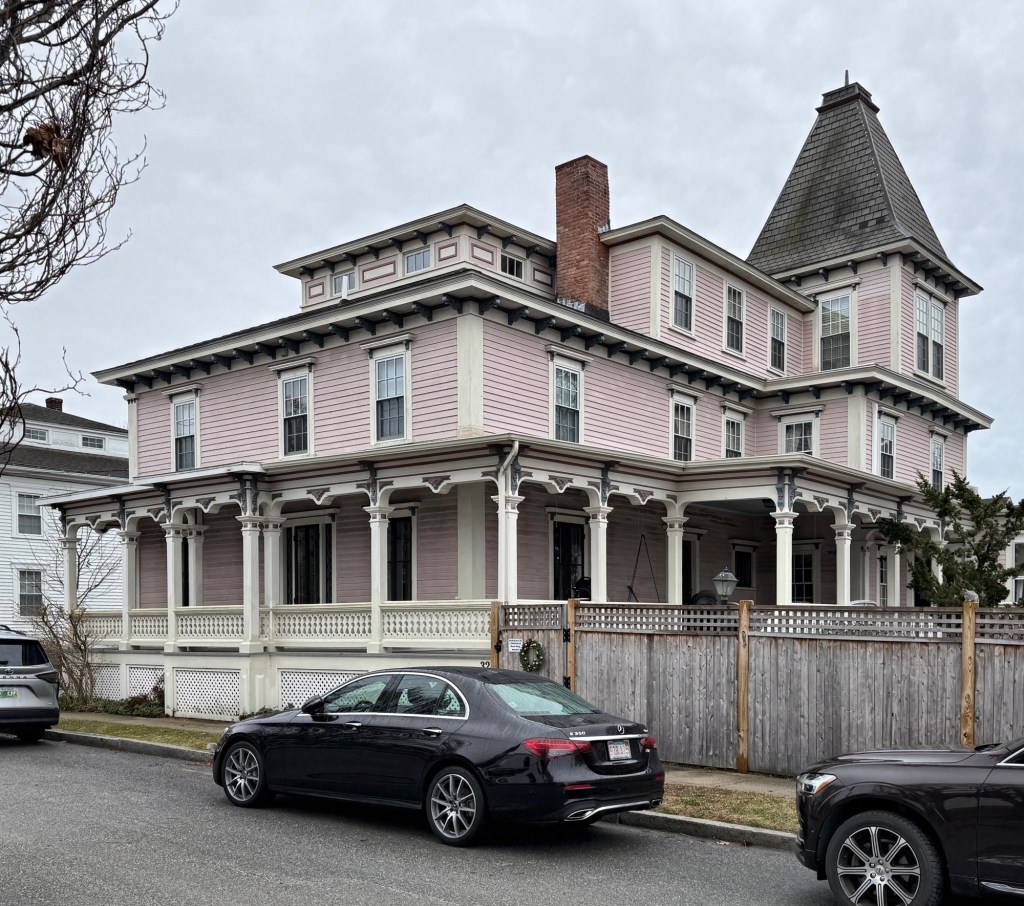
One of the many great examples of Federal period houses being “Victorianized” later in the 19th century, the Smith-Waterman House on Broad Street in Warren, Rhode Island, stands out as one of the most elaborate. The residence was originally built by 1820 and possibly owned by Nathaniel P. Smith (1799-1872). After his death, the house was inherited by his son, N. P. Smith Jr., who would later sell the property to John Waterman, the Manager and Treasurer of the Warren Manufacturing Company. It was under Mr. Waterman’s ownership that the once standard Federal style house was enlarged and given Italianate features, including the wrap-around porch, overhanging eaves with brackets, addition and the three-story tower at the rear.
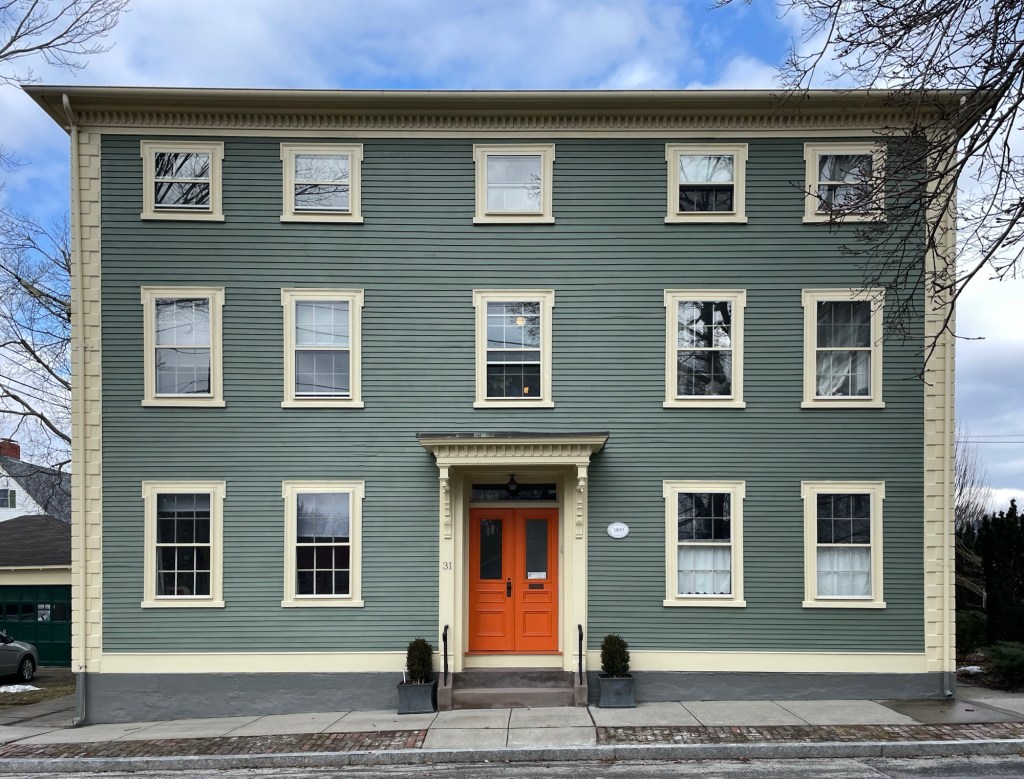
This stately three-story Federal style mansion on Baker Street in the lovely town of Warren, Rhode Island, was built in 1809 as a gift from a father to his daughter as a wedding gift. The house was funded by James Maxwell, of the local family of merchants and slave traders, for his daughter Martha “Patty” Maxwell and her soon-to-be husband, Samuel Randall. Judge Randall operated a school in town and published three local newspapers, the Telescope, the Clarion, and the Telegraph, all rather short-lived. In 1822, he was appointed judge of the court of common pleas for Bristol County, Rhode Island, and served in that capacity until 1824, when he was made justice of the supreme court of the state. The pop of color at the entry and the bracketed, Victorian era door hood complete the facade to give it some serious curb-appeal.
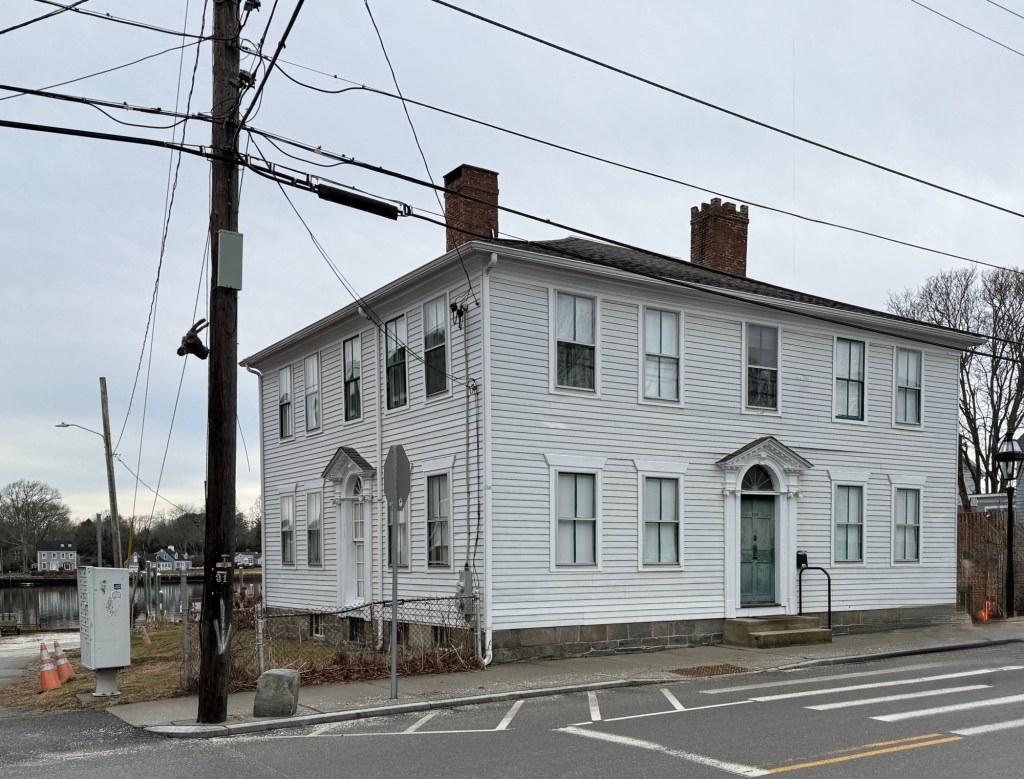
This house, located on Water Street in Warren, Rhode Island, is said to have been built in the 1760s, but its present appearance in the Federal style is credited to owner, Caleb Carr (1768-1853). In around 1790, Caleb fully renovated the property in the Federal style for his residence and as a tavern, with an elegant fanlighted door put on each facade—one for household use, the other for tavern customers. The property was inherited by his son, Captain Caleb Carr Jr., who continued as a tavern owner, but was also an important shipbuilder and operator of the ferry to Barrington, which docked at the end of the street. The Carr Tavern is today covered with later aluminum siding and has Victorian-era two-over-two windows but if restored, would shine as one of the best Federal style homes in town!
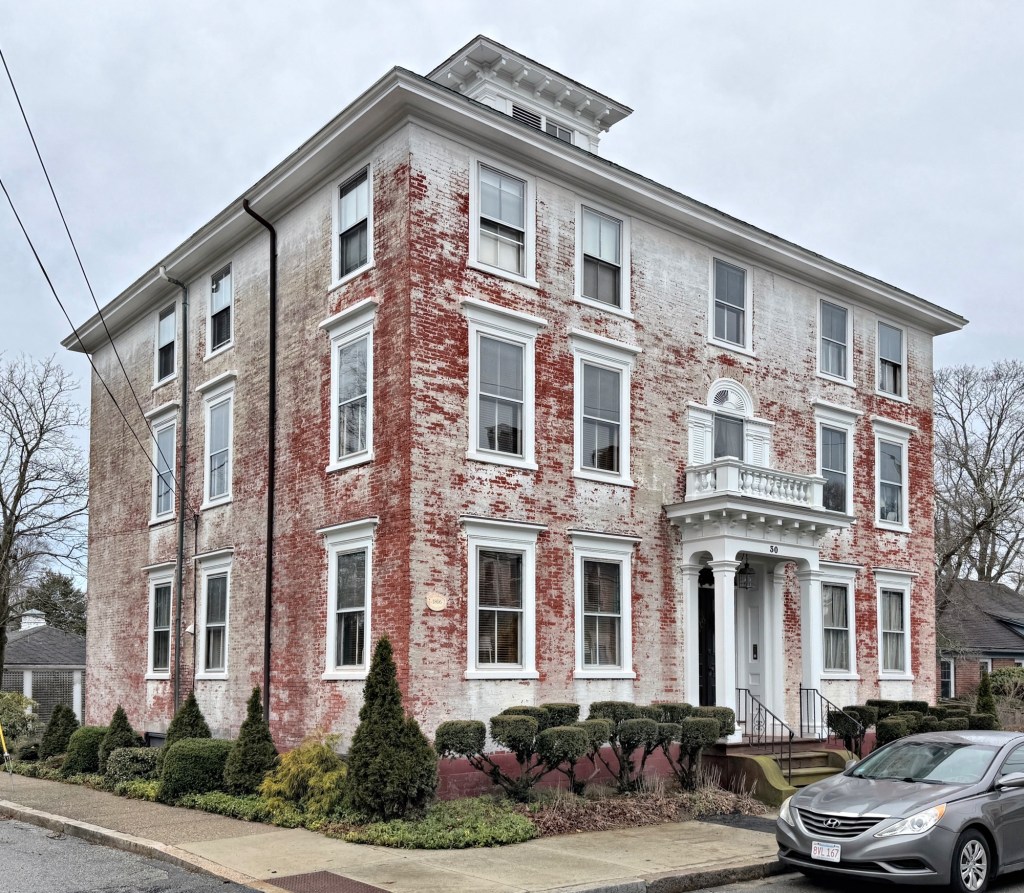
Located next door to the Rebecca Maxwell Phillips House on State Street in Warren, Rhode Island the Eddy-Cutler House remains as one of the finest Federal style residences built of brick in the charming waterfront town. Warren merchant and slave trader Benjamin Eddy purchased this desirable house lot in 1806 from John Throop Child, a town councilman and slave owner in 1774 who built slave ships before the Revolutionary War. Benjamin Eddy began construction on his mansion by 1806, and it was completed sometime before the War of 1812. Like many of the town’s wealthiest residents, Benjamin Eddy was engaged in the slave trade. Captain Benjamin Eddy was captain of at least three slave voyages, delivering 139 captives to docks in Charleston, South Carolina, in June 1806 alone. In 1808, just before the “Act Prohibiting the Importation of Slaves” he purchased and imprisoned 176 Africans – the largest number ever carried on a Warren slave ship. Nineteen died during the return voyage. When he reached Charleston, South Carolina the remaining 157 people were sold into slavery. At the time, the sale would have returned nearly $33,000. He would return home to this mansion on money profited from human suffering, a story as American as apple pie. In 1871, the Eddy Homestead was sold to Charles R. Cutler, a ship master and whaler who had many successful voyages to the Indian Ocean before working in the manufacturing of cotton cordage. The three-story, five-bay Federal style mansion of brick features a Victorian-era porch, but retains its Palladian window with blind fan and lights over the entry and belvedere at the roof. Once painted, the brick is now slowly being re-exposed, a great sight to see.
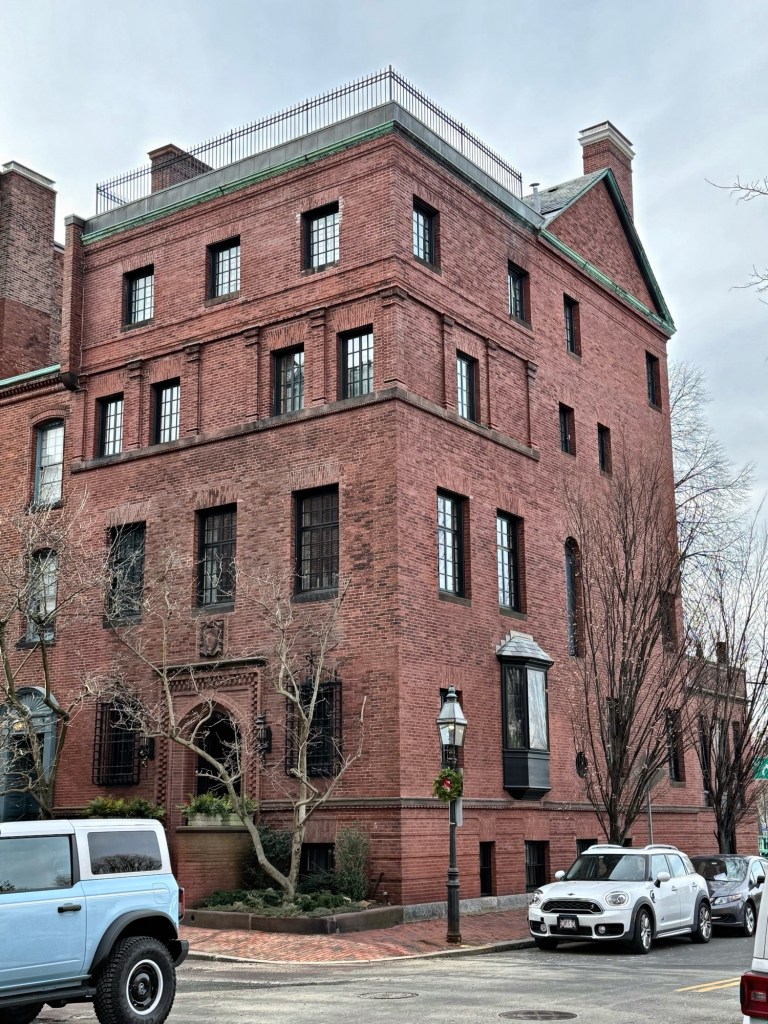
This unique four-story brick townhouse on Otis Place in Beacon Hill, Boston, was built in 1885 by the architectural firm of Rotch & Tilden for Mrs. Octavia L. Apthorp and her husband, William F. Apthorp. Elevated on a tall brick basement, the exterior of the house is richly detailed with masonry decoration in what has become known as the “panel brick” style; with an elaborate brick entrance archway, paneled pilasters at the third floor, and vertical brick lintels above the windows. Over the ground floor windows near the entrance, iron grates with spear-like finials give the design a Medieval/English Queen Anne presence. William F. Apthorp was the only son of Robert Apthorp, a prominent Boston attorney and abolitionist who lived across the street at 2 Otis Place. William was a pianist and teacher at the New England Conservatory of Music and writer who married Octavia (sometimes spelled Octavie) Loir Iasigi in 1876, she was also from a well-connected Beacon Hill family.
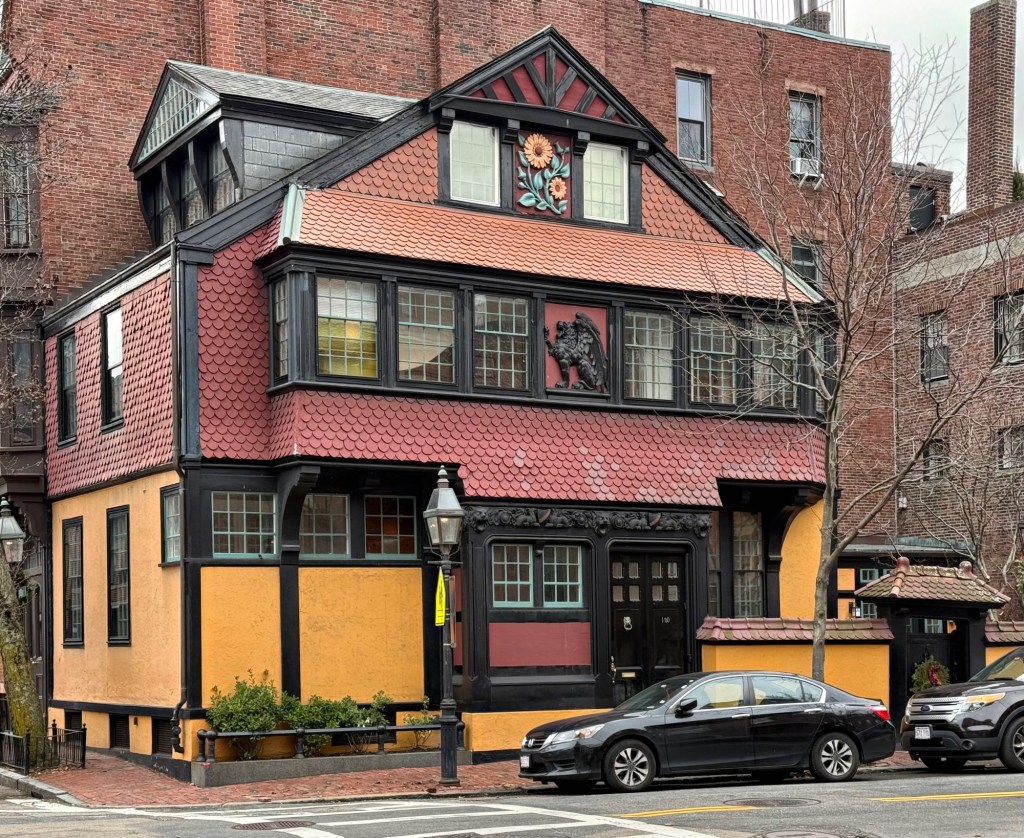
This absolutely unusual and enchanting cottage on Mount Vernon Street in Beacon Hill, Boston, was originally was constructed in the 1840s but completely altered decades later in its distinctive English Queen Anne style. In 1878, Frank Hill Smith, an artist and interior designer, worked with architect, Clarence Luce to renovate what was originally a two-story Greek Revival house into one of the most eclectic and unique residences in New England. The Sunflower Castle, a name reputedly coined by Oliver Wendell Holmes, features a yellow stucco first floor with the upper floors covered with red fish-scale shingles. Further detail includes the half-timbering, decorative panels depicting a gryffin and a sunflower in the gable, and carved wood frieze over the doorway. Clarence Luce was likely so inspired by this project, that he built an even more extravagant example of this house for Edward Stanwood in Brookline soon after. By 1903, the property was sold to the painter, Gertrude Beals Bourne and her husband, architect, Frank A. Bourne, who were both key players in the revival and gentrification of the Beacon Hill Flat neighborhood west of Charles Street in the early 20th century. The Sunflower Castle was used as their home and as an artist’s studio for the couple, with Frank adding the side garden wall with tile-roofed gateway to enclose a private open space. The property remains as a private residence.
This large house on State Street in Warren, Rhode Island, has a plaque that dates it to around 1740, but it must have been relocated to this site or been built later as the street it is located on was initially laid out in 1790. The large, two-story, Federal style house exhibits a large central chimney and five-bay facade and has recently been restored. It looks great! According to sources, the property was owned by members of the Cole Family, a prominent local family who engaged in the sale and transportation of enslaved Africans in the 18th and 19th centuries. The house was eventually owned by Charles Richmond in the mid-19th century and is typical of the many great historic homes in Warren.
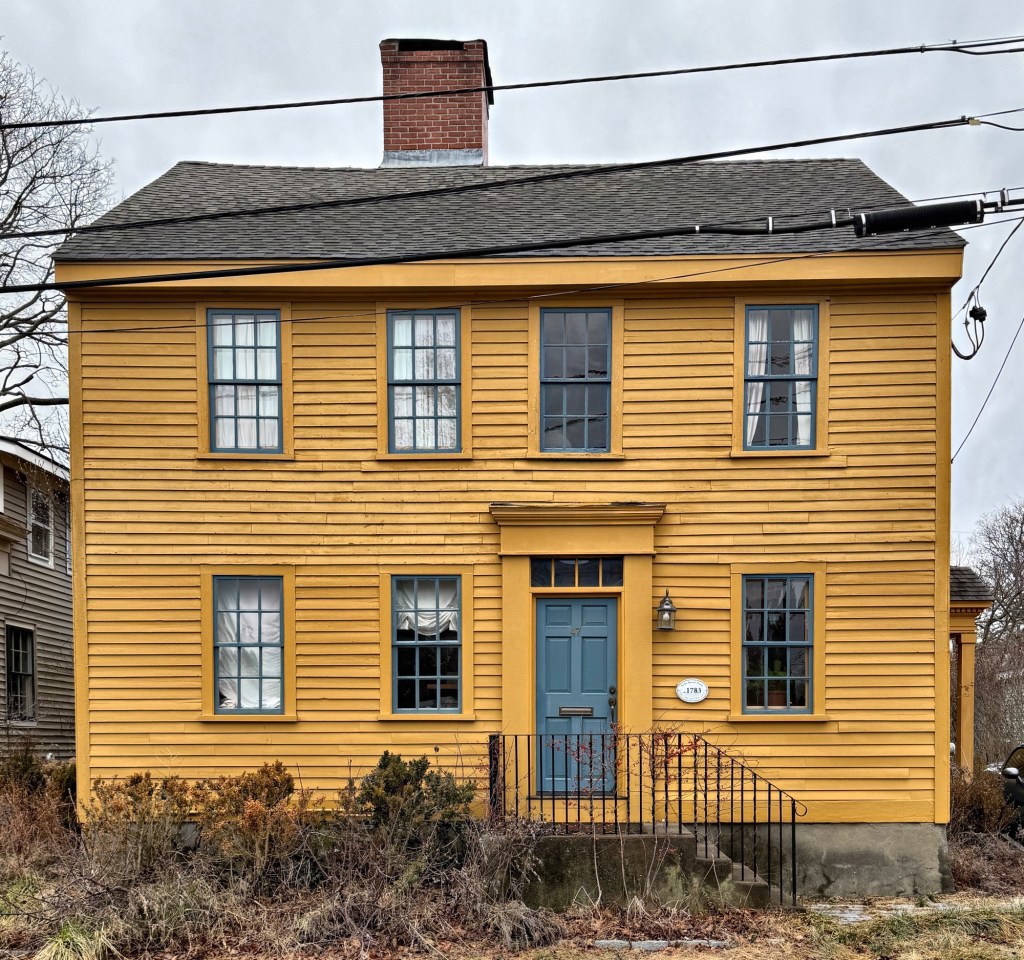
This charming house on Broad Street in Warren, Rhode Island, was built by 1783 for Rufus Barton and his wife, Prudence Cole. Rufus Barton and his family moved to New York and sold the property to Nathan Burr for $775 in 1797, who . Nathan Miller Burr sold the home to William Eastabrook two years later. Captain Eastabrook/Easterbrook had just returned from an illegal slave voyage on the “Betsey” to Africa that resulted in the enslavement of 79 Africans who were sold into slavery in Havana. He would go on to captain at least two more illegal voyages on the “Little Ann” (1806) and the “Hannah” (1807) from Bristol. These three voyages accounted for the death or enslavement of 229 people. The home has been lovingly restored by later owners, who removed the vinyl siding and replaced the cheap, vinyl windows with historically appropriate windows.
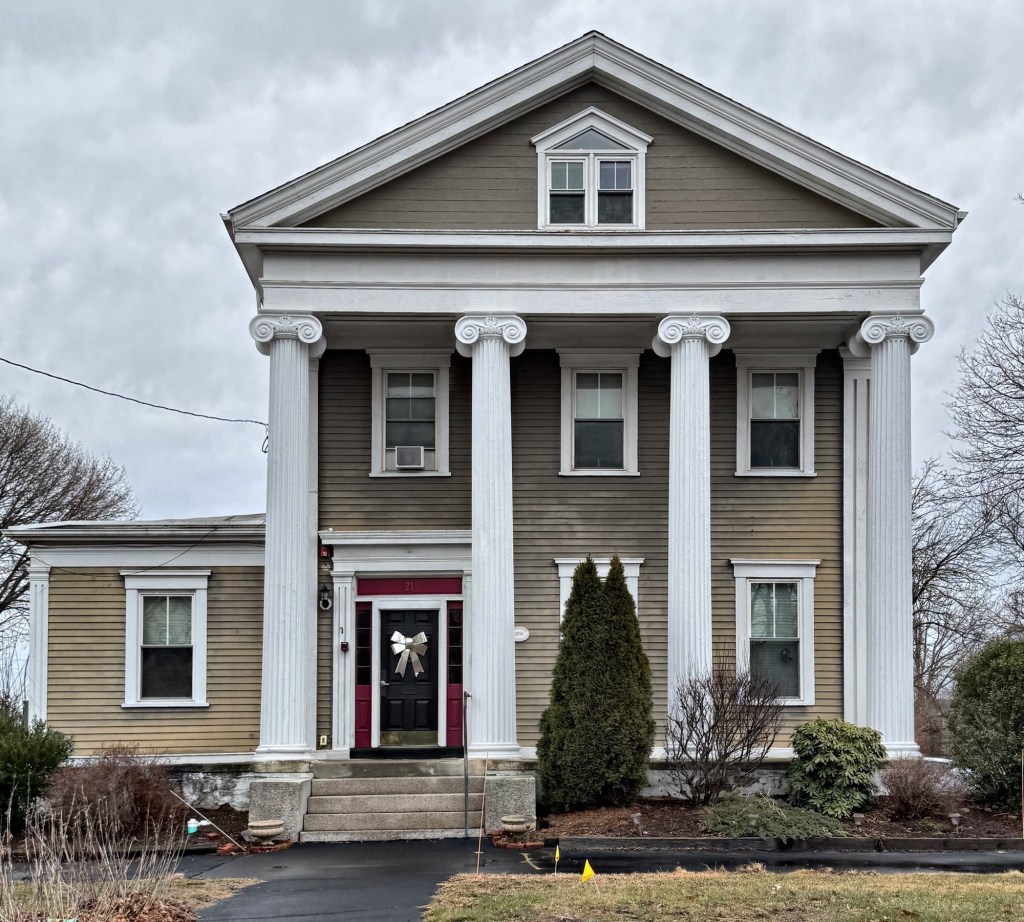
The only two-story temple-front Greek Revival style house in Warren, Rhode Island, the Judge Alfred Bosworth House on Federal Street, is believed to be the work of great architect Russell Warren. Alfred Bosworth (1812-1862) ran a law office in Warren and Providence and represented Warren in the General Assembly from 1839 until 1854 and then served as a justice on the Rhode Island Supreme Court. Bosworth was of counsel for Rhode Island in suits growing out of the boundary question between Rhode Island and Massachusetts, specifically around Fall River. Judge Bosworth died at home in 1862 and his widow, Anne, lived here afterwards. At the end of the century the Bosworth House was converted to an ice cream parlor, named Maxfield’s, which became a very popular attraction in town. The company, owned by Nathaniel and Julia Maxfield, attracted throngs of local residents every summer who would eat ice cream on the front yard of the house. Maxfield’s was even frequented by Providence writer, H. P. Lovecraft, when he was a young man. During the mid-1900s, the house served as a nursing home until 1988, when owners restored the house back to a residence and removed the asphalt siding that was added to the exterior around the time of the Great Depression.
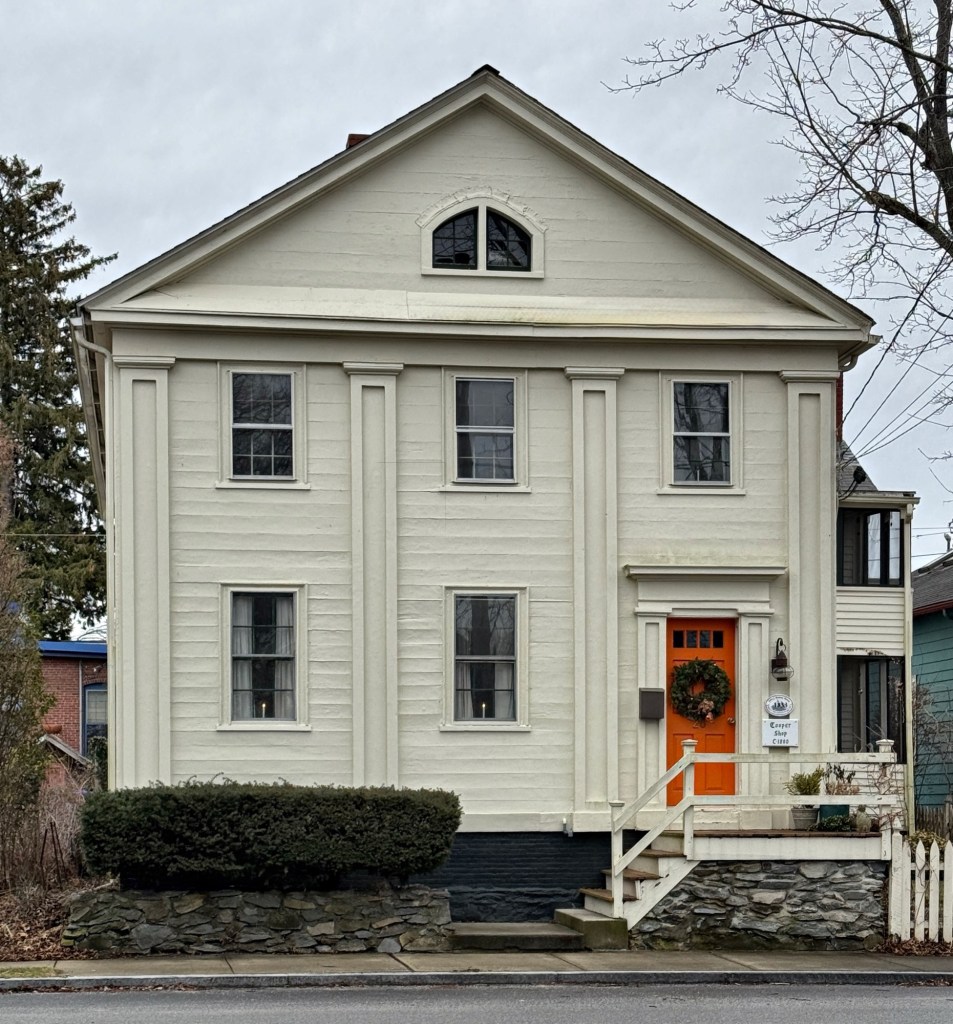
This stunning Greek Revival house on Lyndon Street in Warren, Rhode Island, was according to historians, built around the turn of the 19th century as a cooper shop! A cooper as a professional, would make wooden barrels, tubs, and casks from wooden staves, which were all made in this building before it was converted and renovated around 1830 in the Greek Revival style for Deacon John J. Bickner, who was likely affiliated with the Episcopal Church across the street, which was designed by architect, Russell Warren. Due to the connection, it is possible that the renovation for Bickner was undertaken by Russell Warren as well. On its facade, the house has two-story applied pilasters which break up the bays and smooth flushboard siding which makes the house even more stately!