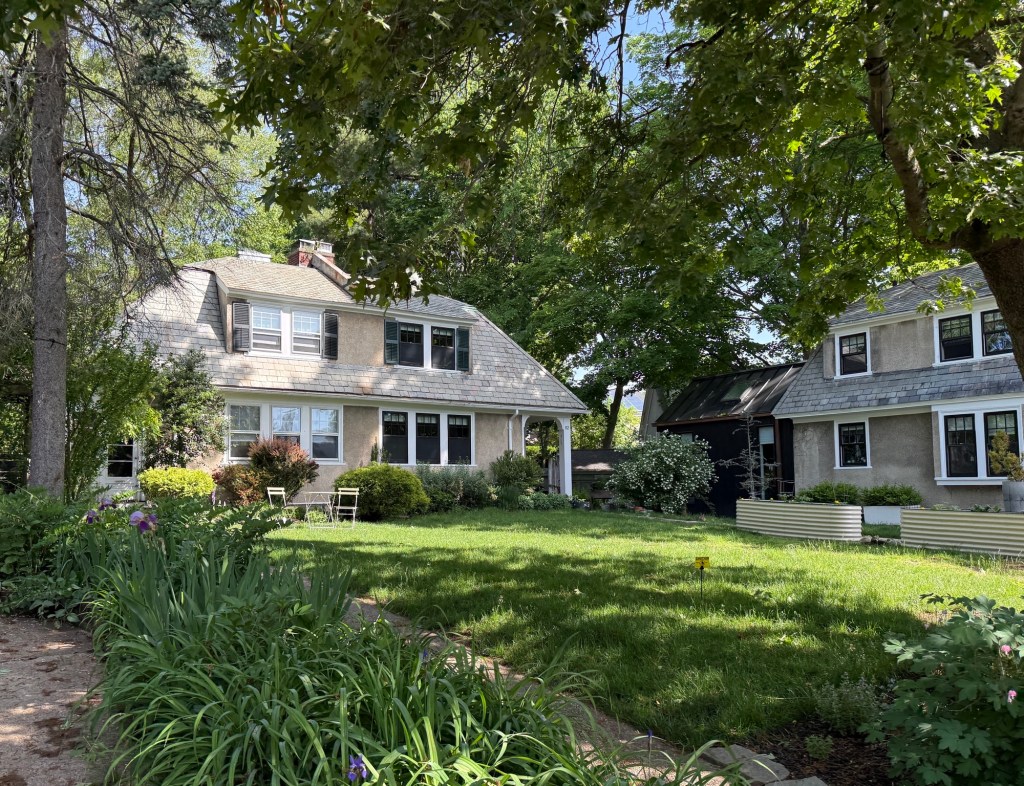
George P. Lawrence Summer House // 1897

On the eastern shore of Lake Massapoag in Sharon, Massachusetts, the George P. Lawrence Summer House is an excellent and rare preserved example of a late 19th century Victorian summer house in the suburban town. The residence was built in 1897 for George Pelton Lawrence (1859-1917) and his wife, Belle, as a summer retreat from their primary residence in North Adams in Western Massachusetts. George P. Lawrence was an attorney who was appointed as a district court judge before entering the political arena where he became a state senator. The couple spent summers at this beautiful Shingle/Colonial Revival style residence until Congressman Lawrence’s death in 1917. On November 21, 1917, Lawrence jumped out of his eighth-floor New York City window at the Hotel Belmont , committing suicide. In his room, he left a note saying that he “could not stand the pressure anymore”. The Sharon property remained in the family until the 1940s and has been modernized, while maintaining its character. 

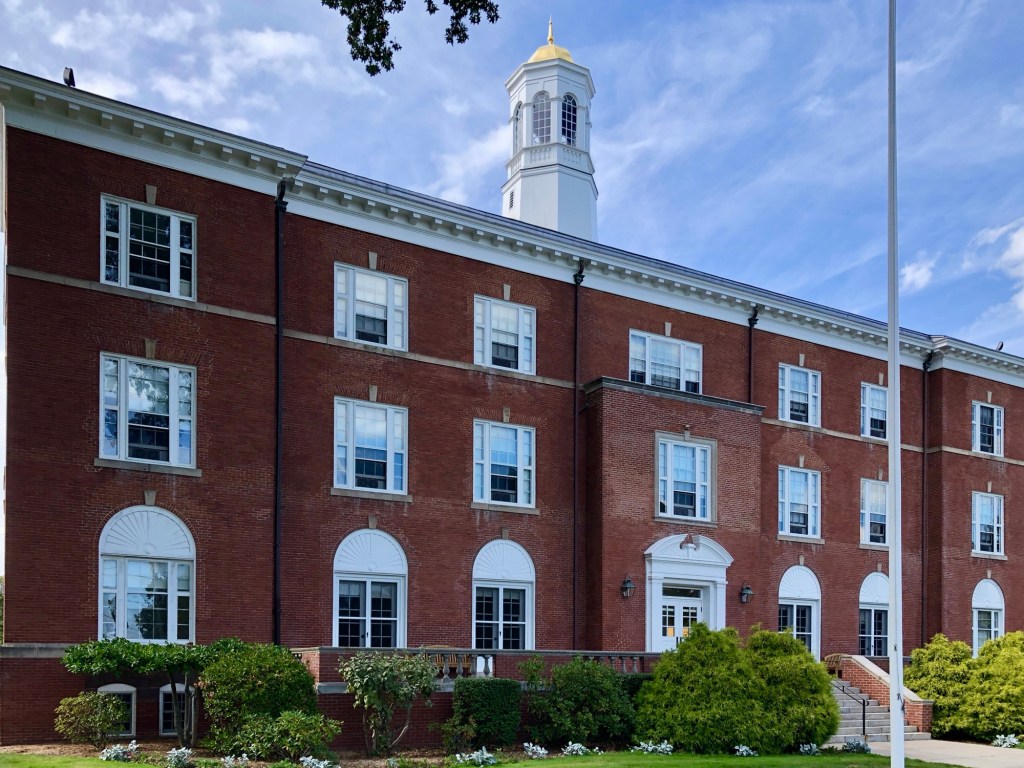
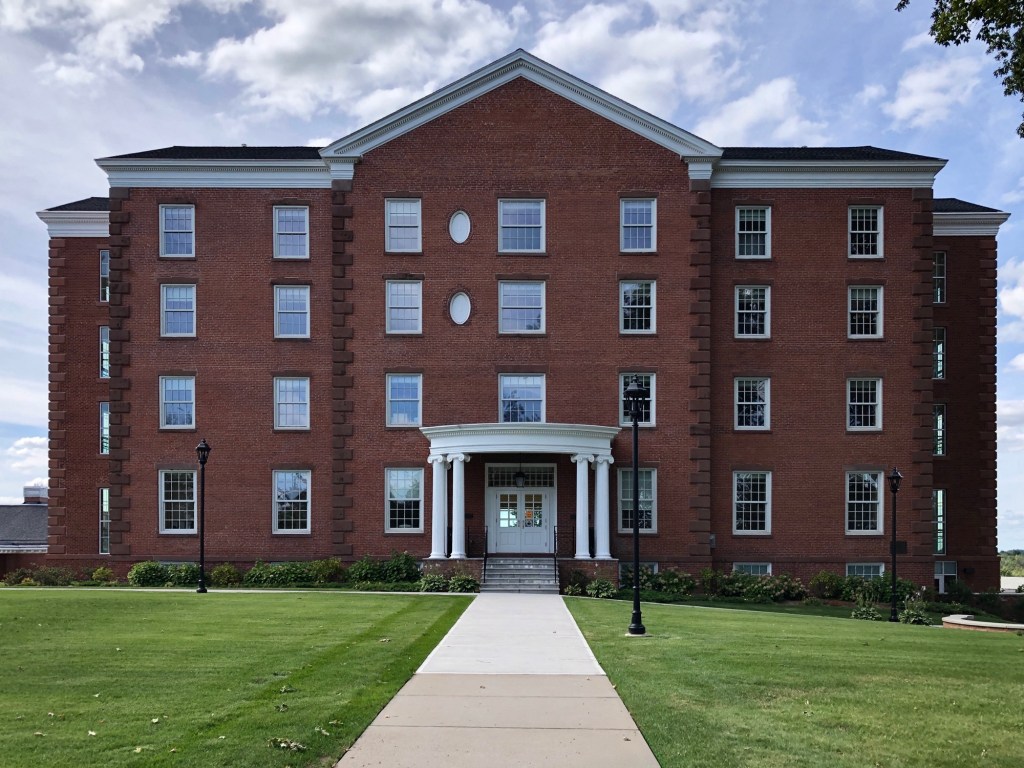
Wrentham State School // 1910

The Wrentham State School (also known as the Wrentham State Hospital) was authorized in 1906 as a school for the “feeble-minded”, and the campus is comprised of a few dozen buildings largely from the early to mid 20th century. The school was founded to house and treat developmentally disabled children and was the first in the state of Massachusetts to employ a standardized plan for wards and employee housing. A site occupied by farmhouses just north of Wrentham Center was selected and purchased by the Commonwealth of Massachusetts. The school officially opened in 1910 and brick structures were built to house students and workers. In its first year, 217 pupils were admitted to the facility, roughly half boys and girls. A majority of the early ward buildings were constructed in the early years of the school, with most designed by the Boston architectural firm of Kendall, Taylor & Stevens, who also designed many other similar facilities around the country in the early 20th century. Most buildings are examples of the Arts & Crafts and Colonial Revival styles built of brick. Today, the campus is comprised of roughly half, deteriorating historic buildings and half are used as part of the Wrentham Developmental Center, which continues the important (and under-funded) work of treating psychiatric and developmental disorders of patients.

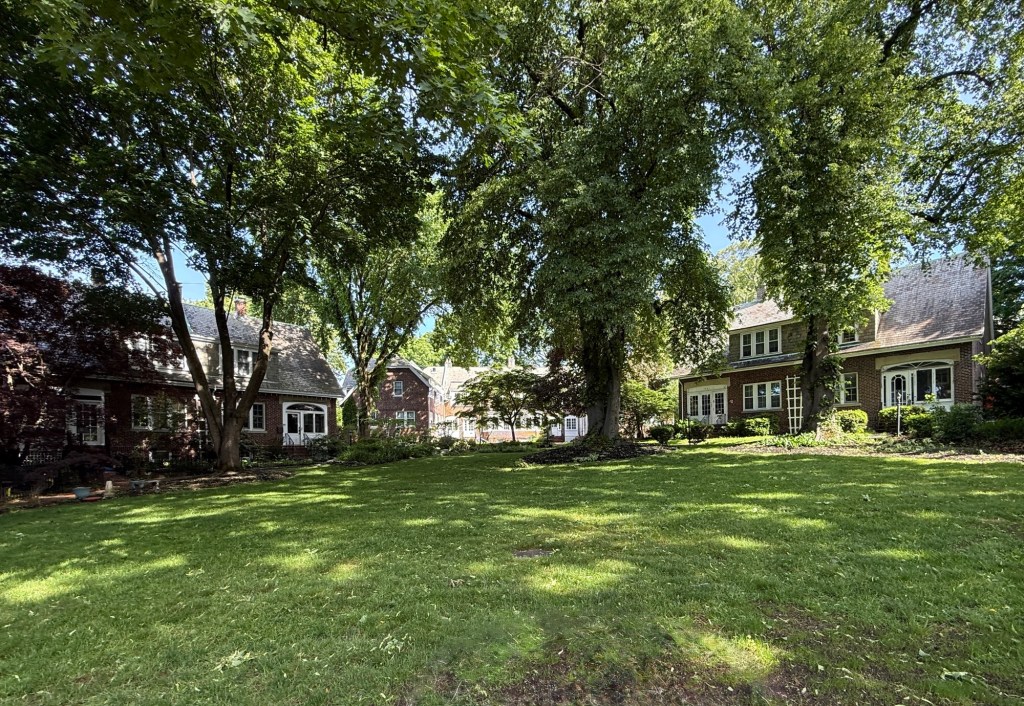
Philander P. Cook House // 1847

Built in 1847 as a residence for local Postmaster and storeowner, Philander P. Cook, this historic house off West Street in West Wrentham, Massachusetts, showcases the evolution so many New England farmhouses have experienced, from working farm, to country retreat, to suburban residence. Philander Perry Cook (1816-1880) purchased this land in 1845 from prominent Massachusetts State Senator and local government official, Alan Tillinghast, and shortly after purchase, he began construction of this Greek Revival style, two-story residence with attached stable. At the turn of the century, wealthy Wellesley College graduate, teacher and published author named Lucy Freeman, purchased the property from Cook’s heirs (as well as a residence nearby where she took up residence) and she rented the Philander P. Cook House to friends during the course of her ownership. In 1910, she modernized the house, likely adding the fanlight transom in the Colonial Revival mode, and had the grounds landscaped as a country retreat. Throughout the 20th century, a number of owners have preserved and modernized the home, while retaining its unique charm and character, and it now is a large, single-family home

Former Fiske Public Library – Old Fiske Museum // 1896

The former Fiske Public Library building in Wrentham, Massachusetts, is an excellent example of a civic building in the Colonial Revival style. The building was funded and dedicated in the memory of the late Josiah Jones Fiske, a Wrentham-born lawyer and businessman, by his heirs. The family selected plans by Boston architect, William York Peters, who designed the building with a symmetrical facade with central projecting portico supported by Corinthian columns, and tall windows set within slightly recessed arches. The library was eventually outgrown, and instead of building an addition, the town decided to build a contemporary library elsewhere. Now, the former library is home to the Wrentham Historical Commission and the Wrentham Arts and Cultural Commission as the Old Fiske Museum, where the commissions feature local artifacts, art, and showcase the town’s ever-changing history and culture.

Richmond Congregational Church // 1903

The Richmond Congregational Church is a stellar example of an early 20th century, wood-frame church building in the small town of Richmond, Vermont. Designed by prominent Burlington architect, Walter R. B. Wilcox in 1903, the building blends many styles that were popular at the time, namely the Shingle, Queen Anne, and Colonial Revival styles, into a single composition. The parish hall addition was built in 1984, and is in a sympathetic Colonial Revival style, designed by Burlington architect Donald Albertson. The congregation remains active and maintains the church building, which was listed on the National Register of Historic Places in 2001.

The Larches // 1910

George Otis Draper (1867-1923) was born in Hopedale and attended MIT to prepare to help run the extremely successful family business, the Draper Corporation in town, which was experiencing a period of rapid growth and expansion of factories. With his position at the company, his wealth afforded him the ability to build a massive country estate known as The Larches. The shingled Colonial Revival style home featured a massive crenelated tower and appeared like a castle in the countryside. George O. Draper sold this home to his aunt Hannah Thwing Draper Osgood in 1909, and within a month, the home burned to the ground. She began construction on the “new Larches“, a shingled mansion with a stunning blending of Colonial Revival and Craftsman styles. The home was likely designed by Robert Allen Cook, who was based out of nearby Milford, MA. The property today is run by Crossroads Clubhouse, an employment and recovery center that offers people with mental health conditions opportunities to achieve their full potential.

General Draper High School // 1927

The General Draper Memorial High School is one of the many civic and institutional buildings in Hopedale Village that were donated to the small industrial community by members of the wealthy Draper Family, who operated the Draper Corporation Factory in town. The school was built in 1927 on land donated to the Town by Princess Margaret Bonocompagni, the youngest child of the late William F. Draper, who married Prince Andrea Boncompagni of Italy in 1916. The marriage ended in divorce by 1924 and years later, she had no need for the family home in Hopedale, and bequeathed the site to the community for a new high school in memory of her late father. General William Franklin Draper (1842-1910) was a Civil War veteran who became a politician and managed the Draper company in Hopedale, where he built a massive mansion for his family. The mansion was demolished and replaced by this Colonial Revival style High School, designed by New Hampshire-based architect, Chase R. Whitcher, the handsome structure has since been expanded at the rear to service the growing student population in town.

Hopedale Community House // 1923

Hopedale in the 1920s saw a civic building campaign led by George A. Draper (1855-1923), then treasurer of the Draper Corporation. Draper often talked about the need for a community center in Hopedale for his workers, and in 1919 decided to build one at his own expense. He commissioned architect Edwin J. Lewis, Jr. of Boston to design the Hopedale Community House which was intended to serve as a social and civic center for all Hopedale residents, as well as Draper Corporation employees residing in other towns. The building was opened in 1923, but sadly George Draper died before he could see it used. Colonial Revival in style, the building’s facade is dominated by a portico along the entire elevation with double-height Ionic columns. The slate hipped roof is capped by a square clock tower at the crest. The Community House included an assembly hall, a banquet hall that doubled as a gymnasium, a kitchen, rooms for smoking and cards and billiards, a ladies’ social room, the Knights of Pythias club room, and candlepin bowling lanes in the basement, all of which exist to this day.

Dr. Byron Brown House // c.1930

Dr. Byron Freeman Brown (1902-1962) was born in Maine and was educated at Bowdoin College before moving to Boston for medical school. After he graduated, he married and accepted a position as a doctor at Milford Hospital, not far from Hopedale, Massachusetts. Dr. Brown and his wife, Veronica, had this cottage on Adin Street built around 1930. Distinguished by its stone veneer walls and steeply pitched red clay tile roof punctuated by dormers and symmetrical facade, the Dr. Brown House is a great example of a Colonial Revival style house with Arts and Crafts flair built in the inter-war period.

Warren Industrial Trust Company // 1906

This monumental Georgian Revival bank building on Main Street in Warren, Rhode Island, and is one of the finest buildings of the style in the entire state. The Warren Industrial Trust in 1906 hired Edmund R. Willson of the Providence architectural firm of Stone, Carpenter & Willson to design the bank for the town after it had absorbed the town’s multiple banks, under one roof. It would be one of his final commissions before his death. On the facade, four Corinthian columns support a dentilled pediment over the entrance with the red brick walls enlivened with arched windows, oversized keystones, and pilasters with contrasting capitals and bases. The building shows that Colonial Revival architecture, while often seen as a refined, classical style, can be festive and ornate.