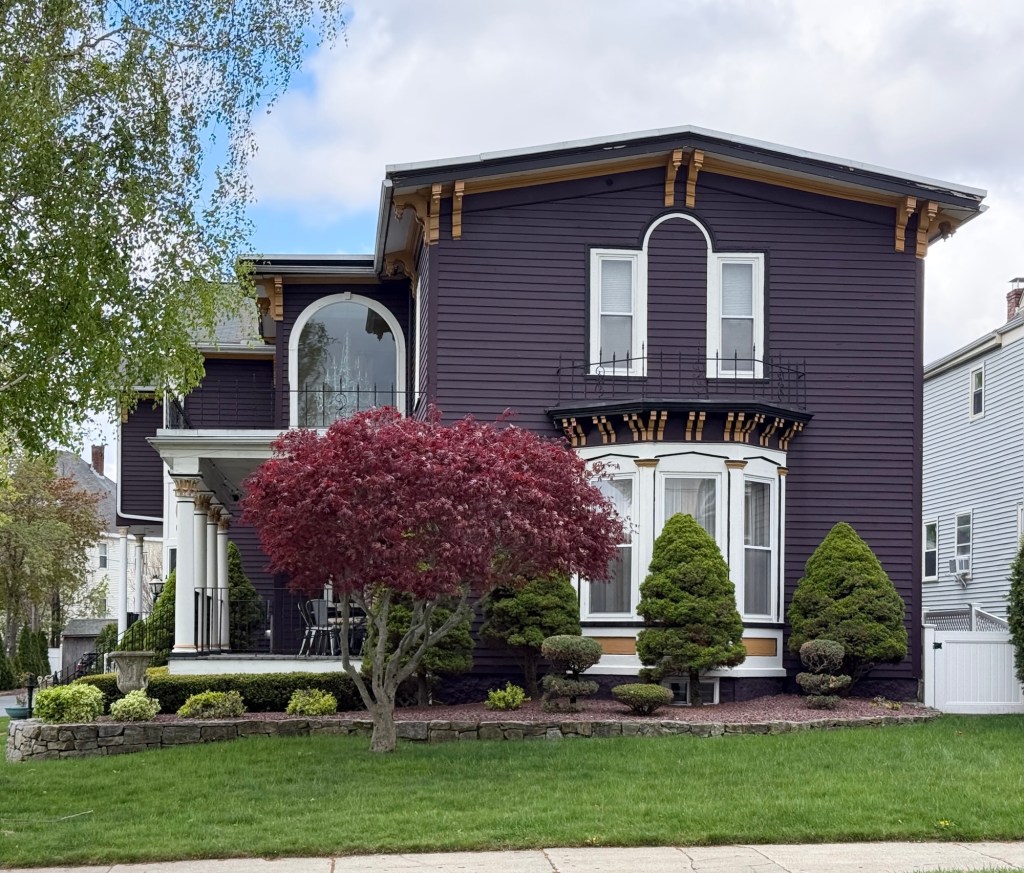
While the town of Milford, Massachusetts is arguably best known for its commercial and institutional architecture, there are some excellent examples of preserved homes of nearly every style and vintage. The Luther P. Jones House on Pearl Street is an interesting example of the Italianate style with unique low-sloped gable roof and typical bracketed cornice, side piazza, and bay window on its facade. While the former arched window has been enclosed and the porch columns have been replaced, the house still maintains its architectural significance as an excellent example of its style. The property was owned by Lydia and Luther P. Jones, a provisions dealer, until their deaths in the early 20th century.
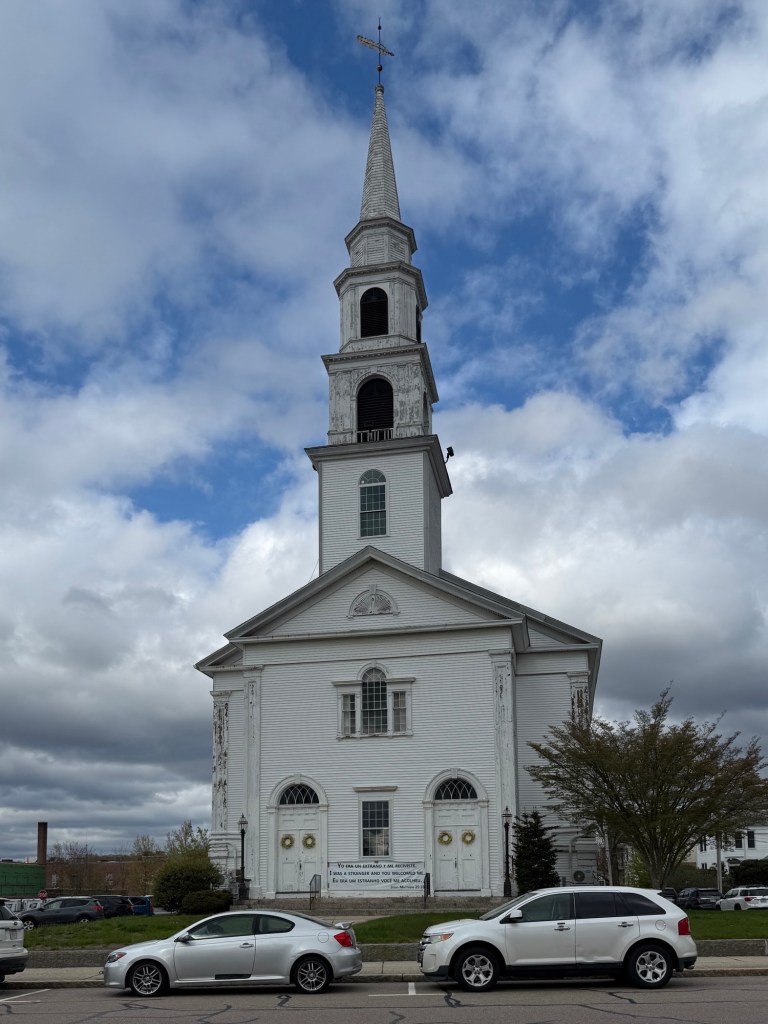
The town of Milford, Massachusetts, incorporated from its “mother town” of Mendon in 1780 and decades later, after the War of 1812, the young town began discussions to build a new town hall. From 1741 when Milford was set of as a separate precinct, through its incorporation, all governmental functions were held at the meetinghouse, which served both religious and governmental functions. By 1819, it was decided that a new town hall structure would be built in town as residents with other religious affiliations did not want their tax dollars going to a separate institution. The Congregationalists too began construction on a new church, this building, in 1819. The Federal style edifice with towering steeple was largely reconstructed in 1868, when the church was enlarged at the rear, raised to allow a full basement, and the facade “modernized” in the Italianate/Romanesque style with round arched openings. The church was again renovated in the early 20th century, converting it back to the more traditional, New England Colonial Revival style with fanlight transoms and large Palladian window. The congregation today remains active and offers sermons in Portuguese, providing a house of worship for the large Brazilian-born population in Milford.
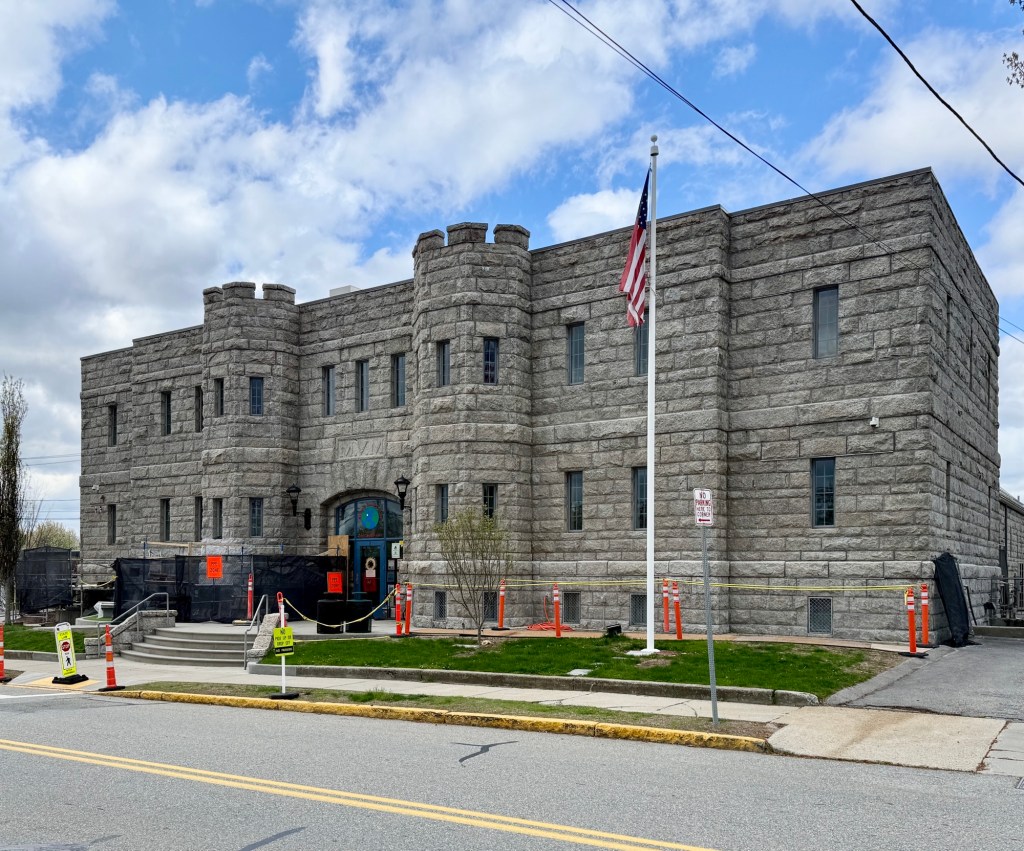
A source of local pride, the Milford Armory building on Pearl Street in Milford, Massachusetts, is an architectural landmark in the community and shows how adaptive reuse can give old buildings new life. The structure was completed in 1912 and constructed of locally quarried and cut Milford granite, a pinkish-grey granite that covers an area of approximately 39 square miles, centered around present-day Milford. Between the Civil War and WWII, the town of Milford became famous for its “pink” granite as a building material, with over 1,000 men laboring in dozens of quarries supplying the stone for some of America’s most iconic buildings including: the Boston Public Library, Worcester City Hall, as well as the original Penn Station and Natural History Museum in New York, among many others. Besides being built of local granite, the Armory was also designed by local architect, Wendell T. Phillips, who followed nationwide trends designing the building like a fortified Medieval castle with crenellated towers, with long and narrow windows recessed, emulating the slit windows used in similar medieval structures. Like in many communities all over the country, the need to store firearms and major National Guard trainings declined with some being demolished, others sitting vacant, and others like the Milford Armory, seeing new life. The Milford Armory was slated for closure in 2002 and was ultimately saved when the Town of Milford and the National Guard struck a deal to initially rent the building for a Youth Center and gymnasium and share the space with the Guard. The armory was home to the popular Youth Center, which needed gym space not available anywhere else. The building was ultimately purchased by the town and underwent a massive restoration, being rededicated as the Milford Youth Center in 2016.
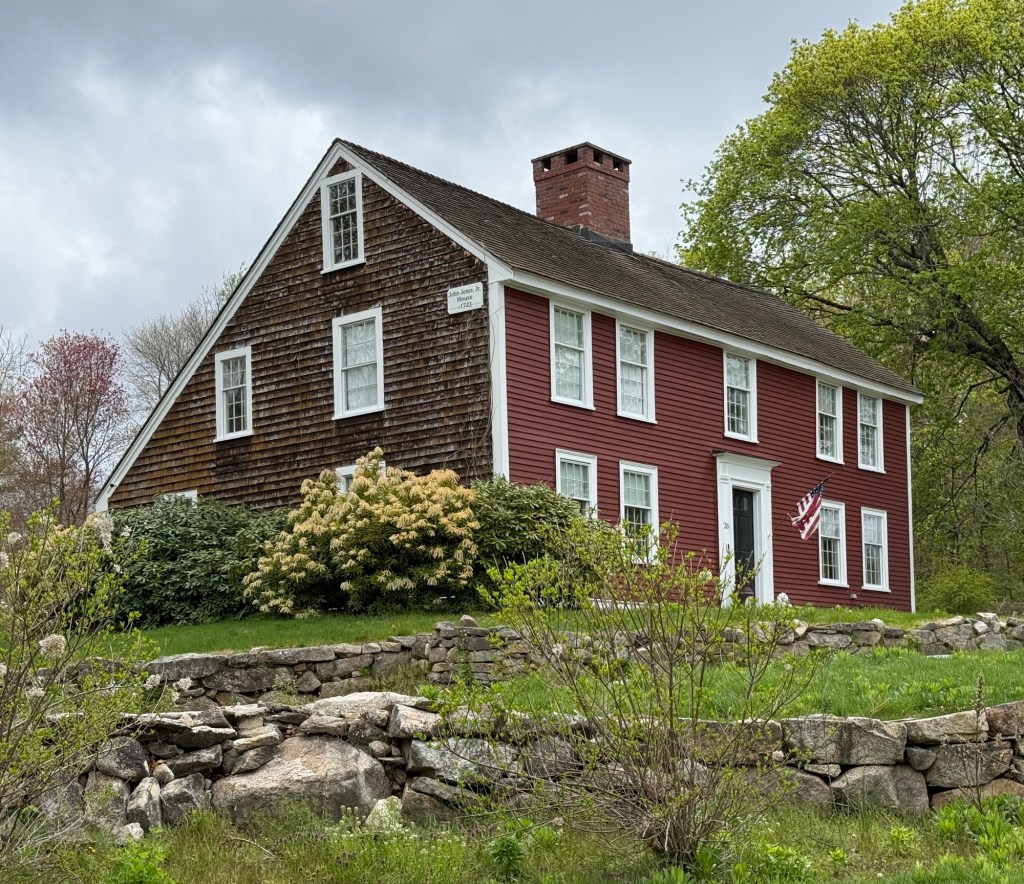
Possibly the oldest extant building in the town of Milford, Massachusetts, the Jones-Corbett Farmhouse stands as a well-preserved example of a rural, First Period residence for early settlers to the area. The Jones Family first arrived in present-day Milford in 1703, when Elder John Jones (1669-1753) settled in the area from Hull, and raised his family in the first wood-frame dwelling in the area, which was still occupied by the Nipmuc Tribe. Elder John Jones raised six children from their home (demolished in 1874), including John Jones Jr., who built this house. John Jones built this house by 1723 but after a few years, traded properties with his brother-in-law, Daniel Corbett, and sister, Sarah. The house was likely added onto with the saltbox roof as the family grew in size and prosperity, and a barn was built on the estate to house horses and other livestock. When Daniel Corbett died in 1753, among his listed property included “a negro boy, his bed and hoe”, with his enslaved young man likely residing in this home and working the property. The residence is an important piece of Milford history that tells the full story of early America.
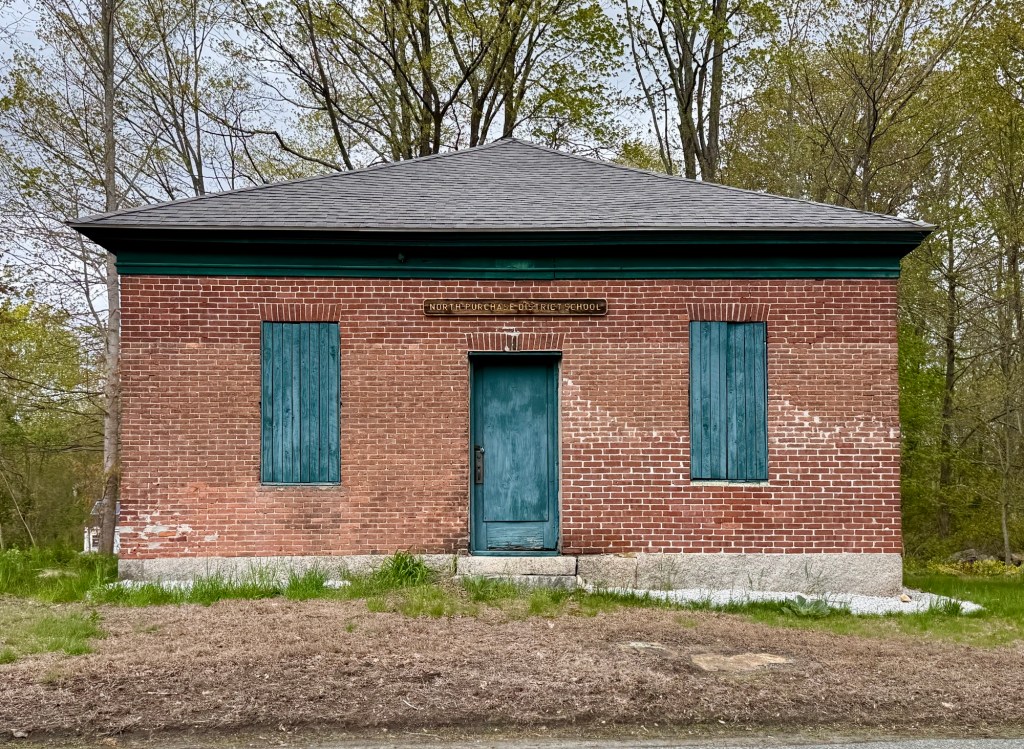
This single-story, hipped-roof, brick schoolhouse is approximately 30’x24′ in plan and was built in 1832 for the town of Milford, Massachusetts, as one of its district schoolhouses to serve the community. After Milford incorporated in 1780, the town was divided into school districts, where area pupils would attend one of six school buildings based on proximity to their primary residence. This brick building replaced an earlier school building which was lost following a fire in 1830. The town funded construction on this school at a cost of $524. The one-room school remained in use until the 1920s, until consolidated schools and accessibility due to bus and personal automobile made getting to a centralized school building, easier. The old North Purchase District School was briefly used as the North Purchase Community House, a center for area residents to socialize and provided space for local scout groups. The building has been boarded up since at least 2009 and its future looks uncertain.
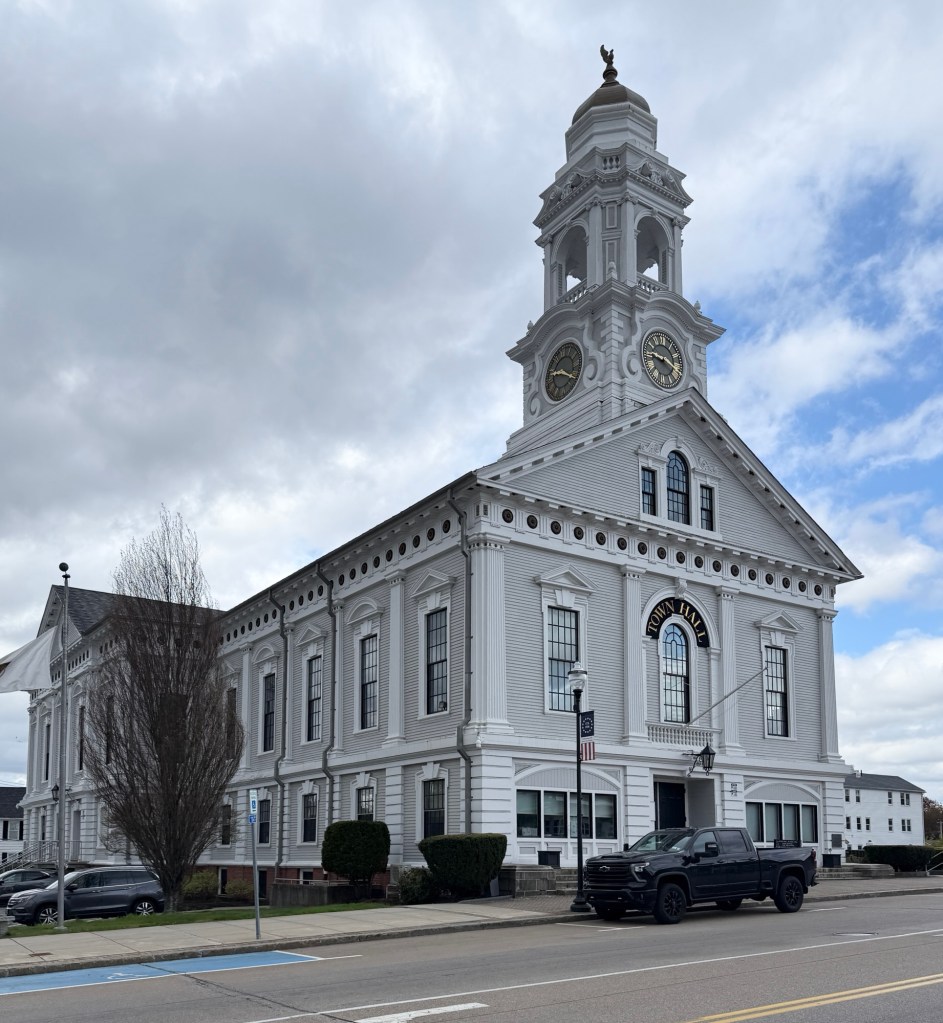
The town of Milford, Massachusetts, is somewhat a hidden gem in the region, but it sure does have some architectural landmarks! Located on Main Street, the Milford Town Hall stands as an early American example of the Romanesque Revival architecture style, and is one of the earlier works of ecclesiastical architect, Thomas Silloway, who would design over 400 churches before his death in 1910. The Milford Town Hall has a somewhat ecclesiastical design to it with a pedimented facade, rusticated base, and pilasters breaking up the bays. The elaborately ornamented cupola rises nearly 50 feet in height and contains a round clock and scroll trim on all four sides with round arched openings and surmounted by a gold dome. As the town grew in the late 19th century, a large cross-axial rear addition was designed in 1900 by local architect, Robert Allen Cook, who appears to have also made the facade more Colonial Revival in style, changing some arched windows to pedimented windows and a Palladian in the gable. An interesting feature of the building is that it is built of wood and not the iconic local Milford “pink” granite that the town became known for. The Milford Granite was actually discovered after the Civil War, and the building material was quarried and transported all over the country for large institutional buildings.
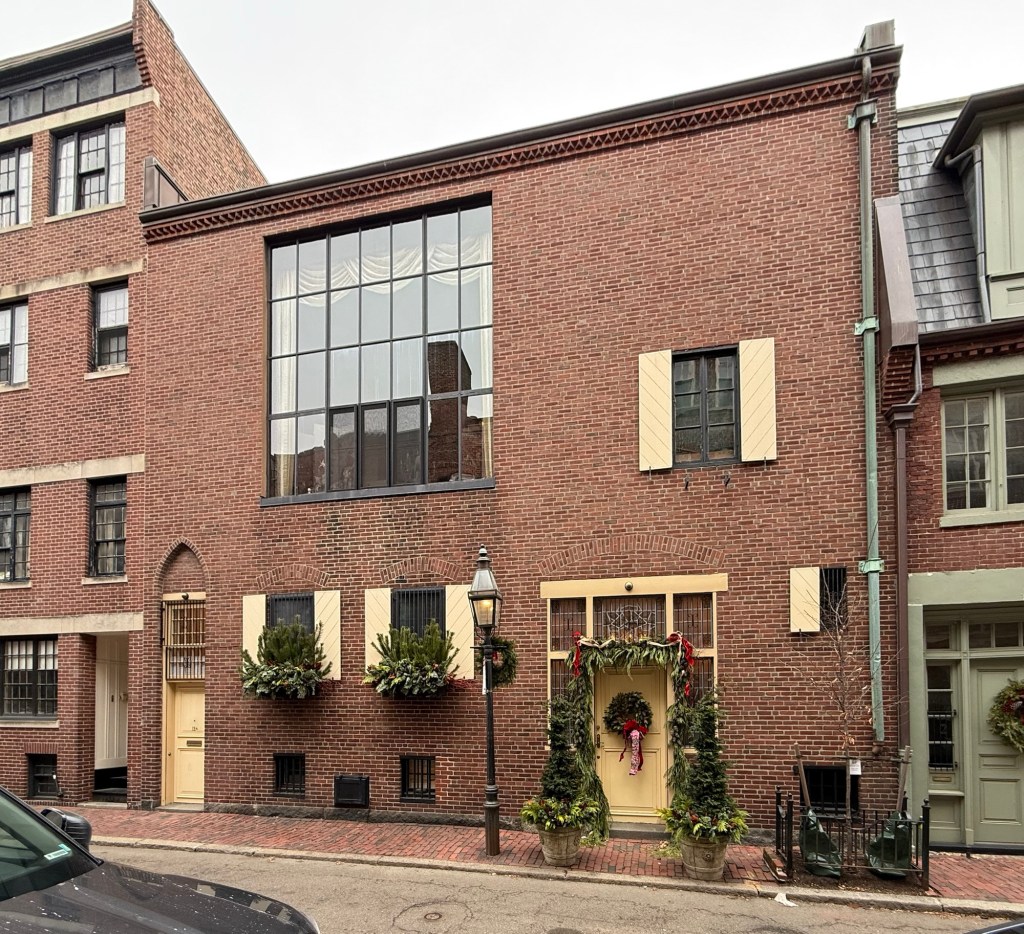
Built from a historic stable building, this unique building on Lime Street in Beacon Hill served as a residence and studio for Martha Silsbee, a prominent New England watercolor and pastel artist. For her Boston residence, Martha Silsbee hired the firm of Richardson, Barott, and Richardson, an office founded by Philip and Frederic Richardson, sons of famed architect Henry Hobson Richardson, who had designed a house nearby with similar design elements years prior. Taking cues from Venetian architecture, the interior spaces were covered with cream-colored plaster with iron gates and walls lined with art. The design includes a massive studio window on the facade, which flooded Ms. Silsbee’s studio where she painted when not at her residence in the Dublin Artist Colony in New Hampshire. The facade also features pointed arches and artistic glass at the entrance. After her death, the property sold at auction. After WWII, the former studio and residence was purchased by Georges F. Doriot (1899-1987), a Parisian businessman who later taught at Harvard Business School and in 1946, founded the American Research and Development Corporation, the first publicly owned venture capital firm in the United States.
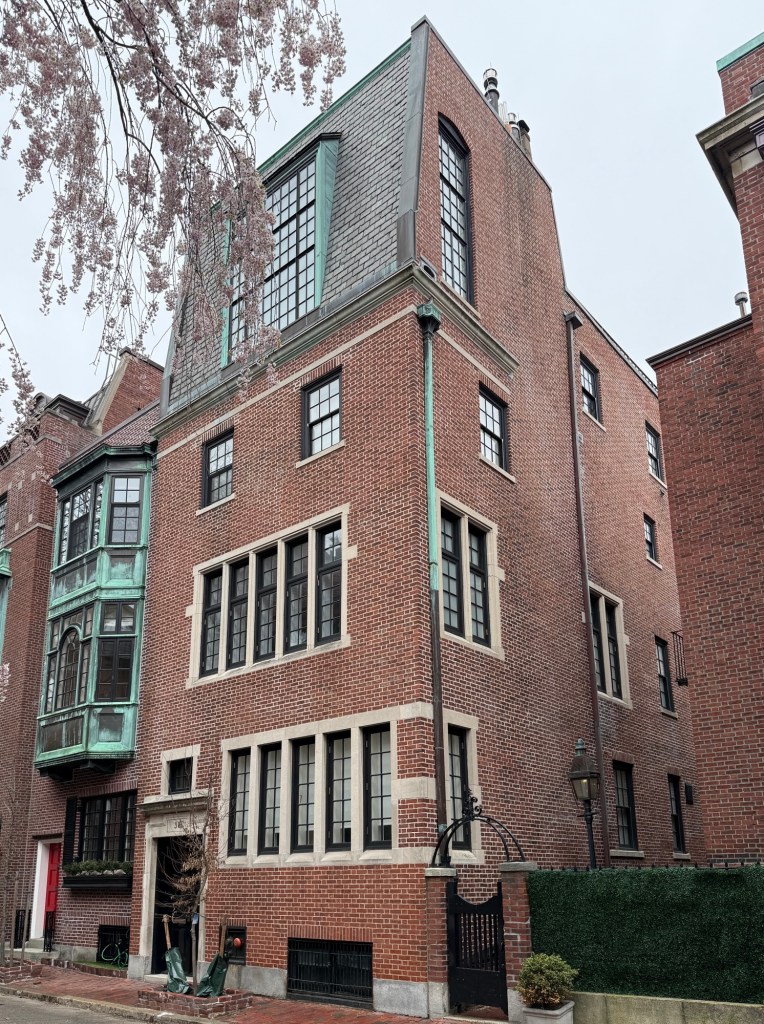
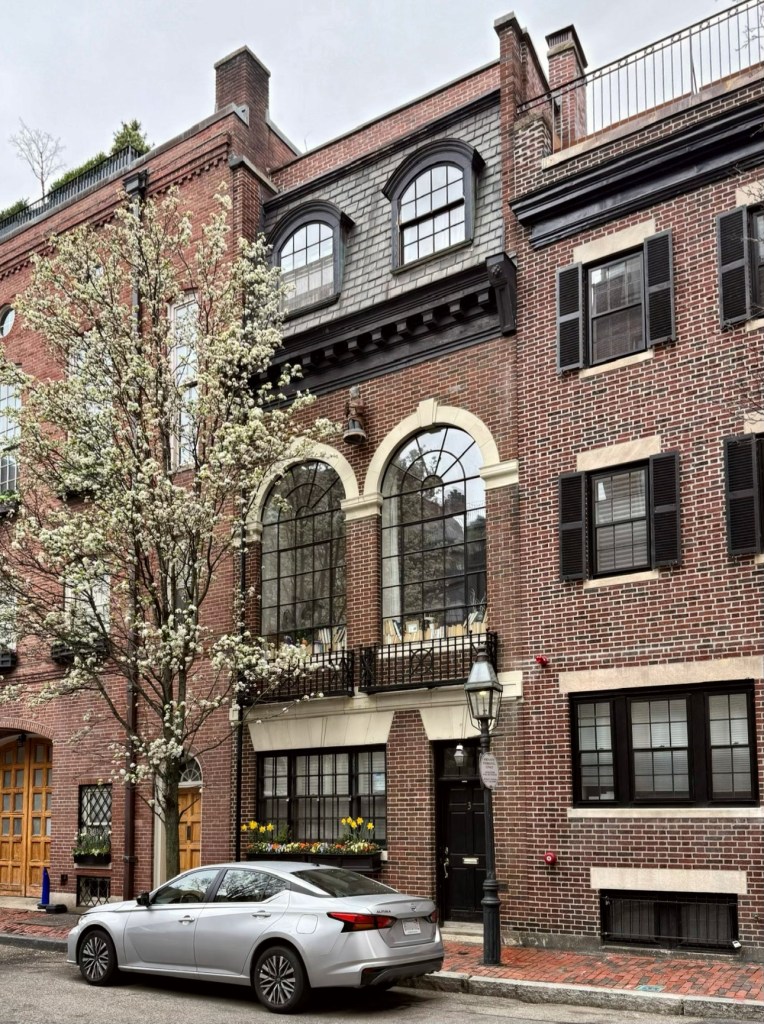
One of the most amazing townhouses in Beacon Hill can be found here on Lime Street, where an oversized mansard roof addition with multi-light dormer, dominates the facade. The townhouse was built in 1912 from plans by architect Richard Arnold Fisher, who lived a few houses away, replacing a livery stable formerly on the lot. The site was developed on speculation by the Brimmer Street Trust, a real estate firm run by Gerald G. E. Street and William Coombs Codman, who sought to develop the area into high-end residences and art studios, protecting the area from unsympathetic developments. A few years after the house was built, it was owned by Frederick Shepherd Converse, a composer who also taught at the New England Conservatory of Music. By 1927, the house was owned by a young Waldo Hayward Brown, who at 32-years-old, occupied the house with his wife, Frances, three young children and four servants. The year he purchased the property, he hired the original architect, Richard Arnold Fisher, to add a In 1927 Brown filed a permit application to build a tall new room over an existing roof terrace at the front of the house, where the architect designed it as a mansard addition, which is of a large scale and broken up by the massive studio window. The blending of Tudor Revival and the later mansard roof surprisingly work here to create the unique composition we see today.
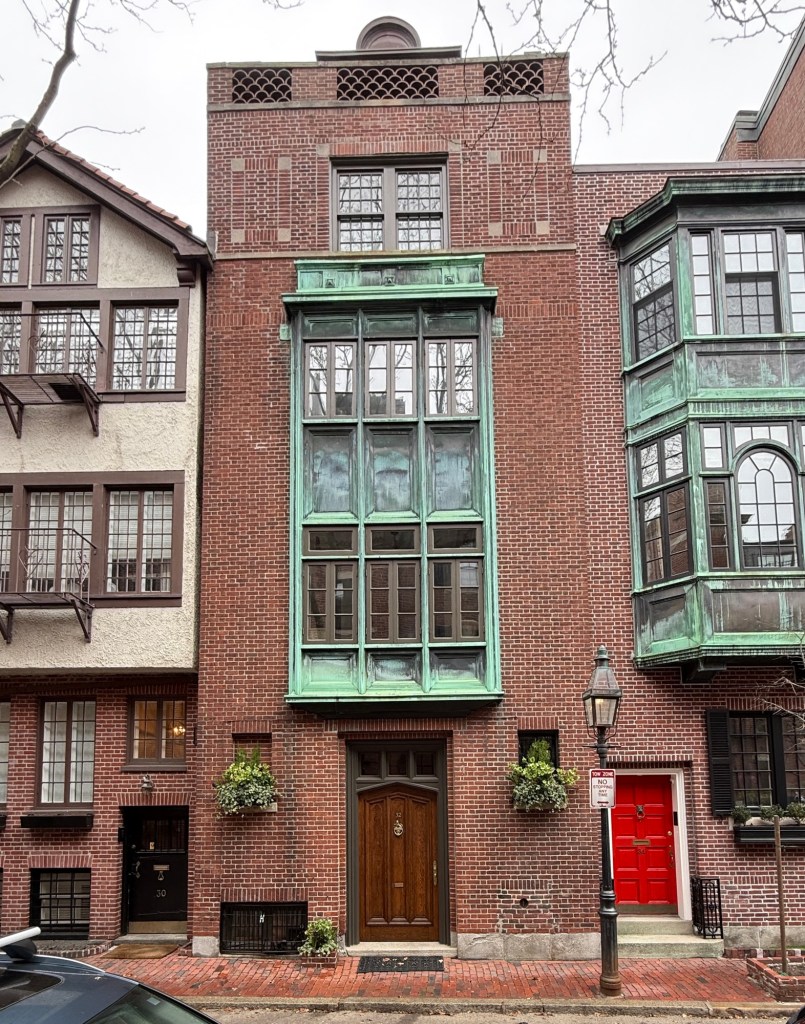
This charming townhouse on Lime Street on the Flat of Beacon Hill, was built in 1912 for the Brimmer Realty Trust by architect, Richard Arnold Fisher, who lived two houses down the street. After the developers built the house on speculation, the townhouse was purchased by an A. G. Burgess, and soon after by Odin Roberts, a prominent patent lawyer with Roberts, Roberts & Cushman. After WWII, the townhouse was purchased by Jacob Wirth Jr., who took over his father’s iconic German restaurant, Jacob Wirth’s after his death. Jacob Wirth Jr. lived here until his death in the 1960s and it remained as the residence of his widow, Dorothy Wirth until 1995. The brick townhouse stands out for its two-story projecting copper oriel and the unique parapet at the roof.
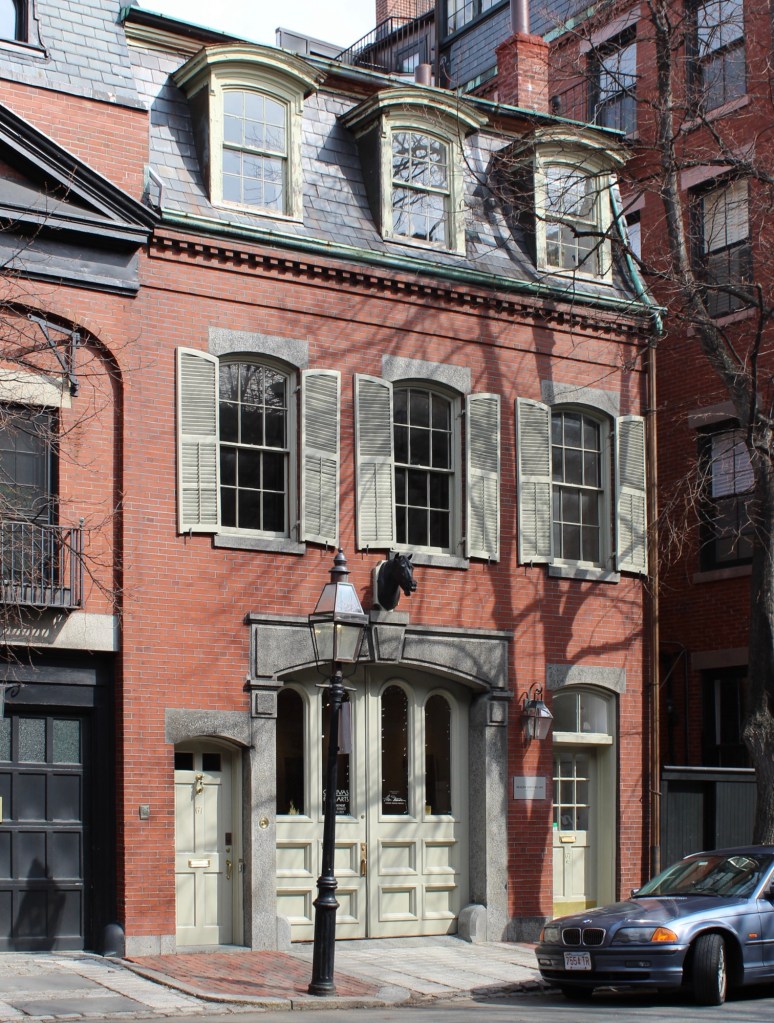
This charming stable building on Chestnut Street on the Flat of Beacon Hill, Boston, was probably built around 1865 for Elijah Williams (1804-1879), a shipping merchant who also served a term on the Boston Common Council. Elijah and his wife, Mary, lived on Louisburg Square and had this stable built to hold their stable, sleigh and horses. Additionally, the stable housed a small residence inside for the stable-keeper and coachman, who would chauffer the Williams’ around and take care of their horses. In the early 20th century, the stable was owned by George Nixon Black (1842-1928), an heir to a Boston real estate fortune that came to Boston to manage the office of his father’s lumber business. He eventually became one of Boston’s largest individual taxpayers and besides his home in Boston, spent time in other homes including the late Kragsyde in Manchester-by-the-Sea and Woodlawn in Ellsworth, Maine, now a house museum. The stunning Second Empire style stable building is built of brick with granite lintels, sills, and surrounding the carriage doorway, over which is a mounted statuary of a horse head as a nod to the building’s original use.
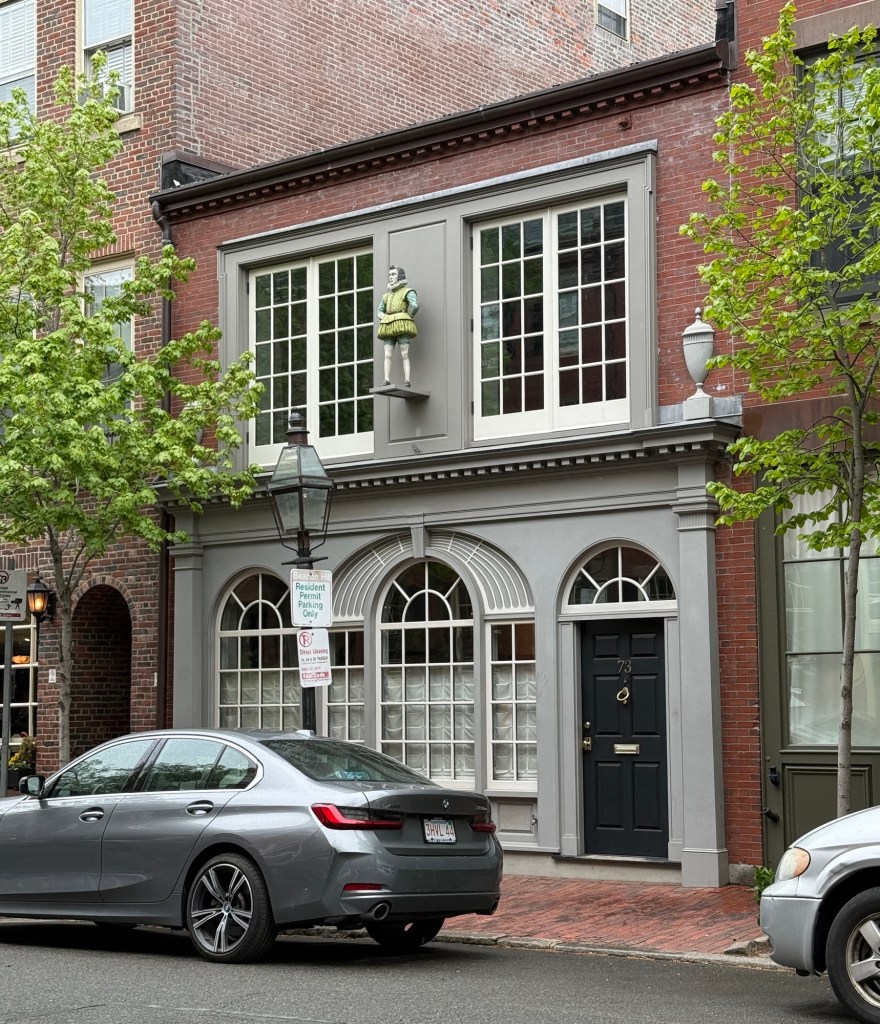
One of the many charming buildings on the Flat of Beacon Hill can be found here at 73 Chestnut Street, which has long been one of my favorites when strolling in the neighborhood. The building was constructed around 1895, replacing a wooden stable on the site, and appears to have been built as a stable and converted soon-after to commercial use. In 1917, the building was leased to tradespeople, and included a plumbing shop and cabinetmaker, but as the area gentrified after WWI, the building was purchased by Israel Sack, an antique dealer as his new store. Israel Sack was born in Lithuania and emigrated to the United States, first working as a cabinetmaker and later becoming an instrumental force in the antiques world, where he assisted with developing the private collections of Henry Ford, Henry Francis du Pont, Ima Hogg, and other leading collectors and supplying the Americana collections of many major museums. A year prior to buying and renovating this building, in 1924, Sack purchased the Robert “King” Hooper House in Marblehead, Massachusetts, and turned the 18th-century mansion into a showroom for his antiques. Israel Sack gave the building at 73 Chestnut Street its distinctive Colonial Revival facade with its urn finials and Bullfinch-eque Federal Revival storefront. Later operators of antique stores within the building include: Louis D. Prince and Stephen Score, until recently when it was converted to a residence, with the owners removing bright blue paint from the brick and restored the facade, down to the iconic wooden statuette on the second story.
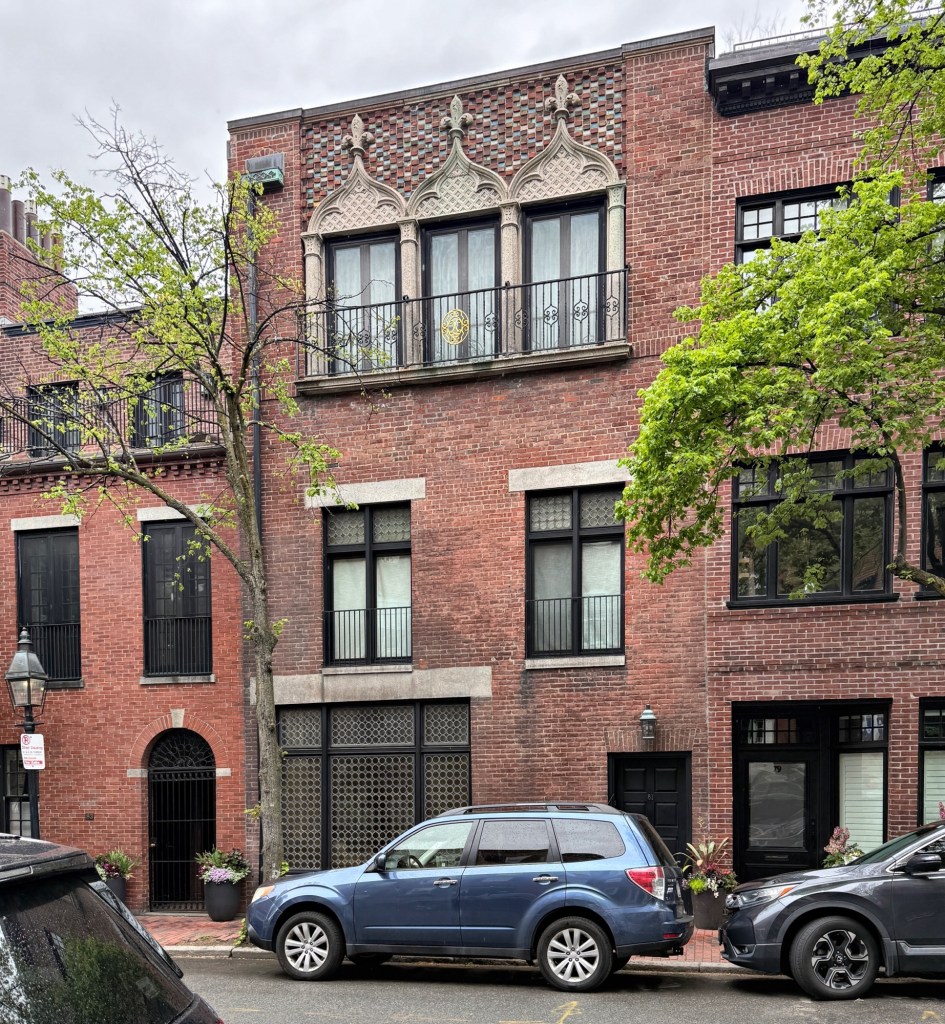
This handsome building at 81 Chestnut Street in Boston, began as a two-story brick stable and was later modernized with an additional floor and renovated for use as an artist’s studio, a perfect encapsulation of the history of the Flat of Beacon Hill from the “horsey end of town” to upper-class enclave and artist community. The stable was built around 1860 for Harleston Parker (1823-1888), the father of the more well-known, architect, J. Harleston Parker, and remained as a stable throughout the 19th century. In the early 20th century, the two-story building was converted to a auto repair shop but changed use in 1916 when owner, Edward H. Noyes hired architect, Harry Browning Russell, to convert the old stable to an artist studio. The second-story windows were enlarged and former carriage door were enclosed with small rounded art glass, likely for and by George Loftus Noyes, a painter who worked for a time at the New England Glass Company. Inside, a central landscaped courtyard flooded the spaces with natural light. In 1936, George Noyes moved to Vermont, divorcing his wife, Maybelle, but leaving her with the Boston studio. Maybelle remarried to George Lee, and soon-after hired architect, Frank Chouteau Brown, to add a third-story to the studio for conversion to a year-round residence. Brown added the unique Moorish arched windows and brickwork at the third floor.
This narrow three-story, two-bay brick house on Byron Street on the Flat of Beacon Hill, is one that I had never noticed before, but it instantly became one of my favorite houses in Boston. Built in 1914 as a two-story residence for Charles Lewis Harding (1879-1944) a wool merchant and agent for mills in the New England area. It appears that Mr. Harding had the building constructed but never resided here and may have rented out space or kept his vehicle inside. After his death in 1944, the property was owned by Ariel Hall and her husband, painter and etcher Frederick Garrison Hall. She removed the garage replacing it with a large window, and added the mansard roof, converting the entire building into a single-family residence from plans by architect, William Chester Chase. They likely expanded the second-floor windows to the present configuration for an art studio for Mr. Hall before his death in 1946. It is unclear the vintage, but the building also features a painted statuette of a Chinese figure, mounted on a pedestal in the space between the arches of the windows at the second floor.
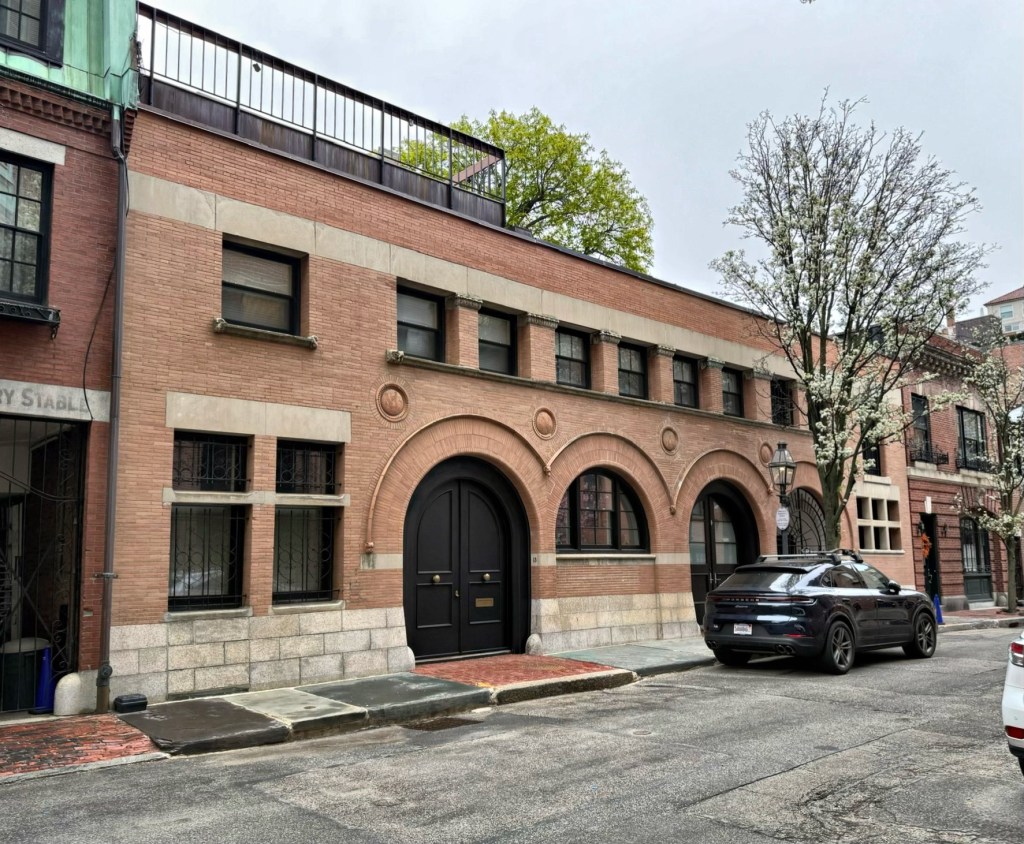
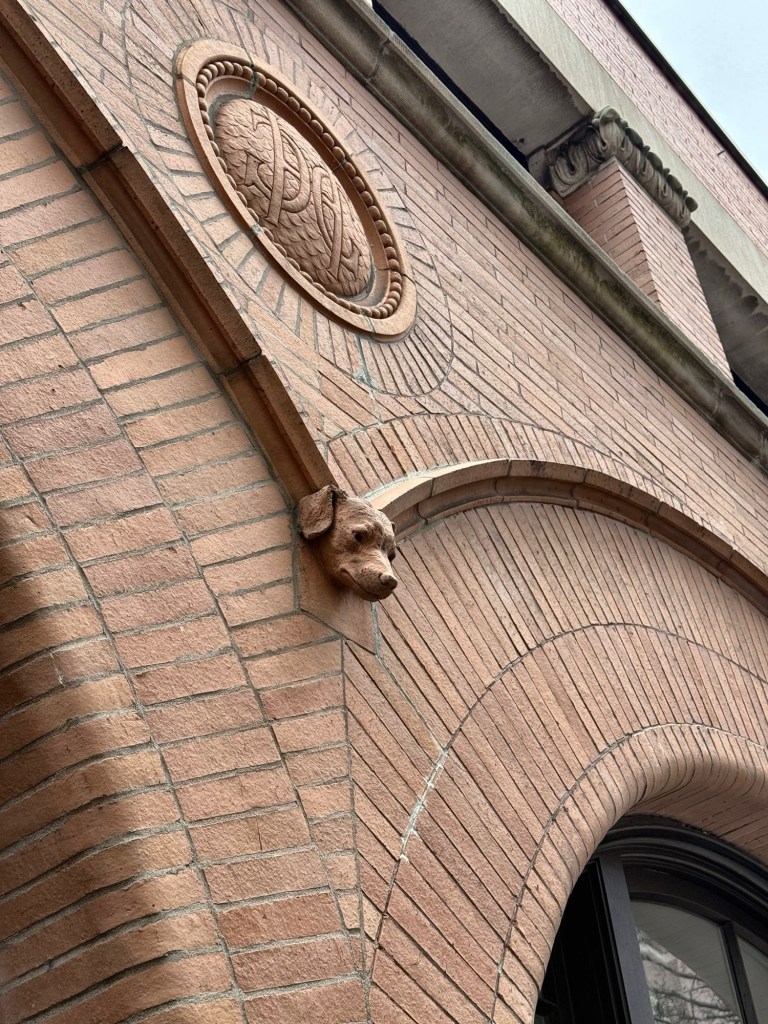
The George G. Hall Stables on Byron Street in Boston’s Beacon Hill neighborhood were built in 1895 for George G. Hall, a wealthy hotelier and developer, who razed three private stables occupying the site prior. For his private stables, George Hall hired Boston architect, William Whitney Lewis, to furnish the plans, which resulted in one of the finest buildings on the Flat of Beacon Hill. Designed in the Richardsonian Romanesque style, the building was described in architectural publications as being constructed of Milford pink granite and coral-colored bricks with two carriage doors and a door for the stable-keeper with an extant hayloft on the second floor. While from afar, the stables are stunning, it is when you inspect it up-close that you see the attention to detail that was taken by the architect. Round stone medallions on the facade read: “G.G.H.” after its owner; “No. 11, 12, & 13”, the addresses; and “1895”, the year of construction. Additionally, at the ends of the arched stable openings, carved dog heads can be found, keeping guard of the horses inside. The stable was later converted to three residences in the 1960s by the architectural firm of Goody & Clancy, Associates.
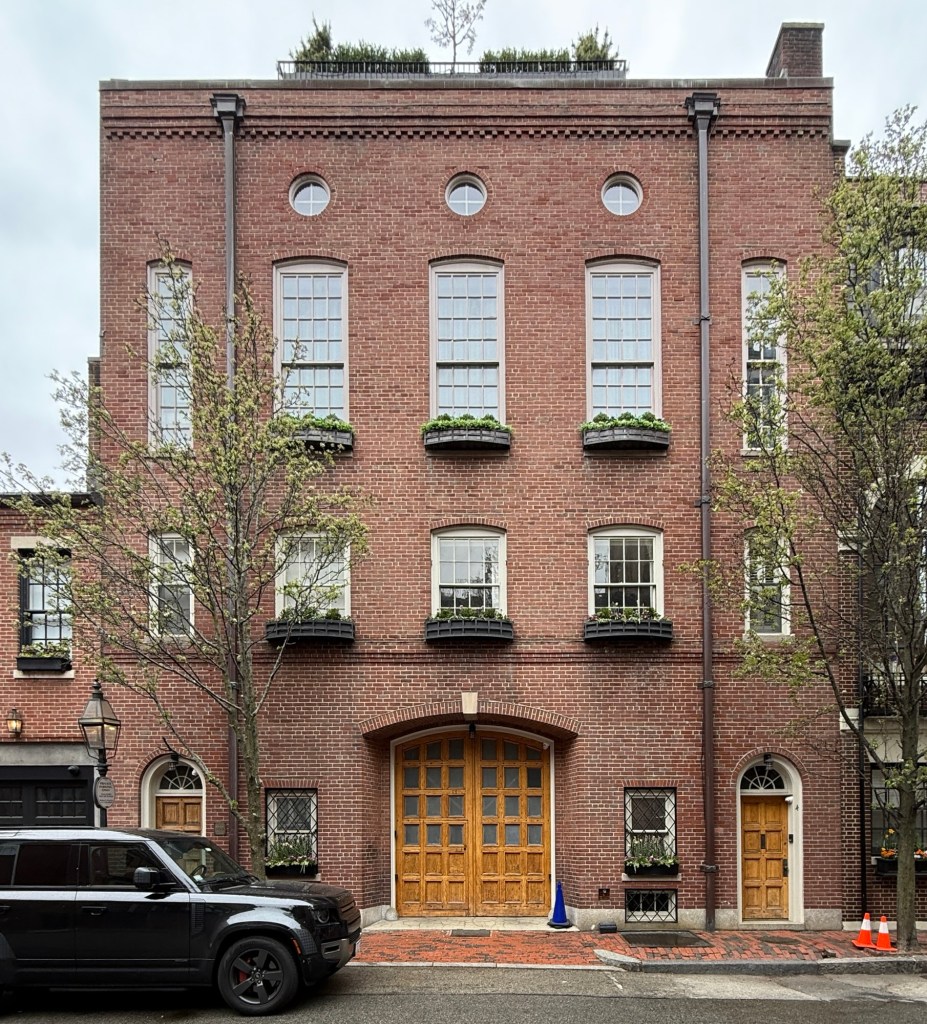
In 1929, Eleonora R. Sears (1881-1968), a tennis champion and great-great-great granddaughter of President Thomas Jefferson, had a 19th century stable she inherited from her late father, demolished and replaced with this stunning residence with garage on Byron Street in Boston’s Beacon Hill neighborhood. The present three-story building was designed by Henry Forbes Bigelow, who lived a few blocks away in his own mansion, as a unique Colonial Revival style building with symmetrical facade. Eleonora Sears was one of the first American women to drive an automobile and fly a plane and lived here with her chauffeur when she was not at one of her other properties. After Eleonora died in 1968, her Beacon Hill residence was converted into condominiums, while the facade retains its architectural features when built nearly 100 years ago.
 Buildings of New England