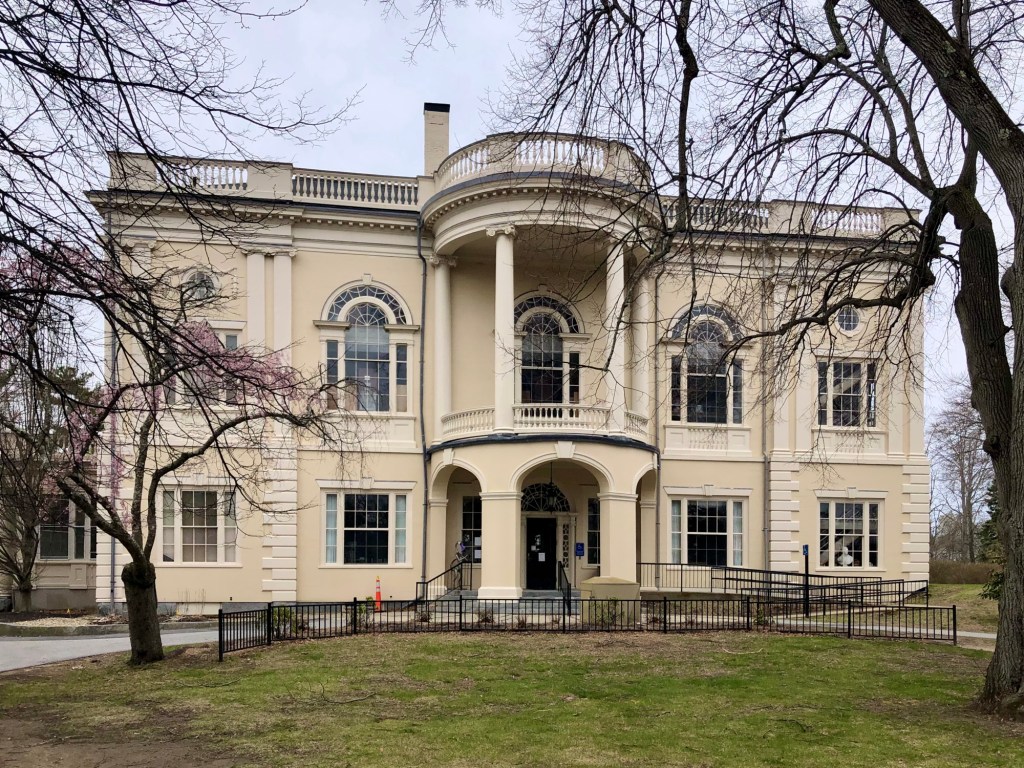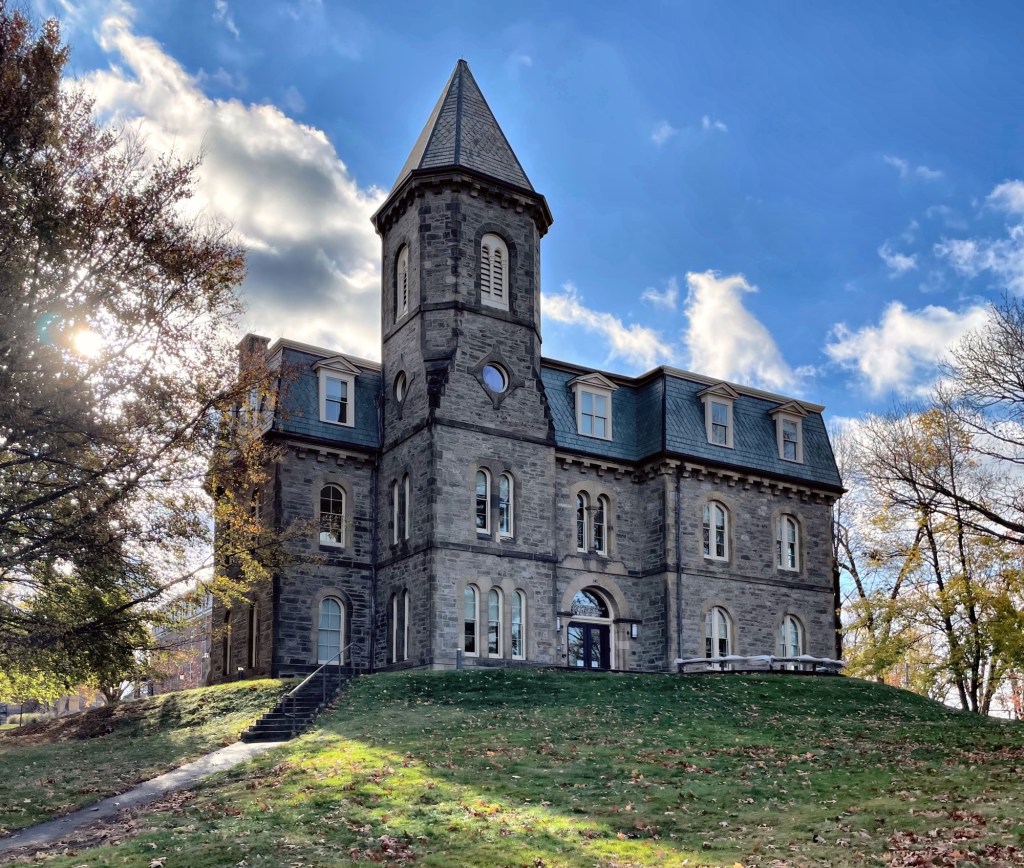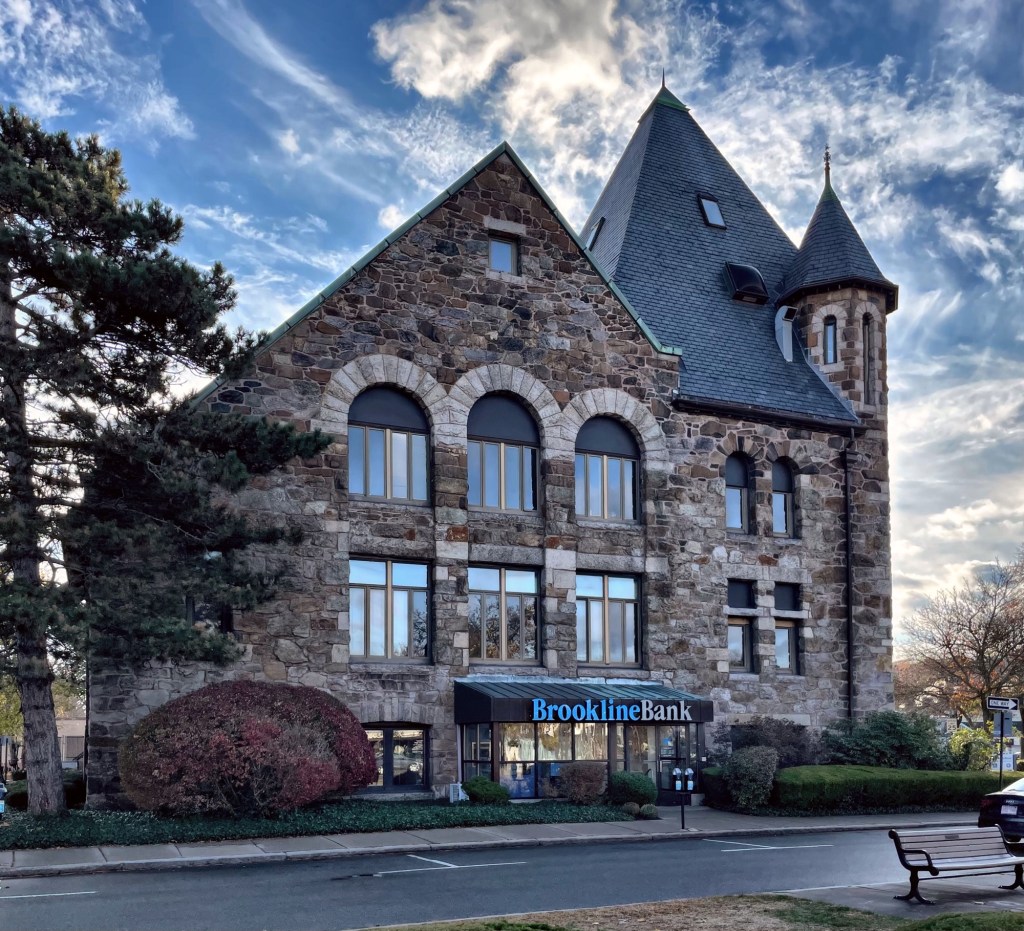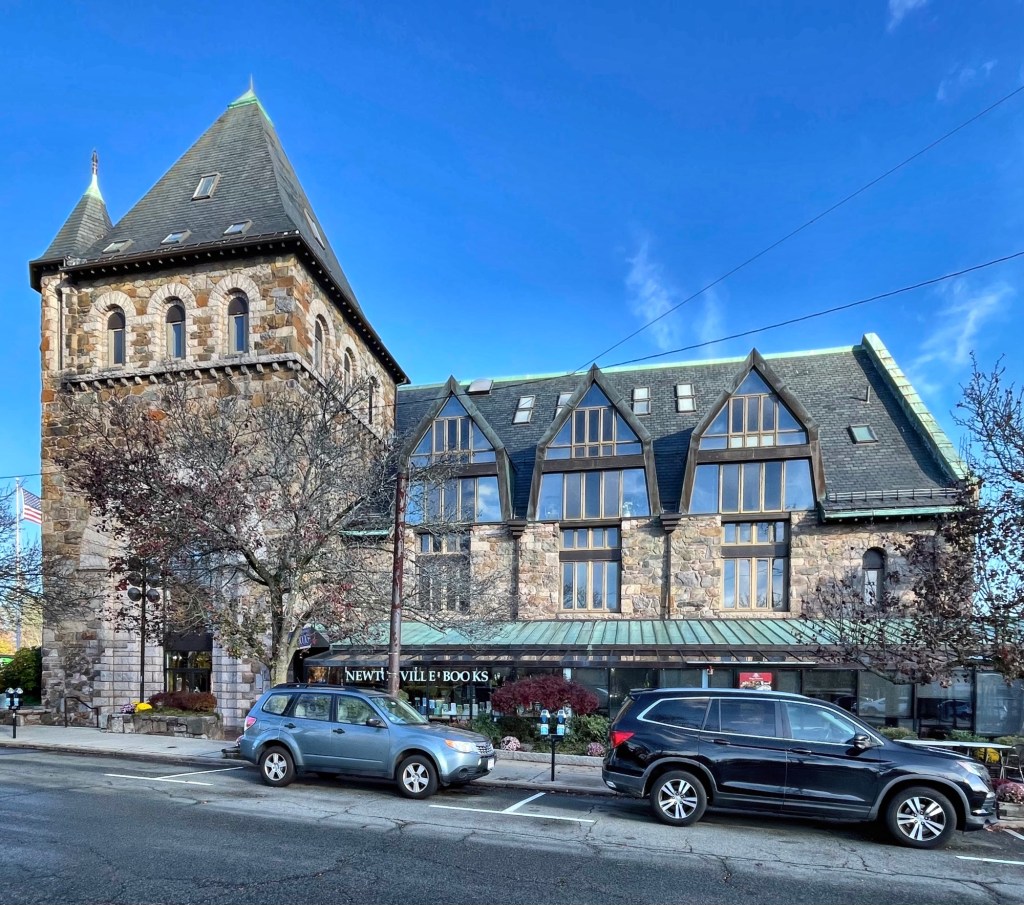
Salem Water Company Offices // 1879

Salem, Massachusetts, was first settled by Europeans in 1626, and it would take 170 years until in 1796, an organization of citizens was established for the purpose of supplying the inhabitants generally of Salem and Danvers with pure spring water. The Salem and Danvers Aqueduct Company was incorporated in 1797  “for the purpose of conveying fresh water by subterraneous pipes into the towns of Salem & Danvers.” As Salem grew, the need for a more central water district and distribution network became a necessity for the health and prosperity of the city. A 1864 law allowed Salem to construct its own water works, and it formed a Board of Water Commissioners who designed and constructed the system. From this, funding was acquired and paid for the laying of tens of thousands of feet of subterranean water distribution pipes connecting the reservoir to buildings and hydrants in Salem. Offices of the Waterworks were scattered and obsolete until 1877, when funds for the construction of this structure at 32-34 Church Street were set aside as the new Water Department Offices. Completed by 1879, the building is a great example of a Romanesque/Italianate style masonry structure with corbelled cornice and arched openings. According to the city directories, this building continued to operate as the Salem Water Works into the late 1930s. By 1945, it was the headquarters of the United States War Price & Rationing Board. In 1964, it held a number of city offices including: Civil Defense headquarters, Fire Department headquarters, Licensing Board, Planning Board, and the City Veterans Service, before being sold by the City of Salem to private ownership in 1976.

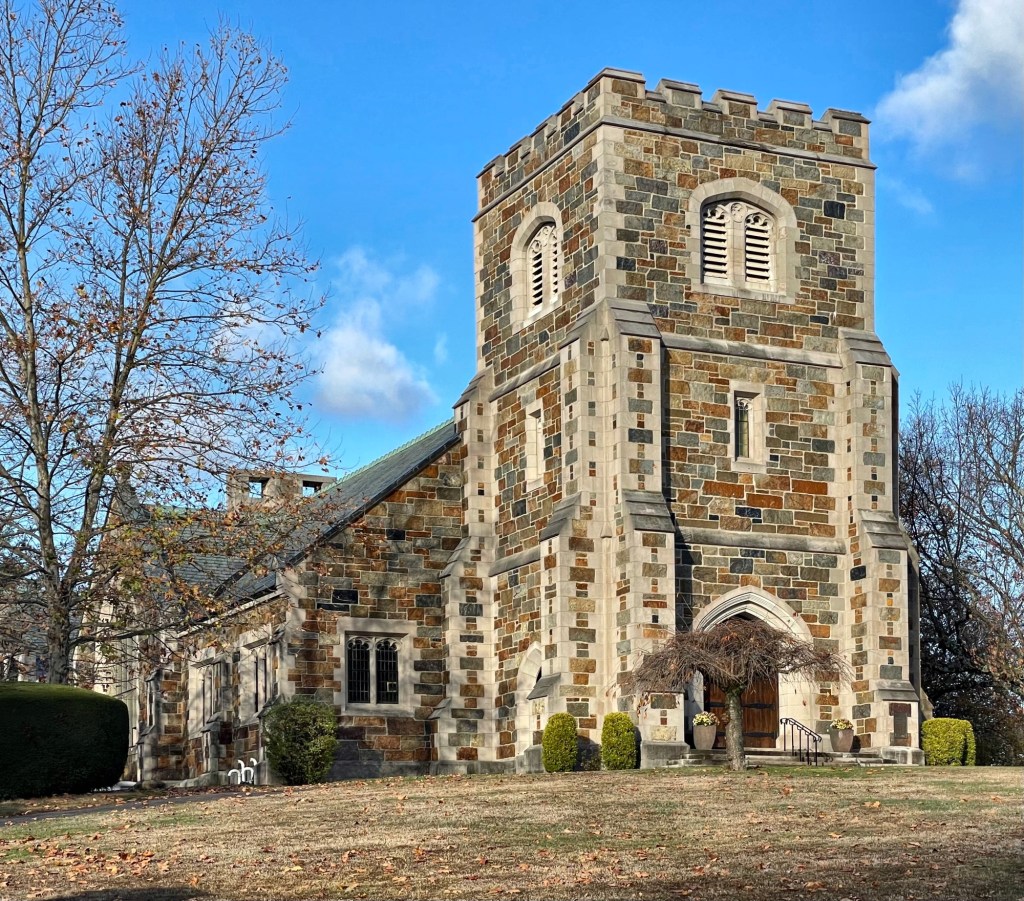
Holyhood Cemetery Chapel // 1857

Holyhood Cemetery in Brookline, Massachusetts, was laid out in 1857 under the direction of Father Joseph M. Finotti, pastor of Assumption Parish , which included Brookline and Brighton. The cemetery reflects the mid-19th century influence of the Rural Cemetery movement and the romantic landscape cemetery planning begun at Cambridge’s Mount Auburn Cemetery in the 1830’s. A plan of the cemetery was drawn up by Shedd & Edson and published in August 1857. It shows curvilinear avenues and paths named after former bishops of Boston and Biblical figures. All were welcome to be buried except those who “died in a state of Drunkenness, Duel, or by self-destruction, unbaptized, non-Catholic, or otherwise opposed to the Catholic Church.” In the 1857 Shedd & Edson plan for Holyhood Catholic Cemetery, a chapel was located at the center on the hill shown in a small drawing on the edge of the plan. Known as St. Joseph’s Chapel, the stone building was designed by Patrick Keely, the successful and influential New York architect of many mid-19th century Catholic churches. The chapel would be dedicated in 1862. Decades later, a cemetery office was planned and built across Heath Street from the cemetery gates, but was demolished sometime in the 20th century. The cemetery grew and it along with the mid-19th century chapel, has been lovingly maintained to this day.  

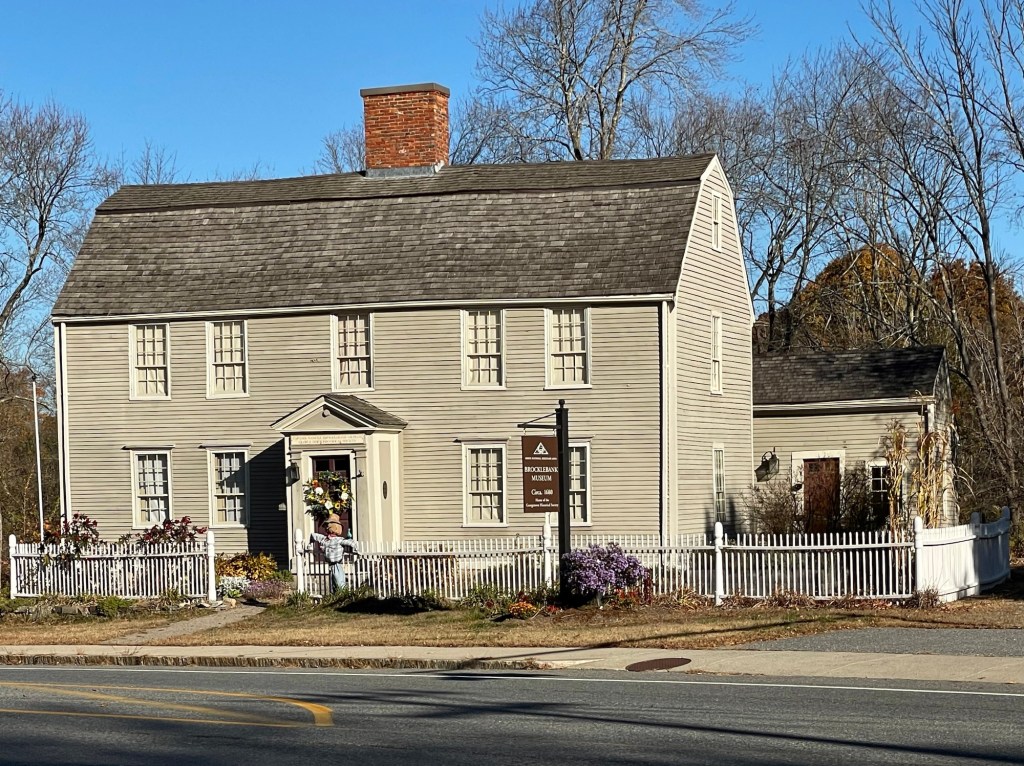
Wright Estate Gatehouse // 1907

Besides the former Wright Carriage House (now the Soule Recreation Center), the only other extant building that was built on the grounds of the former John G. Wright Estate in Brookline, Massachusetts, is this structure, the historic gatehouse to the property. Built in 1907 at the same time as the manor house, the gatehouse was also designed by architects Chapman & Frazer and served as the entry to the expansive grounds with a room for the gatekeeper to sleep in overnight. The Tudor Revival style building is less ornate than the stone mansion, the half timbering and stucco work well to compliment the other buildings. While the formerly dark half timbering has since been painted a white, the building still maintains its character. While the remainder of the Wright Estate was subdivided and sold off by the heirs of next owner, wool merchant, Andrew Adie, the gatehouse remained and survived the destruction that befell the main manor. The old gatehouse was converted to a full-time residence and remains to this day.

Assumption Roman Catholic Church // 1922

As Chicopee developed into one of the major industrial cities in Western Massachusetts, immigrant groups moved there, finding work at some of the major manufacturing companies. Irish and Polish churches were built and French and French Canadian residents too built their own church, where they could gather and worship in their native language. A wood-frame church was first built in the 1870s and used until it was destroyed by fire in 1912. It took a decade for the congregation to gather enough funds to purchase a new lot and build a new church, but patience was a virtue as their church is a stunner! The cornerstone for the church was laid in 1922 and the building was designed by local architect, George P. Dion, and constructed at the cost of $200,000. The building was dedicated in 1925 and is one of the finest, and most unique churches in the state. Italian Renaissance Revival in style, the church stands out for its 85-foot-tall campanile and cast-stone high-relief in the pediment at the facade. It is believed that within the relief, that depicts the figure of Mary surrounded by Cherubs, depicting the “Assumption of the Virgin,” George P. Dion used the likeness of his granddaughter as a face of one of the cherubs. The congregation moved out of the building but has been recently mortgaged to a new church, Iglesia Cristiana Casa De Paz y Restauración, showcasing the ever-changing demographics that keep our cities vibrant and stewards that do right by our collective history and buildings.

Third Congregational Church of Chicopee // 1868

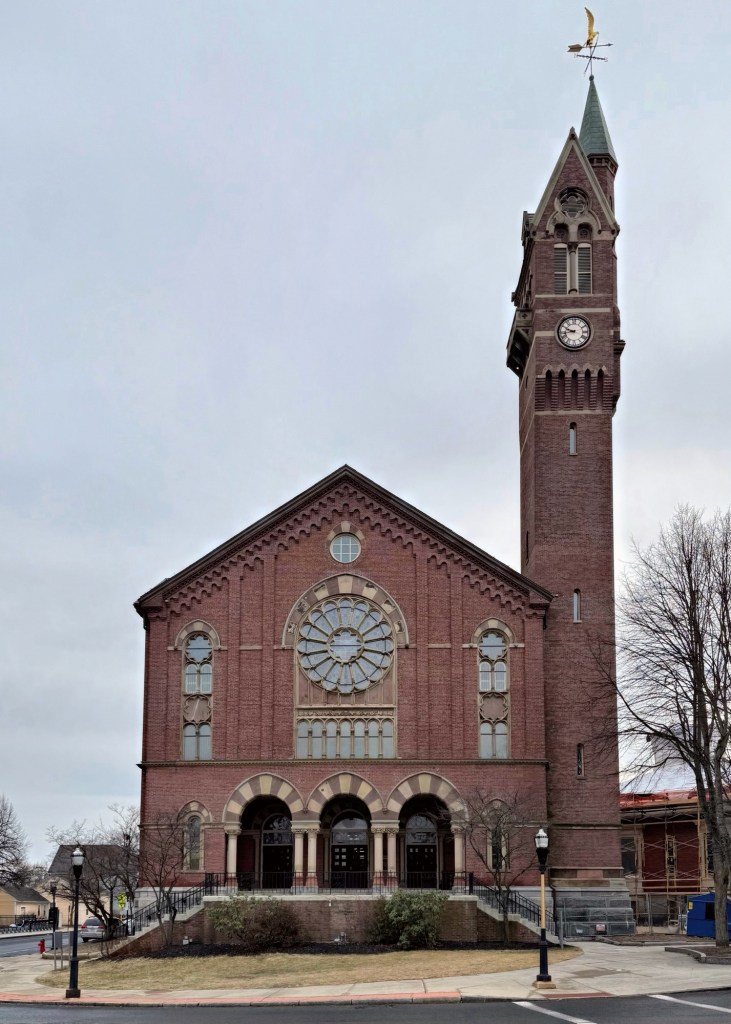
The Third Congregational Church of Chicopee was built on a prominent lot on Springfield Street in 1868, replacing the congregation’s first church there, which was outgrown. The present building was designed by Charles Edward Parker, a Boston-based architect, who was an expert in Gothic architecture. He would design the Chicopee City Hall just years later. The building is constructed of brick and atop a granite base and features lancet (pointed arch) doors and windows, a corner steeple, and steep gable end with large rose stained glass window. The interior is preserved as well. Due to shifting demographics in Chicopee in the early 20th century, the church merged in 1925 with the Central Methodist Episcopal Church, forming the Federated Church of Chicopee. The congregation eventually closed and the church has sat vacant in recent years, and was briefly listed for sale in 2024, 9,339 square feet for just $200,000.

Old Chicopee High School // 1917

The Old Chicopee High School building is located at 650 Front Street, between the two major population hubs of Chicopee Center and Chicopee Falls and is one of the finest examples of Collegiate Gothic/Neo-Gothic Revival architecture in Massachusetts. The school building was constructed in 1917 from plans by architect, George E. Haynes as a central high school, a single building where pupils from all over the city could be educated. The population growth of Chicopee in the early decades of the 20th century necessitated additions and reworking of the spaces of the building, eventually outgrowing the building after WWII. In 1961, plans for a contemporary high school were completed and this building became a middle school for the City of Chicopee. Architecturally, the building stands out for its siting and high-quality design. The main facade features a central clock tower which contains the main entrance. The use of brick with cast stone trim and the castellated parapet add much dimension to the large building. The City of Chicopee have done a commendable job maintaining this important landmark.

Administration Building – Elms College // 1932

Elms College in Chicopee, Massachusetts began as the Academy of Our Lady of the Elms, a Catholic boarding school for girls established in Pittsfield by the Sisters of Saint Joseph in 1897. The academy was relocated to Springfield Street in Chicopee through the efforts of Bishop Thomas D. Beaven in 1899. The Academy provided elementary and secondary education with a Normal School component that prepared young women for careers in teaching. In 1924, Bishop O’Leary announced the intention to expand the school into higher education, creating a women’s college. The college charter was approved in 1928 and the Academy became the College of Our Lady of the Elms. Planning and construction of the Administration Building (later renamed Berchmans Hall in 1983) began immediately after the incorporation of the College in 1928. Designed by John W. Donahue, the official architect of the Diocese of Springfield at the time, Berchmans Hall is a landmark example of the Collegiate Gothic/Neo-Gothic style that proliferated higher education and ecclesiastical buildings in the early decades of the 20th century. Completed in 1932, the new building included offices, modern classrooms and laboratories. The back section contained a gymnasium in the basement and an auditorium on the main floor. The building remains the main building on the Elms College campus and serves as an important visual anchor to the school.

Emerson Gaylord Mansion // c.1871

Emerson Gaylord (1817-1899) was a businessman and politician from Chicopee, Massachusetts, who operated the Gaylord Manufacturing Company and later, the Ames Sword Company, furnishing military swords and other goods for the Union during the Civil War. His business did extremely well and he became one of the wealthiest men in the industrial city. In 1856, Gaylord purchased the property at the corner of Springfield Street and Fairview Avenue and resided in a home here until years following the war, when he demolished the original structures on the site in 1870 to build a new home currently known as the Gaylord Mansion, worthy of his stature and notoriety in Chicopee. In 1962, Elms College purchased the Gaylord Mansion for $50,000. In 1997, an Elms College Cornerstone Campaign raised $100,000 to refurbish the exterior of this historical treasure. In February 2020, the Gaylord mansion underwent another renovation by the college to transform the interior into a classroom-meeting space with dorm residences on the top floors dubbing it “Living-Learning, Community and Cultural Center”.

Ames Sword Company Offices // c.1865

Adjacent to the main Ames Manufacturing Company mills in Chicopee, Massachusetts, this handsome brick structure has ties to industry and the economic growth of the city in the 19th and early 20th centuries. Tucked away on Grape Street, at the edge of the Chicopee River, this building was built following the American Civil War as the offices of the Gaylord Manufacturing Company, a later subsidiary of the Ames Manufacturing Company. The company was run by Emerson Gaylord, a manufacturer, who produced leather belting and swords for the military just before and during the War. After the Civil War, the Gaylord company manufactured cabinet locks and society swords. In 1881, the adjacent Ames Manufacturing Company consolidated its own sword department with the Gaylord Manufacturing Company, forming the Ames Sword Company. The company would close in the 1930s, and today, this handsome brick building with corbelled cornice and segmental arches, sits vacant, awaiting preservation and a new life.

Griggs House // 1891

This fancy Queen Anne Victorian residence can be found in Chicopee Falls, Massachusetts, and is one of the most unique houses in the industrial city. This property was built and occupied by David B. Griggs, a builder in Chicopee under the firm D. B. Griggs & Sons. The firm was very busy in the late 19th and early 20th centuries, as Chicopee saw rapid industrial prosperity followed by a population boom, growing in population from over 9,000 residents in 1870 to 36,000 in 1920. Builders like David Griggs were able to grow to upper-middle class and buy property on desirable house lots and build large homes for their family, as was the case here. David Griggs died in 1896, five years after his home was built, and the property was inherited by his son, Millard Griggs. While the residence is covered in vinyl siding (original siding and trim is likely underneath the present siding), the house retains much of its original fabric including the brackets, delicate open friezes at the porches, and four-story tower.