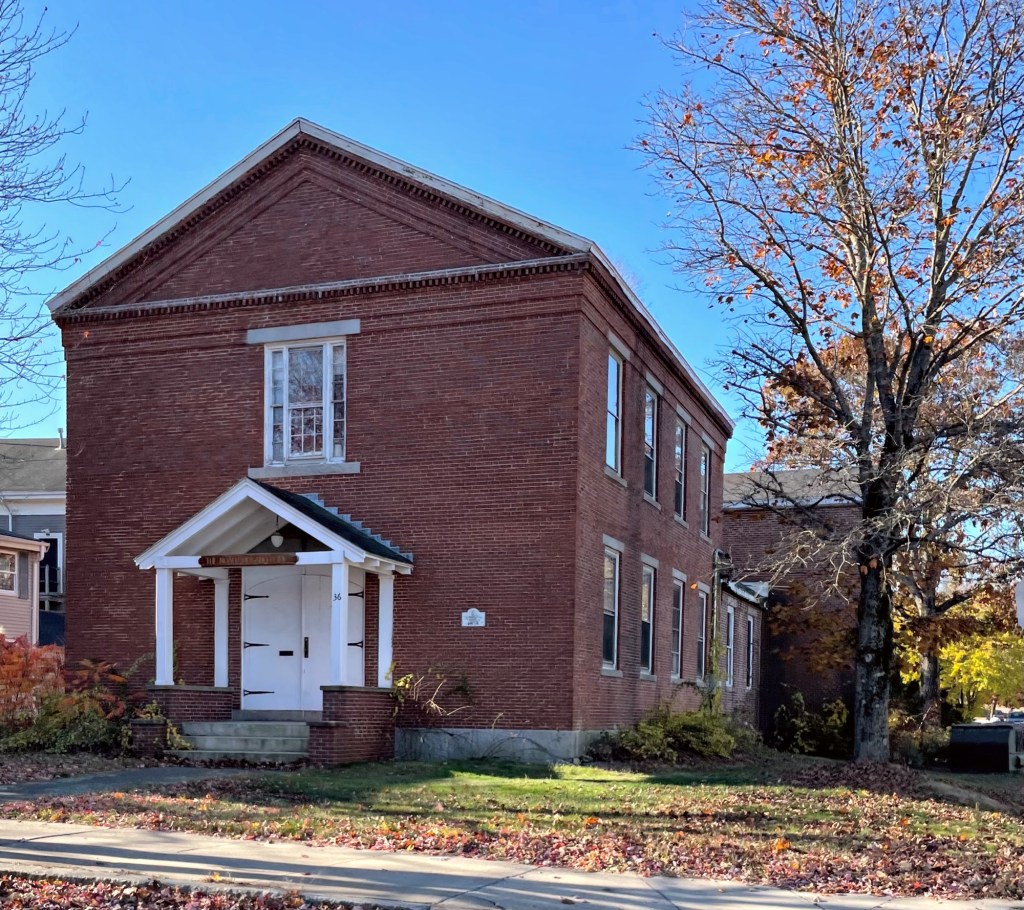
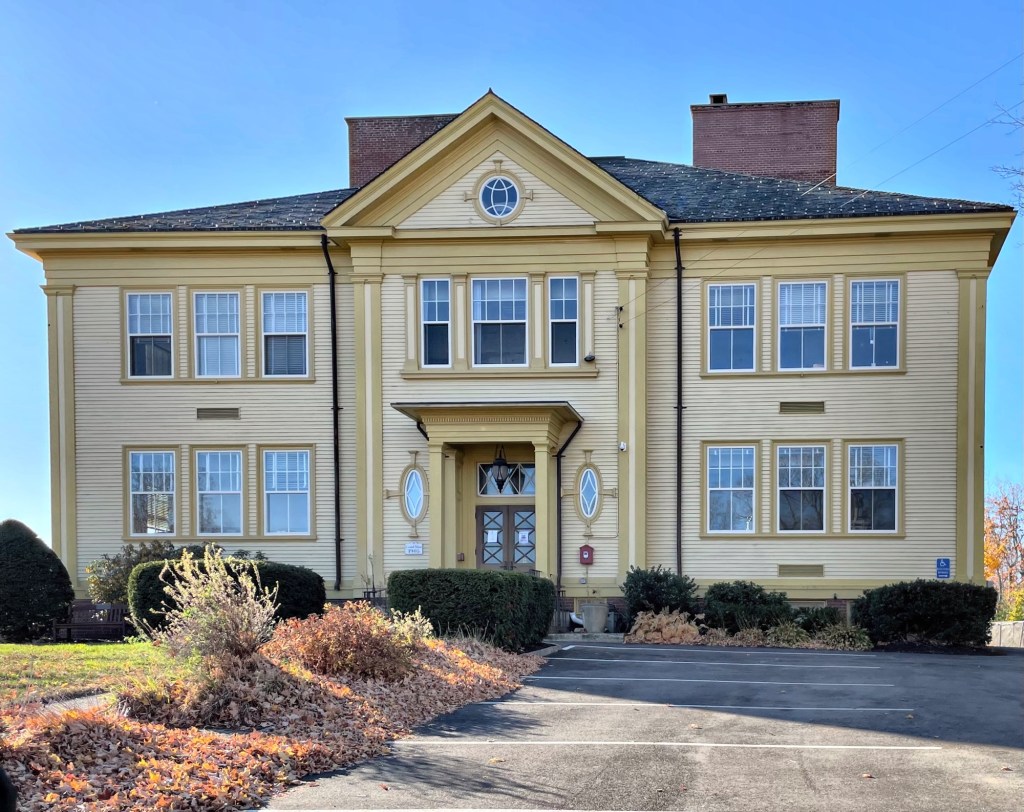
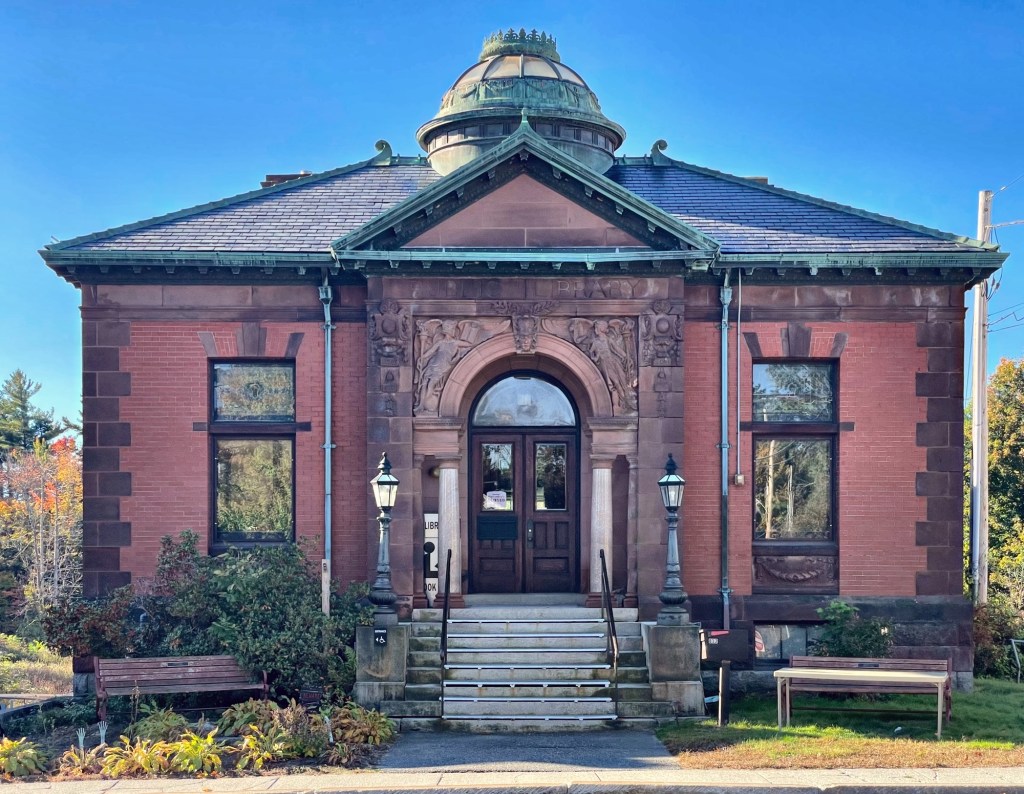
Alvord School // 1894

When the old Broadway school in Chicopee Falls became neighbors with the Overman Wheel Company, an early bicycle manufacturing company, there was so much noise and distraction that the Chicopee School Committee voted to sell the school and build a new school building down the street. A triangular lot on Broadway was purchased and Springfield architect, Francis R. Richmond, was chosen to design the new building in 1894. The school was dedicated to Dr. Samuel Alvord, a Chicopee Falls resident who was first principal of the local high school and local doctor that died in 1892. The Alvord School is a great example of a Richardsonian Romanesque school building of brick and brownstone, with recessed entry within a Syrian arch and decorative terracotta tiles. The school would close in the second half of the 20th century, and today is known as the Helen A. O’Connell Administration Building, a municipal office building.

Justin and Sarah Spaulding House // 1886

Justin Spaulding and his wife, Sarah (Cooley) Spaulding erected this house on Springfield Street in Chicopee, Massachusetts, in 1886, and would later be known for their philanthropic gifts to their home city. Justin Spaulding (1838-1906) was a wealthy grocer who amassed a small fortune operating stores in the industrial Lower Pioneer Valley. The Spaulding House is one of the finest Queen Anne style buildings in Chicopee, and is notable for its asymmetrical form, tower, ornate gable detailing, porches with original balustrade, and the chimney with inlaid terracotta tiles. Justin Spaulding died in 1906, and Sarah C. Spaulding (1840-1907) would pass away a year later. They had no children. In her will, Sarah bequeathed funds for the first purpose-built library in Chicopee and money for a memorial chapel in a local cemetery. The Spaulding House was acquired by the Academy of Our Lady of the Elms (now Elms College), moved to its present location in 1920, and was converted to the Office of Admissions for the College. Besides the need for a new coat of paint, the house is lovingly preserved!

Fisk Rubber Company Offices // c.1916

The Fisk Rubber Company was founded in Chicopee, Massachusetts, in 1898 by Noyes Wilson Fisk, who purchased the Spaulding and Pepper Company in 1895 and renamed it to the Fisk Rubber Company. The company originally produced bicycle tires and other rubber items, later branching out with automobile tires in 1899 which proved to be an impressive success. The company’s “Fisk Tires” became a household name, especially popular among early automobile owners for their durability and performance. At its peak, the company employed thousands of workers, contributing significantly to the local economy of Chicopee, as well as other branch factories in in New Bedford, Massachusetts, Jewett City, Connecticut and Pawtucket, Rhode Island. The firm grew rapidly, and an entire complex was built here in Chicopee, centered around this building, constructed around 1916 as the Administrative Offices for the company. Architect George B. Allen designed the building in the Classical Revival style. During the Great Depression, Fisk Rubber was crippled by competition and eventually was acquired by United States Rubber (later Uniroyal) in 1940. Uniroyal, Inc. closed their Chicopee plant in 1980, and the complex sat largely unused for decades, with a majority of buildings demolished in recent years. Hopefully this lovely building, instrumental to the growth of Chicopee and America as we know it, will be preserved for generations to come.

Edward Bellamy House // c.1840

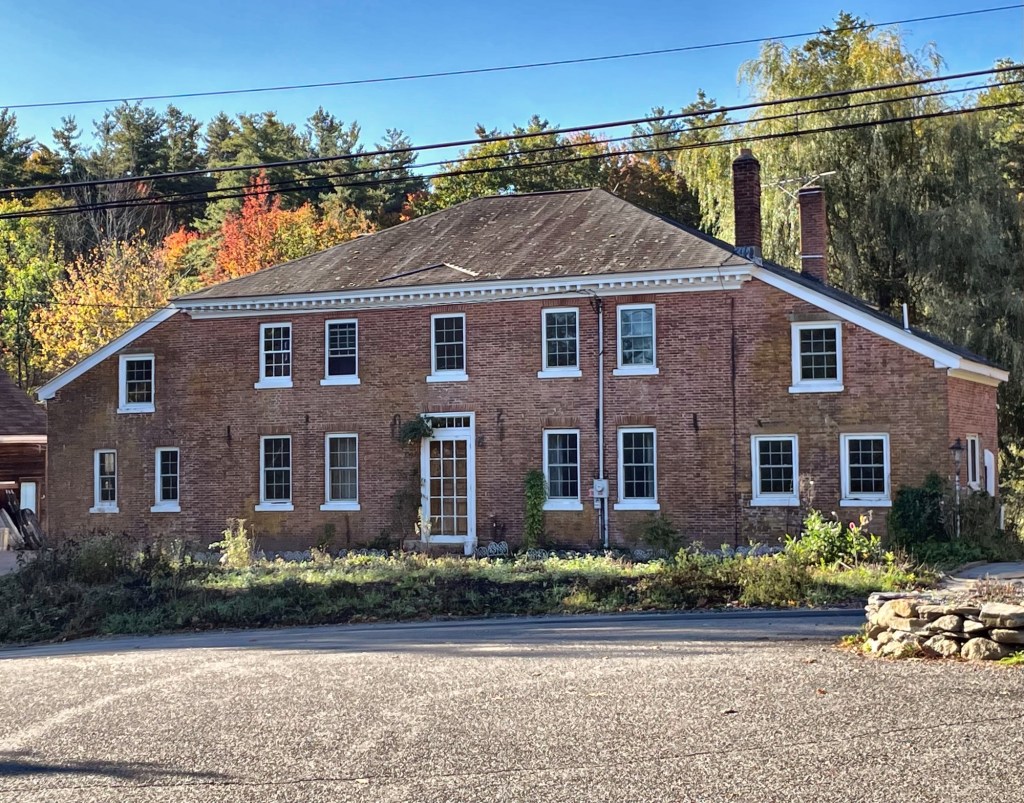
The Edward Bellamy House is the only National Historic Landmark in Chicopee, Massachusetts. Its landmark designation was in honor of journalist and Utopian writer Edward Bellamy (1850–1898), whose home it was for most of his life. The house is located on Church Street in Chicopee Falls, an industrial village in town, which developed around mills and the Chicopee River. Built in for Harmon Rowley, a town selectman and local merchant around 1840, the house would later be purchased in 1852 by Rufus King Bellamy, a Baptist minister, moved the family into this house after its construction. The house, where Edward Bellamy spent much of his childhood is a well-preserved example of a late-Greek Revival residence, and today serves as a museum with rented offices that explores Bellamy’s ideas on social reform, economic justice, and the future of society. From this house, Edward Bellamy wrote  Looking Backward, a utopian novel that was instantly popular. Within a year it had sold 200,000 copies, and by the end of the 19th century had sold more copies than any other book published in America up to that time except for Uncle Tom’s Cabin by Harriet Beecher Stowe and Ben-Hur: A Tale of the Christ by Lew Wallace. His visionary work, which proposed a world free of poverty and class divisions, sparked a nationwide movement and influenced early American socialism. Edward Bellamy died of tuberculosis at his home, ten years after the publication of his most famous book. He was 48 years old. Today, the house stands as a reminder of Bellamy’s lasting legacy and his role in shaping conversations about social progress in the late 19th and early 20th centuries.

Former Chicopee Public Library // 1911

Tucked to the side of the towering City Hall building on Market Square in Chicopee, Massachusetts, this long-vacant former public library is undergoing a major renovation to convert the building to a business incubator and community hub. The library was built in 1911 and was designed by the Springfield architectural firm of Kirkham & Parlett and is a great example of a Classical Revival style civic building with its strict symmetry, Ionic columned and pedimented entrance, and corner quoins. The original town library was organized as early as 1846 under the name “Cabot Institute” a subscription-based library. In 1853, the Cabot Institute donated its collection of nine hundred books to form a public library. The town voted that year to support a public library from tax dollars, making the Chicopee Public Library the first library funded by public funds in Western Massachusetts. The library was located in the City Hall building when it was completed in 1871, and was later moved out of the building to make space for the Board of Aldermen offices. In 1907, Mrs. Sarah Cooley Spaulding bequeathed $20,000 in her will towards a new library building as a memorial to her late husband, Justin Spaulding, and in May 1913, the Chicopee Library opened its first building built solely for the purpose of being a library. The library was expanded in the latter half of the 20th century and ultimately outgrew its space, with the City building a new library in 2004 on Front Street. This library closed at that time and had sat vacant until plans were unveiled to re-imagine this significant building as a community hub. I love to see old buildings repurposed rather than demolished!

Chicopee City Hall // 1871

Chicopee, Massachusetts, was first settled in the early 17th century and incorporated as a town in 1848. Originally part of Springfield, Chicopee grew rapidly in the 19th century, fueled by industrialization and following immigrants arriving to the city to work in factories there. Many of these ethnic groups established cultural centers and built churches, creating the diverse and architecturally unique city we see today. Sadly, like many other 19th century industrial cities, many of the factories closed or relocated in the mid-late 20th century. While the loss of industry harmed the local economy, Chicopee is poised for growth and rebirth as the second largest city in Western Massachusetts, and anchored by its great architecture. The Chicopee City Hall, built in 1871, is one of the region’s finest buildings and one of a handful built in the Romanesque Revival style. The present building was constructed on land the City purchased in 1869 from the Ames Manufacturing Company, a major employer in town with mill buildings nearby along the river. Architect, Charles E. Parker of Boston, was hired to design the new building which is said to have been loosely modelled after the Palazzo Vecchio, the historic town hall of Florence, Italy. The City of Chicopee have been great stewards to their historic City Hall, undergoing numerous restoration projects in the past decades.

Derby Summer House // 1793

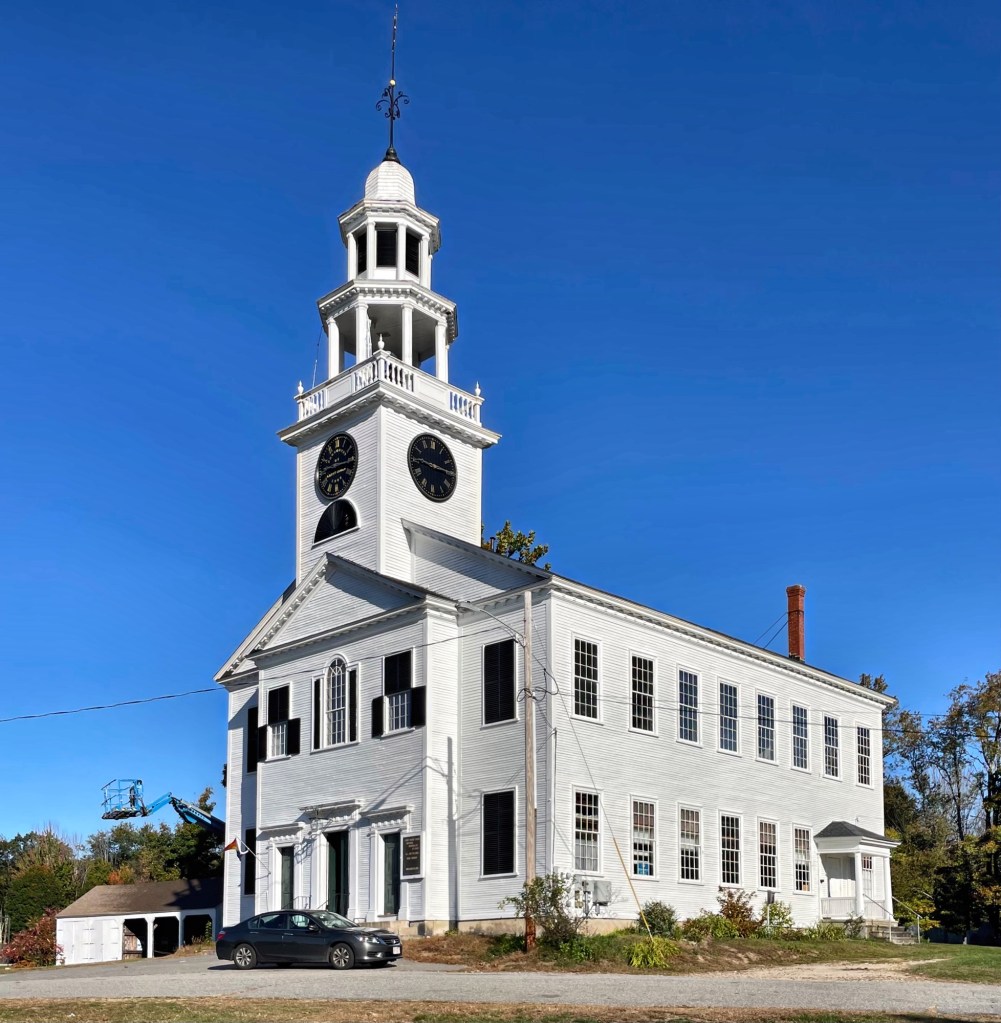
The Derby Summer House sits on the Glen Magna Farms property in Danvers, Massachusetts, and is a rare and excellent example of a formal 18th century garden house in the Federal Style. The structure was built in 1793-94 by Samuel Mclntire, the noted craftsman-carpenter of Salem, on the country farm of Elias Hasket Derby in South Danvers. The Derby Farm was sold off by the family, but in 1901, Mrs. Ellen Peabody Endicott, a descendant of the original owners, bought the Derby Summer House and transported it to Glen Magna Farm, their own summer residence. A shopping center now occupies the original location of the Derby Farm. Inside the structure on the first floor, there are two small rooms which are divided by a central hall that extends through the structure. The steps and vestibule at this level are surfaced in white marble. The second floor, where tea was served, was decorated in an Oriental manner. A wood parquet floor, dating from the first decade of this century is still in place. The structure with its carved figures has been studied and replicated by architects and historians for decades, but nothing beats the original.


Glen Magna Farms // c.1790

Glen Magna Farms is a historic estate located in Danvers, Massachusetts, and it is one of the lesser-known historic properties of this stature. During the War of 1812, Joseph Peabody, the wealthiest Salem shipping merchant of his day, bought a 20-acre Danvers farm with a dwelling house. The c.1790 house was likely updated at this time in a higher example of the Federal style, and used as a summer residence the family would escape to during the warmer months. Peabody purchased additional property and Glen Magna grew to over 130-acres. William Crowninshield Endicott, who served as Secretary of War during the Grover Cleveland administration, married Ellen Peabody, granddaughter of Joseph Peabody in 1859. The couple would inherit Glen Magna and later hire the firm of Little, Browne, and Moore in the 1890s to renovate the mansion and update the gardens. Ellen Peabody Endicott would also have the Derby Summer House added to the grounds by 1901. In 1963, the Danvers Historical Society purchased the house and eleven acres of surrounding gardens which they painstakingly restored to their early 20th century condition. Glen Magna can now be rented out for weddings and other events!

Joshua Silvester House // 1857

This large house sits on Peabody Avenue in Danvers, Massachusetts, and is thought to be the oldest house built of cement in the United States! Joshua Sylvester Silvester (1803-1888), the house’s original owner, was born in Wiscasset, Maine, and began working in the shoemaking business, expanding his products in England, taking many business trips there. While in England, he is said to have particularly admired Charles Dickens’s estate, Gad’s Hill, and modeled his Danvers home after it. Joshua Silvester not only designed this house, but directly supervised its construction which is of hand-poured cement/stucco by two masons imported to town to work on the house. The fifteen-room residence with octagon-shaped barn was complete by 1858. In 1880, the property was purchased by Isaac B. Howe of Clinton, Iowa. Howe was a civil engineer who had helped to lay out the Transcontinental Railroad and had been superintendent of the Iowa division of the Chicago and Northwestern Railroad. Howe died within a year of moving to Danvers,
but his family continued to live in the house for many years.


Peabody Institute Library of Danvers // 1892

In 1856, George Peabody, an American banker and philanthropist, donated funds for a library for Danvers, Massachusetts. The original library was housed in the Town Hall until land was acquired on land that is today known as Peabody Park. In 1866, Peabody deeded the town additional funds for a purpose-built library building, similar to that of Peabody, Massachusetts (which separated from Danvers in 1855). A Gothic style library was built on this site from plans by architect Gridley J. F. Bryant with the purpose “for the promotion of knowledge and morality in the Town of Danvers.” On July 2, 1890, a massive fire destroyed the Danvers library, but many of the collections and volumes were saved by townspeople. Through insurance funds and additional money by trustees, it was decided to rebuild the library on the same site, retaining the architectural firm of Little & Browne, (whose chief draftsman, Lester S. Couch, was a Danvers resident) to design the new building. The present Georgian/Classical Revival structure was completed in 1892 and is one of the finest library buildings in New England.