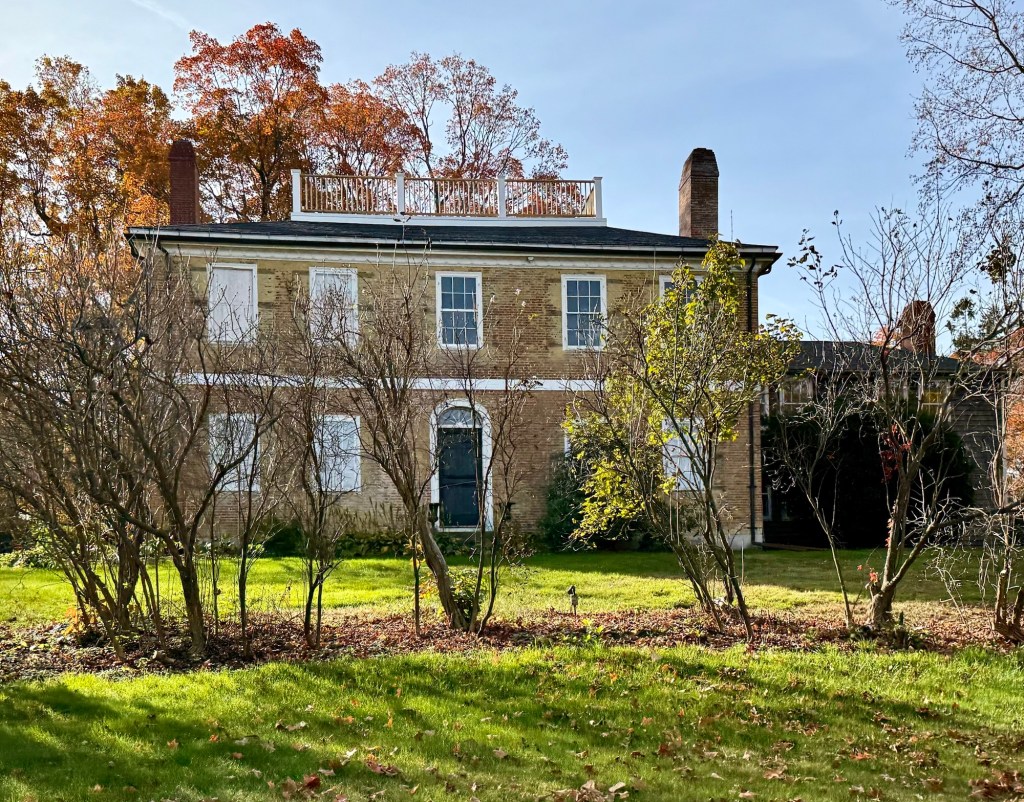
Captain Caleb Moore House // c.1795

This stately Federal style residence constructed of brick sits atop a lovely hill in the town of Bolton, Massachusetts, and has been lovingly maintained by its owners for over 225 years. The home was built by Caleb Moore (1768-1826) just before his marriage to Achsah Whitney in 1796. Caleb was a merchant and later a shareholder and president of the Lancaster & Bolton Turnpike Corporation, chartered in 1805, to collect tolls for travellers from or to Boston from central Massachusetts. Caleb and Achsah had eight children, sadly, five of their children died as teenagers or young adults. The farmhouse was inherited by Alpheus Moore (1802-1882), who operated his late-father’s store and held a liquor license, possibly running the home as a tavern along the turnpike.

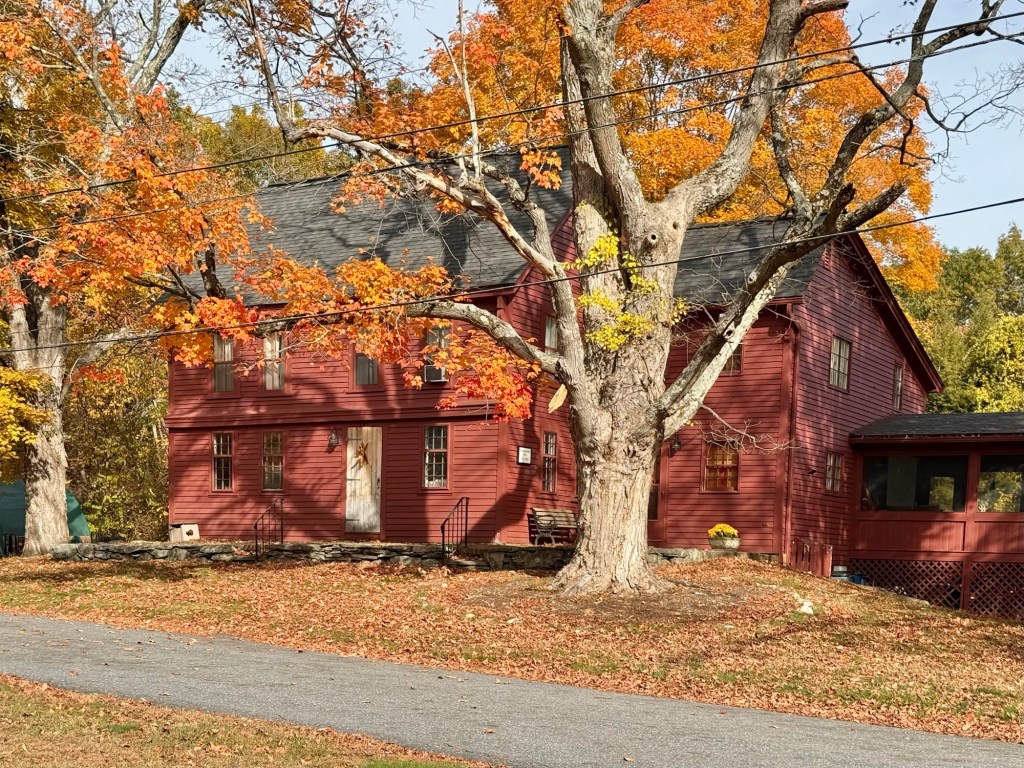
Coolidge-Burnham House // 1822

This charming old home on Burnham Road in Bolton, Massachusetts, was built in 1822, but as a one-story three-quarter cape house with the additional story added later in the 19th century. The residence was built for William Coolidge, a Revolutionary War veteran. After successive ownership, the property was sold in 1855 to Reuben Burnham, a carpenter, who soon after added the second floor onto his new home, keeping the original cornice which now serves as a visual reminder of the home’s changes. Sadly, around 100 years later, the highway cut through the town, bisecting this property, which now abuts the busy road, but owners have maintained and preserved this stunning property which is evocative of the early days of Bolton.

Wilder Mansion // c.1738

The Wilder Mansion at 101 Wilder Road in Bolton, Massachusetts, was built in about 1738 as an early Georgian farmhouse by Josiah Richardson, a Revolutionary War veteran who died in the home in 1799. By 1814, Sampson Vryling Stoddard Wilder purchased the property and “modernized” the old farmhouse which due to its location along the Bay Path, a major east-west route from Lancaster to Boston, operated it as an inn and tavern. Mr. Wilder expanded the property, purchasing additional nearby farmland to create a country seat worthy of a wealthy agent for some of the most influential merchants in the shipping trade in Boston. During his tour of the United States in 1824, Marquis de Lafayette spent the night here on September 2nd between visits to Boston and Lancaster. Sampson V. S. Wilder lost the property following economic crises, and the property changed hands many times until the early 20th century. Stockbroker John L . Saltonstall (1878-1929), first cousin to Massachusetts Governor Leverett Saltonstall, hired Boston architects Bigelow & Wadsworth in 1910, to return the house to a more Colonial appearance. He and his family were apparently only summer residents here, and he was probably absent for a long period during the First World War, when he worked with the Navy and the War Trade Board in Washington, D.C. In about 1915, he sold the property, and in the early 1920’s he relocated to Topsfield, Mass. After WWI, the house had a series of short-term owners, one of which was Henry Forbes Bigelow, who designed the renovation of the house just years prior. Bigelow would later relocate to a new summer house nearby in Lancaster.

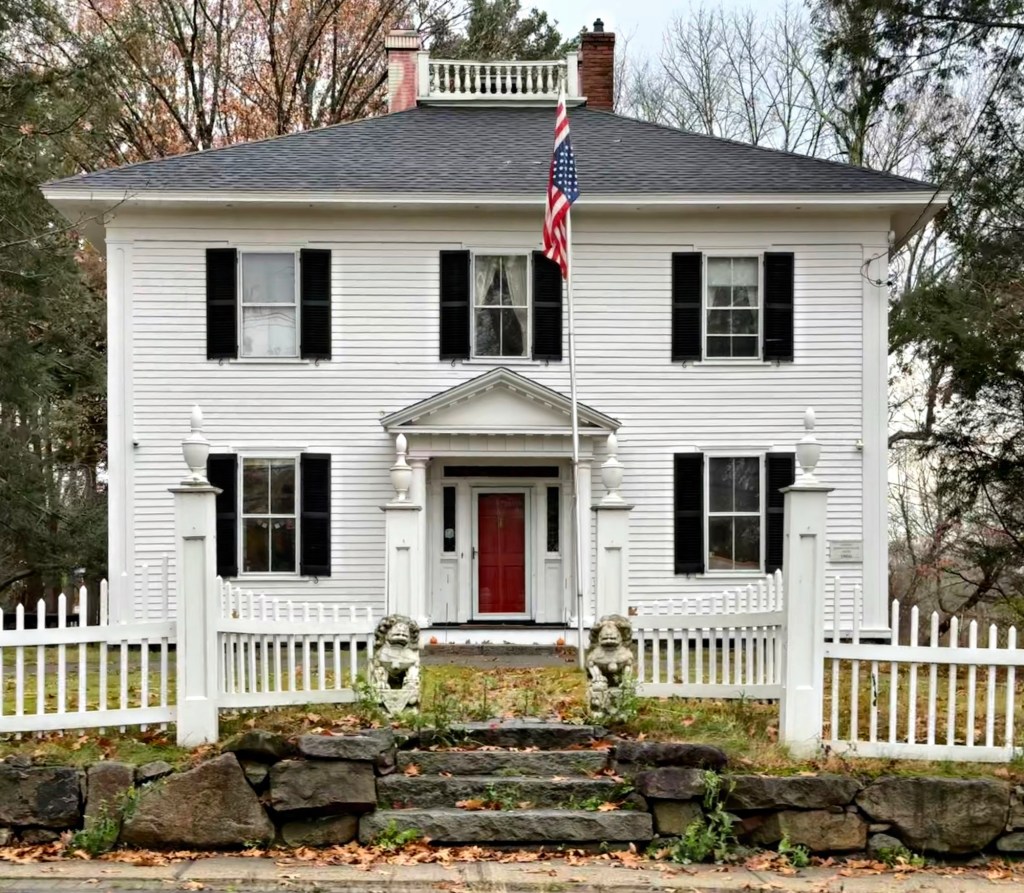
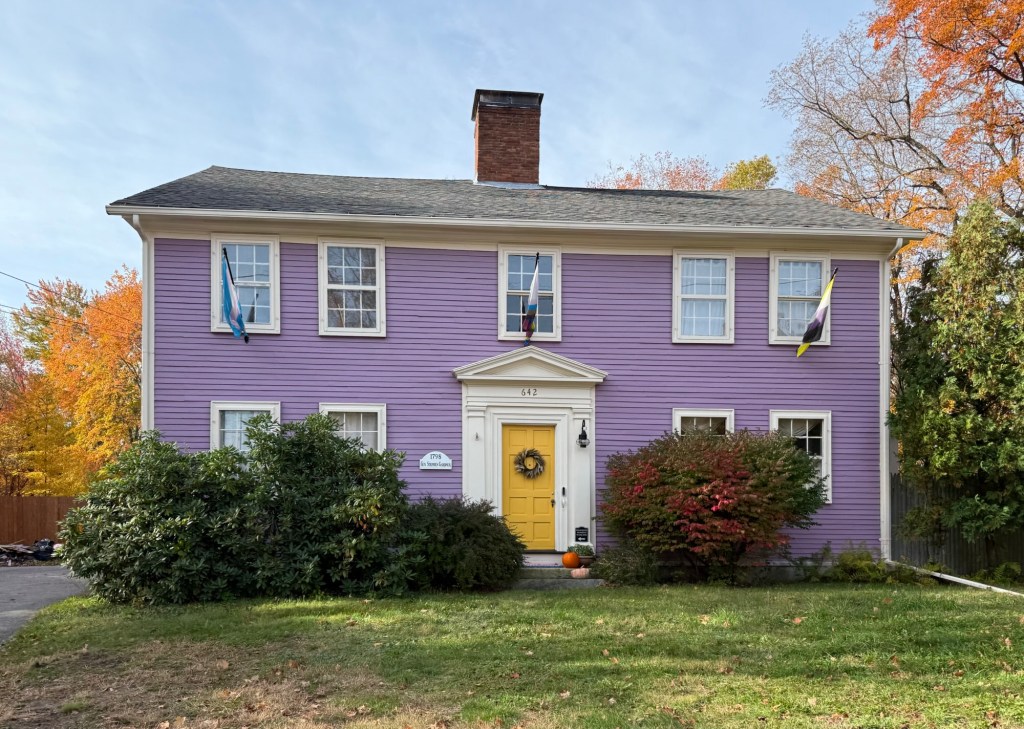
Gen. Stephen P. Gardner House // 1798

The Stephen P. Gardner House on Main Street in Bolton Center, Massachusetts, is a stunning late-Georgian style residence evocative of rural housing built in the decades following the American Revolution. The home was built by 1798 for Stephen Partridge Gardner (1766-1841) upon the occasion of his marriage to Achsah Moore. Stephen Gardner was born in Sherborn but settled in Bolton where he quickly became one of Bolton’s most important residents. He served as Town Clerk for twenty years from 1797 to 1816, as Town Treasurer from 1810 to 1820, and was also an Assessor and a Selectman for many years. Stephen Gardner was chosen to help write the petition from Bolton against the Embargo Act prior to the War of 1812, and rose to the rank of Brigadier General in the Massachusetts militia. In 1873, the house was purchased by the First Parish Church and used as the minister’s residence for about fifty years before being sold to private owners. The now purple house is well-preserved and maintains its traditional pedimented doorway and central chimney.

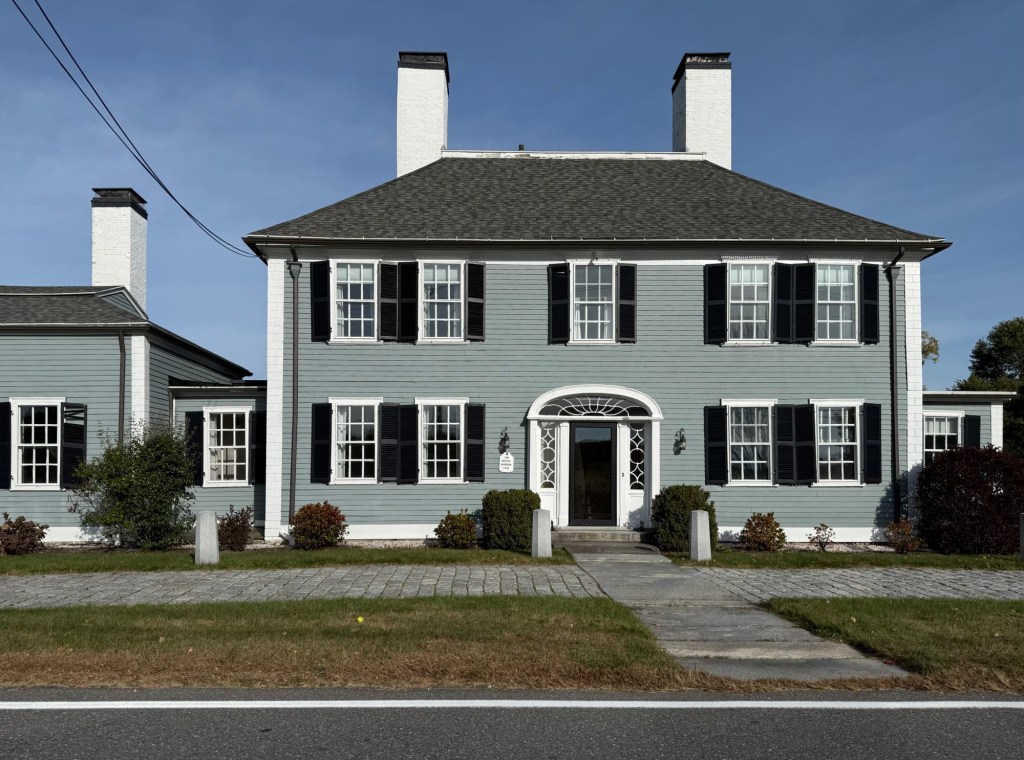
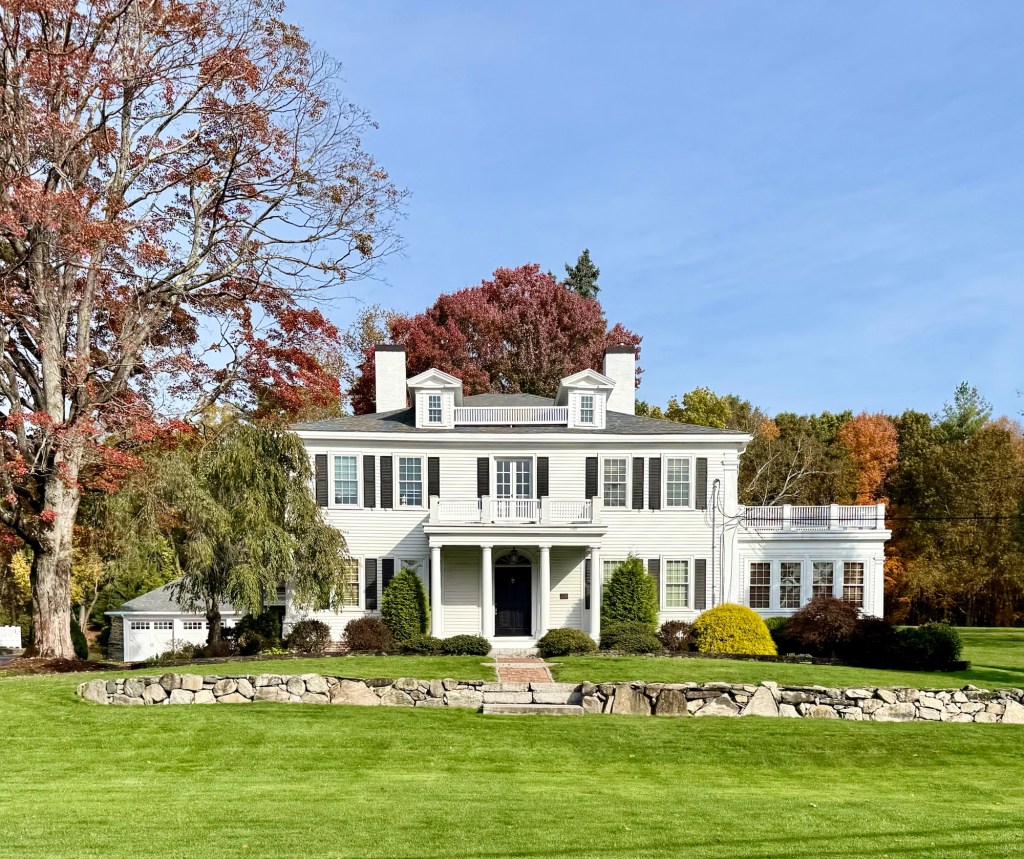
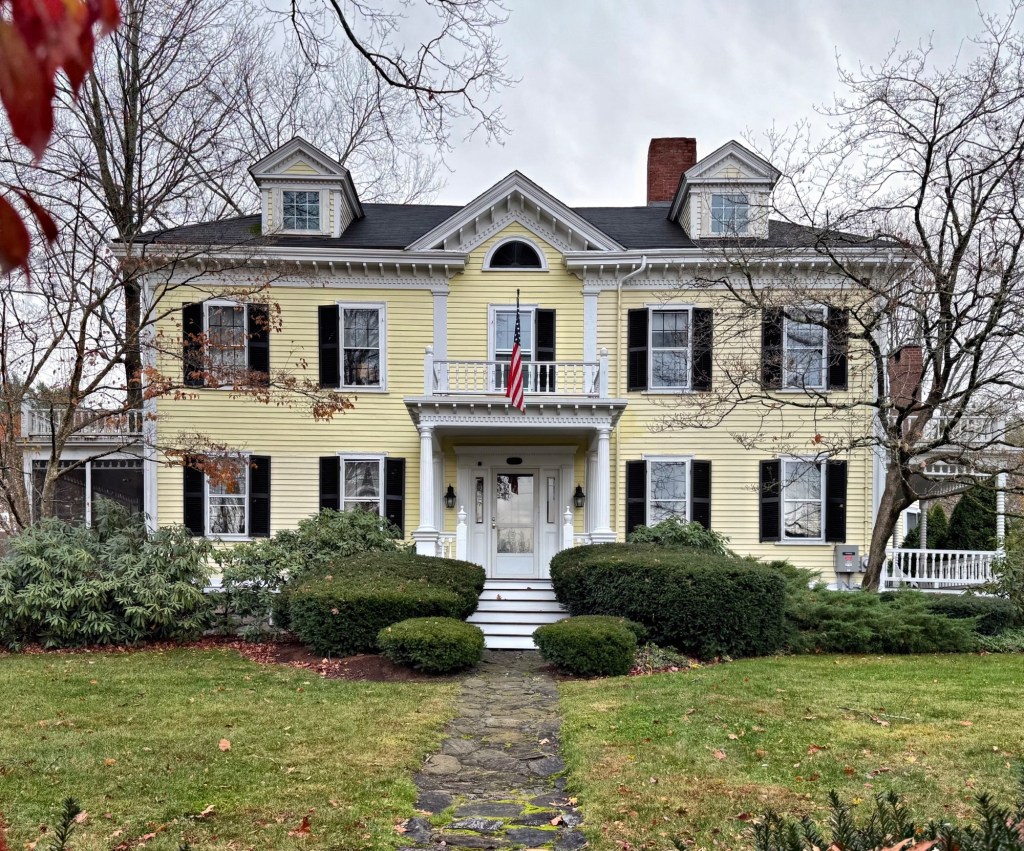
Captain Samuel Blood House // c.1793

This grand federal-period house was built around 1793 by Capt. Samuel Blood (1749-1834), who had served in the American Revolution. He came to Bolton from Lancaster by 1788, and purchased a farm here, where he began working as a hat manufacturer, building a large shop where he made beaver and silk hats. The land As his business grew, his original house was demolished to make way for this more stately, Federal-period home which dates to around 1793. Samuel Blood and his wife, Lucretia (Heywood) had twelve children. Their eldest son, Thomas (1774-1848) became a doctor and settled in Peterborough, New Hampshire, but returned to Bolton to take charge of the factory as his father got older. The family sold the home and the property, then about 120-acres, operated as a farm by subsequent owners. In 1916, the property was sold to Howard Atwood, who had been a successful Boston wool merchant, and he raised pedigreed cattle, thoroughbred horses, and sheep on this property, possibly as a gentleman’s farm. He and his wife, Rose, built a large new barn near the main house where they held many parties and barn dances over the years. The couple also renovated the old house, adding the dormers, porticos and side additions, creating the current composition we see today. The property has been owned by a corporation and appears to be offices today.


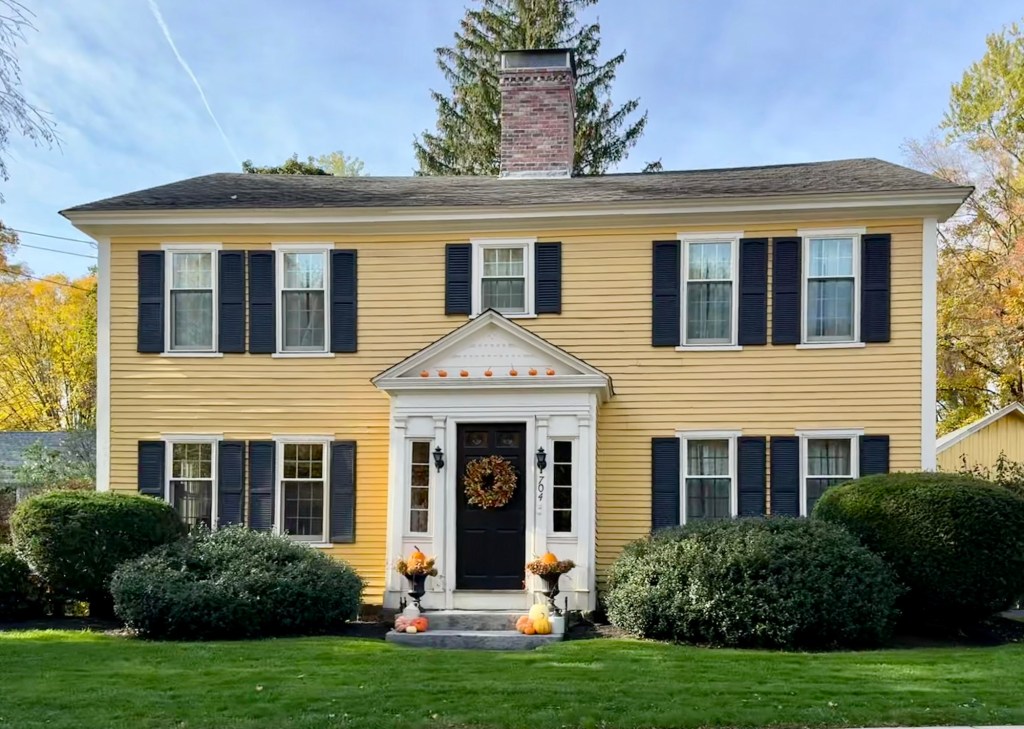
Dr. Amos Parker House // 1801

Built in 1800-1801, this house on Main Street in Bolton, Massachusetts, had multiple owners in quick succession until 1806, when it was purchased by Dr. Amos Parker. Amos Parker (1777-1861) was born in Hubbardston and later moved to Bolton to work as the town’s doctor, and also served as Bolton’s first Postmaster, from an ell that was once attached to this residence. Dr. Parker and his wife, Elizabeth (Whitney,) had at least four children, who of which died as infants and two daughters remained unmarried. Elizabeth Lydia Parker (1809-1882) and Louisa Jane Parker (1812-1900) inherited their parent’s home and lived here until their deaths. Louisa worked as a teacher in Bolton schools, and was forced to remain unmarried to keep her teaching position by law. In 1904, the Parker home was acquired by the local Baptist church and occupied as a parsonage and was later sold to private owners who restored the home to its near-original condition.

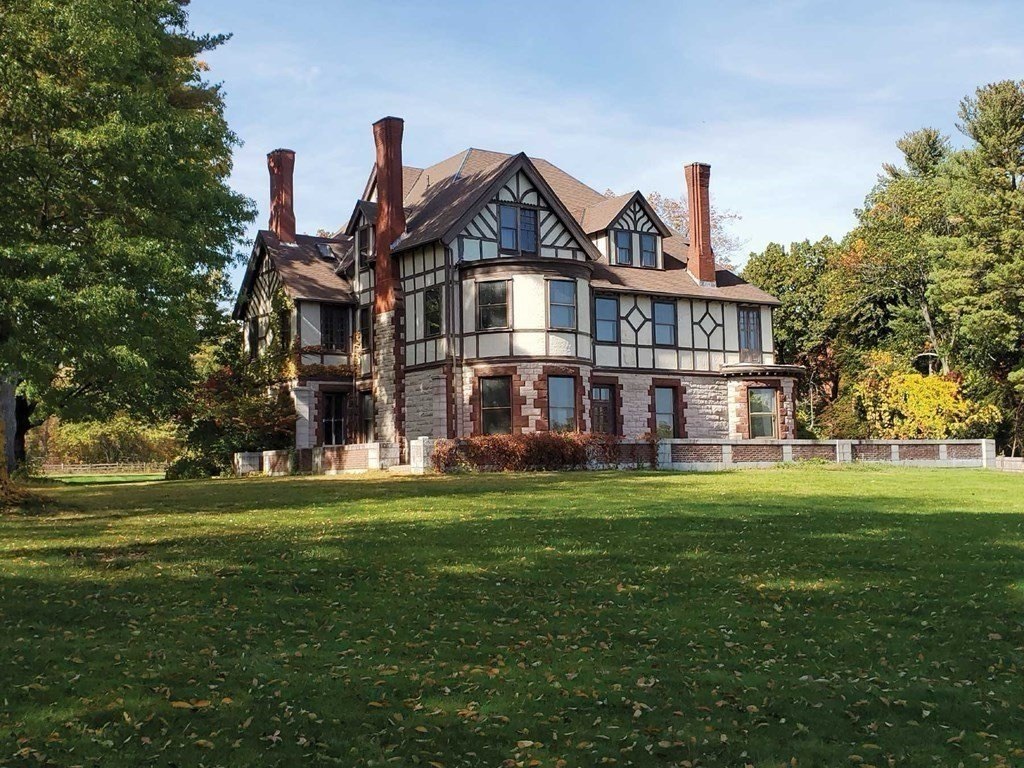
John E. Thayer Mansion // 1883

Photo from real estate listing.

A lesser-known residence built for a member of the wealthy Thayer Family is this stately Queen Anne mansion tucked away in South Lancaster, Massachusetts. The John E. Thayer Mansion was built in the 1880s for its namesake, John Eliot Thayer (1862-1933), who graduated from Harvard College in 1885 and engaged in business before becoming one of the world’s most prominent ornithologists. John began collecting and housed his collections in several wooden buildings close to his home in Lancaster, but when these became unsafe and crowded he built a beautiful brick building in 1903 nearby, opening it to the public as a museum a year later. John Thayer hired esteemed Boston architect, John Hubbard Sturgis, who was then working with his nephew, Richard Clipston Sturgis, to design the English Queen Anne style country mansion. The residence features a stone first floor with wood-frame above that is given half-timbering treatment, suggesting the English design. John Thayer’s country mansion was a short walk away from his twin brother, Bayard Thayer’s mansion, and his other brother, Eugene’s country house, both in Lancaster. The house remained in the Thayer family until the 1960s, and was recently sold to new owners. The interiors are some of the best preserved for a country estate I have seen and worthy of the Thayer name. 

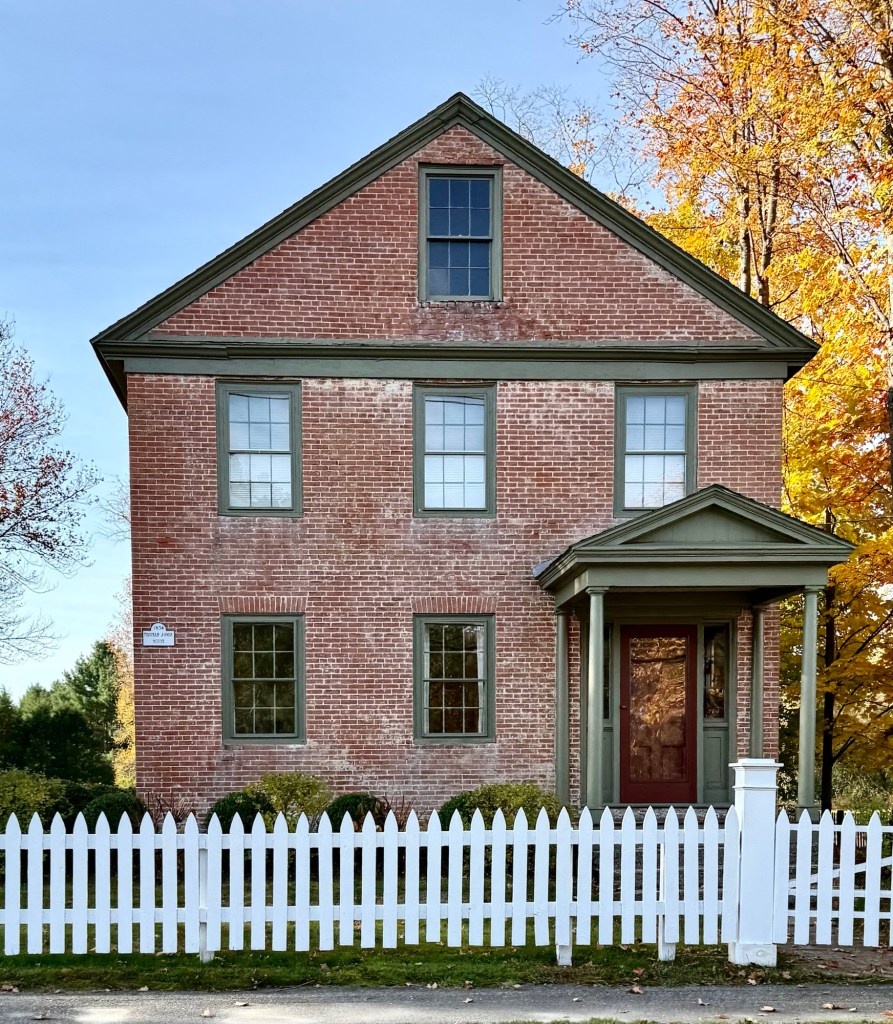
Thomas Jones House // 1834

Thomas Jones of Lancaster married Mary Tweed of Lunenburg, Massachusetts, in June 1834 and immediately began building this house on Main Street in Lancaster for his new family. The Greek Revival style house is a refined example of brick with six-over-six sash double-hung windows and a Classical entry portico supported by Doric columns. The house was later owned by Sewell T. Rugg (1821-1892), a blacksmith who had a shop nearby.

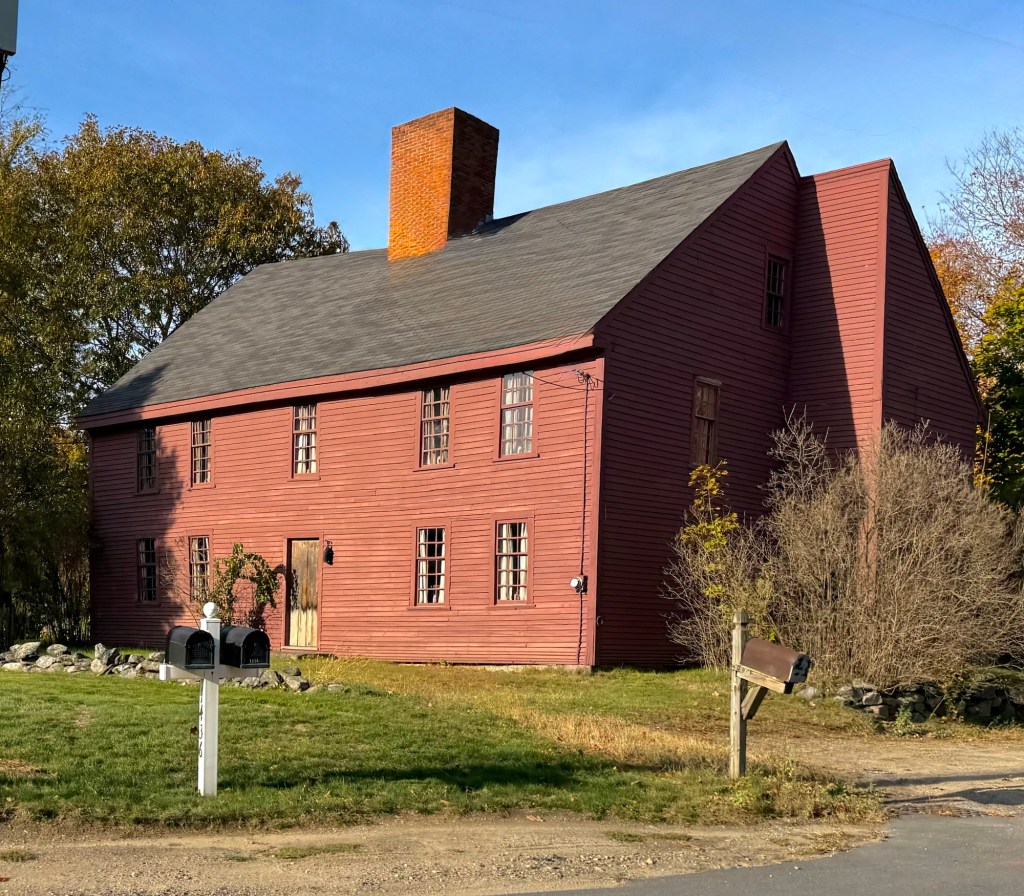
John Bennett House // 1717

The oldest residence in the North Village of Lancaster, Massachusetts, the John Bennett House dates to 1717 and evokes the old Colonial days of New England towns. John Bennett settled in Lancaster and built this large First Period house for his family and operated it as a tavern to weary travellers passing through town along the main turnpike. After Bennett’s death, local legend identifies that the property was a stopping place on the Underground Railroad for runaway slaves escaping to Canada. This, however, has never been substantiated. From 1872 to 1874, the house was occupied by the first Adventist missionary, John Nevins Andrews, co-founder of the Seventh-day Adventist Church. The house is well-preserved and remains as one of the oldest in Lancaster and an important landmark of the early days of the community.

Sprague-Waldo House // c.1771

Just outside of the village center of Lancaster, Massachusetts, this Georgian style house stands out as one of the town’s finest Colonial residences. The residence was built for John Sprague (1740-1800), who settled in Lancaster and was one of only three lawyers in the county following the departure of his Tory colleagues during the Revolution. Sprague represented Lancaster in the General Court beginning in 1782 and occasionally sat in the Senate. He was first appointed judge in 1784 and in 1798 became chief justice of the Court of Common Pleas for Worcester County. He was active in Shays’ Rebellion, and later, along with John Hancock and Samuel Adams, was one of the antifederalists who converted and helped ratify the U.S. Constitution. Sprague moved to a new house in 1785, and sold this property to Daniel Waldo (1724-1808), a wealthy Boston merchant who started America’s longest-running hardware store, in Worcester (Elwood Adams). Waldo was a great-great-grandson of Anne Hutchinson, America’s first major female religious leader/dissenter. The house has had many other notable owners, all of whom have preserved this stunning five-bay colonial house for nearly 250 years.