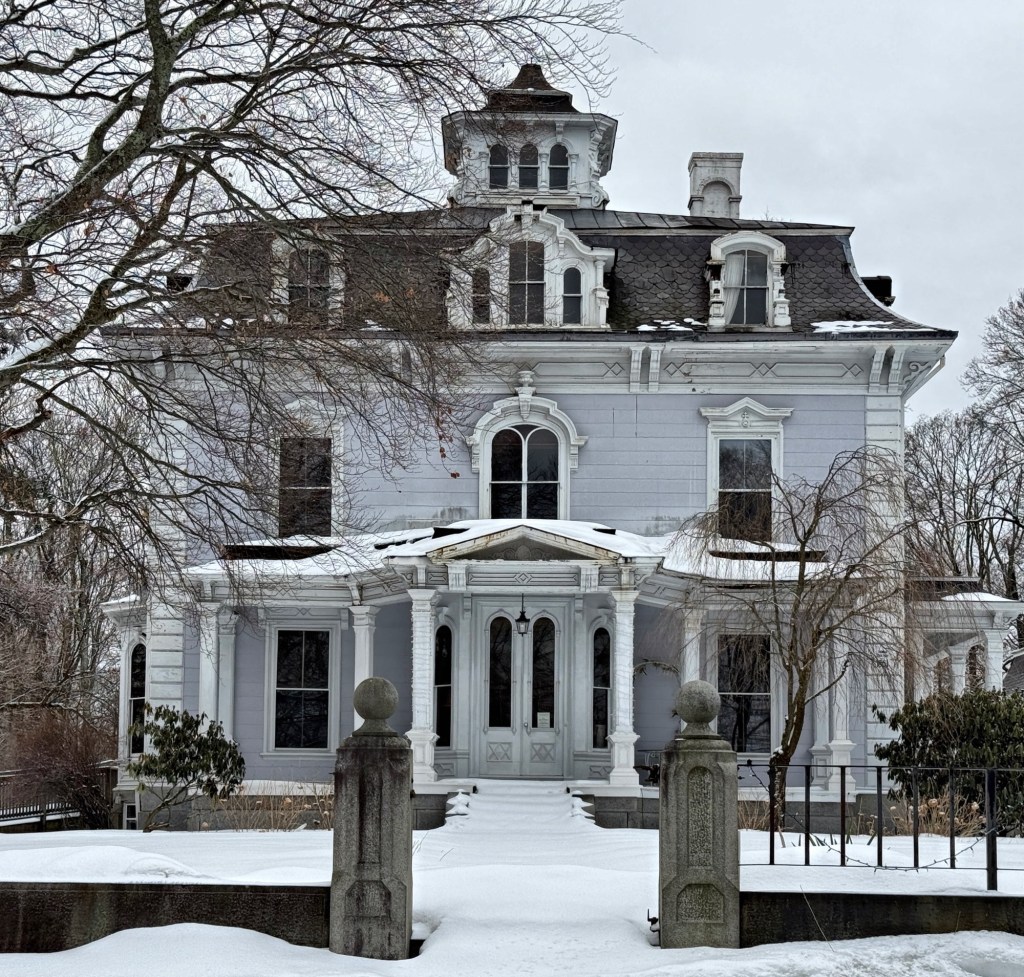
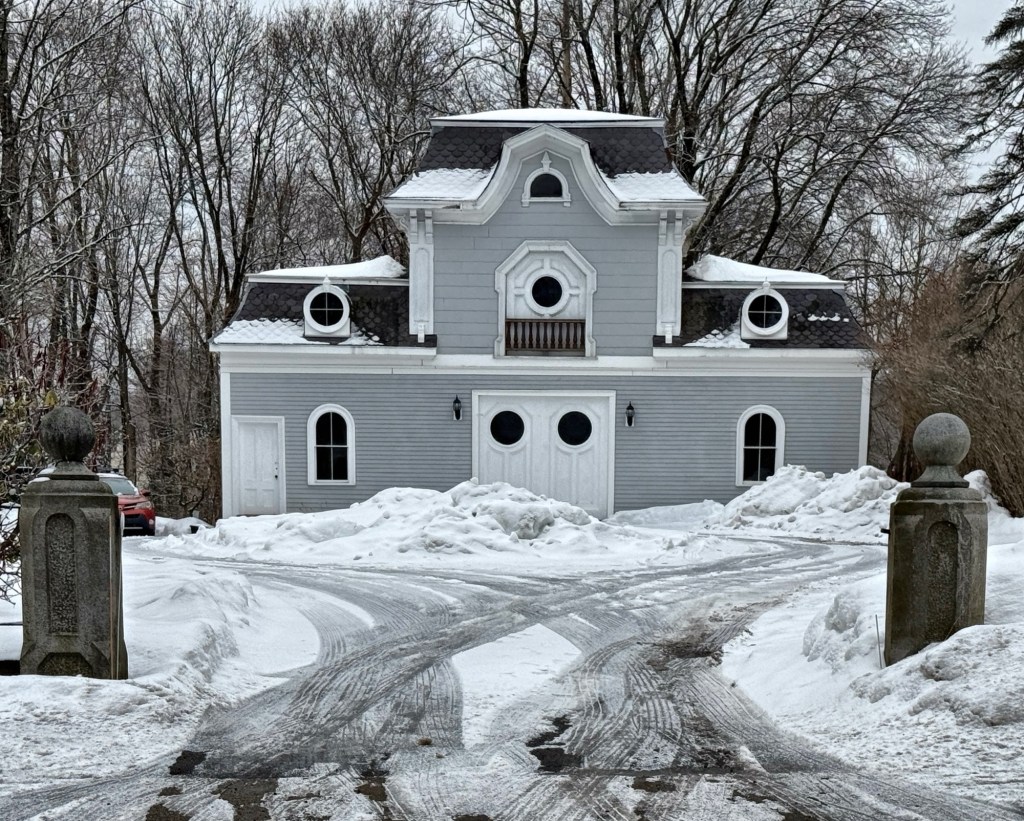
The Proctor-Brown Mansion in Wrentham, Massachusetts, is a striking example of Second Empire style of architecture and even retains its historic carriage house of the same period and style. The mansion was built in 1861 by Thomas Proctor, a wealthy businessman and industrialist from Providence who earned his fortune by inventing a gimbel point for screws with his company, The American Screw Company. He and his wife, Wrentham native Zeolyde Antoynette Hawes Braman, lived in the home until their deaths in the 1880s. The Proctor Mansion was later owned by Daniel Brown, owner of Wrentham Straw Works, and passed down through his descendants until 1991, when the building became the Proctor Mansion Inn, named after its first owners.
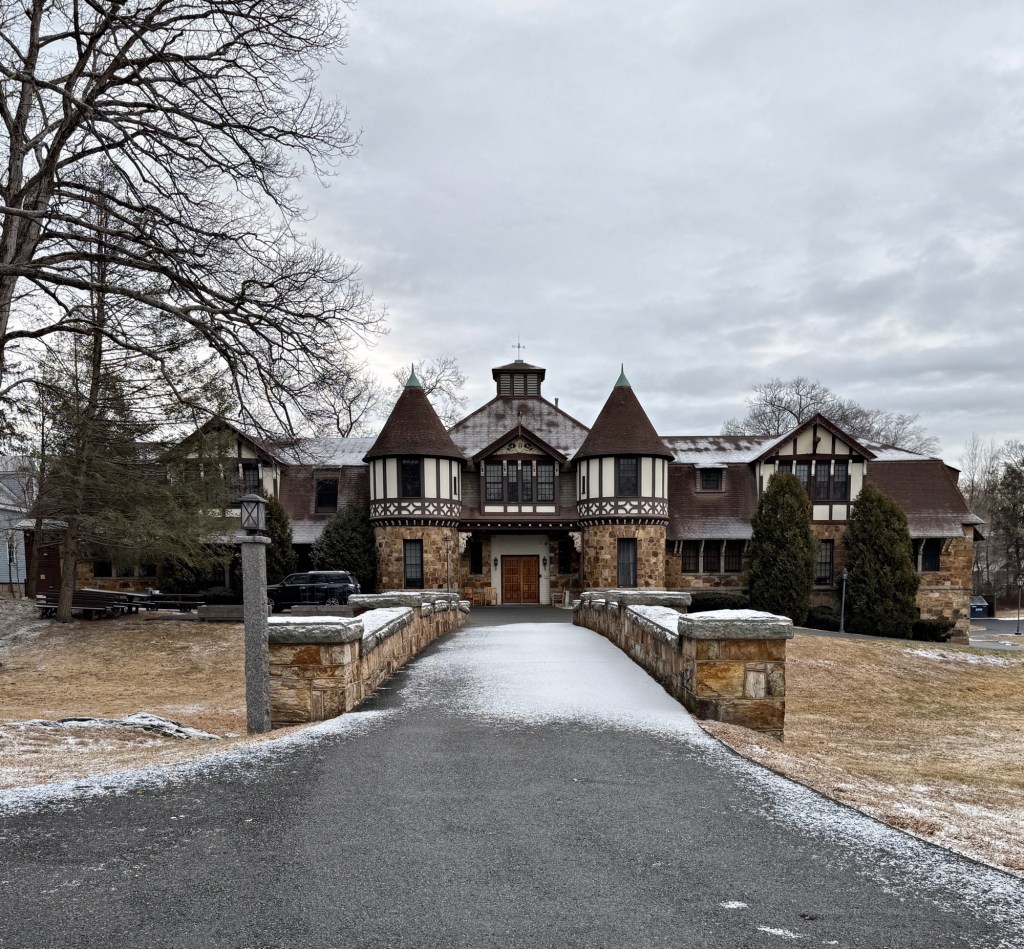
Located next to his Tudor Revival style mansion, Eben Sumner Draper’s stable on Adin Street in Hopedale, Massachusetts, is one of the finest examples of the type in New England. It is possibly that the stable was built before the mansion was built in 1926 for Eben Sumner Draper Jr. (1893-1959), the son of Massachusetts Governor and Draper Corporation executive, Eben Sumner Draper. Little is known about this building, which stands at the end of a drive and is accessed over an arched bridgeway. The building has its first floor in stone with half timbering above. Two rounded towers with conical roofs frame the center entry, which may have been used for horses and carriage, or for personal automobiles, of which, Mr. Draper would surely have one of the first in the state. The building has been owned by the Ledges LLC, who operated a community for developmentally disabled adults.
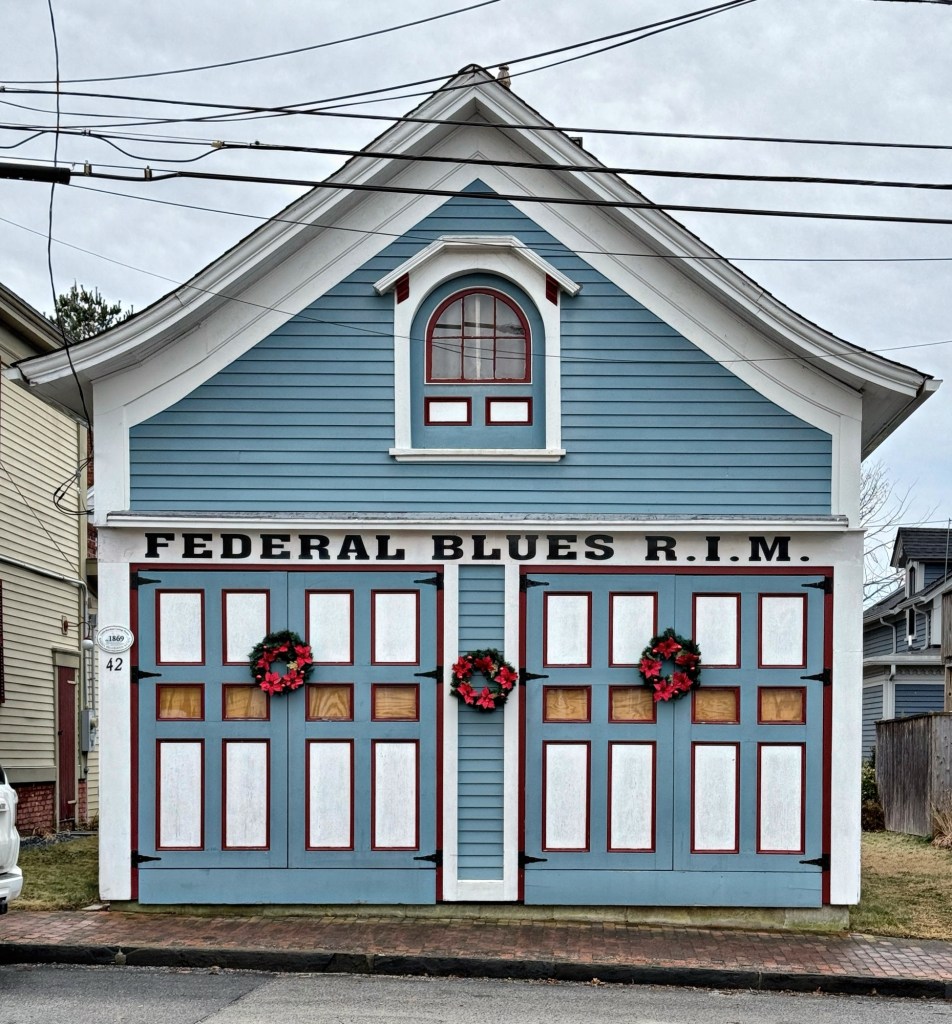
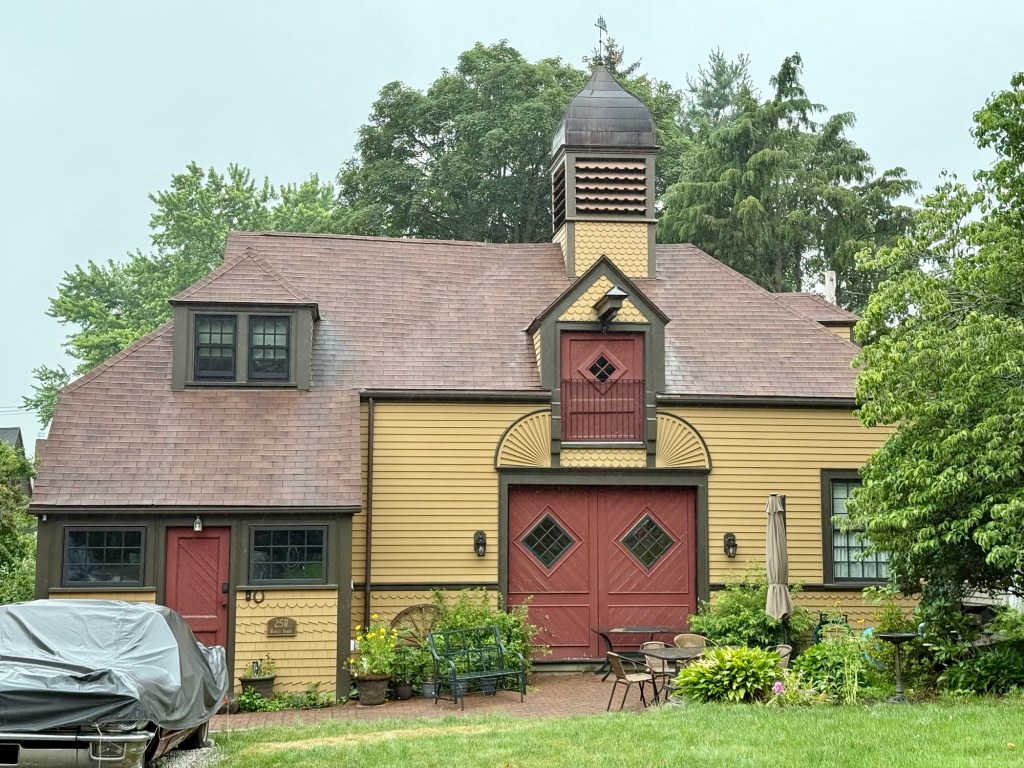
The Warren Federal Blues is an active independent military organization of the Rhode Island militia that was founded in 1798 and today, serves primarily as a ceremonial honor guard and as historic educational organization in Warren, Rhode Island. Members originally served as marines to police navy seamen on the USS General Greene (1799), which was commanded by Christopher Raymond Perry, the father of Oliver Hazard Perry, who also served aboard the ship. The Warren Federal Blues still remain part of the Rhode Island militia but serve in a largely ceremonial and educational role using period muskets and cannon for special events. The organization purchased the historic barn of the Baker-Merchant House on Main Street in about 1990, saving it from demolition for expansion of church parking, and moved the former barn to this site, adjacent to the old Narragansett Engine House, creating a unique composition of diminutive, but spectacular buildings. The former barn, which dates to around 1860, though is likely older, features paired double-leaf doors on the facade, round-arch window in the attic, and a flared roof with cupola centered on the ridge.
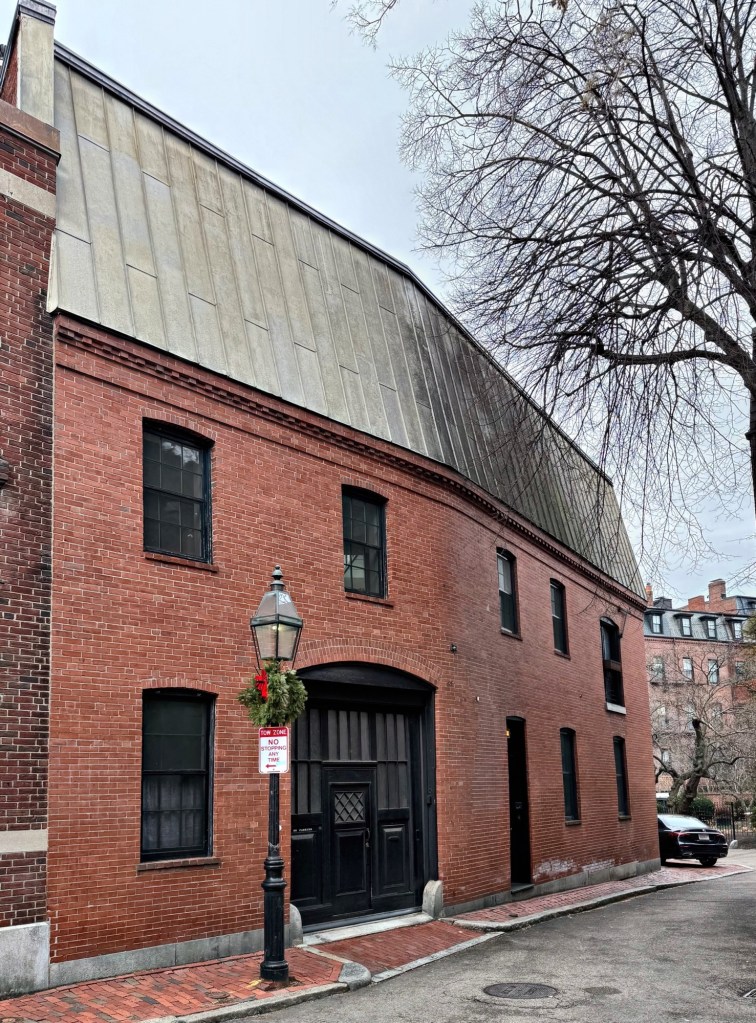
Located behind the iconic former fire station on Mt. Vernon Street in Boston, this converted stable maintains the important nickname for the Beacon Hill Flat as the “horsey” part of the neighborhood, which developed on filled land and contained many stables for wealthy Beacon Hill residents. This two-story stable fronts River Street and dates to 1870 and was built along with the townhouses fronting the hidden Mount Vernon Square for Grenville Temple Winthrop Braman (1832-1902), who partnered with a builder, Daniel Davies, to develop the lots here. The stable, which originally had a flat roof, was occupied as private stables and later as storage for the townhouses for nearly 100 years until it was purchased in 1968 and converted into residences by architects and partners, Joan E. and Marvin Goody, who established Goody/Clancy, a Boston architectural and design firm. The interior was modernized and the addition of a contemporary metal “mansard” roof fits well within the context of the neighborhood and was an important early “remodel” in the Beacon Hill Historic District.
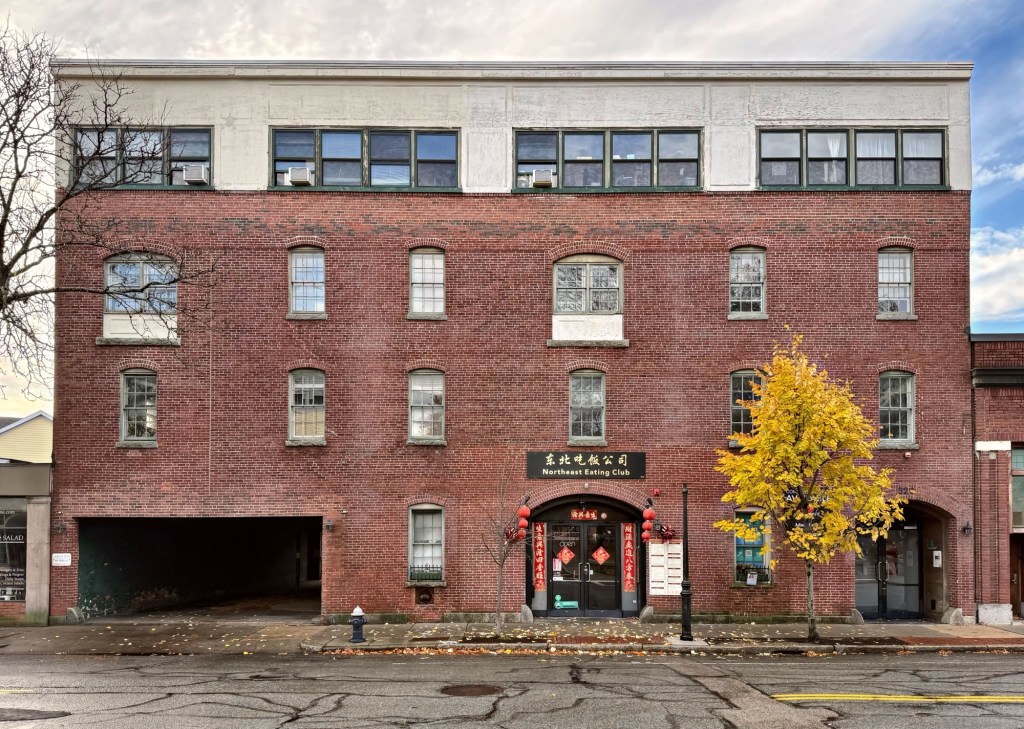
This somewhat unassuming brick building at 316-320 Washington Street in Brookline Village, which now houses offices and a Chinese barbecue restaurant, was for many years the home of a livery stable. Livery stables were facilities where horse owners would pay a weekly or monthly fee to keep their horses and sometimes carriages, with 24/7 staff who take care of and feed the horses. Liveries were essentially the 19th century equivalent of parking garages today, just with more hay and manure. This building was long-owned by Monroe Goodspeed (1842-1921) who originally found work with an express company, delivering packages by horse-drawn wagon. By 1874 Goodspeed was operating this stable, first in partnership with Grafton Stone, and later as sole proprietor. The building was originally a two-story wooden structure but was expanded by the 1880s and built of brick, to fireproof the building. Munroe Goodspeed was succeeded in the business by his son Carl, and remained in operation until the early 1930s. After this, the vehicular door was cut into the first floor for garage use and the upper floor was boxed off from the original gabled design. Two of the original wagon entrances remain on the facade and are now the entrances to the restaurant and to offices in the upper floors.
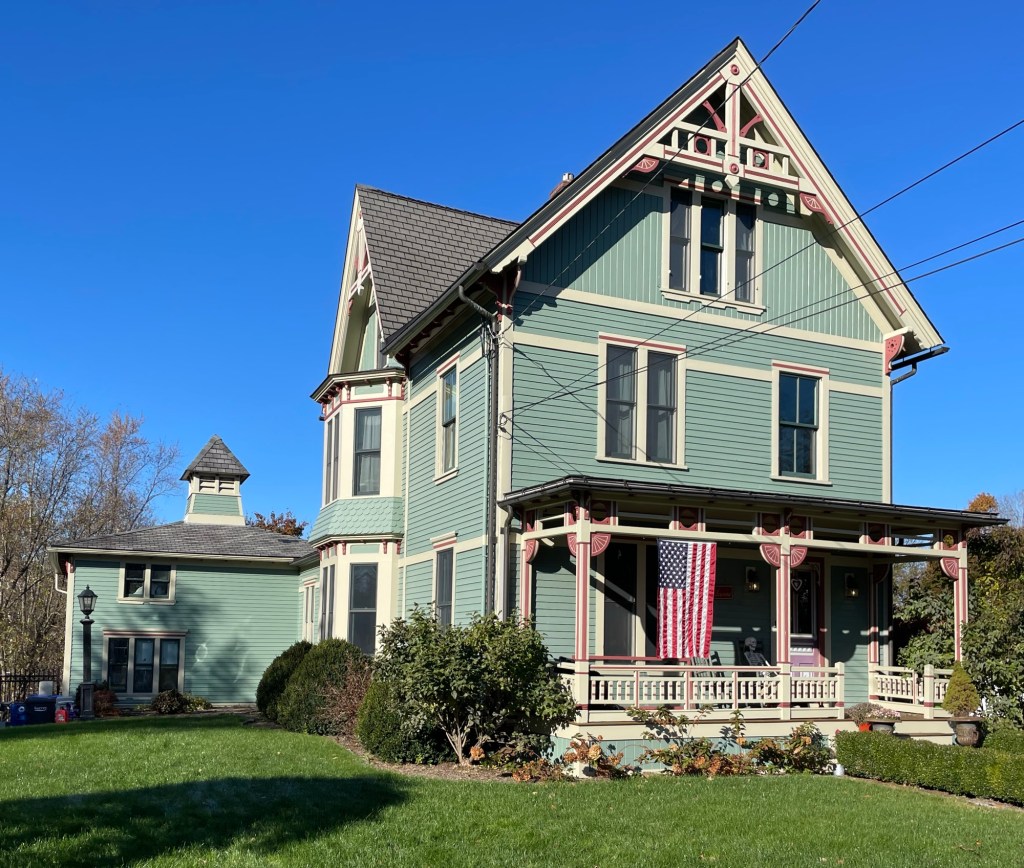
On Main Street in the central village of Lancaster, Massachusetts, the Solon Wilder House stands as one of the town’s finest Victorian-era residences. The house dates to 1883 and was built for Solon Wilder (1828-1889) and his wife, Olive. Mr. Wilder ran a store and served as town treasurer, doing well enough financially to build this handsome, and modern house and rear stable for the time. The Stick style house features a porch with cut woodwork, decorative trusses in gables, and wooden wall cladding interrupted by “stickwork” patterns raised from the wall surface that is meant to symbolize the structural skeleton of the home.
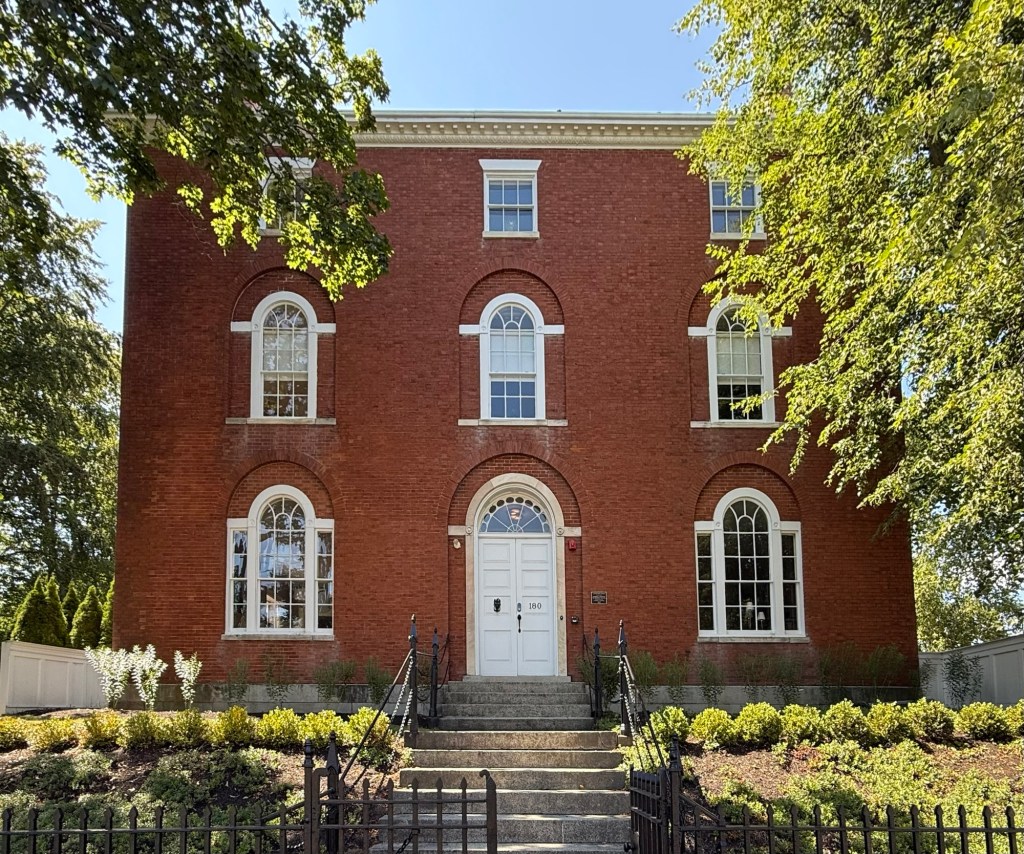
The Larkin-Ladd House at 180 Middle Street in Portsmouth, New Hampshire, is a three-story, masonry Federal-style residence with symmetrical facade, built for one of the city’s wealthiest merchants. Samuel Larkin (1773-1849) was born in Charlestown and moved to Portsmouth, marrying Ann Jaffrey Wentworth, a daughter of Col. Joshua Wentworth. During the War of 1812, Samuel Larkin made his fortune as an auctioneer, selling the contents of English ships captured by local privateers. It is believed that fourteen privateers and their crews worked out of Portsmouth Harbor and are said to have captured an estimated 419 British ships! With the profits from stolen goods from these British ships, Larkin purchased lots on Middle Street and began construction of this stately residence. He (and mostly his wife), had twenty-two children, although roughly half of them died before reaching adulthood. By the late 1820s, financial hardship fell on Larkin and he sold this property, moving into his house next door, which before this was his original residence and later rented to boarders. The Federal style mansion was later owned by Henry H. Ladd, a prosperous Portsmouth shipping merchant, who also served as President of New Hampshire Bank and Portsmouth Savings Bank. The Larkin-Ladd House is undoubtedly one of the finest Federal style residences in New England, and stands out for its entrance, flanked by Palladian windows and the slightly recessed elliptical surrounds at the first and second floor windows. Additionally, the historic stable, also from the 1810s, maintains much of its architectural integrity.
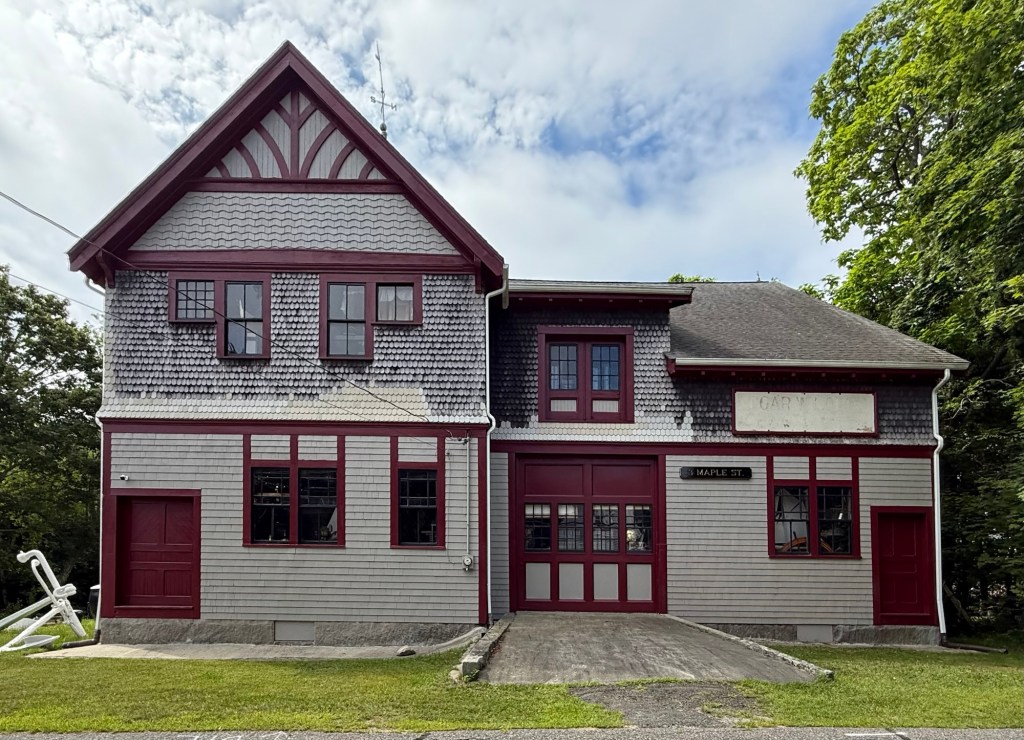
This oversized stable and carriage house is located at 3 Maple Street in Kingston, Massachusetts and it dates to about 1880. The stable was built for Horatio Adams (1845-1911), a wealthy resident who operated a successful slaughterhouse and stockyards nearby along with maintaining stores adjacent to the nearby the train tracks. After Horatio Adams died, the stable was eventually purchased by Edgar W. Loring and converted to a cranberry screen & warehouse for his cranberry farm. The significant Queen Anne/Stick style building suffered from deferred maintenance by the late 20th and early 21st centuries, but was purchased in recent years and undergoing a restoration of the exterior. Does anyone know what its use is today?
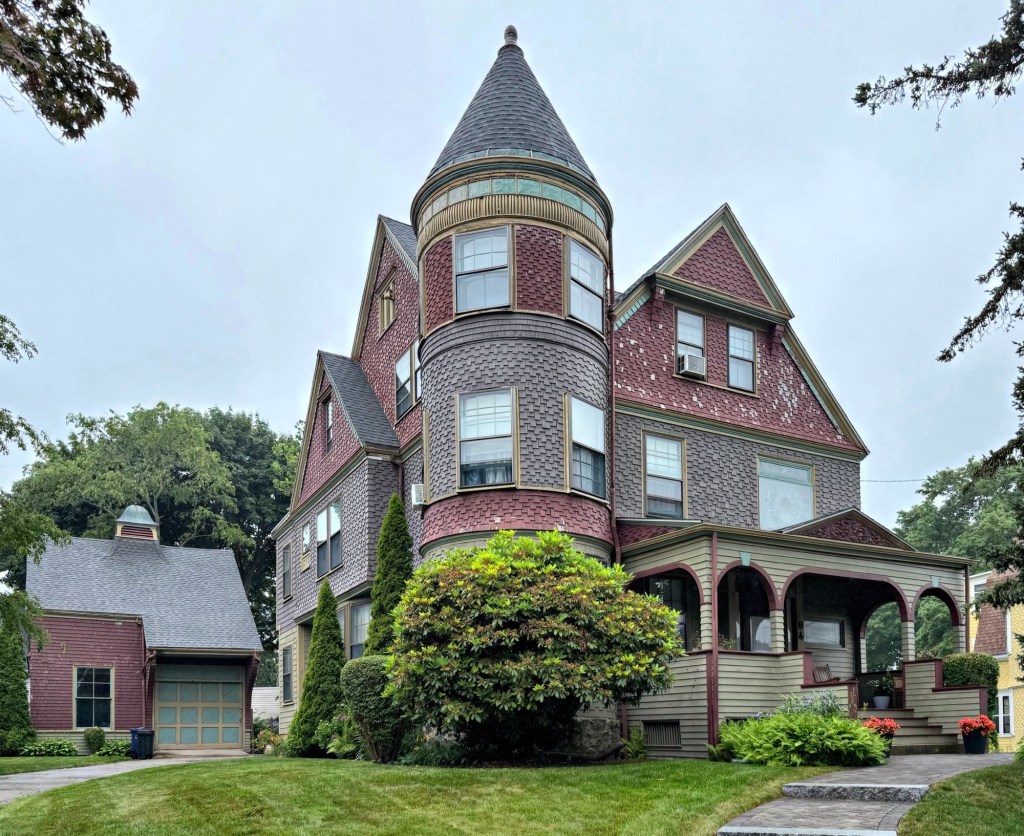
One of the most sumptuous Victorian-era homes in Dorchester can be found at 94 Ocean Street, this is the Clark-Cottie House. The residence (and rear stable) was built in 1890 from plans by famed architectArthur H. Vinal, who designed many other Shingle style and Queen Anne homes in the surrounding neighborhood. The first owners of the mansion were Evelyn and Edward Clark, who after a few years, sold the property to Edgar Cottle, president of the Curtis & Pope Lumber Company. The three-story Queen Anne style mansion features a rounded corner tower, varied shingle siding, shingled porch, and the intact, charming stable at the rear.
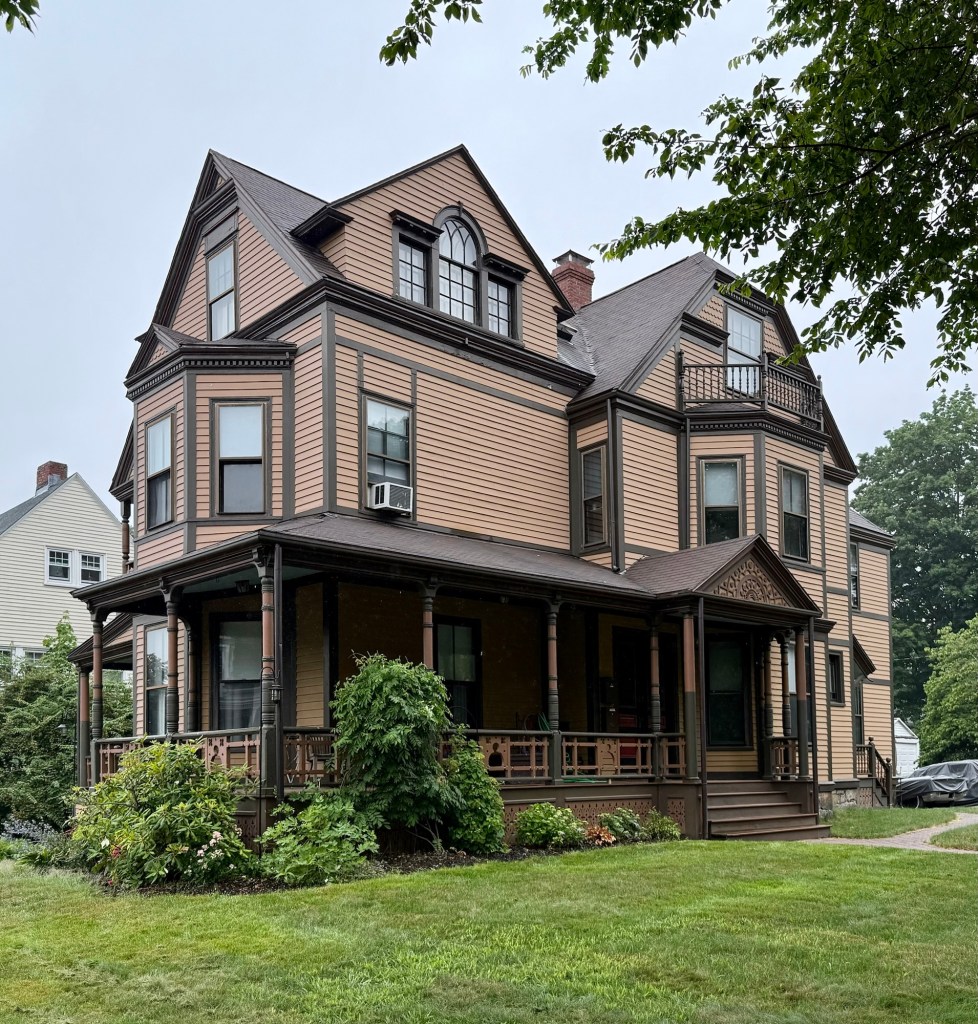
Situated at the corner of Harley and Roslin streets in the Ashmont Hill neighborhood of Dorchester, this property showcases the flair and ornate features of the eclectic Victorian styles, along with an original stable. The property was developed in 1884 by Thomas T. Hartford. Thomas Thurston Hartford (1845-1916), was a shoe machinery manufacturer with offices in the Leather District near downtown Boston, continuing in his father’s company, Hartford Brothers Co. The house and stable are said to have been designed by architect Edwin J. Lewis, Jr., or John A. Fox, who blended Stick and Queen Anne styles. Interestingly, the house features Palladian windows in the gables and was restored by owners, who even went the extra mile to repaint the house in its historic colors.
 Buildings of New England