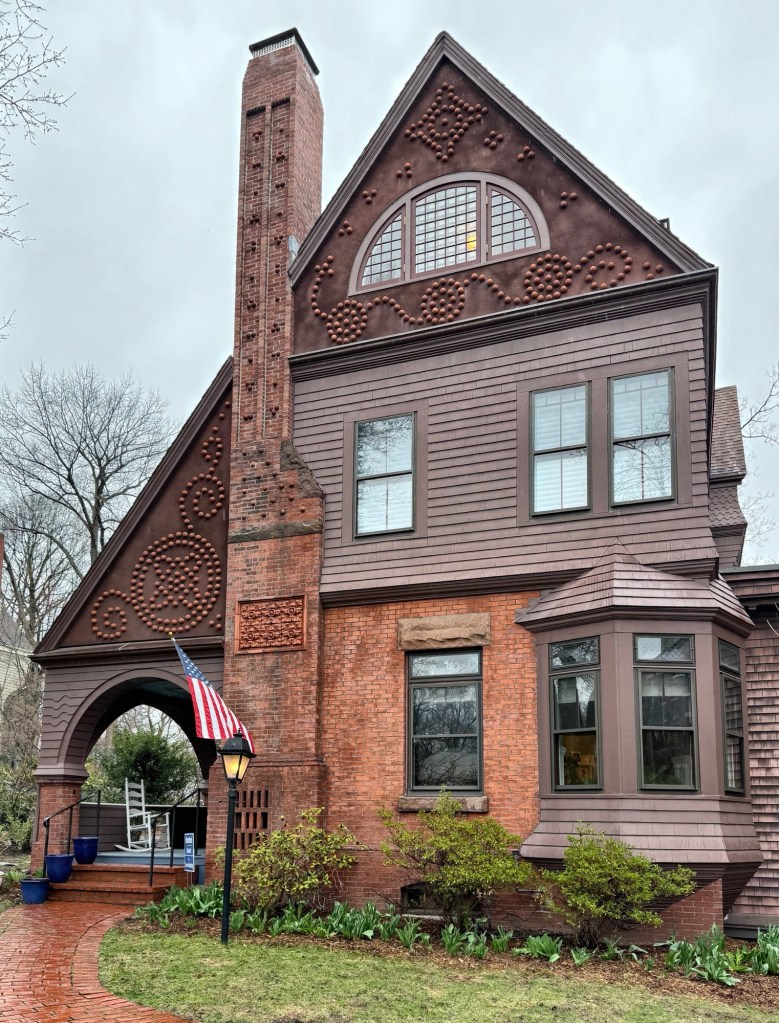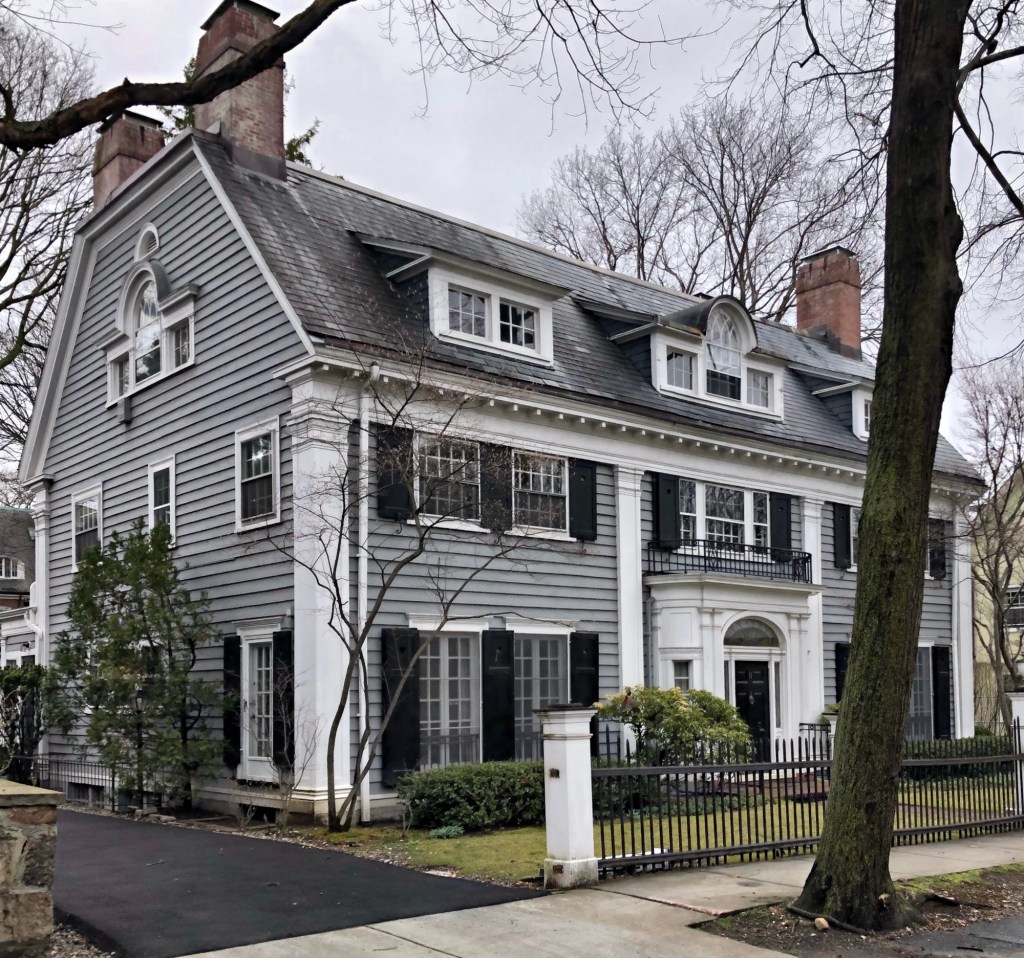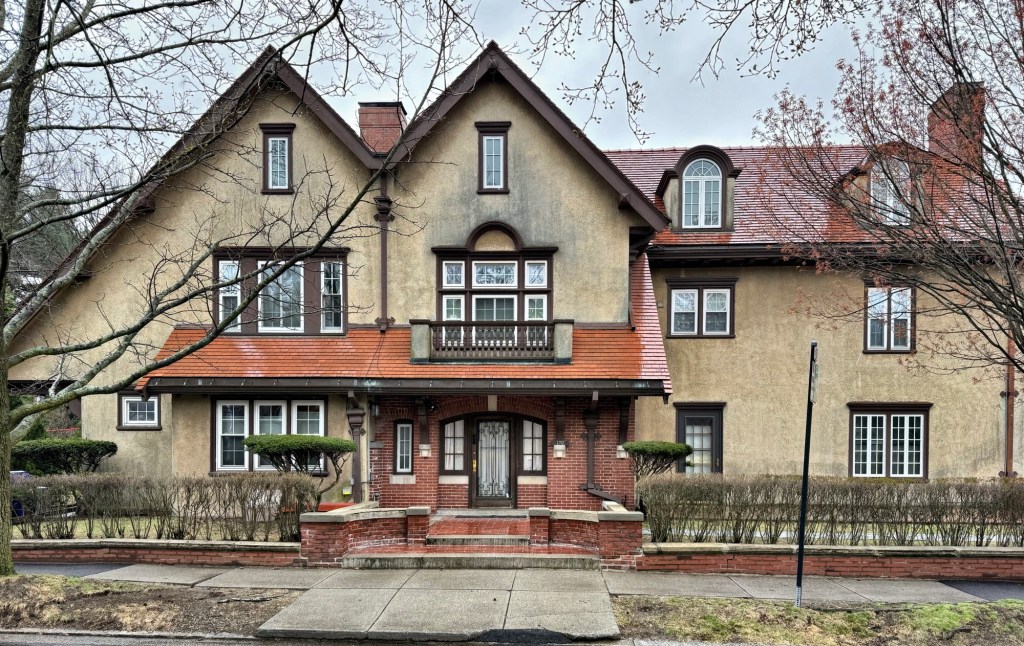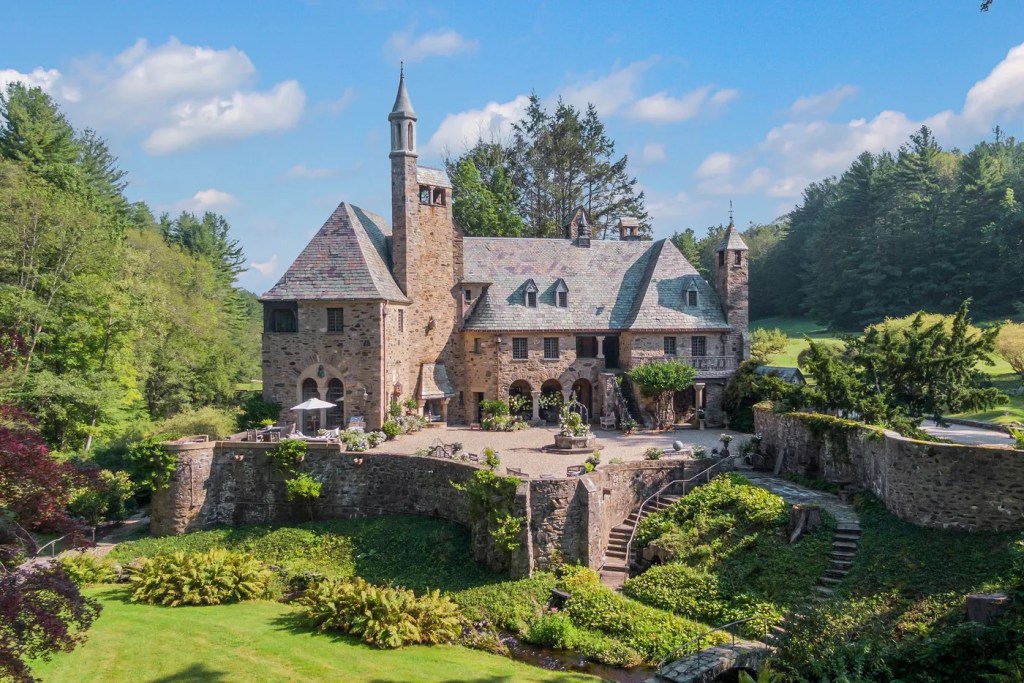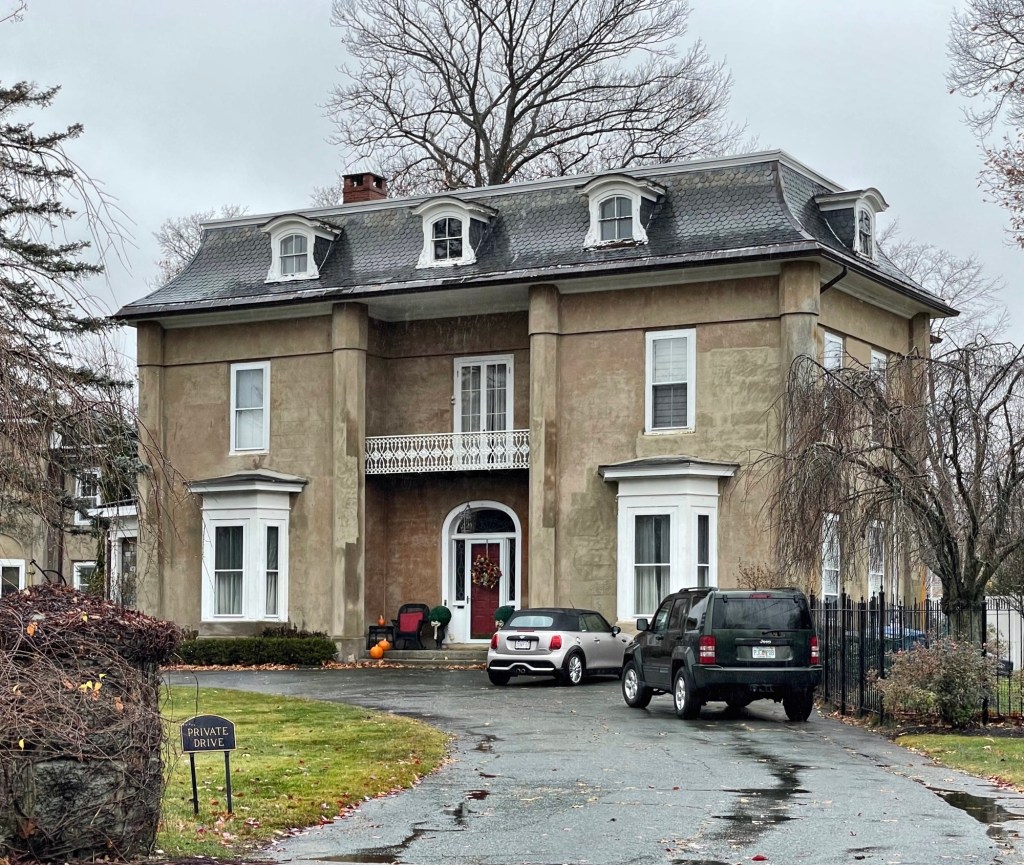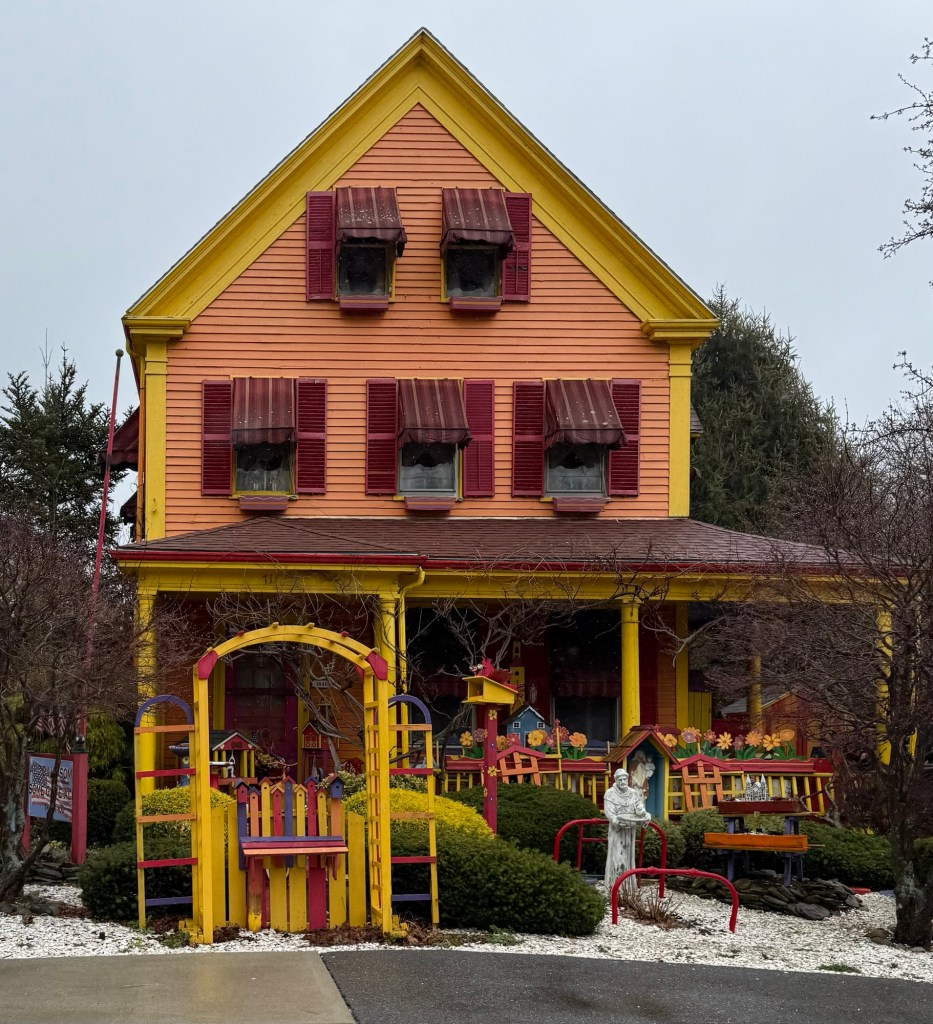
Joshua Silvester House // 1857

This large house sits on Peabody Avenue in Danvers, Massachusetts, and is thought to be the oldest house built of cement in the United States! Joshua Sylvester Silvester (1803-1888), the house’s original owner, was born in Wiscasset, Maine, and began working in the shoemaking business, expanding his products in England, taking many business trips there. While in England, he is said to have particularly admired Charles Dickens’s estate, Gad’s Hill, and modeled his Danvers home after it. Joshua Silvester not only designed this house, but directly supervised its construction which is of hand-poured cement/stucco by two masons imported to town to work on the house. The fifteen-room residence with octagon-shaped barn was complete by 1858. In 1880, the property was purchased by Isaac B. Howe of Clinton, Iowa. Howe was a civil engineer who had helped to lay out the Transcontinental Railroad and had been superintendent of the Iowa division of the Chicago and Northwestern Railroad. Howe died within a year of moving to Danvers,
but his family continued to live in the house for many years.


The Last Tenement // c.1870s

Originally built in the 1870s, and largely remodeled in the early 1900s, this charming building has been known locally as “The Last Tenement” of the old West End of Boston. Once part of an unbroken a row of 30 brick tenements along the east side of Lowell Street, this building typified much of the West End of Boston, a vibrant and dynamic immigrant neighborhood. Dwarfed by larger, modern apartment towers and highway off-ramps, this stand-alone building is a survivor, and should really be preserved! Here is a little history on The Last Tenement that I found. The building was originally built as a three-story residence just after the Civil War by furniture dealer, George M. Rogers. The building was rented to four families in the 1880 census, showing the diversity of the region with 20 people residing in the building of Irish, English, and German-Jewish backgrounds. At the turn of the century, an elevated rail line was laid out down Lowell Street. After WWII, the neighborhood would see a terrible demise, that has been widely told. City leaders effectively considered the vibrant immigrant neighborhood a slum, and in an effort to redevelop it to bring back middle-class families (and their tax dollars) handed much of the neighborhood to developers to start over, with little more than lip service for the displaced. This building, now with an address of 42 Lomasney Way, was occupied for some time by “Skinny” Kazonis, a low-level Mafia associate of the Angiulo Brothers, which was a leading gang in the North End until the Winter Hill Gang decided to run rackets in the area. The property sold, and residential units have been rented and the building maintained, with the assistance of a billboard for additional income for the owner. The Last Tenement showcases the strength and resilience of the old West End and will hopefully remain as a reminder of the vibrant neighborhood that was razed and replaced with mediocrity.

Johnston-Sullivan House // c.1894

One of the more exuberant and ornate homes in Roxbury’s Washington Park neighborhood is this charmer on Howland Street. The eclectic house was built in around 1894 for Ellen S. Johnston from plans by local architect Timothy Edward Sheehan and stands out for its preserved exterior in a neighborhood where many homes are covered in later siding, obscuring the ornate details underneath. Details include: swag and garland applied ornament, two bays at the facade (one polygonal and one rounded), a Colonial Revival style porch, and central rounded dormer. Wow!