Mellen Law Office // c.1829

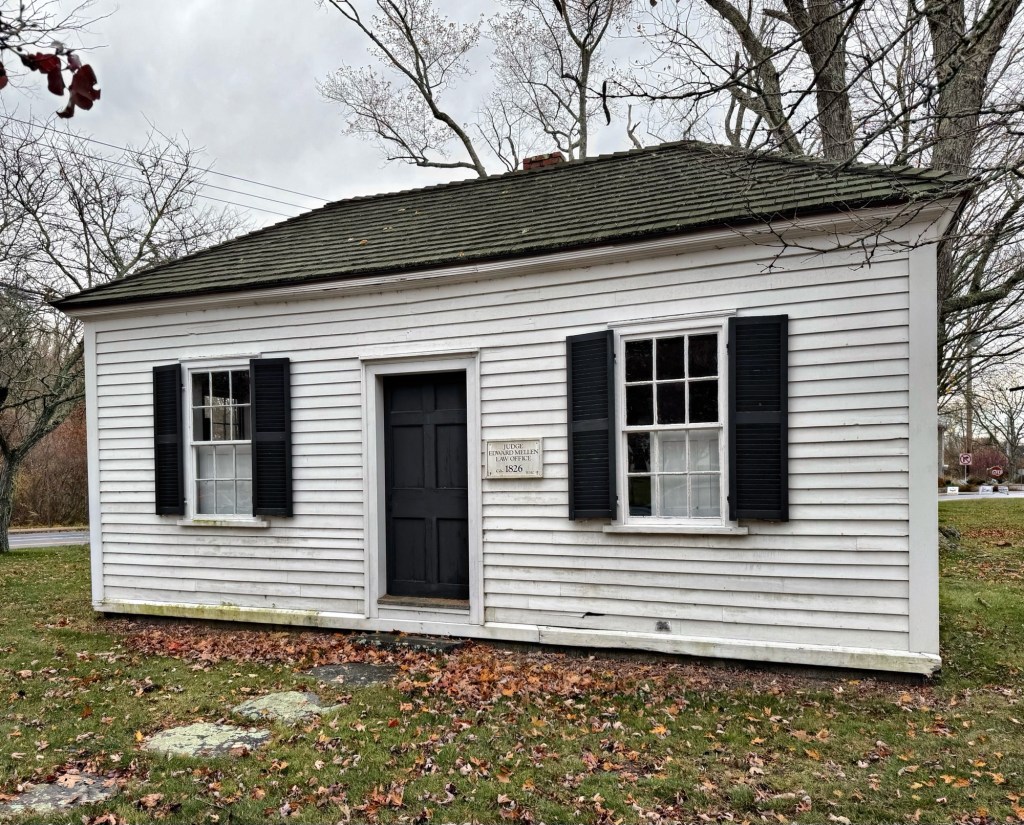
Samuel H. Mann (1801-1838), a lawyer, acquired the Dr. Ebenezer Ames House on Cochituate Road in 1829, only a month before his marriage to Isabella Ross. At about that time, Mann built this small law office across the road from his home, where he would practice law. It is not clear why, but within a year, Mann sold the house and this law office to Judge Edward Mellen (1802-1875), who was appointed Chief Justice of the Massachusetts Court of Common Pleas in 1855 and practiced law in Wayland until his death in 1875. After his death, the law office sat largely vacant until during World War II, when a newsletter to soldiers, The Village Bugle, was published here. After this, a couple of businesses used the former law office in the 1950s and 1960s until the owner donated the lot to the Town of Wayland in 1971. The diminutive building is a charming, and well-preserved example of a vernacular, Federal period professional office building that mimics the form and materials of the Ames House to which it was long affiliated with.

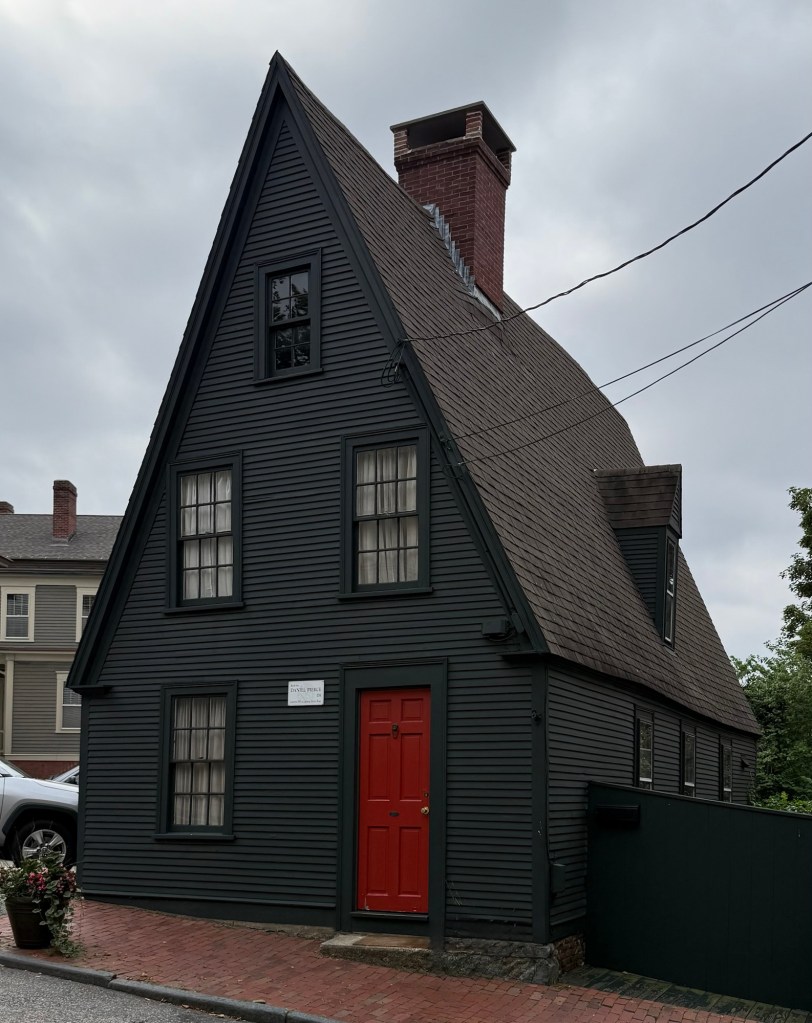
Pierce-Guild Lightning Splitter House // 1781

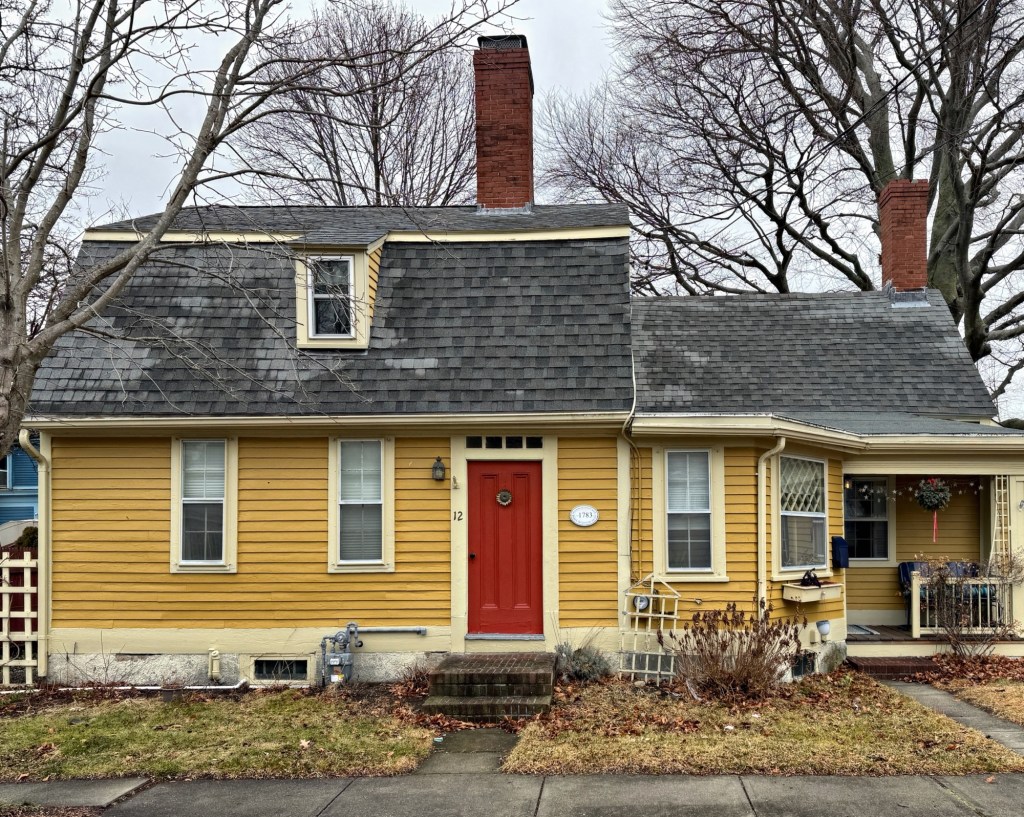
The Pierce-Guild House at 53 Transit Street in the Fox Point neighborhood of Providence, Rhode Island, is one of the most iconic and photographed residences in the state. Known as a “lightning splitter”, the unique name is taken from local folklore that the sharp angle of the gable roof will deflect or split lightning if struck. Whether or not this superstition is true, the unique house form numbers to less than a dozen in Rhode Island. This house, arguably the most well-known for its location off Benefit Street, was originally built in 1781 as a modest 1-1/2-story cottage with a gambrel roof for Daniel Pierce (Pearce), a tailor. In 1844, the property was sold to George Guild, a grocer, who modernized the house by creating the massive gable roof to provide a narrow third floor, which was illuminated by the end windows and a diminutive dormer at the roof. The house retains much of its character, after a restoration by owners in the mid-late 20th century.

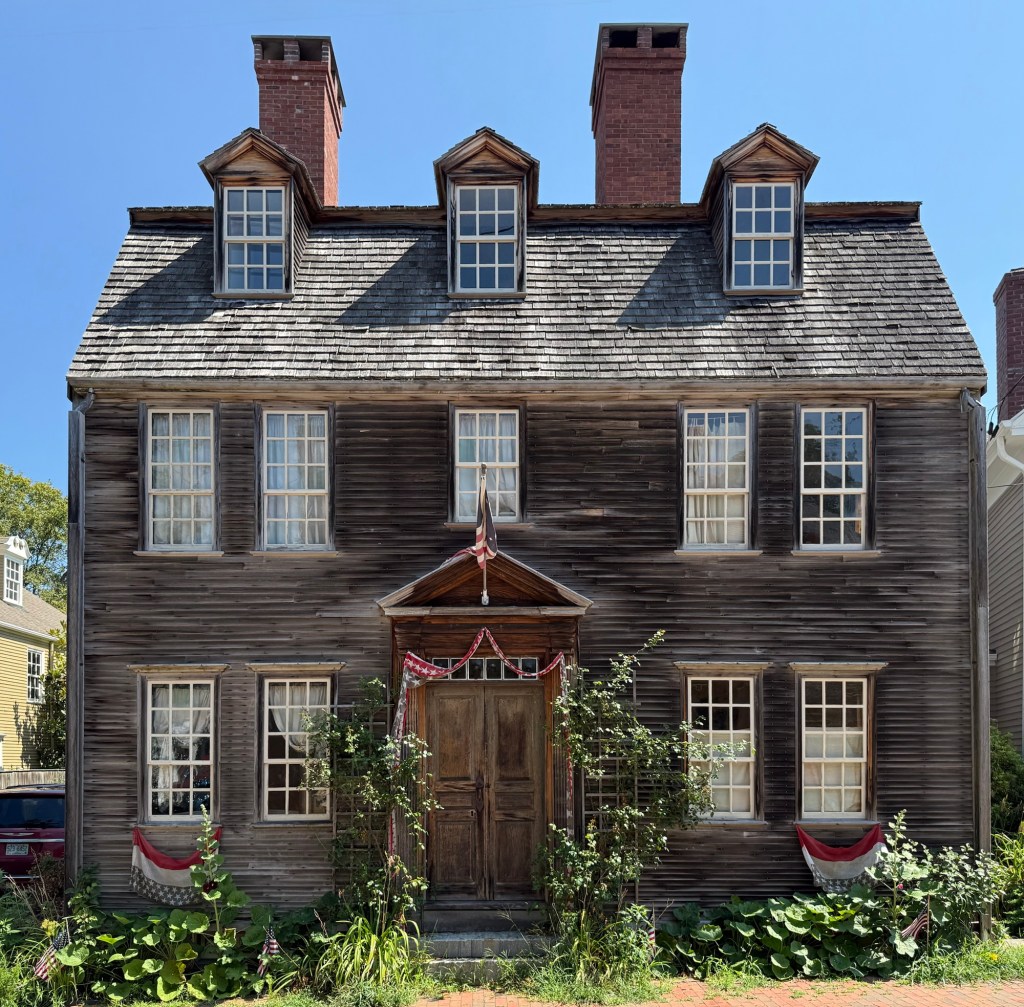
Shillaber House // c.1768

The Shillaber House on Washington Street in Portsmouth, is one of the most photogenic residences in the charming port city. The Georgian-style residence was likely built in the late-1760s, after Joseph Shillaber (1725-1791), a potter, purchased land here in 1766. The residence is of a typical form for 1760s Portsmouth, with a gambrel roof with pedimented dormers and a slightly off-center entry with Georgian style pilasters and pediment. In the later half of the 19th century, the house was “Victorianized” with a bracketed door hood and bay windows at the facade, but the house would be restored by later owners to a version close to its original conditions. The exposed clapboard siding adds to the home’s unique charm.

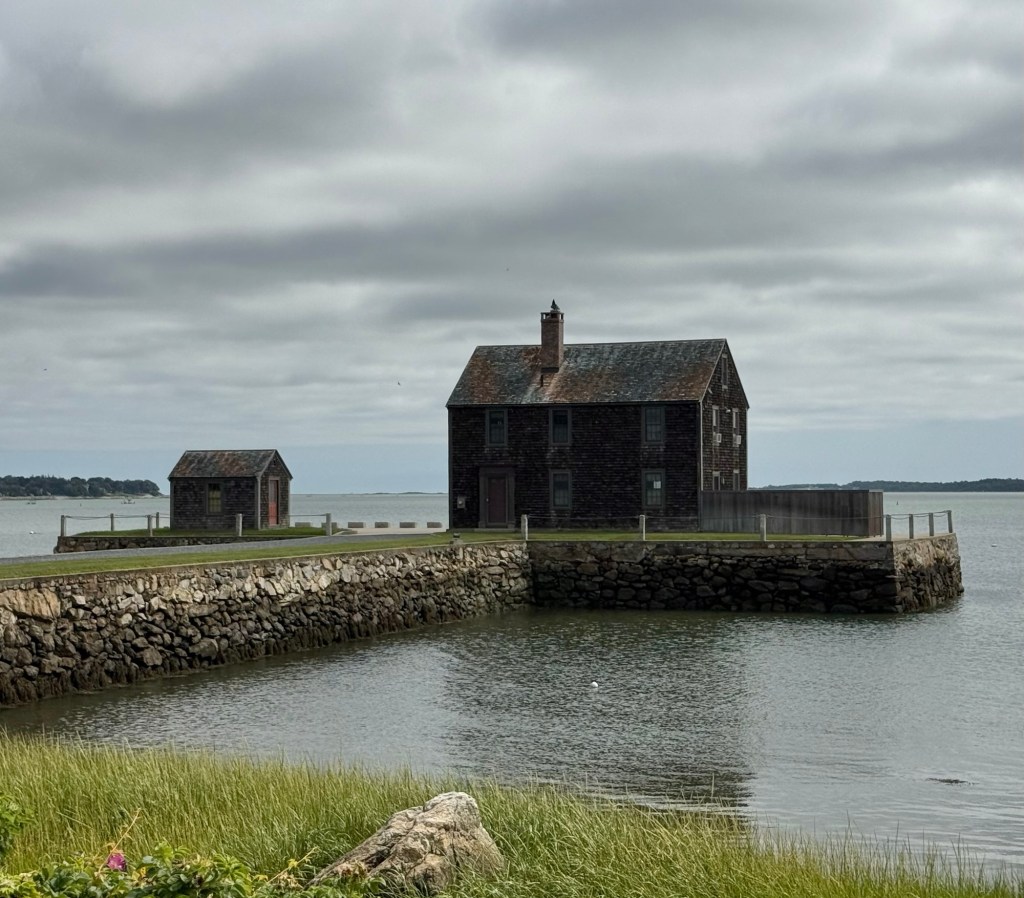
Delano Warehouse and Wharf // 1803

In 1802, Kingston-based merchants and landowners Benjamin Delano and brother-in-law Peter Winsor built this stone wharf and warehouse at Rocky Nook, a small peninsula at the end of the Jones River where it meets Plymouth Bay. The Rocky Nook had several warehouses in the early 1800’s which were used to hold cargo for the busy Kingston vessels that carried passengers and goods all down the eastern seaboard for transit, with larger vessels sent to the West Indies for trade. Benjamin Delano and his son Joshua either owned or partly owned 37 vessels between 1803 and 1882 and were a wealthy family that built their fortune on shipbuilding and trade. The warehouse, built at the end of the wharf was used to store goods and also served as a ship chandlery, a store selling goods needed for newly outfitted ships that were berthed up the Jones River.  A combination of the coming of the railroad and the need for faster and bigger vessels caused the decline of the shipping business in Kingston in the late 19th century with the shipbuilding industry largely evaporating by the 20th century. The Delano warehouse at the end of the wharf has since been converted to a private residence yet retains its unique character and siting with arguably the best view in town. 

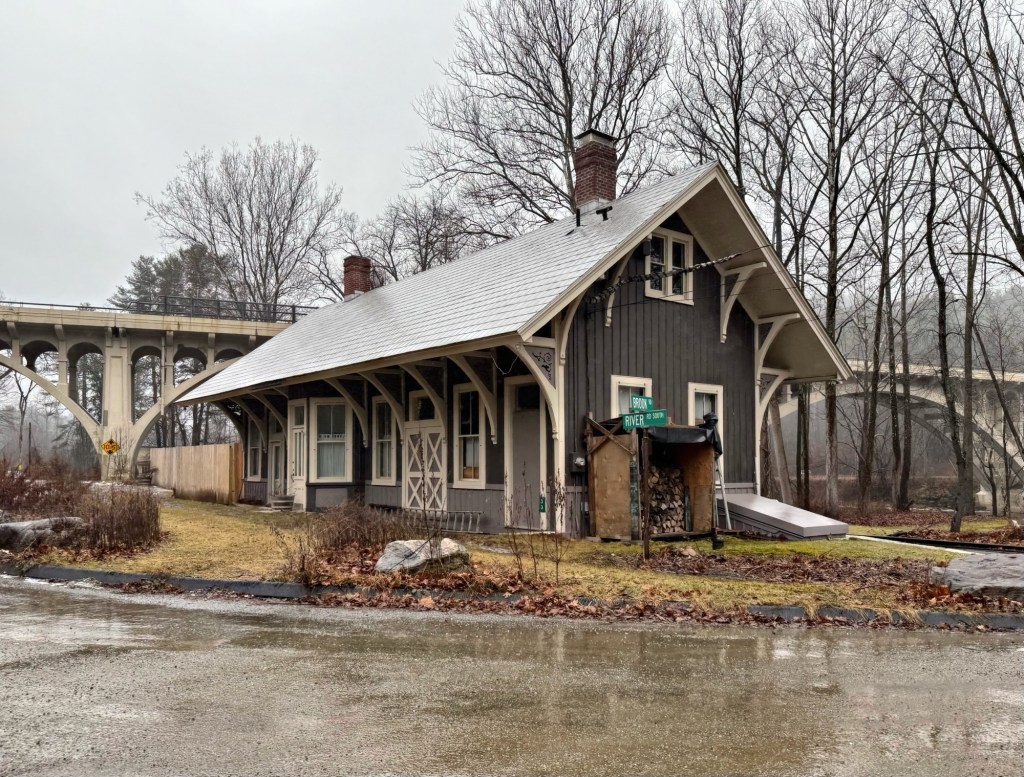
Cornwall Bridge Railroad Station // 1886

One of the most attractive railroad depots in Connecticut, the Cornwall Bridge Railroad Station exists in almost complete originality. Its siding is board and batten and its slate roof with a wide overhang supported by the original brackets, showcases the attention to detail railroad companies paid to design and appoint these important landmarks. Built in 1886, the building can be classified as Stick Style and is one of a few buildings in town of the style, adding to its significance. The station was built by the Housatonic Railroad to replace an earlier station on the site. The Housatonic line was acquired by the New York, New Haven and Hartford Railroad in 1892 and later by the Penn Central Railroad in 1969, which went bankrupt by 1970. This station was subsequently sold to private ownership and listed on the National Register of Historic Places as a tool to bring awareness to its significance and threatened status. Luckily, the building was preserved and has been converted to a private residence.

Oakwold Cottage // 1883

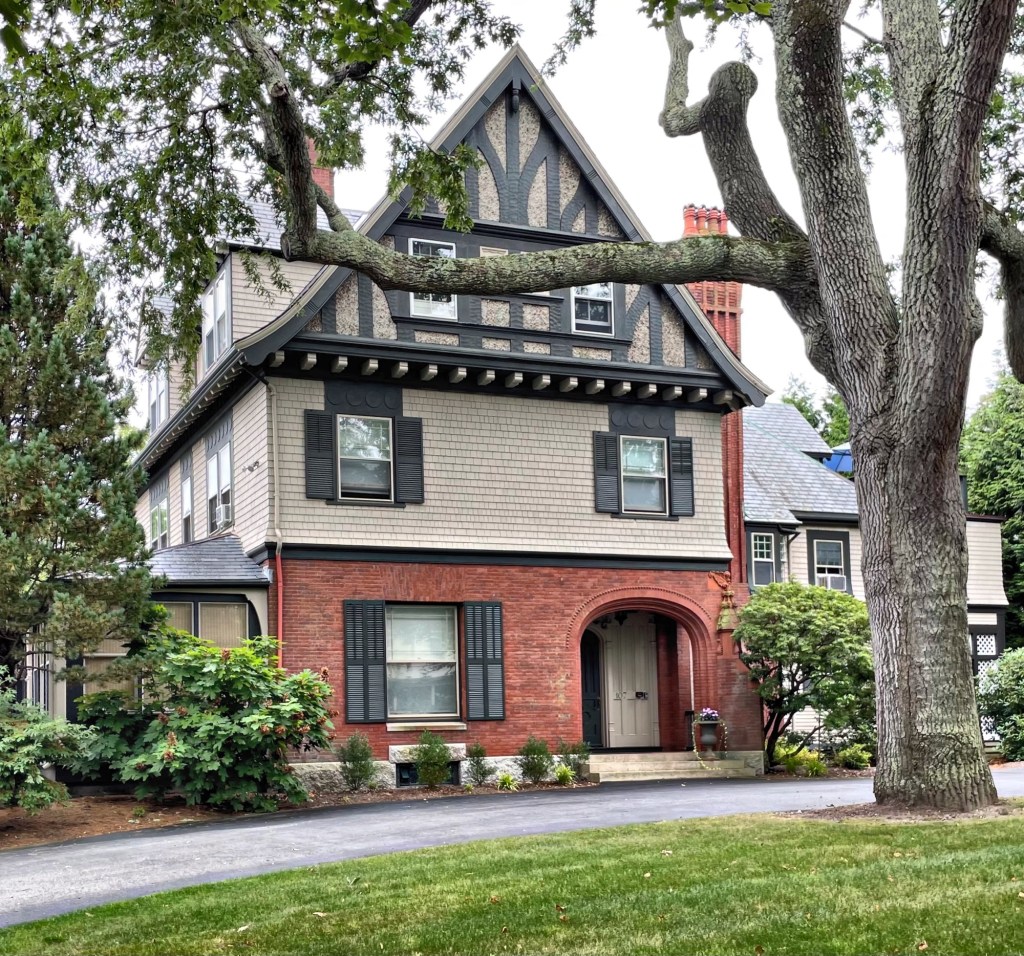
Oakwold, a stunning Queen Anne residence on Old Beach Road in Newport, Rhode Island was supposedly built on speculation and purchased by Augustus Jay (1850-1919). Mr. Jay was born in Washington, D. C., the son of Peter Augustus Jay and Josephine Pearson Jay. Augustus Jay graduated from Harvard College in 1871 and from the Columbia Law School in 1876, and worked as a diplomat. His wife was Emily Astor Kane (1854–1932), a daughter of DeLancey Kane and Louisa Dorothea (née Langdon) Kane. Emily was a descendant of John Jacob Astor. The “cottage” was named Oakwold, and was designed by architect Clarence Sumner Luce, who designed many summer residences in Newport, and specialized in the Queen Anne style. Particularly noteworthy in the design of Oakwold are the brick first floor with entrance within a recessed arched opening and pebble-dashed and half-timbered gable ends.

Joseph P. Allen Cottage // 1877

One of the most picturesque and charming summer cottages (now year-round residences) in the Salem Willows neighborhood in Salem, Massachusetts is this Victorian on Bay View Avenue. The cottage was built around 1877 for Joseph Pray Allen (1822-1897) who was a police officer who likely climbed the ranks in the force to afford a second home in the city. The 1 1/2-story cottage has decorative bargeboards at the eaves and stick bracket at the gable. Perfection!

Hall’s Block // c.1883

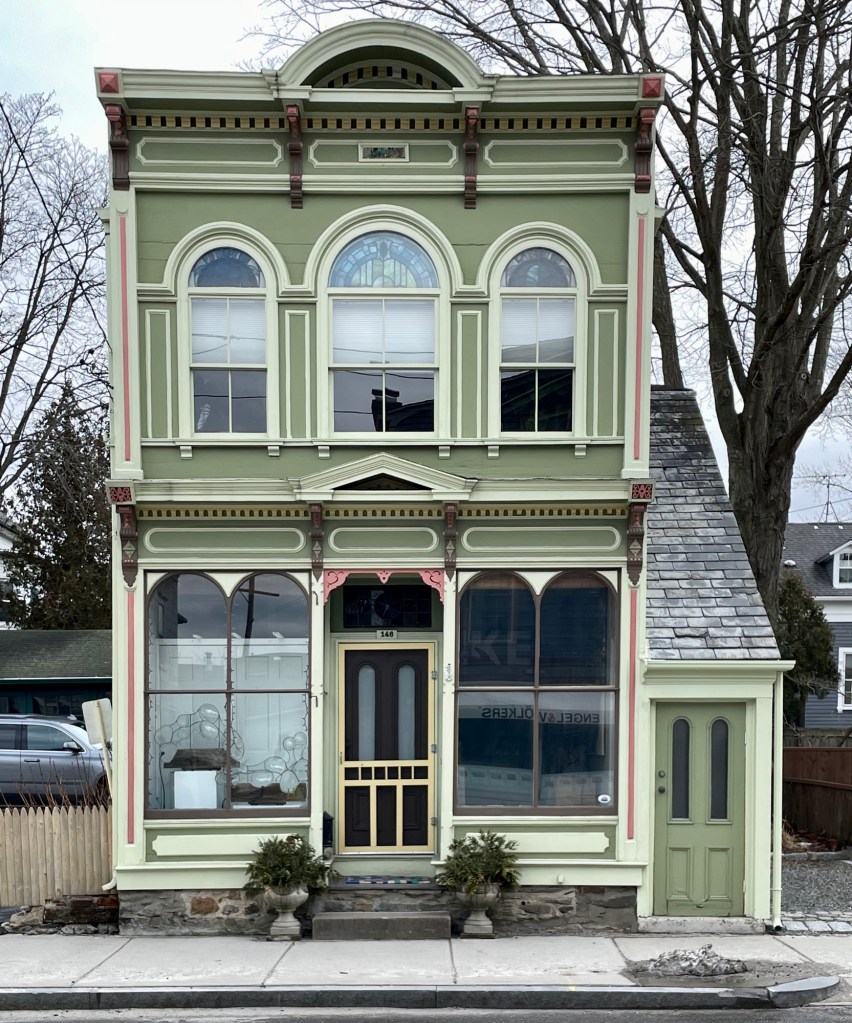
This diminutive commercial block sits on Water Street in Warren, Rhode Island while small in size, packs an architectural punch! The late-Italianate style wooden block exhibits its original wooden storefronts, second floor round arched windows with stained glass, and ornate detailing including the brackets, parapet and period-appropriate paint colors which allow those details to pop. The shop was owned in its early days by the Hall family, who sold drygoods. Later, the building was used as an antiques shop on the ground floor with a studio for author and illustrator, David Macaulay on the second floor. These types of smaller-scale commercial spaces are some last remaining (relatively) affordable spaces for small businesses to operate. So lets make sure we

Old Platte Clove Post Office // c.1885

Believe it or not, but I occasionally venture out of New England, and a favorite place of mine to explore is Upstate New York. On a recent trip, I ended up driving through the tiny town of Hunter, New York, located in the middle of the Catskills. This charming little building was constructed c.1885 as the Platte Clove Post Office. The building was constructed to serve a rural portion of the town and was built as an early mixed-use building with the post office at the ground floor and small residence upstairs for the postmaster to live. The exterior cladding features both shingle and clapboard siding with overhanging eaves. The post office here ceased by 1911 and the use reverted solely to residential.