Old Sharon Sanatorium – Former Kendall Whaling Museum // 1891

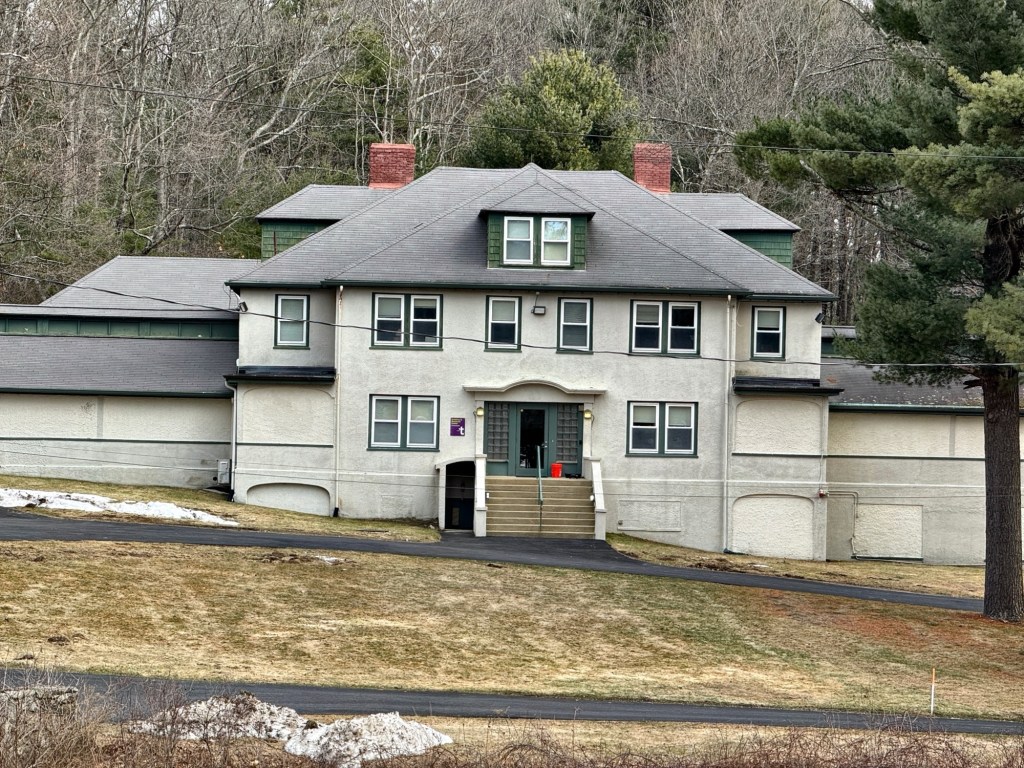
The old Sharon Sanatorium was built on former farmland in Sharon, Massachusetts, as a medical facility for the cure of pulmonary infectious diseases. The rural medical institution was designed in 1890 by the architectural firm of Longfellow, Alden and Harlow and completed a year later. The Sharon Sanatorium for Pulmonary Diseases opened formally in February 1891 with the purpose to provide affordable care for patients suffering from Tuberculosis and other pulmonary diseases. At the time, tuberculosis was a major health concern and treatment often included fresh air, so facilities such as this were designed with access to open air sleeping porches and forested surroundings. The Sharon Sanatorium was sited to catch the prevailing breezes on the side of Moose Hill, the second highest ascent between Boston and Providence. In 1916, the Sanatorium opened a Children’s Pavilion, which was reserved for children less than fourteen years of age suffering from tuberculosis. By 1938, the threat of tuberculosis was under control, and the Sanatorium began admitting patients suffering from arthritis and rheumatic fever until the facility closed in 1947. The Sanatorium integrated with the Boston Children’s Hospital in 1949 and soon after, the property was bought by Henry Plimpton Kendall (1878-1959), a wealthy entrepreneur and industrialist, for use as the Kendall Whaling Museum, showcasing his personal collection of paintings, prints, and tools of the whaling industry in New England. In 2001, the museum merged with the New Bedford Whaling Museum and today, the property is managed by the Trustees of Reservations as their Archives and Research Center.
Former Pleasant Street High School // 1910

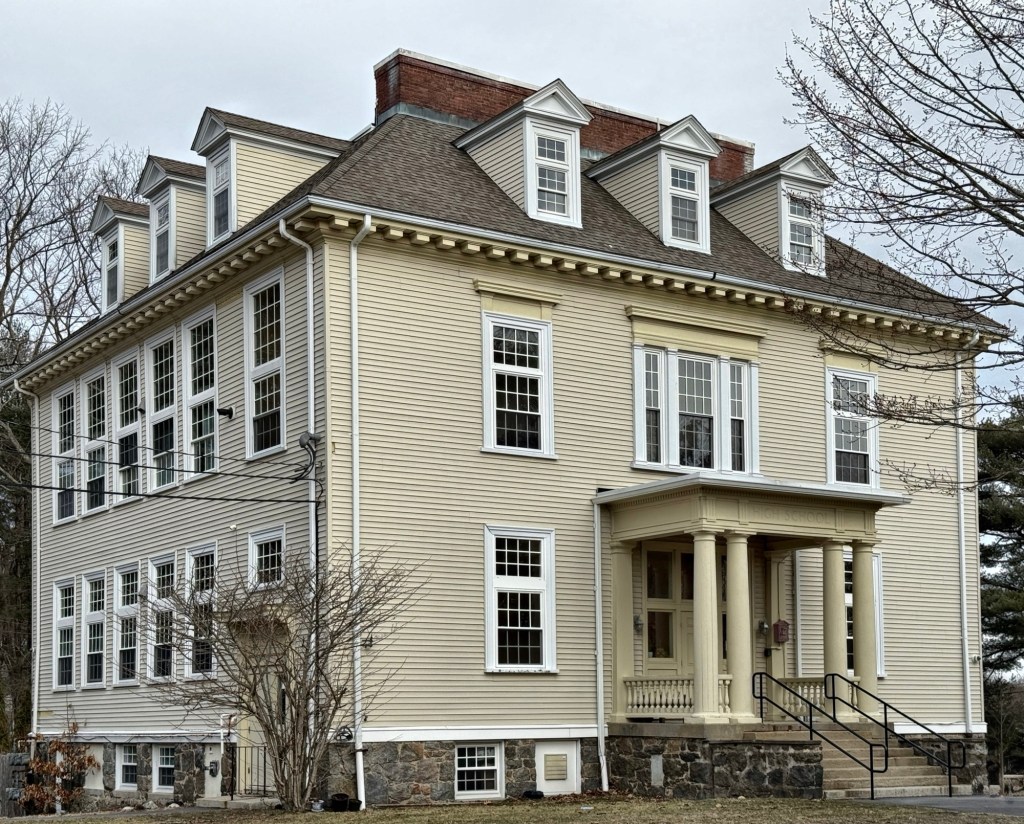
The former Pleasant Street High School in Sharon, Massachusetts, is an excellent example of early 20th century school architecture and adaptive reuse in a small Massachusetts town. The square, two-story, Colonial Revival style school building replaced an earlier school and was designed in 1910 by the firm of Adden & Parker. As with many communities, the school was outgrown and outdated after WWII and a new, consolidated high school was built in town. The former Pleasant Street school closed by 1981 and was subsequently converted to housing by the Sharon Housing Authority. The building is part of a local historic district, ensuring its preservation in perpetuity.

Stoneholm Manor // 1865

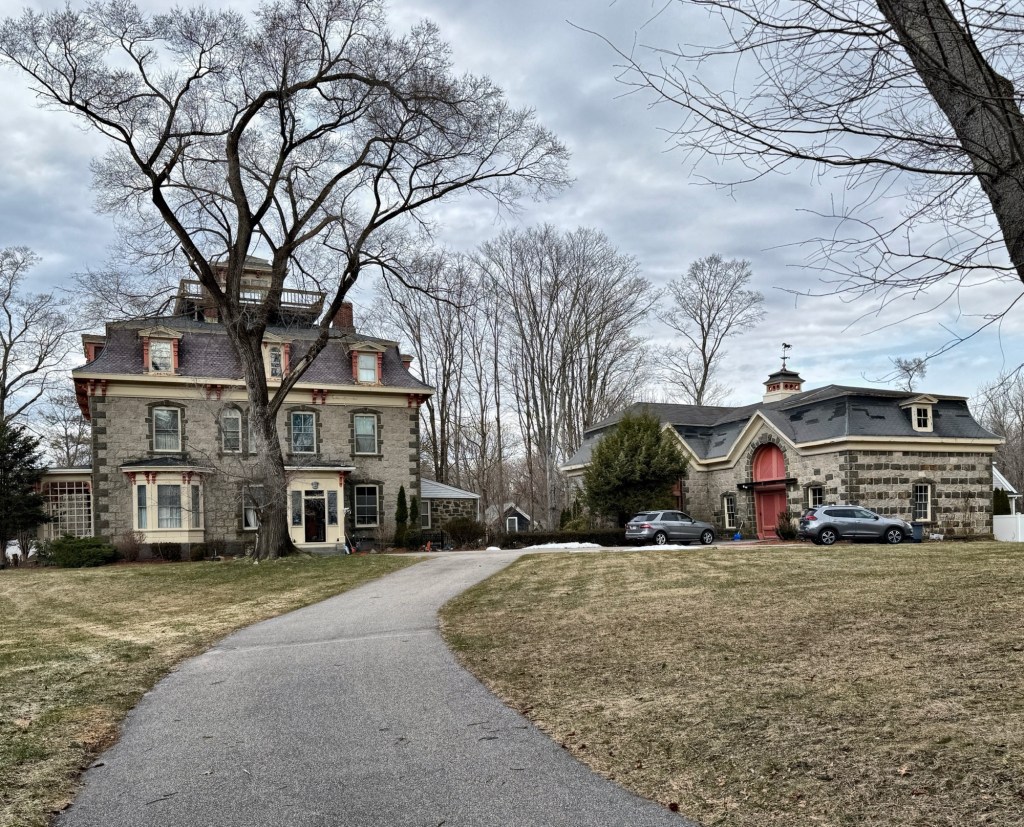
Stoneholm Manor is a historic estate tucked away in Sharon, Massachusetts, that remains one of the finest examples of a Second Empire style mansion and carriage house built of stone in New England. Stoneholm was built in 1865 for Horace Augustus Lothrop (1828-1898) within a year of his marriage to second wife, Sarah Gorham Swain. Horace A. Lothrop was a manufacturer and businessman with factories in Sharon and nearby towns and he invented innovative tools like hoes and wooden shanks for foot support in shoes and boots. He was also engaged in politics, serving in the state legislature and on the local school board. His country estate in Sharon is unique for its construction of locally quarried rock-face granite walls, fine mansard roof with cupola, and matching L-shaped carriage house, all in great condition. Stoneholm was listed on the National Register of Historic Places and remains a private residence.

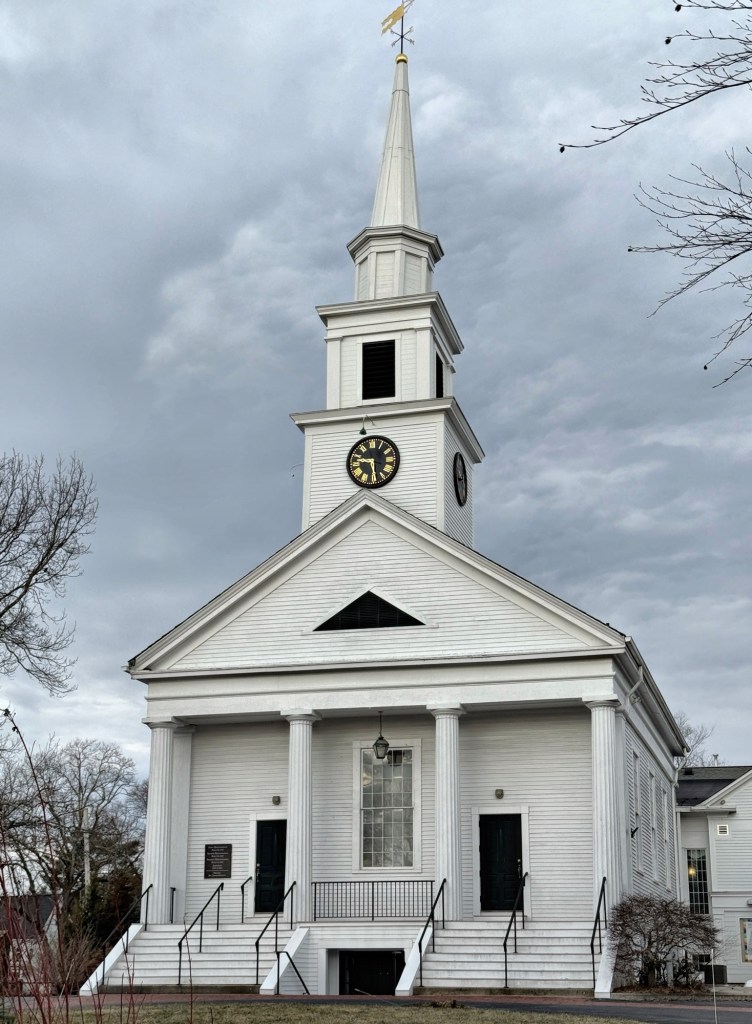
Unitarian Church of Sharon // 1842

Sharon, Massachusetts, is a small suburban community south of Boston that is lesser known than its neighbors, but the community has some great old buildings! The Town of Sharon was originally part of a 1637 land grant given by the Dorchester Proprietors to encourage new settlement in areas southward. In 1726, the lands of the present towns of Sharon, Canton and Stoughton, were separated from Dorchester and called the Stoughton Territory. Settlers in present-day Sharon found it difficult to attend mandated church services centered around present-day Stoughton and petitioned the General Court in 1739 to set off as a separate precinct. The request was granted and the Second Precinct was established, and incorporated as Stoughtonham in 1765, changing its name in 1783 to Sharon, named after the Sharon Plain in Palestine. In 1813, the local congregationalists split due to theological differences and formed a Unitarian church. The Congregationalists moved and built a new church and the Unitarians remained on this site, but the larger building was too large for their needs. They demolished the original building and constructed this church in 1842, which somewhat resembles the 1839 Congregational Church of Sharon a stone’s throw away. Like its neighbor, the Unitarian Church too retains an original bell cast by the The Revere Copper Company of nearby Canton.

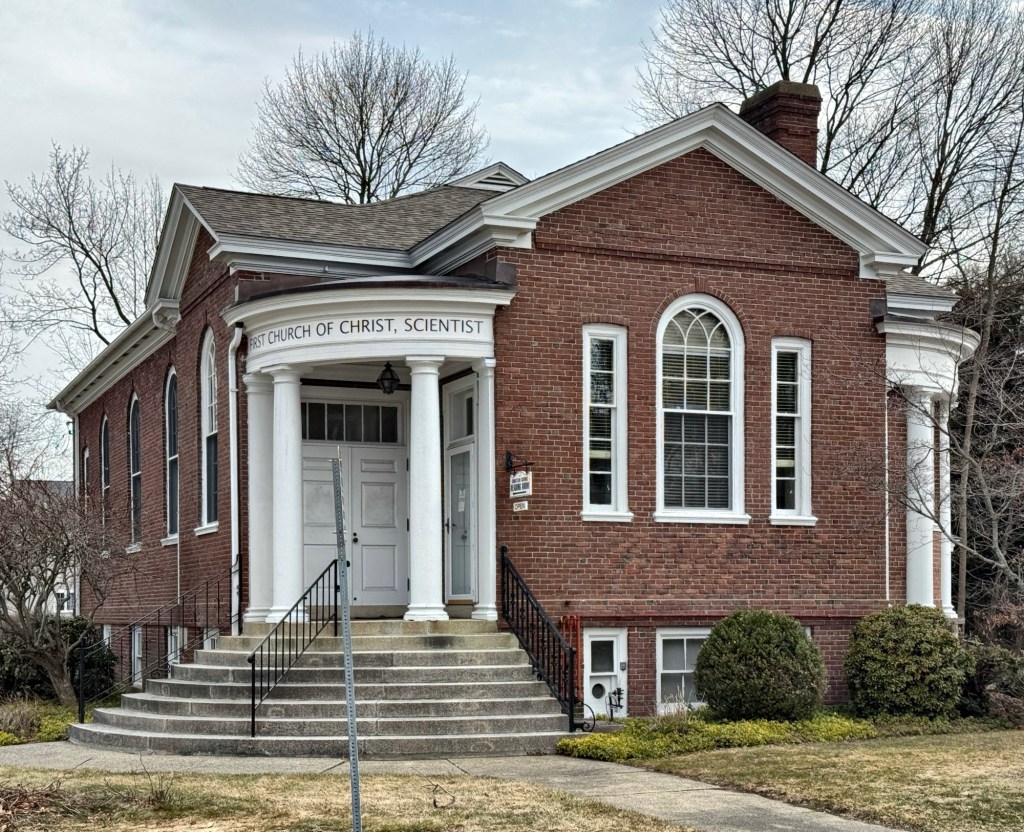
First Church of Christ Scientist, Sharon // 1928

Located on North Main Street in Sharon, Massachusetts, the community’s Christian Science Church was built in 1928 and is a great example of a diminutive chapel designed in the Colonial Revival style. Before it was completed, the Sharon Christian Science Society had been meeting and holding Sunday services in rooms at the Town Hall and other churches until funding was secured for their own house of worship. Customary of all Christian Science churches, the Christian Scientist in Sharon needed to have the building completely free of debt before being dedicated. The church was designed by architect Prescott A. Hopkins, who was likely the first person to receive a master’s degree in architecture at MIT before moving to Atlanta to became the first head of the Architecture Department at Georgia Tech. The building features a large Palladianesque window at the facade and twin curved entry porches at the facade.

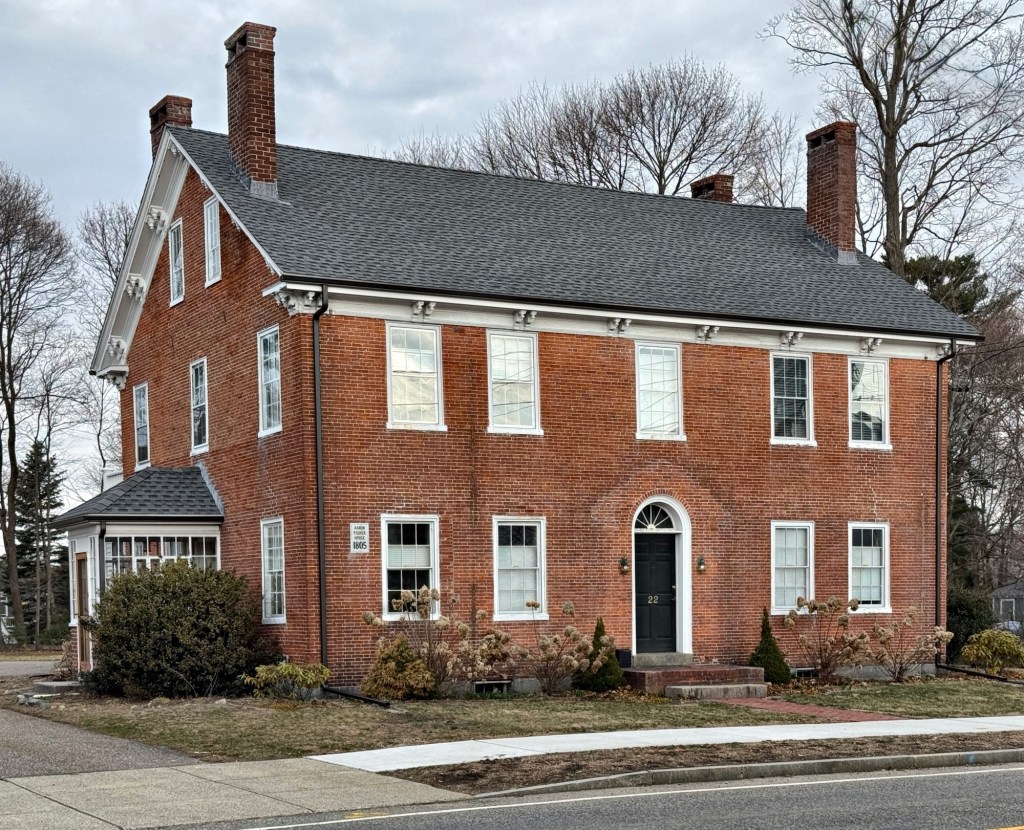
Aaron Fisher House // 1805

The Aaron Fisher House on North Main Street in Sharon, Massachusetts, has stood over 220 years as the town’s finest example of Federal style residential architecture. The residence was built for Aaron Fisher (1762-1809) who is said to have had the house built of brick that was brought over to the United States from England as ballast on a ship and later made its way to Sharon for use as walls of this stately house. While the brick is slight different color than many other local bricks, this may be another example of an urban legend. In the mid-19th century, the house was modernized with an entry porch and brackets at the cornice, and is said to have been painted yellow. Luckily for us, the porch and paint have since been removed and the 1805 house shines once again on the town’s Main Street.

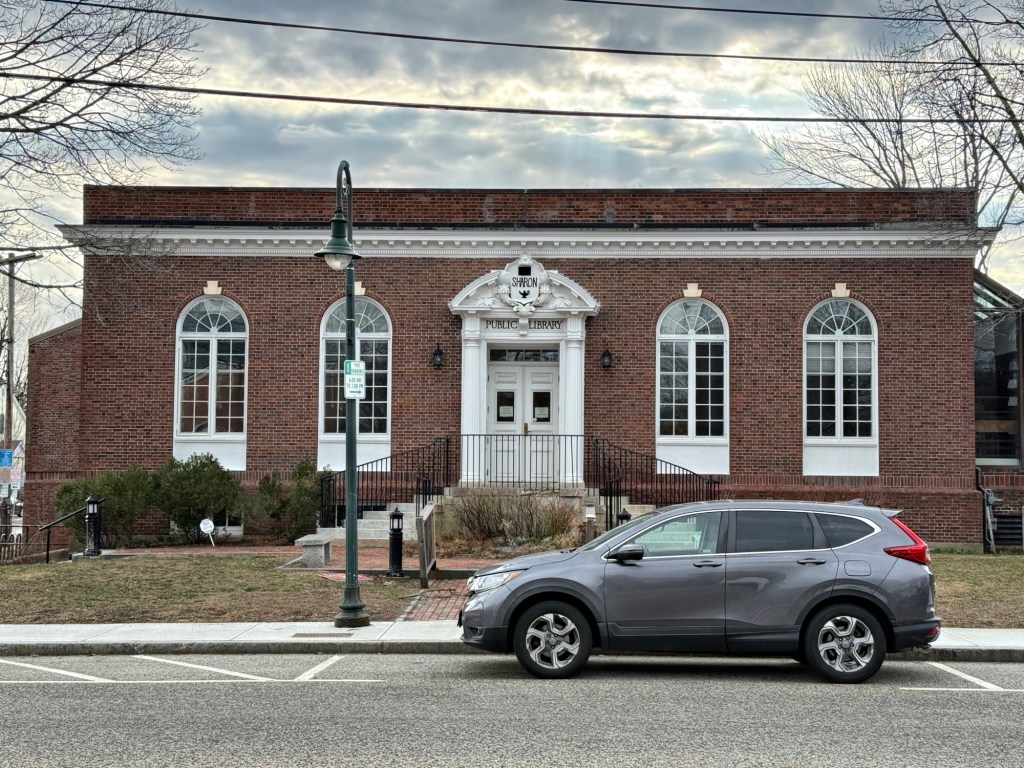
Former Sharon Public Library // 1914

Built with funds donated by Andrew Carnegie as part of his push to expand access to libraries and books to millions of Americans, the former Sharon Public Library in Sharon, Massachusetts, stands as a great example of an early 20th century library built in the Colonial Revival style. Planning for a public library in the town of Sharon began in the 1870s when the town voted to appropriate money gained from charging dog licenses into a fund for a free public library. Additional funds were later added and a collection was set aside in the old Town Hall where the library occupied two rooms. By the 1910s, the circulation and use grew to a point that a new, purpose-built library was needed for the community, but funding was short and Sharon did not have any major benefactors to fund its library like so many other communities in New England at the time. As a result, an application is made to Andrew Carnegie for assistance. Months later, the sum of $10,000 was offered for the planning and construction of the library, costing the community nothing. Boston architect C. Howard Walker was selected to furnish plans for the Sharon Library, which was such a success that the building would be featured in numerous architectural publications after completion. The former Sharon Public Library remains one of a large number of Carnegie Libraries in New England and was subsequently expanded by rear additions in the late 20th century before a new library nearby was completed in 2025. It is not clear what will become of the 1914 library, but it remains in great condition and a lasting landmark on the town’s Main Street.

Mann’s Cotton Mill Double House // 1831

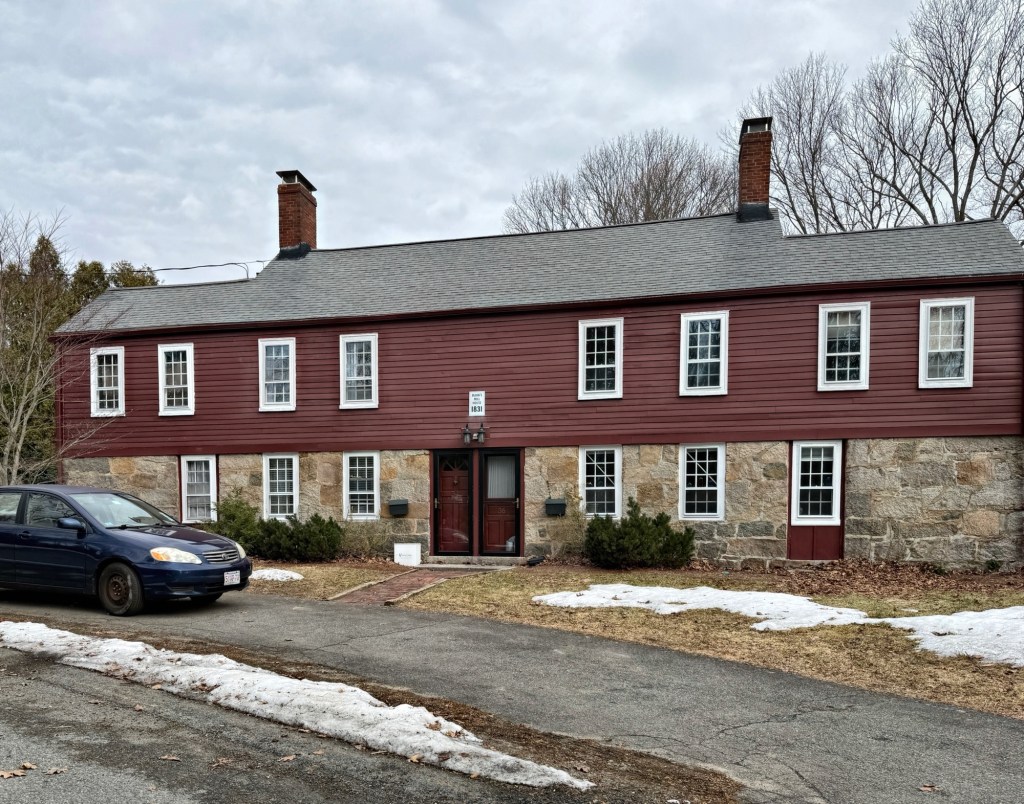
Located on the aptly named Mann’s Hill Road in Sharon, Massachusetts, this historic double-house was built in 1831 as worker’s housing affiliated with the former Mann’s Cotton Mill. The first Mann’s Cotton Mill was constructed in 1831 by George Harvey Mann on Devil’s Brook on the East Branch of the Neponset River. George Harvey Mann (1793-1847) bought the water privileges from Joseph Warren Revere, the son of Paul Revere, and built a factory. The business carried on until a fire in 1840 destroyed the factory and it was rebuilt by George and his son, George Rodney Mann. As part of the original mill complex in 1831, a series of double-houses were built nearby for workers at the mill, making them always available for long days at work. The Mann’s Mill closed in 1900, and it was destroyed by fire in 1919. The double-houses like the one seen here, were sold by the heirs of the family at the turn of the 20th century and feature a stone base and wood frame second floor. 

Darius Lothrop House // c.1830

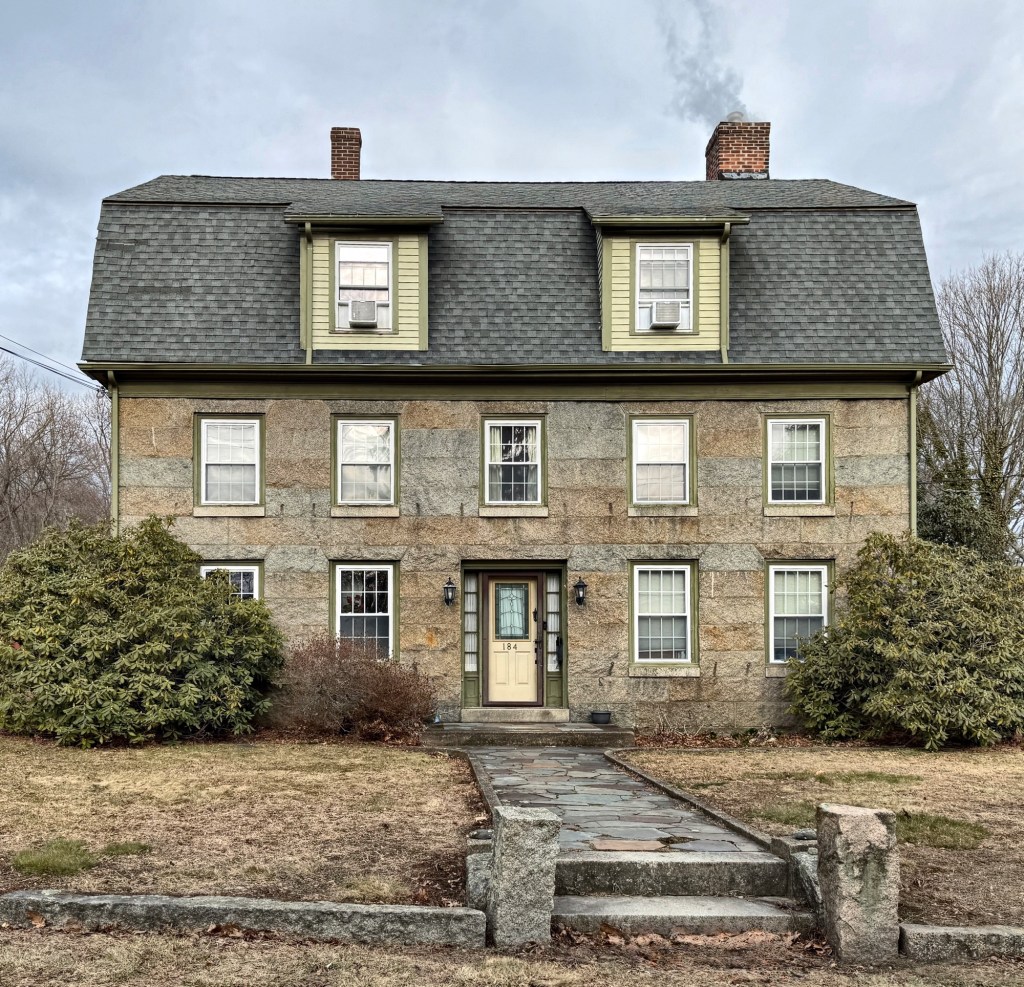
Located on North Main Street in Sharon, Massachusetts, the Darius Lothrop House stands as a unique late-Georgian style residence built of locally quarried stone. Darius Lothrop (1777-1841) is said to have built the large, two-story house in the 1830s and resided here until his death in 1841. The Lothrop House retains its large gambrel roof, center entry set within the stonework, splayed lintels over the first floor windows, and twin shed dormers.

George P. Lawrence Summer House // 1897

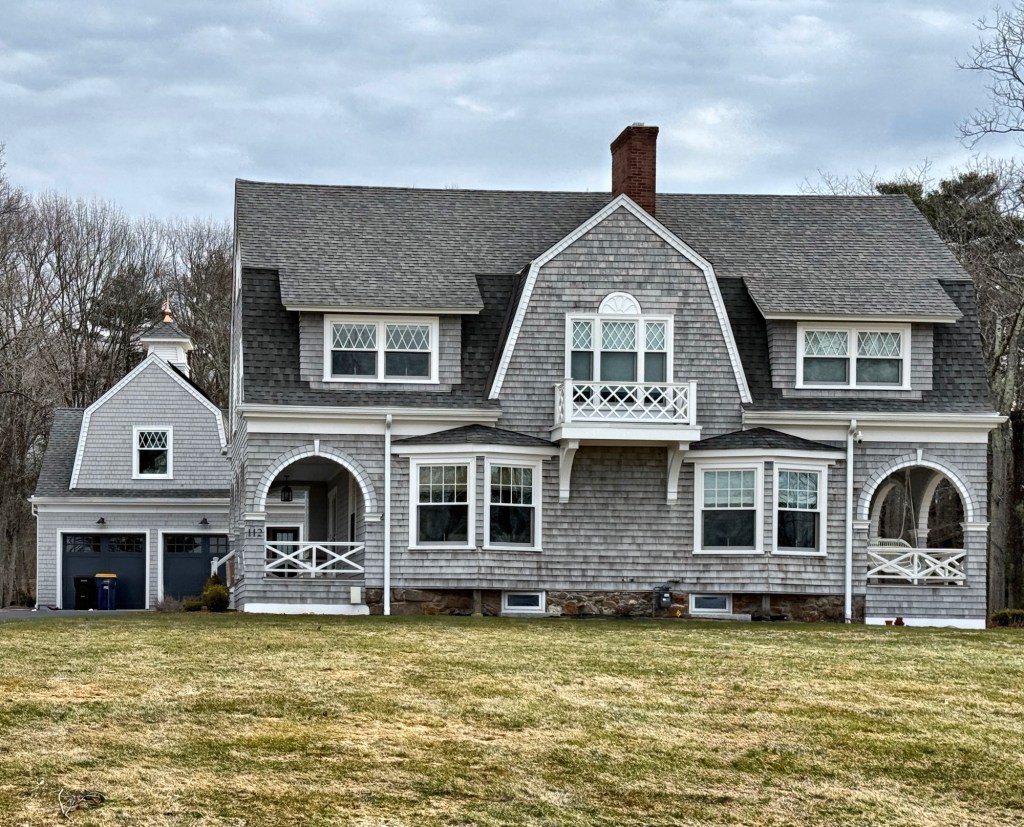
On the eastern shore of Lake Massapoag in Sharon, Massachusetts, the George P. Lawrence Summer House is an excellent and rare preserved example of a late 19th century Victorian summer house in the suburban town. The residence was built in 1897 for George Pelton Lawrence (1859-1917) and his wife, Belle, as a summer retreat from their primary residence in North Adams in Western Massachusetts. George P. Lawrence was an attorney who was appointed as a district court judge before entering the political arena where he became a state senator. The couple spent summers at this beautiful Shingle/Colonial Revival style residence until Congressman Lawrence’s death in 1917. On November 21, 1917, Lawrence jumped out of his eighth-floor New York City window at the Hotel Belmont , committing suicide. In his room, he left a note saying that he “could not stand the pressure anymore”. The Sharon property remained in the family until the 1940s and has been modernized, while maintaining its character.