Norwood Press Complex // 1897

Now that is an interesting example of adaptive use… What do you think of this?
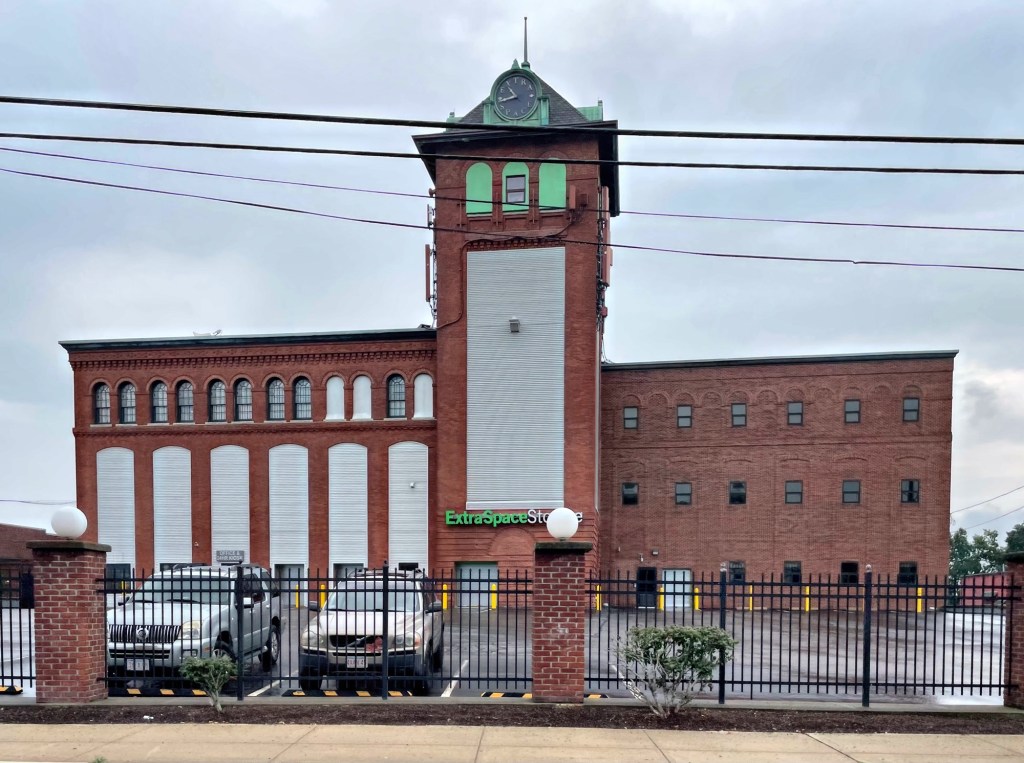
The Norwood Press was formed in 1894 by several companies which consolidated to form a company that covered all aspects of the book-making process. AII three companies had been located in Boston, but were lured to Norwood by free land offered by the local Business Association along with tax incentives that were too good to pass up. The underutilized land was quickly redeveloped in the 1890s with the several-building complex built on Washington Street in Norwood, Massachusetts with the largest building (pictured) constructed in 1897. By 1904,the press room of this plant was one of the largest in the U.S.,producing nearly seven million volumes ranging from 100 to 1,600 pages each. By 1917, the Norwood Press employed 600 workers in town! The Romanesque Revival style brick factory stands out for its five-story clocktower with (now enclosed) arches and corbelling. The Norwood Press closed after WWII and the plant was purchased by the Northrup Company. Today, the warehouse is under new ownership and is used as a storage facility, with many of the windows enclosed for the storage units.

United Church of Norwood // 1886

Located across from the church-like Norwood Town Hall, the United Church of Norwood is a landmark example of the Victorian Gothic architecture style and an important historical landmark for the town. The cornerstone of this present church was laid in 1885 and was completed and consecrated by December of 1886. Boston architect J. Williams Beal, got his start at the firm of McKim, Mead & White, designed the church here for the local Universalists, who lost their previous church to fire in 1884. In 1934, the town’s Universalist and Methodist congregations merged and they joined together in this, as a Union Church. Built of Milford granite and pressed brick, the United Church of Norwood features a side chapel and clock in its steeple which are unique and add charm to the historic church.

Oliver J. Barr House // 1908

Built in 1908 as a late example of the Queen Anne and Shingle styles, the Oliver J. Barr House is one of the finest Victorian buildings in Norwood, Massachusetts. The residence was built for Oliver J. Barr (1863-1935), who served as the General Manager of the Norwood Press in town, following his company from Boston to Norwood. The house was designed by Eugene Clark a Boston-area architect who specialized in suburban houses in the late 19th and early 20th centuries. The dwelling is noteworthy for its distinctive form, intact and rough textured wood shingle siding, and complex roof configuration. Particularly noteworthy is the verandah which encircles its northeast corner and rounded conically capped tower.

Norwood Theatre // 1927

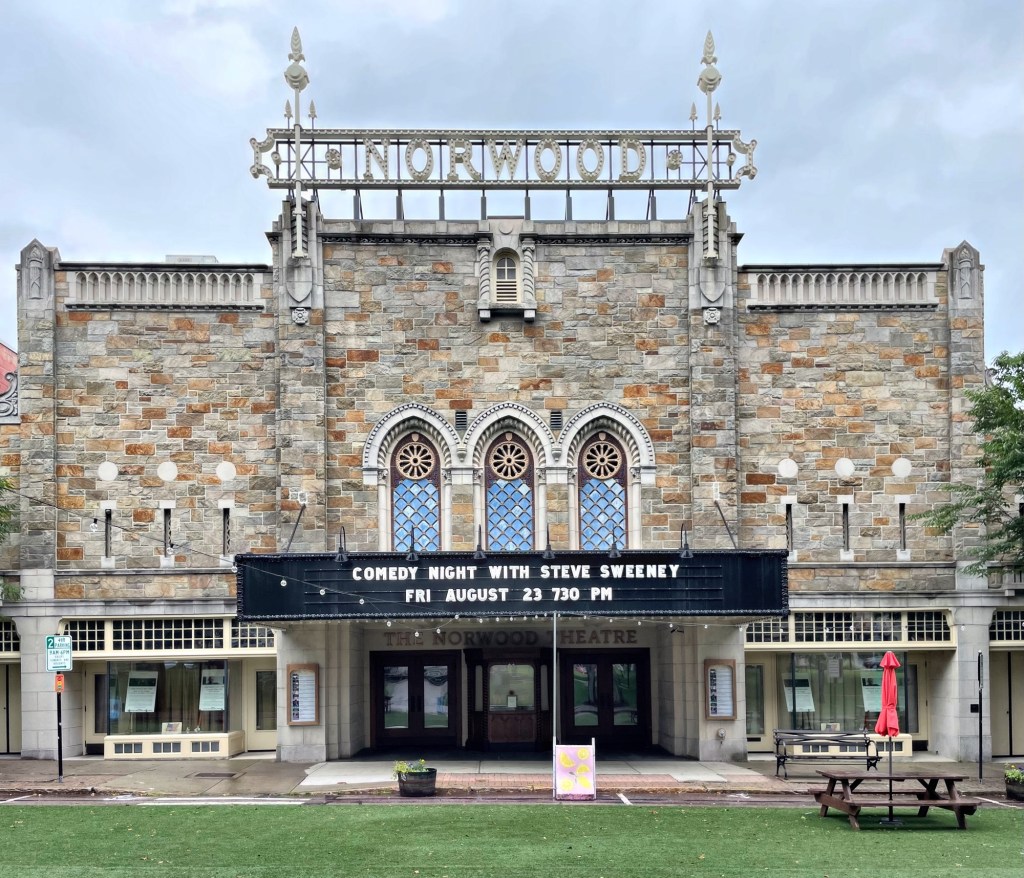
The Norwood Theatre was built in 1927 as a high-style showpiece for the re-invigorated downtown of Norwood, Massachusetts. Built at the same time as the Norwood Town Hall building, the building was constructed at a time of great development in the town, as local entrepreneur and philanthropist, George Willet and landscape architect Arthur A. Shurcliff, created a plan to evolve Norwood from a sleepy rural town to a commercial center. Architect William G. Upham is credited with designing the theatre and he enjoyed a prolific career which encompassed the design of masonic temples, commercial blocks, theatres, homes, and of course, the Norwood Town Hall. The Norwood Theatre was designed in a high-style Spanish Renaissance Revival style and was designed for motion pictures but also included a stage for possible vaudeville and theatrical productions. By the mid-20th century, a Modern sign covered much of the original facade, and lasted until the building came under its current ownership in 2010. A careful two-year restoration brought the theatre back to its former glory.

Chickering Farmhouse // c.1807

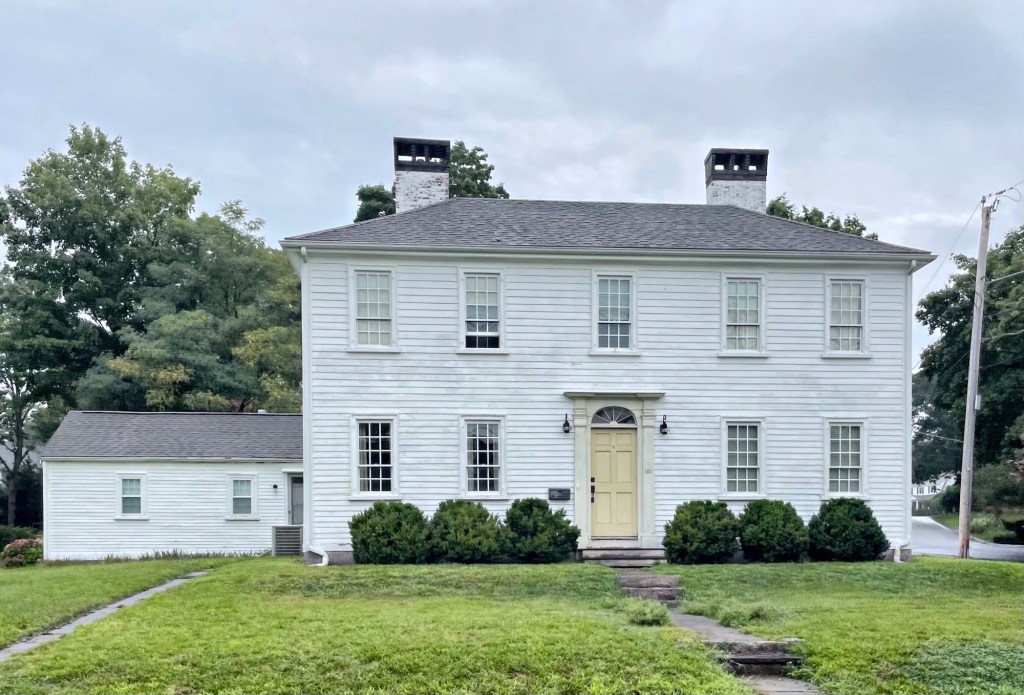
The Chickering House at 101 Walpole Street is significant as one of the oldest extant houses in Norwood, Massachusetts. Although local lore dates this house to 1781, it likely dates to 1807 (or was adapted from an earlier house) and was owned by Deacon Dean and Sally Guild Chickering, who farmed on the lot. Three generations of Chickerings farmed the land here until the early 20th century, when John D. Chickering, a local historian, sold much of the land for suburban development. The Federal style farmhouse remains as a vestige of the early, pre-suburbanization that Norwood is now known for.

Norwood Odd Fellows Building // 1912

In the early 20th century, Norwood, Massachusetts, shifted from sleepy rural town to a commercial and population center with a population tripling in size between 1900 and 1930. Located on Washington Street, the town’s main commercial street, the Odd Fellows Building stands as a reminder of the historical importance to charitable and social organizations. Designed by Boston architect Clarence Blackall, the three story building is characterized by a boxy rectangular form, yellow and tan masonry with limestone and granite trimmings, and its somewhat minimal detailing. Built in 1912, the building’s first floor was designed to contain two stores, the second floor housed the club rooms and meeting hall, and third-story containing restrooms and a kitchen. The Classical Revival style building is one of the larger and more significant commercial structures in the town center.

Norwood Town Hall // 1928

Norwood Town Hall represents the achievement of landscape architect Arthur A. Shurtleff and local financier, George Willet, to transform the village center of Norwood, Massachusetts from a sleepy rural village to a thriving commercial and cultural center of town. Plans for the municipal building began as early as 1919, with this building serving as both a town hall and memorial to the Norwood men who died in all previous wars. The building would not be completed until 1928. Designed by Norwood architect, William Upham, the building is a landmark example of the Neo-Gothic Revival style and its main feature, the 110-foot bell-tower which houses a 50-bell carillon, towers over the town common.

Henry S. Chase House // c.1882

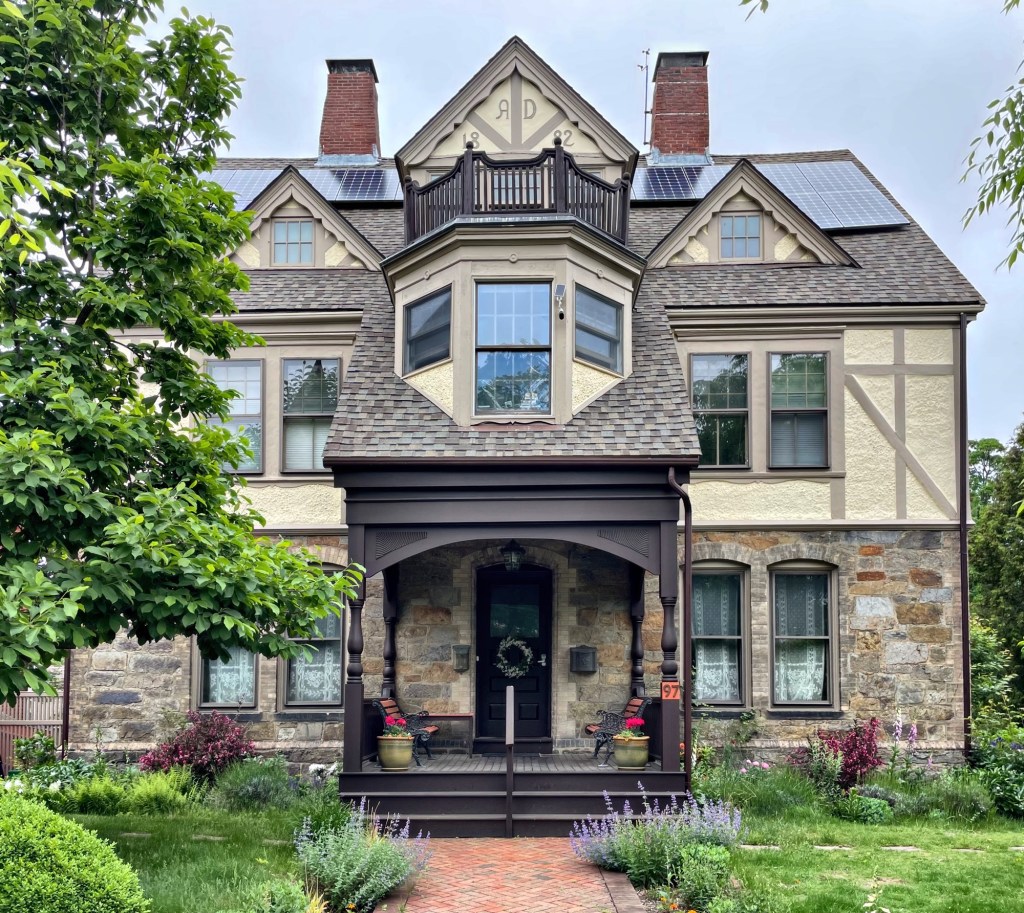
One of the many “hidden” gems of old houses in Brookline is this charmer on Francis Street, just west of the Longwood district. The residence was built by 1882, by Henry Savage Chase (1825-1885) who lived in a larger stone mansion across St. Paul Street (no longer extant). This house was rented out by Chase, possibly to friends and remained in the family for decades. This early Queen Anne style dwelling (and likely the main house) was designed by architect Edgar Allen Poe Newcomb, a relatively unknown architect of the period. The house has an irregular plan with varied siding and materials, with applied ornament that has survived intact for nearly 150 years.

Temple Ohabei Shalom // 1927

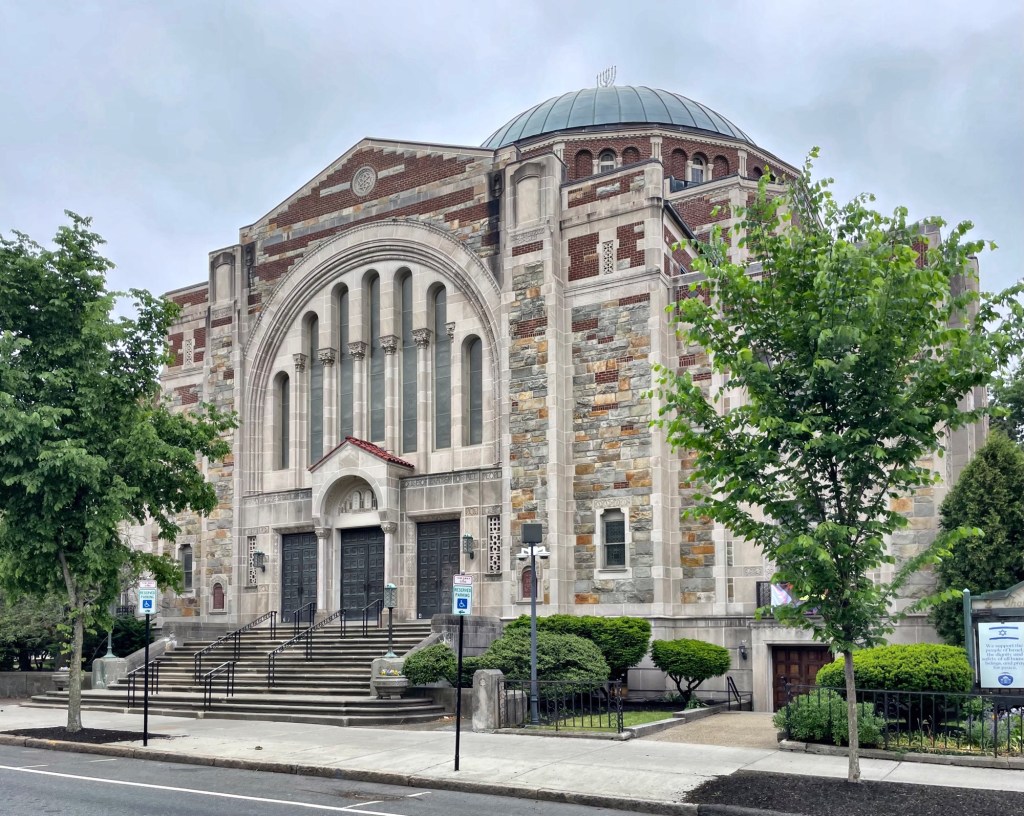
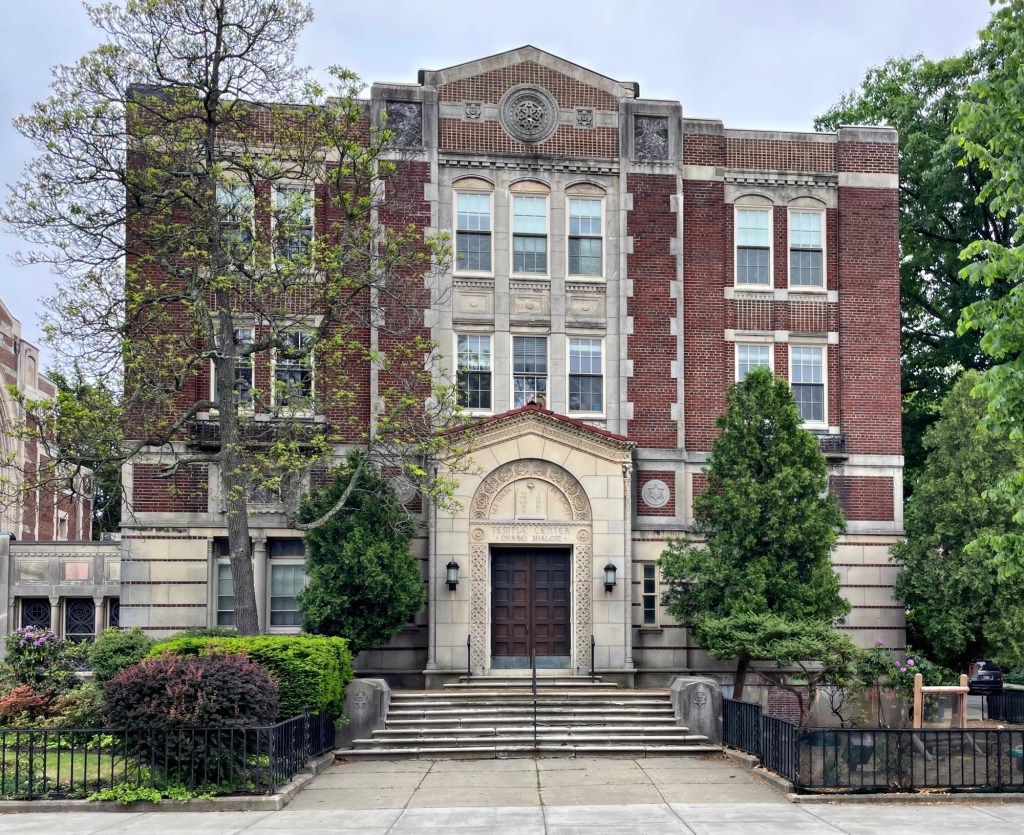
The congregation of Ohabei Shalom is the oldest jewish congregation in the greater Boston area and the second oldest in New England. It was formed in 1843 and was the first formal congregation in Boston. After a smaller space, they purchased the former South Congregational Unitarian Church on Union Park Street in the South End of Boston. The congregation split over ideological differences and the decision was made for one half of the congregation to build a new temple in Brookline, where many of the members began to move to. Land on Beacon Street, just west of the Longwood section of Brookline was purchased in 1921, and it would be four years until a temple center (now the hebrew school) was built in 1925. The larger temple was built just after on the corner of Beacon and Kent streets in Brookline from plans by Clarence Blackall, a noted architect in the area. With its lively use of polychromatic masonry and Byzantine ornament, all surmounted by a great copper dome, the congregation boasts the most architecturally outstanding synagogue in the Boston region and it has been maintained well for the almost 100 years since it was built.

School Building


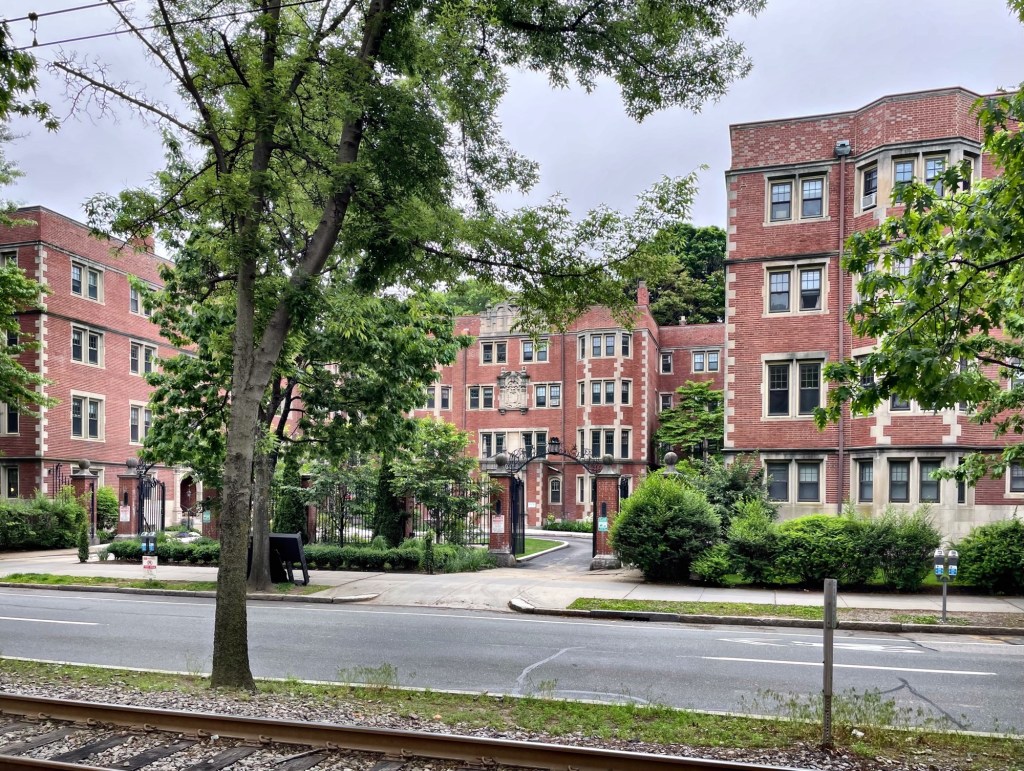
Richmond Court // 1898

Believe it or not, but this apartment building on Beacon Street in Brookline, Massachusetts is one of the most significant buildings of the type in the Boston area! This is Richmond Court, which is one of the oldest (if not the first) apartment house built in the northeastern United States that resembled an English Tudor manor house. The apartment building was constructed in 1898 from plans by architect Ralph Adams Cram, one of the best American architects of the late 19th and 20th centuries. Cram even moved into the building briefly before moving into a townhouse in the Back Bay neighborhood of Boston. The building set the tone architecturally for later apartment buildings in the Boston area, with many architects attempting (largely not as effectively) to design Tudor-influenced apartment buildings regionally. The development is also significant in that at a time when most Boston-area developers were building apartment houses that maximized the buildable square footage, as they do to this day, Richmond Court included a landscaped courtyard to provide residents with more light and air circulation. The development also included two separate town houses on either side of the apartment block.

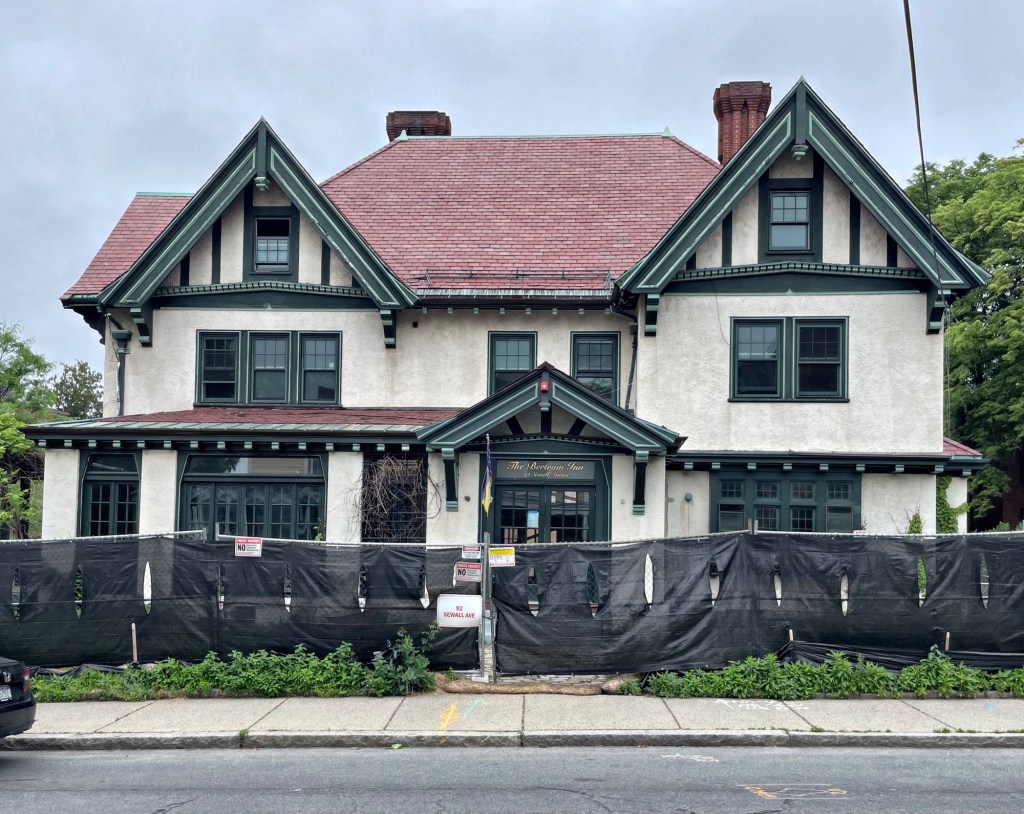
Kaffenburgh House – Bertram Inn // c.1910

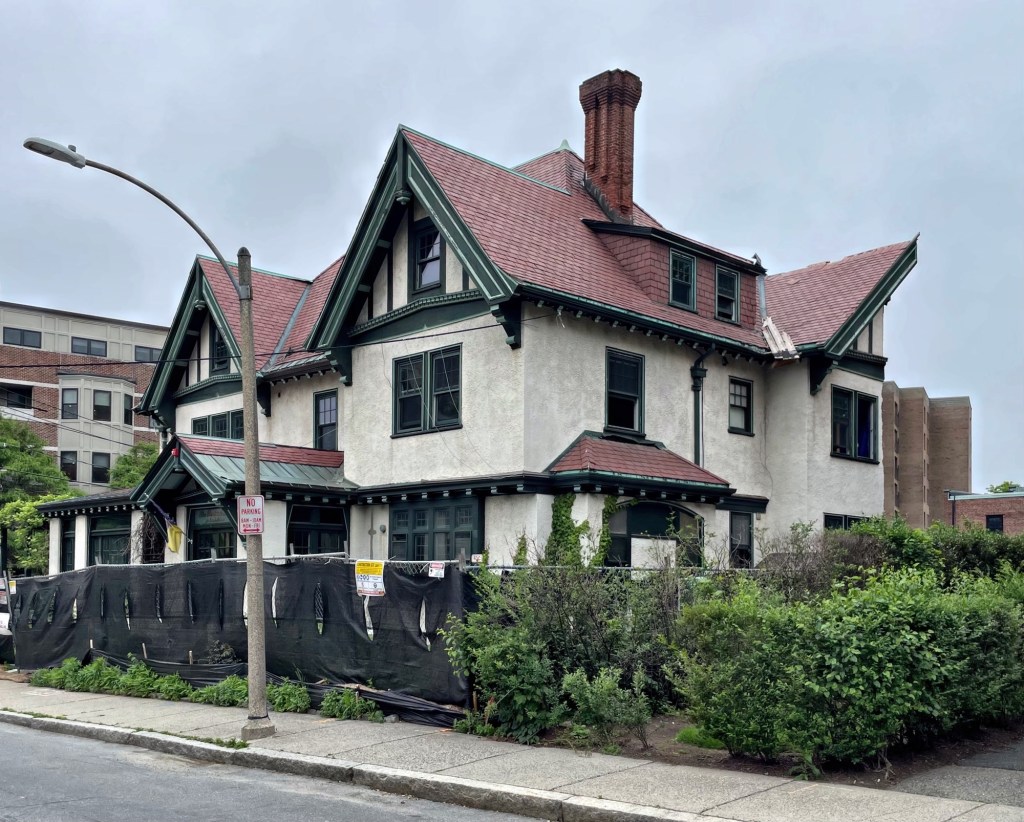
Across the street from the C. D. Hammer House on Sewall Avenue in Brookline, Massachusetts, this later take on the Queen Anne style with Tudor Revival elements is about to go through quite a transformation!

A little history before I share the proposal for the site… This house was built around 1910 for Bessie V. and Carl J. Kaffenburgh, a tobacco dealer with a store in Downtown Boston. The house was  from plans by architect Harry E. Davidson, who had previously designed stucco houses with Tudor influences for both the Vorenberg and Kaffenburgh family including 20 Amory Street in the nearby Cottage Farm neighborhood. By 1940 the house was owned by Hazen Blood and his wife. The Bloods had rented out rooms in the house totalling 13 lodgers here as a rooming house in the 1940 directory. In 1987, owner, Bryan Austin purchased the property restored it, and opened it as the Bertram Inn.

In recent years, the adjoining lots were eyed for redevelopment and demolition was proposed for this property. Neighborhood opposition and the demolition delay process allowed for review of the plans, which now includes the “restoration” of the main house with a six-story boxy addition on the rear containing condominium units. While the proposed addition is not contextual to the historic Tudor Revival house, it does save the original building and provides much-needed housing for others, so I guess this is a win! What do you think?

C. D. Hammer House // 1893

This lovely Queen Anne style residence near the Longwood section of Brookline was built in 1893 for C. D. Hammer, the General Agent for the Provident Life and Trust Company of Philadelphia. The stately suburban dwelling was designed by architect Julius A. Schweinfurth, a noted architect who designed many buildings in the region. While some of the stickwork and applied ornament has been covered by vinyl siding, much of the original detailing and some windows remain. The dropped pendants in the gables with flared bargeboard and highly ornamental corbels are a great touch and remain to this day. I bet all of the original details are still under that vinyl, just waiting to be shown again!

William Potter Rental House // 1889

William W. Potter, a shoe manufacturer and businessman, and his wife, Isabella Abbe Strickland Potter, lived in the Longwood section of Brookline and became active in the surround areas development in the last decades of the 19th century. William bought land off Kent Street and began to lay out house lots, becoming a developer overseeing construction of stately Queen Anne Victorian rental properties marketed to upper-middle-class residents. For this house on Francis Street, he commissioned architects George Rand and Bertram Taylor, who were known for producing stylish residential designs for the middle class in the Boston area. The massive property was a duplex, providing units to two lucky families! The building has just about every hallmark feature of the Queen Anne style including: the conical roof on a rounded corner bay, a complex roofline, asymmetrical plan, varied siding/materials, and applied ornamentation. In the 1920s, the house was owned by Simmons College, and used as a boarding house. Luckily, the property was restored and now is one of the finest residences in the neighborhood.

Orlando & Ellen Alford House // 1883

Orlando Hiram Alford (1840-1908) was an industrious and hardworking Vermonter who settled in the Boston area to make his wealth. He was a member of Bliss, Fabyan & Co., a large drygoods dealer, and would also become a director of the First National Bank, the City Trust Company, and the Franklin Savings Bank. In manufacturing, he serves the role of director of the Bates Manufacturing Company, the Merrimac River Towing Company, the Columbian Manufacturing Company, the Cordis Mills, and the Thorndike Company (among others). From his many positions and roles, he and his wife Ellen, were able to afford a house lot on Kent Street in the neighborhood between Longwood and Brookline Village. The Alford House, a stunning example of the Queen Anne style remained in family until after Ellen’s death in 1929, when it was purchased by the Boston Hospital for Women as a nurse’s residence. It was later used as apartments and was clad with vinyl siding, obscuring much of the original wood trim detailing. In the 2000s, later owners sought to demolish this house, which served as a rallying cry for neighborhood residents who understood the importance of the house and its context with surrounding lots. After the demolition delay process lapsed, they petitioned for a local district designation, effectively preserving the house for more generations to come! The Lawrence Local Historic District has since provided protection for houses in the area, but does not require a homeowner maintains or keeps up a property in a certain condition. Hopefully the Alford House will be restored soon!

Wightman-Pope House // 1910

In 1910, Ralph Linder Pope (1887-1966) graduated from MIT and later became Chairman of the Board of Directors of the Northwestern Leather Co., Boston. He married Elizabeth S. Wightman two years earlier and her father, George Wightman, purchased a house lot near his own 1902 mansion in the Longwood section of Brookline, Massachusetts and had this brick residence built in 1910 for the new couple. Mr. Wightman commissioned the famed architectural firm of Shepley, Rutan & Coolidge to design his daughter’s home in the Colonial Revival style.