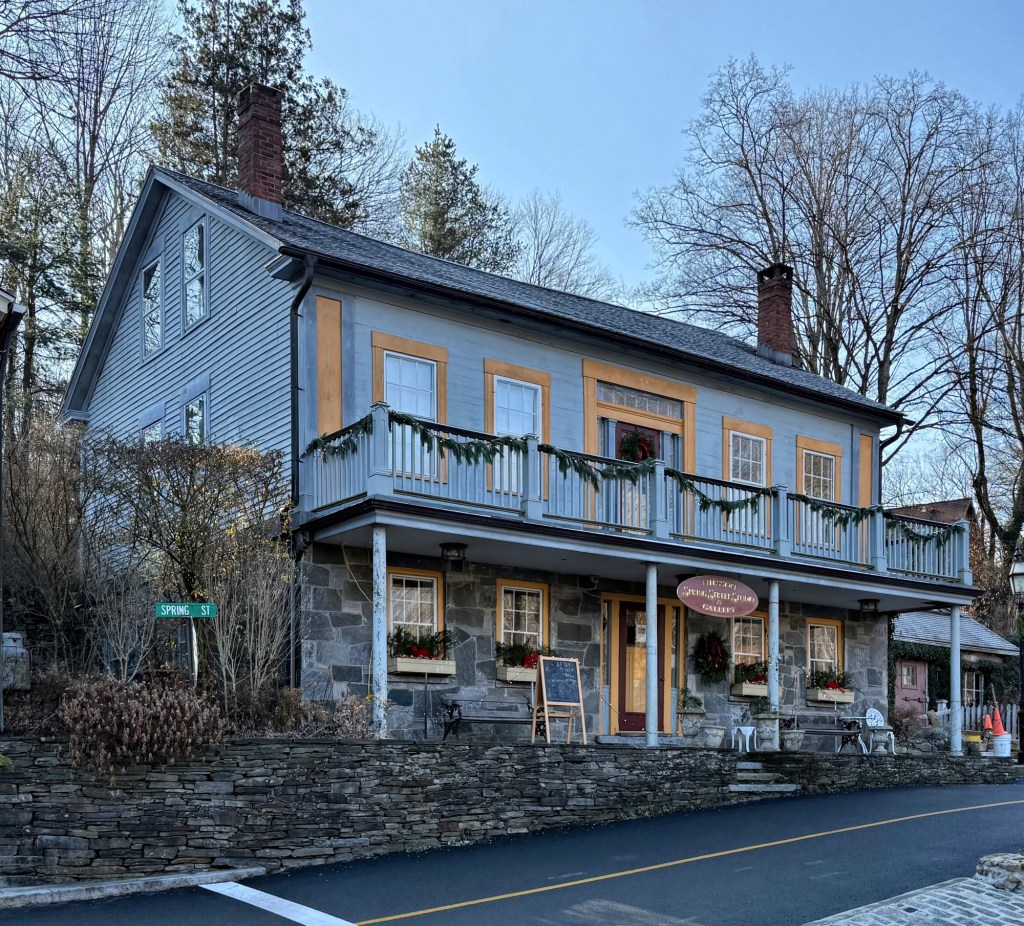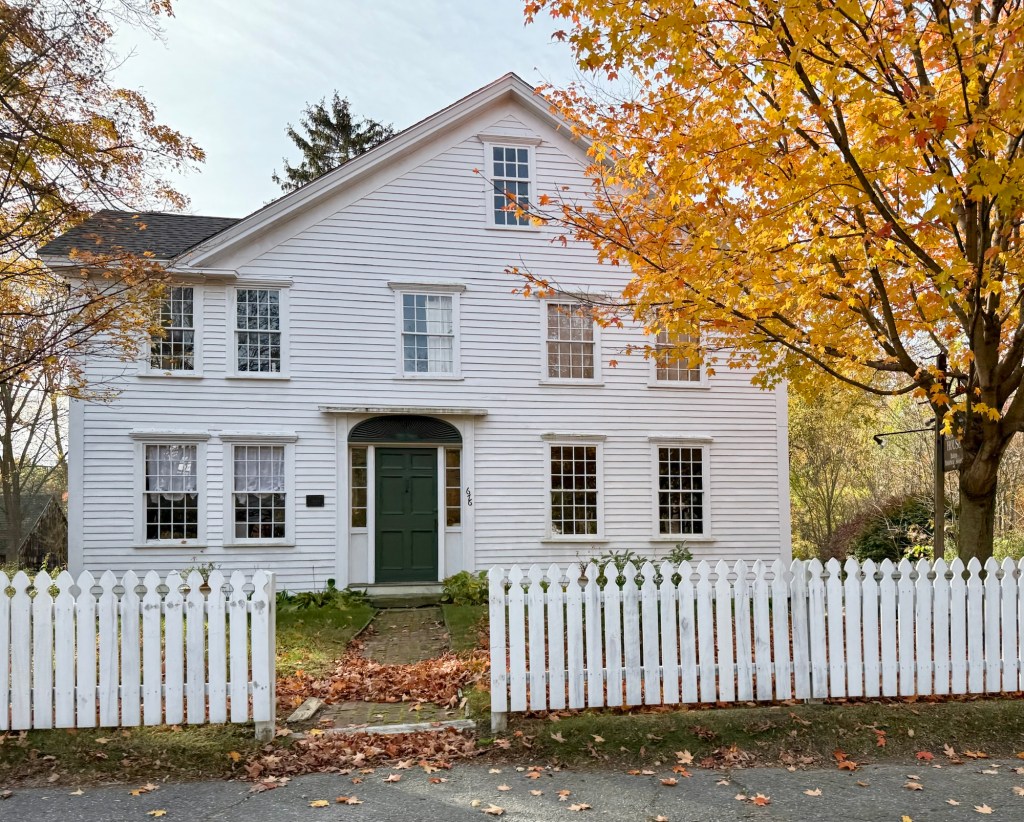
Chester House Hotel // c.1840

This altered building in the center of Chester Connecticut’s village Main Street, has historically been known as the Chester House, a hotel and tavern to provide lodging and drinks to travelers passing through the area in the mid-late 19th century. The structure, built atop a raised stone foundation, was constructed in the Greek Revival style around 1840, and long had a sheltered two-story portico supported by four monumental columns under a gabled roof which resembled a pediment. In 1903, a fire destroyed the upper floor and the roof was removed, creating a flat roof design. Later in the 20th century, a shallow side gable roof replaced the flat roof and the columns on the facade were also removed, giving the building the appearance we see today. The hotel closed, but the historic structure remains an anchor to the town’s vibrant commercial center, and houses a local business.

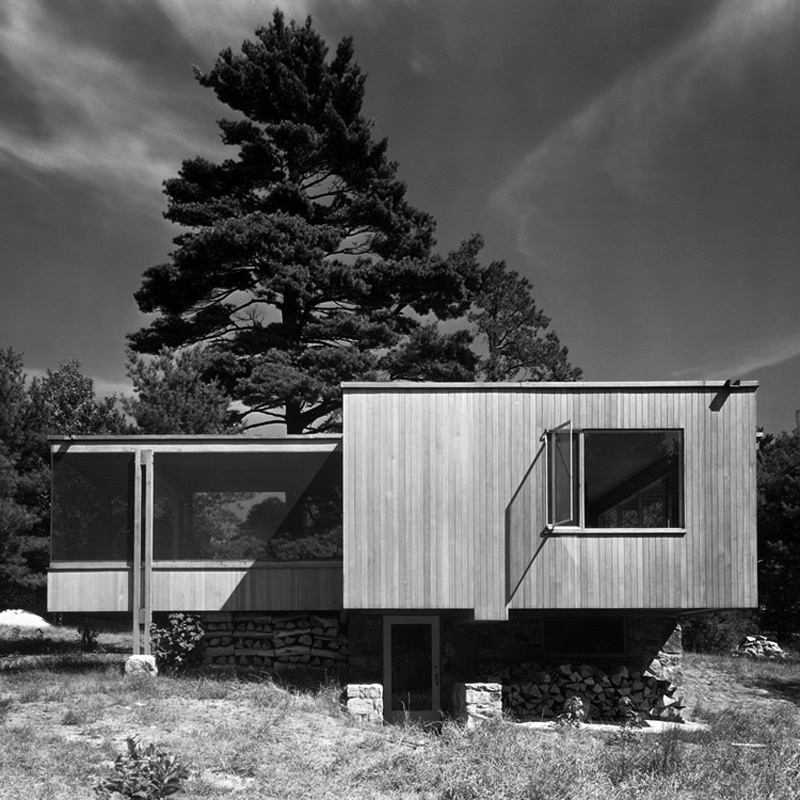
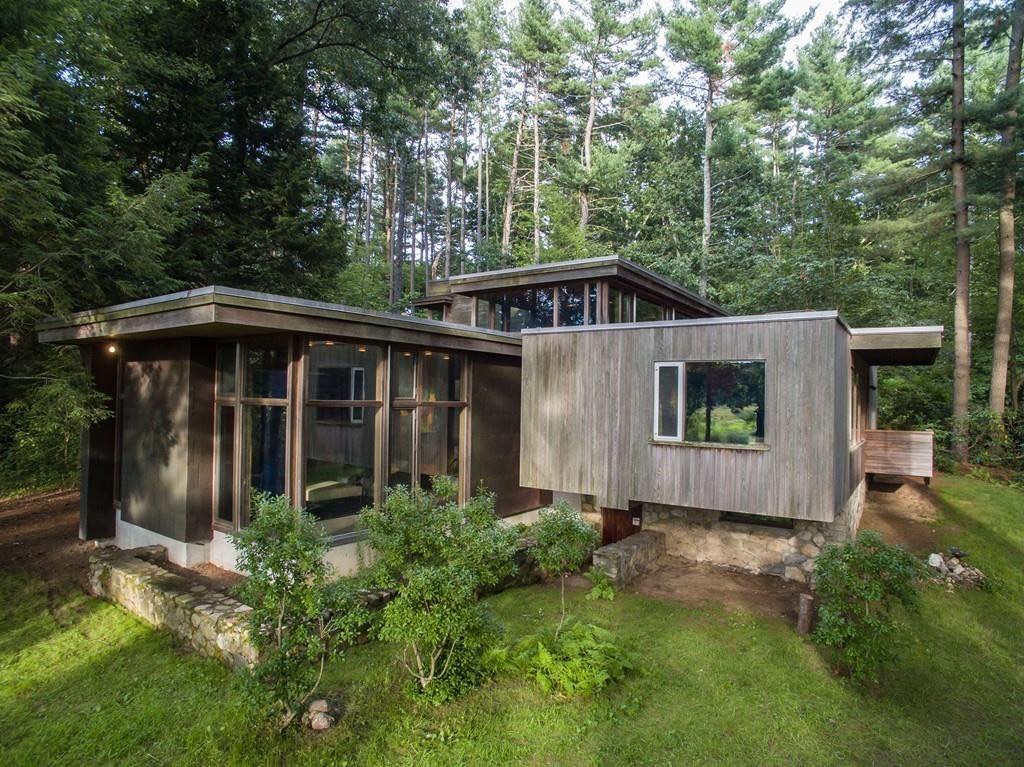
Chamberlain Cottage // 1940

Nestled into the forests of Wayland, Massachusetts, one of the most significant examples of early Modernist architecture, the Chamberlain Cottage, represents the European Bauhaus style adapted to the American landscape and New England vernacular. Designed in 1940 and completed in 1941, the house was commissioned by Harvard Economics professor, Henry Chamberlain and his wife, Margareth, as a weekend retreat from Cambridge. Professor Chamberlain commissioned Marcel Breuer and his mentor, Walter Gropius, then Dean of the Harvard Graduate School of Design, to design a home with a specific request for a screened porch similar to Gropius’ residence in nearby Lincoln. For the Chamberlain Cottage, the design responds to the uneven terrain and the potential for river flooding by two distinct parts: a grounded stone base and a cantilevered wooden volume above. The lower stone level functioned as a foundation while providing storage for a canoe and housing a fireplace that extends vertically through the structure; with the upper wooden volume containing living spaces. Despite its compact size for weekend visits, the upper level is well planned and includes a living space, kitchen, a single bedroom, and the porch. Due to its small scale and siting, the one-bedroom cottage was not easily adaptable for modern living. After falling into disrepair in the 1980s and ’90s, the home was purchased by architects Sidney R. Bowen and Angela Watson, who expanded the structure over the course of a decade to its current size of 3,742 square feet. It has been occupied and lovingly maintained by later owners. It remains a private residence.

Nourse-Sawyer House, Bolton Historical Society // c.1805

The building that became the Bolton Historical Society in Bolton, Massachusetts had unusual beginnings. According to town records, this residence-turned-historical society was built around 1805 as an addition to the famed Holman Inn, which stood in town from 1767 until its demolition in the 1870s. The wing contained a ballroom on the first floor, and guest chambers on the second. The main part of the inn was eventually torn down in 1874, but the east wing, this structure, was moved down the street to the present site, where it was converted to a house by owners Charles S. Rich, a Civil War veteran, and his wife Mary. In 1904, the house was bought by Arthur H. Nourse, who enlarged the property by purchasing adjacent land from his uncle, and bought two small buildings from the Town of Bolton, the historic engine house and old hearse house, which he moved to the site. The house was purchased in 1923 by Perley and Florence Sawyer. Mrs. Sawyer was a charter member of the Bolton Historical Society at its founding in 1962, and later, by 1970, she gave the house, with over three acres of land, to the Society. The property is still owned by the Historical Society, which operates it as a house museum and a repository for local historical documents.

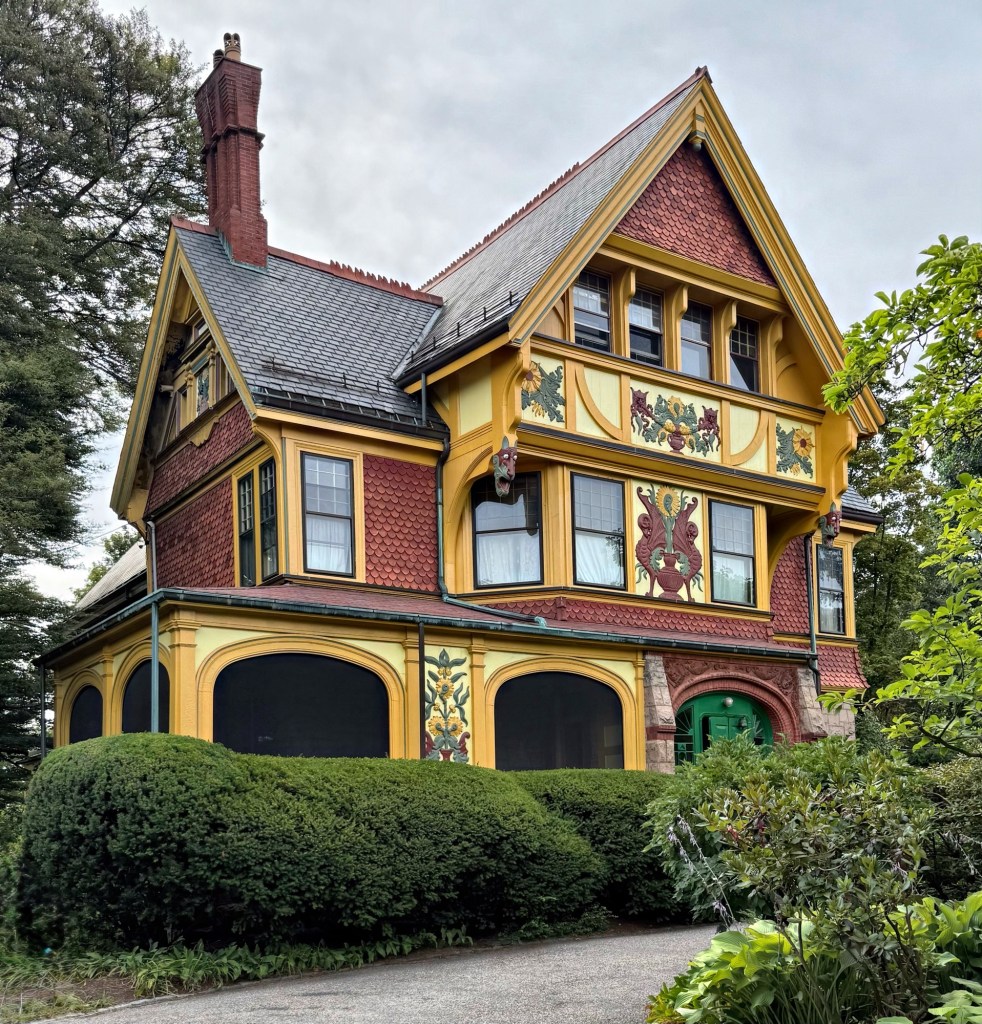
Edward Stanwood House // 1880

The Edward Stanwood House at 76 High Street in Brookline, Massachusetts, is one of the finest and exuberant examples of the English Victorian Queen Anne style, notable for its varied wall textures and materials, unique form, and applied ornament. The house was built in 1879-1880 for Edward Stanwood, who was for many years the editor of the Boston Daily Advertiser, and a children’s magazine, The Youth’s Companion. The ornate residence was designed by Clarence Sumner Luce, with interiors by Thomas Dewing. The Stanwood House features a well-preserved exterior and period-appropriate paint scheme, highlighting the bas-relief sunflower ornament and gargoyles. Of particular note is the use of hung tile siding, overlaid to give the appearance of fish scales and the roof cresting.

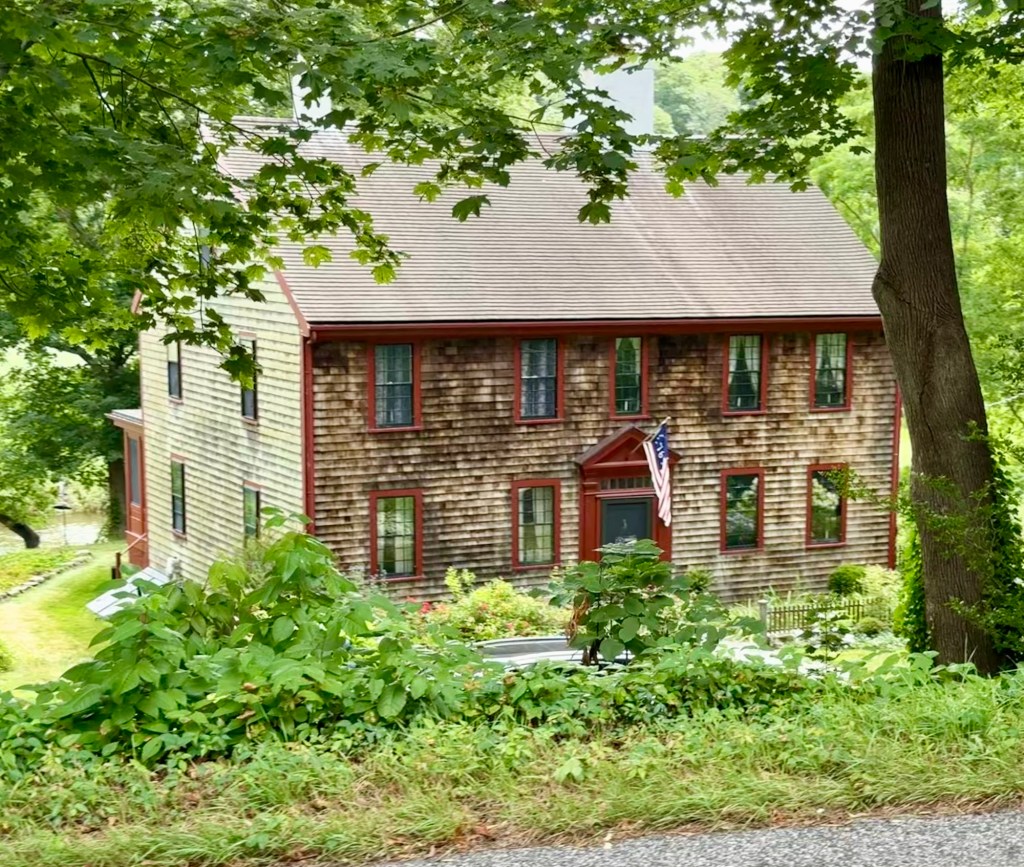
Kingston Almshouse // c.1772

Built on the banks of the Jones River in Kingston, Massachusetts, this large residence is said to date to 1772 and was the home to a prominent ship-building family as well as to hundreds of destitute residents of the community who lived and worked here as the town’s poor house. Land (and possibly an earlier house) was acquired in 1772 by Zenas Drew (1735-1822), the son of Cornelius Drew, a wealthy shipbuilder who employed his many sons to work in the same industry, and the existing house was constructed for his family. From the house, numerous shipyards would be seen with large brigs travelling down the Jones River into Plymouth Bay and the Atlantic. After Zenas Drew’s death in 1822, the Town of Kingston acquired the property for use as the town’s almshouse or poorhouse, and likely expanded the property to its current Federal style configuration. Throughout the 19th and early 20th centuries, almshouses were a reality for society’s most vulnerable people, where these locally run institutions provided living and working conditions in a time before Social Security, Medicaid and Section 8 housing became a reality. These facilities were designed to punish people for their poverty and, hypothetically, make being poor so horrible that people would continue to work at all costs. Being poor began to carry an intense social stigma, and increasingly, poorhouses were placed outside of public view, as was the case here in Kingston outside of the town center at the banks of the river. By the 1920s and 1930s, these institutions began to close, with Kingston’s closing in 1923. The property was sold to a private owner, and has remained as a single-family residence ever since. 

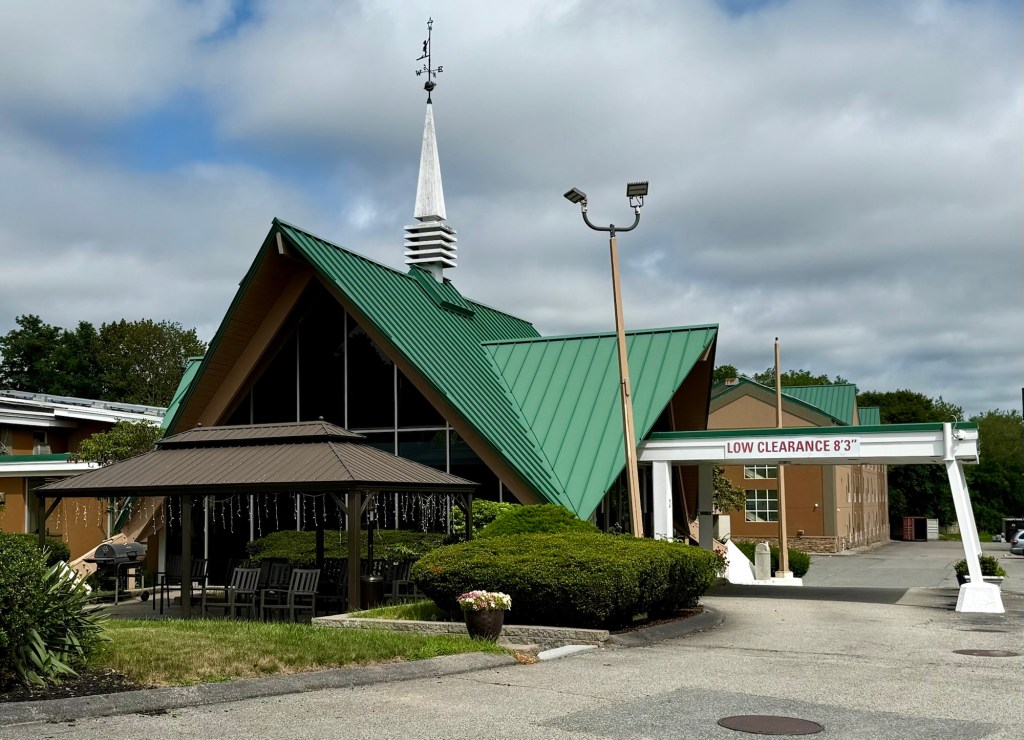
Former Howard Johnson’s Motor Lodge, Kingston // 1956

Howard Johnson’s (Hojo’s) traces its beginnings to the late 1920s when the Boston native Howard D. Johnson (1887-1972) opened a series of ice cream stands at various locations along the South Shore of Massachusetts. By 1940, there were more than 125 restaurants from Maine to Florida and by the late 1950s there were approximately 500 along the east coast. In 1954 the company expanded to motor lodges (motels), eventually opening over 500 across the United States. The growth of the motel tied closely with 1950s legislation that authorized Interstate highways connecting cities via automobile, increasing traffic all across the country. Howard Johnson’s adopted a policy of acquiring real estate directly off highway exit ramps and often the parcels were large enough to include a restaurant and motor lodge. Specifically, many Howard Johnson’s Motor Lodges featured prominent signage and bright orange roof, to help motorists identify the motel while speeding down the interstate. The Kingston location here opened in 1956 along Rt. 3, connecting Boston and points north, to Cape Cod. While it’s iconic name and orange roof do not remain, the unique Googie-esque form of the lobby with very 50s weathervane remain as an important vestige of 1950s America. 

General John Thomas House // c.1761

The General John Thomas House at 156 Main Street in Kingston, Massachusetts, is significant as a pre-Revolution Georgian style residence and for its connections with a notable Patriot. General John Thomas (1724-1776) was born in Marshfield and later studied medicine, completing his studies in 1746 at the age of 22. He practiced medicine until being appointed in March 1746, as assistant surgeon by Governor William Shirley in Samuel Waldo’s regiment. Liking military service, in 1747 he traded his post as surgeon for that of a lieutenant. By the time of the French and Indian War he had risen to colonel in the militia. After the war, he married Hannah Thomas in 1761 and either built or moved into this house in Kingston, where he practiced medicine. In the years leading up to the American Revolution, John Thomas was a Brigadier, and briefly resigned from the ranks, disappointed that while four major generals were named, he was not on the list. Congress was then trying to name no more than one major general from each state, and Artemas Ward was given preference. George Washington implored him to remain, and John Thomas returned to service. The Congress resolved that he would be given precedence over all other brigadiers in the army. On the night of March 4, 1776, he led his division to fortify the Dorchester Heights, overlooking the south harbor at Boston, by using cannon that Henry Knox had brought from Fort Ticonderoga. From that position, he threatened the British fleet and the British were forced to withdraw, evacuating Boston on March 17. Thomas was finally named a major general. Soon after, Thomas was assigned to command in Canada and take charge of the Canadian invasion. He joined the army besieging Quebec and remained there until he died of Smallpox in June 1776, not living long enough to see a free America. The John Thomas House is a lasting and important physical vestige of his legacy.

Joshua Orne House // c.1750

Joshua Orne (1708-1772) was born in Marblehead and attended local schools there. He would marry Sarah Gale, and they had one son together, Azor Orne, who would become a merchant, politician and patriot, fighting in the American Revolution. Sarah Gale died in 1743 and Joshua would remarry to Annis Stacey, having one child together, Joshua Orne Jr., who was a Patriot and fought in the Revolution, fighting alongside his half-brother, Azor. Joshua Orne and Annis owned a c.1663 house on this site and appear to have completely rebuilt the house or greatly modernized it around 1750. Joshua was a cordwainer and shipowner and later got involved with discussions of revolution and liberation from England. He likely inspired his sons to follow-suit and shared the same beliefs and values, though Joshua Sr. would die in 1772, not seeing the beginning of the War, nor freedom from tyranny. The house would be inherited by Joshua Jr. and later deeded to his son-in-law, John Bubier Prentiss, a shipmaster, who likely added the Federal period doorway and pedimented dormers.

Pawtucket Hair Cloth Mill //1864

Despite its name, this handsome mill structure, known as the Pawtucket Hair Cloth Mill, is actually located in Central Falls, Rhode Island. The building, located on Roosevelt Avenue on the banks of the Blackstone River, is a great example of a Civil War-era mill, built for one of the many wool and cloth companies in New England. Begun in a small factory across the street in 1856, this business became successful after the acquisition of patents for weaving haircloth (most of the raw material for which originally came from Russian horse markets) for upholstery, crinolines, and inner linings. The company is said to have once been the largest producer of haircloth in the world. The Italianate style mill stands pretty much as built, besides the tower that has lost its low pyramidal cap. The building was one of the first commissions by great Rhode Island architect, William Walker, who was just 34 at the time of designing this large, and complicated structure.

Central Falls Police Station and Courthouse // 1914

Built jointly by the city of Central Falls and the state of Rhode Island, this Classical Revival style building originally contained both the local police station and a district court house. The symmetrical building was designed by William R. Walker and Son, a Providence design firm, who specialized in large, civic and commercial buildings. The gray brick building is trimmed with limestone and stands three-stories under a hipped tile roof capped by decorative cresting. In the 1970s, the courthouse moved out and the entire building came into the ownership of the City of Central Falls and is today owned by the Central Falls Redevelopment Agency, which frankly worries me about the future of this important building. Does anyone know about plans for the building?