Birch-Stevens Mansion // 1855

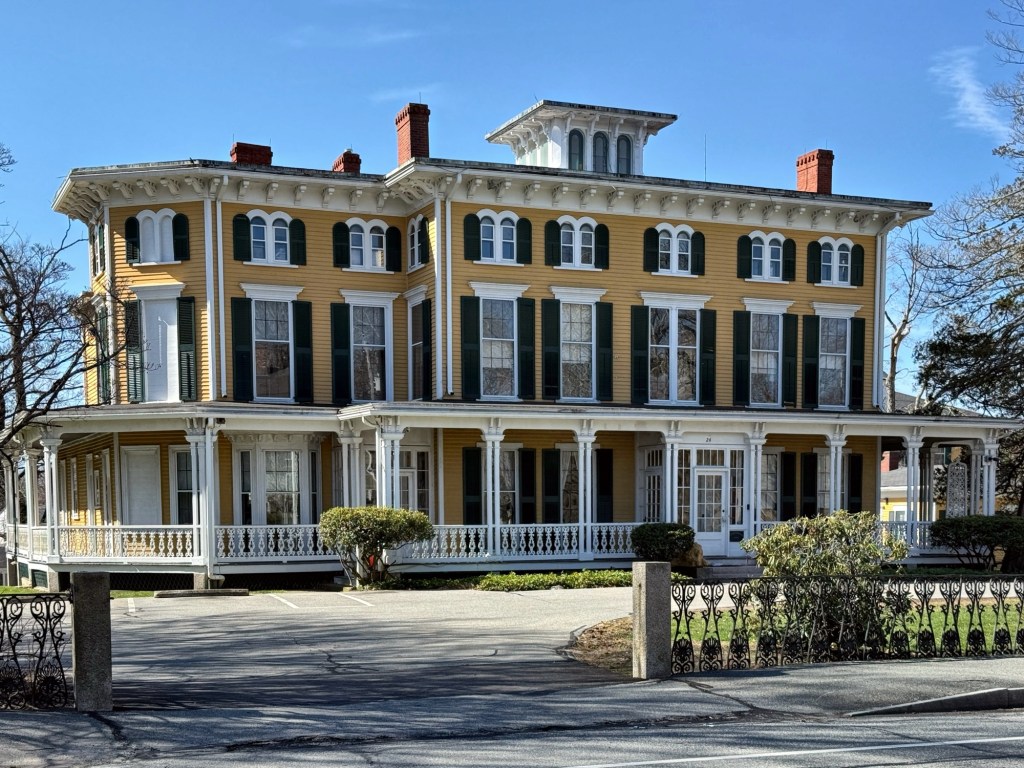
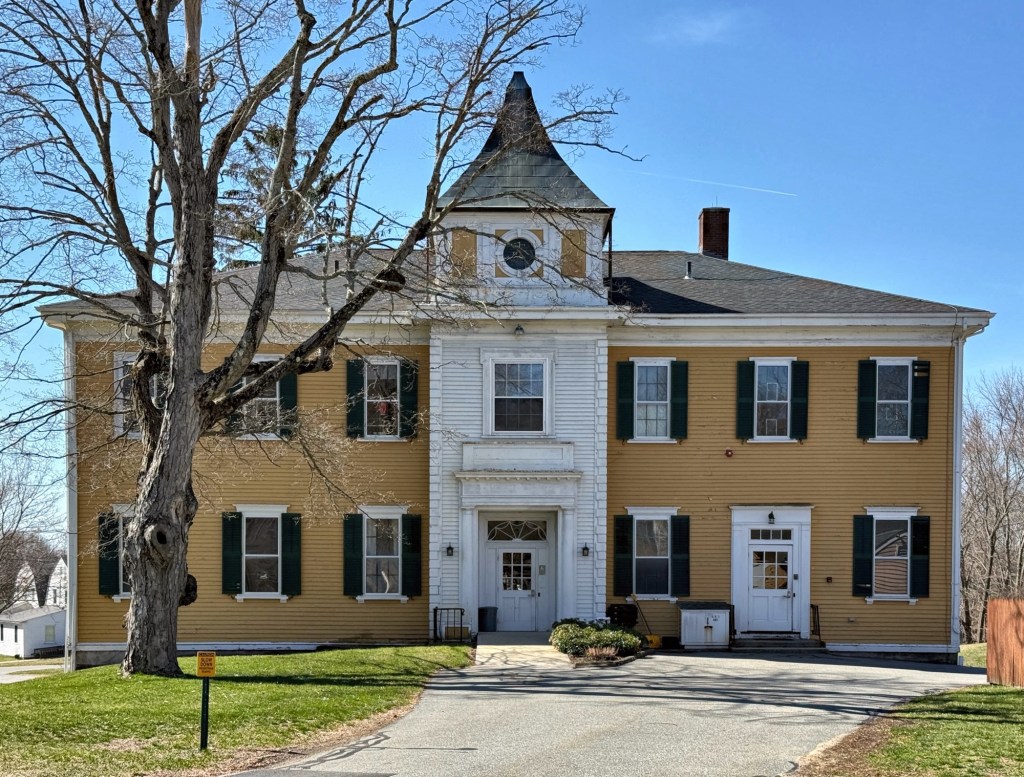
Built in 1855, the Birch-Stevens Mansion of Swansea, Massachusetts, is a grand Italianate style residence distinguished by its low hipped roof with belvedere, broad overhanging eaves with brackets, paired arched windows, and expansive wrap-around porch, all of a scale not commonly found in such a small community. The residence was built for James Birch and overseen by his new bride, Julia Chace. Before construction on the home, James Birch (1828-1857), not a wealthy man, worked as a stagecoach driver in Providence. His bride-to-be desired a large mansion in her native Swansea, equipped with servants and all the finer things of life. Since this dream was not attainable in his present circumstances, Birch, an enterprising 21 year old, decided to join the Gold Rush in California to make his fortune. In California, James became a stagecoach line entrepreneur and founder of the California Stage Company, the largest stage line in California in the 1850s. James made a fortune and returned to his wife in Swansea bringing money for her to begin constructing their grand mansion. James left again, this time establishing the San Antonio -San Diego Mail Line, the first transcontinental mail route in the United States. In 1857, while heading home, James sailed from San Francisco to Panama, took a train across the Isthmus, and sailed for New York on the steamer SS Central America. During the voyage, his ship was struck by a hurricane and later sunk. Many survivors clung to pieces of the ship’s wreckage for days with many dying to exposure or were swept away to their deaths, like James. He was just 28 years old. Back in Swansea, Julia was heartbroken but remarried her late-husband’s business partner, Frank Shaw Stevens, an equally successful businessman. Julia died in 1871, and Frank married a younger Elizabeth Case. The couple resided in this mansion for decades and donated substantially to their community, including funding the Town Hall, Public Library, Episcopal Church, and local public schools. In her will, Elizabeth Case Stevens bequeathed the large mansion in 1837 to the Frank S. Stevens Home for Boys which began as a boy’s orphanage. The organization remains to this day with an expanded mission, and maintain the sprawling estate and its various outbuildings, including the historic stable and farm structures.
Merrill Rowhouses // c.1896

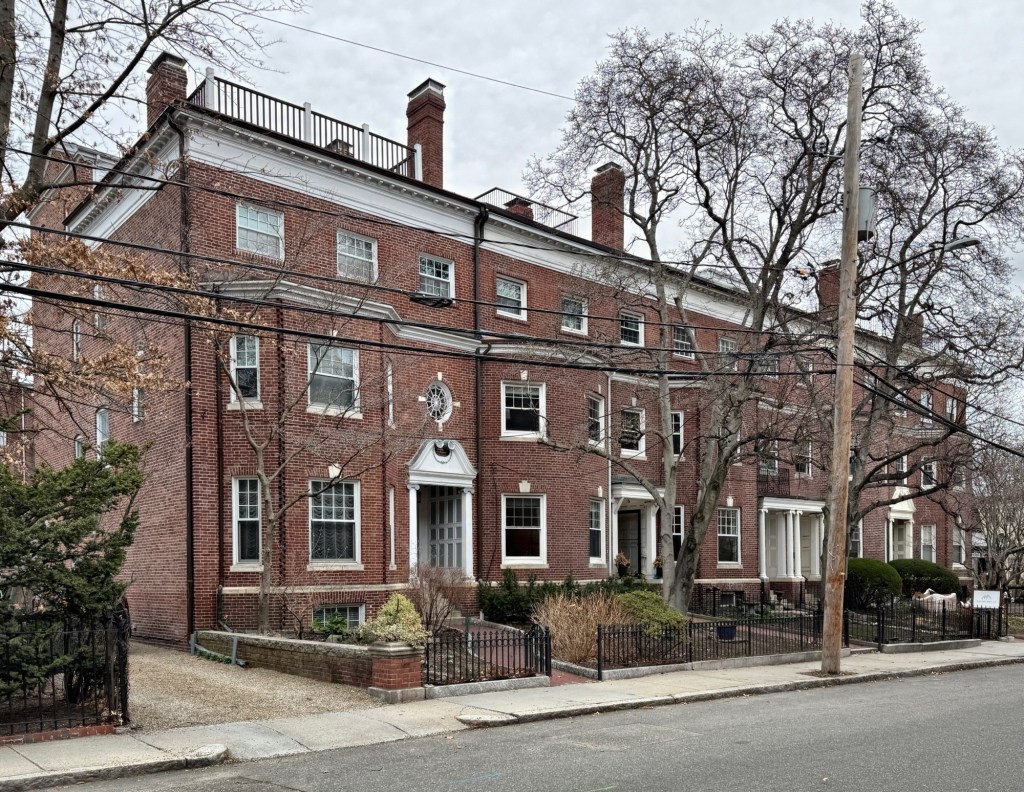
Around the turn of the 20th century, much of Brookline, Massachusetts, saw rapid development and suburbanization as the area streetcars and subway made Boston better-connected to adjacent communities. Developers eyed un- and under-developed lots near major corridors and stations to develop denser housing at varied success. In the Longwood neighborhood, Luther Merrill owned property along Beacon Street and in the more established wealthy neighborhood, where he sought to build. Taking cues from the surrounding context and precedence for rowhouse development, Merrill hired the local architectural firm of Ball and Dabney to furnish plans for a five-unit row. The firm designed the four-story building in the Colonial Revival style with its upper floor set back off the facade to give it the appearance of a three-story structure, to better fit with the surrounding character. The five privately owned rowhouses feature rounded bays and recessed paneled entrances, some surmounted by large swans neck pediments.

Amos Lawrence Rowhouses // c.1877

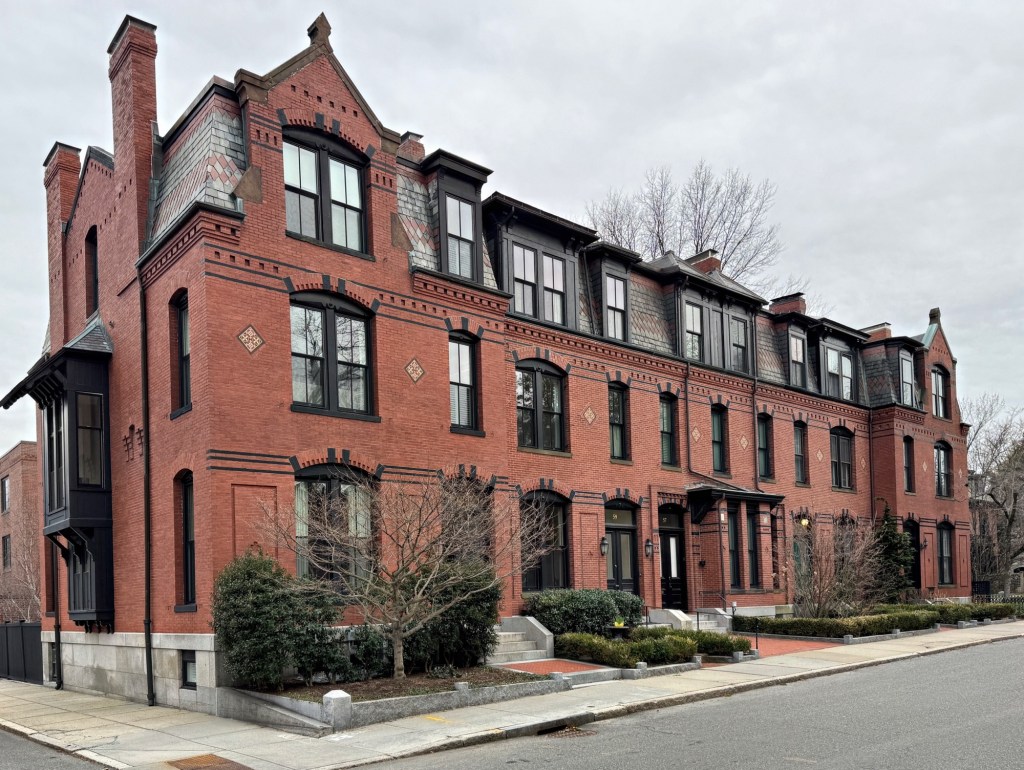
53-61 Monmouth Street

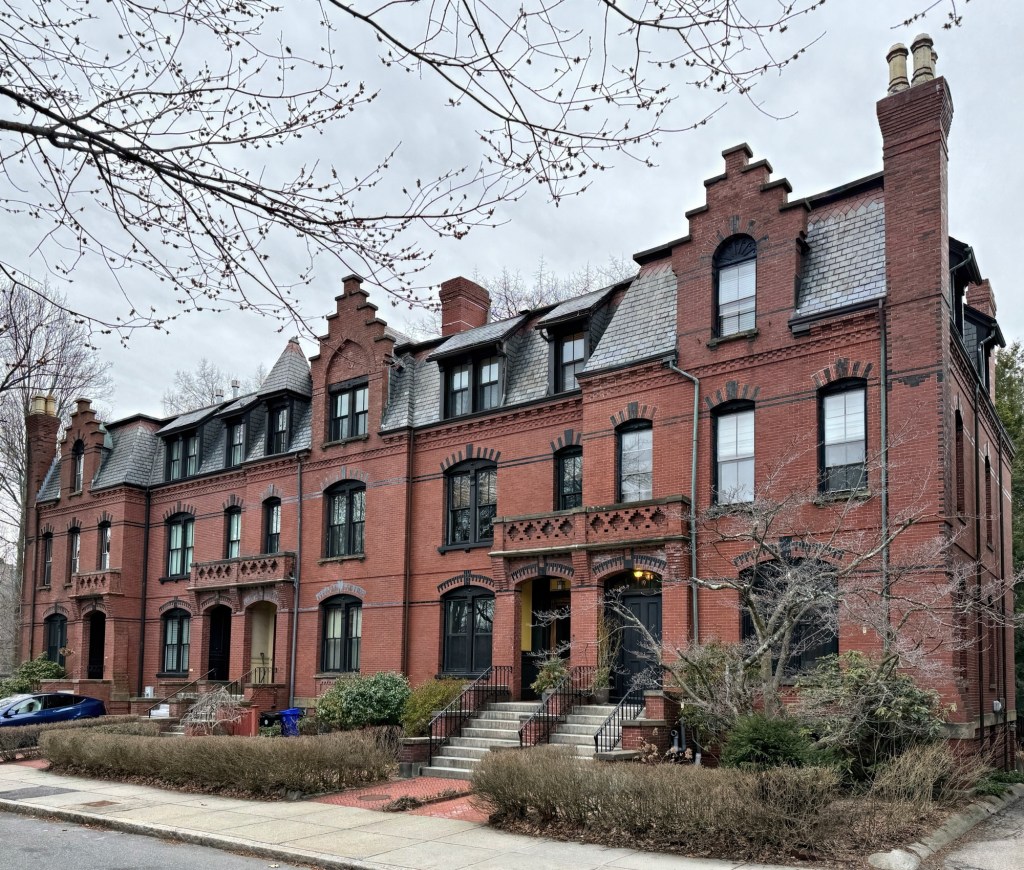
Amos A. Lawrence (1814-1886), a wealthy Boston merchant, owned land holdings in the present-day Longwood neighborhood of Brookline, just over the Muddy River from Boston, and developed the area into a wealthy and high-quality suburb. Lots were laid and Lawrence hired civil engineer, Ernest Bowditch, to plat for multiple sets of distinctive rowhouses surrounding a small green mall, which was later named Monmouth Court. Once the property was laid out, Amos Lawrence hired the Boston architects, J. Pickering Putnam and George T. Tilden, to design rowhouses for rental income. George Tilden was previously employed at the firm of Ware & Van Brunt, a firm that mastered and popularized the panel brick style in the Boston area in the 1870s and 1880s, and he clearly built upon this expertise for the rows for Amos Lawrence in Brookline. All four rows of houses are distinctive, yet compliment eachother stylistically with projecting bays. intricate brickwork, complex rooflines with dormers, and applied ornament. These two rows on the western side of Monmouth Court at 53-61 Monmouth Street and 19-27 Monmouth Court, were also likely the work of Putnam and Tilden, who practiced jointly for a couple years but published their work separately. Stylistically, the two Monmouth Street rows appear to be of the same architect, George Tilden with identical tilework and elements, and the two Monmouth Court rows as the work of Putnam with polychromatic segmental arches over the windows.

19-27 Monmouth Court

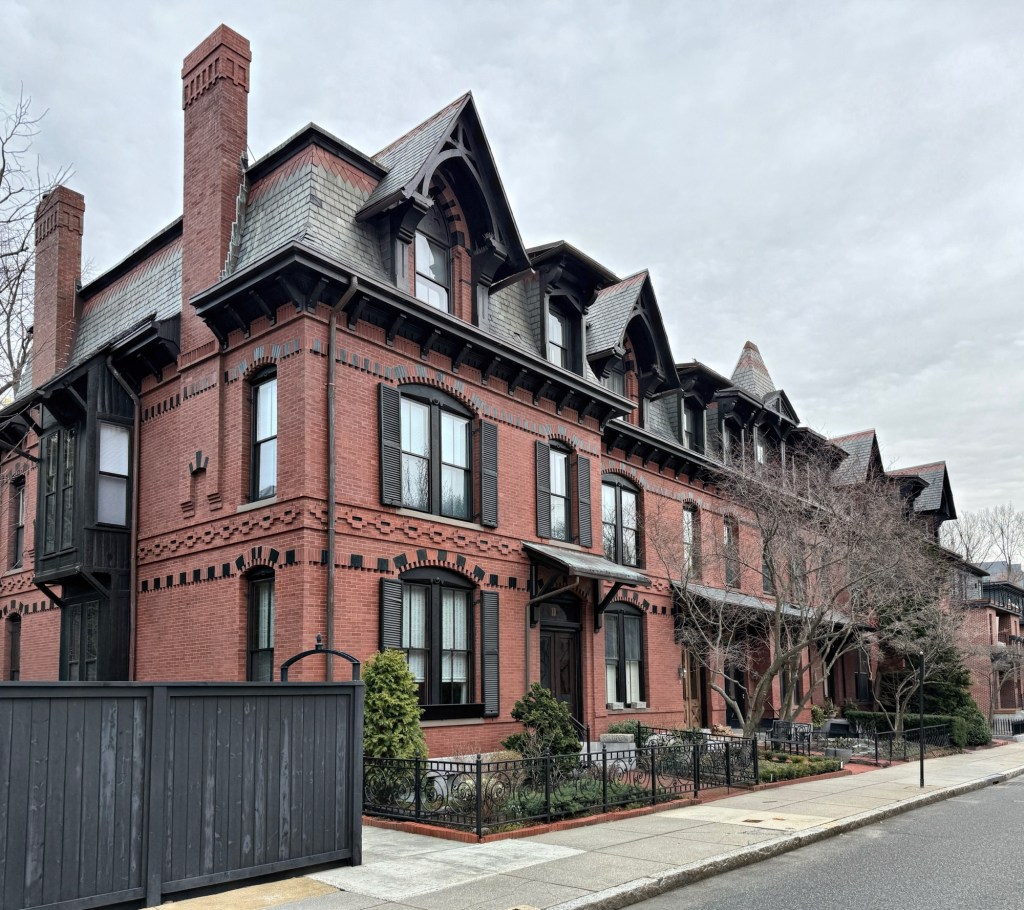
Amos Lawrence Rowhouses // 1876

Amos A. Lawrence (1814-1886), a wealthy Boston merchant, owned land holdings in the present-day Longwood neighborhood of Brookline, just over the Muddy River from Boston, and developed the area into a wealthy and high-quality suburb. Lots were laid and Lawrence hired civil engineer, Ernest Bowditch, to plat for multiple sets of distinctive rowhouses surrounding a small green mall, which was later named Monmouth Court. Once the property was laid out, Amos Lawrence hired the Boston architects, J. Pickering Putnam and George T. Tilden, to design rowhouses for rental income. George Tilden was previously employed at the firm of Ware & Van Brunt, a firm that mastered and popularized the panel brick style in the Boston area in the 1870s and 1880s, and he clearly built upon this expertise for the rows for Amos Lawrence in Brookline. All four rows of houses are distinctive, yet compliment each other stylistically with projecting bays. intricate brickwork, complex rooflines with dormers, and applied ornament. This row at 10-18 Monmouth Court was from the designs of partner, J. Pickering Putnam and was highlighted in an architectural publication soon after completion. The row exhibits a slate mansard roof disrupted by dormers with trusses, lancet arch and trefoil motifs, polychromatic brick and pent roof entrances all stepping out to the private courtyard.

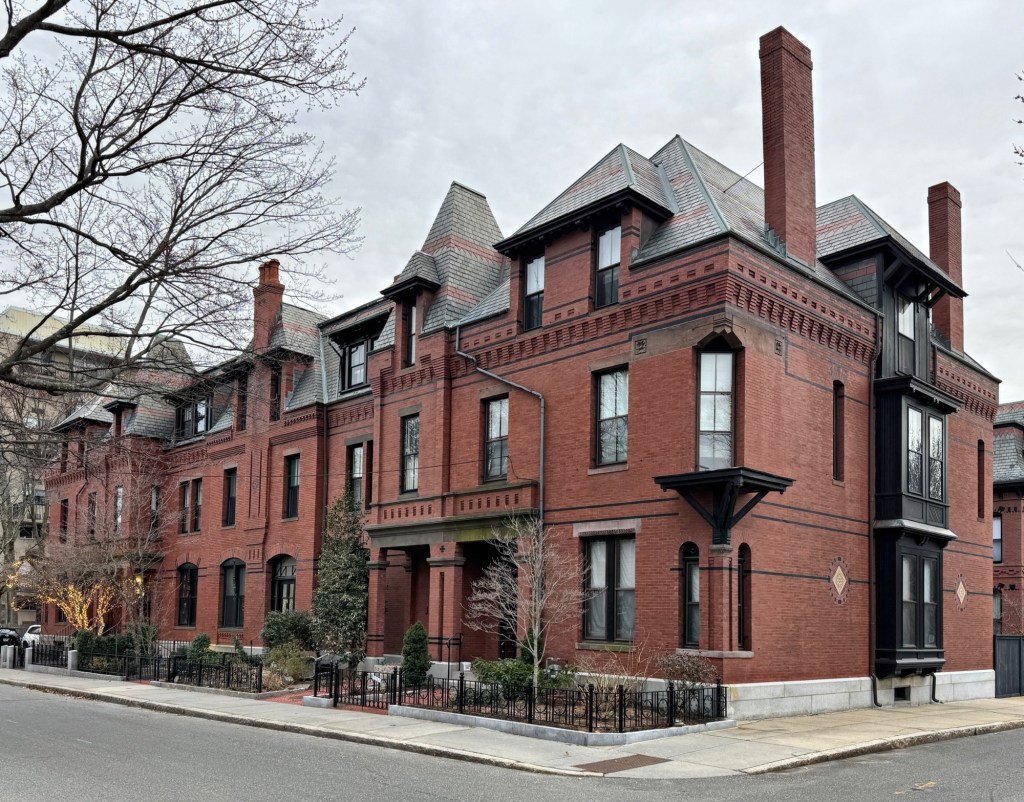
Amos Lawrence Rowhouses // 1876

Amos A. Lawrence (1814-1886), a wealthy Boston merchant, owned land holdings in the present-day Longwood neighborhood of Brookline, just over the Muddy River from Boston, and developed the area into a wealthy and high-quality suburb. Lots were laid and Lawrence hired civil engineer, Ernest Bowditch, to plat for multiple sets of distinctive rowhouses surrounding a small green mall, which was later named Monmouth Court. Once the property was laid out, Amos Lawrence hired the Boston architects, J. Pickering Putnam and George T. Tilden, to design rowhouses for rental income. George Tilden was previously employed at the firm of Ware & Van Brunt, a firm that mastered and popularized the panel brick style in the Boston area in the 1870s and 1880s, and he clearly built upon this expertise for the rows for Amos Lawrence in Brookline. All four rows of houses are distinctive, yet compliment eachother stylistically with projecting bays. intricate brickwork, complex rooflines with dormers, and applied ornament. This row at 69-77 Monmouth Street exhibits inlaid tile medallions and small balconets on the chamfered corners that are missing their railings.

Church of Our Saviour, Brookline // 1868

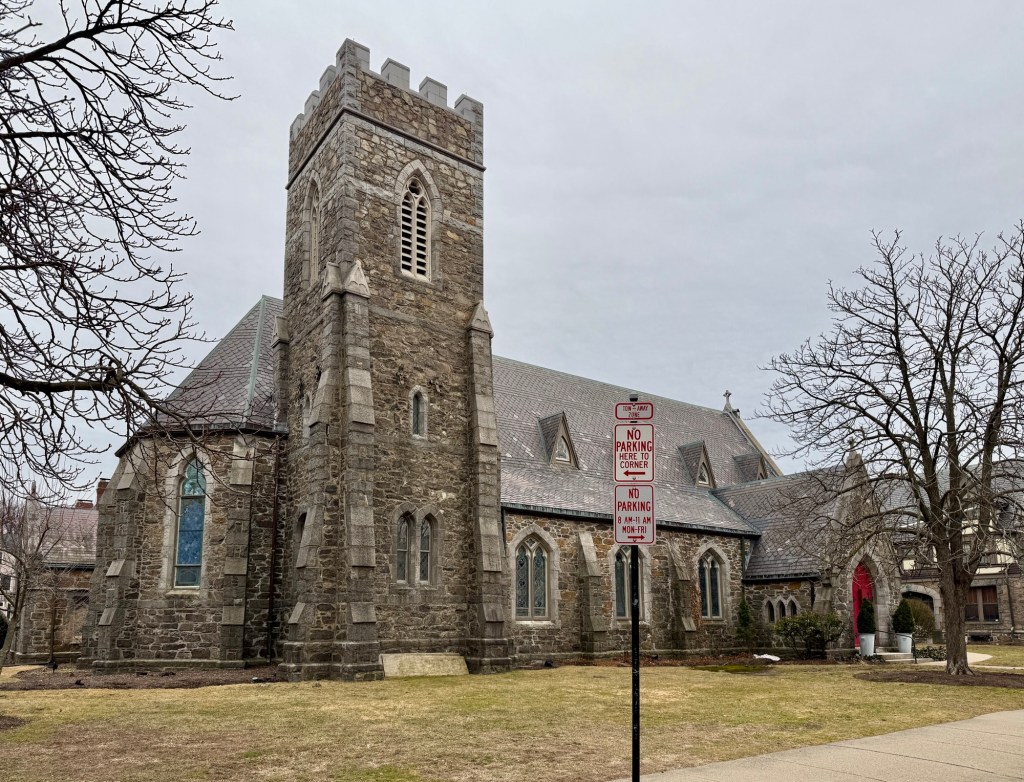
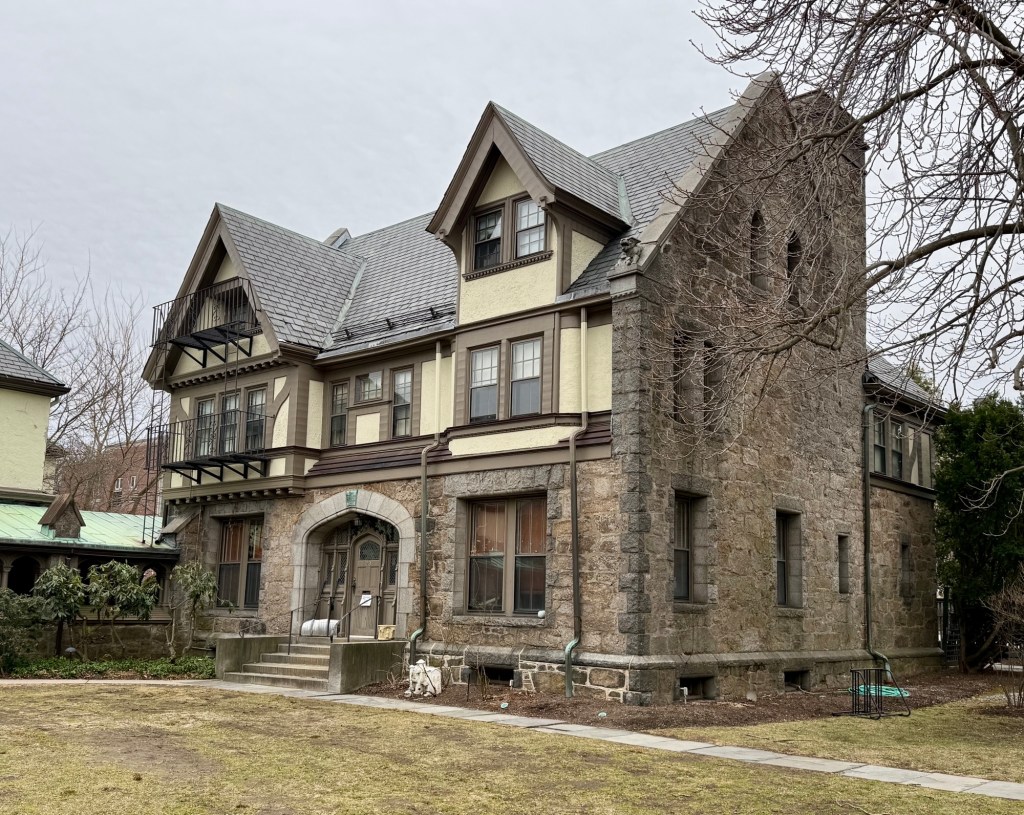
The Church of Our Saviour of Brookline, Massachusetts, is an architecturally and historically significant church complex in the Longwood neighborhood that has ties to those who established this neighborhood into what it is today. The church was built in 1868 by the brothers Amos and William Lawrence, in honour of their father, Amos Lawrence. The church was established by twelve established Boston-area families who wanted to grow the Episcopal diocese in the area. They hired architect, Alexander Rice Esty, who designed the building in the Gothic style, and it was completed in February 1868. The church was expanded numerous times with a transept chapel designed by the firm Sturgis and Cabot (1893) to the memory of Sarah Appleton Lawrence (wife of Amos A. Lawrence); a parish hall designed by the firm of Cabot and Chandler (1880); and a rectory, designed by architect Arthur Rotch (1886). The church remains an active congregation and is lovingly preserved by the congregants.

Rectory

Adolph and Marion Ehrlich House // 1906

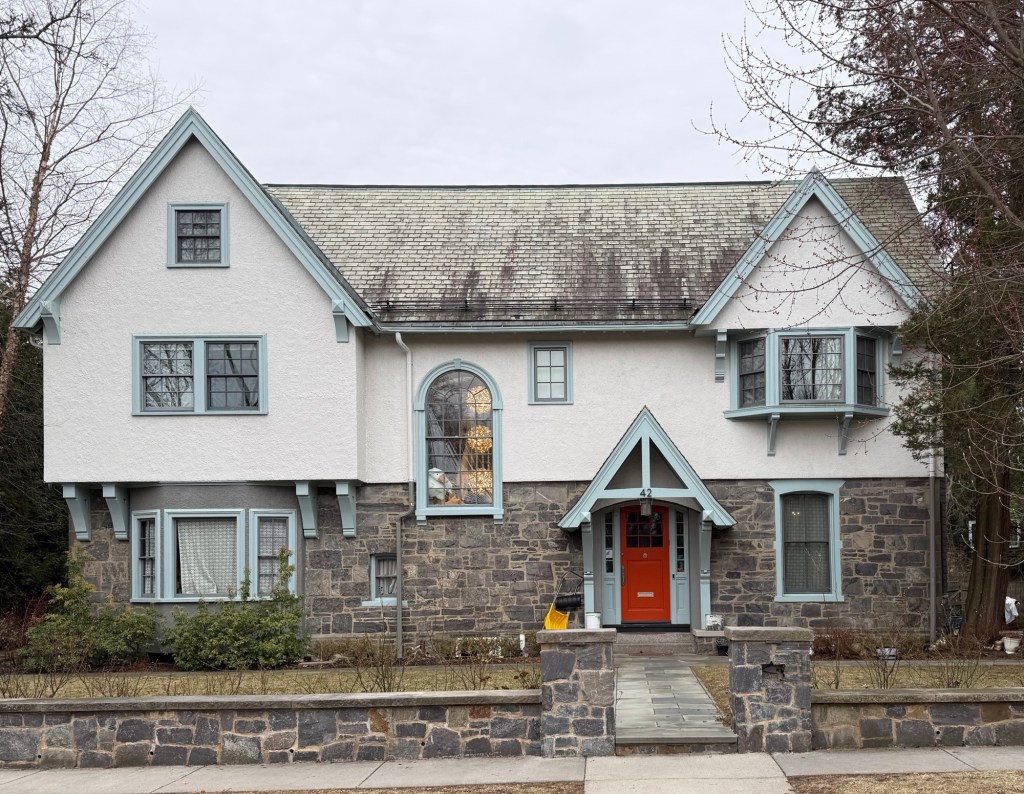
The Adolph and Marion Ehrlich House on Beech Road in Brookline’s Longwood neighborhood is a stunning blend of Arts and Crafts and Tudor Revival styles, popular in early 20th century Boston suburbs. The house was designed by the firm of Andrews, Jaques and Rantoul, for Adolph Ehrlich (1868-1952) and Marion Ratchesky Ehrlich (1877-1966). Adolph was born in Boston and at the age of 11, began work in the textile business. He climbed the ranks and became a partner in a clothing company before becoming a director of the Jordan Marsh Department Store Company from 1925 until his death in 1952. His wife Marion was heavily involved in social causes until her death, including the Louisa May Alcott Club, a settlement house in Boston for young, predominantly immigrant girls.

Gahm House // 1907

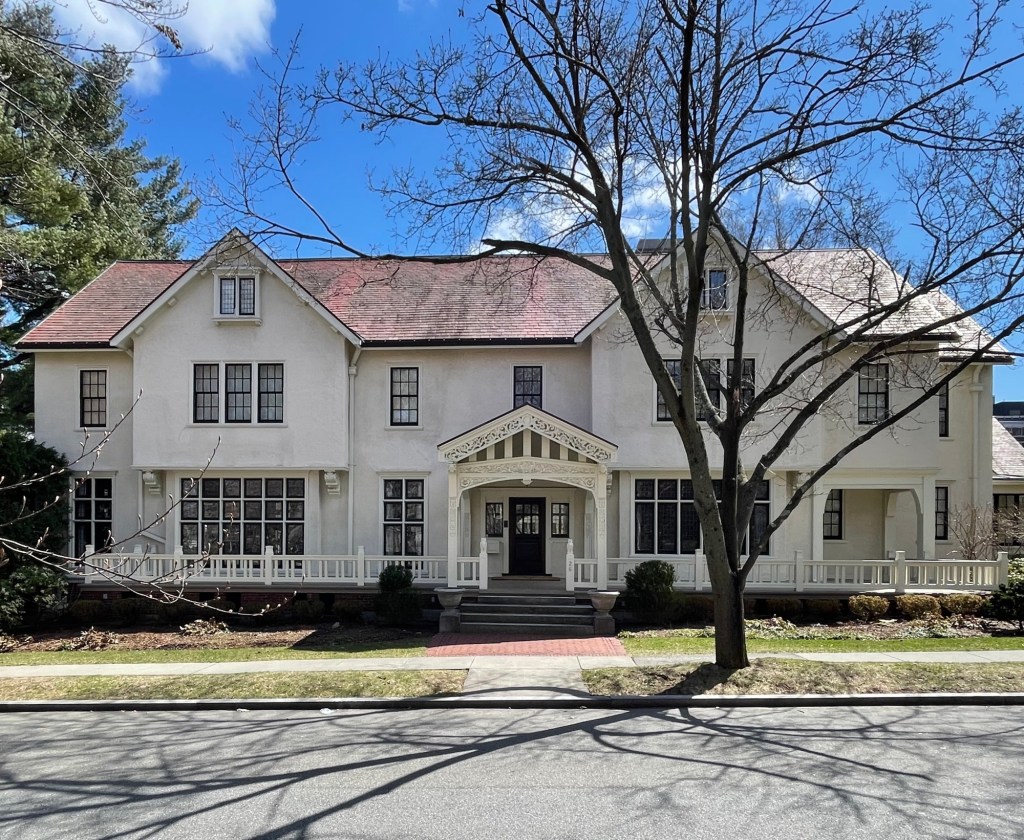
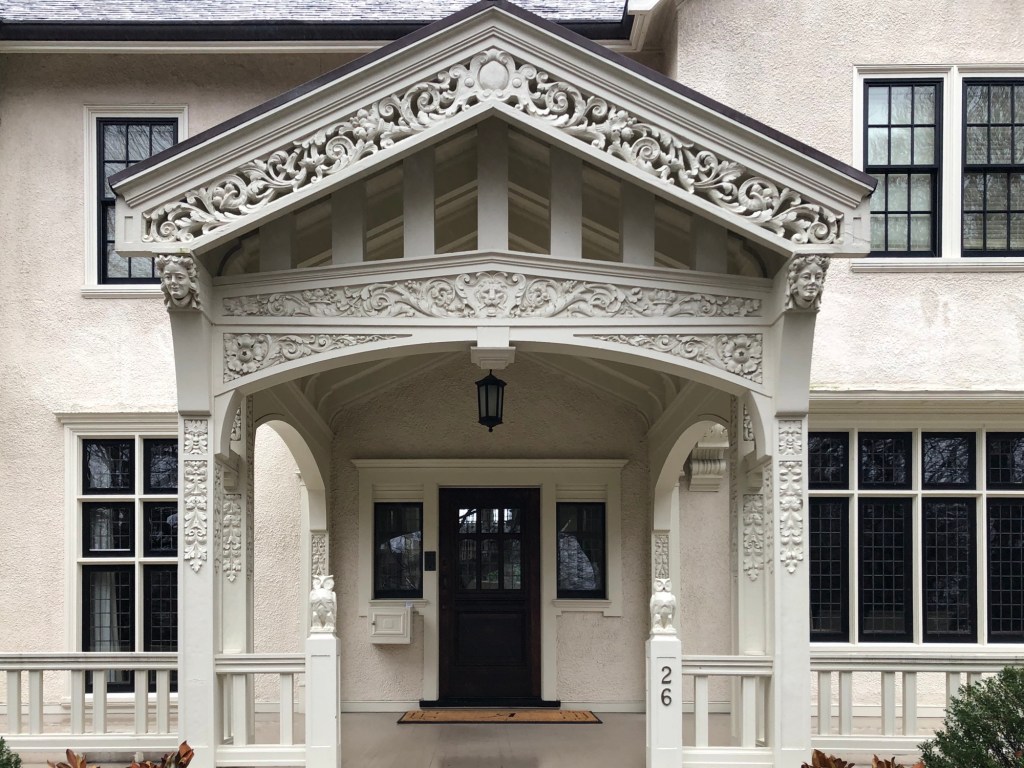
Located in the Longwood neighborhood of Brookline, Massachusetts, the Gahm House stands out not only for its size, but stunning details and architectural design. This house was designed in 1907 by the architectural firm of Hartwell, Richardson & Driver, one of the premier firms of the region at the time, who blended Arts and Crafts with Tudor Revival styles with a notable front entry. Joseph and Mary Gahm hired the firm to design their new home the same year the firm designed a bottling plant (no longer extant) in South Boston for Mr. Gahm’s business. Joseph Gahm was a native of Wurtemberg, Germany, who emigrated to Boston in 1854 and initially worked as a tailor. In the early 1860s, Gahm opened a restaurant in Charlestown, by the late 1860s he added a small bottling operation to this business. The bottling business soon expanded to such an extent that he was able to give up the restaurant business and open a large bottling plant in 1888. He eventually moved operations to South Boston where there was more room for transportation and shipping capabilities. Their stuccoed house in Brookline is especially notable for the well preserved carvings at the entrance, which include: faces, floral details, lions, and owls perched atop the newel posts. What do you think of this beauty?

Eisemann Mansion // 1905

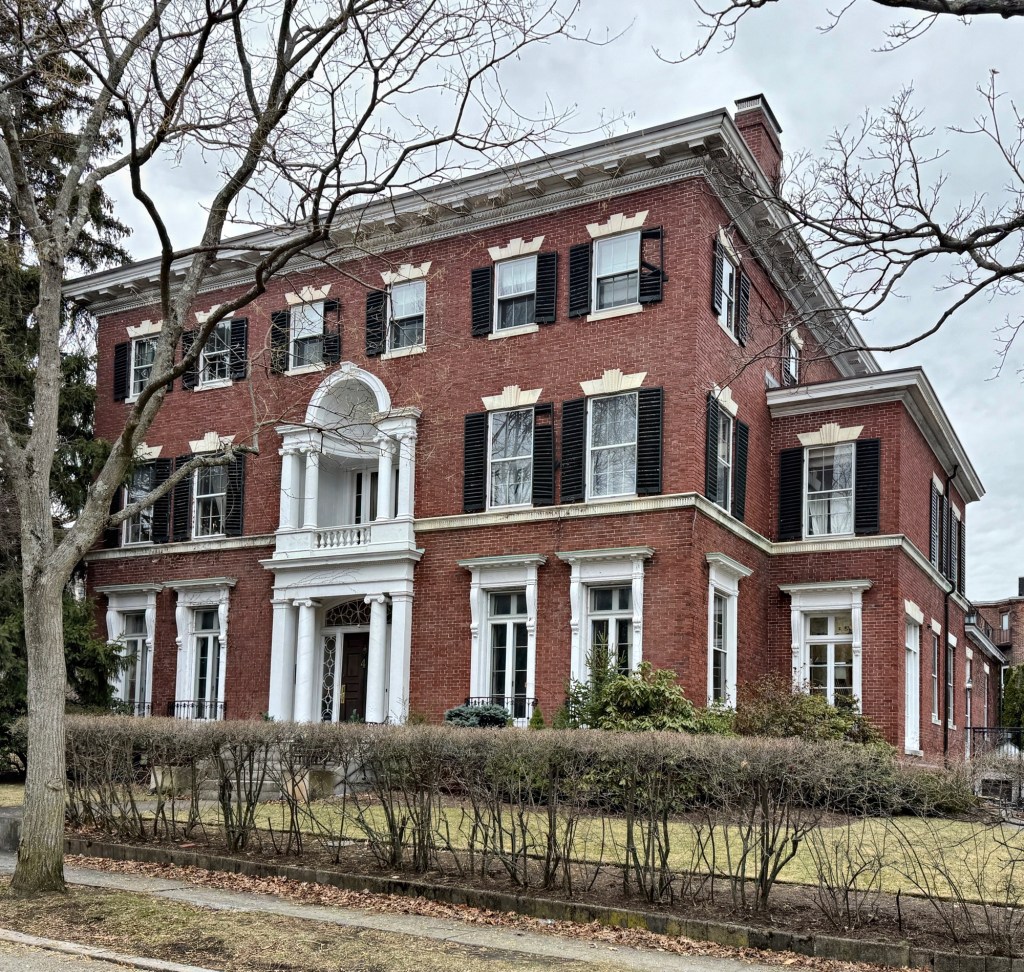
Among the area’s best examples of a high-style Colonial Revival residence of the early 20th century, the Eisemann Mansion on Monmouth Street in Brookline’s Longwood neighborhood stands out not only for its scale and massing, but unique architectural details. The dwelling was built in 1905 for Selly and Albert Eisemann, both German-born Jews who immigrated to the United States and originally lived in New Mexico before moving to Brookline in their retirement. Albert was a retired wool merchant, and clearly made a name for himself out west, hiring local architect, James Templeton Kelley, to furnish plans for his large mansion in Longwood. With a boxy form and five bay facade (with six smaller windows at the third floor), the center-hall mansion is notable for its elaborate first-floor windows with individual cornices, recessed entry set between Ionic columns, and recessed niche balcony over the entry as a unique interpretation of a Palladian motif. 

Harrison Gardner House // c.1873

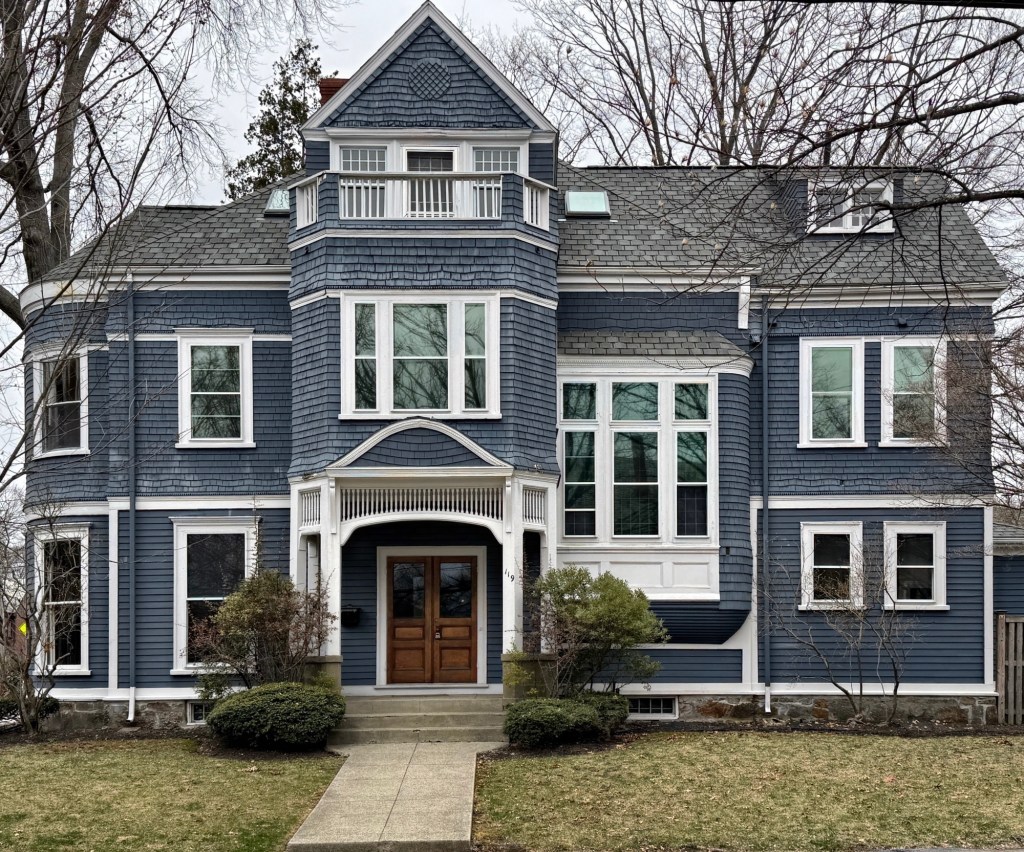
The Harrison Gardner House on Colchester Street in the Longwood section of Brookline is a stunning late Victorian residence that was “modernized” in 1887 to its current configuration. Harrison Gardner (1841-1899) was a Civil War veteran who arrived back in Boston becoming a wealthy dry goods wholesaler, later investing in Massachusetts mills. On January 20, 1871, Harrison was a founder and treasurer of the Boston Red Stockings of the new National Association of Professional Base Ball Players (NABBP). The team’s name  changed multiple times, eventually landing on the Boston Braves, which would later move to Atlanta to become the Atlanta Braves in the MLB. With increased wealth and status, Harrison Gardner in 1887, hired the prestigious architectural firm of Hartwell and Richardson, to update his Brookline residence with additions and renovations in the Queen Anne and Shingle styles. Years after his death in 1899, Harrison’s widow, Laura Perkins Harrison, moved out of the large Longwood home and into a new, Arts and Crafts style stucco residence on Amory Street, designed by William Gibbons Rantoul.