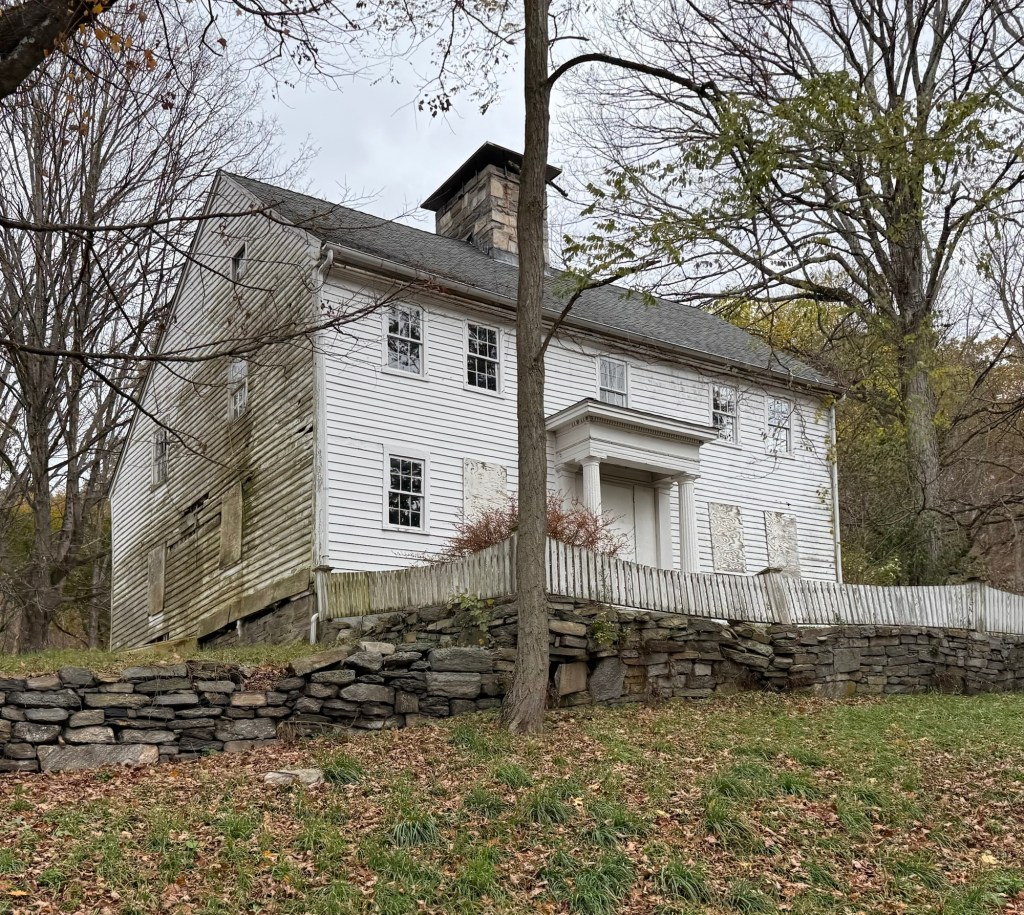
Smith-Curtiss House // c.1714

The Smith-Curtiss House, which is possibly the oldest extant building in Derby, Connecticut, has sat vacant and decaying for years and is owned by the State of Connecticut. Believed to have been built sometime between 1714 and 1740, this historic saltbox farmhouse at 411 Hawthorne Avenue is slowly decaying due to lack of maintenance and funding. Early ownership is difficult to determine, but by the 19th century, the property was owned by Ms. Alice E. Curtiss. The old estate was sold by Ms. Curtiss in 1913 to Frances Osborne Kellogg, a businesswoman, philanthropist and environmentalist, as part of her 350-acre dairy farm and land-conservation holdings. The Smith-Curtiss House was used as a residence for the herdsmen who ran the farm nearby. Before her death in 1956, Frances deeded the property to the state as a public park, and allowed her head herdsman life-occupancy of this house for the remainder of his life. The State of Connecticut assumed possession of this house in 1981. The building has suffered from deferred maintenance since this period, with the State attempting to lease the building to tenants. I hope that local and statewide preservation groups can mobilize to secure grants and funding to restore this important property.

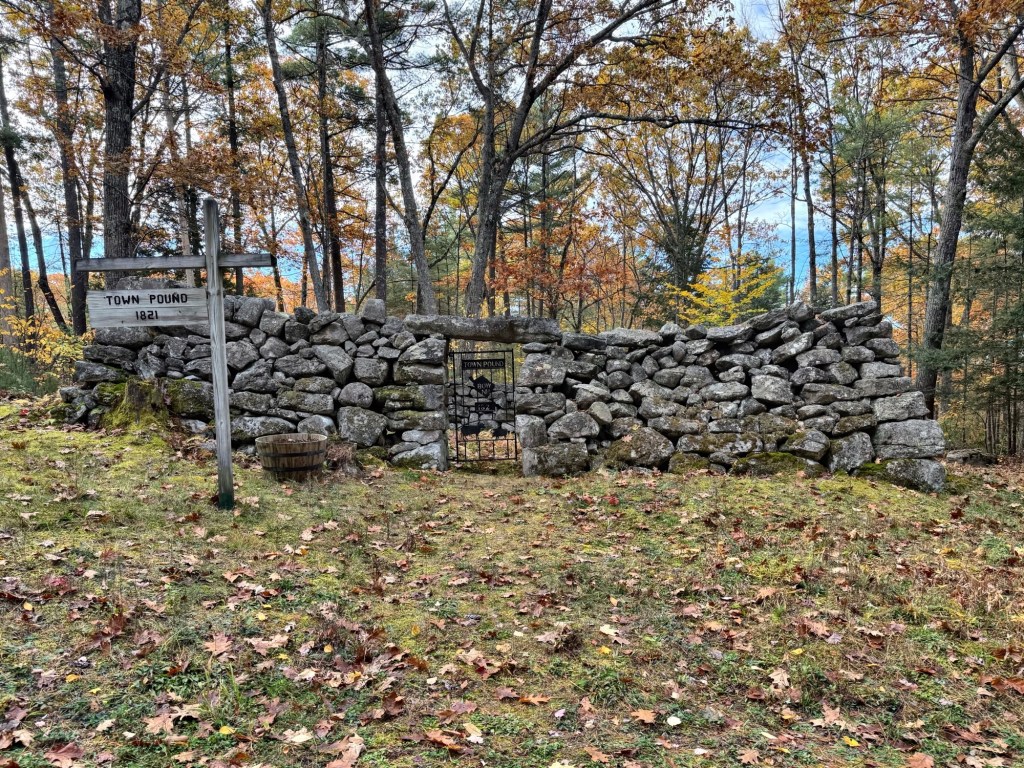
Bow Town Pound // 1821

In farming communities all across New England, disputes inevitably arose when one person’s livestock left their land and damaged another person’s crops. New England laws required farmers to fence their fields and keep farm animals from straying, but some inevitably got out. The solution was to build pounds where stray cattle, horses, sheep and swine were rounded up and kept by a town-appointed pound keeper who would round up the roaming animals and keep them there, charging by the day until an owner releases the animal and pays the fee of any damage done. The old town pound in Bow, New Hampshire, dates to 1821 and features tall stone walls, high enough to prevent taller livestock from jumping out. As towns like Bow shifted away from agrarian culture, these structures crumbled back into the earth. Luckily for us, some sommunities preserved their pounds and in Bow, the local community restored the town pound in 2011.

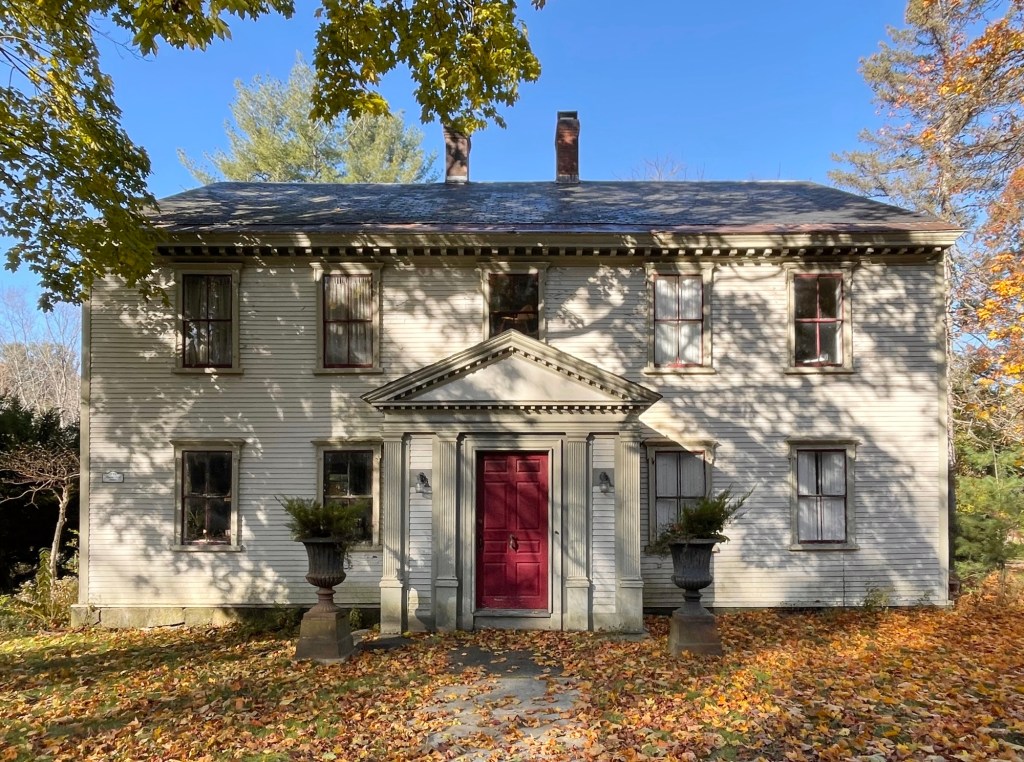
John Sprague House // 1785

Judge John Sprague (1740-1800) was a Harvard graduate and settled in Lancaster, Massachusetts as one of only three lawyers in Worcester County following the departure of his Tory colleagues during the Revolution. From this, a young Sprague climbed the professional ladder quickly and represented Lancaster in the General Court beginning in 1782 and occasionally sat in the Senate. He was first appointed judge in 1784 and in 1798 became chief justice of the Court of Common Pleas for Worcester County. After being appointed a judge in 1784, Sprague purchased a house lot on Main Street in Lancaster and hired local housewrights Eli Stearns and Jonathan Whitney, to design and build this stately home. Judge Sprague moved from his 1771 houseshort distance away, to this more substantial late-Georgian home with projecting entry with pilasters and pediment. After his death in 1800, the property was inherited by his daughter, Ann Sprague Vose and her husband, a merchant, Peter Thatcher Vose

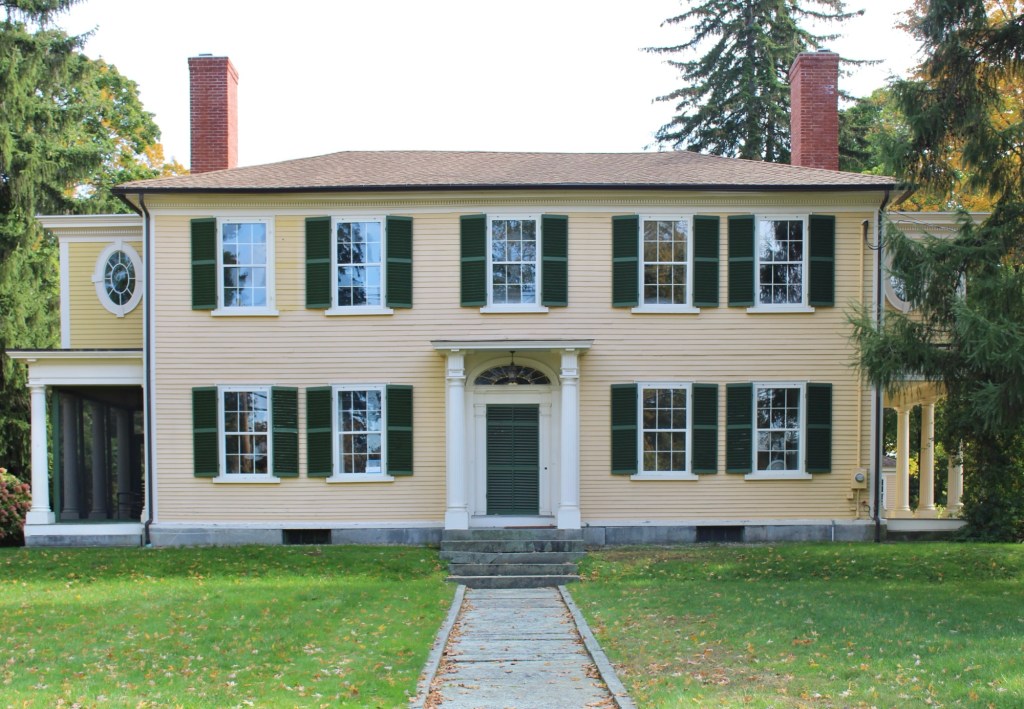
Rice-Carter House // 1796

In 1796, attorney Merrick Rice (1764-1819) built this stately Federal style farmhouse on Main Street in Lancaster. The house exhibits a symmetrical facade with hipped roof and twin chimneys and portico at the entrance sheltering the front door with fanlight transom. The house has end porches which may have been added sometime in the 19th century. The property was later purchased by Rev. Asa Packard, who rented the residence to his daughter, Ann, and her husband, James Gordon Carter, a state representative and education reformer who wrote Influence of an Early Education in 1826, and in 1837, as House Chairman of the Committee on Education, contributed to the establishment of the Massachusetts Board of Education, the first state board of education in the United States. The Rice-Carter House is excellently preserved both inside and out.

Ambrose Burnside House // 1866

What do this unique Victorian house and sideburns have in common? Well, you are about to find out!

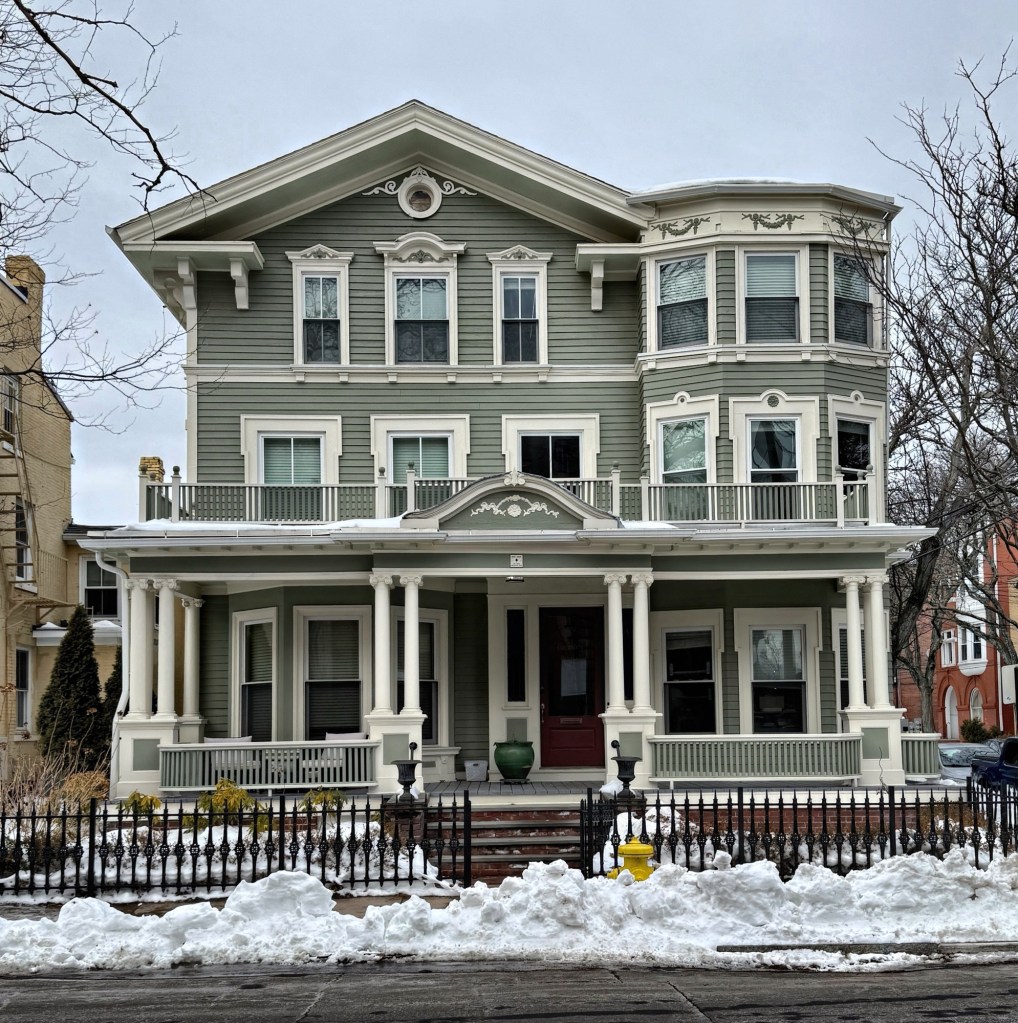
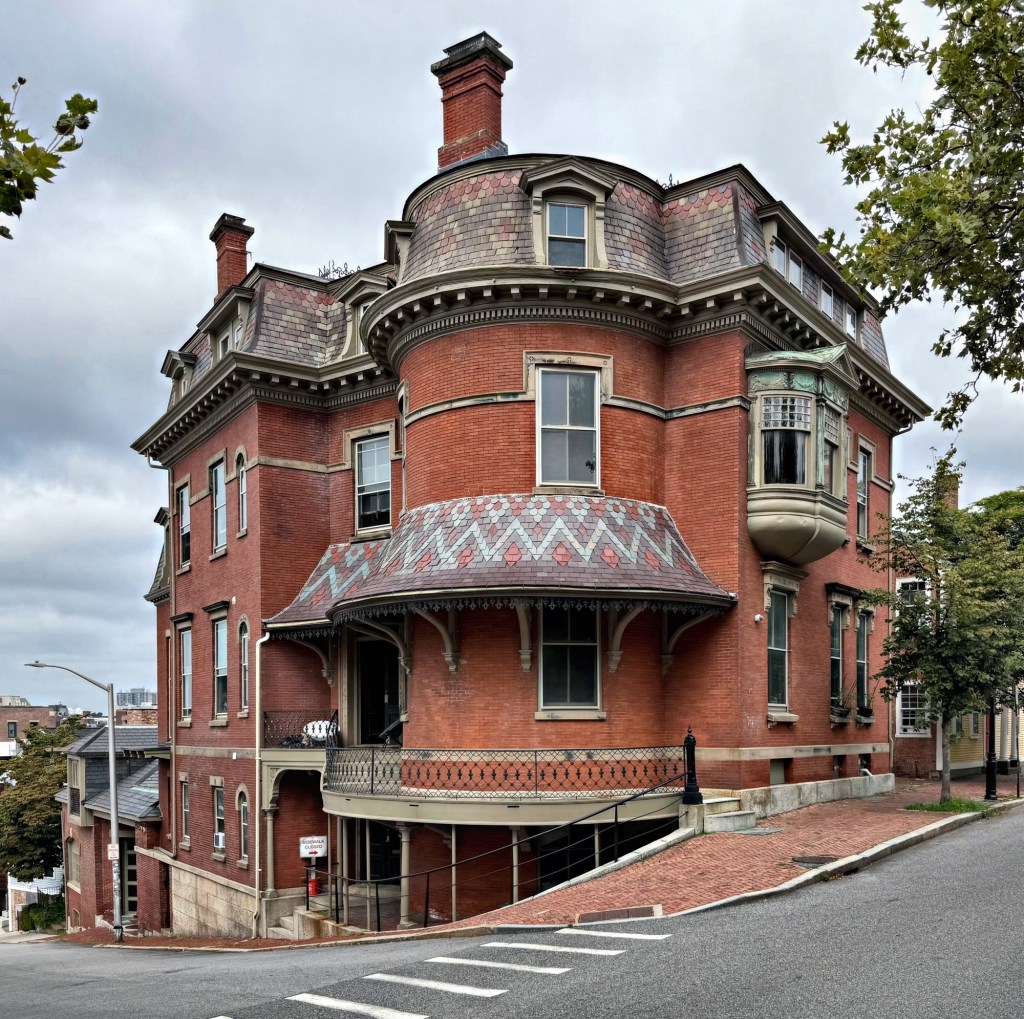
The Ambrose Burnside House is sited on an oddly shaped, and sloping corner lot on Benefit Street in Providence’s East Side neighborhood, and is one of the most unique Second Empire style residences in New England. The house was built in 1866 for General Ambrose Burnside (1824-1881), a Union general in the American Civil War, who returned to Providence and was about to begin a term as governor, followed by two terms in the United States Senate. Ambrose Burnside hired local architect, Alfred Stone, to design his new city mansion, which upon completion, was deemed one of the most “modern residences” in Providence. Built of brick with Nova Scotia stone with a concave slate mansard roof and one-of-a-kind rounded corner bay, the Ambrose Burnside House does not disappoint! Ambrose Burnside died in 1881 and the property was occupied by his sister-in-law until the property was sold in 1884 and housed the Providence Children’s Friend Society House for Aged Women and the Providence Association for the Benefit of Colored Children, providing shelter and food for elderly women and children of color without parents or guardians. After WWII, the Burnside House was converted to apartments.

Now, to the sideburns… Ambrose Burnside was noted for his unusual beard, joining strips of hair in front of his ears to his mustache but with the chin clean-shaven; the word burnsides was coined to describe this style. The syllables were later reversed to give sideburns.

Kingston Almshouse // c.1772

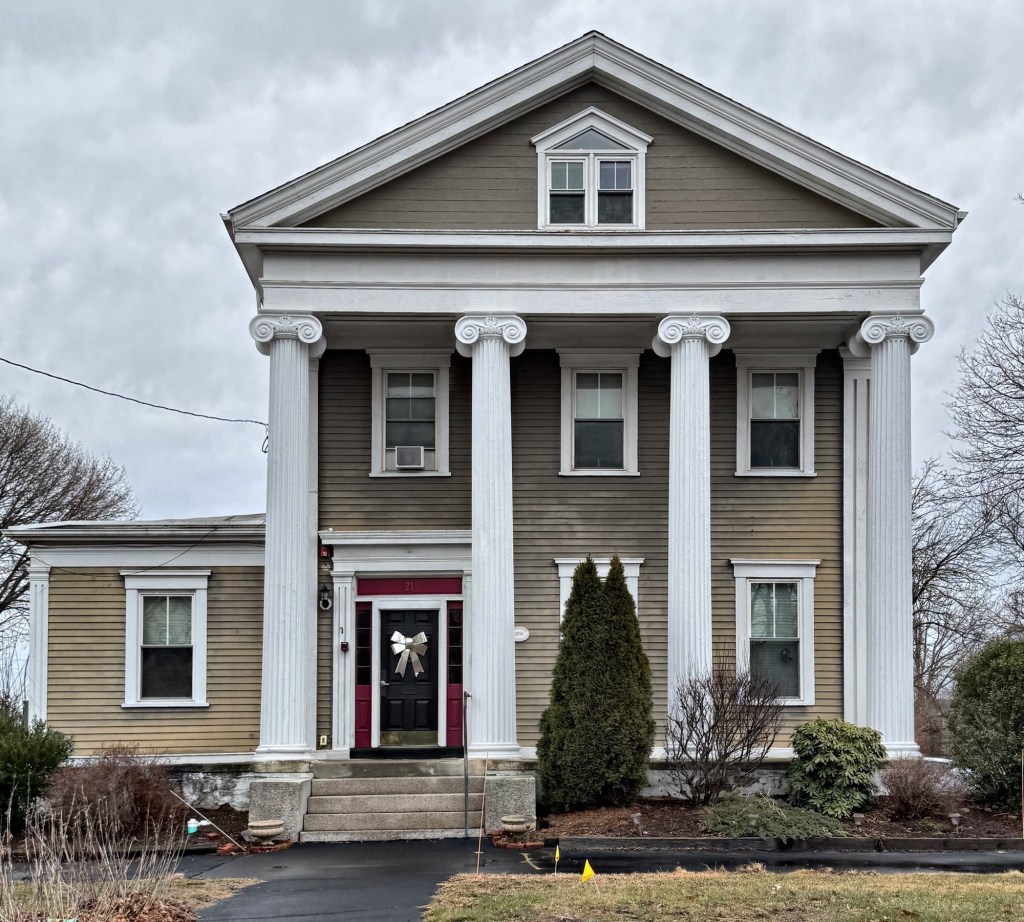
Built on the banks of the Jones River in Kingston, Massachusetts, this large residence is said to date to 1772 and was the home to a prominent ship-building family as well as to hundreds of destitute residents of the community who lived and worked here as the town’s poor house. Land (and possibly an earlier house) was acquired in 1772 by Zenas Drew (1735-1822), the son of Cornelius Drew, a wealthy shipbuilder who employed his many sons to work in the same industry, and the existing house was constructed for his family. From the house, numerous shipyards would be seen with large brigs travelling down the Jones River into Plymouth Bay and the Atlantic. After Zenas Drew’s death in 1822, the Town of Kingston acquired the property for use as the town’s almshouse or poorhouse, and likely expanded the property to its current Federal style configuration. Throughout the 19th and early 20th centuries, almshouses were a reality for society’s most vulnerable people, where these locally run institutions provided living and working conditions in a time before Social Security, Medicaid and Section 8 housing became a reality. These facilities were designed to punish people for their poverty and, hypothetically, make being poor so horrible that people would continue to work at all costs. Being poor began to carry an intense social stigma, and increasingly, poorhouses were placed outside of public view, as was the case here in Kingston outside of the town center at the banks of the river. By the 1920s and 1930s, these institutions began to close, with Kingston’s closing in 1923. The property was sold to a private owner, and has remained as a single-family residence ever since. 

Captain John Stacey House // 1731

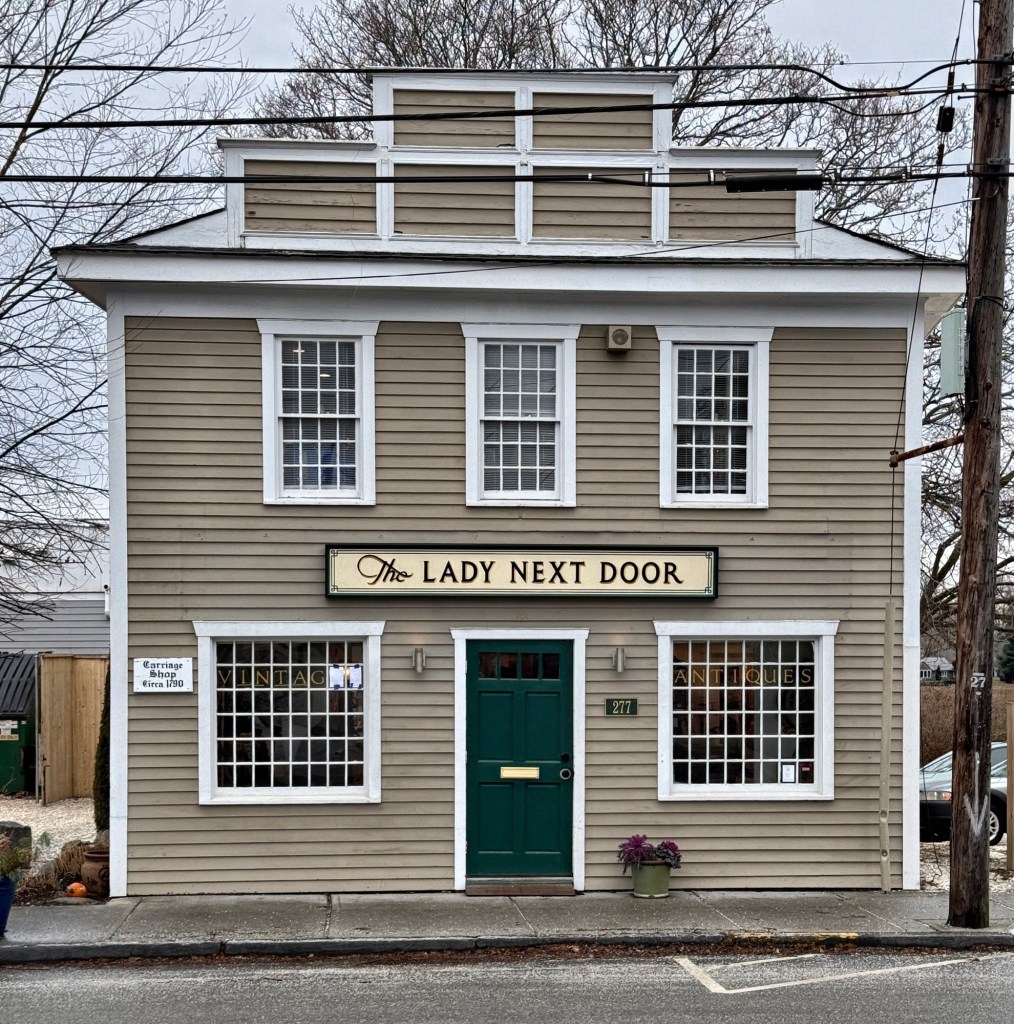
In 1731, Captain John Stacey, a merchant and shipowner in Marblehead, had this gambrel-roofed house built on family land. Due to its orientation from the main street, a passageway allowed access to the rear of the property where other buildings were constructed by the family. By 1850, the house was jointly owned by Hawkes and Brown, with Mr. Hawkes operating a store in the first floor corner room. Eventually, by 1912, Brown had bought the whole building and moved his meat market into the store in this building. The property was later purchased and restored by Donald Mackenze Stacey (1916-1998), a contractor and descendant of the home’s original owner, John Stacey. Donald was a veteran of the U.S. Navy and served in World War II, before moving back to Marblehead and worked in the building trade. In town, he restored antique clocks, furniture, and buildings, including the Old Town House and Abbott Hall, the current town hall

Elbridge Gerry House // c.1734

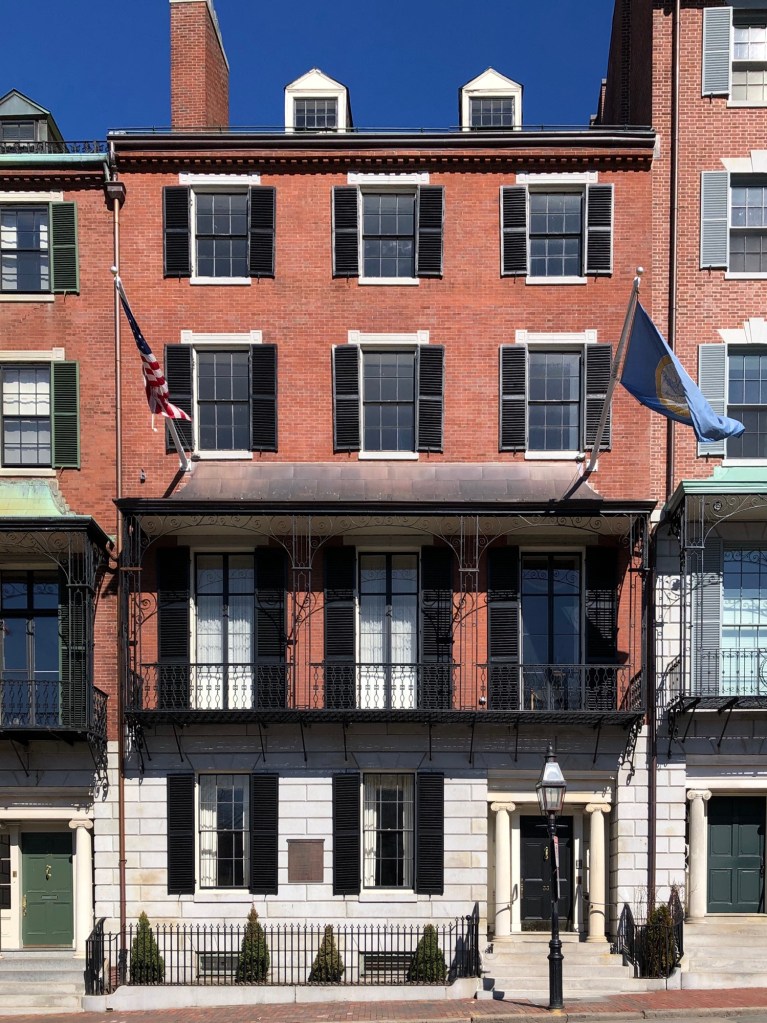
The Elbridge Gerry House is a historic house on Washington Street in Marblehead, Massachusetts that was built by local merchant, Thomas Gerry around the time of his marriage to Elizabeth Greenleaf. Architectural evidence suggests that the house was a two-story L-shaped Georgian frame structure, that in about 1820, was raised to its present three-story form in the Federal style. It was in this house that Founding Father, Elbridge Gerry (1744-1814) was born, and spent many formative years in. Gerry was a wealthy merchant, politician, and diplomat who served as the fifth vice president of the United States  under President James Madison from 1813 until his death in 1814, and is arguably best-known for Gerrymandering. The term, originally written as “Gerry-mander,” first was used on March 26, 1812, in the Boston Gazette — a reaction to the redrawing of Massachusetts state senate election districts under then-Gov. Elbridge Gerry. One of the remapped, contorted districts in Essex County (where Marblehead is located) was said to resemble the shape of a mythological salamander, hence the name “Gerry-mander”. The newly drawn state senate district in Essex County was lampooned in cartoons as a strange winged dragon, clutching at the region. Elbridge Gerry would live mostly in Cambridge and the family home was sold by around 1820 and modernized about that time.

Forbush-Brigham House // c.1875

This stately and well-preserved Stick style residence is located on High Street in Westborough, Massachusetts. The house was built around 1875 for Mr. William Henry Forbush and his wife, Alice. William was a sleigh manufacturer in town and served in the Civil War, mustering out years after injuring his left hand during the Second Battle of Bull Run. Forbush died in 1881 at the age of 37, and Alice married to Dexter Brigham, a carpenter who also fought in the Civil War. It was possibly Mr. Brigham who added the intricate woodwork on the home.

Westborough Savings Bank // 1928

The Westborough Savings Bank was incorporated in 1869 and shared space in a building with another bank and the post office. As the population and prosperity grew in the suburban community, so did the Westborough Savings Bank, who would move into a larger space. Just before the Great Depression, the bank sought to build its first purpose-built structure, and they hired the firm J. Williams Beal & Sons to furnish plans for this handsome masonry bank, designed to showcase the strength and stability of the institution. Renaissance Revival in style, the 1928 building is constructed of buff brick with limestone trim. The facade is dominated by large, round arched windows and is framed by pilasters with an off-center entrance. The Westborough Savings Bank would eventually merge into Avidia Bank and the West Main Street building was sold. The handsome building is well-preserved and home to Westborough TV, which makes broadcast media programming that is by, about, and for the entire Westborough community.