Copp’s Hill Burying Ground // 1659

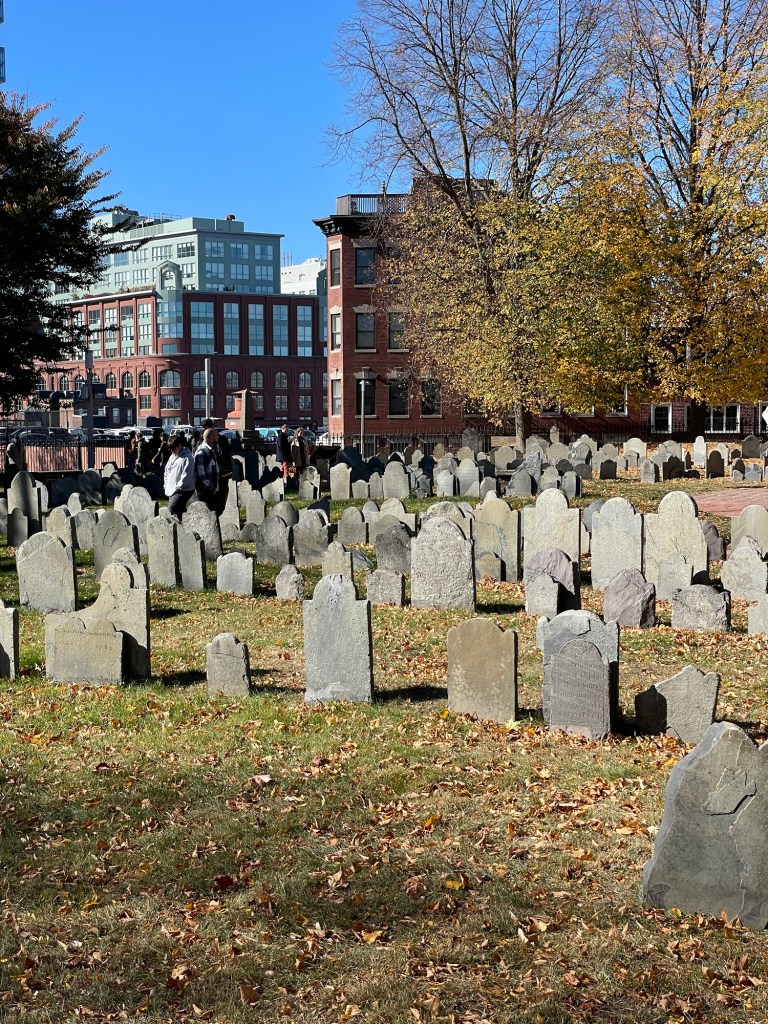
Happy Halloween! Welcome to Copp’s Hill Burying Ground, a historic cemetery nestled in Boston’s historic North End. Established in 1659, it served as a burial site for some of Boston’s earliest settlers and notable figures, including craftsmen, merchants, and members of the influential Mather family. Also burie here is abolitionist and leader in the free black community in Boston, Prince Hall. Originally called North Burying Ground, Copp’s Hill was the second place of interment on the Boston peninsula and was laid out in 1659. The area acquired its present name through its association with William Copp (1589-1670), a shoemaker and early settler who lived near today’s Prince Street; ironically, his stone is no longer standing.
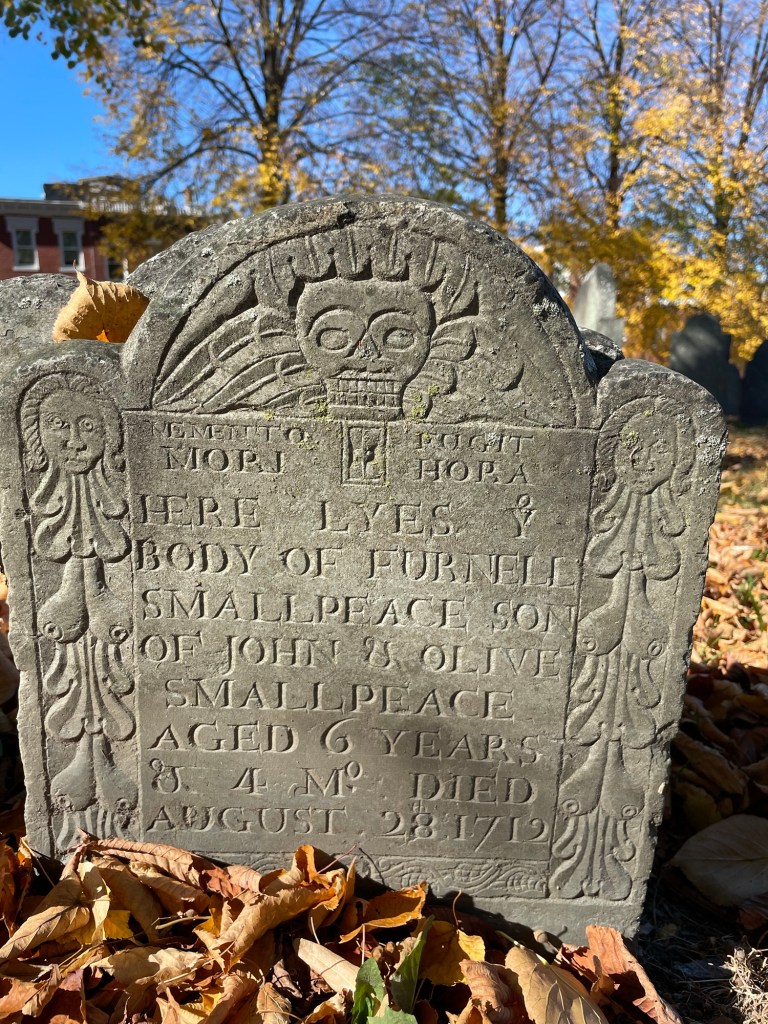
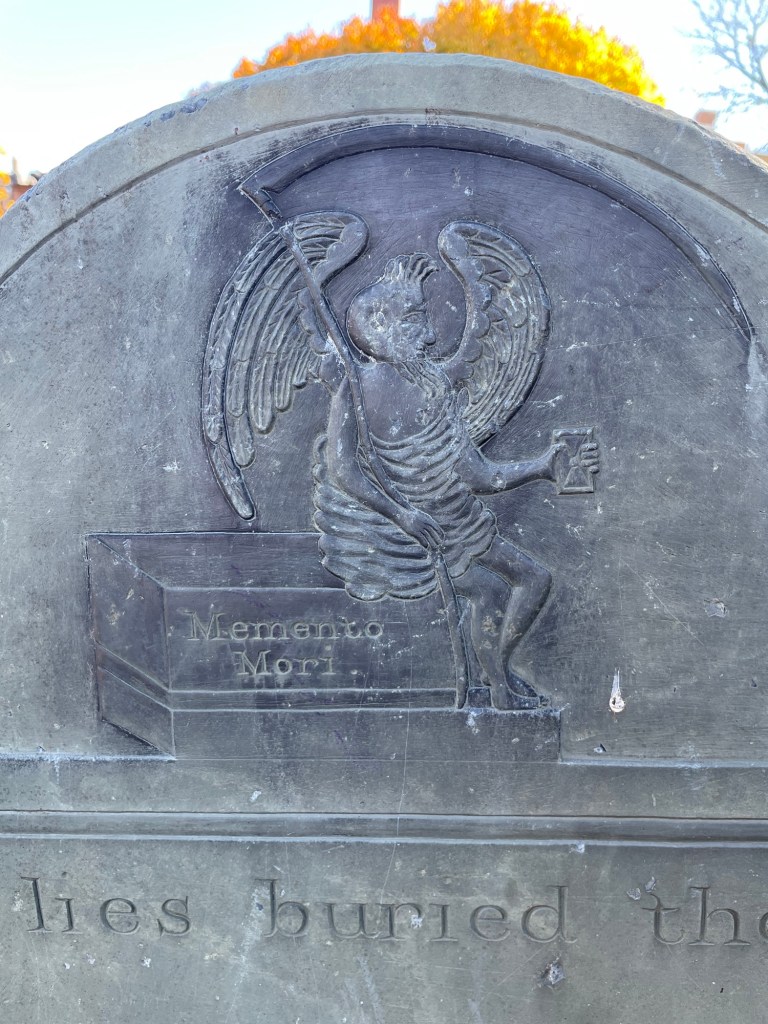
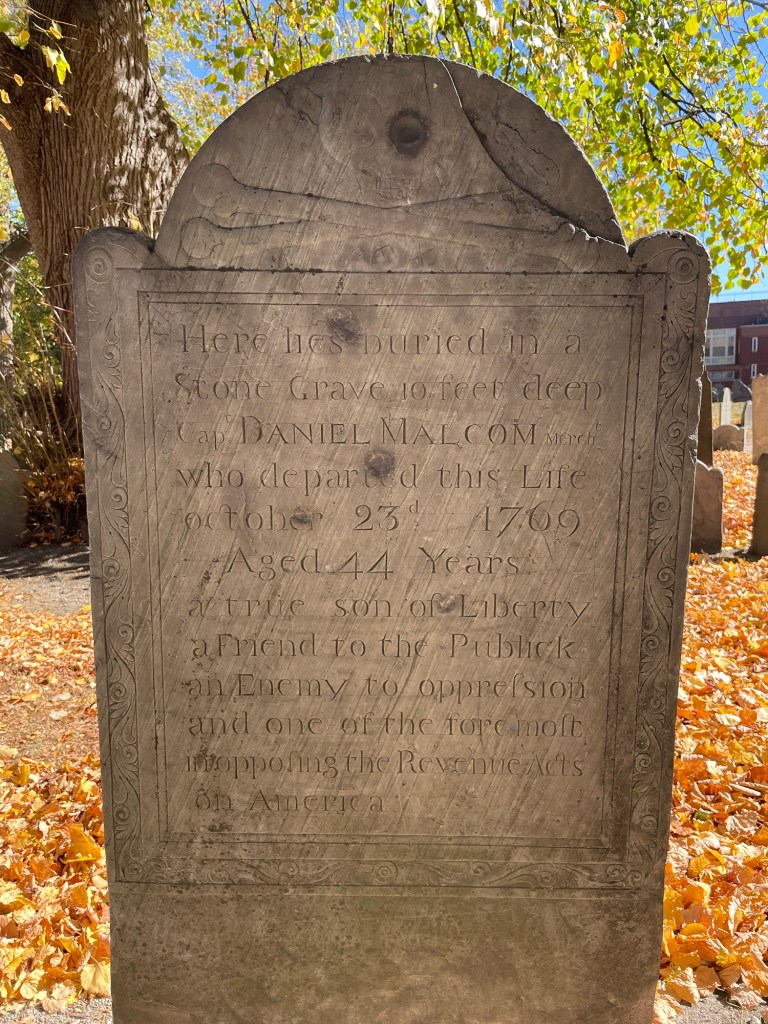
The cemetery is particularly known for its distinct slate gravestones, many adorned with intricate carvings that reflect the artistry of the era. Over the centuries, it has witnessed significant events, including the American Revolution, when it was used as a lookout point for British troops. During the Revolution, the burying ground’s prominent location overlooking the harbor gave it strategic military importance. At its southwest side the British established their North Battery and an earthworks from which they directed the shelling of Bunker Hill and ultimately the torching of Charlestown. Legend has it that British troops used gravestones for target practice. Many have interpreted the round scars on the gravestone of Captain Daniel Malcolm, an ardent son of liberty who spoke against Britain, as the result of musketballs shot at close range. The cemetery was used continually until the 1850s and is today, an evocative reminder of Boston’s early days, drawing visitors who seek to connect with the city’s storied history amidst its tranquil surroundings while the city stretches upwards around it. The cemetery is open and free to visit most of the year and is a great place to stroll and learn about Boston’s early history and see amazing stone carving!
First Parish Congregational Church of Pownal // 1811

Completed in 1811, the First Parish Congregational Church of Pownal, Maine, is an excellent and well-preserved example of a vernacular Federal-period church in a rural setting. Located across from Mallett Hall and built at the foot of Bradbury Mountain, the church was built by a crew headed by master-carpenter Uriel Whitney, a Revolutionary War veteran who moved to the area after the war. He was active in this church and is buried in the church cemetery. Little remains of the original Federal Style architecture, as its current Greek Revival Style (architects unknown) dates from remodeling apparently undertaken in 1838 and 1857.

Jacob Randall House // c.1796

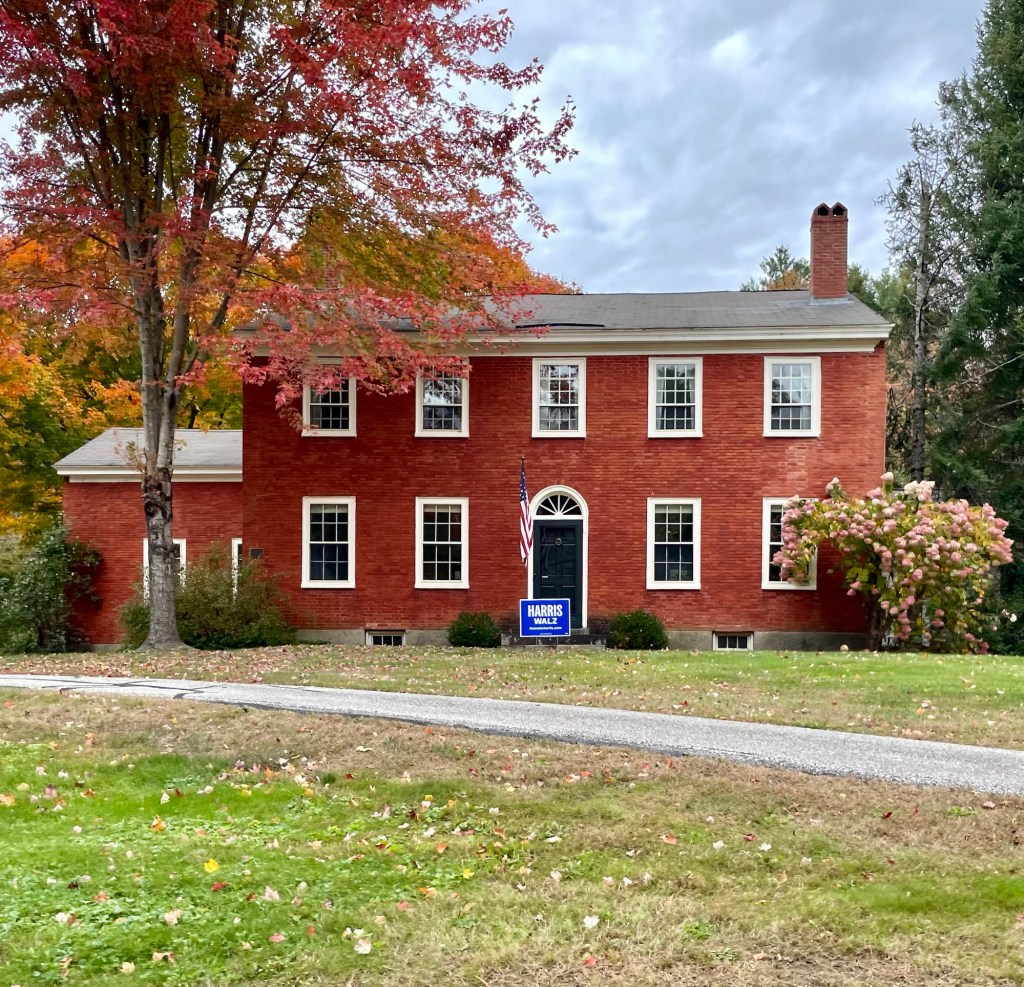
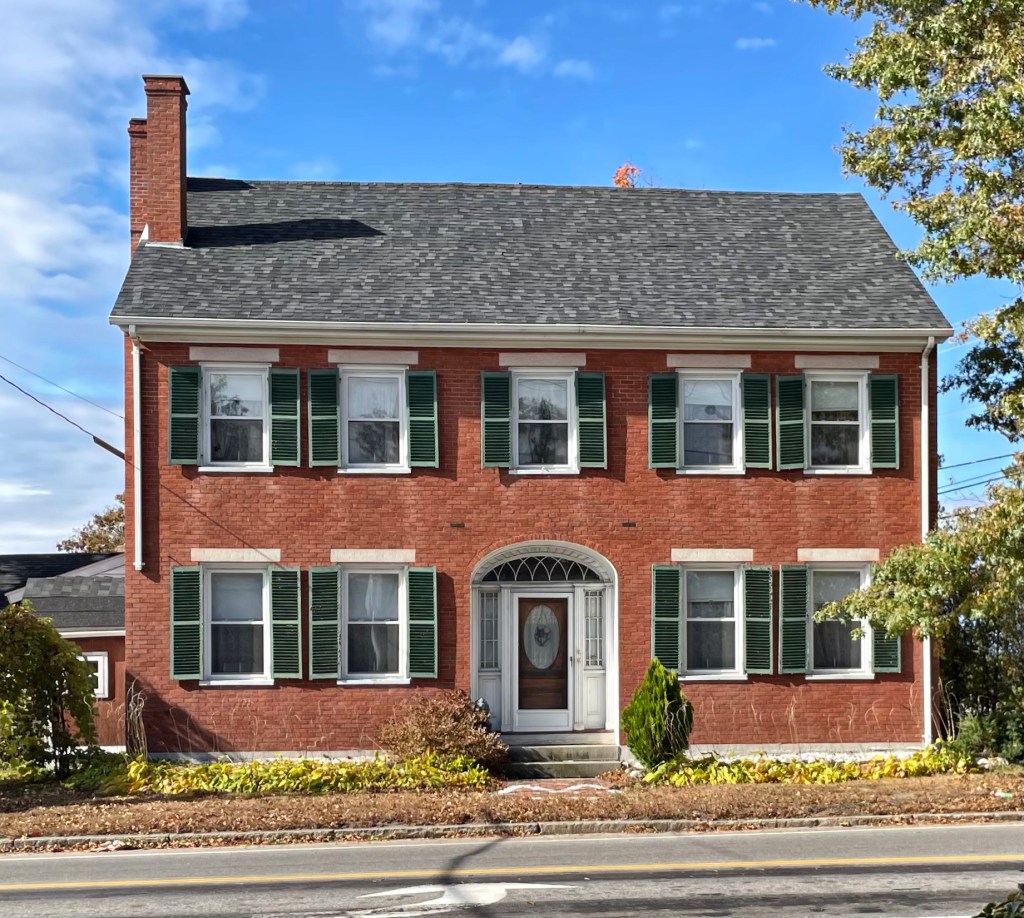
The Jacob Randall House on Lawrence Road in Pownal, Maine was built about 1796 and is a fine example of Federal period architecture executed in brick in the town. Built for Jacob Randall (1771-1829) a native of Weymouth, Massachusetts, who purchased over 100 acres of land in town, and had this house built sometime after. His property spanned the nearby Chandler River, upon which he established a sawmill and gristmill. When Pownal was incorporated in 1808, Randall was one of its first town selectmen, a seat he held nearly continuously until his death in 1836. The house is five bays wide, with its entrance in the central bay, recessed with a fanlight.

Sabbathday Lake Shaker Meetinghouse // 1794

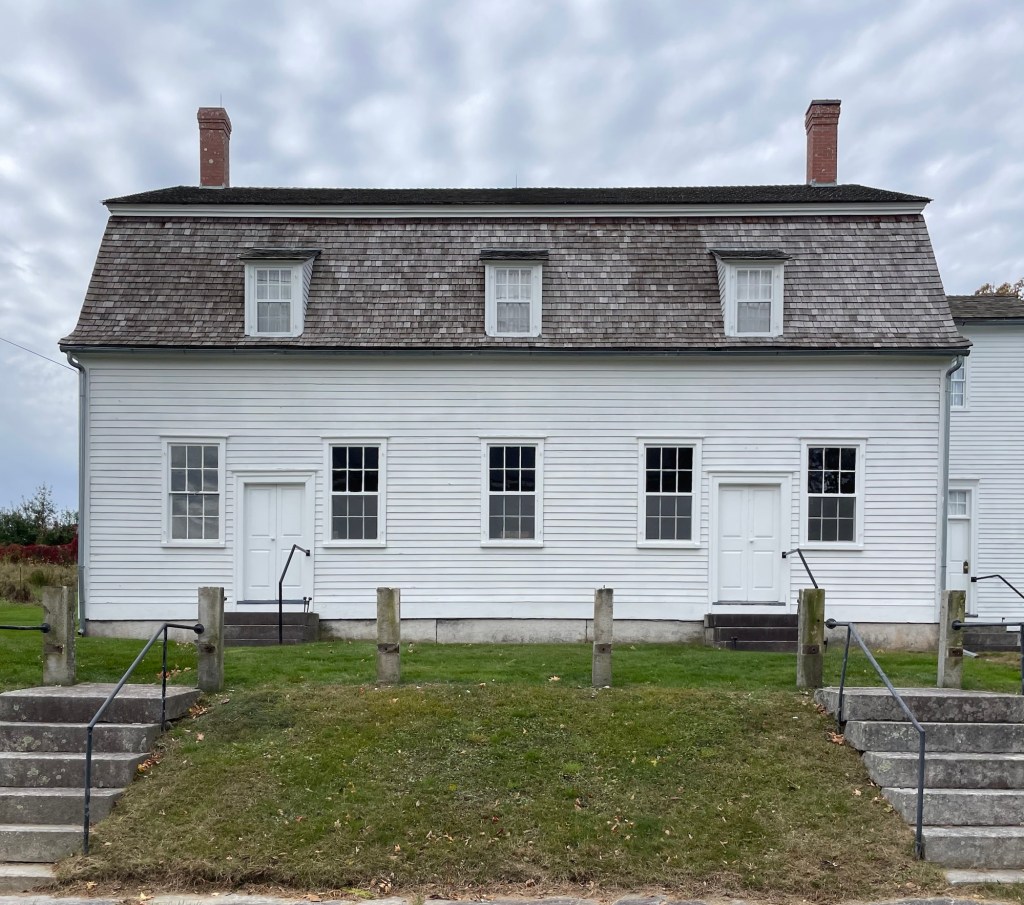
The last active Shaker community in the world can be found in New Gloucester, Maine. The Shakers migrated to Colonial America in 1774 in pursuit of religious freedom and developed from the religious group called the Quakers, which originated in the 17th century. Both groups believed that everybody could find God within him or herself, rather than through clergy or rituals, but the Shakers tended to be more emotional and demonstrative in their worship. Shakers also believed that their lives should be dedicated to pursuing perfection, continuously confessing their sins, and attempting a cessation of sinning, including sex and marriage. They built 19 communal settlements (so far I have featured two: Enfield Shaker Village and Canterbury Shaker Village) that attracted some 20,000 converts over the next century and maintained their numbers through conversion and adoption of orphans, numbers which have dropped to just three active members in 2024! The Sabbathday Lake community was established in 1782 and grew to a size of 1,900 acres with 26 large buildings by 1850. This building, the Shaker’s meetinghouse, was built in 1794 with all materials and labor supplied by the community. The small but significant structure remains a landmark in the community and is occasionally open for tours.

Old New Gloucester Public Library – New Gloucester Meetinghouse // 1895

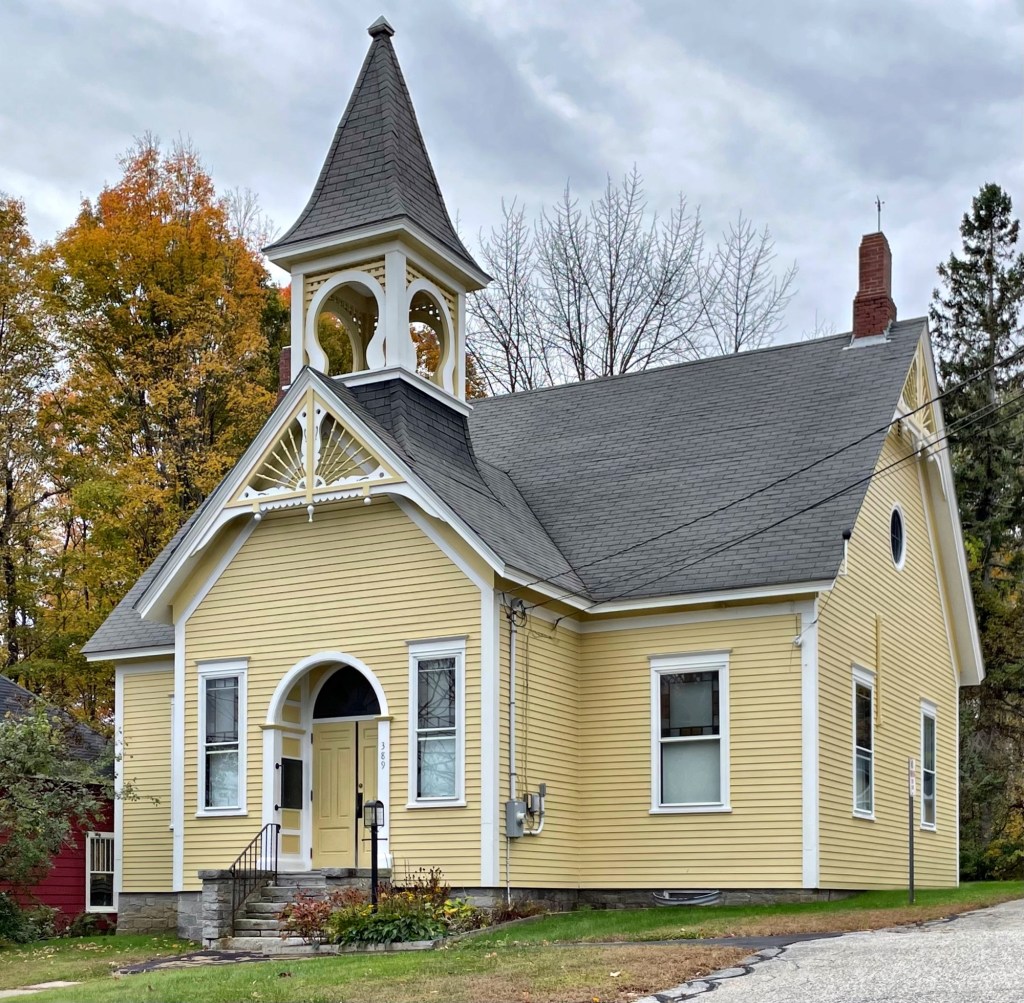
The original New Gloucester Public Library is located in the central village of New Gloucester, Maine, and is one of the finest architectural buildings in the town. The library was established in 1888 when voters passed a resolution to establish a public town library as before this, a private, social library existed here. A committee was chosen to purchase books and make decisions for expenditures and staff. The library was originally located in the town hall building, and was supported by an annual poll tax of 50 cents. The first librarian was Helen A. Moseley, with a salary of $50 a year, she remained the town’s librarian until 1920. By 1895, the library had grown to more than 2,100 volumes and it was decided a new, purpose-built library was needed. That next year, a lot was purchased and this Victorian style building was constructed adjacent to the Town Hall. The wood-frame building has a decorative central section with recessed, arched entry and gable with decorative Stick style ornament. Additionally, a tower protrudes from the roof, giving the building additional whimsy. The library was eventually outgrown and relocated in the former High School, two buildings down the street. The old library has ever-since been the town’s meetinghouse.

New Gloucester Old High School – New Gloucester Public Library // 1902

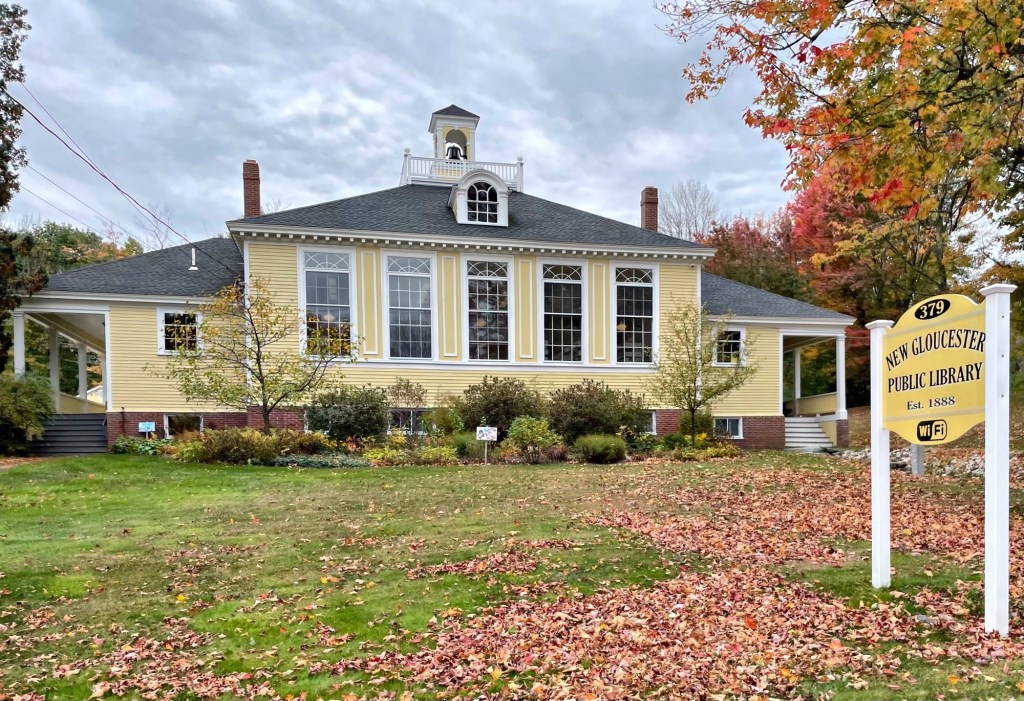
This building, the present New Gloucester Public Library, was originally constructed in 1902 as the town’s high school, a use that remained until 1962, when pupils would go to a modern school building in nearby Gray, Maine. The building is an excellent example of the Colonial Revival style with a symmetrical facade dominated by a row of multi-light windows separated by paneling, a segmental-arched dormer, and cupola at the roof with a bell. When the high school moved to its present location, this building sat vacant for some time and would be occupied by the New Gloucester Historical Society for storage and display of their collections until the public library moved into the building by the early 1990s.

Nathaniel C. Allen House // 1793

The Nathaniel C. Allen House is a two-story Federal style residence located in New Gloucester, Maine. The house was built in 1793 by Shubael Marsh, a local builder (and father of Shubael Jr. (1797–1867), who moved to Texas with Stephen F. Austin) and sold to Nathaniel Coit Allen, an early settler in New Gloucester, who served as a General during the American Revolution. The property was purchased by Col. James Madison Thompson, then owner of the Glen House, an early White Mountains hotel in New Hampshire, who renovated the home by replacing the central chimney with two narrow ones and raised the ceilings and introduced Victorian interior woodwork. A subsequent owner added large Colonial Revival porches on the front and side entrances along with a new entry. The house showcases the changing tastes from Federal style to Victorian back to traditional tastes.

New Gloucester Town Hall // 1886

New Gloucester, Maine was established in 1736 under a Massachusetts Bay Colony grant of a 6-square-mile tract of land in the Maine Territory to sixty inhabitants from the Gloucester fishing village on Cape Ann. The first white settlers here built cabins in the forests in the 1740s, which were largely abandoned from 1744–1751 due to the heightened native tribe attacks during King George’s War. As the Native Americans gradually withdrew to Canada, the settlers moved out into their own newly built homes and the town has grown ever-since. New Gloucester was incorporated on March 8, 1774, and was named New Gloucester after Gloucester, Massachusetts, the native home of a large share of the early settlers, as Maine was still a territory of Massachusetts until 1820. Previous to 1886, the First Baptist Church was used for a town meeting house, but in that year the new Town Hall, this building, was dedicated. The building is Queen Anne in style with varied siding, applied ornament in the gable, with a more Classical portico at the entrance.

Morrill House // c.1830

This stunning brick Federal style home sits in the center of Gray Village in Maine. The house dates to the early 19th century and was long-owned by members of the Morrill Family, seemingly first by William C. Morrill and remaining in the family for generations. The residence is a high-style example of the Federal style with recessed elliptical entrance with fanlight transom and sidelights with a Victorian-era front door. The house was likely built by a local mason or housewright who employed the designs of a Federal style plan book for the architectural detailing at the entry.

Samuel Perley House // c.1784

Built around 1784 for Reverend Samuel Perley, this Federal style home is one of the finest in the town of Gray, Maine. Samuel Perley (1742-1830) was educated at Harvard College and while there, met and befriended John Adams, who would later become the second President of the United States. The two maintained a lifelong friendship. Perley came to Gray in 1784 as a pastor of Gray’s first church. He likely had this house built at the time or purchased an existing house and updated it and the house is said to have Moses Eaton stencilling inside. At one point, Rev. Perley and his wife lived on one side of the house while his son Isaac, his wife, and their twelve children lived on the other.

Stimson Memorial Hall // 1900

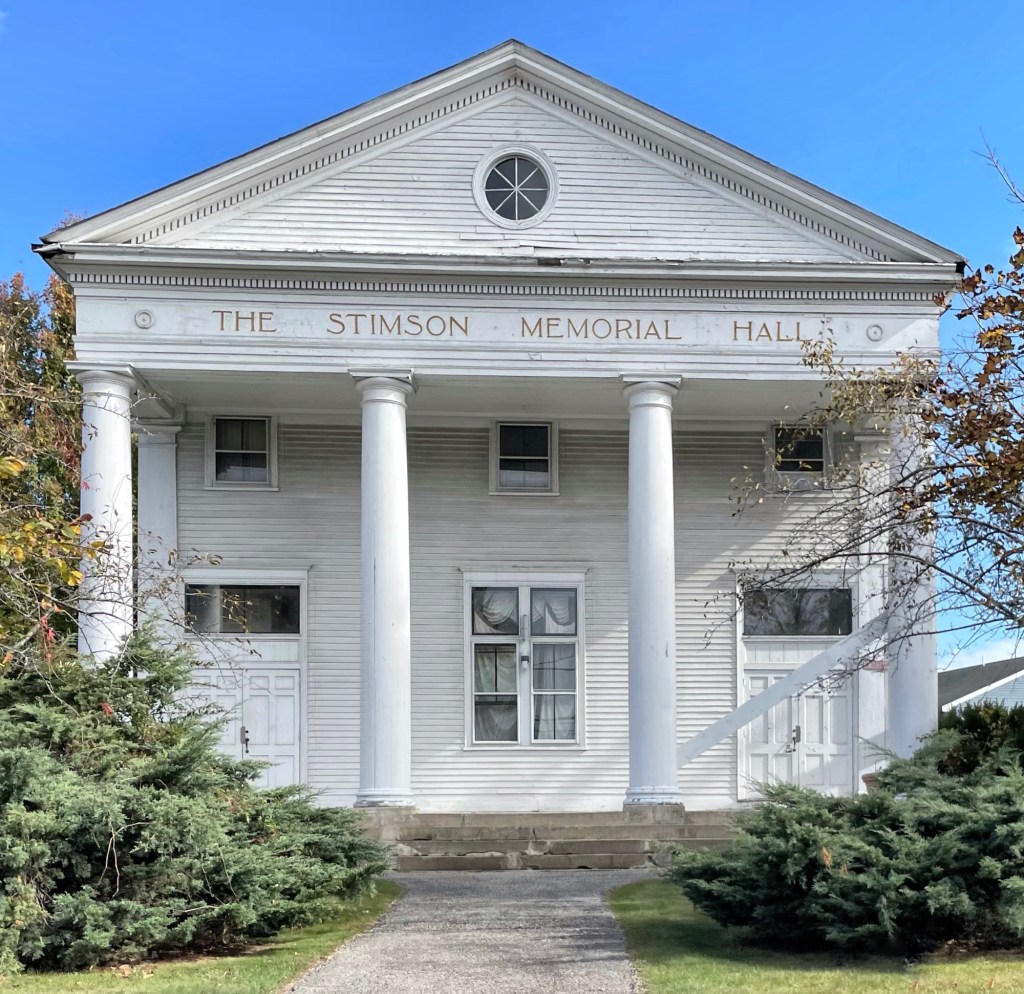
Stimson Memorial Hall is a historic, Neo-Classical building on Shaker Road in the center of Gray, Maine. Built in 1900, it served for many years as the town’s main public meeting space, and is a prominent landmark in the town center. The hall was built as a gift to the town, primarily through the efforts of Abbie Stimson Ingalls, who had moved to Cincinnati, Ohio with her husband, as a memorial to her late parents, Theophilus and Mary Stimson. The memorial hall was designed by Elzner and Anderson of Cincinnati, Ohio, and was built on land originally purchased by the local Universalist congregation. The upper level house the town library until the 1950s. The building was threatened in recent years, and as one of a handful of significant buildings remaining in the center of town, its preservation was important. It has some deferred maintenance but remains in good shape! Does anyone know what the building is/will be used for?

Pennell Institute Building – Gray Town Hall // 1886

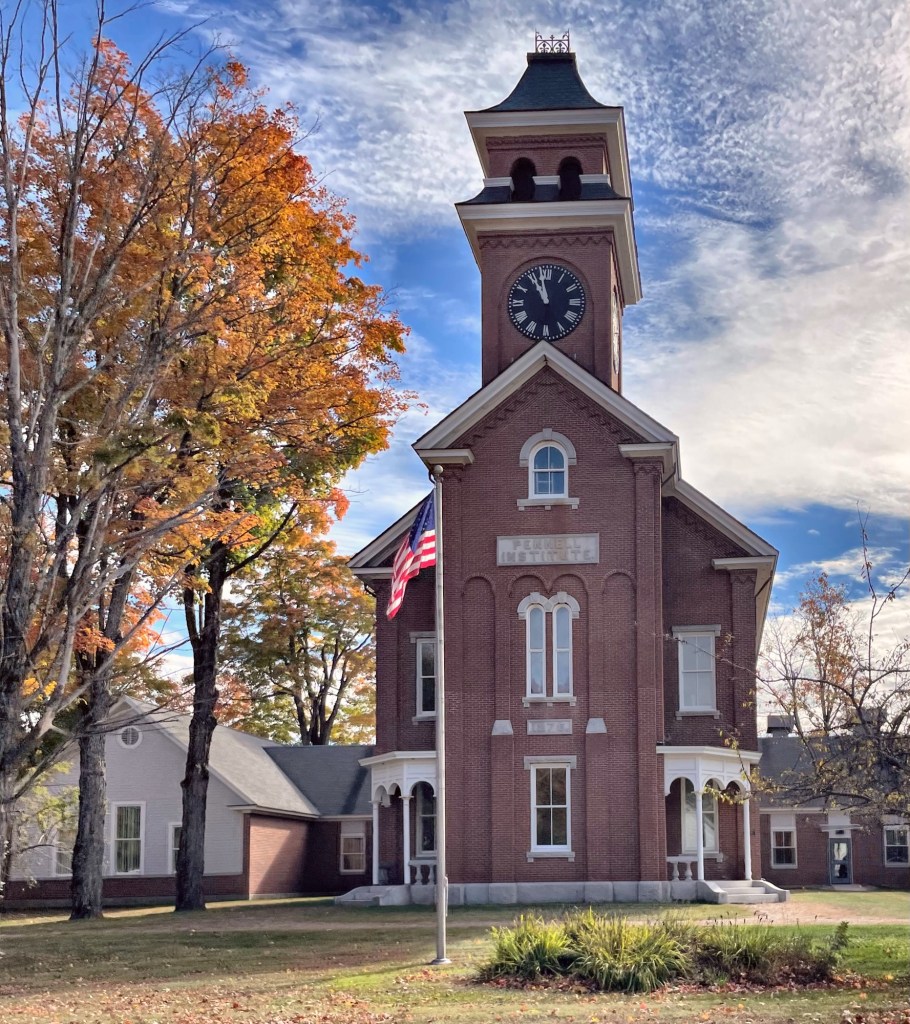
The Pennell Institute was built in 1886 as a privately funded, public school for the town of Gray, Maine. By 1870, Gray High School was located in the former Town Hall, and due to increased enrollment and ever-cramped quarters, demand for a standalone school was of grave importance. As a result, local resident Henry Pennell decided he would help his hometown. Henry Pennell (1803-1884) as a young man, worked as a butcher and traveled to Portland to sell his cuts of meat, later buying and selling livestock. After the Civil War, he dealt in real estate and mortgages, was sheriff of Cumberland County (1857-1858) and served in the State Senate (1872-1873), and became the richest man in the town of Gray. Mr. Pennell, who himself, never had received much formal education, saw the value in it for the youth of the town. Construction started on the school in 1876, where the foundation was laid, but it would take ten years until after the death and bequeathing of his estate in his will, that the building would be completed in 1886. Henry Pennell left the town the school building, the lot it stood on, a trust fund of $25,000 for the school’s general expenses, and a special fund of $5,000 for the library and for laboratory equipment and supplies. The school closed with students educated at a larger, modern building. After disputes between the Town of Gray and the local school district, the building has now been home to the Gray Town Hall, with the town clearly showing pride in their Italianate style building.

Former Columbian Cotton Mill // 1864

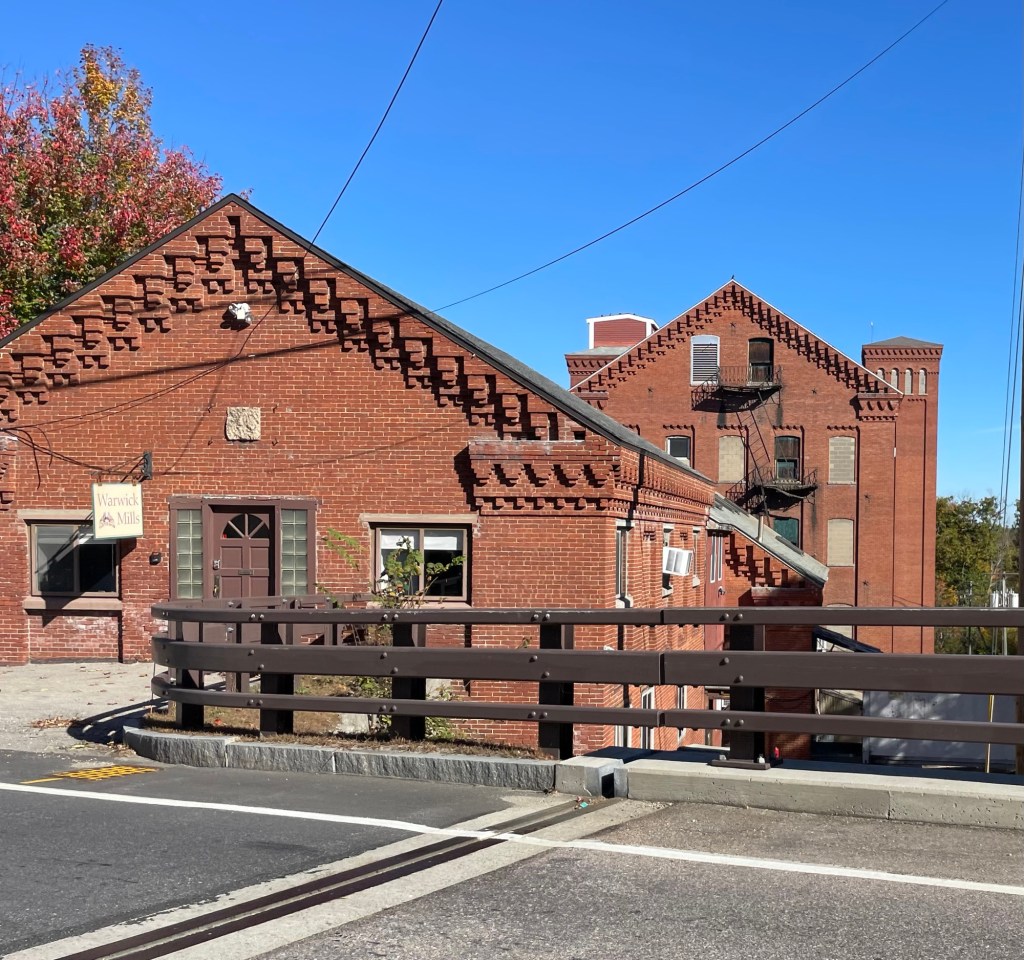
While New Ipswich, New Hampshire, is best known for its early Georgian and Federal period architecture, the small town is home to Warwick Mills, the site of the oldest textile mill in the state. Originally built circa 1807, the mills here burned down two times and were rebuilt a third time using brick; that third iteration is the building seen today. The brick for the building was forged on site and was finished in 1864, with signatures on the beams by craftsmen as far south as Baltimore. The mill was home to the Columbian Mill Company, who created textiles from cotton and other materials in the building, becoming a leading employer in the region. The building is now known as the Warwick Mill, and is an active manufacturing complex, making many contemporary and high-quality materials for 21st century clothing. The buildings exhibit stunning corbel detailing.

Old New Ipswich Center Schoolhouse // 1829

Presently owned and occupied by the New Ipswich Historical Society, this handsome brick building was originally constructed in 1829 as a schoolhouse for young students in town. The structure is located on Main Street and replaced wood-frame school that was located on the other side of the road. Almost immediately after it was built, the building and its location were heavily criticized as early as 1847. There were up to 92 pupils in its two rooms, both of which were accessed by a central entrance, causing those entering and leaving to disrupt both classrooms. Additionally, the closeness to the road caused noise and dust to enter the classrooms. The school closed in 1860 and was used for a time as a blacksmith shop before it was acquired by the New Ipswich Historical Society in 1939.

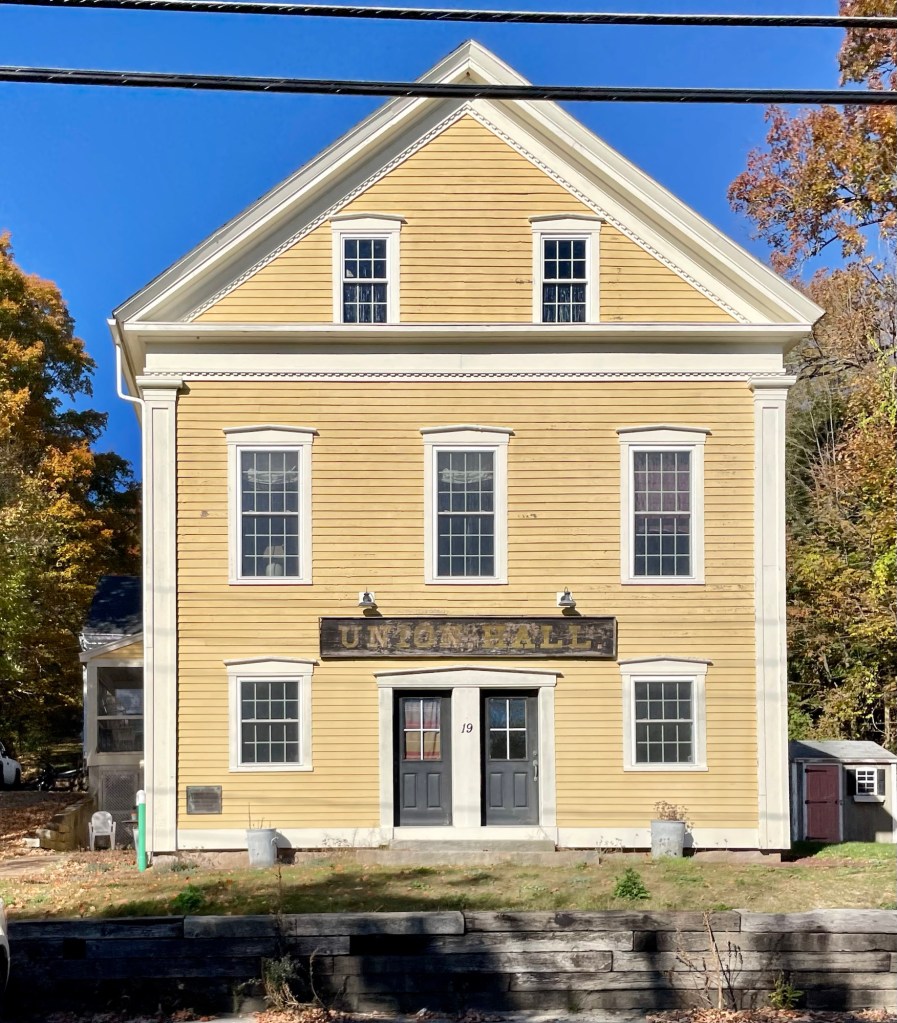
New Ipswich Union Hall // c.1845

This large, wood-frame building on Main Street in New Ipswich, New Hampshire, dates to the 1840s and has long served as a meeting place for local social groups and organizations. The building is a vernacular example of the Greek Revival style with corner pilasters, a dentiled entablature and slightly pedimented lintels over the windows and paired doors. The building was used by various groups including the local chapter of the International Order of Odd Fellows (IOOF), the Women’s Relief Corps, and as the Watatic Grange Hall.