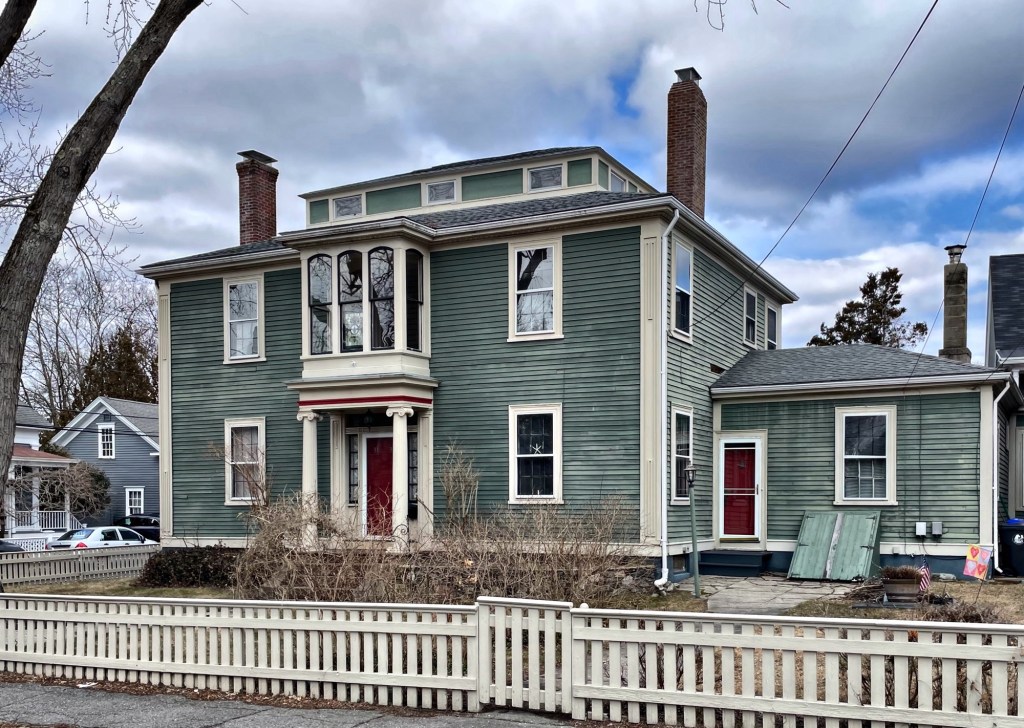
Charles Wheaton (1761-1863) enlisted in the his local militia at just 14 years old and served in Colonel Robert Elliott’s Regiment of Artillery to protect Narragansett Bay. After the war, Charles settled in Warren, Rhode Island, and married Abigail Miller. They would have at least nine children, with one of their children, Charles Wheaton, Jr., (1791-1863) marrying Abiah Goodwin Turner in 1815, the daughter of a wealthy sea captain. Around the time of their marriage, they built this house on Liberty Street in Warren in the Federal style with a three bay facade, monitor on hip roof, and portico at the entrance with Ionic columns. By the end of the 19th century, the house was enlarged and a bay window was added over the entry portico.
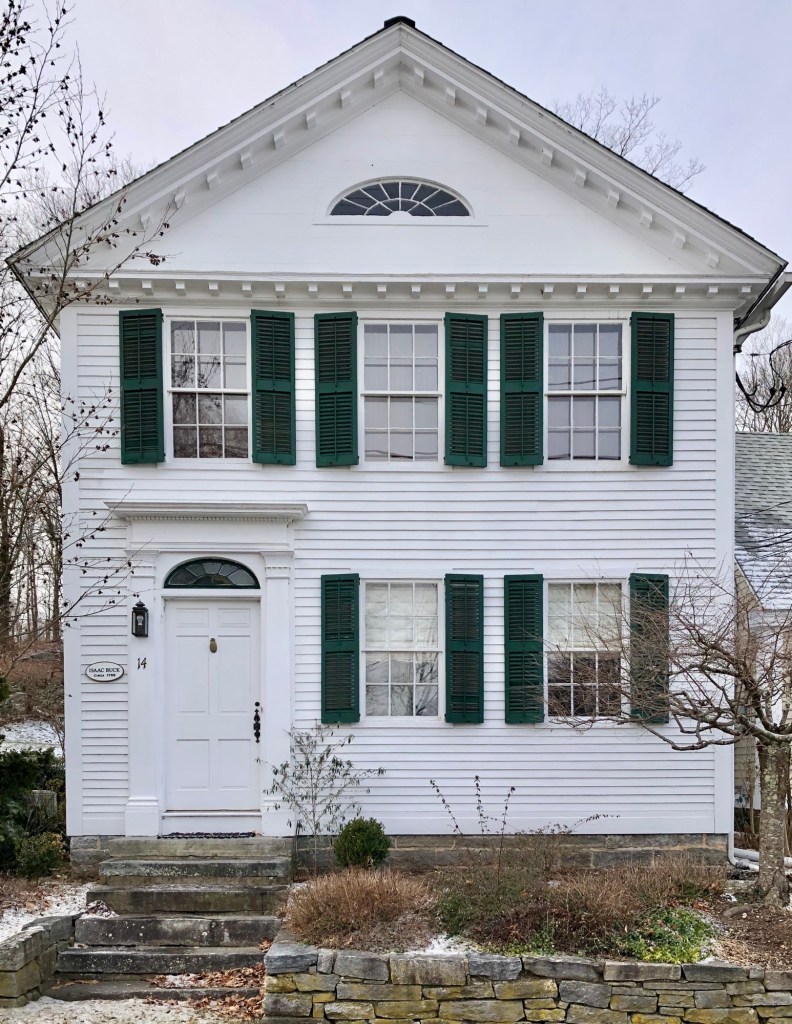
This beautiful Federal style side-hall house is located on Maple Street in Chester, Connecticut, and (at least a part of it) was built by 1755 by Isaac Buck, who deeded half of the property to his son, Justus, during his lifetime. In the early 1800s, the property was purchased by Joshua L’Hommedieu (1787-1880), a manufacturer, who had the property redeveloped or redesigned in the Federal style giving it the appearance we see today. The house has its gable end oriented to the street with an elliptical fan and dentil block detailing.
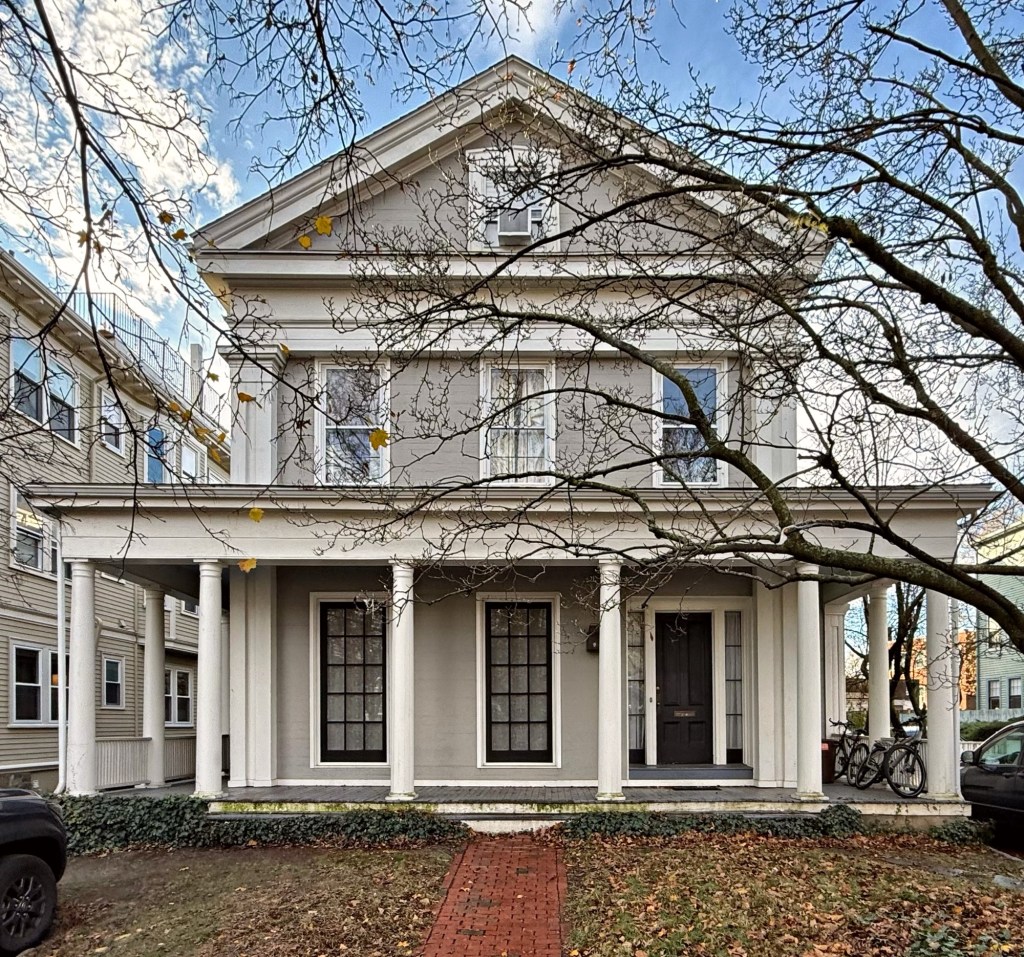
The Lindens neighborhood, located just east of the civic and commercial core of Brookline Village, was long an apple and cherry orchard known as Holden Farm. Beginning in 1843, the area became the earliest planned development in the town and was laid out as a “garden suburb” for those wishing to escape the growing congestion of Boston. As originally conceived in 1843, it reflected the latest ideals of planned residential development for a semi-rural setting on land owned by Thomas Aspinwall Davis. The streets, parks, and house lots here were laid out by civil engineer, Alexander Wadsworth, who two years earlier, laid out plans for Mount Auburn Cemetery in Cambridge, the first “Rural Cemetery” in America. Early homes were built on speculation by John F. Edwards, an architect-builder, for Davis, who was strict about high-quality designs in the Greek and Gothic revival styles in his newly laid out neighborhood. This house, at 12 Linden Street, was built in 1844 by Edwards, and sold soon-after to a Charles W. Scudder, a Boston hardware merchant. The Scudder House is an excellent example of the Greek Revival style in which the front facade of the house suggests a classical temple with flush-board siding resembling the smooth surface of stone. The wrap-around columned porch would have provided great views of the surrounding orchards and gardens until the neighborhood filled in later in the 19th century.
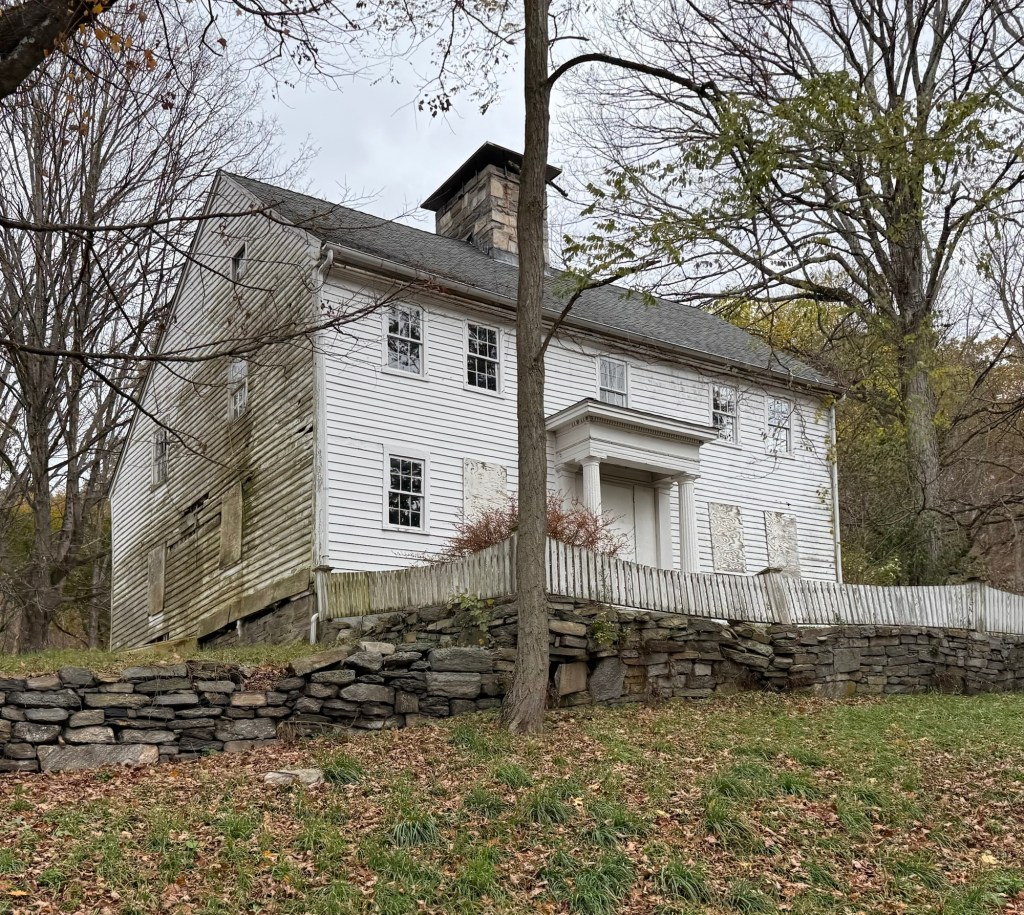
The Smith-Curtiss House, which is possibly the oldest extant building in Derby, Connecticut, has sat vacant and decaying for years and is owned by the State of Connecticut. Believed to have been built sometime between 1714 and 1740, this historic saltbox farmhouse at 411 Hawthorne Avenue is slowly decaying due to lack of maintenance and funding. Early ownership is difficult to determine, but by the 19th century, the property was owned by Ms. Alice E. Curtiss. The old estate was sold by Ms. Curtiss in 1913 to Frances Osborne Kellogg, a businesswoman, philanthropist and environmentalist, as part of her 350-acre dairy farm and land-conservation holdings. The Smith-Curtiss House was used as a residence for the herdsmen who ran the farm nearby. Before her death in 1956, Frances deeded the property to the state as a public park, and allowed her head herdsman life-occupancy of this house for the remainder of his life. The State of Connecticut assumed possession of this house in 1981. The building has suffered from deferred maintenance since this period, with the State attempting to lease the building to tenants. I hope that local and statewide preservation groups can mobilize to secure grants and funding to restore this important property.
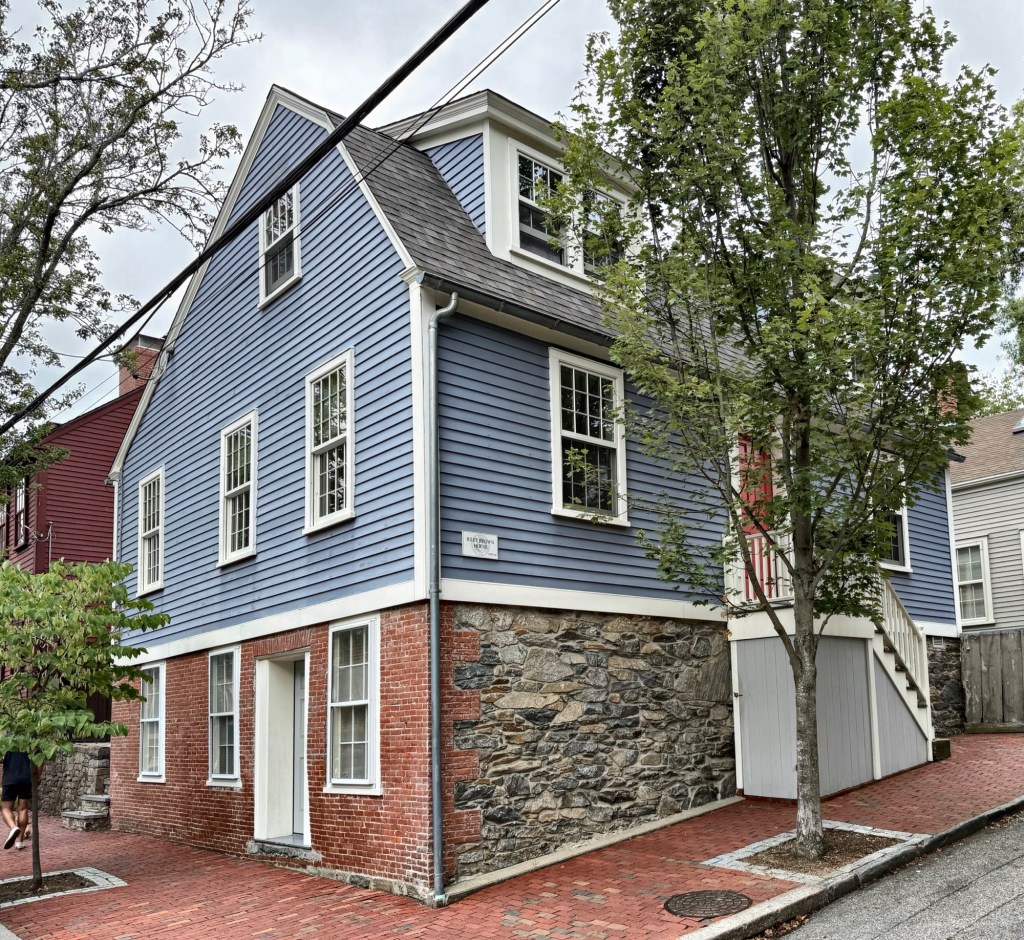
In 1829, Riley Brown, a housewright, purchased a house lot at the corner of Thayer and Transit streets in Providence, and by 1836, built this charming gambrel-roofed cottage, which is one of the most charming in the city. Riley Brown lived in the house next-door at 6 Thayer Street (1829) and on available land, built this 1-1/2-story dwelling on a full-height raised basement on speculation. It is possible that the house could have dated to the 18th century, and was possibly moved to the site from a nearby location, given the distinct gambrel roof and Georgian qualities. The residence here was sold in 1836 to John Crocker, who resided here with his family until his death in 1865. The Brown-Crocker House stands out for its unusually high basement of brick and stone, with a stair ascending up to the central entry and the gentle saltbox roof off the rear. Two shed dormers were likely added in the 20th century to make the house’s second floor more liveable.
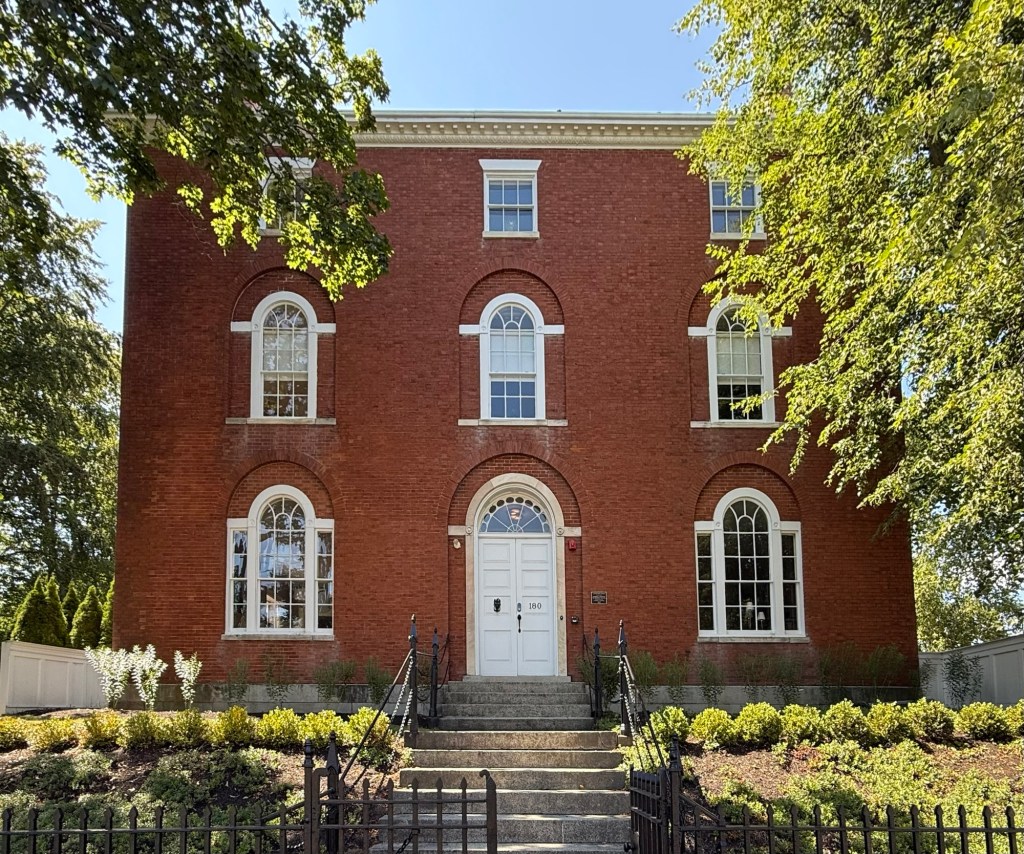
The Larkin-Ladd House at 180 Middle Street in Portsmouth, New Hampshire, is a three-story, masonry Federal-style residence with symmetrical facade, built for one of the city’s wealthiest merchants. Samuel Larkin (1773-1849) was born in Charlestown and moved to Portsmouth, marrying Ann Jaffrey Wentworth, a daughter of Col. Joshua Wentworth. During the War of 1812, Samuel Larkin made his fortune as an auctioneer, selling the contents of English ships captured by local privateers. It is believed that fourteen privateers and their crews worked out of Portsmouth Harbor and are said to have captured an estimated 419 British ships! With the profits from stolen goods from these British ships, Larkin purchased lots on Middle Street and began construction of this stately residence. He (and mostly his wife), had twenty-two children, although roughly half of them died before reaching adulthood. By the late 1820s, financial hardship fell on Larkin and he sold this property, moving into his house next door, which before this was his original residence and later rented to boarders. The Federal style mansion was later owned by Henry H. Ladd, a prosperous Portsmouth shipping merchant, who also served as President of New Hampshire Bank and Portsmouth Savings Bank. The Larkin-Ladd House is undoubtedly one of the finest Federal style residences in New England, and stands out for its entrance, flanked by Palladian windows and the slightly recessed elliptical surrounds at the first and second floor windows. Additionally, the historic stable, also from the 1810s, maintains much of its architectural integrity.
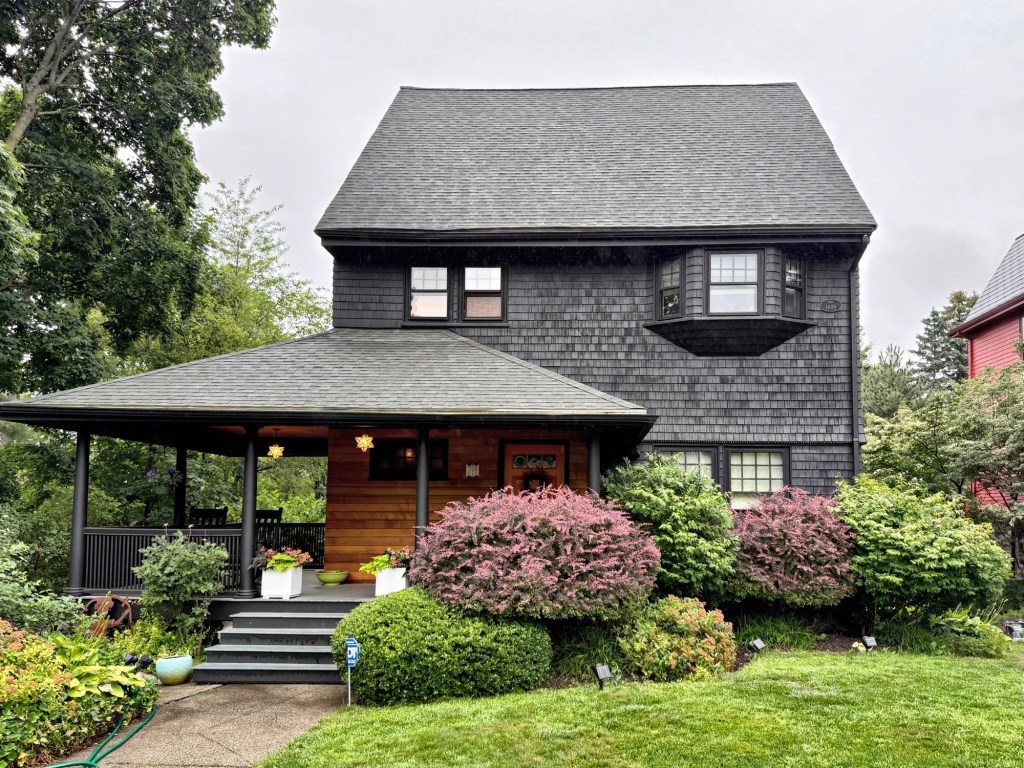
One of the finest and refined examples of the Shingle style in Boston can be found on Alban Street in the Ashmont Hill section of Dorchester, a lovely, walkable neighborhood where you can find timeless examples of just about any Victorian-era architectural style. Built for Charles F. Dillaway, a banker in Boston, this home was designed by local architect, Edwin J. Lewis, architect for many houses in the Ashmont area. Lewis’s designs are distinguished by their crisp geometry, often with horizontal lines emphasized and small-paned windows. The house has been slightly modernized by later owners who added new siding within the inset porch and a more moody color scheme.

 Buildings of New England
