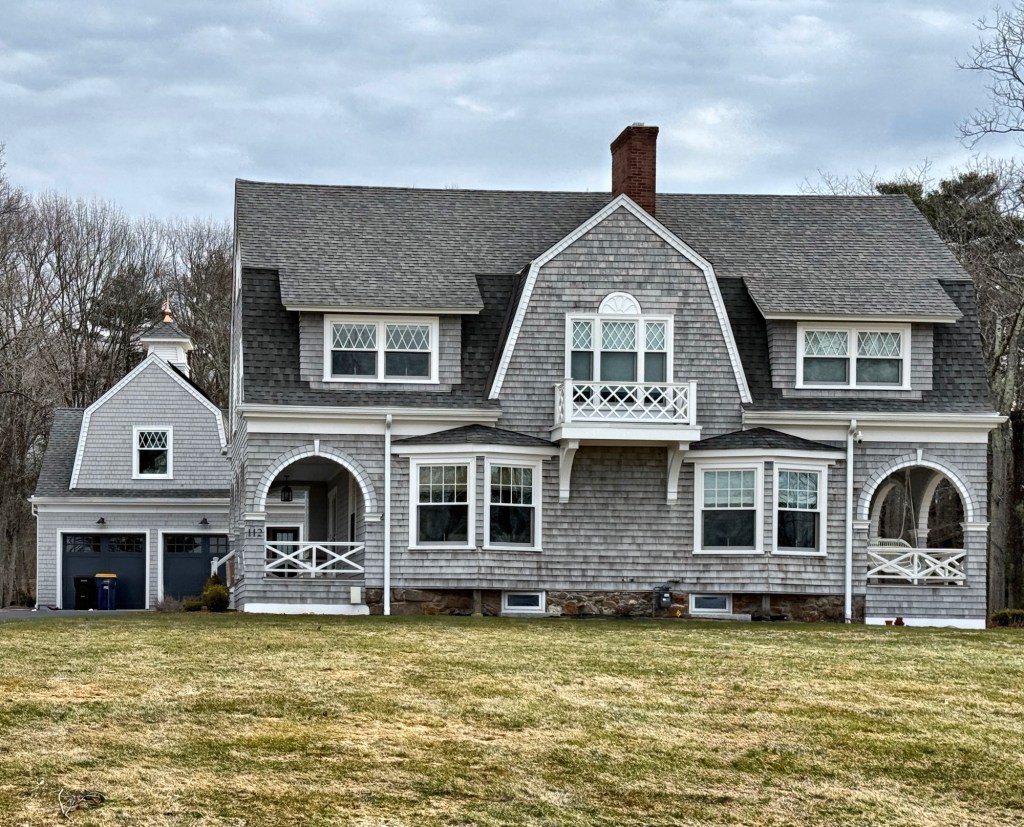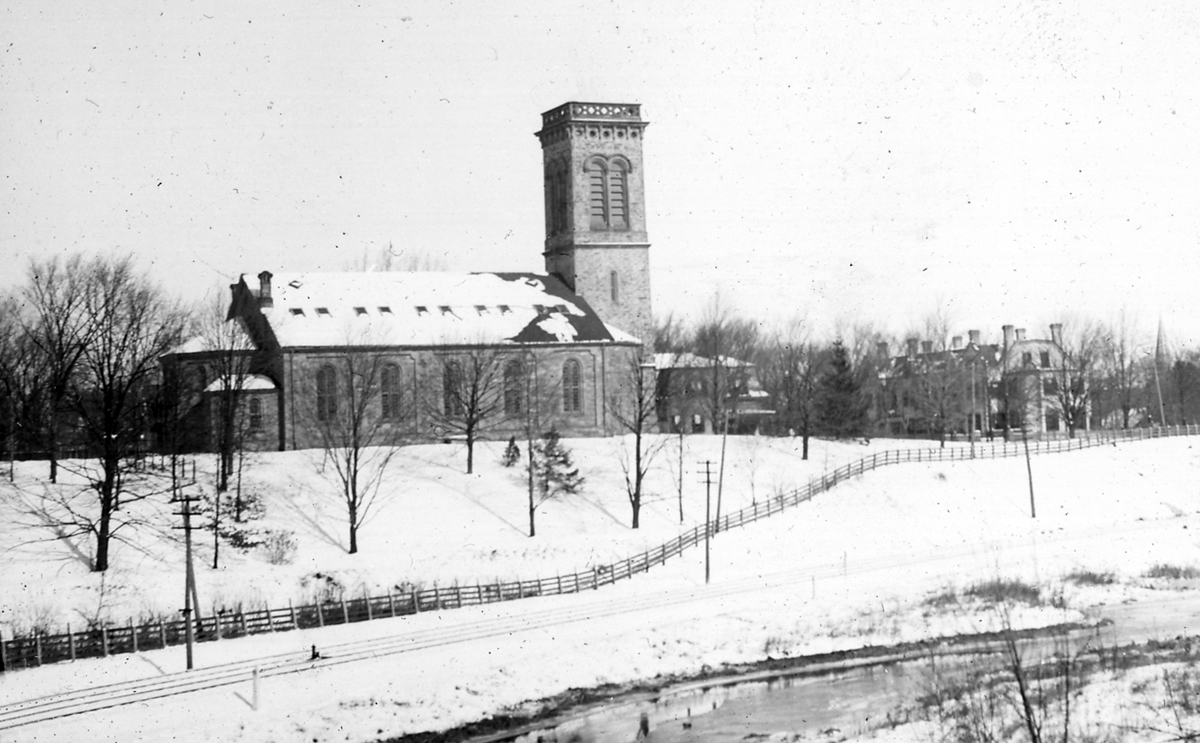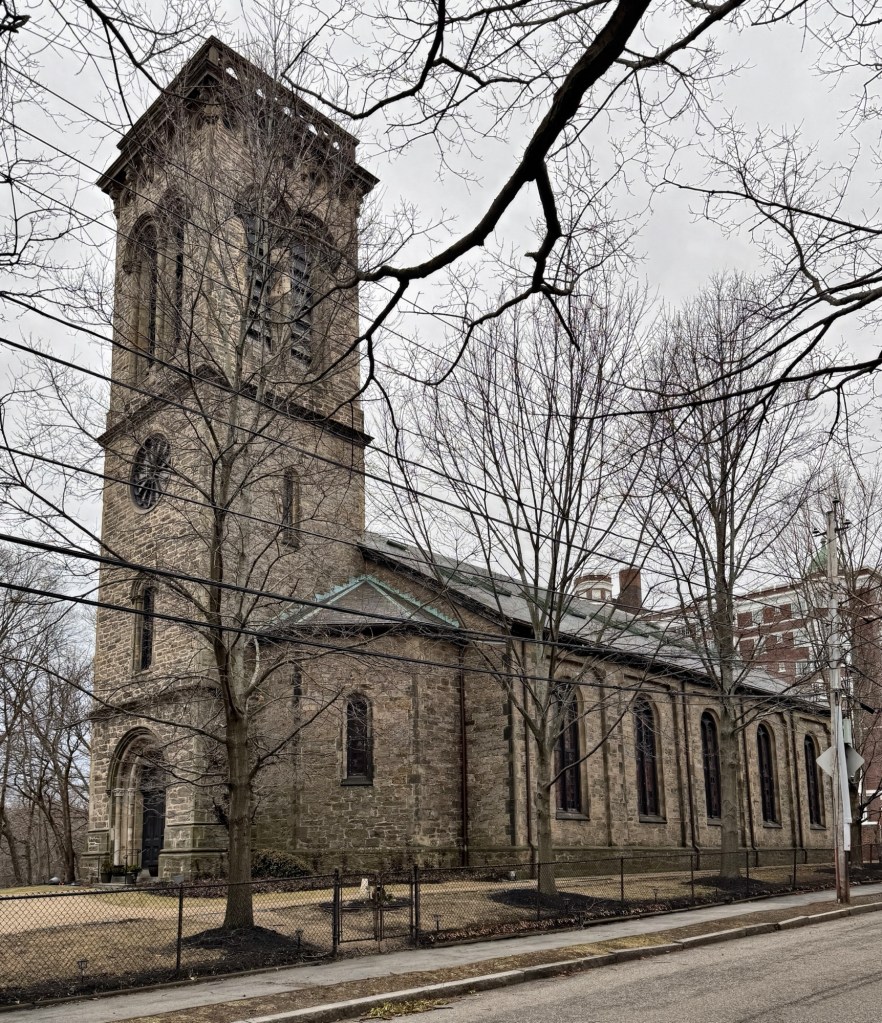
St. Mary of the Assumption Catholic Church, Brookline Village // 1880

St. Mary of the Assumption church was the first Catholic Church established in Brookline, Massachusetts, in 1852 when a congregation of Catholics began to congregate to worship together at the old Lyceum Hall. The congregation primarily consisted of Irish immigrants who settled in Brookline, where they often found work at the many large estates and building the new branch railroad in town, but desired a true house of worship close to their homes. By 1853, a modest wood-frame Gothic Revival style church was built in the Village, but was quickly outgrown. In 1873, the pastor of the congregation, Irish-born Rev. Lawrence Morris (1845-1900) began purchasing land at the corner of Harvard Street and Linden Place to establish a new church, large enough to comfortably fit the congregation and various church-related buildings. In 1880, the firm of Peabody & Stearns was hired to furnish plans for the Victorian Gothic edifice in brick and brownstone. Although the church was designed in 1880, it was not dedicated until 1886, and at this time, Pope Leo XIII sent a chalice to the Parish in honor of the completion of this church, the first in America to be named Saint Mary of the Assumption.

Brookline Town Hall // 1965

The modernist Brookline Town Hall building stands in stark contrast to the many historic buildings in Brookline Village, and even more-so from the town’s third Town Hall, a Victorian Gothic design by architect Samuel J. F. Thayer. Completed in 1965 as a six-story municipal “skyscraper”, the structure was designed by Anderson, Beckwith, and Haible, architects who specialized in sleek, clean, Modernist designs, primarily in office parks and college campuses. The unadorned box is broken up only by the rows of identical windows and slightly projecting fins, which break up the bays in their own monotony. Like many such municipal and office buildings of the time, the structure is set back from the street and surrounded by landscaping, with surface parking behind. While the building was lauded when it opened in 1965, tastes shifted and like in many communities, a majority of the public (and likely the employees who work here) would have preferred its predecessor.

Gleason-Patterson House // 1803

Another stately old home on Glezen Lane in Wayland is this brick, Federal style country mansion located across from the town Training Field. This residence is said to have been built by a Nathaniel Gleason (Glezen) and later inherited by a family member, Abel Glezen (1803-1890) who farmed the 55 acres of land and was a local politician. In 1900, as Wayland shifted from rural community to a desirable Boston suburb for summer residences, the Gleason House was purchased by Henry W. Patterson, who was in his late 20s when he bought this country house. Henry inherited his father’s estate and married Jane Harrington Adams from Massachusetts. The couple spent only a couple years here until Henry died in 1907 at just 35 years old. Jane, his widow, remained here until her death in 1950. The estate was subsequently subdivided and remains one of the finest homes in the community.

Isaac Gleason House // 1805

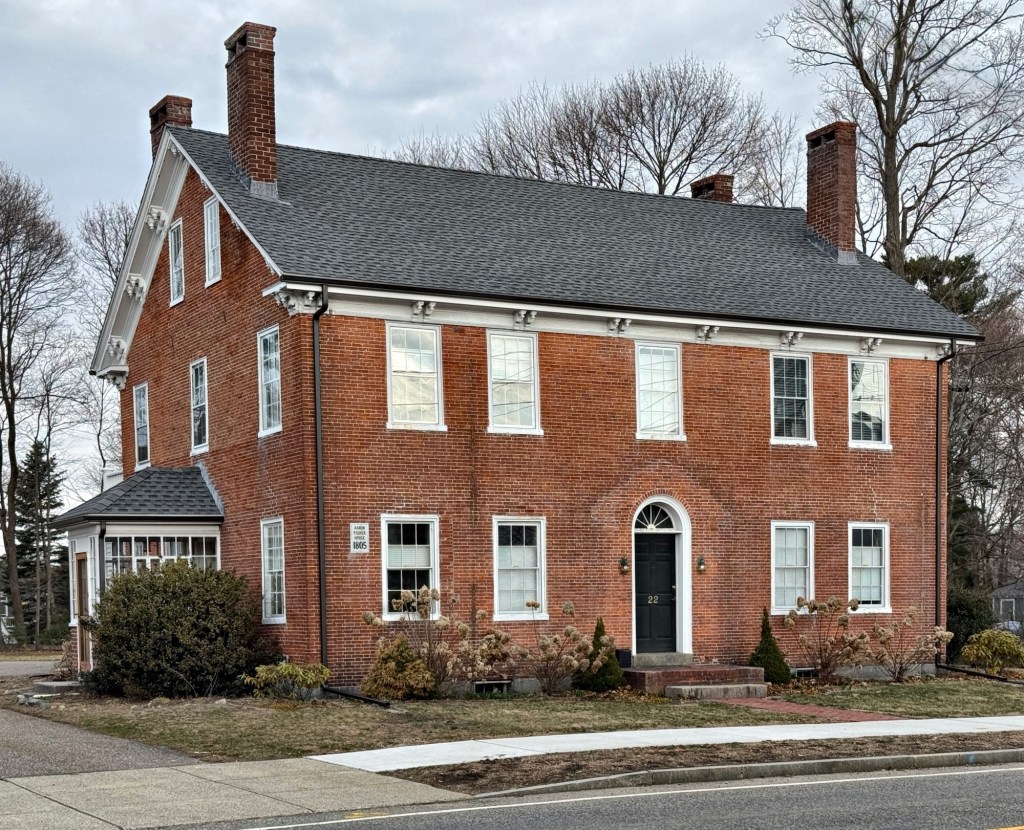
Built in 1805 by Isaac Gleason (Glezen), this Federal style mansion was later expanded in the early 20th century in the Colonial Revival style as Wayland became more of a wealthy Boston suburb. Located on the appropriately named Glezen Lane, this house was constructed for Isaac Glezen (1769-1843), who farmed the land here. Other family members built homes nearby. As Wayland shifted from rural community to a wealthy Boston suburb in the early 20th century, the property was purchased by Charles Ashley Hardy and his wife, Alice. The couple would sell the property in 1918, which comprised of 89-acres of land and a chauffeur’s residence, was purchased by Albert H. Beck, a New York banker. The property was later subdivided and consists of many other large, single-family homes.

Griffin-Malloy House // 1720

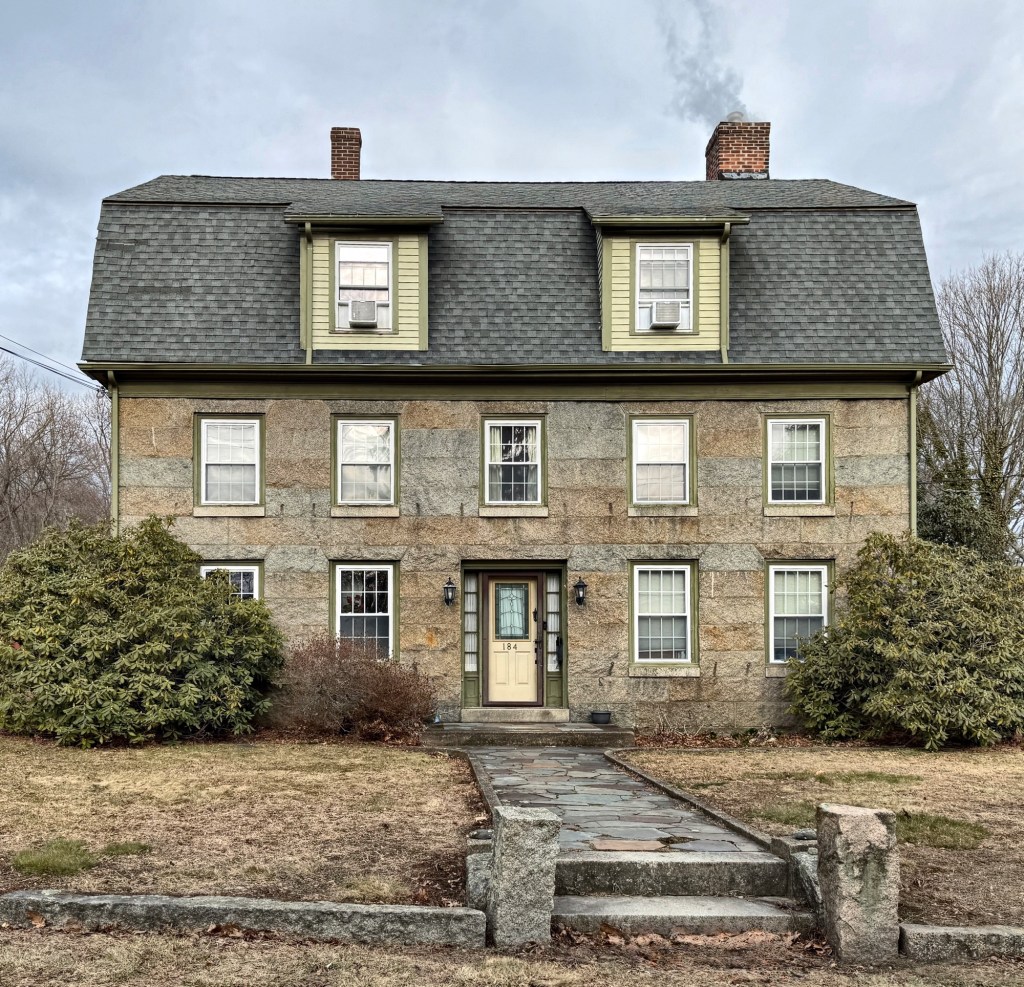
This First Period Home on in Wayland, Massachusetts, can be found at 184 Glezen Lane and is one of the community’s oldest residences. The Griffin-Malloy Homestead dates to about 1720 and is a large, single-family farmhouse that is just over 300 years old! Records state that the house was built by early settler, Samuel Griffin and possibly expanded later by his son, Deacon Jonathan Griffin. After generations of Griffin Family ownership, the old farmhouse was purchased in 1877 by Timothy Malloy (1839-1909) an Irish immigrant who settled in Wayland and operated a farm here. The house as of the 20th century, retained much of its original wood paneled walls and fireplaces, and has been lovingly preserved by generations of great stewards. 

Bryant-Finlay House // c.1713

This large First Period house in Wayland dates to the early 18th century and was originally located in Kingston, Massachusetts, and moved to its present location in the 40s. The historic home was built by 1713 for Jonathan Bryant (1677-1731). After 250 years in Kingston, the house was threatened with demolition, and was ultimately saved by Wayland resident, Allan Finlay. Allan was a member of the town’s Planning and School boards, and was active in overseeing the Modern expansion of Wayland’s schools in the 1950s and 60s. In 1941, Finlay had this house disassembled and rebuilt on land on Old Sudbury Road for his family. The house, with its expansive setback, overlooks preserved wetlands.

Happy Hollow Siphon House, Weston Aqueduct // 1903

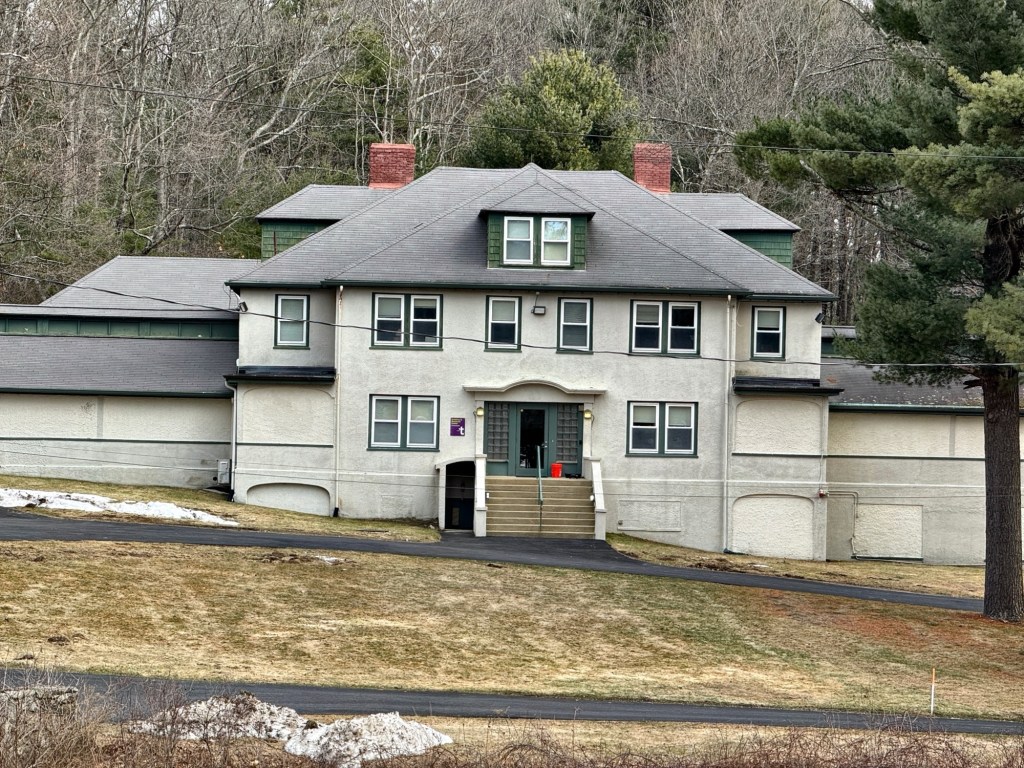
The Weston Aqueduct was designed to deliver water from the Sudbury Reservoir in Framingham to the Weston Reservoir in Weston, Massachusetts. Built between 1901 and 1903, the aqueduct was designed to provide water to the suburbs north of Boston. All of the buildings that shelter the aqueducts above-ground elements, including this structure in Wayland, were designed by the architectural firm of  Shepley, Rutan and Coolidge, with landscaping along the route and at the reservoir designed by the Olmsted Brothers, landscape architects. This siphon house, known as the Happy Hollow Siphon House was built in 1903 and was an important part of the aqueduct system, as it transferred water through varied elevations using gravity and pressure to move the liquid without a pump. The aqueduct route is now a long, linear path and remains owned by the Massachusetts Water Resource Authority.

Cochituate School // 1910

The Cochituate School in Wayland, MA, was built in 1910 to educate the Cochituate Village’s growing student population. The industrial village was dominated by shoe manufacturing with workers largely consisting of first- and second-generation European immigrants who moved to New England for work. Boston architect, Willard P. Adden, designed the school, which replaced an earlier schoolhouse on the site that was outgrown. The two-story, brick school was expanded following WWII, when a long rear ell with classrooms and a cafeteria was designed by Perry, Shaw & Hepburn. In the 1990s, the old Cochituate School was renovated and converted to senior housing administered by the Wayland Housing Authority.

George Risley House // c.1870

This unique residence in Wayland, Massachusetts, is tucked away on Corman’s Lane, a dead-end street near Snake Brook, a small stream leading into Lake Cochituate. The house was built around 1870 for George William Risley (1836-1913), a shoe manufacturer and Civil War veteran who settled in Cochituate Village and ran a factory there. Risley was active in town affairs and served as Selectman in 1872, the year in which the annual meeting authorized the selectmen to petition the General Court for Cochituate to separate from Wayland. The petition was ultimately never was filed and Cochituate remains a part of Wayland. The Risley House has five bays and a shallow side gable roof with broad, overhanging eaves supported by brackets. A central porch runs along part of the facade and has intricate turned posts and spindlework. The home remains in great shape and is evocative of mid-late 19th century industrial housing built for factory managers.

Damon-Griffin House // 1869

The Damon-Griffin House at 92 Commonwealth Road in Wayland, Massachusetts, is one of the exemplary buildings constructed in the Cochituate village in town, which prospered in the 19th century and centered around industry. This stately Second Empire style mansion is sited on a rise in the land overlooking Lake Cochituate and was completed in 1869 for George A. Damon (1826-1885), a wealthy businessman. George Damon died in 1885, and the house was sold to Wallace Griffin, one of the Griffin brothers who worked for the Bent Company, a prominent local shoe manufacturer. In 1890, Noble Griffin bought the house from his brother and, as his business prospered, proceeded to fix up the house as the showplace of a successful shoe manufacturer. In the mid-20th century, the Damon-Griffin House became a funeral home, and later was purchased by a developer who subdivided the land to build a suburban-style development of detached homes behind the house, and constructed an addition to the rear with more condominium units.