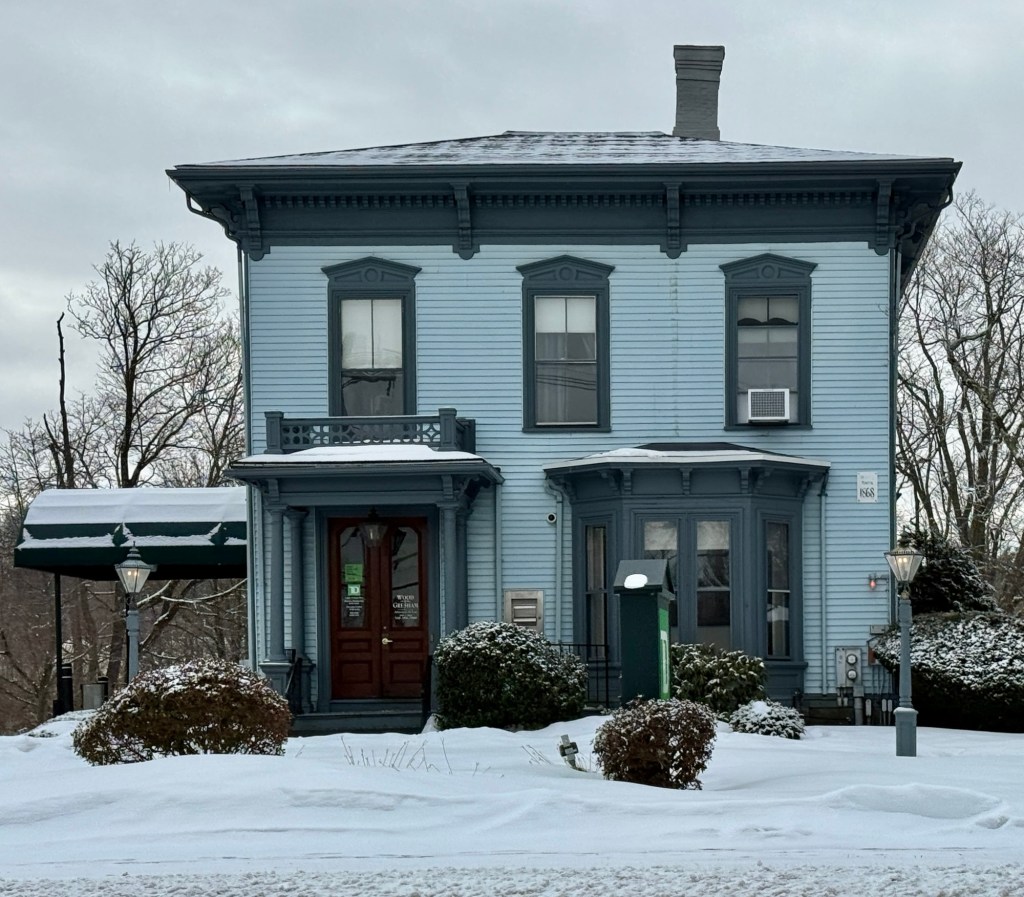
Plimpton-Winter House // 1868

Only in New England will you find a historic 19th century house converted into a bank! The Plimpton-Winter House is located at 127 South Street in Wrentham, Massachusetts, and is among the finest Italianate style houses in the community. The residence was built in 1868 for Francis Newton Plimpton (1828-1913), who worked as a cashier and town treasurer, later becoming President of the National Bank of Wrentham. Two years after Plimpton’s death, in 1915, the house was bought by Murray Winter, who moved to Wrentham with his two brothers and established the Winter Brothers Tap and Dye Factory. The company manufactured gauges and valves during the early 20th century, quickly becoming the town’s largest employer until WWII. In the 1980s, the home was purchased and rehabilitated by the Foxboro Savings Bank to serve as its Wrentham Branch location. Today, the Plimpton-Winter House stands as a TD Bank Branch, where the exterior of the Italianate style residence is preserved, down to its bracketed cornice, ornate trim, bay window, and entry with paired wooden doors. How cool is that?
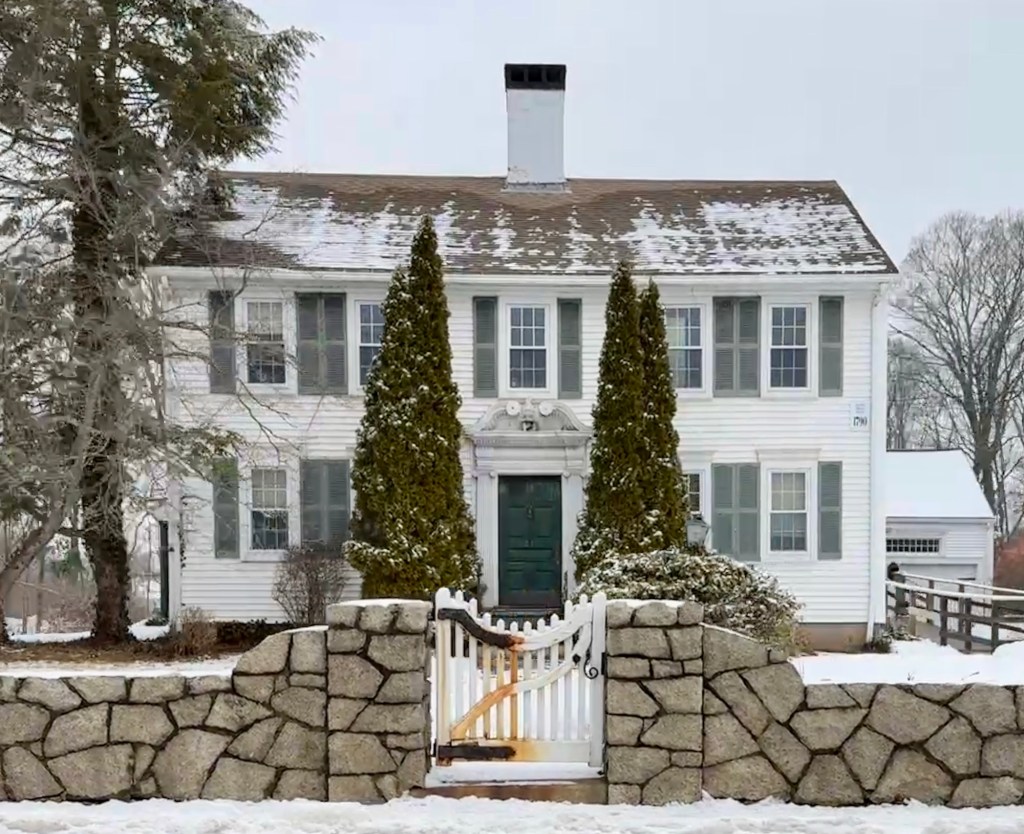
Druce-Francoeur House // c.1787

In 1787, Oliver Druce (1760-1797) married Sarah “Sally” Kollock (1764-1789) and had this large residence built overlooking the Town Common in Wrentham, Massachusetts. The young couple raised one daughter here until Sarah died in 1789 at 25 years old, followed years later by Oliver, who died in 1797 at 37 years old. By the turn of the 19th century, the late-Georgian residence was owned by John Francoeur, a French Huguenot. The Druce-Francoeur House is one of the finest Georgian style residences in Wrentham, which retains its magnificent doorway framed by fluted Ionic pilasters with broken scrolled pediment above.

Wrentham Congregational Church // 1834

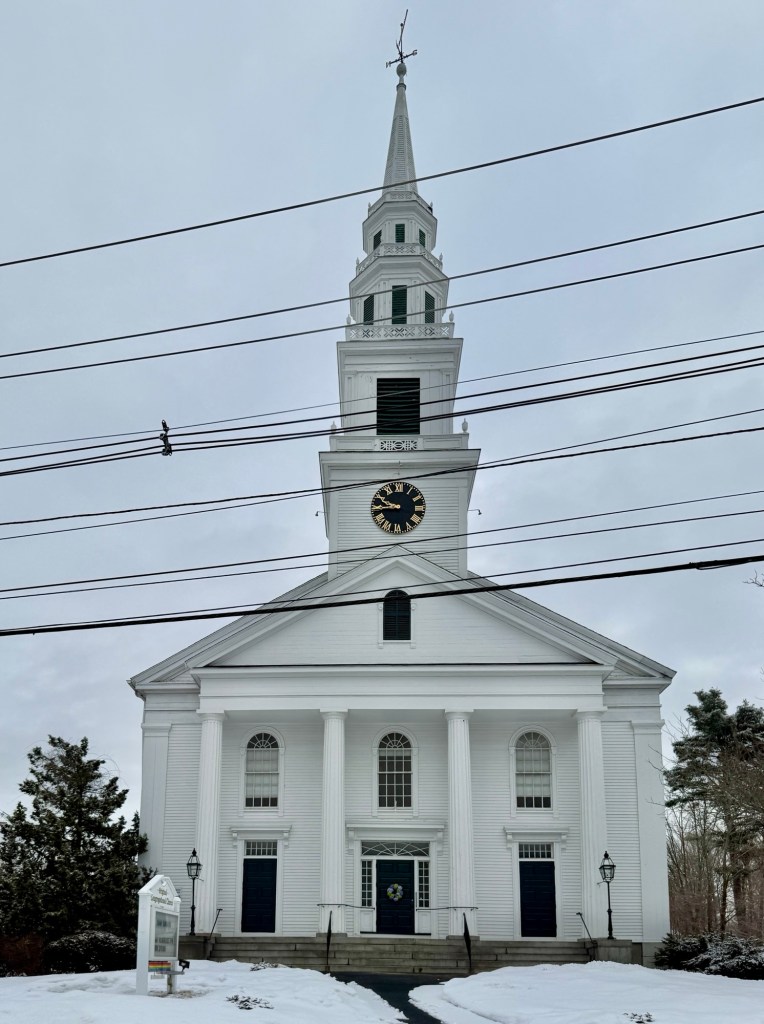
The Wrentham Congregational Church is the oldest house of worship in the suburban community, and the fourth consecutive meetinghouse for the congregation at the town center that was originally established in 1692. The frontier town grew slowly as a largely agricultural community and three houses of worship were built nearby the town common until 1833, when it was decided that a church worthy of its historic congregation be built. It is not clear who designed the Greek Revival church, but timbers were transported to town in 1834 for the new edifice which was completed that year. Over the following century, the church was expanded and modernized, all-the-while retaining its historic character. The four-stage steeple toppled during the New England Hurricane of 1938, and was rebuilt. The congregation remains active in the community and is a visual landmark at the town center.

Boyden-Clark House // c.1725

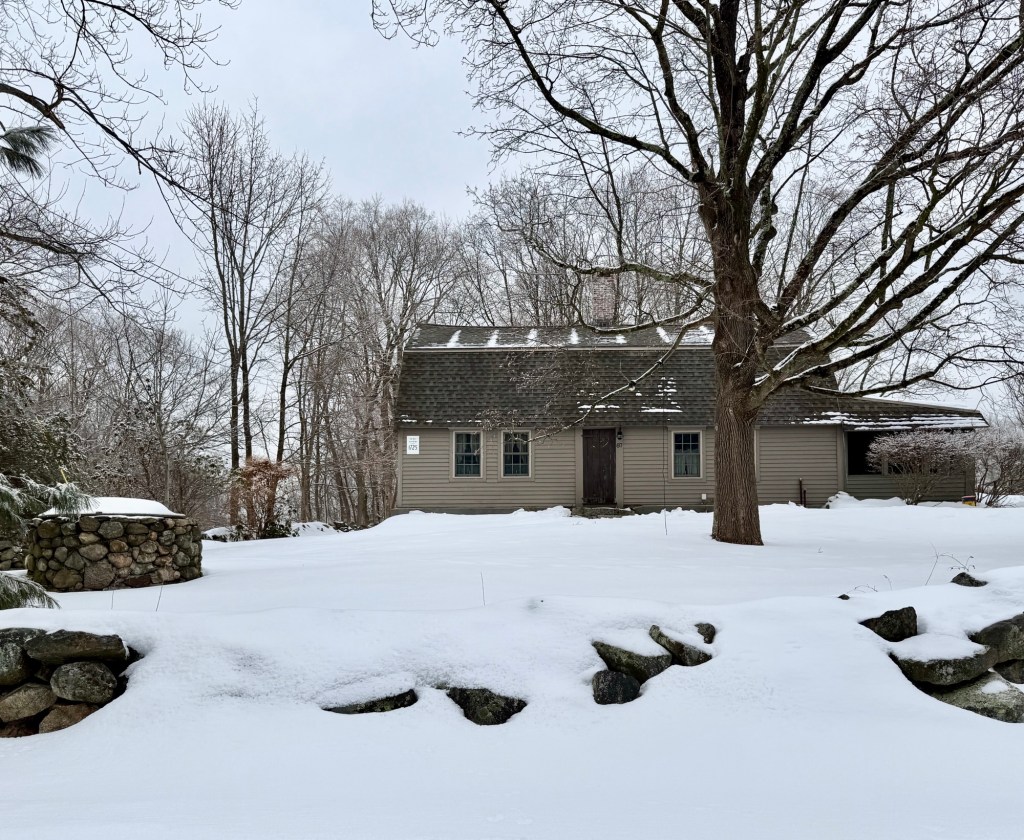
Wrentham, Massachusetts, was originally known as Wollomonopoag, roughly translating to “place of shells” a name given by the native tribes living here, referencing to area lakes as a food source for the people living here for over 8,000 years before European settlement. The area was settled by colonists in 1635 and became part of Dedham, when it was established in 1636. In 1673, the General Court allowed for the separation of what is now Wrentham, to incorporate as its own town. The community adopted the name Wrentham after the town in Suffolk County, England, a small village of just under 1,000 residents. About 50 years after incorporating, this historic Georgian farmhouse off Cumberland Road, not far from the Rhode Island state line, was built. The Boyden-Clark House is among the few pre-Revolutionary era homes remaining in the suburban community and retains its rural character. The house is said to have been built for Thomas Boyden (1681-1771) and wife, Mary (Clark) Boyden around 1725. The Boyden’s enslaved laborers who worked the farm here for decades. The property was later owned by Stephen Clark who farmed the land and likely added the stone well in the front yard. The house retains its gambrel roof and central chimney, hallmarks of the Colonial era.

Rowe House // 1911

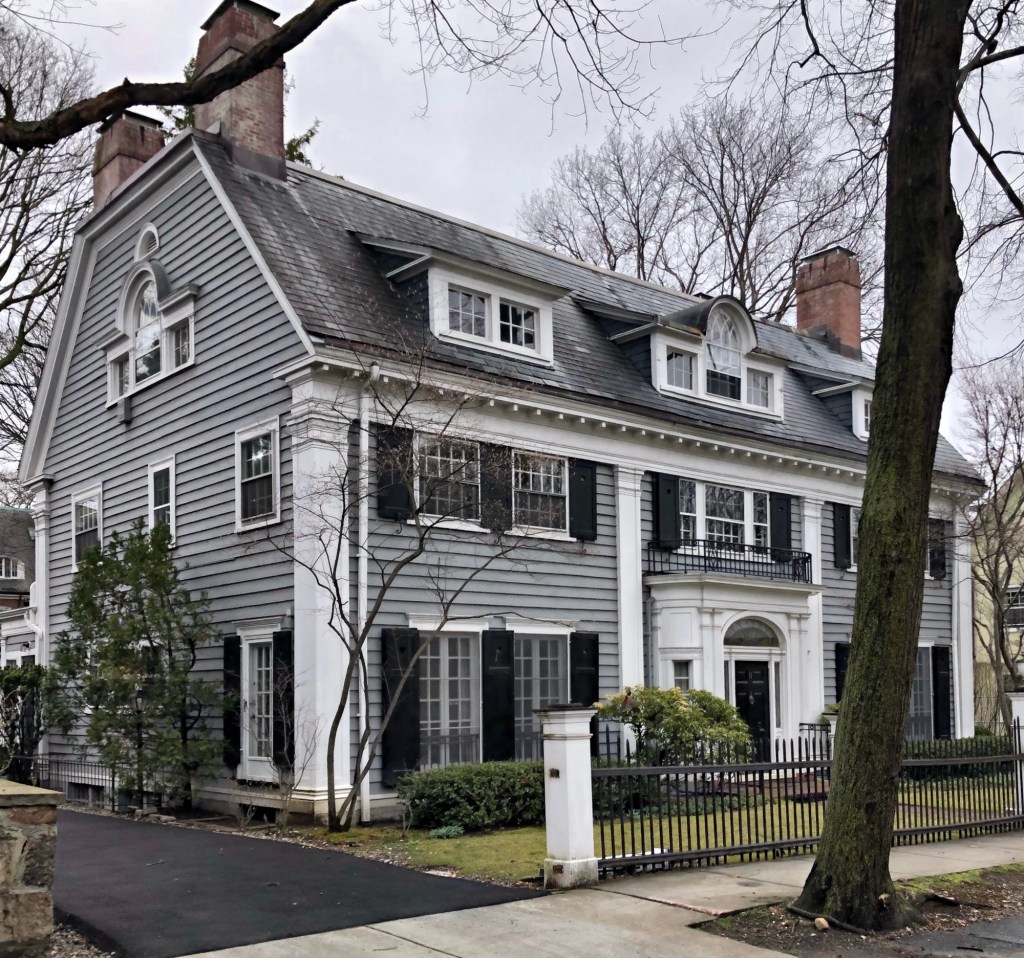
The Rowe House at 11 Mason Street is an over-the-top, and high-style example of the Colonial Revival style, showcasing the oversized proportions and scale that architects in the early 20th century followed when referencing Colonial American architecture. The house here was built in 1911 for Edward Prescott Rowe (1879-1936) and his wife, Eleanor Livingstone. Designed by the firm of Rowe & Keyes of Boston and New York, the commission was likely a relative of Mr. and Mrs. Rowe. The symmetrical house features a broad gambrel roof with Palladian windows in the side gable and central dormer at the facade, large pilasters breaking up the bays on the facade, a projecting Colonial Revival entry, and squat windows at the second floor terminating at the entablature above. The property even retains its Colonial Revival gateway.

Dana-Jewell House // 1872

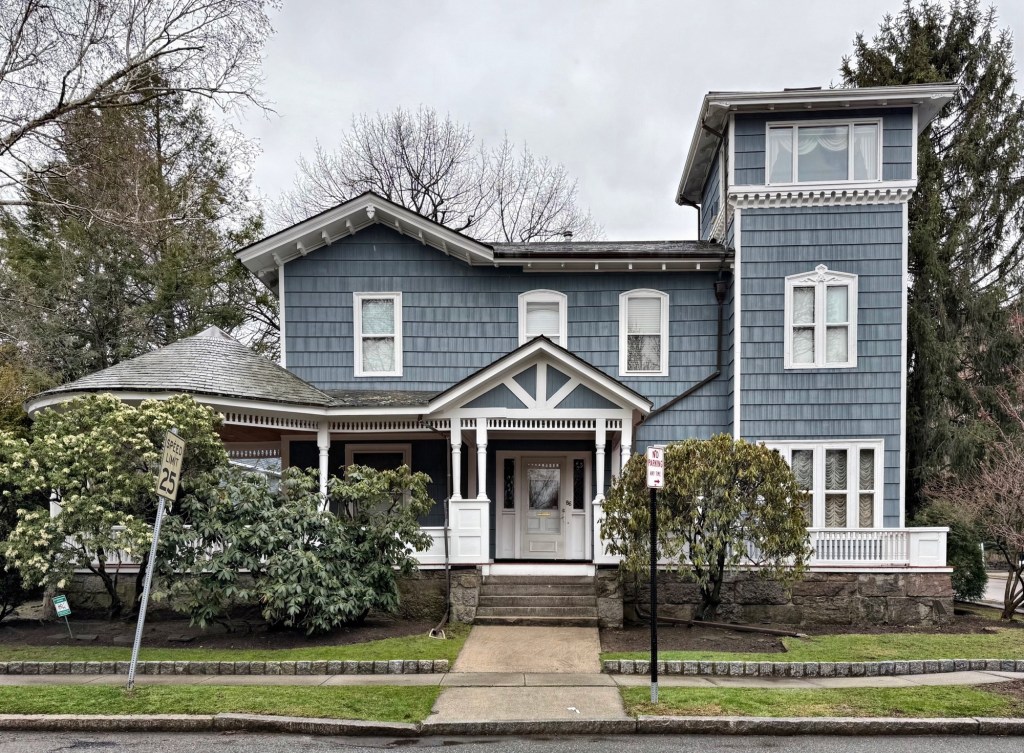
This house at the corner of Freeman and Powell streets in the Cottage Farm area of Brookline, Massachusetts, was one of the first to be built on Sears family land in the years following the death of the family patriarch, David Sears. In 1871, Dennison Dean Dana (1827-1899) purchased land here from the Sears heirs and constructed this Italianate house with three-story square tower. Dana owned the house through the 1880s, and by 1893 it had been acquired by Albert L. Jewell, a real estate developer who added the large veranda and a two-story addition to the house, and would subdivide the property, developing fashionable houses along Powell Street to the south. The house (while clad in asbestos shingles since the 1960s) is an important early residence in the neighborhood which is today, dominated by late 19th and 20th century architecture.

Abercrombie Fine Arts Wing // 1974

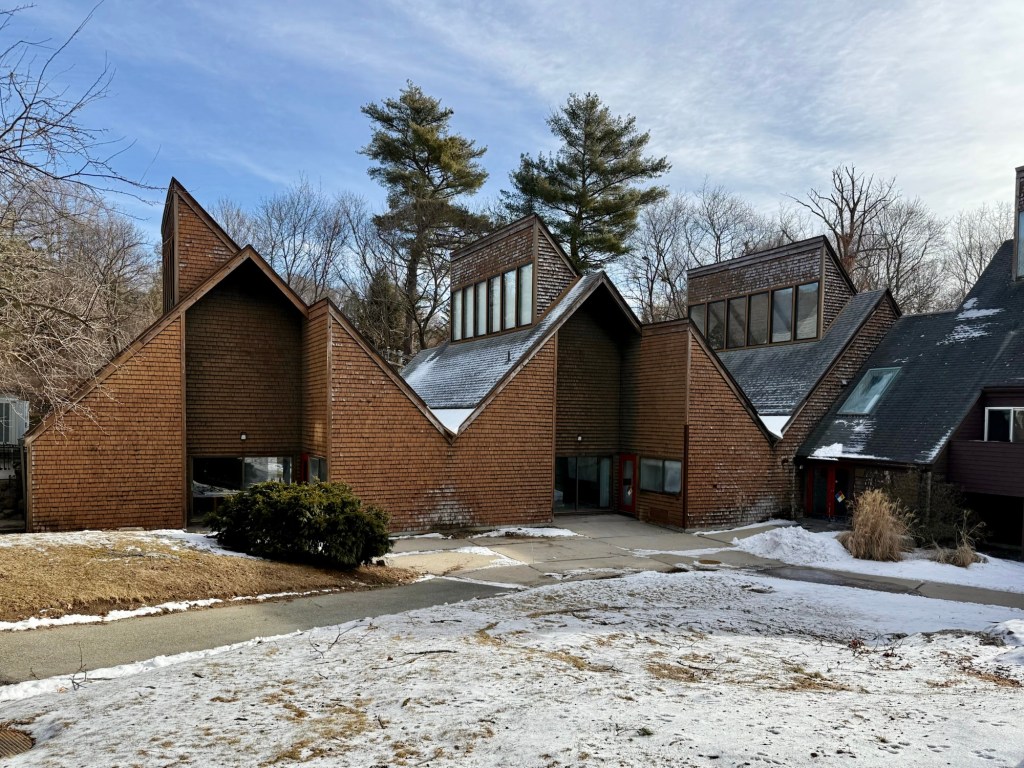
Completed in 1974 for the now defunct Pine Manor College in Brookline, Massachusetts, this interesting Contemporary/Shed style building is modern, yet employs materials and a general form that fits into its surrounding context. When Pine Manor College received a grant by the Abercrombie Foundation, planning began immediately to design and build the Abercrombie Fine Arts Wing of the school. The building was designed by Paul J. Carroll & Associates, and features a bold roofline with clerestory windows, used to provide ample natural light for the classroom and art studio spaces inside. The building remains a part of the newly established Messina College, a Boston College campus enrolling first-generation high-financial need students, giving all an opportunity for education, no matter their circumstances.

Highland Cemetery Chapel // 1903

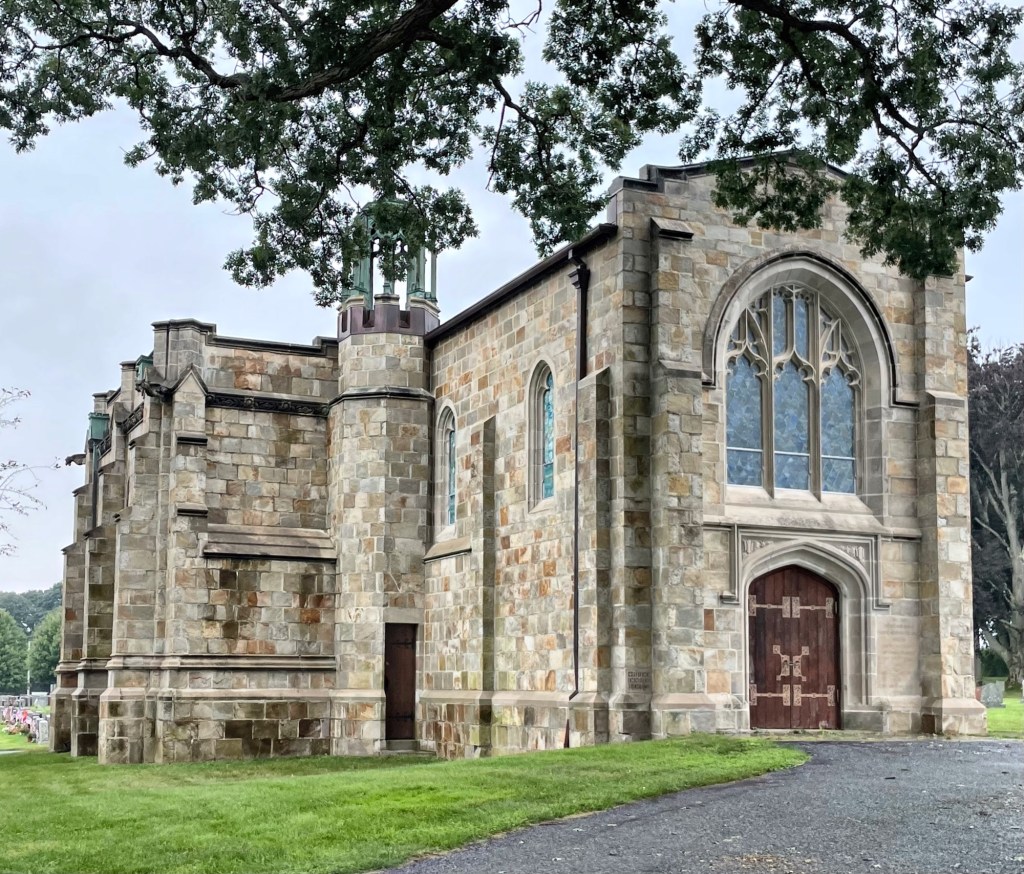
Tucked away in Highland Cemetery, a typical looking cemetery in Norwood, Massachusetts, you will find a masterpiece chapel designed by one of the great architects of the Arts & Crafts movement. The Highland Cemetery was established in 1880 becoming the town’s second and primary burial ground. The town’s first burial ground was the Old Parish Cemetery which is located in the center of town on a 3/4-acre hill and because of its limited size and the difficult terrain; there was no room for growth. The rapidly developing town required a second cemetery and laid out Highland View on the outskirts of the village. In 1903, the Chapel of St. Gabriel the Archangel, also known as the Day Memorial Chapel, was erected at the center of the cemetery. The Chapel, which also acts as a mausoleum, was donated to the town by Lewis and Anna Smith Day in memory of their parents. Their only stipulation was that the chapel be available for use free of charge for any resident who desired to do so, no matter their religion or race. Esteemed architect Ralph Adams Cram designed the chapel in the Neo Gothic Revival style. Fred Holland Day, a renowned photographer and publisher, was the only child born to Lewis and Anna and he was a close friend of Ralph Adams Cram and Bertram Grosvenor Goodhue, likely leading to their commission here in Norwood. F. Holland Day lived in a Tudor mansion in town, modified from his childhood home. The Cemetery Chapel remains a seminal building for its genre and time.

Fred Holland Day House // 1892

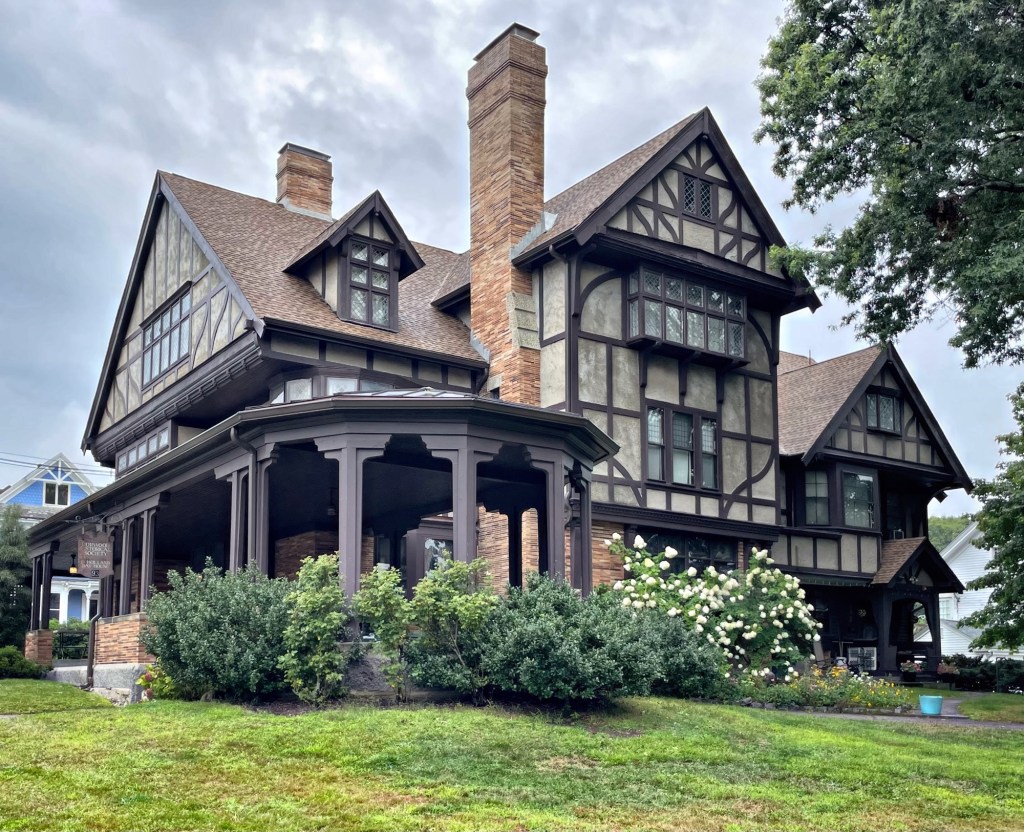
The Day House is a significant landmark in Norwood, Massachusetts. Originally built in 1861 for Lewis Day (1835-1910), a wealthy Boston leather dealer who was born in town. The house was a two-story Second Empire style mansion with mansard roof and detached stable. During 1890-92 the Day House was rebuilt at the direction of the Lewis’ son, F. Holland Day, who hired Boston architect J. Williams Beal to remodel the house in the Tudor Revival style. Fred Holland Day (1864 – 1933) was a prominent photographer and publisher and was an early and vocal advocate for accepting photography as a fine art. Day’s life and works were controversial because he took an unconventional approach to religious subjects and often photographed males nude sometimes the photos being homoerotic, leading many to speculate he was gay, though he never “came out”. Fred Holland Day died in 1933 and the house is today owned and managed by the Norwood Historical Society as a historic house museum.

Morrill Memorial Library // 1896

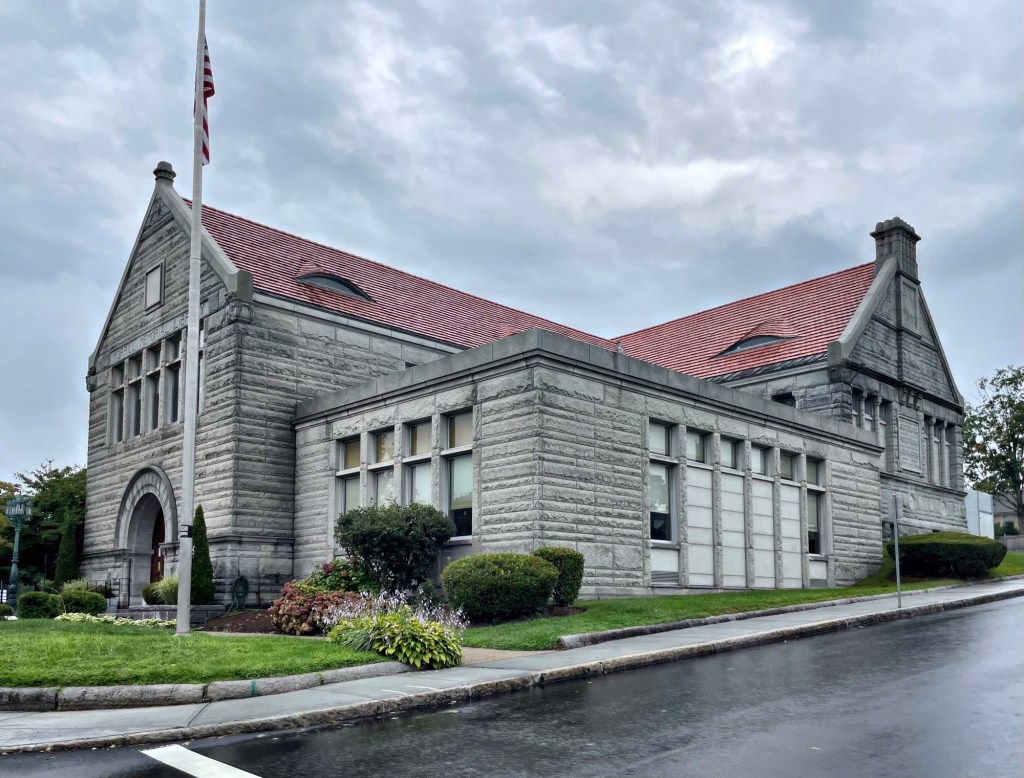
One of the best parts about New England is the diversity of the architecture and history of local public libraries. The Morrill Memorial Library in Norwood, Massachusetts, was erected by George H. Morrill in memory of his daughter Sarah Bond Morrill, who apparently died in 1895 of Typhoid Fever at the age of 22. George Morrill made his fortune as one of the largest producers of printing inks in America. The business was founded by Samuel Morrill, father of George H. Morrill in 1845 in Andover, but in 1856, he moved the works to South Dedham (present-day Norwood). The company grew rapidly and factories were built in Norwood and expanded to meet increasing operations. Mr. Morrill built a massive estate in Norwood (no longer extant) and also houses for his family members nearby to create a small enclave for the family. One of the lots on Walpole Street was utilized for a memorial library in honor of his late daughter. Architect Joseph Neal, who originally worked for Shepley, Rutan & Coolidge in Boston, designed the Richardsonian Romanesque library constructed of rough-faced granite blocks with a red terracotta tile roof above. The main entrance was deeply recessed within a great Assyrian arch typical of an arch-type that was a hallmark of the public and ecclesiastical buildings of Boston architect Henry Hobson Richardson during the 1870’s and 1880’s, but has since been enclosed by a vestibule, somewhat diminishing the original entry. The library was originally cruciform in plan but one-story additions constructed in the 1960s, on either side of the original facade have altered its original volume, but at least they are of a similar material. The library is one of the more unique in the Boston area and a testament to a father’s love to their children.