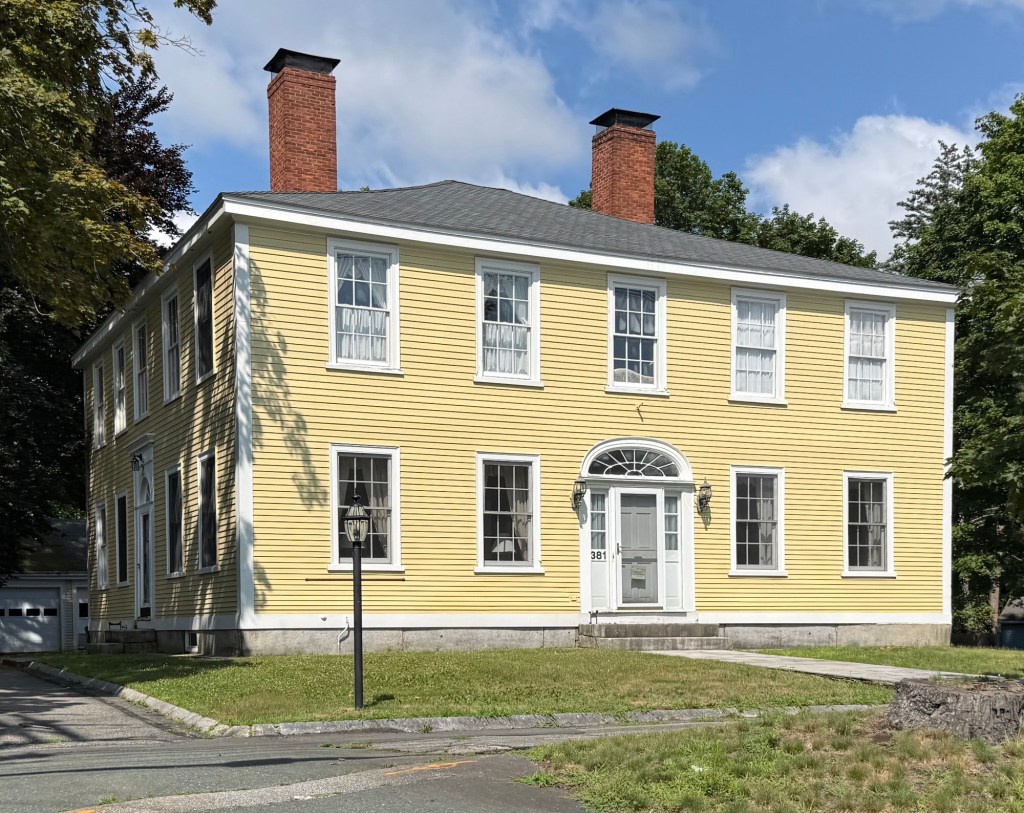
This beautiful Federal style house in Billerica, Massachusetts, was built in 1811 by Joseph Locke (1772-1853), a lawyer in Billerica until 1833, when he moved to Lowell residing there until his death. He was elected eight times to serve as a member of the state legislature from Billerica and once from Lowell and is best known for being the first justice to serve for the Lowell Police Court. The house was built on the site of the 1654 Jonathan Danforth homestead. In 1885, George E. Stearns bought the house and operated it as a hotel. After some time outside of the Stearns Family, the property was purchased by Dr. Albert Warren Stearns, psychiatrist and Dean of Tufts Medical School in 1915. The home has been preserved and maintains all the hallmarks of the Federal style.
The Rufus Underhill House in Billerica, Massachusetts, is an excellent example of the eclectic nature of residential architecture seen in the United States during the Victorian period following the conclusion of the Civil War. Without a clear distinguishing style, the house stands out for its unique form, architectural details, lancet windows and side four-story tower, all with paint colors to highlight and accentuate its distinctive features. The house and accompanying stable were built around 1870 for Rufus K. Underhill (1819-1894) and his wife, Deborah, as a place to spend their retirement. Rufus Underhill was born in Chester, NH and worked as a blacksmith, later establishing the Underhill Edged Tool Co. in Nashua later expanding to sales in Boston.
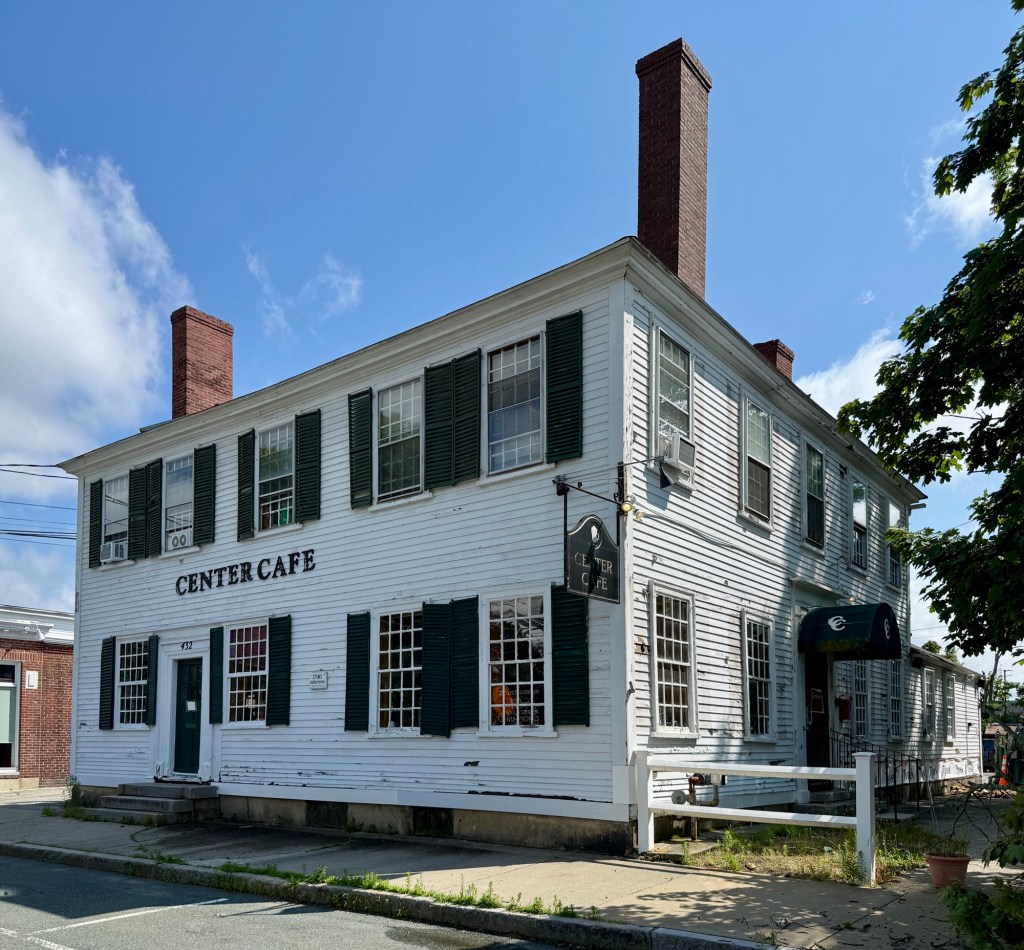
The Abbott-Bowers House at on Boston Road in Billerica Center was built in 1796 and stands as a significant Federal period residence in town, though suffers from deferred maintenance. The building was constructed for James Abbott, a merchant who likely operated a store from the street-side entrance. The property was owned later by Jonathan Bowers, the first Postmaster in Billerica and his home served as the Post office for over 100 years. Many other organizations and committees have also been run out of the building. The residence is five-bays wide on all elevations and has a hipped roof with tall end chimneys and what appear to be the original windows. The building recently sold and is planned for a new commercial use, hopefully with a restoration of the exterior.
Located on the edge of the Town Common in Billerica, Massachusetts, this handsome civic building stands as one of the community’s best examples of the Colonial Revival style. The building was constructed in 1895 to replace the mid-19th century Town Hall that was destroyed by fire in 1893. The community hosted a design competition, where prominent firms from the Boston area submitted designs, and ultimately selected the plans from the firm of Warren & Bacon, led by Herbert Langford Warren and Lewis H. Bacon, who had a short-lived business partnership lasting just one year. The symmetrical, two-story brick building is trimmed with limestone and capped with a gray slate roof. The facade is embellished with a Palladianesque arched loggia sheltering the entrances with a centrally placed Palladian window above on the second floor. Additionally, the roof is adorned by a Christopher Wren inspired cupola with a gold leaf dome capped with a weathervane. The building functioned as the Town Hall with offices and a grand hall on the second floor for city meetings until the town hall relocated in 1979 to a former school building. Since 2000, the former Town Hall of Billerica has housed the Billerica Public Library, which was formerly located in a smaller historic building nearby.
The town of Billerica was originally settled by colonists in 1640, but the area west of the Concord River was not settled until after 1690. This saltbox Colonial house built around 1696 is believed to be the oldest house in town west of the river. The residence was built by Samuel Manning (1644-1711) as his homestead. Between 1752 and 1800, the Manning family operated a tavern out of the rear portion of the house. In the later years of the 18th century by the family of William Manning, a veteran of the Revolutionary War, who after the war, began to believe that his military service meant little to the American ruling class. He wrote the anti-Federalist ‘The Key of Liberty” in 1798, arguing that the goal of the “Few” was to distress and force the “Many” into being financially dependent on them, creating a continued cycle of dependence to the elite class and government. In the late 19th century, this old saltbox Colonial house began to deteriorate, until the 1890s, when descendant of its original owner, and landscape architect, Warren H. Manning, spearheaded family efforts to restore the property. As a prominent landscape architect, Manning purchased not just the house, but the surrounding lands that formed the basis of Manning State Forest, protecting both. Manning conducted a carefully documented restoration of the house in 1899, and made it his summer home. A family association was eventually formed to take over the property, which leases the old home to a local pub and restaurant. The house faces south, away from the street and the kitchen ell off the side of the house does detract from the building, but it remains a significant early building from the settlement of Billerica.
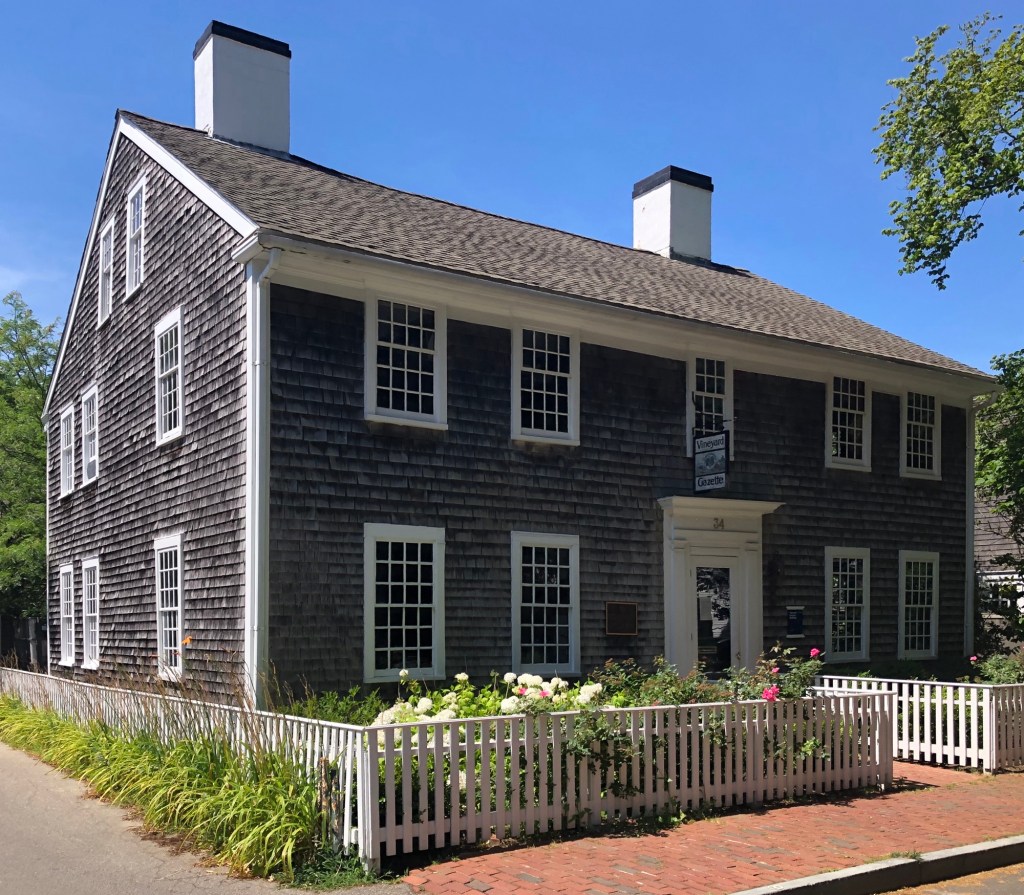
The Captain Benjamin Smith House on South Summer Street in Edgartown, Martha’s Vineyard, Massachusetts, was constructed c.1760 and retains its historical and architectural integrity. Capt. Benjamin Smith (1740-1821) was a military captain who commanded a company of militia on Martha’s Vineyard during the Revolutionary War, after, he served as a County Sheriff and Town Clerk. Captain Smith and his wife, Love (Coffin) Smith, had nine children in this home; with two of their sons becoming sea captains. The property remained a single-family residence until it was purchased in 1938 by the Vineyard Gazette, the first newspaper to be published in Dukes County, beginning in 1846. When the newspaper purchased the building, it constructed a rear addition, seeking to preserve the old home but expand the footprint to increase its operations with editor offices located in the main house and assembling and printing machinery in the addition. The Smith House-Vineyard Gazette Building was later acquired by the Vineyard Trust in 2010 who preserve the building and continue to rent the space to the Gazette. The pre-Revolutionary residence features a five-bay facade, shingle siding, and lovely historic double-hung windows.
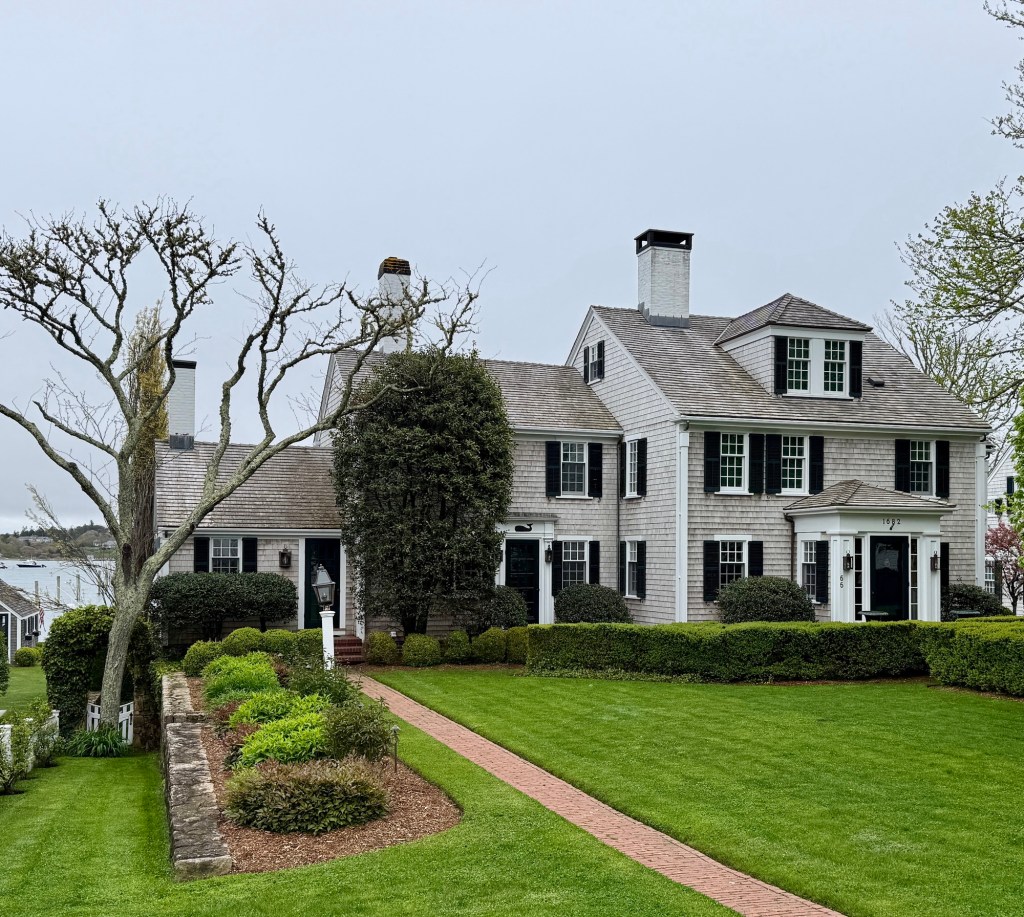
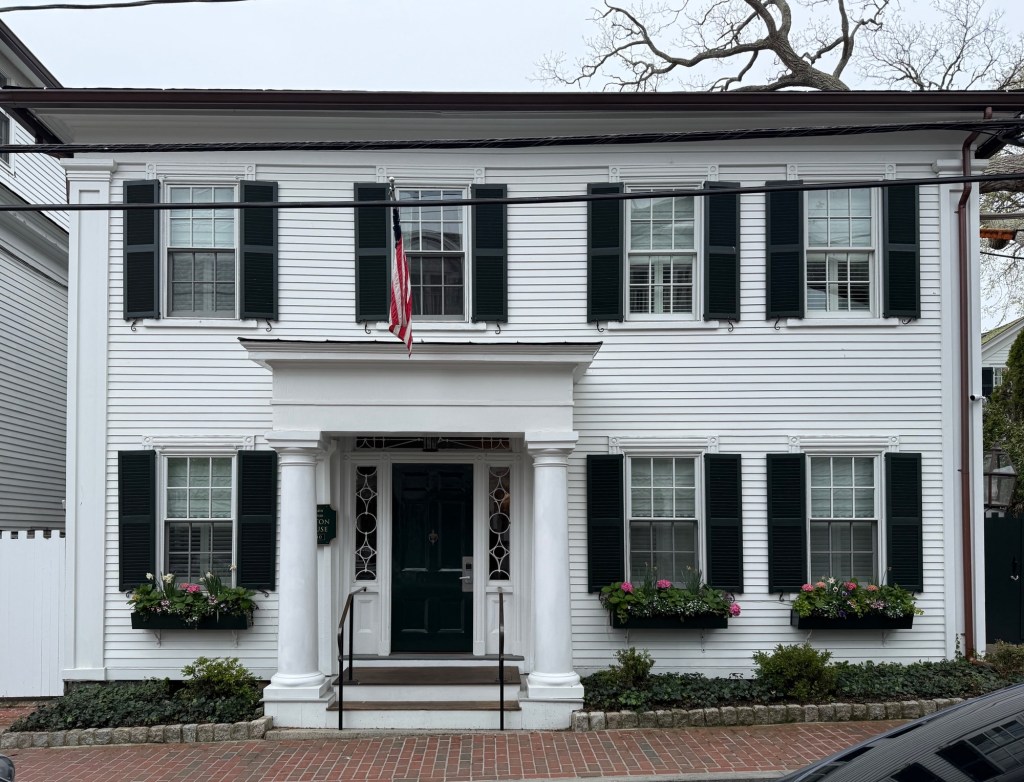
John Coffin (1647-1711) was born in Haverhill, Massachusetts, and later moved to Nantucket with his father finding work as a blacksmith. John moved to Edgartown (Martha’s Vineyard) in 1682, continuing his profession there as the island’s premier blacksmith. Soon after arriving, John Coffin and his wife, Deborah, built a small residence and blacksmith shop, here on South Water Street, which later became this stunning property with later additions and alterations. The construction of the original section is said to be built of timber infilled with brick, a luxury but also a necessity to protect John Coffin’s house in case of a fire from his attached blacksmith shop. The business did well and John and Deborah moved to a new residence on North Water Street by the turn of the 18th century. This property overlooking the harbor was later occupied and expanded by various artisans, including Elijah Dunham, a shoemaker, in 1792. It was likely under Dunham’s ownership that the house was expanded to its present two-story form with telescoping ells. More recently, the Coffin-Dunham House, one of the oldest extant buildings on the island, was thoughtfully renovated by Patrick Ahearn Architects.
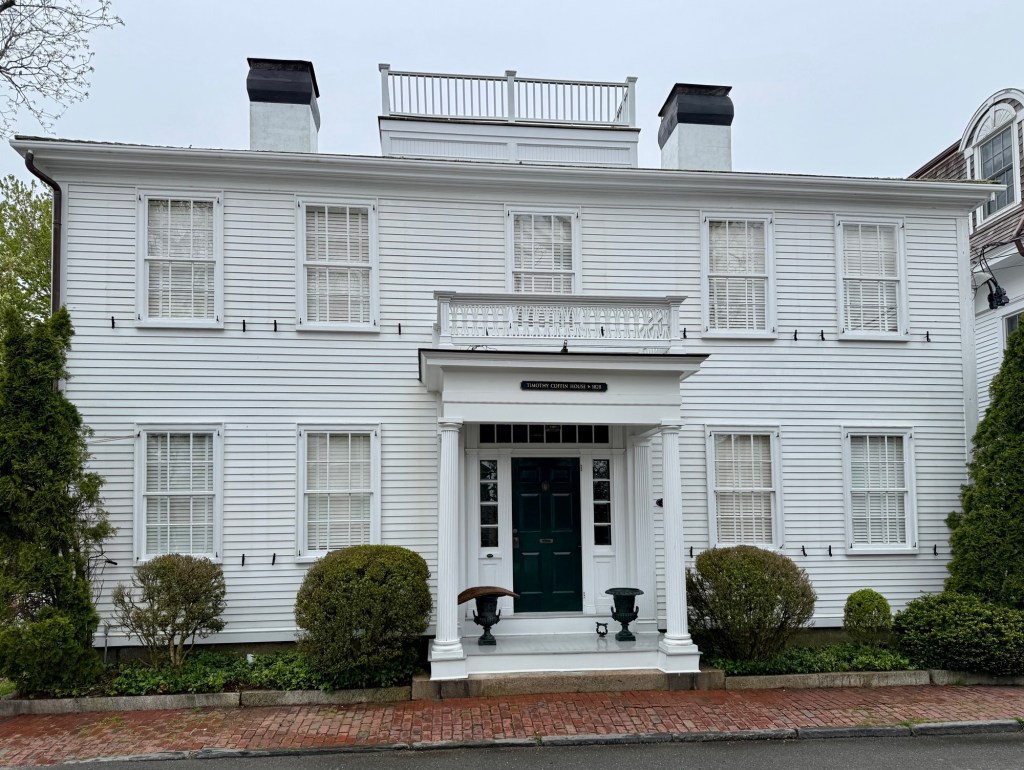
One of the finest Federal style houses on Martha’s Vineyard, the Timothy Coffin Jr. House on South Water Street in Edgartown is a well-preserved example of the five-bay, center hall form. The residence was built in 1828 for Timothy Coffin III (1797-1838), an attorney, after the death of his father, Timothy Coffin a year prior. The residence was built by master-builder Jared Coffin, likely a relative of Timothy. The builder stated that this was one of the finest houses he ever constructed. Timothy and his wife, Velina had six children in the home until his death in 1838 at the age of 42. One of their children, Zoraida, married Samuel Osborn, Jr. and inherited the house, which remained in the family until the 1950s. The residence is said to have some of the finest interior woodwork in Edgartown and features a stately doorway covered by a portico supported by fluted columns and intricate balustraded roof above. The residence also features a small “widow’s walk” at the roof, which provides views of Edgartown Harbor.
Located on the idyllic South Water Street in Edgartown, Martha’s Vineyard, the Capt. Thomas Milton House stands as a fine and well-preserved example of a sea captain’s house built in the Greek Revival style. Captain Thomas Milton (1787-1862) was born in Liverpool, England, and first arrived to the island as a young man aboard a whaling vessel. He served as a Lieutenant and privateer during the War of 1812, when England restricted trade to maritime ports, which severely crippled the Edgartown economy. After the embargo ended, Captain Milton led whaling vessels and trade routes to as far as China. On his last trade excursion to China in 1837, Captain Thomas Milton brought back a sapling of a Pagoda Tree that was planted on the lot of his soon-to-be-built house on Water Street. Construction began on the house in 1840, which is unique for its asymmetrical four-bay facade and low hipped roof. Captain Milton died in 1862 and by the turn of the century, his residence was converted to an inn, which is now a part of the multi-building, Harborside Inn complex. The property has stood here for nearly 200 years joined by the ever-growing Pagoda Tree, which is believed to be the largest of its kind in North America.
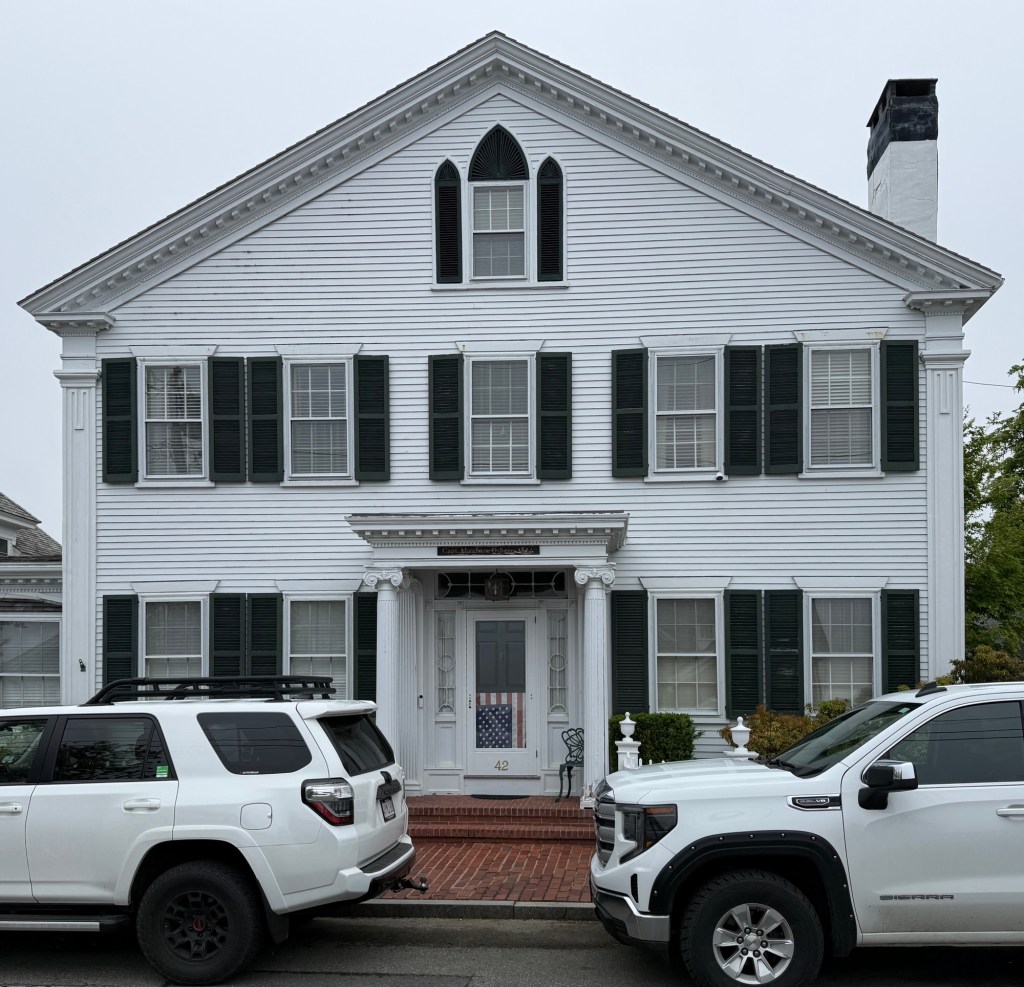
Built in 1834, this early Greek Revival house with Gothic Revival detailing, sits on Edgartown’s South Water Street, a notable street lined by large mansions built for early whaling captains on Martha’s Vineyard. The residence was built for Abraham Osborn (1798-1865), a whaling captain, soon after his marriage to Eliza Norton. Captain Abraham Osborn owned several whaling ships based out of Martha’s Vineyard and New Bedford, and one of these large vessels, the Ocmulgee, came to an untimely end early in the Civil War. When captaining the ship in September 1862, the Ocmulgee was approached by a ship flying British flags. When it got within speaking range, the British flags were replaced by Confederate colors and the rebel captain took over the ship, which contained 250 barrels of whale oil. The Confederates detained the ships officers and Captain Osborn in chains bringing them aboard their ship, the Alabama, which was known for stealthy operations to damage the economy of the Northern states. The rebels torched the Ocmulgee, forcing Captain Osborn and his crew to watch their profits burn up and sink into the ocean. The crew was detained for a few days and ultimately released near the Fayal Islands where they received help. Captain Osborn returned home and would die just three years later. The Osborn house was later inherited by his son, Abraham Jr., a retired sea captain himself, who eventually converted the large family home into a hotel called Ocean View. A famous guest at his hotel was Alexander Graham Bell, who was on island to study the extensive deafness prevalence for those on the Island. The house has since been converted back to a single-family residence and maintains its stunning Greek Revival entry portico and tripartite window in the gable with shuttered lancet openings.
Separate from the main cemetery parcel, the Forest Hills Cemetery Crematory and Columbarium is architecturally significant and also historically significant as the the first crematory in New England. The cremation building was constructed in 1893 by the Massachusetts Cremation Society, an organization unaffiliated with the cemetery across the street. The original crematory building was designed by Ludvig Sandöe Ipsen, a Danish-American artist and designer who is best-known for his book illustrations. It is unclear why Ipsen, who had almost entirely given up architecture as a profession, was selected by the Massachusetts Cremation Society, but he showcased his design expertise for this handsome masonry building. The original crematory included a chapel, operating plant, guest area, and offices. Classical Revival in style, the building is constructed of granite with limestone trim and capped by a red slate roof. The first cremation in New England occurred here in 1894, when Lucy Stone, the important abolitionist and suffragist, passed away and was cremated here. The chapel inside the building was named after Lucy Stone. In 1905, the columbarium was added from plans by Ipsen, where cremated remains of the dead are stored and displayed in urns. In 1925, the property was sold to the Forest Hills Cemetery association and the building expanded to its current size.
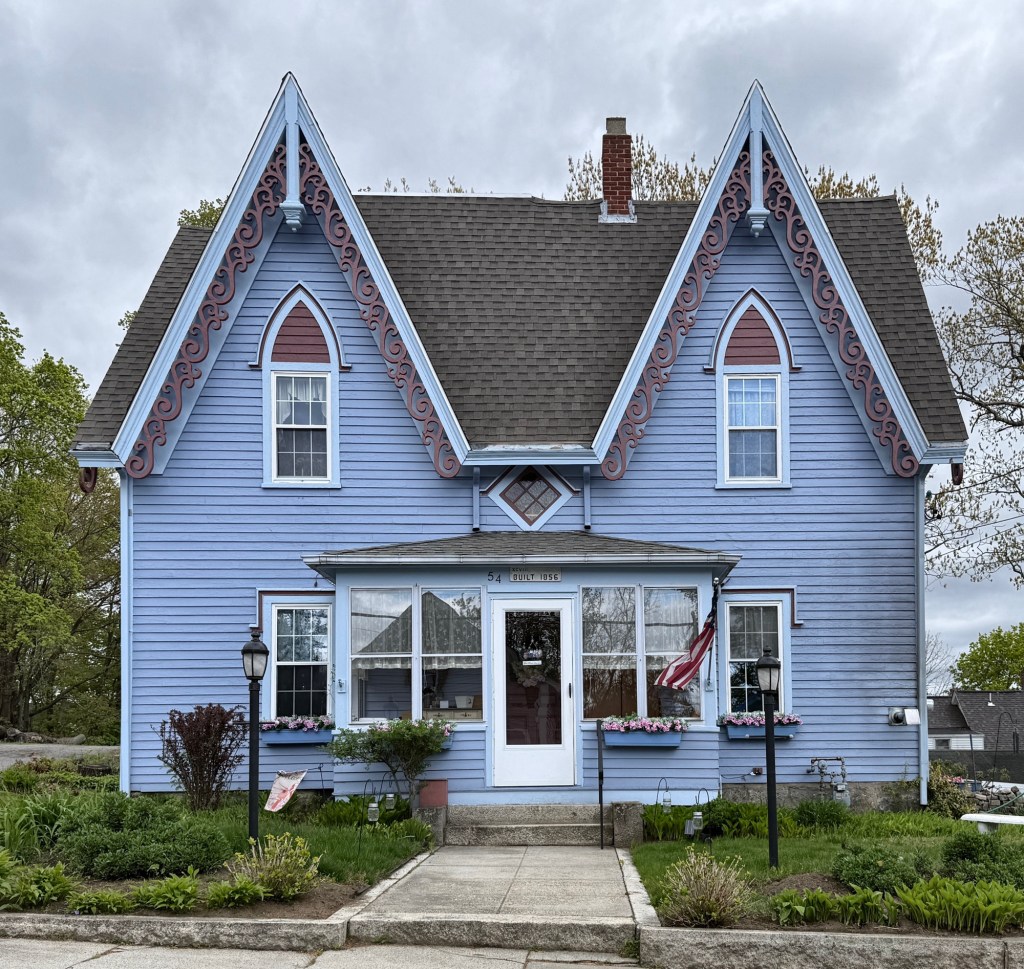
The finest Gothic Revival style residence in Milford, Massachusetts, can be found tucked away on Claflin Street, and it features the iconic hallmarks of the style. With its steeply pitched roof, blind lancet windows, drip moulds at the windows, and intricate barge boards with hanging pendants, the Nash-Wood House does not disappoint! The residence was built in 1858 and owned at different times by men who worked in the local shoe and boot manufacturing companies in Milford; William Nash and Peleg E. Wood. The property, with its playful paint colors, has been lovingly preserved my subsequent owners.
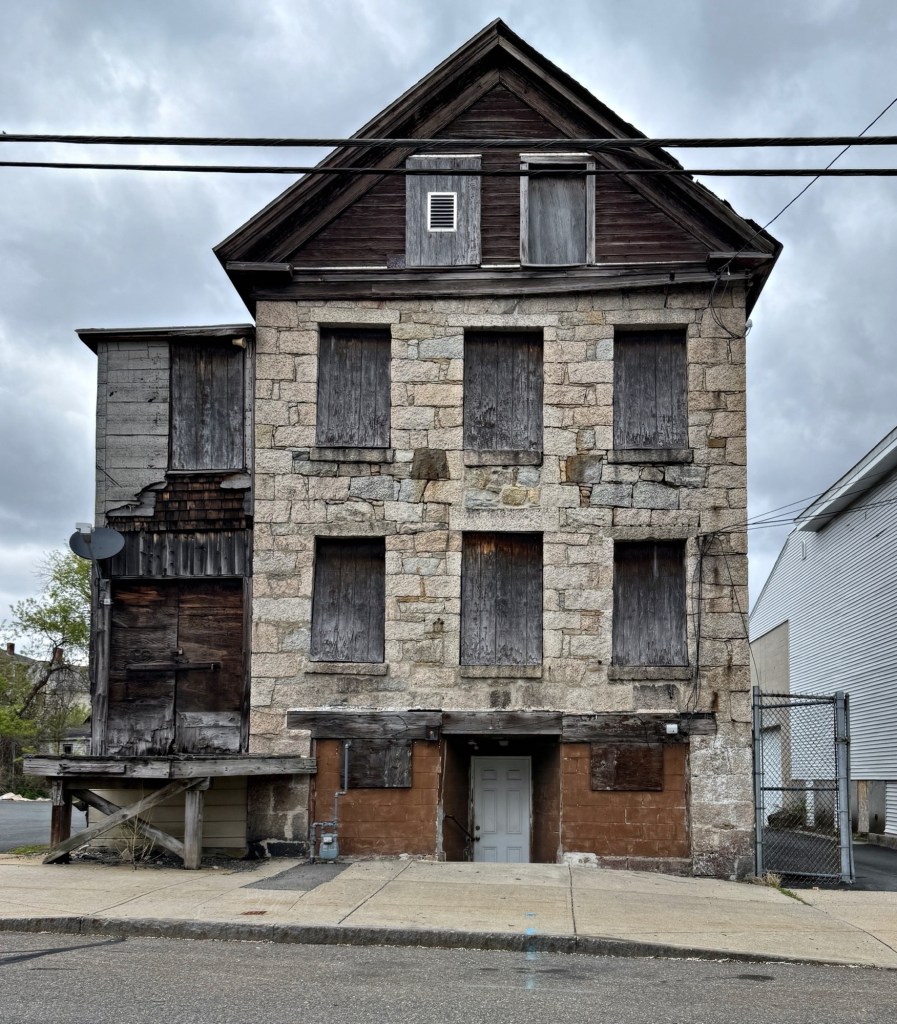
The Claflin & Thayer Company was established in 1851 by Aaron Claflin (1807-1890) and quickly became a leading boot and shoe manufacturer in Milford, Massachusetts. The business expanded after the Civil War, and built multiple buildings on the town’s Central Street, including this early stone building constructed of locally quarried Milford “pink” granite. The building depicted here included a large engine and boilers on the first floor with two stories above housing workers and boot crimping stations. After Aaron Claflin died in 1890, the business dissolved and this building became used for storage for other corporations, with the significant, yet vernacular building sitting to deteriorate.
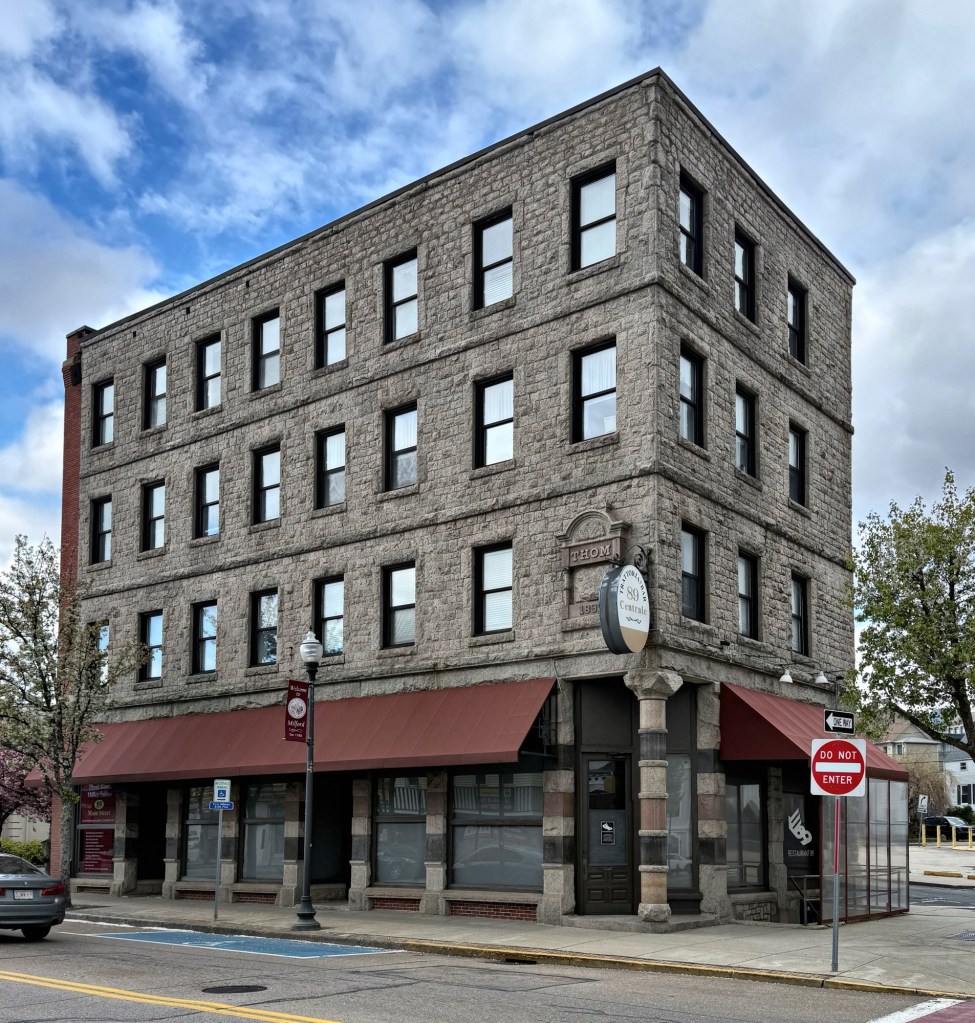
The Thom Block on Main Street in Downtown Milford, Massachusetts, is a historic mixed-use commercial block built of locally quarried Milford “pink” granite. The structure was constructed in 1891 by owner (and likely builder), James Thom, who arrived to Milford around 1889 and was hired by the Milford Pink Granite quarries as a foreman. Mr. Thom was the target of a vicious attack by a disgruntled quarry-worker and James would submit his resignation, turning his pursuits toward a local bicycle and horse racetrack and two of the town’s semi-professional baseball teams. He also got involved in real estate, in 1891 submitting plans for this building on Main Street that bears his name. Shortly after completion, a fire gutted the inside of the building and was rebuilt. Thom’s insurance did not fully cover the loss and he defaulted on the mortgage, selling the building and moved out of Milford. The Thom Block retains the polychromatic piers between storefronts and at the corner, which feature rounded granite blocks of polychromatic polished granite. The major ornament of the upper stories is a large plaque on the Main Street facade just above the recessed entrance with two Corinthian colonettes, spanned by a frieze and plinth on which “THOM” and “1891” are carved, respectively, showing us over a century later the original owner and his story.
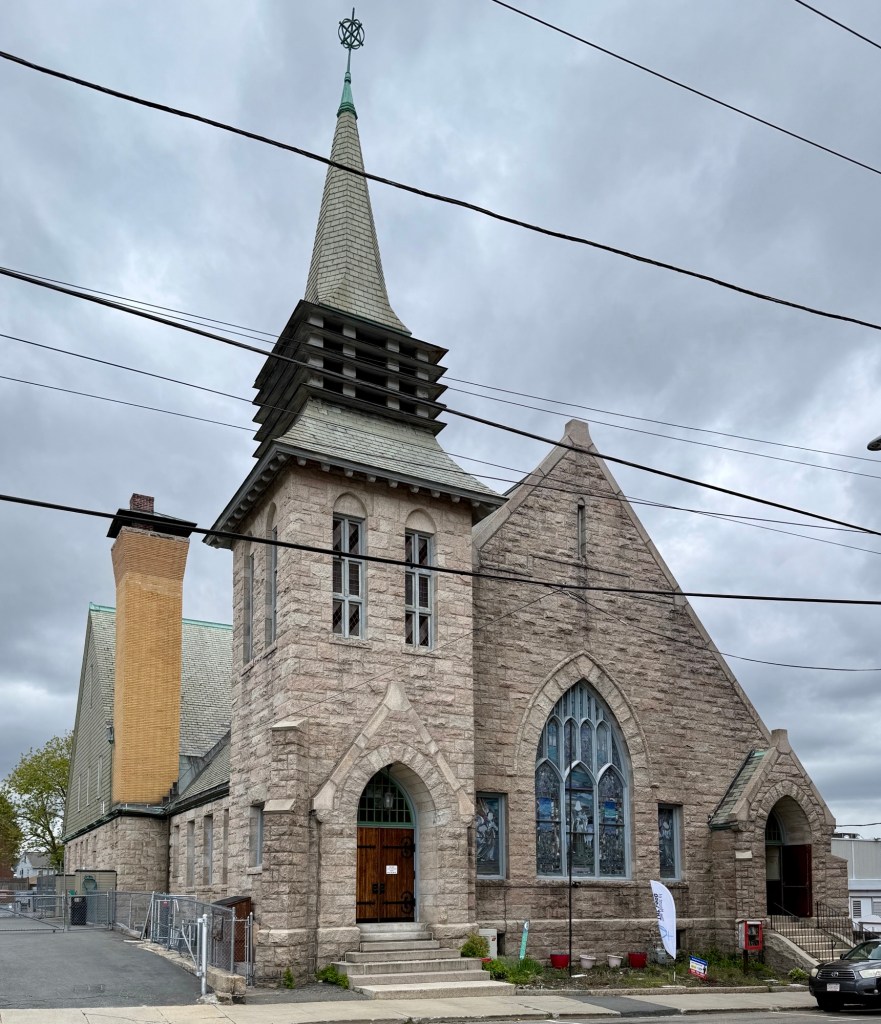
In the summer of 1785, a Universalist congregation was formed in Milford, Massachusetts, making it one of the first in the United States. The Universalists here were led by some illustrious ministers including Thomas Whittemore, an energetic advocate of abolition and an ardent foe of the Fugitive Slave Law; Ebenenzer Fisher who left the Milford congregation to become the first president of what became St. Lawrence University; and Adin Ballou who, after serving the congregation for six years, established a religious commune in the Hopedale section of Milford called “The Hopedale Community” that was to become a model for similar religious organizations. The congregation grew and by the late 19th century, it was decided that a new church in Milford should be built. Local architect, Robert Allen Cook, who was then in his twenties, was hired to furnish plans for this handsome edifice, which was built of locally quarried Milford “pink” granite. Robert A. Cook was a personal favorite architect of the Draper Family of Hopedale and Milford, who likely held sway in his selection. The church was built in 1899 and remains an excellent example of Victorian Gothic architecture with large lancet window and many beautiful stained glass windows in the sanctuary.