Plimpton-Winter House // 1868

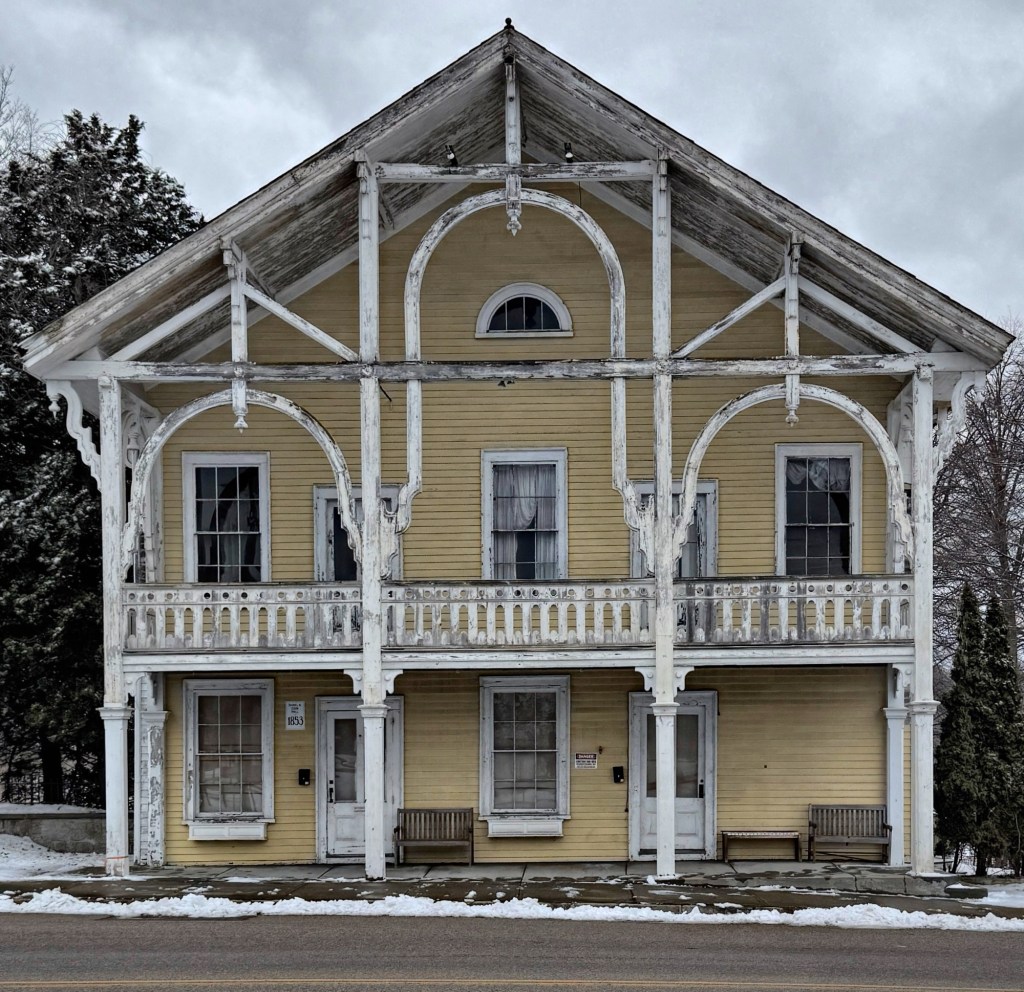
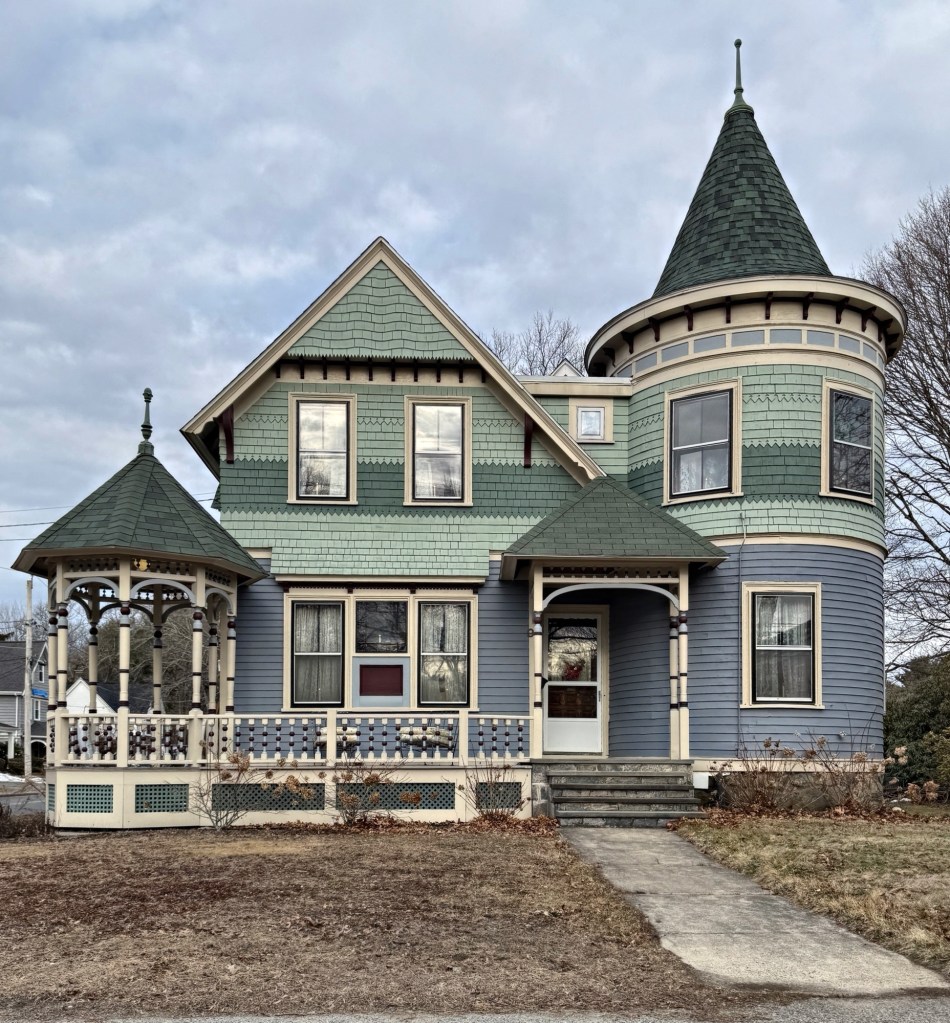
Only in New England will you find a historic 19th century house converted into a bank! The Plimpton-Winter House is located at 127 South Street in Wrentham, Massachusetts, and is among the finest Italianate style houses in the community. The residence was built in 1868 for Francis Newton Plimpton (1828-1913), who worked as a cashier and town treasurer, later becoming President of the National Bank of Wrentham. Two years after Plimpton’s death, in 1915, the house was bought by Murray Winter, who moved to Wrentham with his two brothers and established the Winter Brothers Tap and Dye Factory. The company manufactured gauges and valves during the early 20th century, quickly becoming the town’s largest employer until WWII. In the 1980s, the home was purchased and rehabilitated by the Foxboro Savings Bank to serve as its Wrentham Branch location. Today, the Plimpton-Winter House stands as a TD Bank Branch, where the exterior of the Italianate style residence is preserved, down to its bracketed cornice, ornate trim, bay window, and entry with paired wooden doors. How cool is that?


Druce-Francoeur House // c.1787

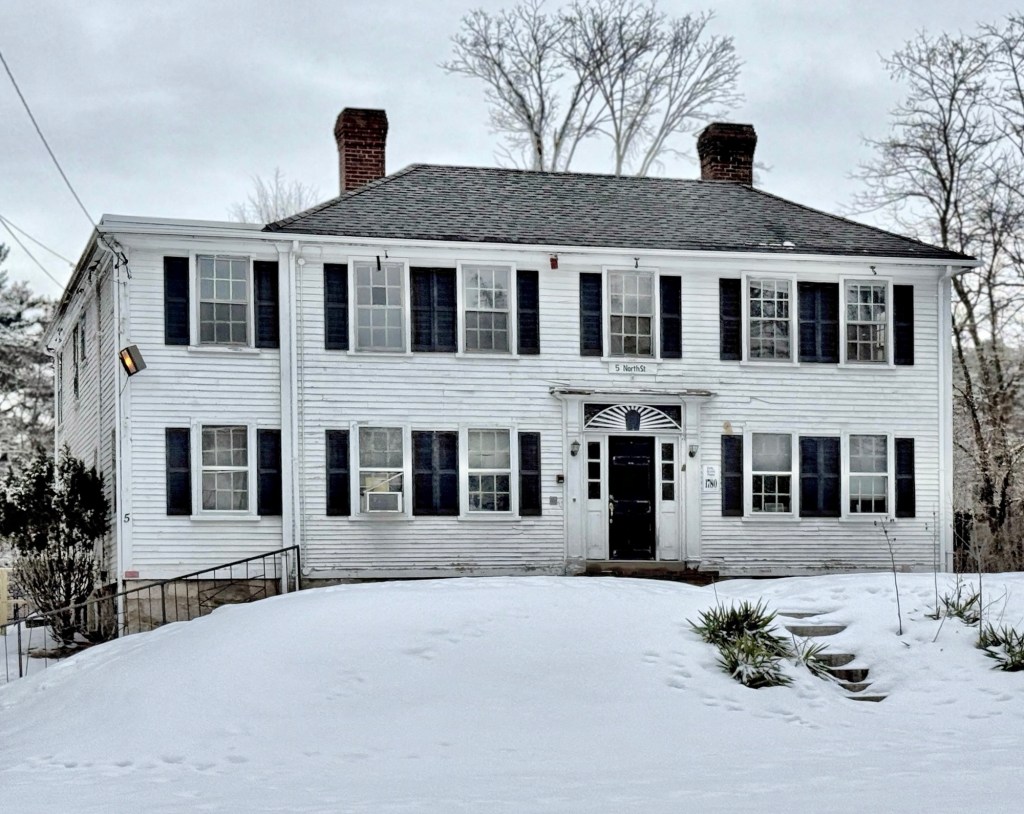
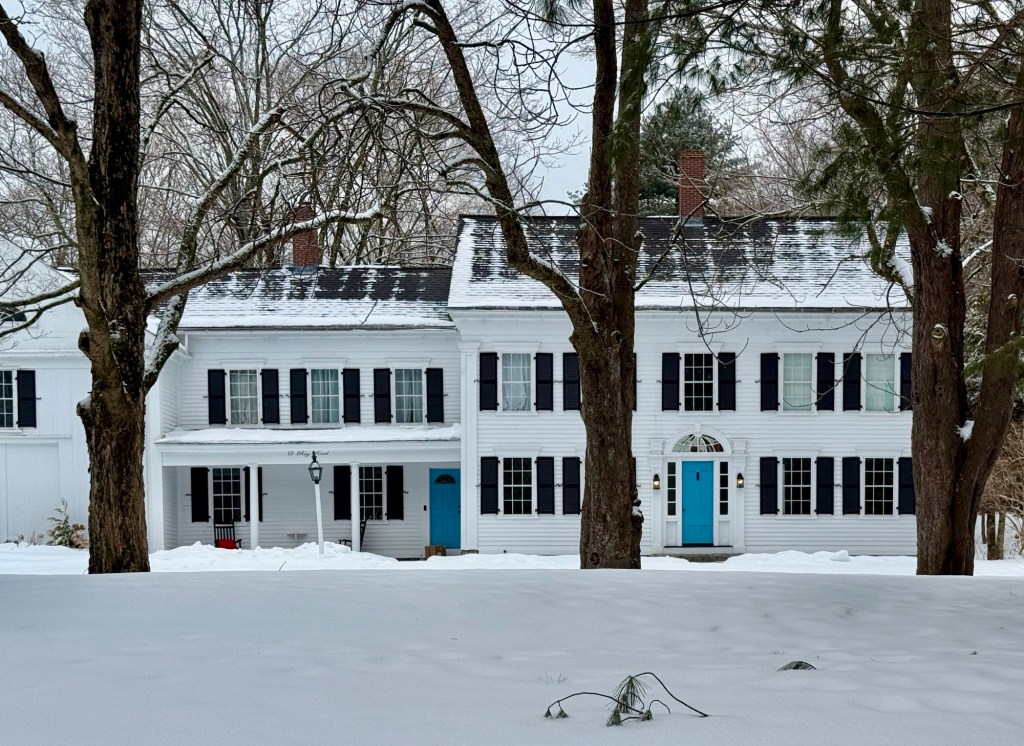
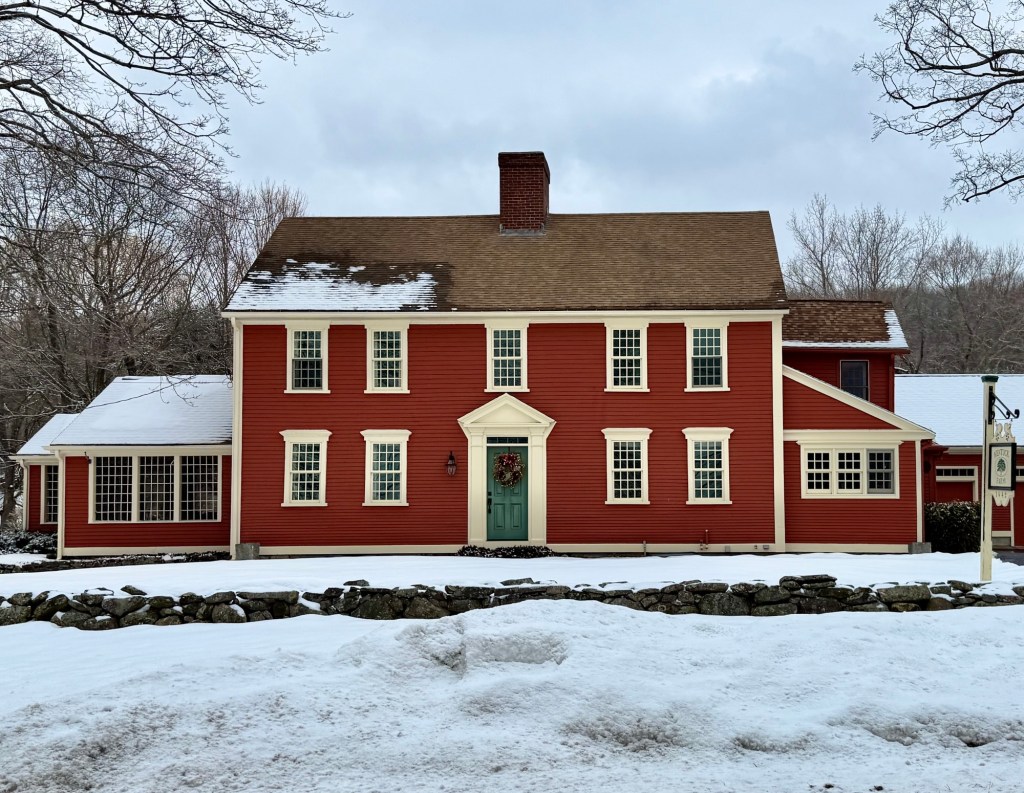
In 1787, Oliver Druce (1760-1797) married Sarah “Sally” Kollock (1764-1789) and had this large residence built overlooking the Town Common in Wrentham, Massachusetts. The young couple raised one daughter here until Sarah died in 1789 at 25 years old, followed years later by Oliver, who died in 1797 at 37 years old. By the turn of the 19th century, the late-Georgian residence was owned by John Francoeur, a French Huguenot. The Druce-Francoeur House is one of the finest Georgian style residences in Wrentham, which retains its magnificent doorway framed by fluted Ionic pilasters with broken scrolled pediment above.

Wrentham Congregational Church // 1834

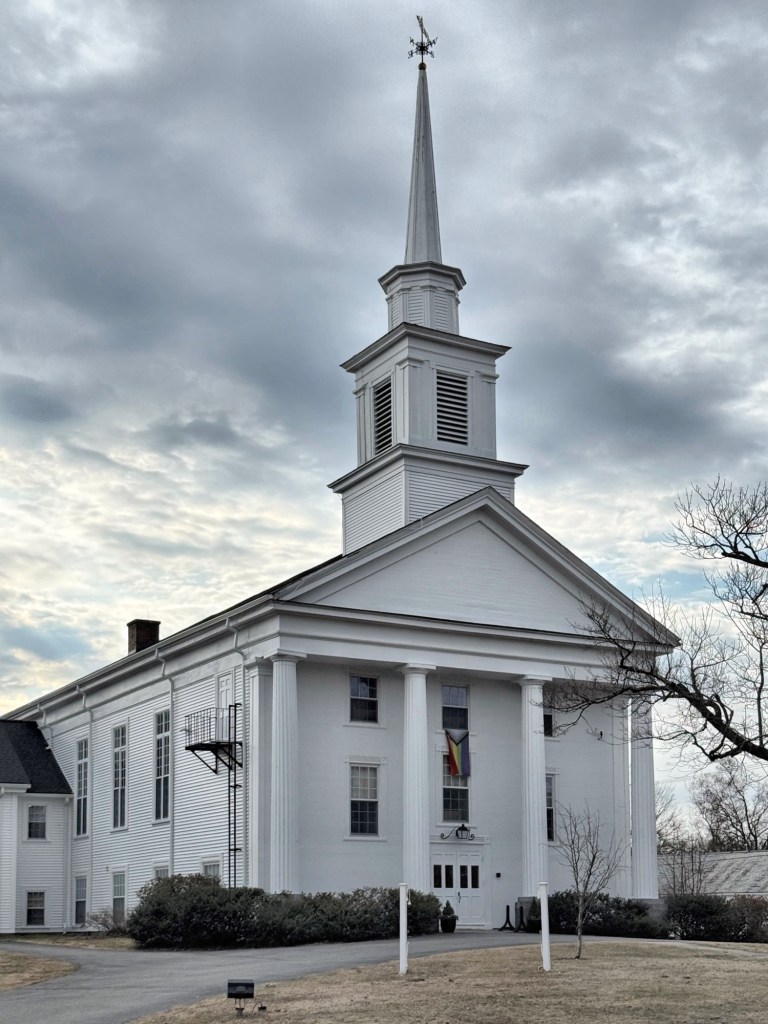
The Wrentham Congregational Church is the oldest house of worship in the suburban community, and the fourth consecutive meetinghouse for the congregation at the town center that was originally established in 1692. The frontier town grew slowly as a largely agricultural community and three houses of worship were built nearby the town common until 1833, when it was decided that a church worthy of its historic congregation be built. It is not clear who designed the Greek Revival church, but timbers were transported to town in 1834 for the new edifice which was completed that year. Over the following century, the church was expanded and modernized, all-the-while retaining its historic character. The four-stage steeple toppled during the New England Hurricane of 1938, and was rebuilt. The congregation remains active in the community and is a visual landmark at the town center.

Boyden-Clark House // c.1725

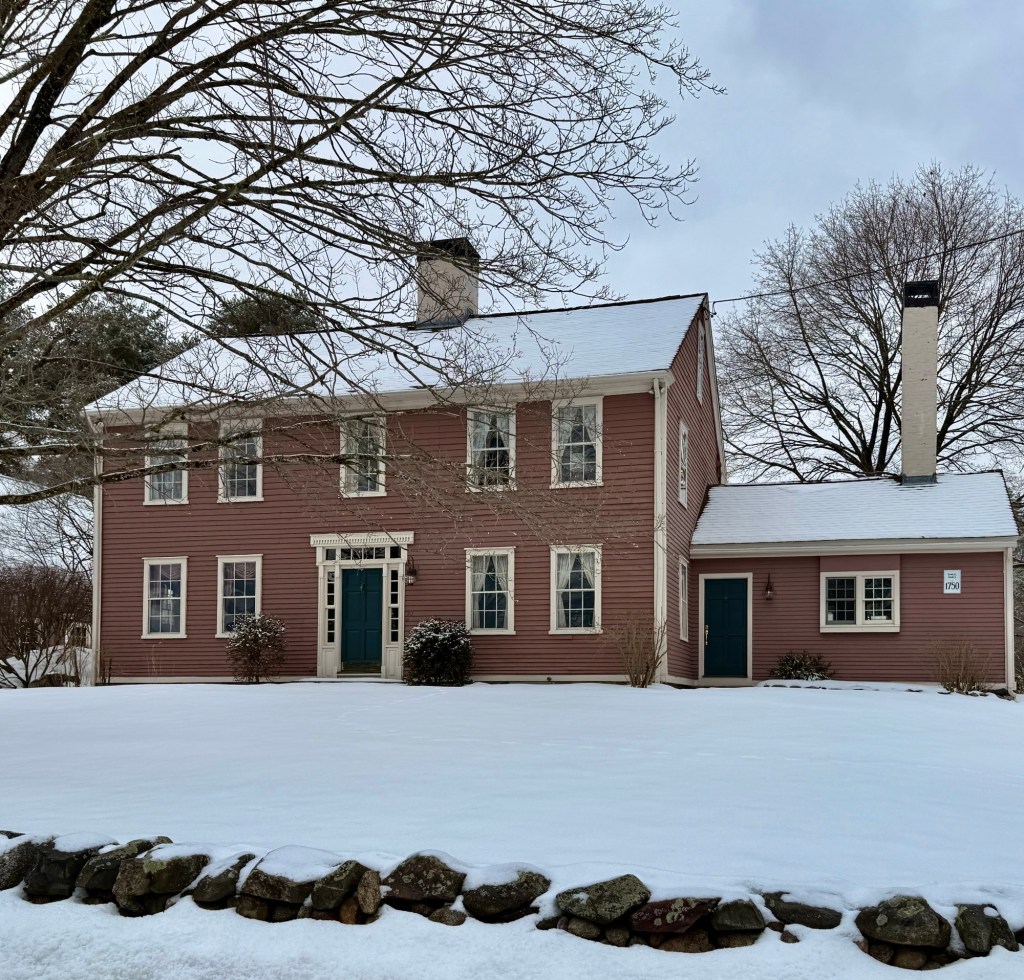
Wrentham, Massachusetts, was originally known as Wollomonopoag, roughly translating to “place of shells” a name given by the native tribes living here, referencing to area lakes as a food source for the people living here for over 8,000 years before European settlement. The area was settled by colonists in 1635 and became part of Dedham, when it was established in 1636. In 1673, the General Court allowed for the separation of what is now Wrentham, to incorporate as its own town. The community adopted the name Wrentham after the town in Suffolk County, England, a small village of just under 1,000 residents. About 50 years after incorporating, this historic Georgian farmhouse off Cumberland Road, not far from the Rhode Island state line, was built. The Boyden-Clark House is among the few pre-Revolutionary era homes remaining in the suburban community and retains its rural character. The house is said to have been built for Thomas Boyden (1681-1771) and wife, Mary (Clark) Boyden around 1725. The Boyden’s enslaved laborers who worked the farm here for decades. The property was later owned by Stephen Clark who farmed the land and likely added the stone well in the front yard. The house retains its gambrel roof and central chimney, hallmarks of the Colonial era.

Charles F. Roper House // c.1890

Charles Frederick Roper (1847-1916) was a machinist and inventor who moved to Hopedale, Massachusetts, where he found employment from the Draper Corporation. His inventions were important for the company, and included loom machinery, air supply for motors to prevent overheating, and grinding machines. Before his death, Charles Roper had over 100 patents and from his success, he afforded one of the finest Victorian homes in Hopedale. In around 1890, Charles Roper had this Shingle style residence built on Freedom Street from plans by Robert Allen Cook, a Milford-based architect who was a favorite of the Drapers. The residence sits on a rubblestone first floor with cedar shingles above.

The Larches // 1910

George Otis Draper (1867-1923) was born in Hopedale and attended MIT to prepare to help run the extremely successful family business, the Draper Corporation in town, which was experiencing a period of rapid growth and expansion of factories. With his position at the company, his wealth afforded him the ability to build a massive country estate known as The Larches. The shingled Colonial Revival style home featured a massive crenelated tower and appeared like a castle in the countryside. George O. Draper sold this home to his aunt Hannah Thwing Draper Osgood in 1909, and within a month, the home burned to the ground. She began construction on the “new Larches“, a shingled mansion with a stunning blending of Colonial Revival and Craftsman styles. The home was likely designed by Robert Allen Cook, who was based out of nearby Milford, MA. The property today is run by Crossroads Clubhouse, an employment and recovery center that offers people with mental health conditions opportunities to achieve their full potential.

Bancroft Memorial Library // 1898

The Bancroft Memorial Library on Hopedale Street in Hopedale, Massachusetts, was built in 1898 and is one of the finest examples of a Romanesque Revival style library in New England. The library’s benefactor, Joseph Burbier Bancroft (1821-1909), moved to Hopedale and joined the Hopedale Community in 1846, where he became connected with the Hopedale Machine Company founded by the Draper Family. Shortly afterward Mr. Bancroft entered into a partnership with Ebenezer and George Draper, and was put in charge of the cotton machinery department of the Draper Corporation. Joseph married Sylvia W. Thwing, sister of the wives of Ebenezer and George Draper. As he rose through the ranks of the Draper Company, he decided to fund a library as a gift to the company town. Designed by architect, C. Howard Walker of the Boston architectural firm Walker & Kimball, the library is constructed of granite and features arched entry at the facade with carved stone panel above. Before the building was completed, Sylvia died, and the library became a memorial in her memory by Joseph Bancroft.

Warren W. Dutcher House // c.1860

The finest example of the Second Empire style in the industrial village town of Hopedale, Massachusetts, is this stately residence at the beginning of Adin Street, which has been colloquially known as ‘Millionaire’s Row’ as it is lined with many large mansions owned by factory owners and managers. This is the Warren W. Dutcher House, built around 1860 for its namesake, a wealthy and well-connected manufacturer. Square in form, the house is capped by a concave mansard roof in slate, and features a cornice with paired brackets, round-headed dormer windows, and a central entry with door hood supported by oversized brackets all under the full-length porch. Warren Whitney Dutcher (1812-1880) was originally from North Bennington, Vermont, and in the 1850s, he invented a temple that worked better than one used by the Draper Corporation. are adjustable stretchers used on a loom to maintain the width and improve the edges of the woven fabric. George Draper bought an interest in it, and encouraged Mr. Dutcher to move to Hopedale to expand his operations. He moved to Hopedale in 1856, and built this home after a few years of managing the Dutcher Temple Company. After Warren Dutcher died in 1880, the home was inherited by his son, Frank Dutcher, until he built his own house on a lot behind his childhood home.

General Draper High School // 1927

The General Draper Memorial High School is one of the many civic and institutional buildings in Hopedale Village that were donated to the small industrial community by members of the wealthy Draper Family, who operated the Draper Corporation Factory in town. The school was built in 1927 on land donated to the Town by Princess Margaret Bonocompagni, the youngest child of the late William F. Draper, who married Prince Andrea Boncompagni of Italy in 1916. The marriage ended in divorce by 1924 and years later, she had no need for the family home in Hopedale, and bequeathed the site to the community for a new high school in memory of her late father. General William Franklin Draper (1842-1910) was a Civil War veteran who became a politician and managed the Draper company in Hopedale, where he built a massive mansion for his family. The mansion was demolished and replaced by this Colonial Revival style High School, designed by New Hampshire-based architect, Chase R. Whitcher, the handsome structure has since been expanded at the rear to service the growing student population in town.

Urncrest // c.1875

Located on Adin Street, a street of homes formerly owned by factory owners and managers in Hopedale, Massachusetts, you will find “Urncrest”, a stunning Queen Anne Victorian mansion. This home was originally built around 1875 for William Lapworth (1844-1937) an English-born weaving expert, who worked at Hopedale Elastics Co. and patented certain weaving processes for suspenders, boot webbing, and garters. Hopedale Elastics was absorbed by the Draper Corporation in 1890, and Lapworth “modernized” his home with profits from this sale. His formerly modest home was updated with a corner tower, large additions, wrap-around porch with porte cochere, and applied ornament. The detached carriage house was also expanded, where he added a coachman’s apartment.