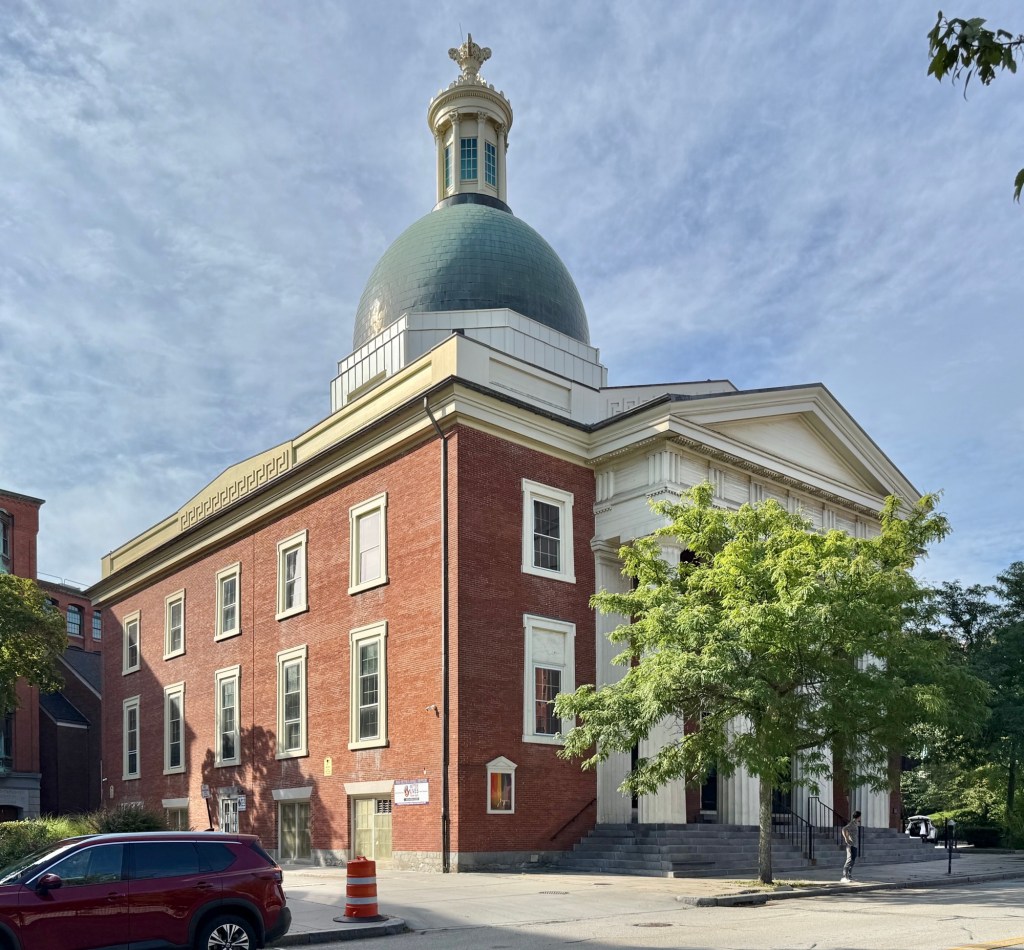
Located on Weybosset Street in Downtown Providence, the Beneficent Congregational Church, affectionately nicknamed “Round Top” for its striking dome, is significant architecturally and historically as an early Federal/Greek Revival style church and the oldest in Downtown Providence. The congregation was founded in 1743 during the “First Great Awakening” as a separatist spin-off of College Hill’s First Congregational Church (now First Unitarian Church). The offshoot occurred after when Deacon Joseph Snow, Jr. (1690-1773), a fiery preacher who was also a carpenter by trade, began preaching a more evangelical brand of Congregationalism than the more reserved members of the church could tolerate. Eventually, Father Snow, and his ardent followers established a second congregation on the west side of the Providence River in what was then an area of scattered residences and farms. The current church, the congregation’s second on the site, was constructed in 1809 from designs by Barnard Eddy and John Newman, but it was largely reworked into its present form in 1836 by the firm Tallman & Bucklin, who swapped the original Federal-era details for bolder Greek Revival trim, including the chunky Doric columns of the entrance portico, a paneled parapet, and an octagonal drum beneath the dome. That dome, along with the two-story front portico, survived the remodel unchanged in its overall form, and today it is sheathed in durable copper rather than the gold leaf that once covered it.
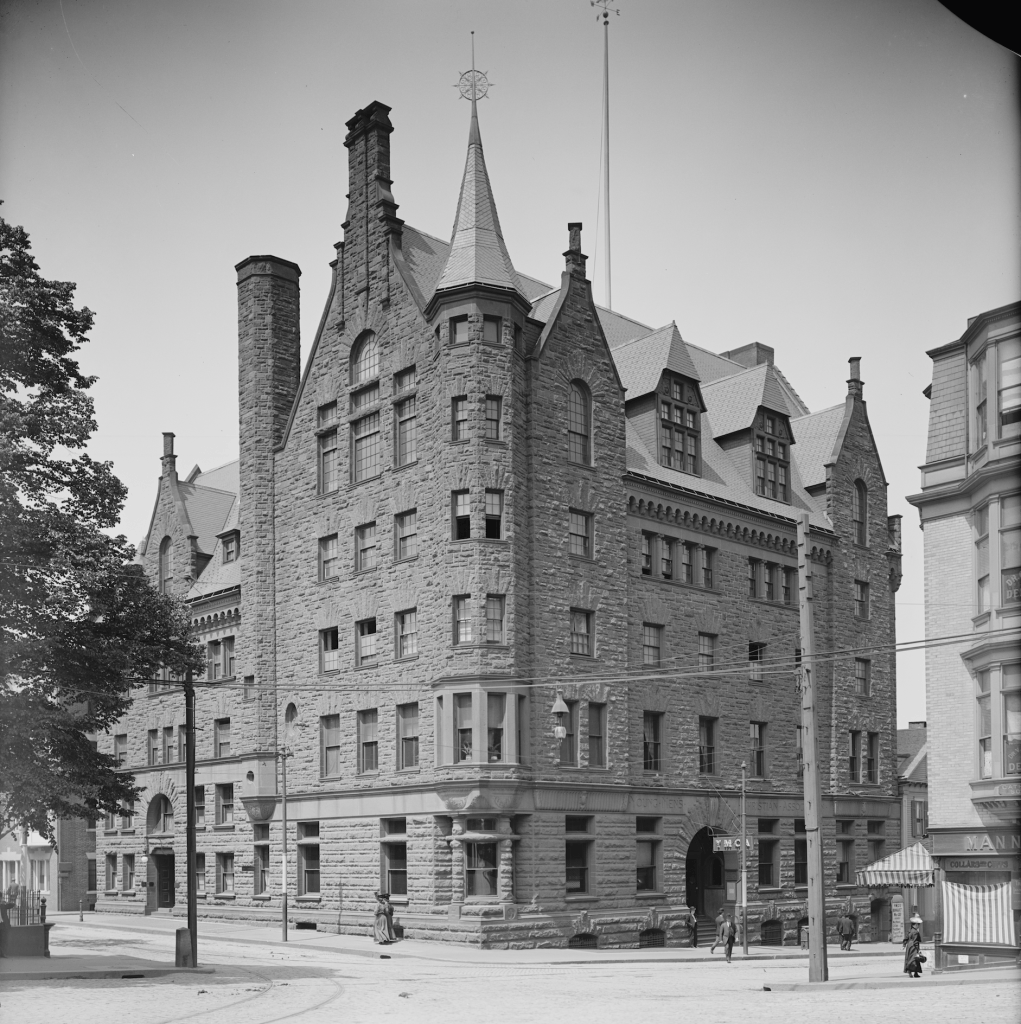
Founded in 1853, the Providence YMCA holds the distinction of being the second-oldest YMCA in the United States. The YMCA had been born out of anxieties around industrialization and urbanization when young men arrived to the country and were vulnerable to the temptations and sins of alcohol, so a group of evangelical churches created a space for Christian men to spend their time productively at meetings and lessons and have access to recreational facilities. The Providence YMCA was dispersed into three buildings until 1889, when this building at the corner of Westminster and Jackson streets opened to great fanfare. The Young Men’s Christian Association and architects, the Providence firm of Stone, Carpenter & Willson, featured this new Romanesque Revival building in architectural publications showcasing the original proposal and the final approved design, with prominent oriel bays, spires, arched entrances and intricate roofline punctuated by dormers. The building contained a gymnasium, auditorium, classrooms, libraries, parlors, and reception areas. The 1889 building proved obsolete within a generation, and it was torn down in 1913 to make way for a new office block as the neighborhood commercialized. The YMCA responded by building larger, more purpose-built quarters further west on Broad Street, which was completed in 1915, a structure that still stands today, now repurposed to serve the city’s homeless population through Crossroads Rhode Island.
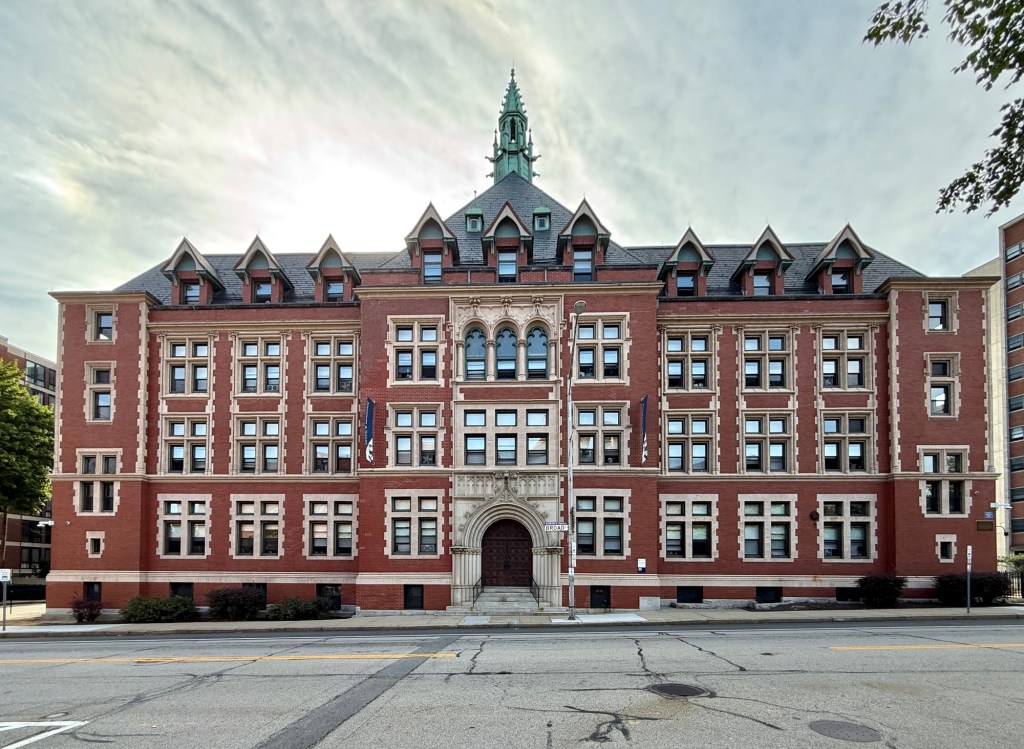
The Sisters of Mercy was established in 1831 by Mary Francis Xavier Warde, who was born in Ireland and was orphaned in her teens. At sixteen, she moved to Dublin and met Catherine McAuley, a social service worker who established the Sisters of Mercy in 1831 to provide for the education and social needs of poor children, orphans, the sick, and homeless young women. The organization flourished in Ireland before Sister Warde migrated to Pittsburgh in 1843, opening a convent there. Her educational work on behalf of the Irish immigrants in that city prompted Irish-born Bishop Bernard O’Reilly to invite the Sisters of Mercy to Providence in 1851. They started teaching Sunday school and provided food to the poor and took over the school at the Cathedral of Saints Peter and Paul. Also in 1851, the sisters opened the first Catholic orphanage in Rhode Island, the second in New England and St. Xavier’s Academy, a boarding and day school combined. The original 1856 building (extant) on Claverick Street was added onto in 1865 with a mansard wing. Before the turn of the 20th century, it was decided that a more substantial structure be built for the academy. The Providence firm of Martin & Hall architects, was selected to design this building, an E-shaped structure that includes the two earlier wings with a new Neo-Gothic/Tudor Revival style facade on Broad Street. The 1894 school building and attached chapel operated here until it ultimately closed in the 1970s. Since then, the building has been purchased by Johnson & Wales University and operates as a residence hall named after its history, Xavier Hall.
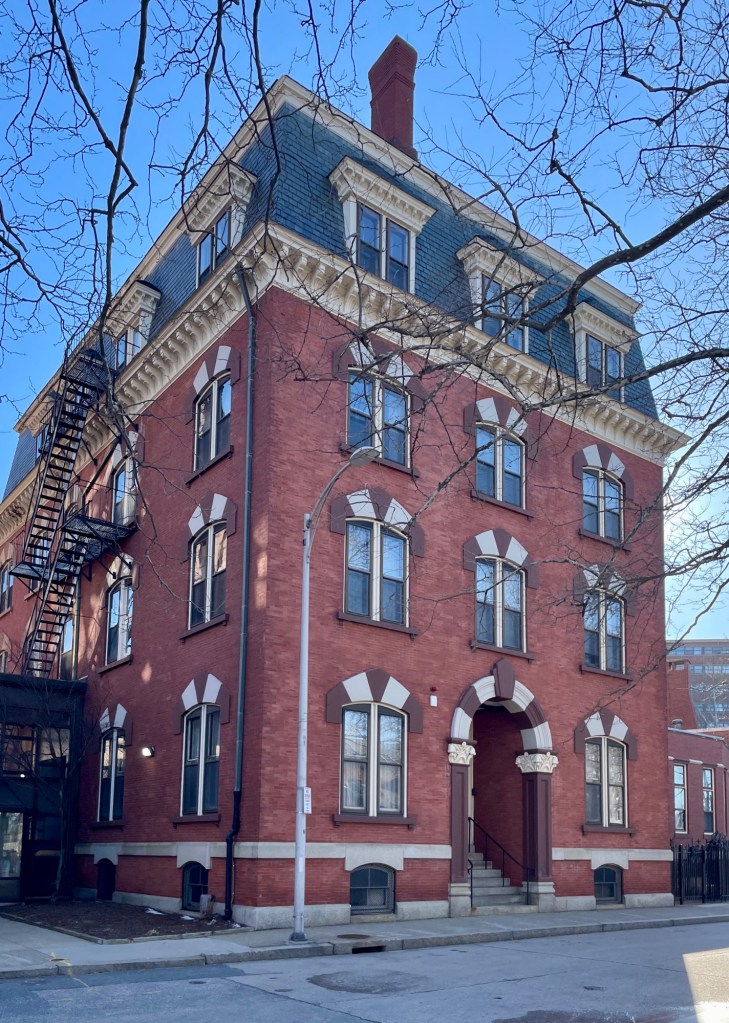
Built around the time of its neighbor, the Cathedral of Saints Peter & Paul in Downtown Providence, this handsome brick masonry building with mansard roof was constructed as the rectory for the larger cathedral next door. Like the corresponding cathedral, this rectory was likely the work of premier ecclesiastical architect, Patrick C. Keely, who designed the structure in the Victorian/Ruskinian Gothic style with polychromatic stone voussoirs, a brownstone Romanesque style arched entry with floral capitals, and a mansard roof with bracketed cornice. Since its construction around 1878, the building has been added onto and connected to the Cathedral, but still retains its architectural significance. The building is home to the Diocese of Providence offices, a library, and remains the rector’s residence.
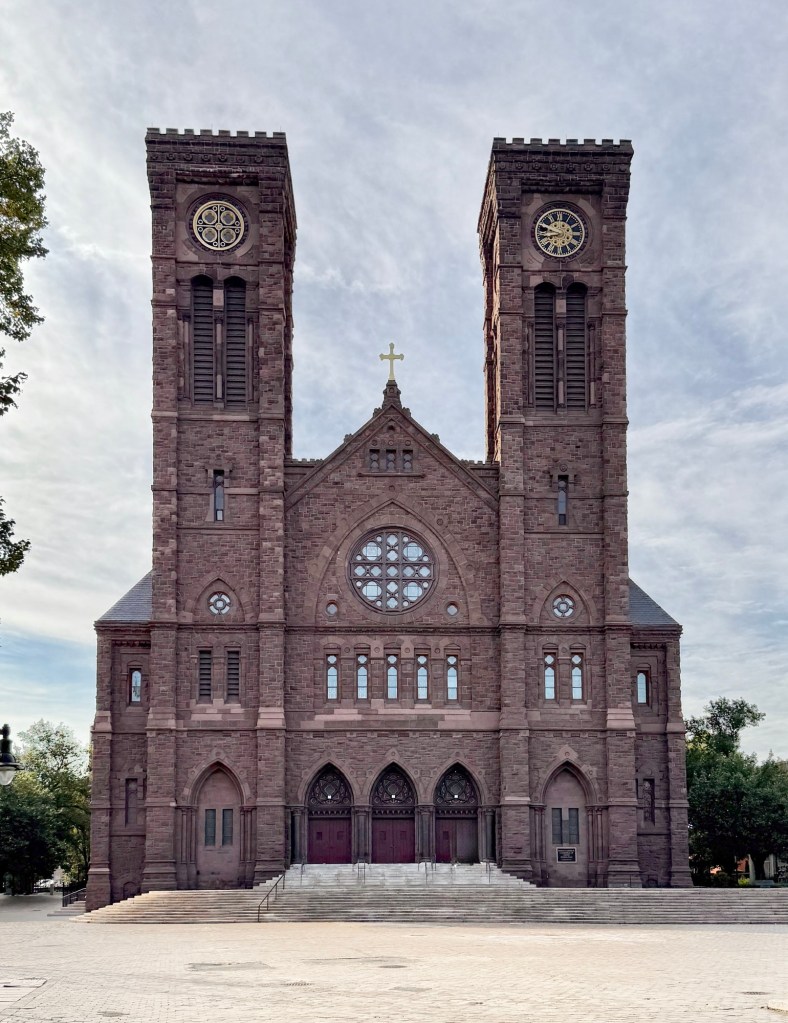
The Cathedral of Saints Peter and Paul rises in Providence’s Cathedral Square, a sub-region of the city’s Downtown that was largely reshaped in the mid-late 20th century period of Urban Renewal. The monumental Romanesque style church is the mother church of the Diocese of Providence and was built on the site of the city’s first Roman Catholic parish, established in 1838. Designed by the prolific church architect Patrick Keely, the Providence cathedral broke ground in 1878 and was consecrated over a decade later in 1889. For this commission the blending of Romanesque and Gothic Revival detailing was likely inspired by both H. H. Richardson’s newly completed Trinity Church in Boston and on German and French medieval precedents. The structure is dominated by the two crenelated towers and displays strength with its bold proportions and use of reddish-brown stone. Inside, the cathedral is even more remarkable than its imposing exterior, distinguished by an overall multicolored, small-scale pattern of gray marble moldings and stained glass, complemented by a large Casavant organ with more than 6,600 pipes. Today, the miraculous cathedral is somewhat diminished in beauty due to the surrounding dead plaza, a scar on the built environment in Providence from Urban Renewal. In the 1960s and 70s, the entire western edge of Downtown had been slotted for redevelopment at a time when federal dollars funded mass demolition and rebuilding across American cities. The plan was designed by Modernist architect, I.M. Pei, who had envisioned a European-inspired courtyard, with a mix of residential and retail uses surrounding the church in the new development. Pei worked with the modernist landscape architects Zion and Breen on Cathedral Square, which was called a “conspicuous failure” within just a few years, a sentiment that has lasted a half-century since. The city has more recently pursued redesign proposals aimed at reconnecting Cathedral Square with the surrounding neighborhood, with the Cathedral of Saints Peter & Paul as the centerpiece.
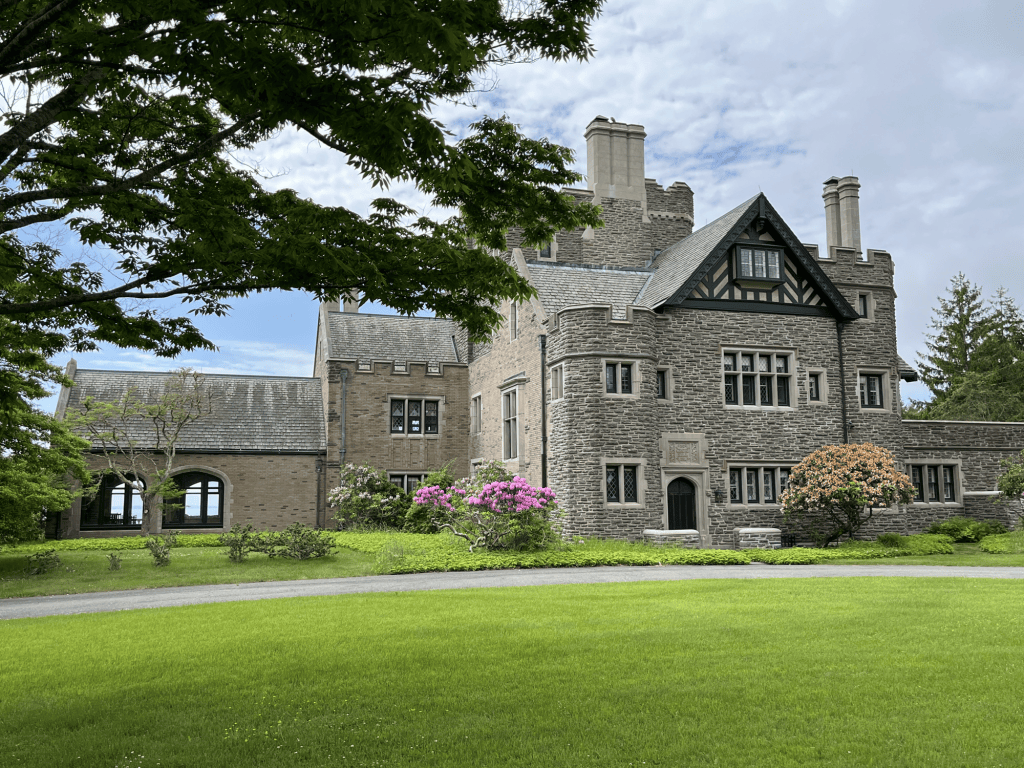
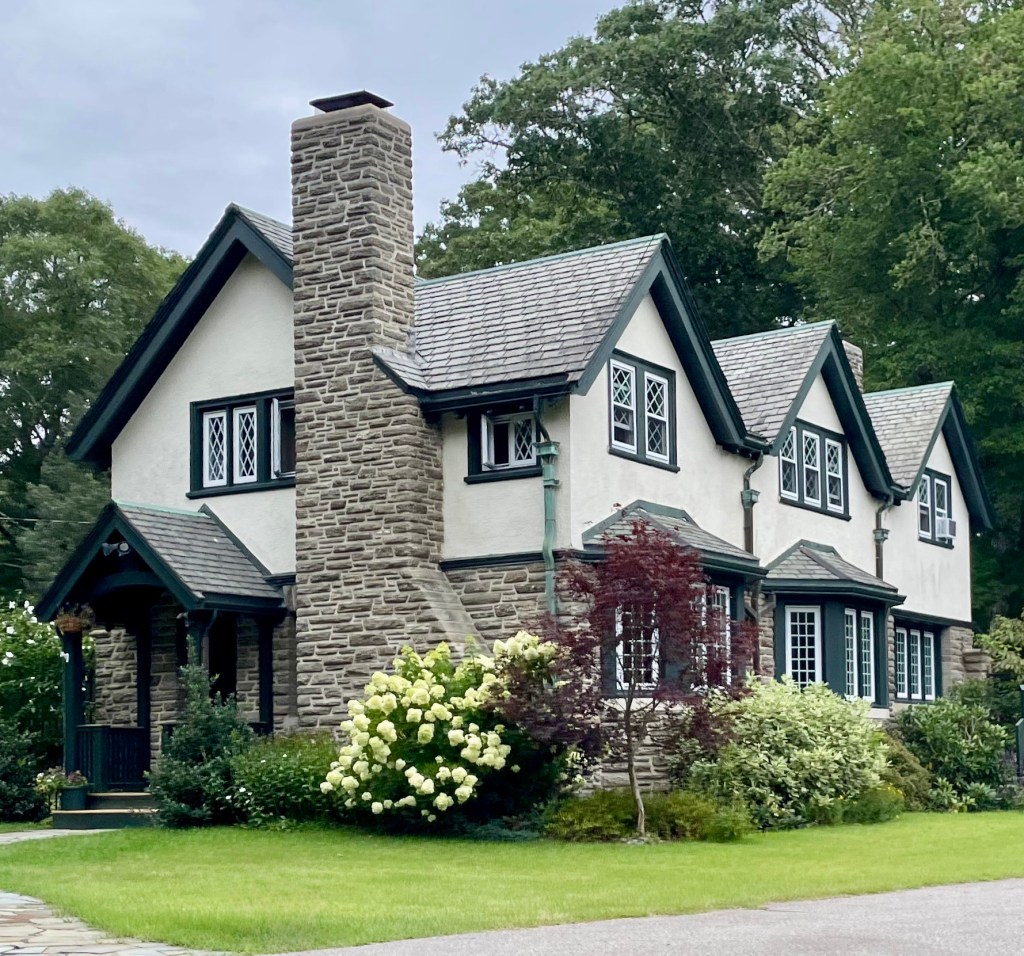
Jutting into Buzzards Bay in Marion, Massachusetts, Great Hill is significant not only as the highest point in town but it is also home to one of the grandest estates in New England. Before the present mansion and various outbuildings were constructed here in the early 20th century, the property was home to Marion House, a sprawling 1860s resort hotel that drew hundreds of summer guests every year. In the early 1900s, Boston financier and Hayden, Stone & Co. co-founder, Galen L. Stone (1862-1926) bought the entire 312-acre peninsula and had the old hotel torn down. In its place, Stone commissioned this massive Tudor-style stone mansion with a central Great Hall built from stone quarried in Pennsylvania and shaped on-site by dozens of stonecutters. The estate was designed by architect, Horace Frazer of the firm, Chapman & Frazer, and it takes strong design elements from the country estates in the English countryside. Inside, the spaces are finished largely in oak with the grounds dotted with formal gardens, greenhouses, by landscape architects, Shurcliff & Shurcliff. The castle-like Main House, was greatly reduced from its original size in the 1950s to make the residence more manageable for later descendants, but even over one hundred years later, it remains one of the most impressive English Revival country houses in the United States, and the property’s grounds are open on weekdays for walking and cycling on paved roads.
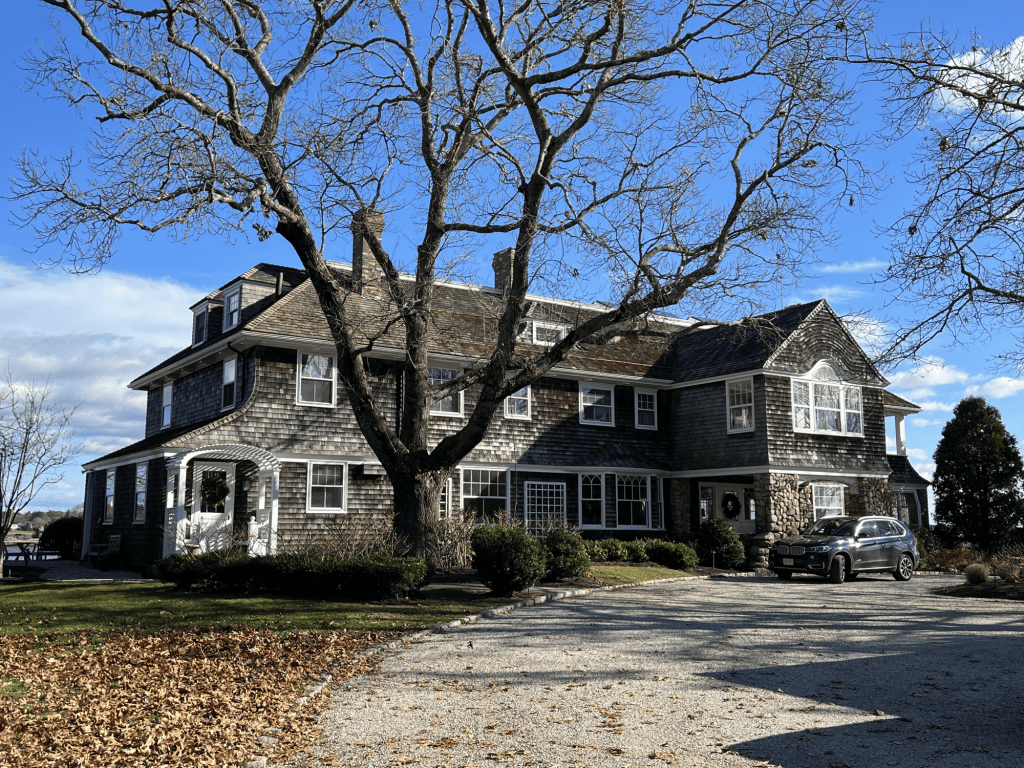
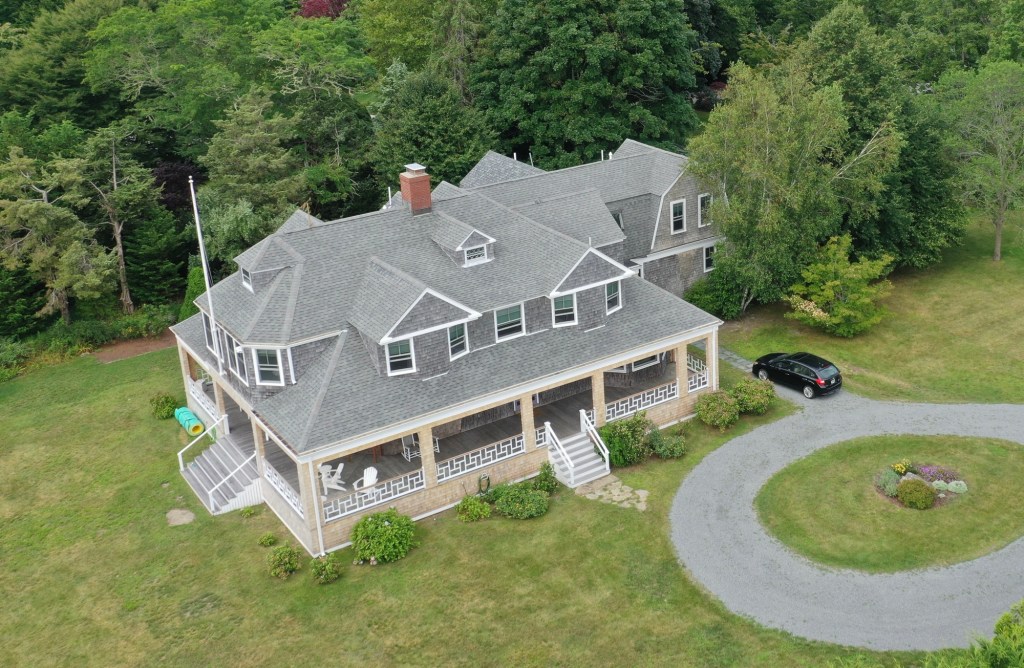
Augustus Nickerson (1860-1928) was a Boston-based accountant and avid cyclist of the Boston Bicycle Club and secretary of the League of American Wheelmen. Nickerson seemingly built this home in Marion around 1885 as a summertime retreat from the stresses of city living, but rented it to other Boston families for supplemental income. The property was sold in 1905 to Martha and Matthew Buckman (1832-1910), President of the University of Vermont 39 years from 1871 to 1910, overseeing dramatic growth for the University, which was one of the first eastern schools to admit women. This Marion home was his summer retreat while classes were out. While the architect is not currently known, it is clearly the work of a well-educated architect of the time, and likely the work of either William Gibbons Preston or Charles Allerton Coolidge, two Boston-based architects who summered in Marion and designed many Shingle style homes there. The home exhibits strong horizontal massing with an elongated sloped roof and is covered with weathered wood shingle sheathing, characteristic of the Shingle Style.
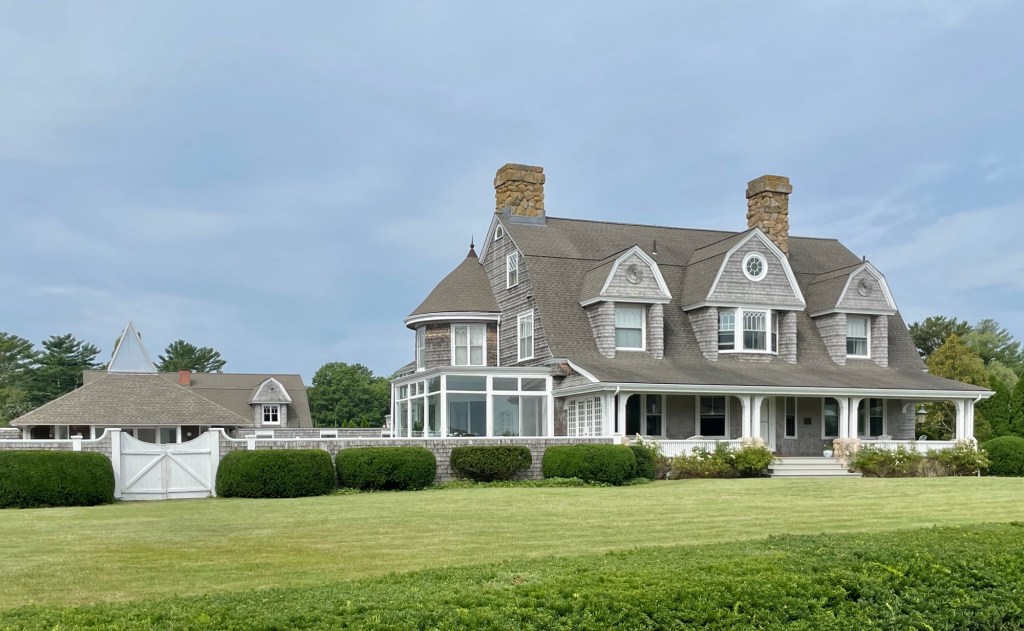
The H. R. Reed House (also known as the President Grover Cleveland Summer Home) is located on the iconic Water Street in Marion, Massachusetts, and is one of the town’s finest Shingle-style summer cottages. The shingled “cottage” was built in 1886 to a design by architect James T. Kelley, reportedly incorporating an earlier 1840s structure that Reed previously had enlarged years prior. Henry R. Reed was an agent for the Revere Sugar Refinery in Boston and was well-connected locally. He hosted President Grover Cleveland at the cottage during summer visits, earning the home its enduring nickname as Cleveland’s Marion “summer White House,” with the president renting the property for the 1890 and 1891 seasons, between his two terms as President. President Cleveland and his wife, Frances, apparently loved summering in Marion so much, that they named their third child Marion. Architecturally, the house presents a two-story, shingle-clad form beneath a gambrel roof, fronted by a broad porch on columns and with three gambrel dormers at the roof. Behind the house, a Shingle style carriage house remains and to the side, a pool is enclosed by a shingled wall. Reed, who died in 1905, did not long enjoy his Marion property, but his widow and daughters continued to spend their summers there until the mid-20th century. Since then, the property has sold a few times and current owners are undertaking a large renovation to this significant residence, which has been individually listed on the National Register of Historic Places.
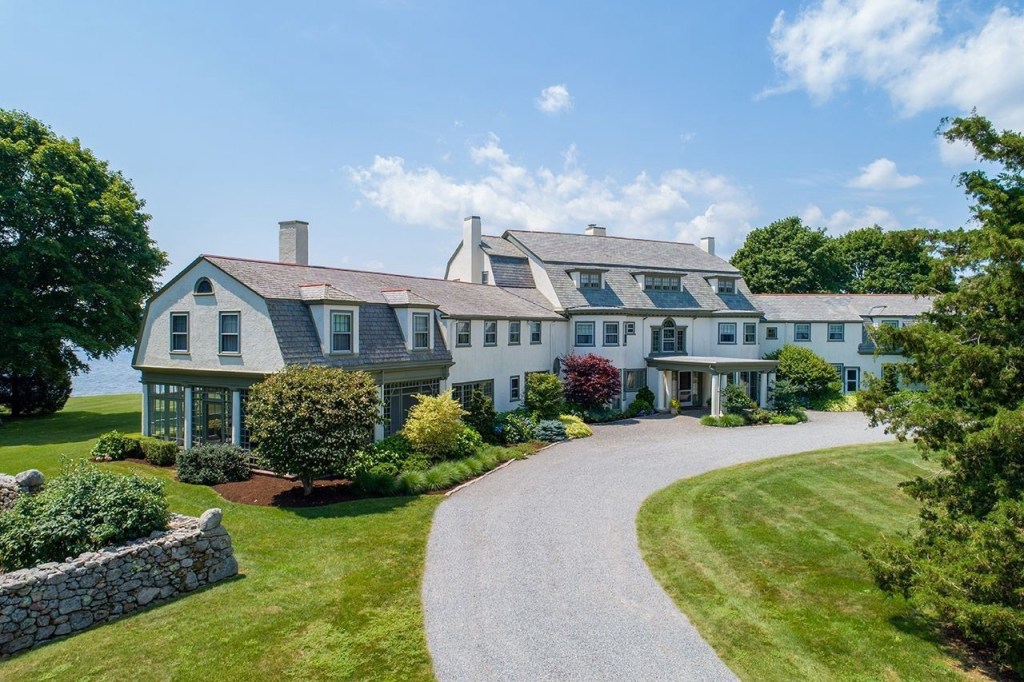
One of the grandest homes overlooking Hammetts Cove and Sippican Harbor in Marion, Massachusetts, the Leonard-Mitton Estate showcases the status of the coastal community as a premier summer colony for wealthy Boston families going back over 100 years. The estate was built around 1900 for Charles Webster Leonard (1844-1941) of Boston and later New York, who without formal education, became the owner of a number of mills and quarries throughout New England and was a director of several local banks and businesses. A renowned horseman, he owned a breeding farm in Lexington, Kentucky and a trotting track in Readville. He was married to Emelyn Thatcher Welch in Paris and together, they built and owned this house until 1916. The residence is a sprawling Colonial Revival style mansion clad in stucco and capped with a gambrel roof. Its form comprises of a 2 1/2-story main block with two-story wings extending at 30-degree angles from the sides to provide better views of the harbor. By 1916, the summer residence was sold to George W. Mitton (1869-1947), the eldest son of Edward J. Mitton and Sarah Wade, the second generation of a family of merchants who operated the Jordan Marsh department store in Boston. Starting as a stock boy, George Mitton eventually became president of the company. He was trained in the business by his father, Edward J. Mitton, the Jordan Marsh president, and Eben D. Jordan, the company’s founder. George Mitton was credited with growing the company into New England’s largest department store and introducing innovations such as executive training programs and employee benefits. George Mitton and his wife, spent summers at their Marion “cottage” until George’s death, but the property remained under the ownership of the family until the 1970s. The expansive waterfront property was recently renovated and sold, preserving this grand estate for another century.
This historic summer cottage on Water Street represents one of the more sophisticated examples of the Shingle Style in Marion, Massachusetts, and is evocative of the type of houses built for the wealthy in the late 19th and early 20th century as their summer retreats. The “cottage” was built around 1898 as a summer residence for George Peabody Hamlin (1867-1935) and wife, Mary Farnsworth Tappan, of Boston. George P. Hamlin was a successful coal merchant who’s family business became part of the Metropolitan Coal Company in the late 1890s. George P. Hamlin was treasurer of the company until his retirement in 1927, when he turned to commercial real estate and worked in that field until his death. It is likely that for his summer residence, Hamlin hired Boston architect and Marion summer resident, William Gibbons Preston, who also designed a house for George’s brother further up Water Street. After Hamlin’s death in the 1930s, the Marion cottage was purchased by Ms. Katherine Hobart Ames Spalding (1874-1949), the daughter of Oakes Angier Ames (1829-1899) and granddaughter of Oakes Ames (1804-1873), a Massachusetts Congressman and leading figure in the development of the Transcontinental Railroad, who was one of the wealthiest men in America. Katherine Ames married Philip Leffingwell Spalding (1871-1938), President of the New England Telephone & Telegraph Company. The shingled cottage with its rubblestone base, remains one of the best-preserved in Marion and a landmark of the style.
One of the many beautiful late 19th century shingled “cottages” overlooking Sippican Harbor in Marion, Massachusetts, Point Rock Cottage stands out not only for its siting on the waterfront, but also for its preservation. As any good summer cottage must have a name, Point Rock Cottage derives its name from its location overlooking the rocky coast and Sippican Harbor on the tip of the village. The Shingle style cottage was built for David W. Lewis (1833-1915) of Boston, who purchased the land in 1893 and had the house built soon after. Lewis began his career in the retail shoe business in Vermont until he enlisted in the Union Army in 1862, serving in the 9th Vermont Volunteer Regiment. Lewis rose to the rank of major and saw action in several major campaigns of the war. After the war, David Lewis married Elizabeth T. Willett and they moved to Hyde Park in Boston where he shifted professions and became a dealer in building materials, which he saw immediate success as many Boston areas saw development in the late 19th and early 20th centuries. The architect is not presently known, but it is probable that the cottage was designed by William Gibbons Preston or Charles Allerton Coolidge, both Boston architects who designed many of Marion’s summer homes and both of whom summered in Marion themselves. Architecturally, the residence is a blending of Shingle and Arts and Crafts styles with the low-pitched roof and continuous shingled cottage encircled by a one-story integrated porch supported by wood shingle clad rectangular posts with a Chinese-fret work railing.
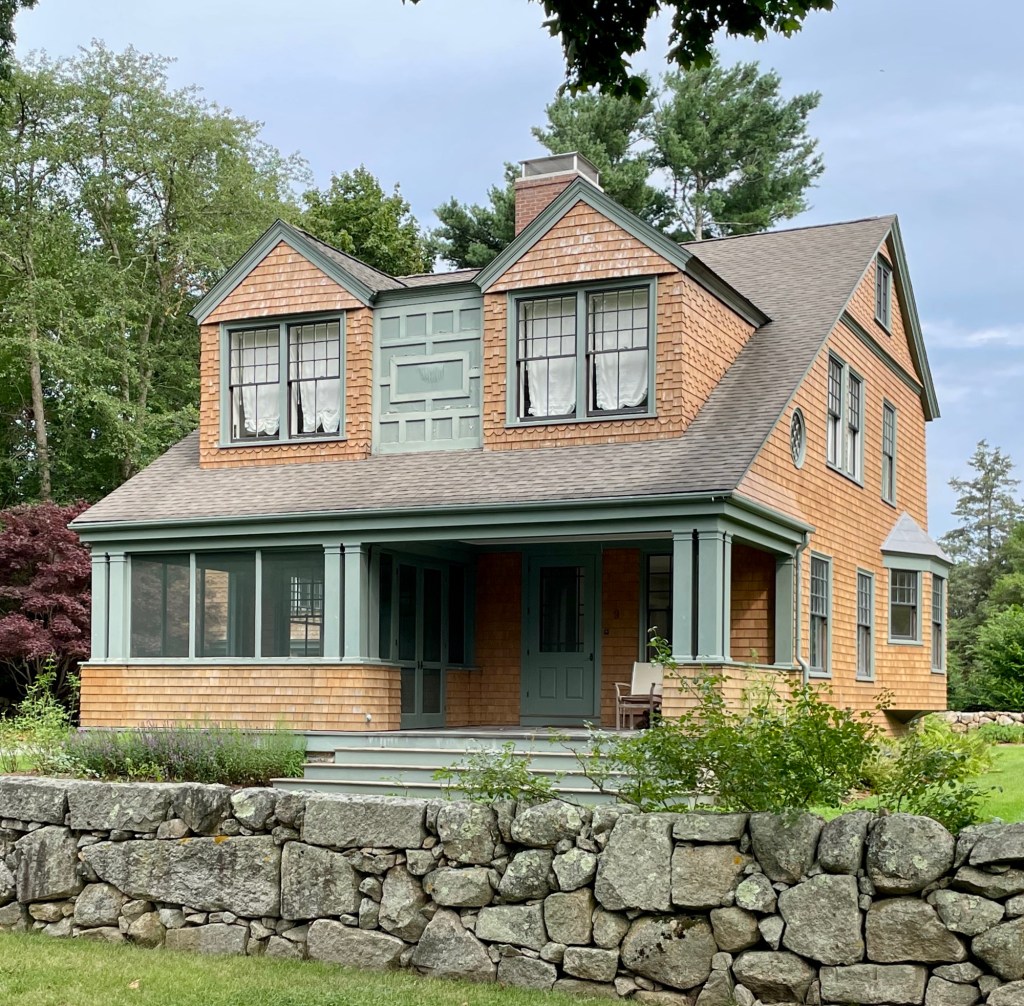
One of the finest cottages in the coastal community of Marion, Massachusetts, is found tucked away behind the larger Shingled mansions overlooking the harbor; and while smaller in stature, it packs an architectural punch! This is the Rev. John C. Brooks cottage, constructed c.1891 as a blend of Shingle and the emerging Arts & Crafts styles in a bungalow form. The cottage, designed by Boston architect and summer resident of Marion, William Gibbons Preston, was built as a summer residence for Revered John Cotton Brooks (1849-1907) who descended on his father’s side from the New England Puritan clergymen, John Cotton and Cotton Mather. Like many in his family, Rev. John C. Brooks joined the ministry in the Episcopal Church and was the rector of Christ Church in Springfield from 1878 until his death in 1907. He was also the younger brother of famed preacher and theologian, Phillips Brooks (1835-1893), rector of Trinity Church Boston, Episcopal bishop of Massachusetts, and a frequent visitor to Marion, which likely inspired him to build his own summer residence here. John Brooks was additionally a colleague of Reverend Percy Browne, for whom their friend and Trinity Church architect, Henry Hobson Richardson, designed the first Shingle Style house in Marion. After Reverend Brooks died in Paris in 1907, the family sold the property to David Rice (1856-1932), the brother of noted Boston architect Arthur W. Rice, who too summered in Marion at this cottage. While somewhat altered, the cottage stands out architecturally for its varied shingle types, an integrated porch spanning the façade supported by paired square posts and a shingled knee wall, and paired gable dormers linked by a blind shed-roofed dormer which is faced with a panel with applied rectangular fretwork.