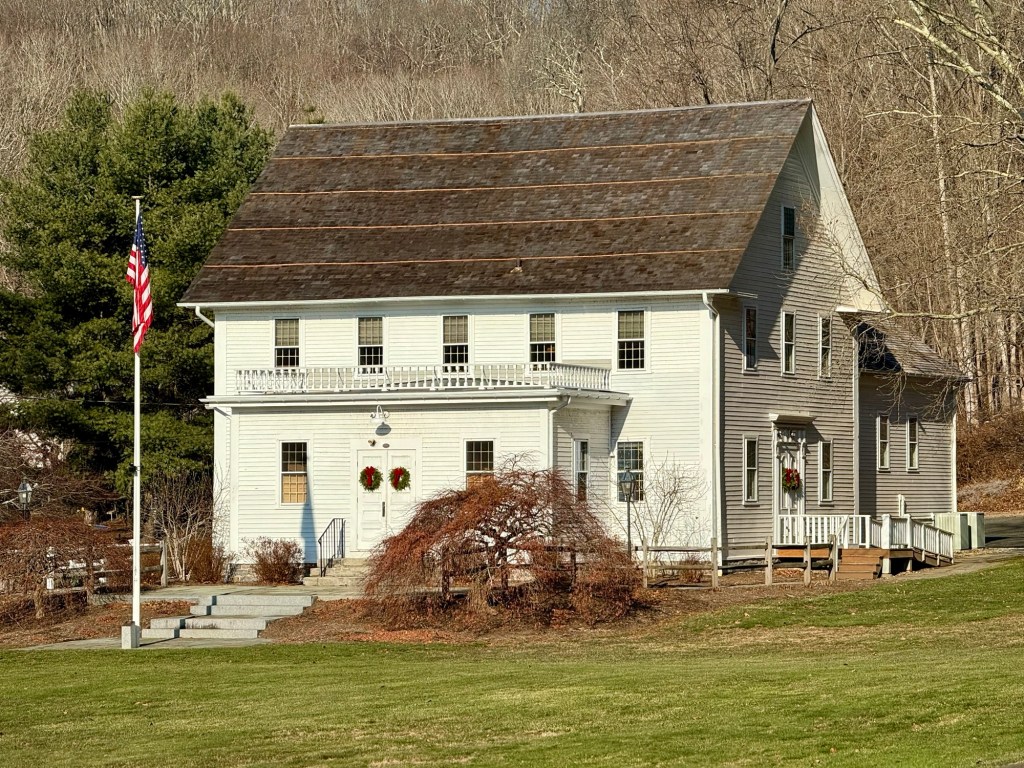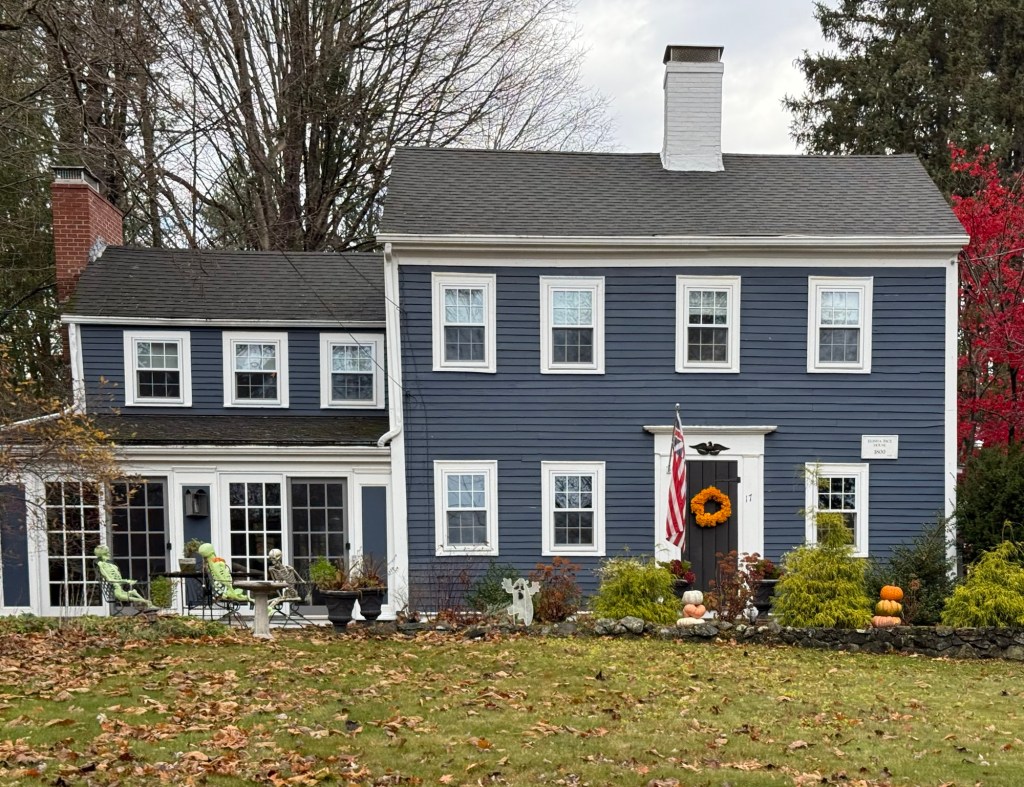
Elisha Rice House // c.1800

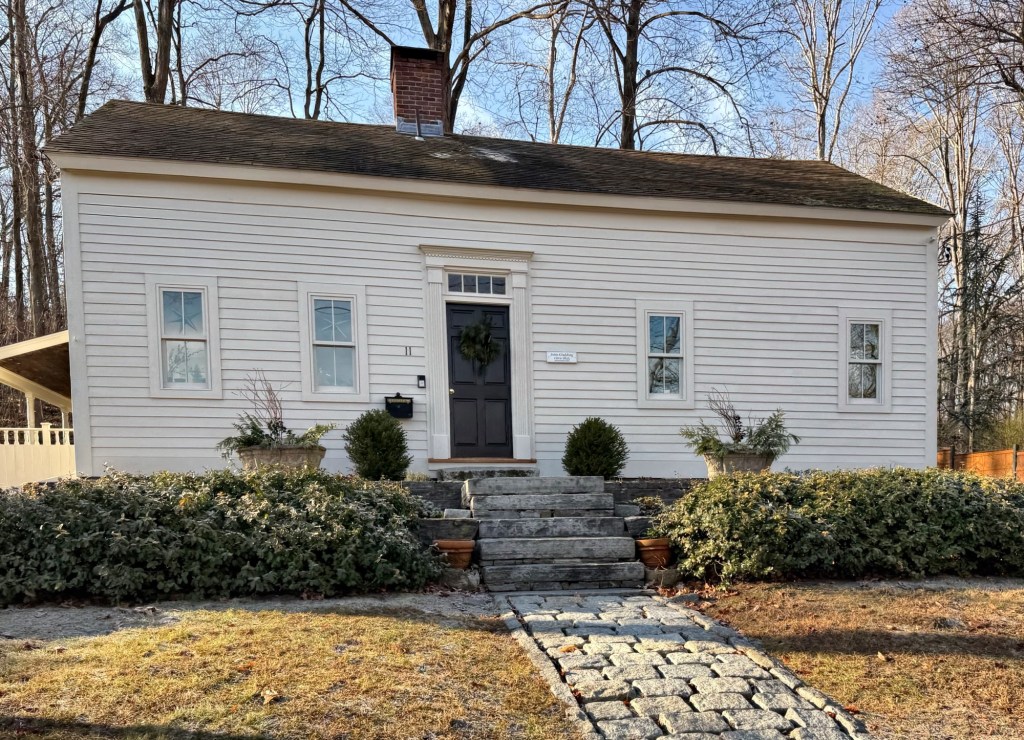
Elisha Rice (1784-1841) moved to Wayland, Massachusetts in 1800 and built this charming house on Bow Road for himself and his family. Elisha worked as a wheelwright, a craftsman who builds and repairs wooden wheels, and was able to build this home near the village. While built and later occupied by later artisans, the community has become an exclusive and wealthy Boston area suburb, which has subsequently made it so many “working class” citizens can no longer afford such a house, but has also allowed many of these great old homes to be lovingly preserved and maintained for future generations.

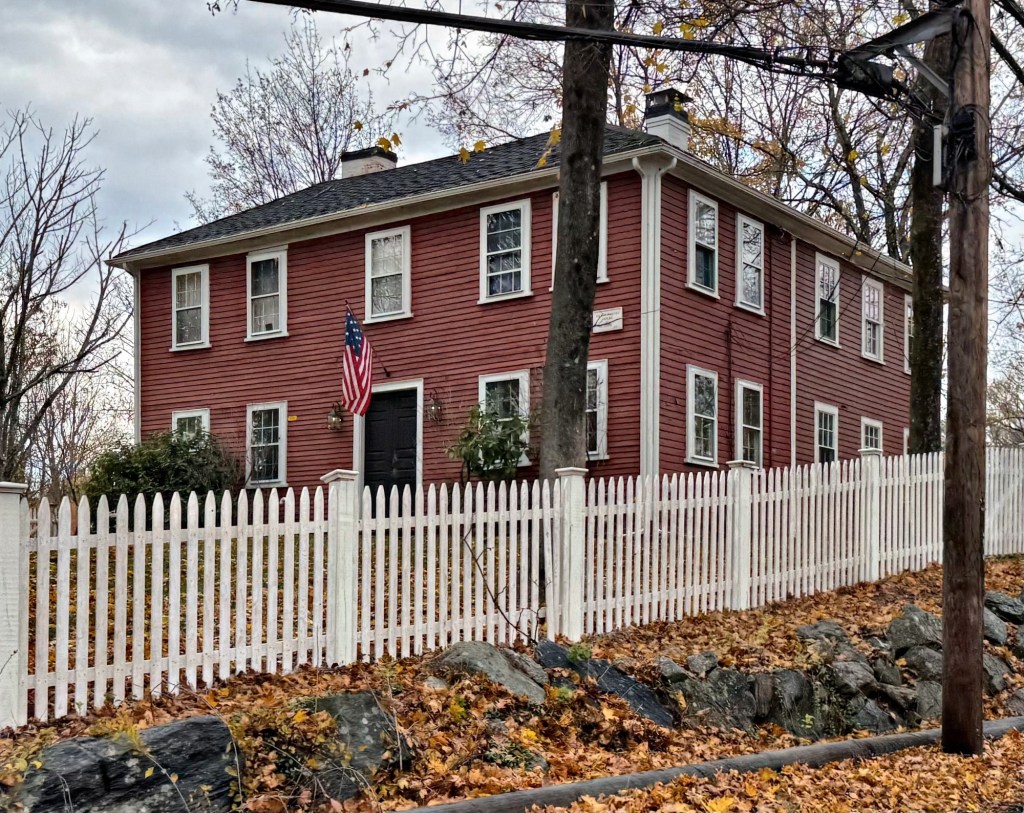
Reeves-Goodell House // c.1816

Built on a hill on Concord Road in Wayland, Massachusetts, the Reeves-Goodell House is a beautiful vernacular Federal period residence owned and occupied by a local builder and architect. The house was constructed by Henry Reeves (1789-1878), a local carpenter and descendant of Jacob Reeves (1720-1794) a tavern-keeper in town. In the 1920s, this property became the home of Edwin B. Goodell, Jr. (1893-1971), a prominent local architect who designed area houses before becoming a partner in the firm Andrews, Jones, Biscoe and Goodell of Boston. It was Goodell who added on the rear, three-bay addition to the residence, which blends in with the 1810s aesthetic. Interestingly, Edwin Goodell lived in this historic, vernacular house but designed some of the earliest International style modernist homes in New England.

Bow Center Schoolhouse // 1894

One of the many one-room schoolhouses of rural New England, this late-19th century example can be found in the town center of Bow, New Hampshire. The vernacular schoolhouse served hundreds of pupils in the northern part of town, from its construction in 1894 until 1924 when it was moved to its present location near the old Town Hall, where it was in use until 1945. In 1948, the School District sold the school to the nearby Baptist Church for Sunday school classes. The Town bought the building from the Church in 1968 and restored it as an historic site. Today, the rebuilt Snow Roller used in the early 1900s to pack snow down for passage of horse-drawn sleighs and wagons, and a mill stone, sit nearby the old schoolhouse as sort of an open-air museum.

Bow Old Town Hall // 1847

The town of Bow, New Hampshire, was incorporated in 1727 and named after its location along a bend, or “bow” in the Merrimack River at its easternmost boundary. Early town meetings were held in the town meetinghouse of 1770, and the second meetinghouse of 1801, until the separation of church and state became official in New Hampshire in 1819, with the passage of the Toleration Act. Until 1819, residents in New Hampshire conducted town business and religious services in the same building, the town meetinghouse. However, as towns diversified and religious freedom prospered, citizens grew less comfortable supporting one particular religious denomination with taxpayer money. Bow eventually secured funding to erect its first purpose-built town hall in 1847, this vernacular, two-story building on Bow Center Road. The small building served as the town hall for over 100 years, when in 1957, a growing suburban population required a larger, more modern town hall. The old Town Hall of Bow now serves as a meeting place for Town organizations and is rented out to Town residents for events.

Abraham Wilder House // 1827

This exceptional vernacular example of a brick, Federal period house in Bolton, Massachusetts, sits on the town’s Main Street in the East Bolton village. Built in 1827, this house with attached wooden ell was the home to Abraham Wilder, a local blacksmith who followed his father’s footsteps in his professional pursuits. The house is two-stories with historic six-over-nine sash windows. The main center entry, rather than displaying a common elliptical fanlight for the period, is surrounded by trim boards, four-pane sidelights and a vertical-board door. Abraham’s blacksmith shop was once located next-door but was moved and reassembled in Old Sturbridge Village in 1957.

Bolton Powder House // 1812

Hidden away in the woods behind the Bolton Town Hall, this small brick structure sits atop a rocky outcropping and showcases a piece of early history we often do not think about. Built in 1812 as a powder house, a storage facility far from homes and businesses to store the town’s supply of gunpowder, musketballs and cannonballs, the structure remains as the town’s oldest extant municipal building. Since the founding of the colonies, the procurement and storage of ammunition had been the responsibility of local governments. Before this structure was built in the forest, Bolton‘s gunpowder and ammunition had been kept under the meetinghouse pulpit, not the best place suitable for highly explosive storage. The structure is a well-preserved example of a typical early 19th-century powder house, built of brick manufactured in town, laid in common bond, measuring just over seven-feet square with a pyramidal wood shingle roof.

Stone Village Schoolhouse // 1835

Across the street from the Gideon Lee House in the Stone Village of Chester, Vermont, this historic schoolhouse is one of the oldest in the state and one of the few extant schoolhouses built in stone in New England. The Stone Village Schoolhouse is a rare example of a snecked ashlar building, where the construction method is said to have been brought to the area by masons from Scotland and Ireland which is known there as ‘Celtic Bond’. Oral tradition state that Scottish masons from Canada introduced the technique to local masons while erecting a mill in nearby Cavendish in 1832. Local Chester resident, Dr. Ptolemy Edson became such a fan of the building that in 1834, he had his home, the first stone building in Chester, built in this method. He then would influence the rest of the North Village of Chester, where many of his neighbors, as well as the church and schoolhouse, built their structures in snecked ashlar. Completed in 1835, the schoolhouse is a single-story rectangular plan building with the end gables forming a high pitched roof with a bell cupola over the facade’s gable. The snecked ashlar siding appears only on the first floor with traditional wood clapboard siding in the gable above. Built as School No. 3 for Chester, the building converted to residential use in the 20th century, but still maintains its important materiality and the iconic school bell, allowing passersby to understand its original purpose.

Chester Public Tomb and Hearse House // 1850

Near the entrance to the Brookside Cemetery in the charming village of Chester, Vermont, these two very different looking buildings were constructed for one purpose, death. Before the proliferation of funeral homes and cremation, infrastructure for the dead was a necessary piece of the built environment for towns and cities all over the region. The wood-frame building seen here was built as a hearse house, which would shelter the horse-drawn hearse for the town. Prior to the advent to funeral homes, most wakes were held at the home of the deceased, after-which, the body would be transported by the horse-drawn hearse to the cemetery for burial. This was followed by a memorial service at the nearby church. If the ground was frozen or if the family did not yet have the funds to bury their family member, the body would be held in the public tomb until the burial. The Chester Public Tomb dates to 1850 and was built by local mason, Arvin Earle from stone  quarried near Gassetts, a hamlet in the north part of Chester that was shipped to Chester Depot by the newly completed railroad. While no longer in use, these two vernacular buildings hold a very important history of the town and have been lovingly preserved by local residents. 

Simonsville Schoolhouse // 1856

One-room schoolhouses like this example in the Simonsville area of Andover, Vermont, have been commonplace throughout rural portions of New England where children of most ages would share the classroom and be taught everything from basic spelling to math. The Simonsville schoolhouse was built in 1856 and is a typical example of a vernacular one-room schoolhouse in rural New England, with no frills or ornament, just a house of learning. The Simonsville Schoolhouse was converted to a residence sometime in the latter half of the 20th century and has been renovated, keeping the basic form and interior floorboards from the 1850s. The school-turned-home is currently (2025) listed for sale.

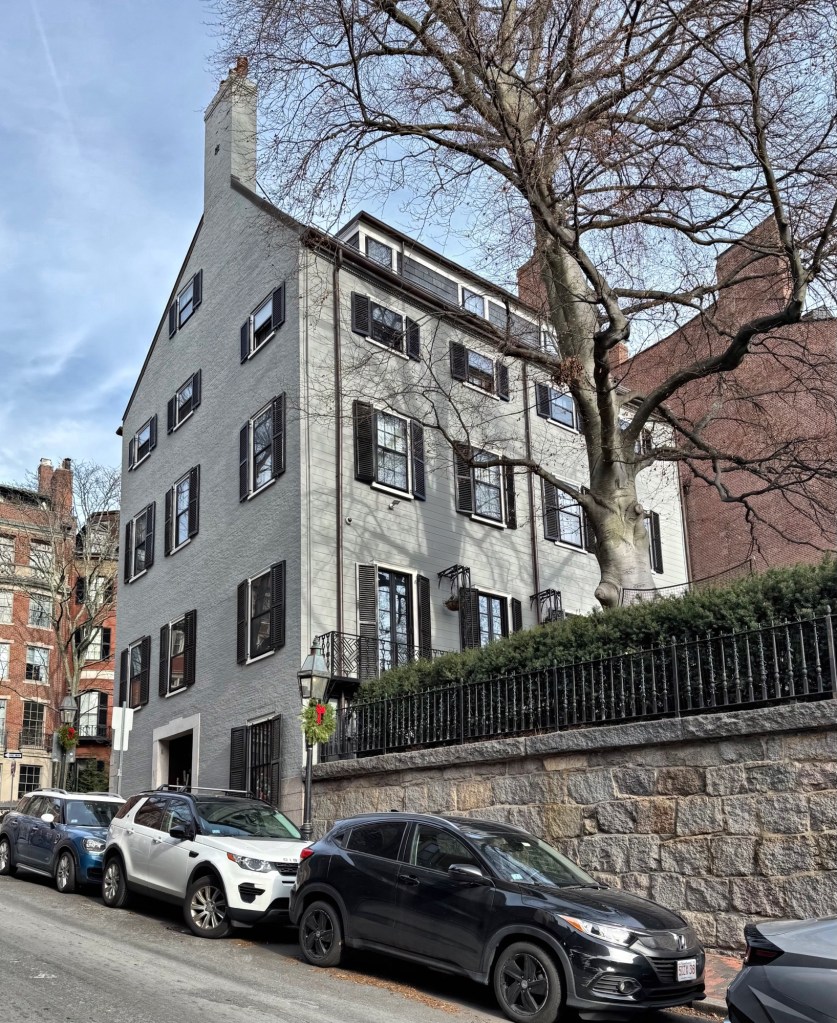
Pierce-Guild Lightning Splitter House // 1781

The Pierce-Guild House at 53 Transit Street in the Fox Point neighborhood of Providence, Rhode Island, is one of the most iconic and photographed residences in the state. Known as a “lightning splitter”, the unique name is taken from local folklore that the sharp angle of the gable roof will deflect or split lightning if struck. Whether or not this superstition is true, the unique house form numbers to less than a dozen in Rhode Island. This house, arguably the most well-known for its location off Benefit Street, was originally built in 1781 as a modest 1-1/2-story cottage with a gambrel roof for Daniel Pierce (Pearce), a tailor. In 1844, the property was sold to George Guild, a grocer, who modernized the house by creating the massive gable roof to provide a narrow third floor, which was illuminated by the end windows and a diminutive dormer at the roof. The house retains much of its character, after a restoration by owners in the mid-late 20th century.