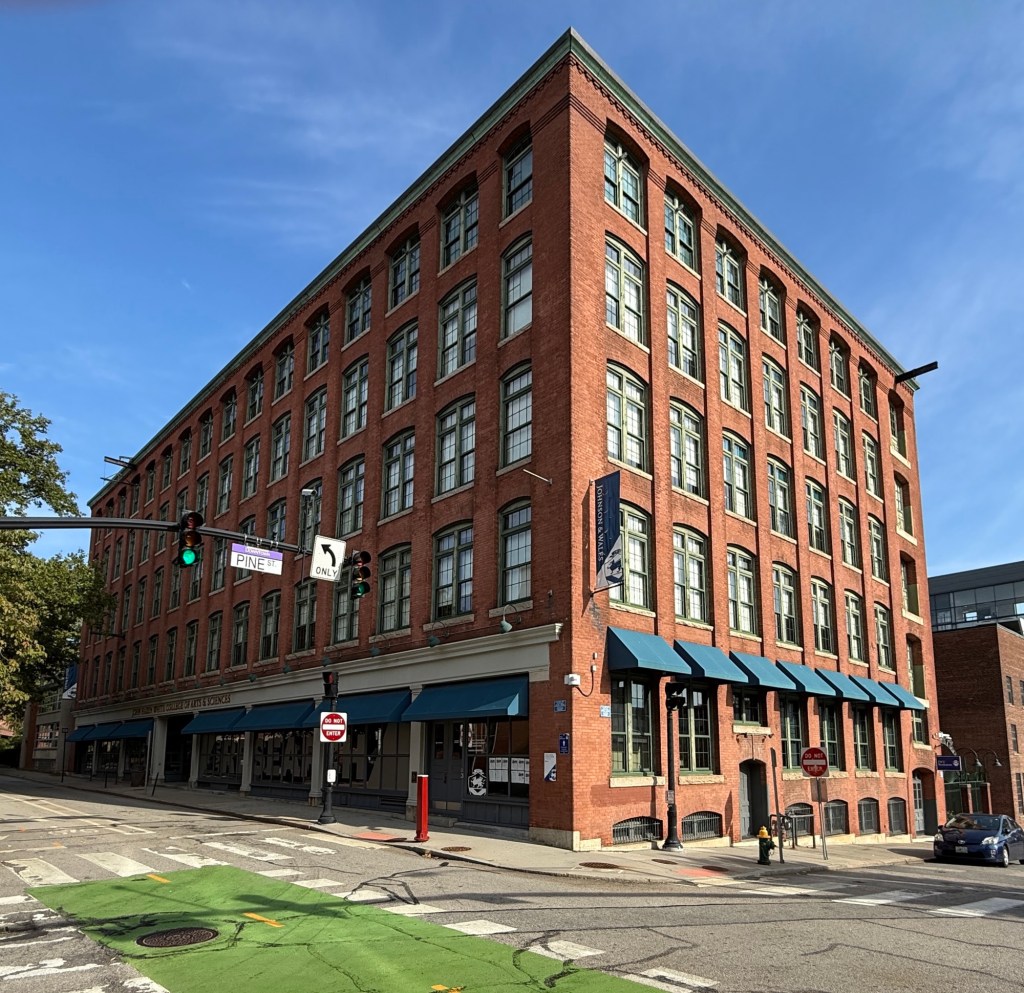
C & J Mauran Company Warehouse // c.1820

In Providence, even industrial warehouses are architecturally interesting to look at! This is the C & J Mauran Company Warehouse at 369 South Main Street in Providence’s East Side neighborhood. The building was constructed around 1820 for brothers, Carlo (1779-1844) and Joshua Mauran (1782-1847), who were wealthy merchants who stored goods from their ships trading in the Indies here. Before all of this, the site was home to an earlier structure from the 1770s, built by Deacon Joseph Sheldon, and the site was occupied by a warehouse, later owned by his son, Christopher Sheldon, and was known as the “Slave Pen” for its use of holding and transporting enslaved people. The “slave pen” burned in 1801 and the structure was later rebuilt by the Earle Brothers, and then again (the current structure) by Carlo and Joshua Mauran. Later in the 19th century, a brick façade and storefront were added to the building as the street shifted firmly to commercial uses, with noxious industrial buildings moving further to the periphery of the established College Hill neighborhood. From 1856 to 1939, the Ferry Coal Yard Company and the National Coal Company stored coal in the building After WWII, the City of Providence took the building and adjacent block by eminent domain to make way for urban renewal, and luckily for us, the building was rehabilitated rather than demolished at this time. The structure was converted to office use, and was again restored in the 2010s by Newport Collaborative Architects.

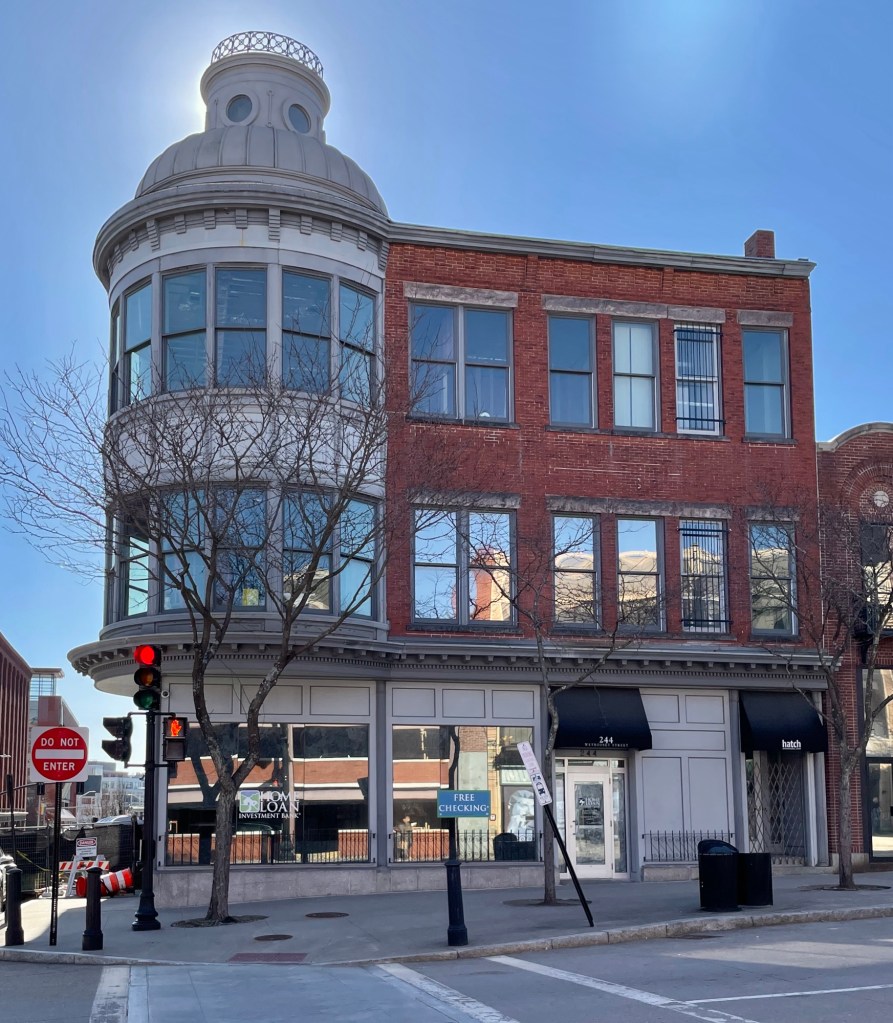
Clark & Nightingale Block // c.1815

In the early 19th century of Providence, wealthy merchants dabbled in real estate and urbanism, not only as an income-producing investment, but also to serve as a buffer to obscure unsightly industrial and wharf uses from their mansions on College Hill. This is the Clarke & Nightingale Block, a c.1815 vernacular Federal style row of residences above commercial storefronts on South Main Street. The block was developed by the heirs of wealthy merchants, Joseph Innes Clark (1745-1808) and Joseph Nightingale (1747-1797), and constructed of brick and stone, providing a handsome structure facing the wealthy residences to their east, and obscuring the view of industrial buildings closer to the river. The block was gutted and rehabilitated as part of the East Side Renewal project in the early 1970s. Arguably the only thing Urban Renewal did right was select restoration of significant buildings within seas of the destruction and scars on the landscape the program left behind.

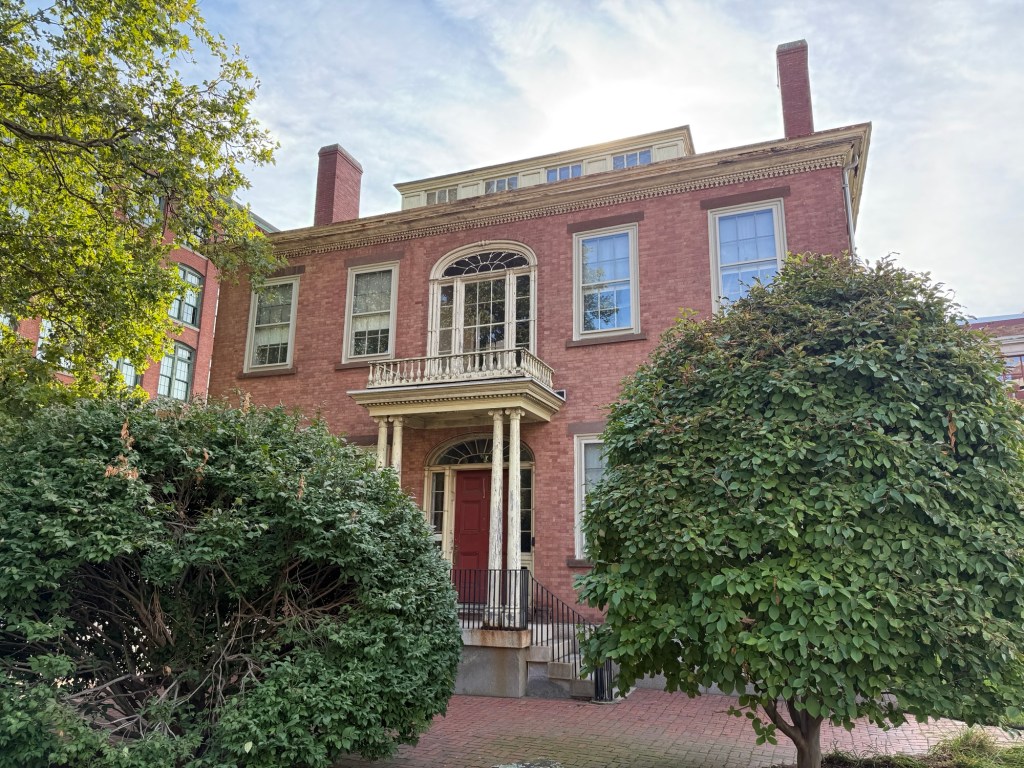
William Woodward House // c.1826

Providence has some of the finest 19th century housing in New England; from the early Colonial and Federal residences to Victorian mansions, you can find hundreds of architect-designed showpieces that tell the full story of American architecture, sometimes on the same street! This is the William Woodward House at 22 James Street in the Fox Point/East Side area of Providence, built sometime between 1826-1828. The Woodward House is a landmark example of the Federal style, likely designed or inspired by local architect, John Holden Greene, which characteristic features including the hip roof with monitor, fanlight transom, and center hall plan. William Woodward Jr. (1791-1861) worked as a grocer, with a market nearby, and clearly did well for himself to afford such a home. 

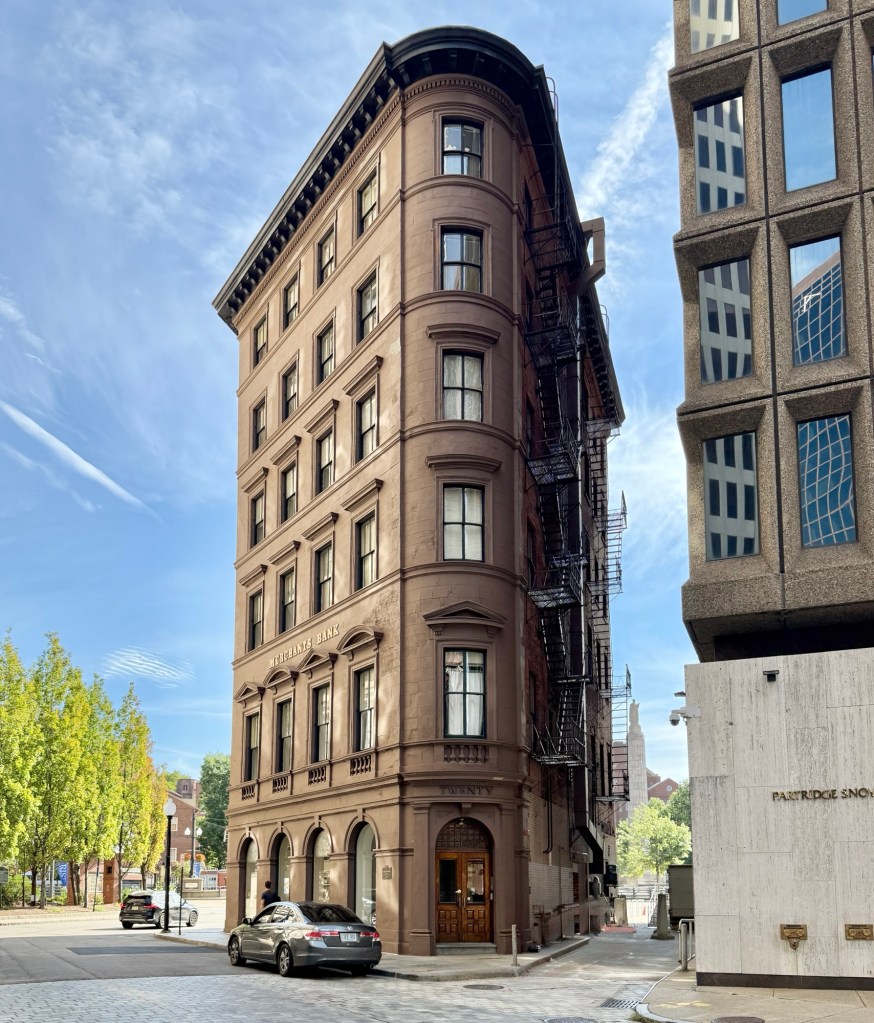
Walker – Russell House // 1797

In 1797, housewright Calvin Walker acquired a house lot on Transit Street in Providence’s Fox Point/East Side neighborhood and built this Federal period residence for his family. The three-bay Federal style home was a side-hall form with off-center entry and a monitor roof. In 1824, Calvin sold the residence to his daughter, Mary and her husband, Daniel Russell, a grocer and shoemaker, for $250. By the 20th century, the house was altered with later siding and a new entry, which were later restored by later owners, back to the home’s original grandeur. The blind fan with engaged columns adorned by rounded capitals, really enhances the design. The Walker-Russell House remains as an excellent example of a Federal style residence in Providence built for middle-class residents. 

Amos Beckwith Mansion // 1861

To conclude this series on Stimson Avenue houses in Providence, I will showcase the grand dame of Stimson Avenue, the Amos Beckwith Mansion. Built in 1861, the large estate was essentially a country villa when built, as this section of Providence was sparsely developed before the Civil War. Amos Beckwith (1822-1890) was the son of Truman Beckwith and, like his father, was a wealthy cotton broker. He hired architect Alpheus C. Morse to design the house, which is an Italianate Villa, with prominent four-story tower. thick moulded trim, projecting eaves and balconies supported by large brackets and corbels, and the rounded arch windows. In 1882, Beckwith subdivided his land in the area to make half the building lots on Stimson Avenue. Amos Beckwith lived in the home with his wife, Clara, until her death in 1879. Unknown to many, Amos would secretly remarry his housekeeper, a fact that came out after his death when discussions about the estate were raised. Maria Sherman, the 35-year-old housekeeper, stated she was in the will. It is not clear if the family fought this claim and who inherited the property, but what an interesting story!

George H. Dart House // 1893

Arguably the most restrained and modestly detailed residence on Stimson Avenue in Providence is this residence, the George H. Dart House, a late-Queen Anne dwelling built in 1893. The original owner, George H. Dart (1845-1897) worked as the President of the Rhode Island Tool Company before his unexpected death in 1897.  Four years prior to his death, Mr. Dart hired the local architectural firm of Stone, Carpenter & Willson, to design this single-family residence, which employs Shingle and Queen Anne detailing under a two-story gambrel roof with overhanging eaves sheltering recessed porches and bay windows.

Thurston-Gladding House // 1886

One of the finest Victorian-era houses in the College Hill/East Side area of Providence is this stately residence at 30 Stimson Avenue, known as the Thurston-Gladding House. The house was built for newlyweds, John Russell Gladding and Ellen (Thurston), on land given to the couple by Ellen’s father, attorney and judge, Benjamin Thurston. John Gladding was originally from Connecticut and the couple split their time between their Providence home and a country retreat in Thompson, Connecticut. Architects Thomas J. Gould and Frank W. Angell (Gould & Angell) furnished the plans for the home, which features a ground floor faced with textured brick and walls adorned by continuous wood shingle siding above. A rounded tower, projecting bays and dormers, and a elongated front porch break up the massing into a pleasing composition.

Louis E. Robinson House // 1892

Built in 1892, at the height of the convergence of tastes of the Queen Anne Victorian and more traditional Colonial Revival architectural styles, the Louis E. Robinson House at 60 Stimson Avenue in Providence, Rhode Island, showcases the intricacies and whimsy that can be designed when a house is a blending of styles. The residence was built for Louis Elmer Robinson (not Robertson like so many sources claim), a cotton dealer and merchant, from plans by architect Frank W. Angell of the firm, Gould & Angell of Providence. The Robinson House is a gambrel-roofed mass, set gable end to the street, leaving only the ground story and side elevations in clapboard. The polygonal half-tower attached to the side elevation and its paneled grouping of windows retains the older medieval allusion of the early Queen Anne style, but with a swans neck pediment topping the stair hall window showcased the Colonial influence. I am imagining the home with a more period-appropriate color palette, but it still shines!

Henry A. Waldron House // 1893

The period of the late 19th through early 20th centuries provided architects the opportunity of blending the two prominent styles, Queen Anne and Colonial Revival into a single composition, and as a result, this period has provided some of the most whimsical yet stately homes in New England. This modestly sized residence sits on Stimson Avenue, one of the finest streets in Providence, and despite its unassuming size, packs an architectural punch with its materials and detailing. The Henry Waldron House was built in 1893 for Henry A. Waldron, a clerk in Providence. From deed research, it appears a member of his family, Nathan Waldron, a wealthy grocer, purchased the site in 1891 and likely funded some or all of the construction of the residence there. The architectural firm of Hoppin, Read & Hoppin is credited with the design of the residence, which employs a Colonial Revival form with the gambrel roof and Columned and ornate entrance porch with fan motif, while the use of varied siding materials and octagonal tower with pyramidal roof veers into the Queen Anne style.

Newton D. Arnold House // 1888

Behold, a Queen Anne Victorian house in all her majesty! This residence, the Newton D. Arnold House, is located at 24 Stimson Avenue in Providence, and is one of the finest examples of its style in the city. Newton Darling Arnold (1843-1916) was employed at the Rumford Chemical Works serving as Treasurer for the company and from this position, accepted additional roles in banking and fraternal organizations, like the Freemasons, where he served a term as Grand Master of the secret society. Newton and his wife, Caroline, purchased a house lot on Stimson Avenue and set out to build one of the finest homes in Providence. To achieve this, they hired local architect, Edward I. Nickerson, to furnish designs. The Arnold House is covered by clapboard and shingle siding beneath a complex, cross-gabled roof of slate, with an ornate gable end and two-story corner tower.

Ellen and Charles Baker House // 1898

The versatility of the Queen Anne style of architecture is unmatched! This stunning example is located at 67 Stimson Avenue in Providence, Rhode Island, and was built in 1898 for Charles H. Baker and his wife, Ellen. Mr. Baker was a superintendent at the Gorham Manufacturing Company, one of the largest manufacturers of sterling and silverplate tableware in America. Sadly, Charles Baker would not get to enjoy the house for long as he died within a year of the house being finished. Ellen and the couple’s daughter, Maude, would reside here for years later. The Providence architectural firm of Gould and Angell designed the house with a large brick Flemish gable breaking the shingled mass of the house in a really abrupt, yet pleasing way.

Goodwin House // 1886

Queen Anne style buildings are a favorite as they are all so different and interesting to look at with all the ornate details, asymmetrical forms, varied siding, and rooflines. This example on Stimson Avenue in Providence is a great example of the style. The house was built in 1886 for William P. Goodwin (1852-1921), a banker, insurance executive, and author, who never married and lived in the house with his sister, Sarah Jane Goodwin. Keeping it in the family, William hired his brother, architect, John Bray Goodwin, to design his residence, with little expense spared. Interestingly, the house is built right at the street with its front door accessed up a stair and a brick base adjacent to enclose the property from the sidewalk, creating a high garden wall with gate. There is so much to look at here, it is spectacular.

Joseph Fletcher House and Stable // 1889

With red brick and slate siding and all the finest trimmings, this house looks like a present wrapped under the Christmas tree! The Joseph Fletcher House is located at 19 Stimson Avenue in Providence, Rhode Island, and is an excellent example of a Queen Anne residence with the innovative use of siding types often found in the style. The residence was built in 1889 for textile manufacturer, Joseph Edward Fletcher (1866-1924), the son of wealthy, English-born manufacturer, Charles Fletcher. The Fletcher house and adjacent stable were designed by Stone, Carpenter & Willson, one of the most prestigious architectural firms in New England at this period. It is believed that the site was developed by Charles Fletcher, as a wedding gift to his 23-year-old son and daughter-in-law following their marriage. The home was recently sold, and the interiors are as stunning as the exterior!

Rose Farm – Ebenezer Knight Dexter House // 1800

When Ebenezer Dexter built this country retreat in 1800, it stood at the eastern edge of settlement in Providence, Rhode Island. Several of the city’s wealthy residents maintained country seats on the then rural outskirts of the city, but Rose Farm is the only remaining gentleman’s farmhouse from the period in this part of the city, surviving over two centuries of development pressure and economic recessions. The house stands out amongst a neighborhood of mid-to-late 19th century residences, for its refined form and simple symmetry. Rose Farm is a wood-frame dwelling with brick end walls and exceptionally tall chimneys at the hipped roof, which once had two levels of a decorative balustrade. Ebenezer Knight Dexter (1773-1824), was a businessman and philanthropist, who left the bulk of this farmland to establish a home for the poor, Dexter Asylum, on land to the north. John Stimson bought the farmhouse and surrounding land in 1837 and the property directly surrounding the farmhouse was later subdivided with large residential lots, with the neighbrohood filling-in by the late 19th century.

Francis and Sarah Cranston House // c.1895

The Francis and Sarah Cranston House is located on Bowen Street in the College Hill section of Providence, Rhode Island. Built circa 1895 for Francis Augusta Cranston (1837-1909) and his wife, Sarah (Hill) Cranston, the house is one of the best residential examples of Colonial Revival architecture in the city. Francis was the son of Barzillai Cranston, a descendant of Gov. Samuel Cranston, who held office from 1698 to 1727, being elected to office 30 times; serving as governor longer than any other individual in the history of Rhode Island. Francis worked as cashier of the Old National Bank of Providence for over fifty years and built this residence to settle into retirement. The residence is unique for its high-sloping hipped roof with two layers of dormers, corner quoins, Palladian window, and Ionic portico. I could not locate the architect, but if anyone knows, I’d love to give them their deserved credit!