Whitcomb Inn and Farm // c.1708

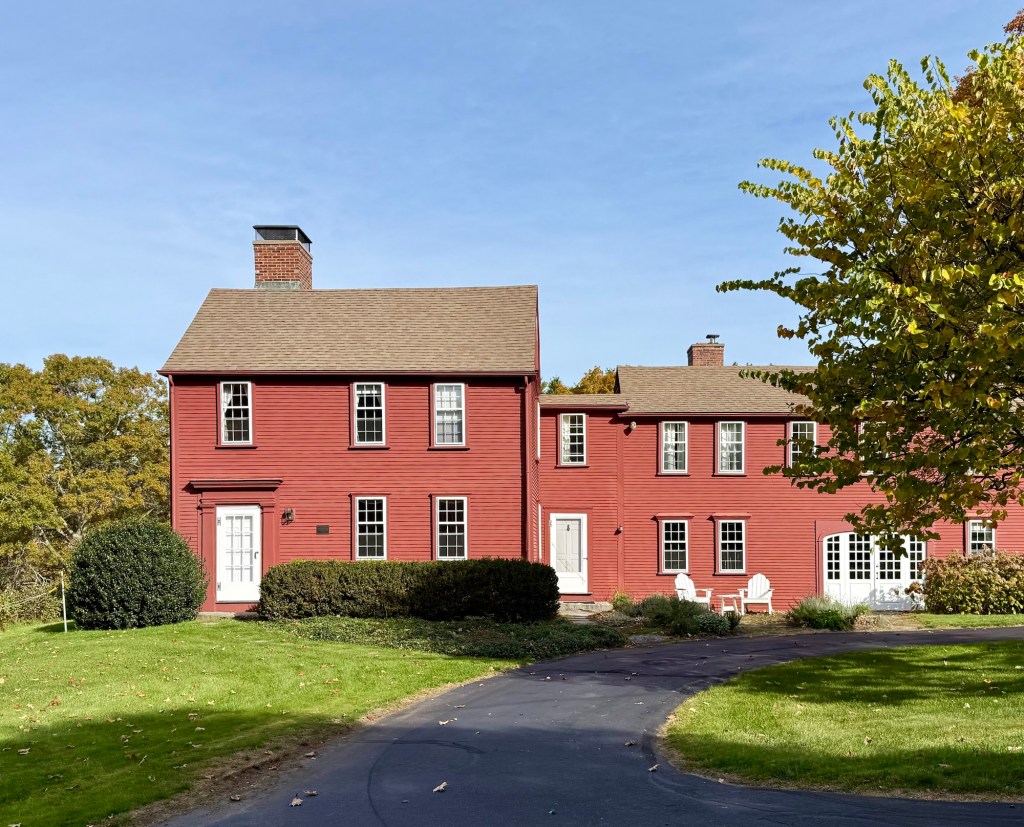
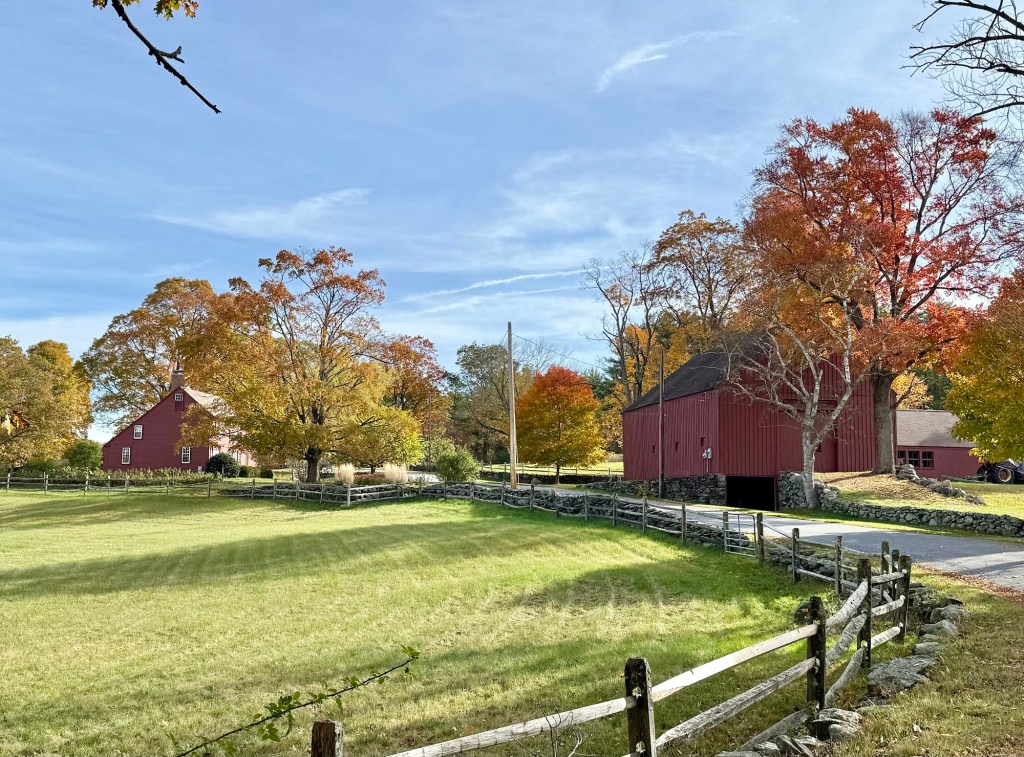
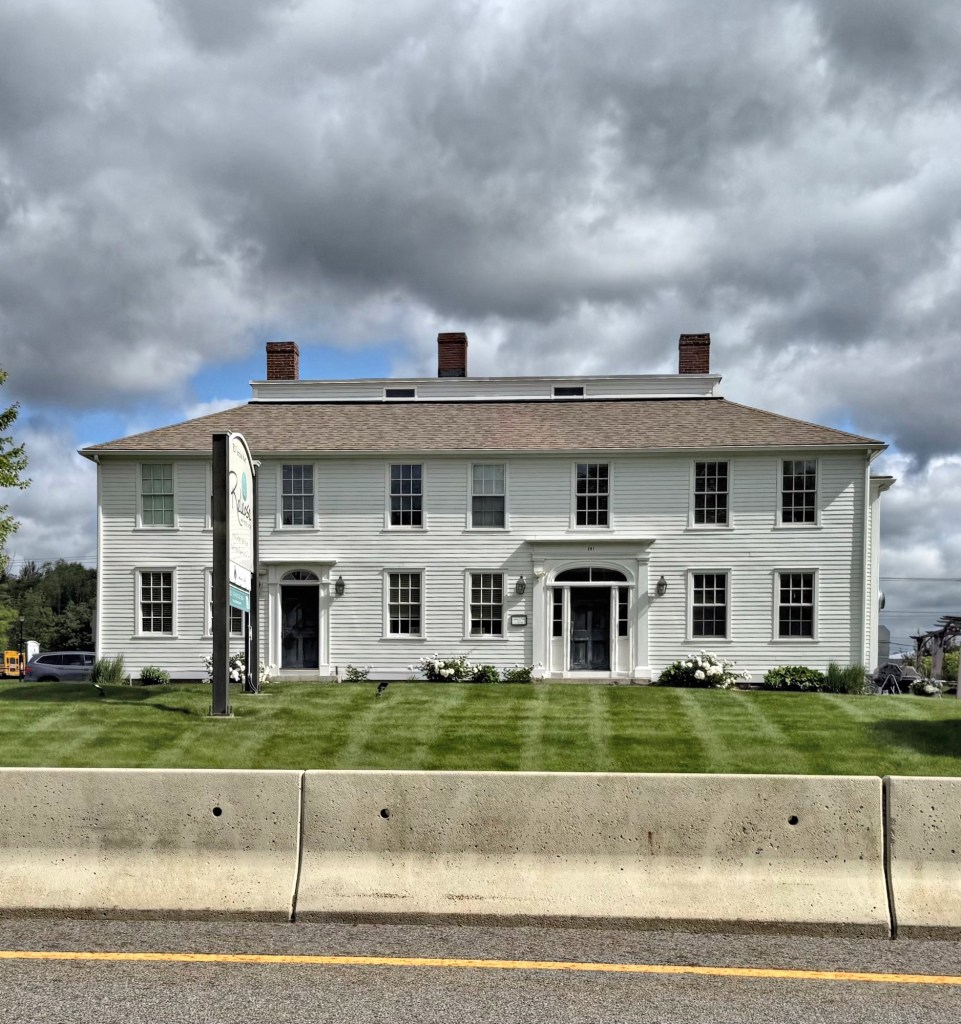
The Whitcomb Inn and Farm in Bolton, Massachusetts, is believed to be the oldest extant building in the rural community and is believed to have been built around 1708. The oldest portion of the farmhouse, the three-bay, two-story, side-hall house, was likely built when David Whitcomb (1668-1730) acquired the land from his father. David married Mary Hayward in 1700 and the couple had many children, necessitating additions to the old farmhouse, including the rear saltbox with a “Beverly jog” (a section of the rear addition projecting beyond the side of the original structure) that was built in the 1710s. The building underwent stylistic changes in the 19th century, most of which were removed during a major restoration in 1937–38 by Philip Phillips, a Harvard professor in Archaeology, who drew the plans for the restoration of the old house and 1850s barn. Professor Phillips was also a conservationist, and donated some of his land, which directly abuts the highway (built in 1962) was donated to the town and is now known as Split-Rock Trail. The Old Whitcomb Inn and Farm was listed on the National Register of Historic Places in 2002, ensuring that any future highway expansion or re-routing would require preservation of this significant home.

South Lancaster Engine House // 1888

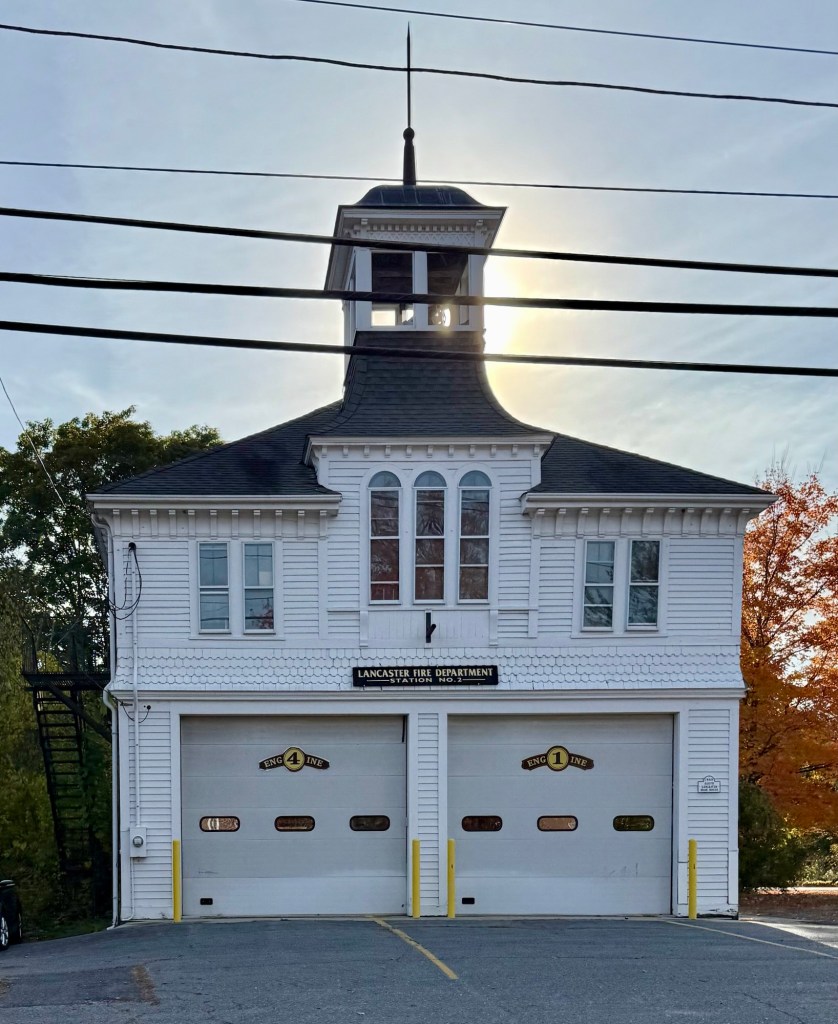
The South Lancaster Engine House is located in the village of South Lancaster, Massachusetts, and is one of the town’s three remaining historic fire stations and the oldest that remains in use by the local fire department. At the Town Meeting of June 18, 1887, it was decided that $3, 500 would be expended to build a station for the Fire Department in South Lancaster. Construction began in 1887, and was completed in March of 1888 from plans by architect, C.A. Woodruff. The station housed horse-drawn wagons, including one sleigh, and featured a bell in the belfry to call attention to the public. The station appears much like it did when built in 1888, besides the bright white paint color and the modification of the engine doors for the new, larger fire trucks. 

First Baptist Church, Providence // 1774

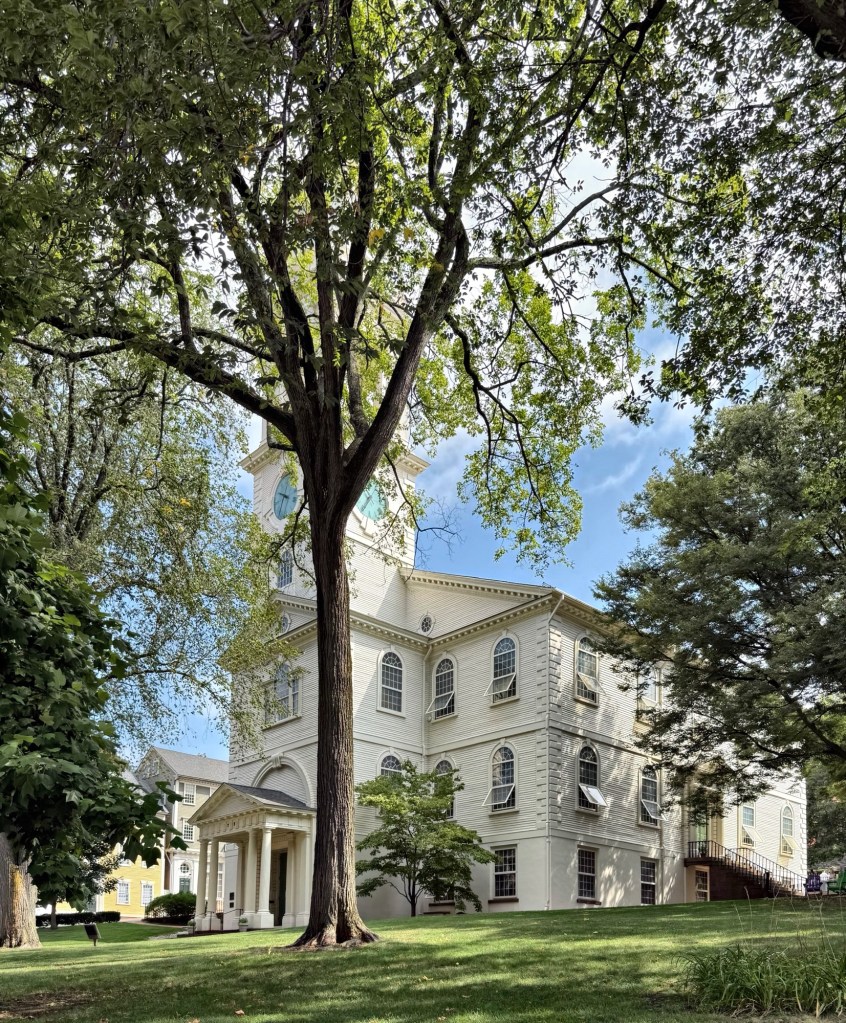
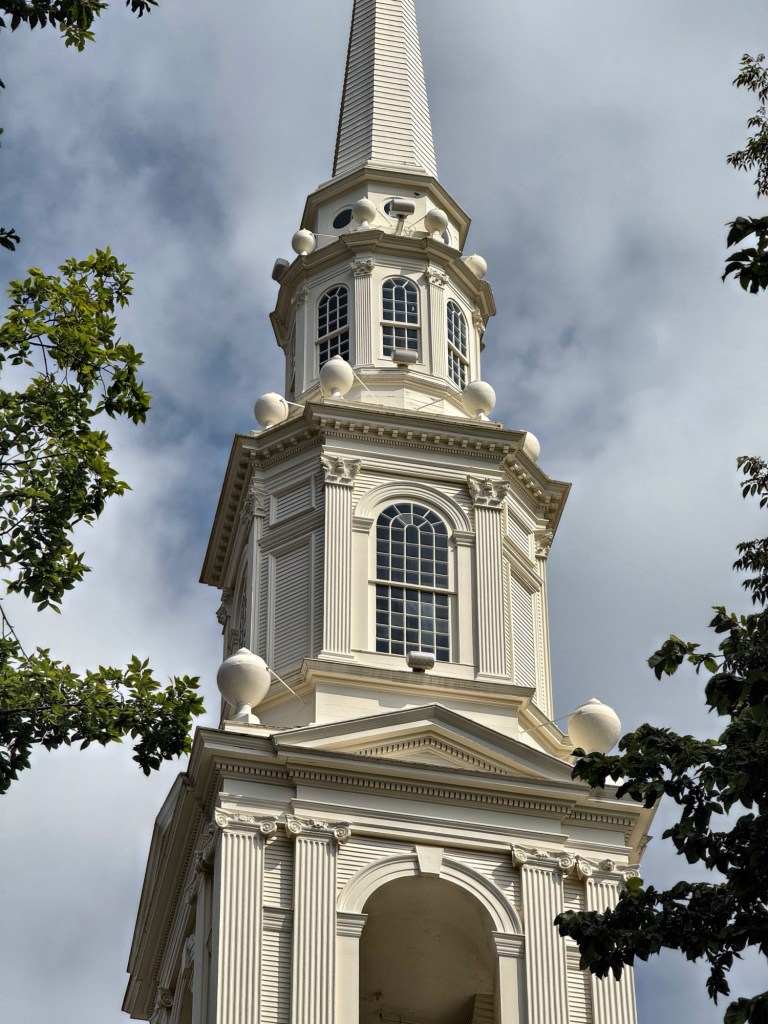
The First Baptist Church of Providence, also known as the First Baptist Church in America is the oldest Baptist church in the United States. The Church was founded in 1638 by Roger Williams, who before building this church in 1774, often met in private residences or in more plain meetinghouses to not show vanity. By the early 1770s, a new building for Providence Baptists was needed, and it was conceived in a very large (and ornate) way. Built to accommodate over 1,200 people (just under a third of the entire population of Providence at that time), this church was built “for the publick Worship of Almighty God; and also for holding Commencement”, referring to the commencement ceremonies of Rhode Island College (later Brown University), also founded under Baptist auspices. The church was designed by local amateur architect, Joseph Brown, who was likely inspired by Sir Christopher Wren’s London churches in James Gibbs’s Book of Architecture (1728). The construction was greatly aided by the fact that the British had closed the port of Boston as punishment for the Boston Tea Party. Many shipwrights and carpenters were thrown out of work and came to Providence to build the meetinghouse there. The structure was dedicated in May 1775, and the 185-foot steeple was added shortly thereafter. This was the first Baptist meetinghouse in New England to have a steeple, and it has survived dozens of hurricanes and hundreds of years of change since. The church is a National Historic Landmark and remains as one of the most significant buildings in New England.

Larkin-Ladd House // c.1813

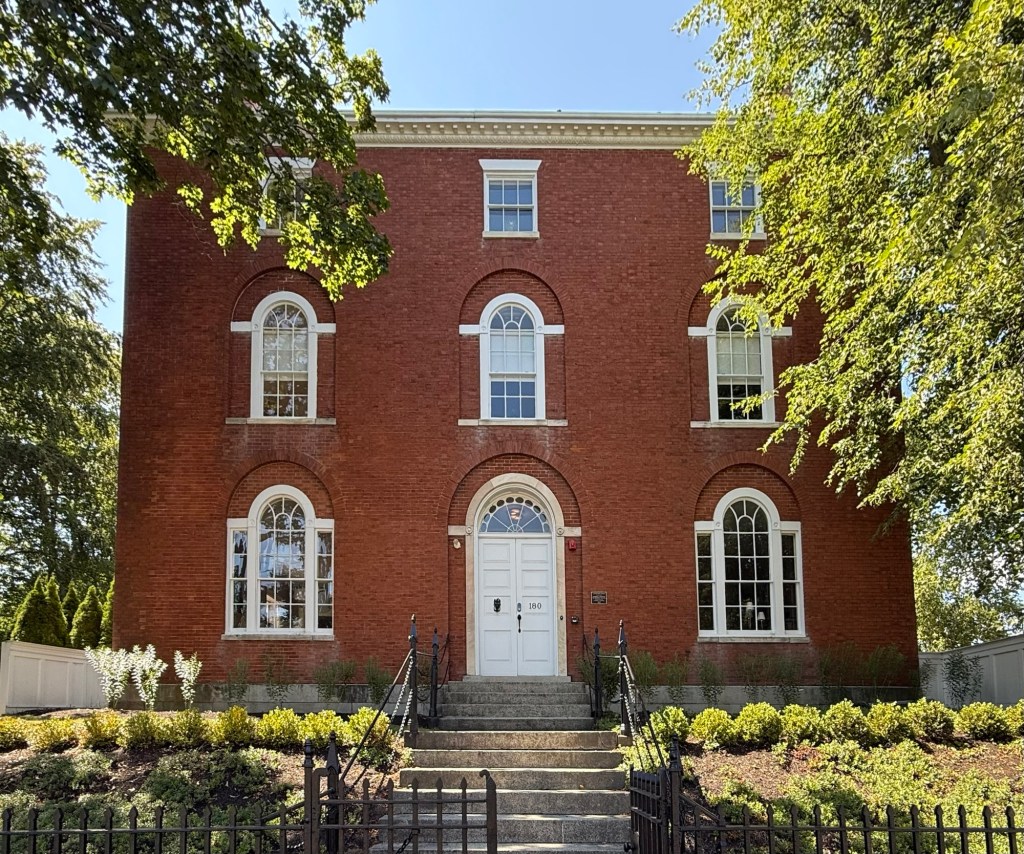
The Larkin-Ladd House at 180 Middle Street in Portsmouth, New Hampshire, is a three-story, masonry Federal-style residence with symmetrical facade, built for one of the city’s wealthiest merchants. Samuel Larkin (1773-1849) was born in Charlestown and moved to Portsmouth, marrying Ann Jaffrey Wentworth, a daughter of Col. Joshua Wentworth. During the War of 1812, Samuel Larkin made his fortune as an auctioneer, selling the contents of English ships captured by local privateers. It is believed that fourteen privateers and their crews worked out of Portsmouth Harbor and are said to have captured an estimated 419 British ships! With the profits from stolen goods from these British ships, Larkin purchased lots on Middle Street and began construction of this stately residence. He (and mostly his wife), had twenty-two children, although roughly half of them died before reaching adulthood. By the late 1820s, financial hardship fell on Larkin and he sold this property, moving into his house next door, which before this was his original residence and later rented to boarders. The Federal style mansion was later owned by Henry H. Ladd, a prosperous Portsmouth shipping merchant, who also served as President of New Hampshire Bank and Portsmouth Savings Bank. The Larkin-Ladd House is undoubtedly one of the finest Federal style residences in New England, and stands out for its entrance, flanked by Palladian windows and the slightly recessed elliptical surrounds at the first and second floor windows. Additionally, the historic stable, also from the 1810s, maintains much of its architectural integrity.

Nathan Fisher House // 1822

In 1820, Nathan Austin Fisher (1796-1851) purchased land along the Boston-Worcester Turnpike in Westborough, Massachusetts with the aim to build a home for his new wife, Susan T. Lothrop. By 1822, he had built a five-bay, center-hall Federal style estate house on the property and the couple began to raise their family. By 1826, Nathan and his brother-in-law, Joseph Lothrop, had opened a store in a section of Fisher’s house, which had been added for that purpose, presumably the western (left) three bays of the structure. Joseph Lothrop would build a Federal style residence on the opposite side of the turnpike that same year. When the railroad came to Westborough, turnpike traffic slowed, and the new rail line went through the center of town, bypassing the Fisher House and store, causing it to fail. Fisher and Nothrop would eventually leave Worcester County, and the property was sold numerous times until 1919, when this property was purchased by the Lyman School. The Fisher House became a residence for younger, special-needs boys to insulate them from the main population of Lyman, a reform school for the education and vocational training of wayward boys. In 1938, the house was converted back to a two-family home and used by families of Lyman School employees until the Lyman School closed in 1972, leaving the iconic Nathan Fisher House vacant for decades. After a failed attempt to convert the property into a house museum, the property was purchased by a local business, Release Well Being Center, and has been lovingly restored and maintained ever-since!

Samuel & Susan Gaut House // c.1855

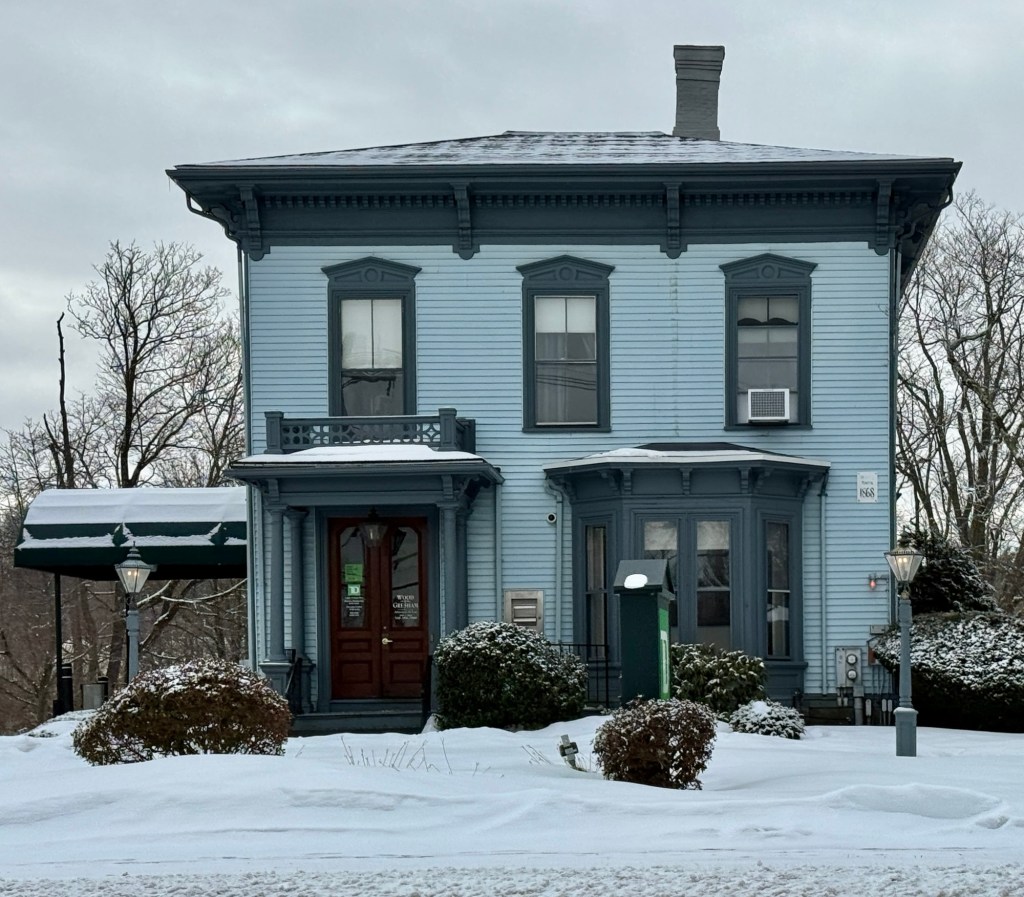
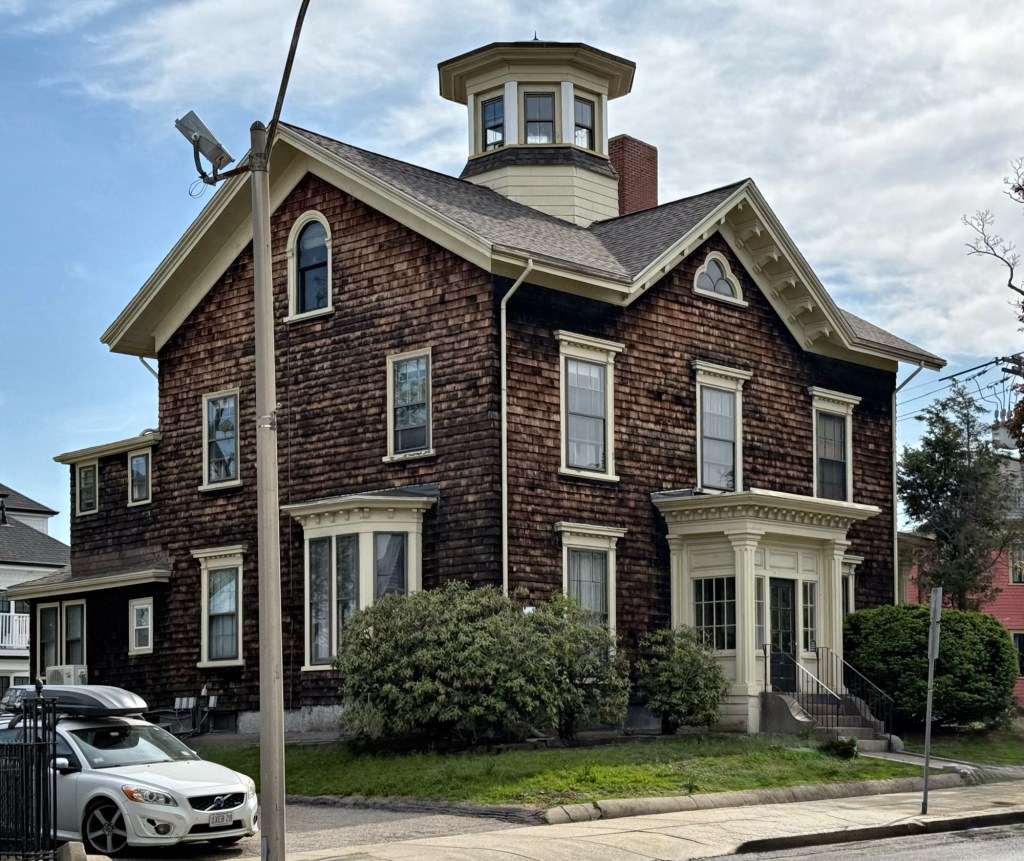
Built in the 1850s, the Samuel and Susan Gaut House on Highland Avenue in Somerville, Massachusetts, is one of the finest examples of a symmetrical, three-bay, Italianate style house in the city. Samuel Norton Gaut (1816-1891) worked as a baker with shops in downtown Boston, and married Susan Dutton (1824-1892), the daughter of a wealthy shipbuilder in Newburyport. The Gaut House was listed on the National Register of Historic Places for its architectural significance as an intact example of a gabled Italianate style home. Special details include the brackets in the gable, trefoil window in the peak, and the octagonal cupola at the roof. Early 20th century alterations include the shingle siding, replacement windows, and enclosed portico, but neither truly detract from the beautiful home.

Amos A. Lawrence House // 1851

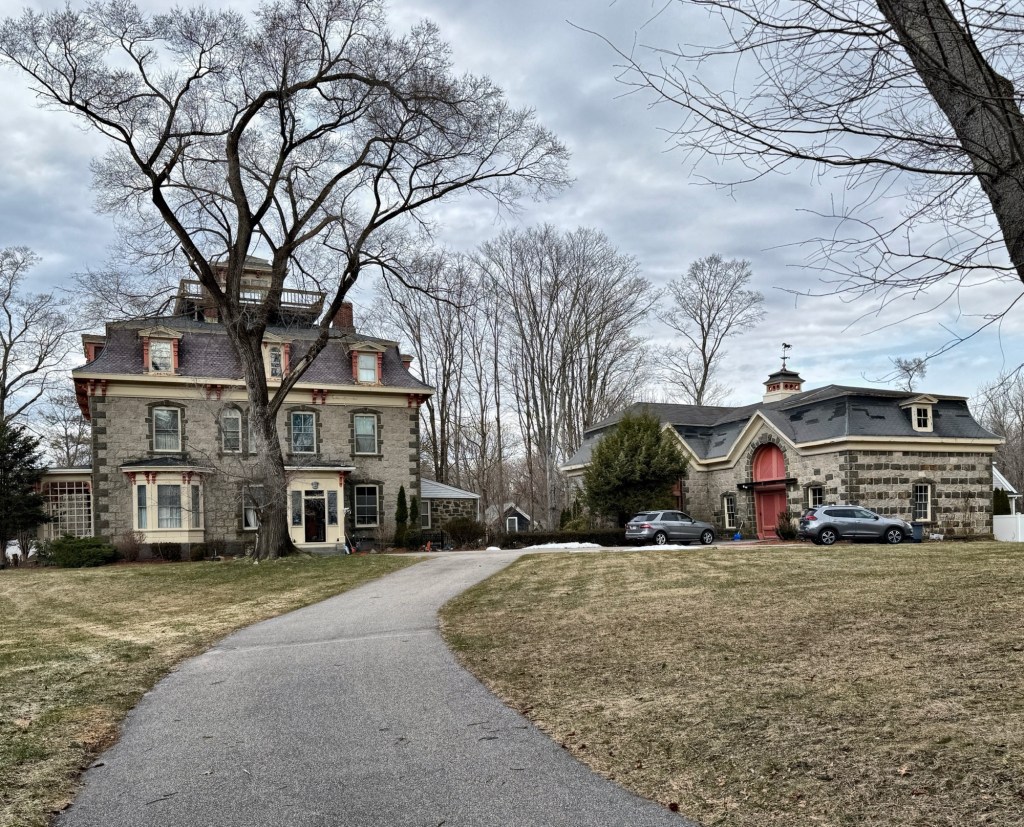
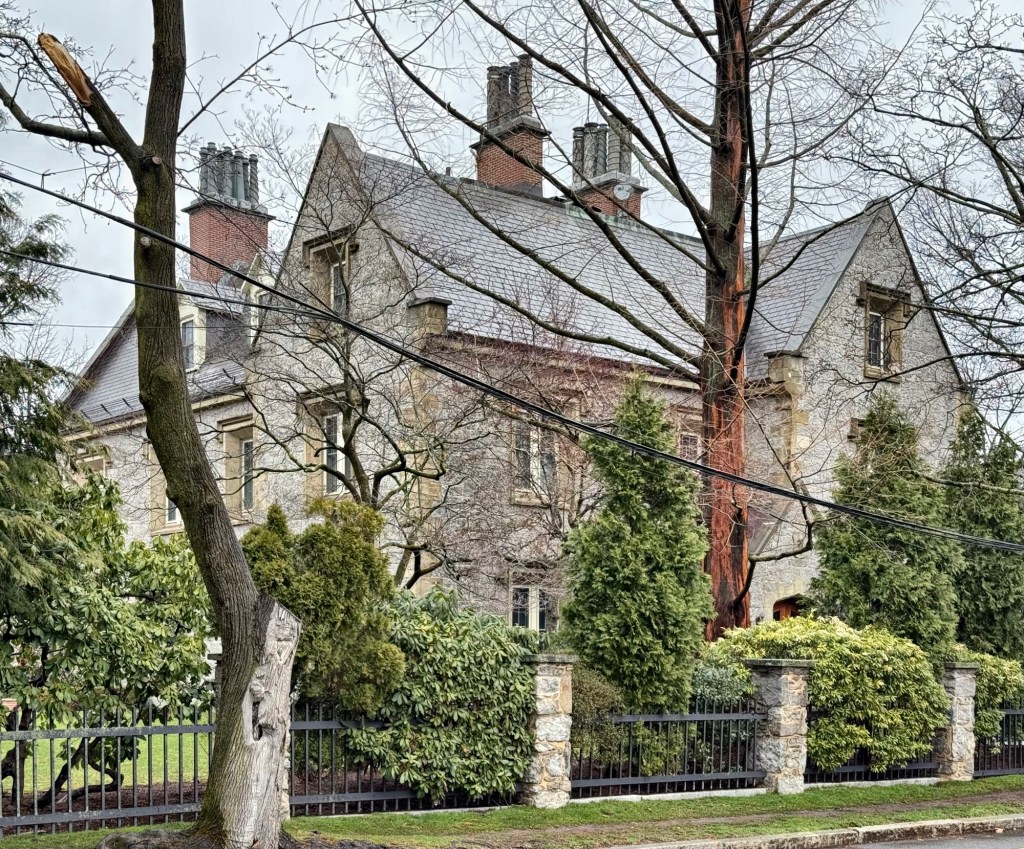
Cottage Farm area of Brookline is one of the finest neighborhoods in all of New England. The area was developed thanks to Amos A. Lawrence (1814-1886), a wealthy second-generation Bostonian, who provided much of the capital and enthusiasm for the growth of the cotton industry in New England prior to the Civil War. Lawrence’s involvement in the industry aided the development of the Massachusetts mill towns of Lowell and Lawrence, whom the city was named after. In 1851, Amos Lawrence purchased 200 acres of land from David Sears, who himself developed the equally beautiful Longwood neighborhood of Brookline on the other side of Beacon Street. Amos began to subdivide the land, working with the architect George Minot Dexter and landscape architect and surveyor, Alexander Wadsworth, who designed Mount Auburn Cemetery in Cambridge, to create an early picturesque residential suburb. With houses designed in the newly popular Gothic Revival and Mansard styles and several small parks, the area became known as Cottage Farm. This stone house was designed by George M. Dexter and was the country residence of Amos Lawrence, who had other homes built nearby and rented out to wealthy friends and family. By 1888, the property was owned by Amos’ daughter, Hettie S. Cunningham, who later, subdivided the estate into five house lots, and moved this stone house to the corner of Ivy and Carleton streets. Expressive of English architectural traditions over the more ornate Gothic Revival popularized by Andrew Jackson Downing, the Lawrence House is one of the finest residences in the Boston area. Built of granite with limestone trim and set behind landscaping and a perimeter fence, the mansion is surprisingly hard to get decent photos of, but it is a stunner. Today, the house is owned by Boston University and is known as Sloane House.

Captain John Clark House // 1802

The Captain John Clark House in Canterbury, Connecticut, is one of the finest examples of the Federal style of architecture in New England, and has remained in a fine state of preservation since its construction in the early 19th century. The house was built by 1802 for John Clark (1731-1834), who purchased an earlier home on the site from and had it either taken down or enlarged to its present appearance. The mansion is symmetrical with five bays, central entry and twin chimneys projecting through the hipped roof. The central bay is a showstopper with its triangular pediment at the roofline containing a fanlight, Palladian window at the second floor, and main entrance with its own pediment, sidelights, fanlight transom, all framed by two-story columns. The house’s south facade is equally beautiful with its own Palladian window and entrance.

Prudence Crandall’s School for Young Ladies and Little Misses of Color // c.1805

Built c.1805 for Elisha Payne, this architecturally distinguished Federal style mansion in Canturbury, Connecticut is one of the most significant buildings in the state, not only for its architecture but historical significance. In 1831, a young white woman, Prudence Crandall, was asked to open a boarding school for girls in Canterbury. She purchased this mansion and began operations for the school, which was attended by many wealthy girls in town. In 1832, Ms. Crandall was approached by a young Black girl who worked as a servant in town, named Sarah Harris, asking to attend the school. Encouraged by conversations with both Harris and Maria Davis, a Black woman who worked for Crandall and shared copies of the abolitionist newspaper The Liberator with her, Crandall agreed to admit Harris. Almost immediately, residents protested the school’s admission of a Black girl and parents threatened to withdraw their students, Crandall undeterred, closed her school and reopened in 1833, solely for Black and Brown students. Young girls traveled from several states to attend the school. The legislature of Connecticut responded by passing the “Black Law,” which prevented out-of-state Black and Brown people from attending school in Connecticut towns without local town approval. Crandall was arrested, spent one night in jail, and faced three court trials before the case was dismissed. In September 1834, a nighttime mob of men attacked the house, smashing the windows, leading Crandall to close the school out of fear for her students as no protections were afforded to them. These events made national and international news in the 1830s and galvanized the burgeoning abolitionist movement. Crandall would later marry and left Connecticut, never to return. For her vision and brave actions at this school, Prudence Crandall is Connecticut’s official state heroine and the house was designated a National Historic Landmark in 1991.

Samuel B. Conant House // 1895

Built in 1895 for Samuel Conant, president of a Pawtucket printing firm, this stately residence is one of the finest Colonial Revival houses in Central Falls, Rhode Island. Designed by the Providence architectural firm of Stone, Carpenter & Willson, the house is brick on the first floor with clapboard siding above. The Contant house has a gambrel roof punctuated by several gable dormers. The main facade has two symmetrical round bays, which rise to the roof and are topped by low balustrades. A single-story porch extends between the center points of these bays, and is also topped by a low balustrade. Recognized for its architectural grandeur (inside and out), the house was individually listed on the National Register of Historic Places. The Conant House is now used as a nursing home and while the transition to this new use has required a number of interior alterations, these changes have been made with sympathy for the character of the house and many of them are reversible.