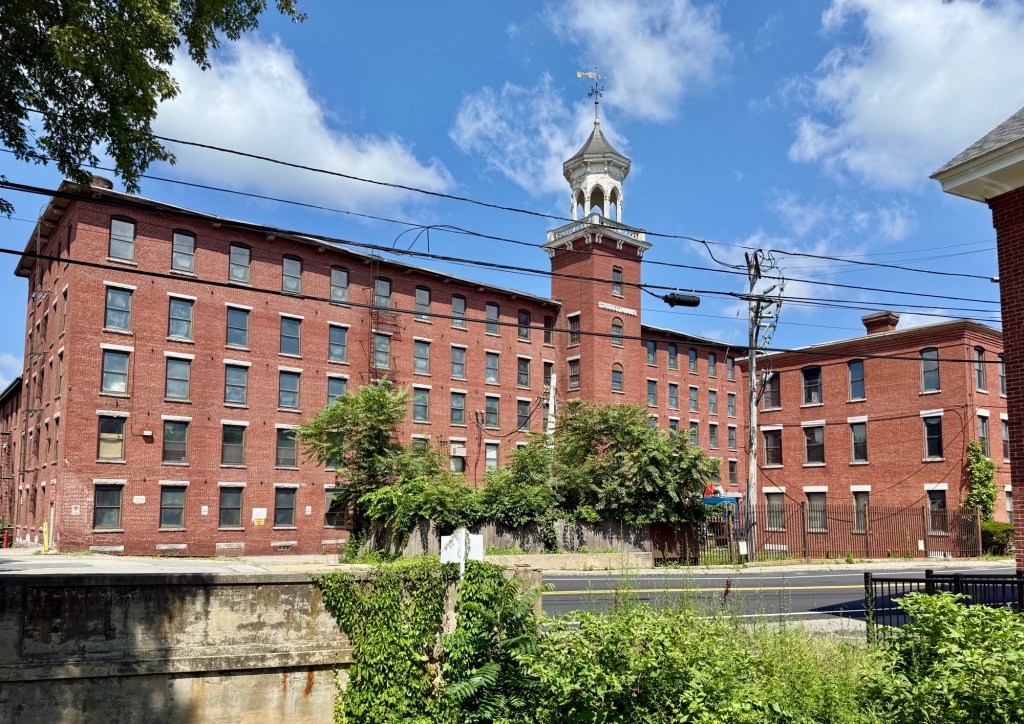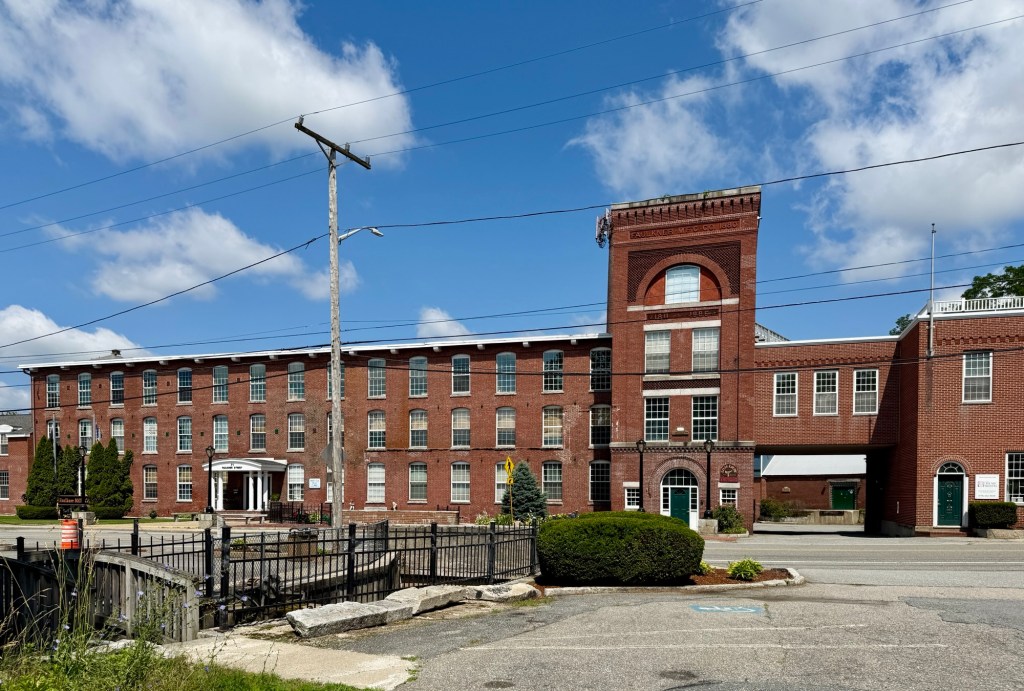
Strouse, Adler Company Corset Factory // c.1880

The Strouse, Adler Company Corset Factory is a historic factory complex at 78-84 Olive Street in New Haven, Connecticut that has been adaptively reused into apartments, serving an important second life. Developed between 1876 and 1923, the complex was the largest and oldest of New Haven’s several corset manufacturers, and remained in continuous operation for that purpose until 1998. The company was originally founded in 1861 as J.H. Smith and Company, and was the nation’s first manufacturer of corsets. The business was purchased the following year by Isaac Strouse, who took on Max Adler, a local dry goods retailer, as a partner. The company adopted the name Strouse, Adler in 1899 and was incorporated in 1927. The complex eventually closed and was converted to apartments, serving an important need for housing in the region.

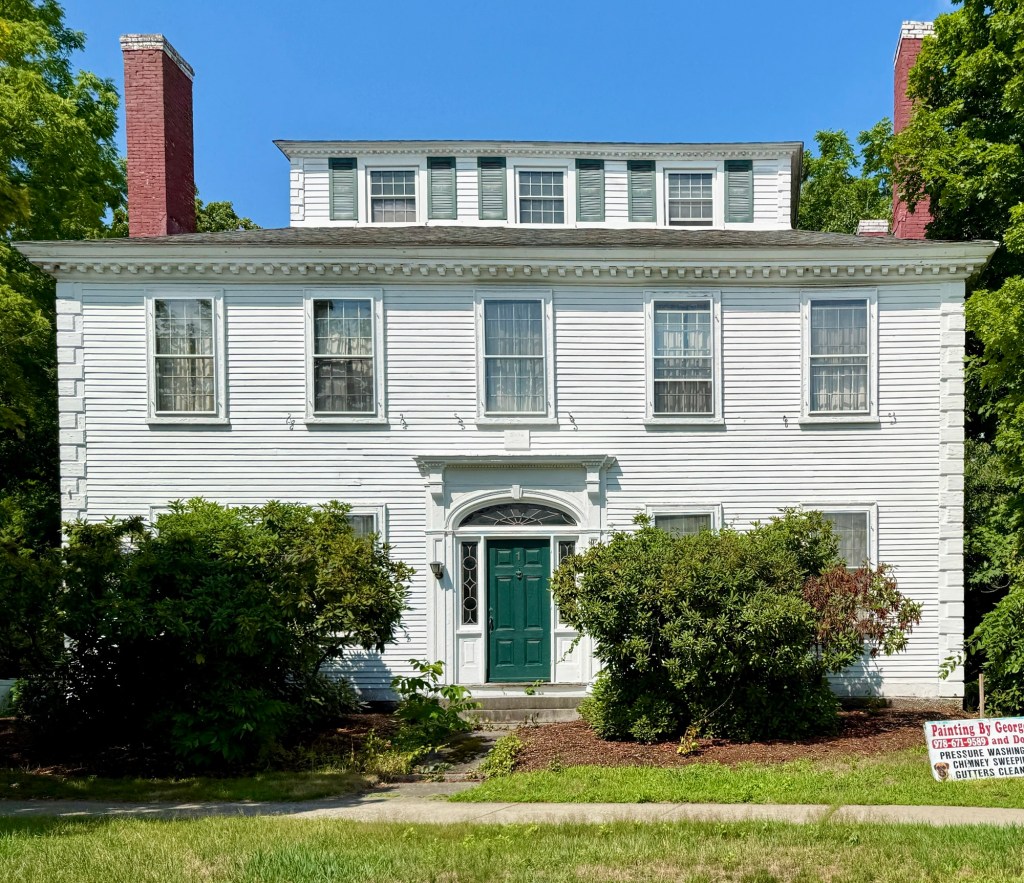
Hotchkiss-Stephens House // c.1843

The Hotchkiss-Stephens House on Wooster Place overlooks the iconic Wooster Square park in New Haven, Connecticut, and is significant as an early neighborhood residence altered after the Civil War in the fashionable Italianate style. The brick residence is said to have been originally designed by Ithiel Town for Russell Hotchkiss (1781-1843), an early merchant in the neighborhood. Hotchkiss lived in the home just a year before his death in 1844. His second wife remained in the home for some years after his death, along with children and two Black female servants according to census records. The property was later purchased by Edward Stevens (1824-1884), a manager at the New Haven Clock Company, who had the property modernized with a full third floor with bracketed cornice, iron balconies and garden fence, and its stunning two-story castiron side porches.

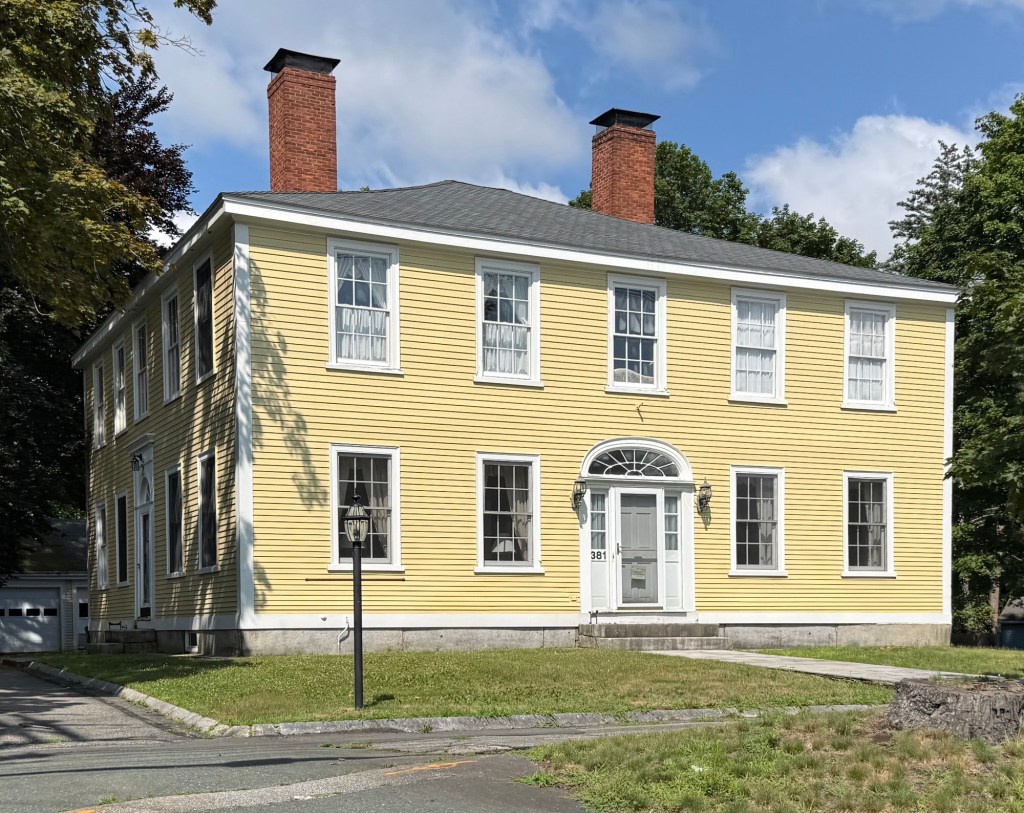
Mayor Robertson House // 1836

This large, brick, Greek Revival style residence sits on the corner of Wooster Place and Greene Street in New Haven’s iconic Wooster Square neighborhood, and stands as an important example of the style along with its significance of its early owner, who became a prominent local politician. In 1836, Dr. John Brownlee Robertson (1809-1892) married a second time to Mabel Heaton, following the death of his first wife, Mary, a year prior. Mabel’s father Abram Heaton, was an early investor who helped develop Wooster Square into the high-quality neighborhood in the early-mid 19th century, and upon this prominent corner lot, had this residence built for his newlywed daughter and son-in-law. The five-bay, two-story house features its original fluted column portico and a shallow hipped roof and was converted to a two-family around the turn of the 20th century.

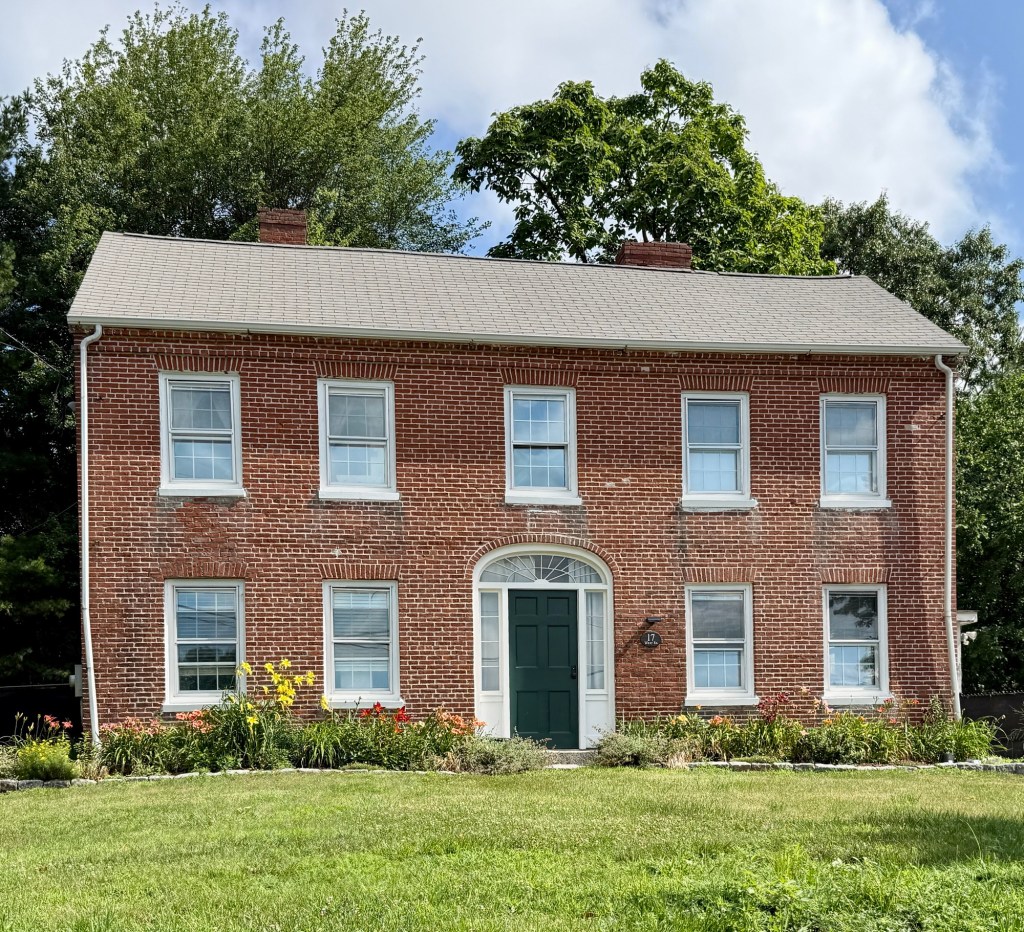
Elliott-Russo House // c.1835

Located at the corner of Wooster Place and Chapel Street in the iconic Wooster Square neighborhood of New Haven, this early Greek Revival style house is a physical landmark showcasing the evolution of the neighborhood in the 19th and 20th centuries. The residence was built around 1835 either for or purchased early on by Matthew Griswold Elliott (1805-1892), a businessman who later engaged in politics and became Vice President of the New Haven Savings Bank and a director of the New York and Hartford Railroad. In 1890, the property was purchased by Paulo “Paul” Russo, an Italian immigrant who was born in 1859, in Viggiano, Italy. His family moved to New York in 1869 and then New Haven in 1872. Paulo opened a small market in New Haven which became the first Italian-owned business in the state of Connecticut. In 1893, Russo became the first Italian to graduate from Yale Law School and he helped foster and grow the local Italian-American community around Wooster Square. After Paul Russo, Michael D’Onofrio, also of Italian descent, purchased the home and along with his wife, brothers, and friends, D’Onofrio transformed the building into a funeral home for over a decade before the house was converted to condominiums. The Elliott-Russo House is a landmark example of a hipped-roof, Greek Revival style residence with smooth flushboard siding, pilasters dividing the bays, and unique Greek meander motifs in the window lintels.

Olive Street Rowhouses // c.1865

The Wooster Square area of New Haven, Connecticut, is comprised of a lovely collection of houses and institutional buildings from the 1830s through the late 19th century, showing the ever-changing taste of architectural styles from Greek Revival to Italianate to Second Empire and Queen Anne. These rowhouses on Olive Street serve as bookends to long rows of houses on Court Street, a narrow, one-way street radiating from Wooster Square. The buildings were developed by the Home Insurance Company, a fire insurance firm and developer that helped fuel the development of residential New Haven in the 1860s by investing in real estate, primarily with fireproof masonry buildings. These Italianate style rowhouses were built in the 1860s after the Civil War and were sold on speculation to middle-class families. All buildings retain the original bracketed cornices, brownstone sills, lintels, and basement facing, and projecting porticos at the entries.

St. Michael’s Roman Catholic Church // 1904

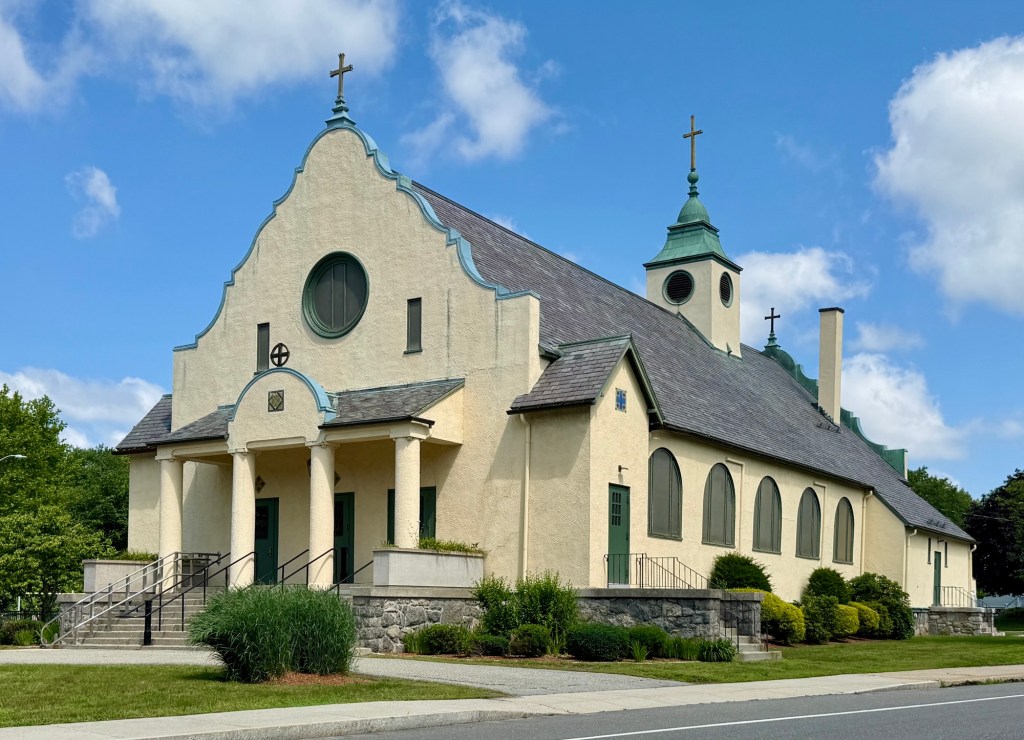
St. Michael’s Roman Catholic Church in Wooster Square, New Haven, Connecticut, was established in 1889 to serve a burgeoning community of Italian immigrants and is said to be the oldest Italian Catholic church in the state. New Haven’s census of 1870 listed just ten Italian residents and by 1900, the census listed more than 5,000 Italian-born residents. Most of these Italian immigrants were drawn to New Haven for employment in the growing industrial and railroad industries and the proximity to New York, where many arriving immigrants passed through. New Haven’s Italian community centered around Wooster Square, where many today know all about the many Italian groceries and nationally known pizzerias. The Italian Community acquired a c.1855 church here by 1899 and following a fire, rebuilt the church in the current form. The New Haven-based architectural firm of Brown and Von Beren furnished plans for the Italian Renaissance Revival style renovations, which was completed in 1904 with bold central tower and stucco walls, retaining many original Italianate windows. The church has served as an important cultural and institutional landmark in New Haven for over 120 years and the congregation remains active.

General Oliver Pond House – Wrentham State Hospital Superintendent’s House // c.1790

This Federal period house in Wrentham, Massachusetts, has had quite the history from the residence of a Revolutionary War veteran to the superintendent’s house for a school for the insane. This five-bay Federal style house was built for Oliver Pond (1737-1822) in about 1790. General Pond commanded one of the five militias in Wrentham that marched on Boston in 1775 to fight in the Revolution. Pond fought in at least two battles in Princeton and Trenton New Jersey under Washington. After the War, Oliver Pond got involved with politics and became General of the local militia granting him this important title. His heirs remained in the house into the second half of the 19th century. In the early 1900s, the property was purchased by the Commonwealth of Massachusetts as part of the new Wrentham State School, a facility to treat and educate children with disabilities. The Pond House was occupied by the superintendent of the school and is still owned by the State.

Wrentham State School // 1910

The Wrentham State School (also known as the Wrentham State Hospital) was authorized in 1906 as a school for the “feeble-minded”, and the campus is comprised of a few dozen buildings largely from the early to mid 20th century. The school was founded to house and treat developmentally disabled children and was the first in the state of Massachusetts to employ a standardized plan for wards and employee housing. A site occupied by farmhouses just north of Wrentham Center was selected and purchased by the Commonwealth of Massachusetts. The school officially opened in 1910 and brick structures were built to house students and workers. In its first year, 217 pupils were admitted to the facility, roughly half boys and girls. A majority of the early ward buildings were constructed in the early years of the school, with most designed by the Boston architectural firm of Kendall, Taylor & Stevens, who also designed many other similar facilities around the country in the early 20th century. Most buildings are examples of the Arts & Crafts and Colonial Revival styles built of brick. Today, the campus is comprised of roughly half, deteriorating historic buildings and half are used as part of the Wrentham Developmental Center, which continues the important (and under-funded) work of treating psychiatric and developmental disorders of patients.

Follett House // c.1820

A rare surviving half-cape dwelling, the Follett House on Chestnut Street in Wrentham, Massachusetts, has been lovingly preserved by generations of stewards as a private home. Given its form and vernacular style, the house could date to the mid-18th century, but available early records show it was owned by members of the Follett family in the 19th century. The home was owned by Amorous Follett (1792-1863) and his wife, Huldah Mason Follett who operated a farm on the property and raised their children in the small residence. The property was later inherited by the couple’s son, Alonzo Follett and his wife, Tryphena. The half cape is just three bays wide with a steeply pitched side gable roof, shingled siding, and later wings, expanding the original house.

Philander P. Cook House // 1847

Built in 1847 as a residence for local Postmaster and storeowner, Philander P. Cook, this historic house off West Street in West Wrentham, Massachusetts, showcases the evolution so many New England farmhouses have experienced, from working farm, to country retreat, to suburban residence. Philander Perry Cook (1816-1880) purchased this land in 1845 from prominent Massachusetts State Senator and local government official, Alan Tillinghast, and shortly after purchase, he began construction of this Greek Revival style, two-story residence with attached stable. At the turn of the century, wealthy Wellesley College graduate, teacher and published author named Lucy Freeman, purchased the property from Cook’s heirs (as well as a residence nearby where she took up residence) and she rented the Philander P. Cook House to friends during the course of her ownership. In 1910, she modernized the house, likely adding the fanlight transom in the Colonial Revival mode, and had the grounds landscaped as a country retreat. Throughout the 20th century, a number of owners have preserved and modernized the home, while retaining its unique charm and character, and it now is a large, single-family home

Fisher-Mason Mansion // 1868

The Fisher-Mason Mansion on South Street in Wrentham, Massachusetts, is among the town’s finest and well-preserved Victorian-era homes. The house is said to have been funded and built in 1868 by Thomas Proctor (who lived in a large Mansard house overlooking the town common) for his daughter, Emma Proctor as a wedding gift upon her marriage to husband, Henry Kollock Fisher, a shoe manufacturer. The couple lived in the home, raising four children here until 1910, when the Proctors sold the property to Otis N. Mason of Providence. Today, the Fisher-Mason Mansion is known as the R. J. Ross Funeral Home, who have operated a funeral home from the residence since before WWII. The mansion features a mansard roof with unique mansard gable at the side sheltering an ocular window.

Proctor-Brown Mansion // 1861

The Proctor-Brown Mansion in Wrentham, Massachusetts, is a striking example of Second Empire style of architecture and even retains its historic carriage house of the same period and style. The mansion was built in 1861 by Thomas Proctor, a wealthy businessman and industrialist from Providence who earned his fortune by inventing a gimbel point for screws with his company, The American Screw Company. He and his wife, Wrentham native Zeolyde Antoynette Hawes Braman, lived in the home until their deaths in the 1880s. The Proctor Mansion was later owned by Daniel Brown, owner of Wrentham Straw Works, and passed down through his descendants until 1991, when the building became the Proctor Mansion Inn, named after its first owners.

Trinity Episcopal Church of Wrentham // 1872

Overlooking the Town Green in Wrentham, Massachusetts, the Trinity Episcopal Church of Wrentham stands as the town’s finest example of Victorian Gothic architecture and the community’s oldest Episcopal church. Episcopalians in Wrentham first began worshipping in 1863 and in less than ten years, quickly grew in numbers from just two members to so many that a church building was needed to house the congregation. The site on East Street was purchased and architect, Shepard S. Woodcock, was hired to furnish plans for the new building. Completed in 1872, the Victorian Gothic design features all of the hallmarks of the style, including the steeply pitched roof, pointed arch windows and entry doors, buttresses, and towering steeple.

Ebenezer Fisher House // c.1764

This historic Georgian-era house at 677 South Street in Wrentham, Massachusetts, is one of the town’s most historic and unaltered dwellings. Dating to about 1764, the Georgian Cape farmhouse replaced an earlier house formerly owned by Dr. Cornelius Kollock, the town doctor and later purchased by Ebenezer Fisher. The home is said to have burned and was replaced by the present building around 1764. It is unclear if the original 17th century home was largely rebuilt or if the existing house now was built from the ground up. The home has historically (and even today) been known as the Wampum House, said to have been named after “Wrentham’s last Indian.” This claim highlights a common but harmful misconception that no Indigenous peoples survived colonization and its impacts in New England. However, the name Wampum’s Corner and the Wampum House remain. The house is today owned by the Wrentham Historical Commission, and operates as a historic house museum, though is suffering from some deferred maintenance. It would be important for the community to fully document the home’s history, namesake, and tell a more complete and accurate history of this historic house.

Wrentham Village Hall – Daniel Cook Store // 1853

Arguably the most recognizable and beloved building in Wrentham, Massachusetts, is this eclectic mid-19th century commercial building, known as the Wrentham Village Hall. The structure was originally constructed for Daniel A. Cook where he operated a store in the ground floor retail space and rented a meeting hall to local organizations above. The building was constructed around 1853 as a more vernacular building, but given its current appearance decades later when the ornate Stick style porches were added to the facade. While the building has served many uses over its history, the structure is suffering from some deterioration, which hopefully will not impact the rare surviving exposed porch framing and trusses, which give the building so much character.