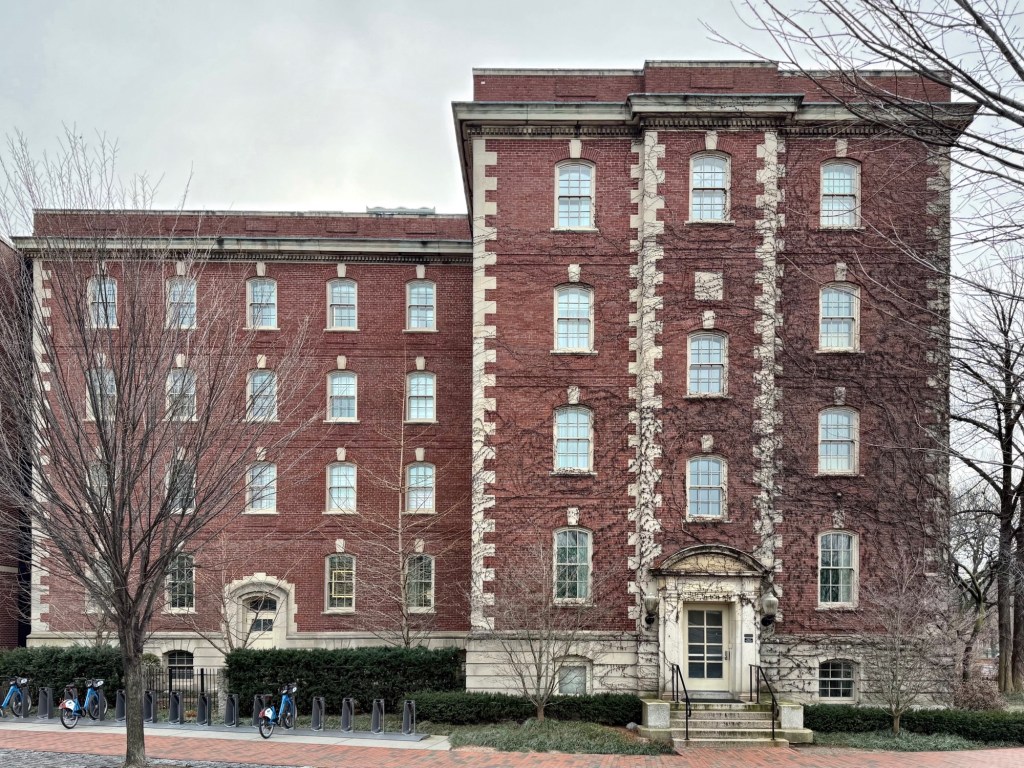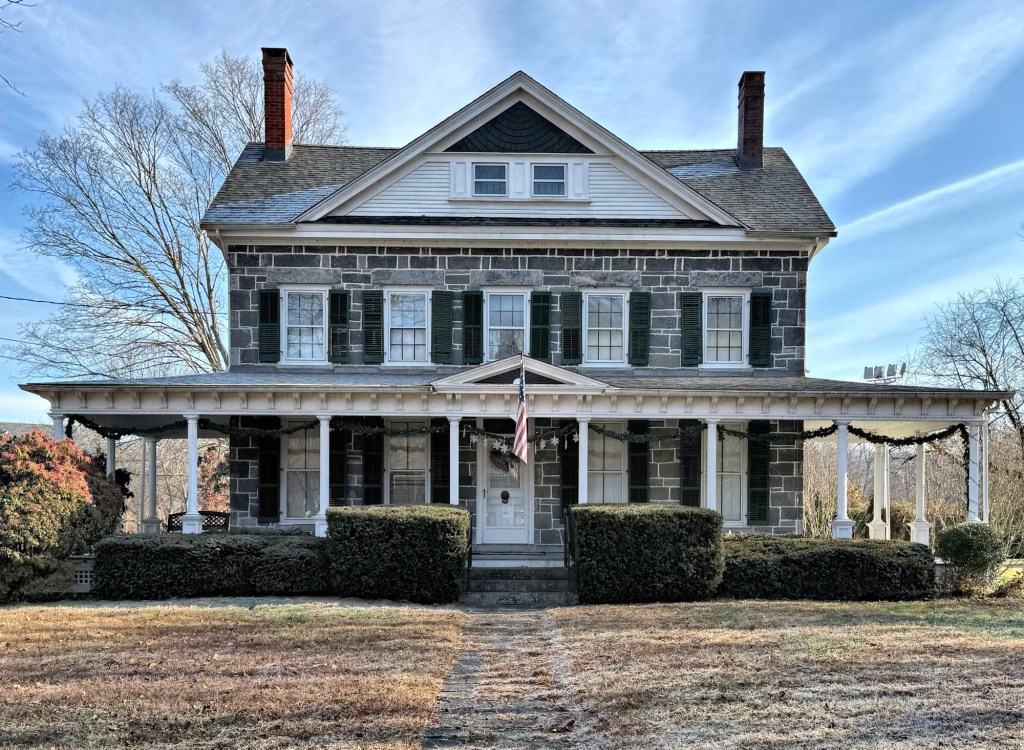
Southworth House – Deep River Historical Society // 1842

The Southworth House, also known as the Old Stone House, in Deep River, Connecticut, is a significant example of a stone, Greek Revival style house built for an important local family. The Southworth House was constructed in 1842 for Deacon Ezra Southworth (1803-1859) from stone harvested from one of the Southworth family’s quarries. Ezra was the son of local shipbuilder, Job Southworth who began building ships at the Deep River landing in the 1790s. Ezra Southworth branched off into manufacturing, becoming a partner and patent holder producing ink wells. His son, Ezra Job Birney Southworth (1844-1919), went into business with his father-in-law in shipping and served as a member of the State Legislature twice. In 1882, Ezra Jr. added the wooden ell onto the rear of the Stone House along with the wrap-around veranda and likely the rear barn as well. Ada Gilbert Southworth Munson was Ezra J. B. Southworth’s only child to live to adulthood and inherited the family home. She was a founding member of the Deep River Historical Society and bequeathed her family home to the Society in 1946, who have maintained the significant home here ever since. 

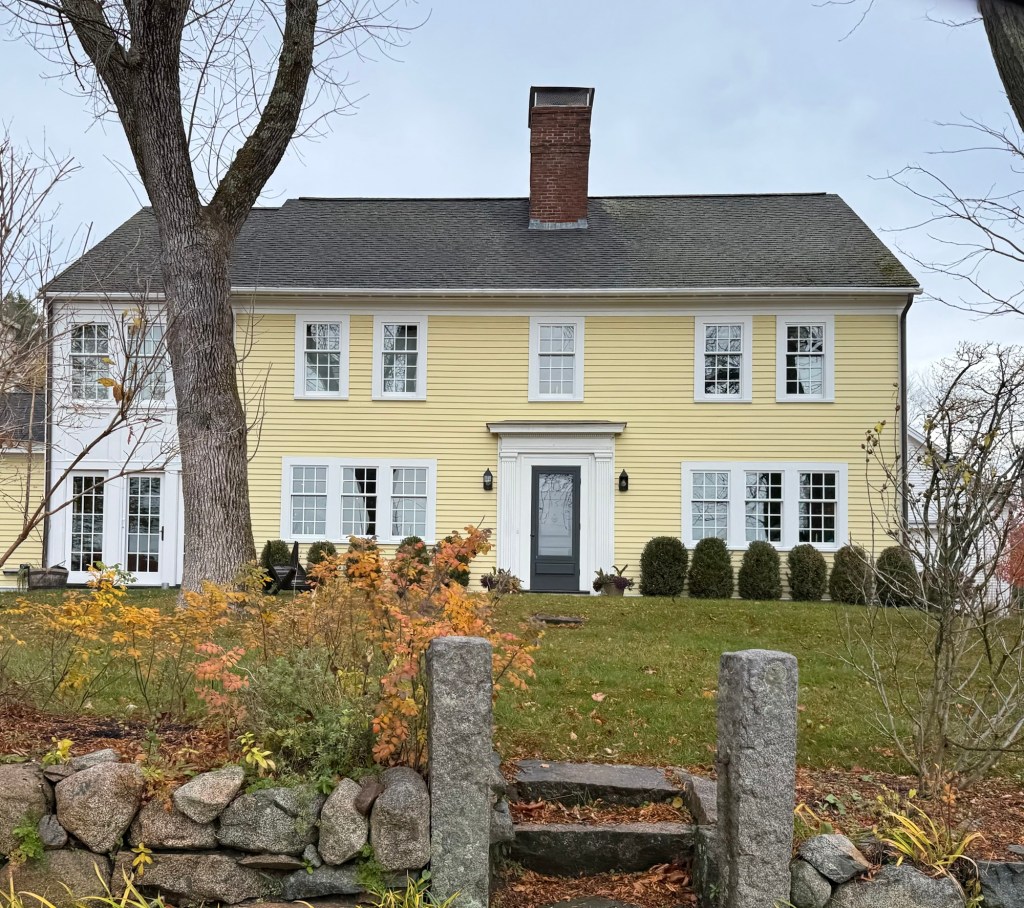
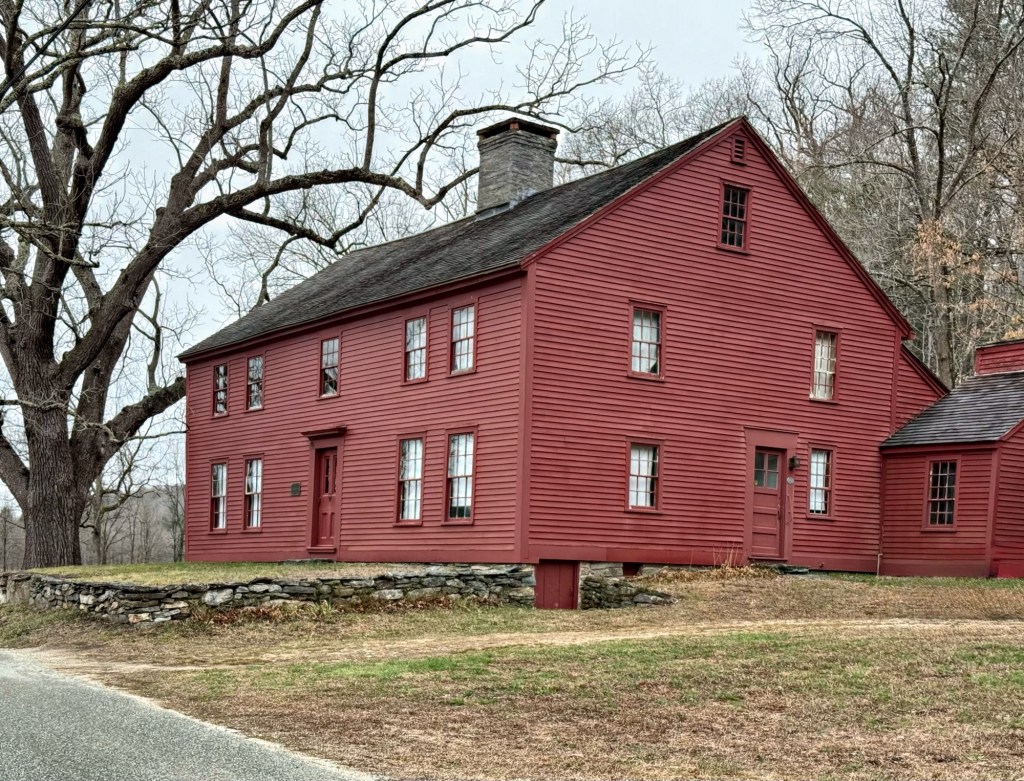
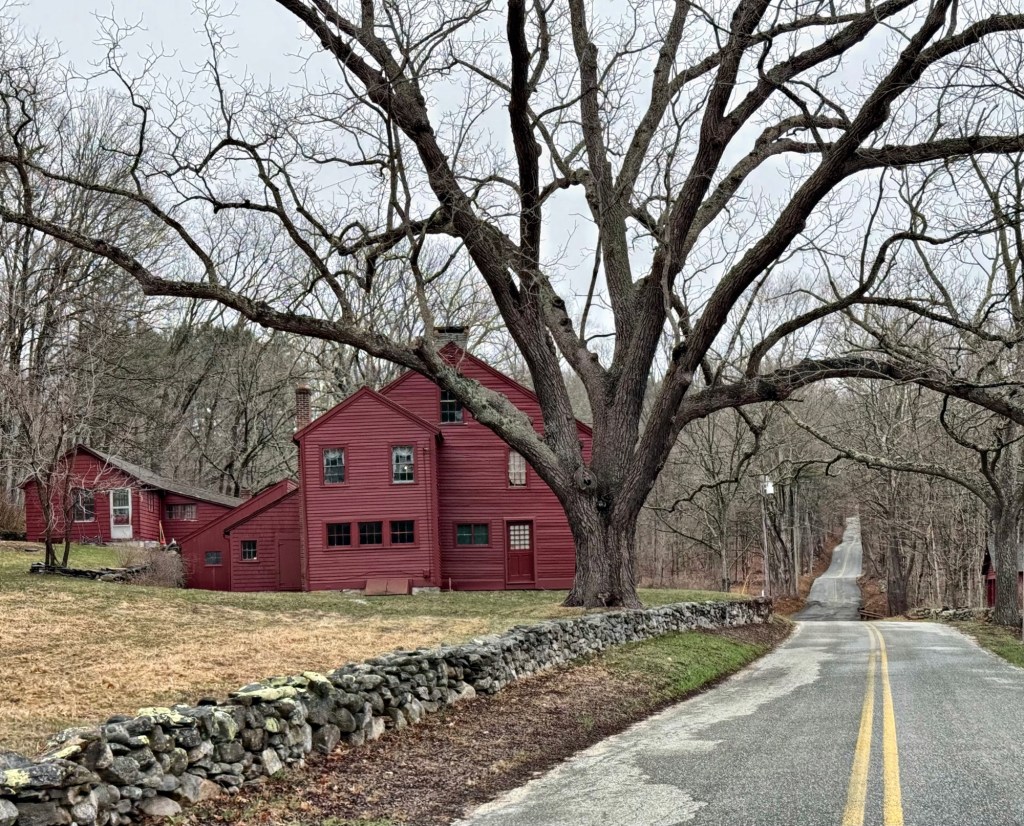
Benjamin Adams Farmhouse // 1775

Benjamin Adams (1750-1843) was born in Milton, but relocated to East Sudbury (later renamed Wayland) and purchased property here from a Bezaleel Moore, a tanner and farmer. Soon after moving to town, in 1775, he mustered with the minutemen under the command of Capt. Nathaniel Cudworth. After the conclusion of the war, Benjamin married Elizabeth “Betsy” Adams and they expanded the old farmhouse (today at 34 Lincoln Road) and raised their children here. The property remained in the family until 1873 when it was purchased and operated as a dairy farm. In the 1920s, the farmhouse was expanded with Colonial Revival additions and a renovation for use as a summer residence and gentleman’s farm. It is believed that some of the interior wood paneling inside the house was added at this time and was salvaged from the Pequod Inn, which was razed around that time.

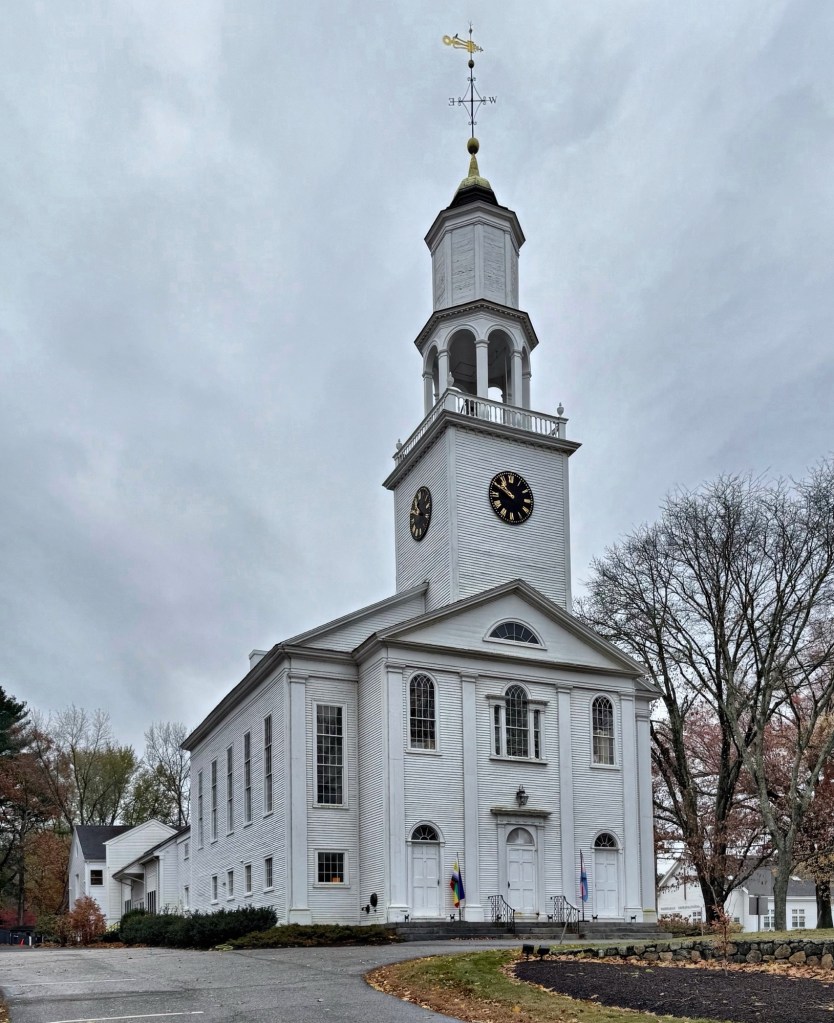
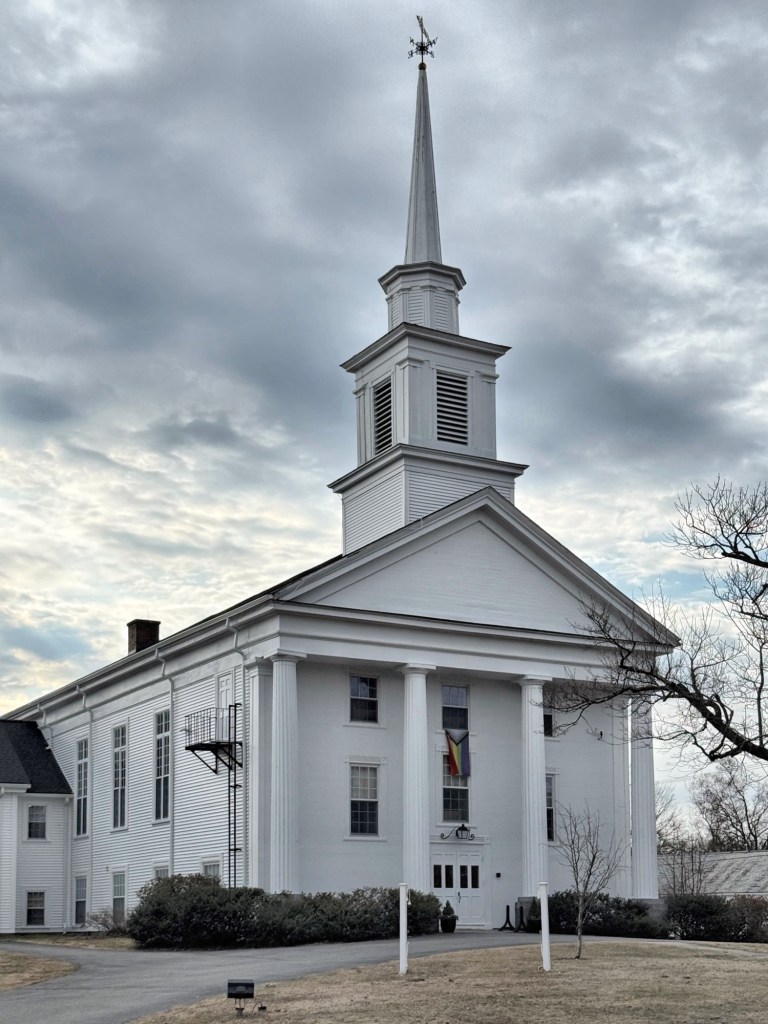
First Parish Church, Wayland // 1814

The First Parish Church of Wayland, Massachusetts, is an iconic church that displays the typical early 19th-century meetinghouse form with Federal-style elaboration. Built in 1814, the church is two-stories with a five-bay gabled-front structure with a projecting enclosed portico of three entrance bays, and a four-stage bell tower that rises above the façade. Today known as Wayland, the town was originally called East Sudbury, after it split away from the western parish in 1780. In 1835, members of town meeting voted to rename East Sudbury “Wayland” in honor of Dr. Francis Wayland, a temperance advocate, abolitionist, and then president of Brown University. The First Parish Church of Wayland was built by Andrews Palmer of Newburyport, who used an Asher Benjamin design. The bell was cast by Paul Revere and Sons and first lifted into the bell tower in 1814. The property also includes the historic, twelve-bay horse/carriage sheds where parishioners would “park” their horses and carriages while attending services.

Joshua Wentworth House // 1770

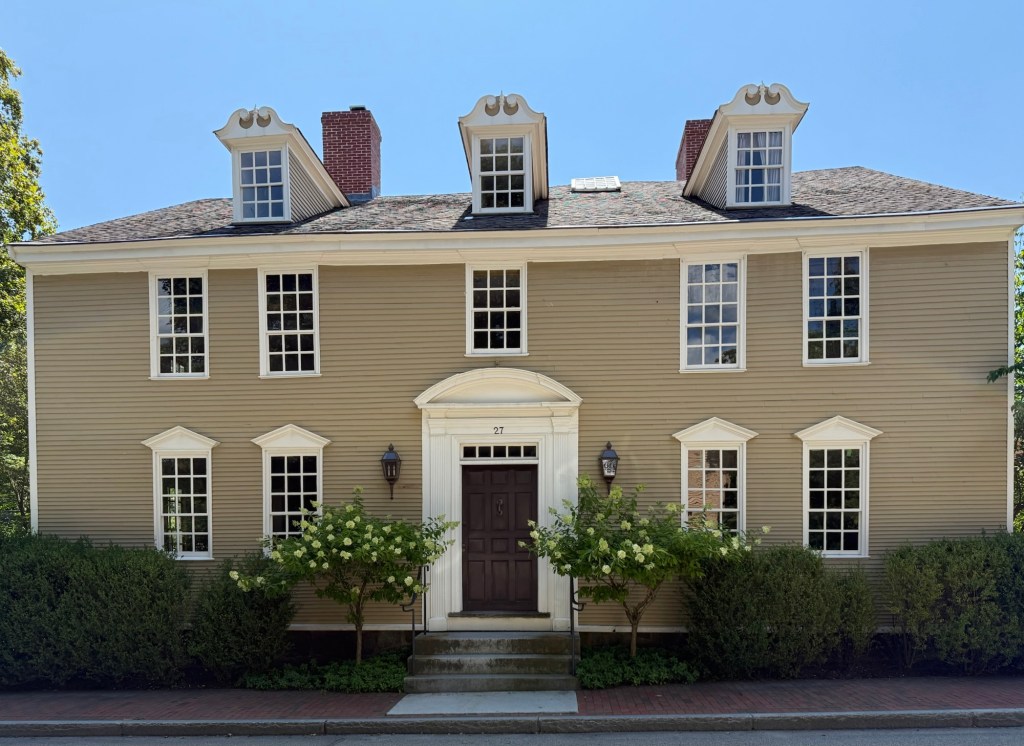
The Joshua Wentworth House at 27 Hancock Street in Portsmouth, New Hampshire, is a high-style Georgian residence built before the American Revolution, and was almost demolished in the name of “urban renewal.” The house has a side-gable roof with three broken-pediment dormers and a wood paneled door with segmental entablature, pilasters, and a five-light transom. Joshua Wentworth (1742–1809) the namesake of the house, was a grandson of John Wentworth (1671–1730), who had served as an early Lieutenant Governor for the Province of New Hampshire, and was himself, a merchant and State legislator. The house was originally located in the North End of Portsmouth, but in the 1970s, urban renewal and local politicians sought to raze portions of the town to “revitalize” the port town. If only they knew that Portsmouth would be the largest tourist draw in the state just for people to see historic, walkable neighborhoods! Businessman Harry Winebaum acquired the house and sought to preserve it. The solution: move the house by barge to the south side of town near Strawberry Banke. Luckily for us, the house was moved in 1973 and was restored. It is a private residence.

William Sever House // 1755

The William Sever House is an architecturally and historically significant residence in the town center of Kingston, Massachusetts. A prosperous merchant, owner of ships involved in coastal and international trade and member of the colony’s House of Representatives, William Sever (1729-1809) was prepared to erect a home of appropriate status when he married his cousin, Sarah Warren, in 1755. Sever joined his father Nicholas Sever’s commercial shipping business after graduating from Harvard College in 1745 and in 1754, was elected to the Massachusetts Bay Colony’s House of Representatives. In 1769, Squire Sever was elected to the Governor’s Council, a position he held until 1774 when he joined the Provincial Congress. Due to his experience and seniority, Sever was appointed to head the Congress and was declared “President of Massachusetts” and endowed with the governor’s executive powers. After his death in 1809, the house remained in the Sever family for generations, including as a summer residence for James W. Sever, the namesake of Sever Hall at Harvard University. The residence is well-preserved and showcases the telescoping nature of some of these early Colonial-era properties, with the main house adjoined by a barn and carriage house and diminutive ells and was thoroughly documented in the 1930s through the Historic American Buildings Survey, with detailed drawings, plans, and photographs of the exterior and interior spaces. 

Pine Grove Cemetery Mausoleum & Chapel // c.1875 & 1904

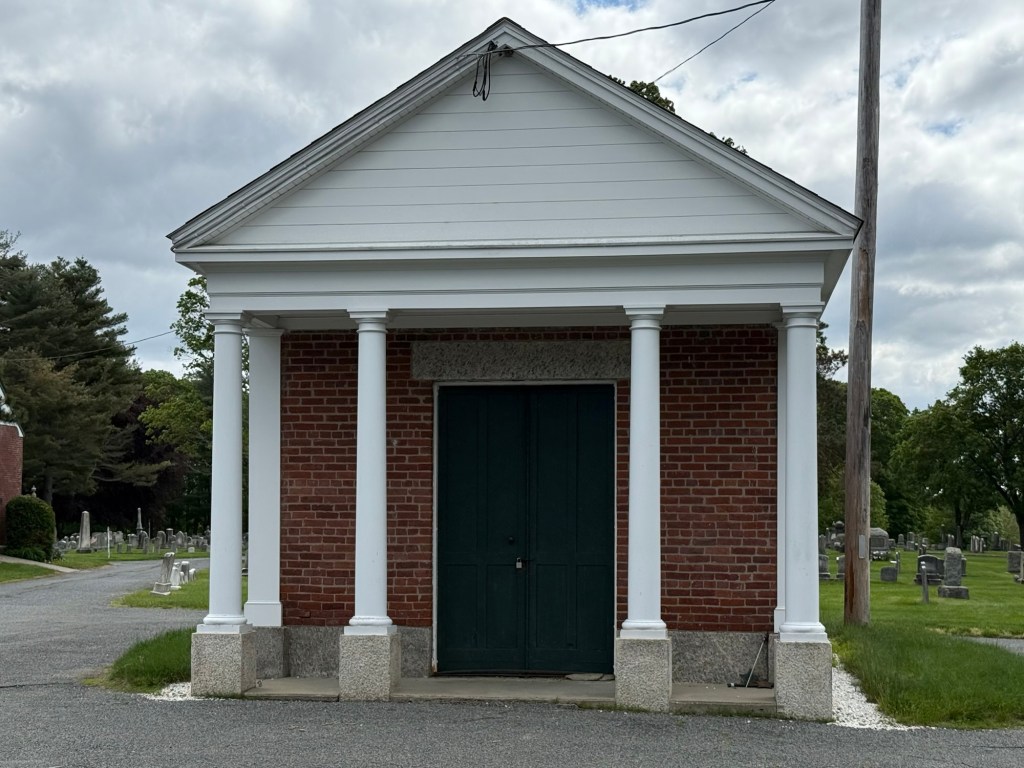
Mausoleum

The mausoleum and the Jonas A. Stone Memorial Chapel are two historic structures located in the Pine Grove Cemetery of Westborough, Massachusetts. Land here was acquired in 1746 by the Reverend Ebenezer Parkman, and it comprised of a pine lot of sixteen acres on the road to Mendon (now South Street). Nearly 100 years later, in 1844, the lot was deeded to the town as a new cemetery, as the older cemeteries were quickly becoming crowded. It was named Pine Grove after the historic use of the grounds. Due to the rural cemetery movement, which sought to reimagine cemeteries as a beautiful park-like setting, not a simple burial ground, many Westborough families purchased plots here and some even moved their loved ones to the new family plot, in the “new” Pine Grove Cemetery.

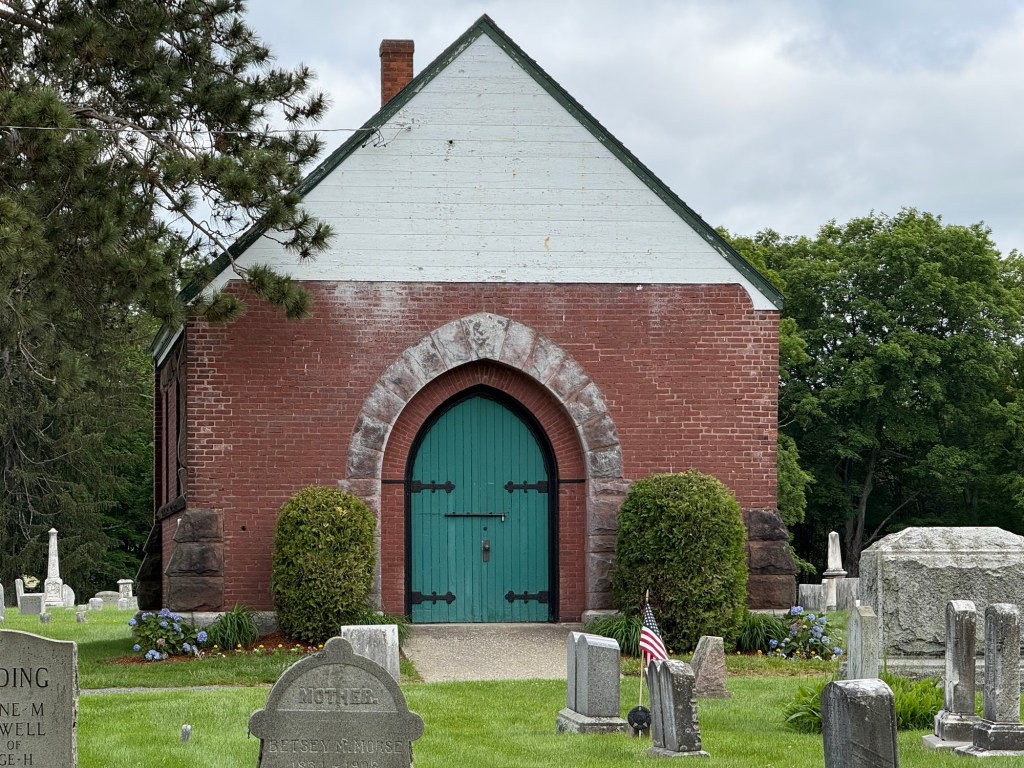
Chapel

The Mausoleum was built sometime in the mid-19th century and is a modest, Greek Revival style structure of granite and brick construction. Four Doric columns support the portico and wooden roof which serves as a pediment above. The Jonas A. Stone Memorial Chapel was built in 1904 following a bequest to the town from the will of Jonas Adams Stone (1821-1900), and additional donation by his brother, Nymphas Stone. The Victorian Gothic chapel is built of brick and brownstone with a wooden gable and roof. The structure was damaged during the destructive 1938 New England Hurricane, but restored and is an important local landmark today.

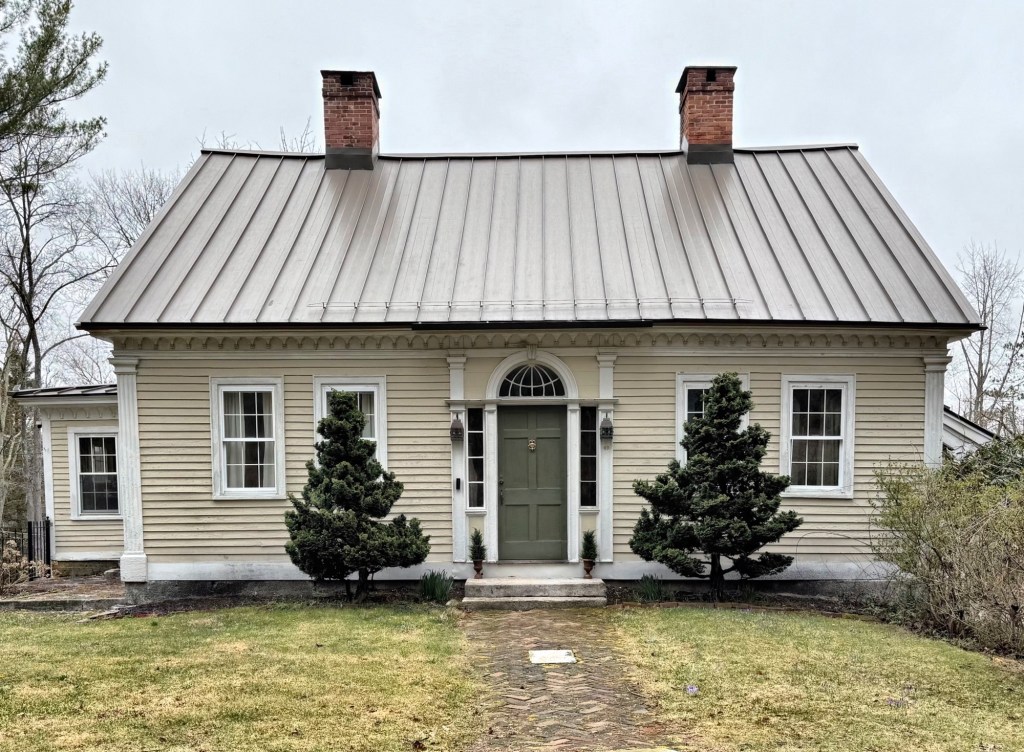
Levally-Crandall House // c.1820

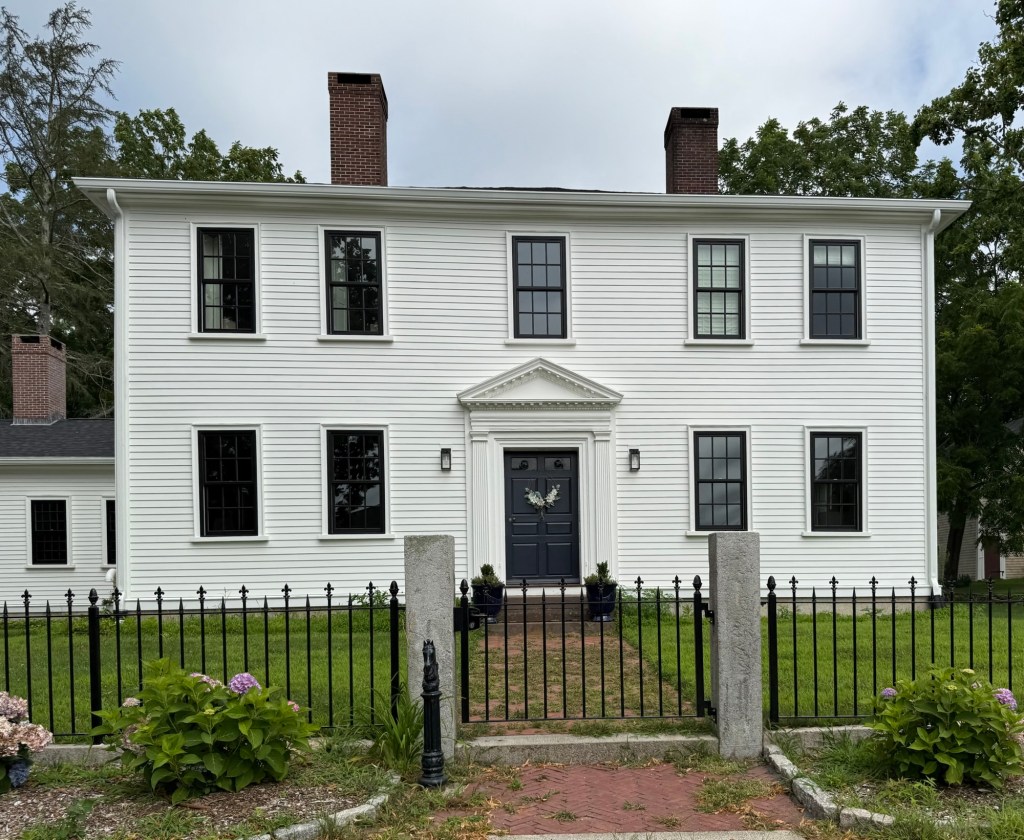
This attractive Federal-style Cape house is located in Canterbury, Connecticut, and is one of the very finest such houses of its type in the state. The house was built by William Levally, a successful millowner in town who married Patience Horton just prior. William died unexpectedly in 1841, and the property was inherited by Patience, who then married Hezekiah Crandall, also a millowner, who was also the brother of Prudence Crandall, the teacher who operated the famous African American girls boarding school in Canterbury Center in the 1830s. Hezekiah and his sister later migrated to Kansas, after essentially being pushed out of town. The Levally-Crandall House stands out for its proportions, exterior moldings, and ornate entry with pilasters, sidelights, and a molded, keyed arched transom. The house has been lovingly preserved by the successive owners, who clearly take pride in owning such a piece of history.

Edward Waldo House // c.1715

The Edward Waldo House in Scotland, Connecticut, is a vernacular Georgian house with saltbox roof and wings which from its erection about 1715 until 1971 was owned by members of the Waldo family. Edward Waldo (1684-1767) purchased land here along the Shetucket River in 1702 and by 1715, erected this house. The saltbox house which Edward Waldo built was one of the first houses in the town of Scotland and would remain in successive generations of the family for centuries. The house was the birthplace of Samuel Lovett Waldo (1783-1861), a portraitist who was a founder of the National Academy of Design as well as Daniel Waldo, chaplain of Congress, 1856-1858, and was one of seven Revolutionary War veterans who, having survived into the age of photography, were featured in the 1864 book The Last Men of the Revolution. The last Waldo owner, Miss Ruth Waldo died in1975. She insured the preservation of her family homestead by bequeathing the house, its contents, and about 15 acres of land to the Antiquarian & Landmarks Society of Connecticut Inc. and the surrounding acreage to the Connecticut Forest and Park Association, creating an enduring legacy for centuries to come. The house, set amongst a quiet country road, is evocative of early days in Scotland, Connecticut, and is one of the finest-preserved Colonial homes in this part of the state. 

Hotel Essex – Plymouth Rock Building // 1900

The construction of a new South Station Terminal in 1899, prompted a development boom for the nearby area, which had for the previous decades been almost entirely mercantile and centered around the leather and woolen industries. Due to increased land values and an influx of travelers to the area, developers saw an opportunity to erect this building to serve as a hotel for visitors to Boston via South Station. Boston architect, Arthur H. Bowditch, furnished plans for this building in the Beaux Arts/Renaissance Revival style, with use of brick and limestone construction, ornate finishes at the façade including the fluted pilasters, arches and cartouches in the spandrels. The building was completed in 1900 and known as Hotel Essex and featured a long, storied history as a hotel until it closed in the second half of the 20th century. After years of deteriorating conditions, the building was adapted as the corporate offices for Plymouth Rock Assurance Corporation in 1982. The building was restored and has been known as the Plymouth Rock Building ever since.

Cornwall Bridge Railroad Station // 1886

One of the most attractive railroad depots in Connecticut, the Cornwall Bridge Railroad Station exists in almost complete originality. Its siding is board and batten and its slate roof with a wide overhang supported by the original brackets, showcases the attention to detail railroad companies paid to design and appoint these important landmarks. Built in 1886, the building can be classified as Stick Style and is one of a few buildings in town of the style, adding to its significance. The station was built by the Housatonic Railroad to replace an earlier station on the site. The Housatonic line was acquired by the New York, New Haven and Hartford Railroad in 1892 and later by the Penn Central Railroad in 1969, which went bankrupt by 1970. This station was subsequently sold to private ownership and listed on the National Register of Historic Places as a tool to bring awareness to its significance and threatened status. Luckily, the building was preserved and has been converted to a private residence.