Eddy-Cutler House // c.1806

Located next door to the Rebecca Maxwell Phillips House on State Street in Warren, Rhode Island the Eddy-Cutler House remains as one of the finest Federal style residences built of brick in the charming waterfront town. Warren merchant and slave trader Benjamin Eddy purchased this desirable house lot in 1806 from John Throop Child, a town councilman and slave owner in 1774 who built slave ships before the Revolutionary War. Benjamin Eddy began construction on his mansion by 1806, and it was completed sometime before the War of 1812. Like many of the town’s wealthiest residents, Benjamin Eddy was engaged in the slave trade. Captain Benjamin Eddy was captain of at least three slave voyages, delivering 139 captives to docks in Charleston, South Carolina, in June 1806 alone. In 1808, just before the “Act Prohibiting the Importation of Slaves” he purchased and imprisoned 176 Africans – the largest number ever carried on a Warren slave ship. Nineteen died during the return voyage. When he reached Charleston, South Carolina the remaining 157 people were sold into slavery. At the time, the sale would have returned nearly $33,000. He would return home to this mansion on money profited from human suffering, a story as American as apple pie. In 1871, the Eddy Homestead was sold to Charles R. Cutler, a ship master and whaler who had many successful voyages to the Indian Ocean before working in the manufacturing of cotton cordage. The three-story, five-bay Federal style mansion of brick features a Victorian-era porch, but retains its Palladian window with blind fan and lights over the entry and belvedere at the roof. Once painted, the brick is now slowly being re-exposed, a great sight to see.

Rebecca Maxwell Phillips House // 1806

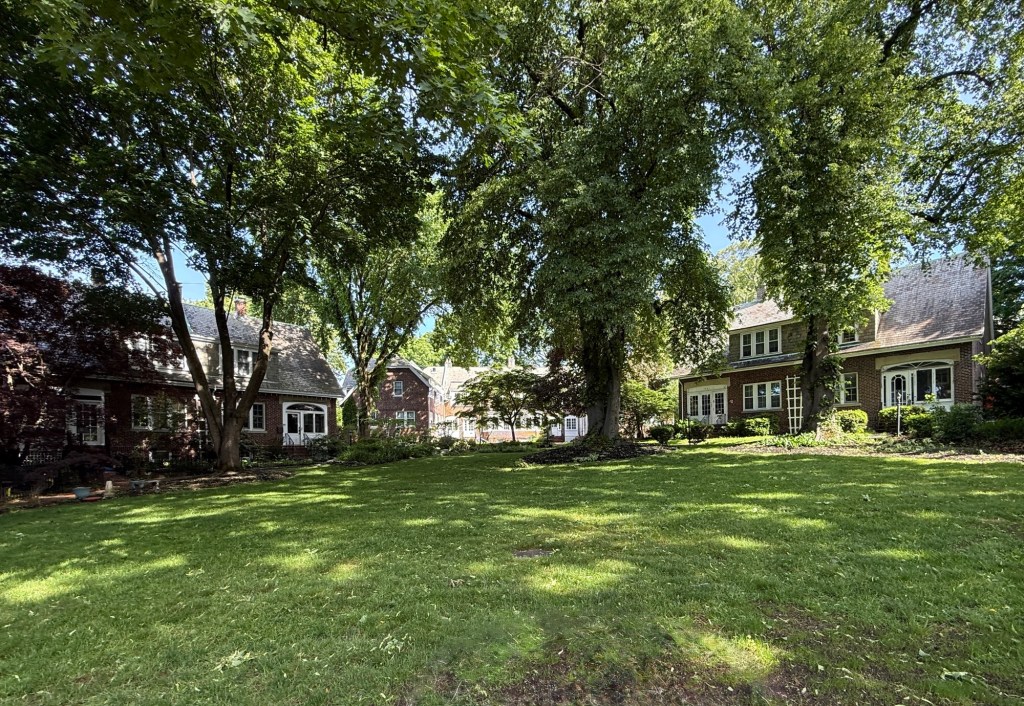
The Rebecca Maxwell Phillips House at 26 State Street in Warren, Rhode Island, is one of the state’s finest examples of the Federal style of architecture, though the building was funded through profits off of enslaved people. The house was funded by Warren resident, Squire James Maxwell for his daughter, Rebecca, and is traditionally said to have been a wedding present or possibly a gift to potential suitors to his daughter. The Maxwell family’s immense wealth was partially resulted from the illegal sale of enslaved Africans, including those illegally transported on his schooner, Abigail, which left Warren in September 1789. The captain of the vessel, Charles Collins, purchased 64 slaves on the coast of Africa, and sold them in the Americas by June of 1790. Of the 64 captives embarked on the ship, only 53 survived the voyage. This home was occupied by Rebecca Maxwell and her new husband, William Phillips. The three-story mansion exhibits a pedimented fanlight transom, corner quoins, and a shallow hipped roof. The property is located on an oversized lot which contains a massive Japanese Beech tree in the side yard, which is said to have been brought from Japan by Commodore Joel Abbot, who lived nearby, in 1853.

Maxwell House // c.1755

The Maxwell House in Warren, Rhode Island, is a striking example of mid-18th-century colonial architecture and one of the oldest brick dwellings in the waterfront town. Built before 1755, the house is one of the finest brick Georgian-era residences in New England with its characteristic Flemish bond brickwork, fieldstone foundation, wood-frame gable ends, and massive central chimney that anchors its historic pre-Revolutionary form. Originally constructed for the Reverend Samuel Maxwell (1688-1778) and later home to members of the Maxwell family, prominent shipowners, merchants, and slave-owners in town. The Maxwell family’s wealth was tied to the maritime economy of the era, which tells the story of many Rhode Island merchants of the time, who participated in the trans-Atlantic slave trade that enriched local elites and shaped the region’s economic growth, a history that communities are increasingly confronting alongside preservation efforts to this day. Today, the Maxwell House serves as a house museum preserved by the Massasoit Historical Association, who (hopefully) share the full story of the house, from its architecture to funding to construct it.

Miss Grace Nichols House // 1913

Located at the western end of Chestnut Street in the Flat of Beacon Hill, you will find this stucco residence, one of the finest mansions in Boston. The four-story residence with two entrances is built of brick and covered with stucco and was constructed for Miss Grace Nichols (1874-1944), the daughter of John Howard Nichols, who worked for John Lowell Gardner (the husband of Isabella Stewart Gardner) as a merchant transporting goods between Boston and Chinese markets, before overseeing mills. As a single woman, Grace inherited much of her parents wealth upon their deaths, and in 1913, hired architect, William Chester Chase, to design her Beacon Hill home in the Italian Renaissance Revival style, similar to Isabella Stewart Gardner’s Fenway Court mansion (1903). Grace Nichols married Richard Pearson Strong, a Harvard professor and medical researcher, in 1936 and the couple lived here with servants until their deaths in 1944 and 1948 respectively. After their death, the building was either purchased by or willed to the Boston Society of Natural History and the New England Museum of Natural History, which moved out of their Berkeley Street location in 1946. The Nichols Mansion served as the new Boston Museum of Science until 1951, when the new and current museum was built between Boston and Cambridge. Today, the former Nichols mansion is five condominium units, with owners having one of the most enchanting and unique properties in the exclusive Beacon Hill neighborhood.

Elizabeth G. Evans – Edward A. Filene House // 1883

This unique brick house at 12 Otis Place in Beacon Hill was built in 1883 by the architect, Carl Fehmer for attorney Glendower Evans and his wife, Elizabeth Gardiner. Mr. Evans died in 1886 of Hodgkin’s Disease at just 30 years of age. His widow, Elizabeth Glendower Evans (1856-1937) was greatly influenced by her husband during their brief marriage, even taking her husband’s first name as her middle name after his death. Elizabeth Glendower Evans became a prominent social activist, studying child labor conditions in the South and took up the cause of women’s suffrage and the associated problems of tenements and factory work arising from disenfranchisement in the late 19th and early 20th centuries. In 1915 Evans served as a delegate to the International Congress of Women at the Hague. She was the first National Organizer of the Woman’s Peace Party. From 1920 until 1937 she served as a national director of the American Civil Liberties Union. In the 1910s, Elizabeth sold the home to Edward Albert Filene (1860-1937), who, together with his younger brother Abraham Lincoln Filene, reorganized his father’s department store into “William Filene’s Sons Company”, which would later become Filene’s. He was a supporter of credit unions to help ordinary American workers to access loans at reasonable rates and allow workers to save their money so that when hard times hit, they were prepared.

Mrs. Martin’s School – Jenks & Gaugengigl Studio // 1872

This unique three-story building on Otis Place in Beacon Hill, Boston, was actually constructed in 1872 by owner/architect, Abel C. Martin (1831-1879) as a school run by his wife, Clara Barnes Martin (1838-1886). Clara B. Martin was born in Maine to Phineas Barnes, a prominent publisher in Portland, who educated his daughter at the best schools. She in turn, became a writer and educator herself, writing a book about Mount Desert Island in Maine and publishing articles in national papers, along with operating a school in this building, designed and owned by her husband as they lived next door. After Clara died in 1886, the property was sold by the Martin heirs and in 1895, renovated into artist studios with two floors of large windows to provide natural light for the work inside. The building was owned and operated as artist studios by Ignatz M. Gaugengigl (1855-1932), a Bavarian-born artist who spent most of his professional life in Boston and was a prominent member of The Boston School, and Phoebe Jenks (1847 – 1907), a portrait painter who divided her career between New York and Boston. The building, while heavily altered, showcases the history of the Beacon Hill Flat neighborhood, which, during the late 19th and early 20th centuries, became a popular place for artists and Bohemians, who renovated existing houses and stables in the Arts and Crafts, neo-Federal and other fashionable styles into loft spaces and studios. The 1895 renovation was undertaken by architect, Edgar Allen Poe Newcomb, who was the nephew of sculptor, Thomas Ball, likely providing him insight into the design of artist studios.

Samuel and Emily Eliot Rowhouses // 1871

These three identical three-story houses at 156, 158 & 160 Mt. Vernon Street in Beacon Hill Flat were built in 1871 as income producing properties for Samuel and Emily Otis Eliot who lived next door on the corner of Brimmer Street. The architect is not evident from my research, but they were likely designed by Abel C. Martin, who furnished speculative housing for the Eliot’s elsewhere in the neighborhood. All three residences feature brick facades with off-center recessed entries on raised stoops. The use of brownstone lintels and sills, decorative brick cornice, and second-story hexagonal oriel windows add intrigue to the design, along with the slate mansard roofs. The three houses were sold or rented and all were owned by various families, but notable owners of the central house include the architect George Russell Shaw (1848-1937) of the firm Shaw and Hunnewell through the early 1900s. Later in the 20th century, the house was owned by Kevin White (1929-2012), who served as the mayor of Boston for four terms from 1968 to 1984.
All three residences are well-preserved and look much as they did when constructed over 150 years ago.

Sunflower Castle // 1878

This absolutely unusual and enchanting cottage on Mount Vernon Street in Beacon Hill, Boston, was originally was constructed in the 1840s but completely altered decades later in its distinctive English Queen Anne style. In 1878, Frank Hill Smith, an artist and interior designer, worked with architect, Clarence Luce to renovate what was originally a two-story Greek Revival house into one of the most eclectic and unique residences in New England. The Sunflower Castle, a name reputedly coined by Oliver Wendell Holmes, features a yellow stucco first floor with the upper floors covered with red fish-scale shingles. Further detail includes the half-timbering, decorative panels depicting a gryffin and a sunflower in the gable, and carved wood frieze over the doorway. Clarence Luce was likely so inspired by this project, that he built an even more extravagant example of this house for Edward Stanwood in Brookline soon after. By 1903, the property was sold to the painter, Gertrude Beals Bourne and her husband, architect, Frank A. Bourne, who were both key players in the revival and gentrification of the Beacon Hill Flat neighborhood west of Charles Street in the early 20th century. The Sunflower Castle was used as their home and as an artist’s studio for the couple, with Frank adding the side garden wall with tile-roofed gateway to enclose a private open space. The property remains as a private residence.


Cole-Richmond House // c.1740

This large house on State Street in Warren, Rhode Island, has a plaque that dates it to around 1740, but it must have been relocated to this site or been built later as the street it is located on was initially laid out in 1790. The large, two-story, Federal style house exhibits a large central chimney and five-bay facade and has recently been restored. It looks great! According to sources, the property was owned by members of the Cole Family, a prominent local family who engaged in the sale and transportation of enslaved Africans in the 18th and 19th centuries. The house was eventually owned by Charles Richmond in the mid-19th century and is typical of the many great historic homes in Warren.

Hill-Collins House // 1761

Located at the corner of Water and Baker streets in Warren, Rhode Island, this Georgian Colonial-era home oozes charm! Built by shipwright William Hill, as a three bay, two storied residence in 1761, this Colonial “half-house” was later owned by mariner William Collins who managed a wharf nearby. The home was later inherited by his son, Capt. Haile Collins (1798-1863). The two-story house with three-bay-façade and side-hall entry is a great example of a Georgian residence with raised stone foundation with entry accessed by double-run brownstone steps, massive central chimney, and the pedimented entry with transom and pilastered enframement. The home was eventually covered with asphalt shingle siding and was threatened with demolition in the 1980s until it was purchased and restored by Lombard John Pozzi, a prominent local force in architecture and historic preservation, who restored many old houses in the region.

Warren Industrial Trust Company // 1906

This monumental Georgian Revival bank building on Main Street in Warren, Rhode Island, and is one of the finest buildings of the style in the entire state. The Warren Industrial Trust in 1906 hired Edmund R. Willson of the Providence architectural firm of Stone, Carpenter & Willson to design the bank for the town after it had absorbed the town’s multiple banks, under one roof. It would be one of his final commissions before his death. On the facade, four Corinthian columns support a dentilled pediment over the entrance with the red brick walls enlivened with arched windows, oversized keystones, and pilasters with contrasting capitals and bases. The building shows that Colonial Revival architecture, while often seen as a refined, classical style, can be festive and ornate.

Judge Alfred Bosworth House // c.1849

The only two-story temple-front Greek Revival style house in Warren, Rhode Island, the Judge Alfred Bosworth House on Federal Street, is believed to be the work of great architect Russell Warren. Alfred Bosworth (1812-1862) ran a law office in Warren and Providence and represented Warren in the General Assembly from 1839 until 1854 and then served as a justice on the Rhode Island Supreme Court. Bosworth was of counsel for Rhode Island in suits growing out of the boundary question between Rhode Island and Massachusetts, specifically around Fall River. Judge Bosworth died at home in 1862 and his widow, Anne, lived here afterwards. At the end of the century the Bosworth House was converted to an ice cream parlor, named Maxfield’s, which became a very popular attraction in town. The company, owned by Nathaniel and Julia Maxfield, attracted throngs of local residents every summer who would eat ice cream on the front yard of the house. Maxfield’s was even frequented by Providence writer, H. P. Lovecraft, when he was a young man. During the mid-1900s, the house served as a nursing home until 1988, when owners restored the house back to a residence and removed the asphalt siding that was added to the exterior around the time of the Great Depression.

Old Cooper Shop // c.1800

This stunning Greek Revival house on Lyndon Street in Warren, Rhode Island, was according to historians, built around the turn of the 19th century as a cooper shop! A cooper as a professional, would make wooden barrels, tubs, and casks from wooden staves, which were all made in this building before it was converted and renovated around 1830 in the Greek Revival style for Deacon John J. Bickner, who was likely affiliated with the Episcopal Church across the street, which was designed by architect, Russell Warren. Due to the connection, it is possible that the renovation for Bickner was undertaken by Russell Warren as well. On its facade, the house has two-story applied pilasters which break up the bays and smooth flushboard siding which makes the house even more stately!

St. Mark’s Episcopal Church // 1829

St. Mark’s Episcopal Church in Warren, Rhode Island, is a small, yet architecturally significant building that was one of the first examples of the Greek Revival style in the community. The episcopal church was formed in Warren in 1828, with members originally meeting in Cole’s Hotel while this site and construction completed on their new house of worship. The well-connected congregation hired architect, Russell Warren, who had just completed the Westminster Arcade, a landmark in the Greek Revival style, in Downtown Providence. Distinguished by its beautiful four columned Ionic portico and canted door frames, the church also originally had a square tower and parapet, which were removed following the 1938 hurricane, and replaced with a simple pediment. The parish closed in 2010 and the diocese sold the building in 2012 to private owners, who converted it about ten years ago into a residence, but retained the historic stained glass windows and character of the building. The entire site today (2026) is being renovated with what appears to be a modern addition on the side (not pictured). Hopefully the architecture of this landmark will be preserved.

Warren Armory // 1842

Although somewhat altered from its original appearance, the Warren Armory on Jefferson Street in Warren, Rhode Island, can easily be identified as a playful example of a Gothic Revival building, one of several Romantic styles that prevailed in the mid-19″ century. Here, the distinguishing features are its octagonal castellated towers, pointed arched central entry, and thin, long, slit-like, window openings set into the thick, stuccoed stone walls, important fire/blast-proof construction due to the storage of arms and gunpowder. Built in 1842 and formally opened in 1843, the building was used for social affairs by the local artillery company as well as citizens of the town for general entertainment for the public, including performances by Gen. Tom Thumb of P.T. Barnum’s travelling circus. In 1952, the property was conveyed to the Warren Post #11 of the American Legion.