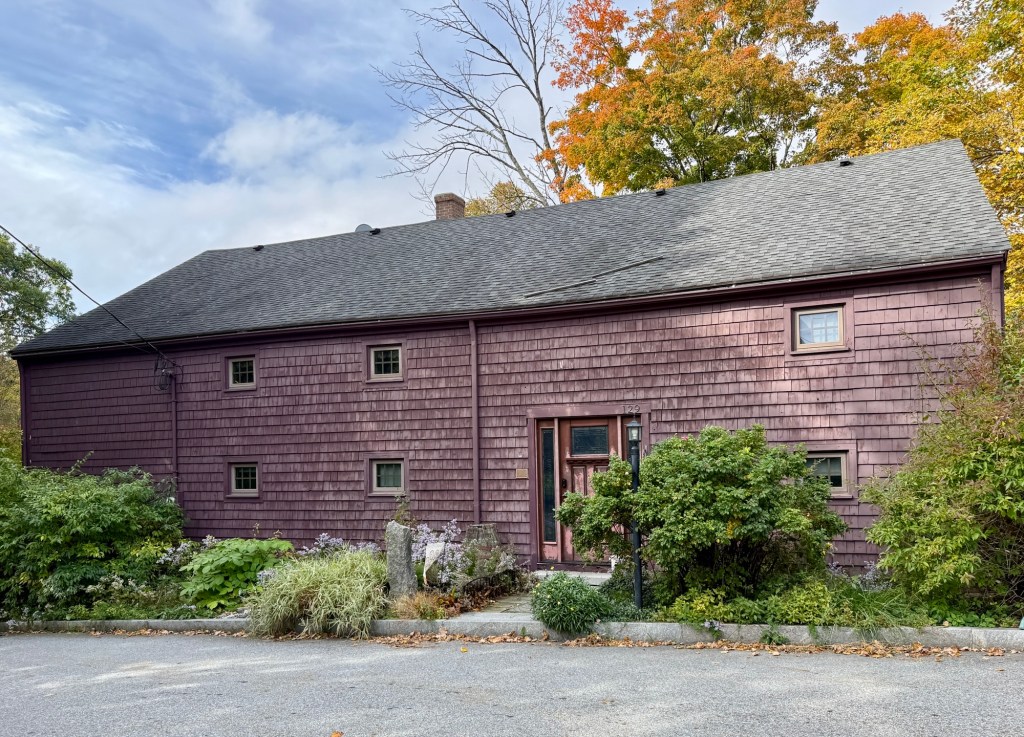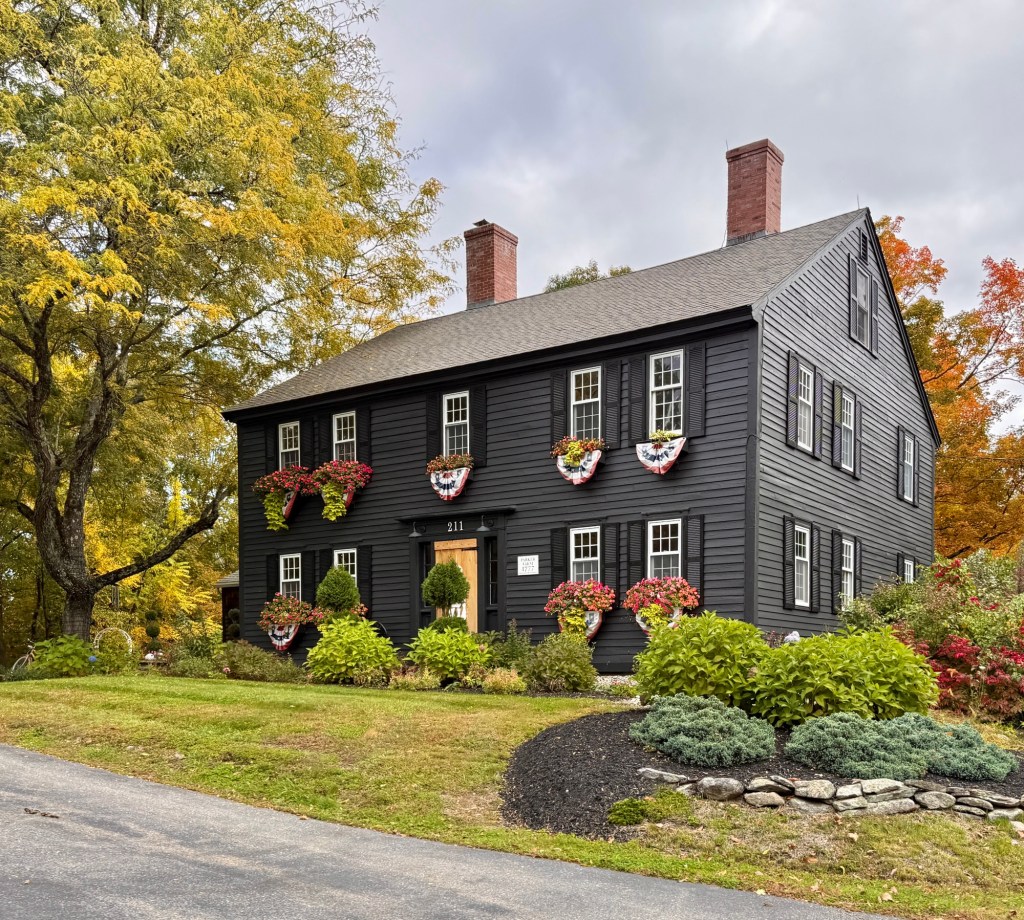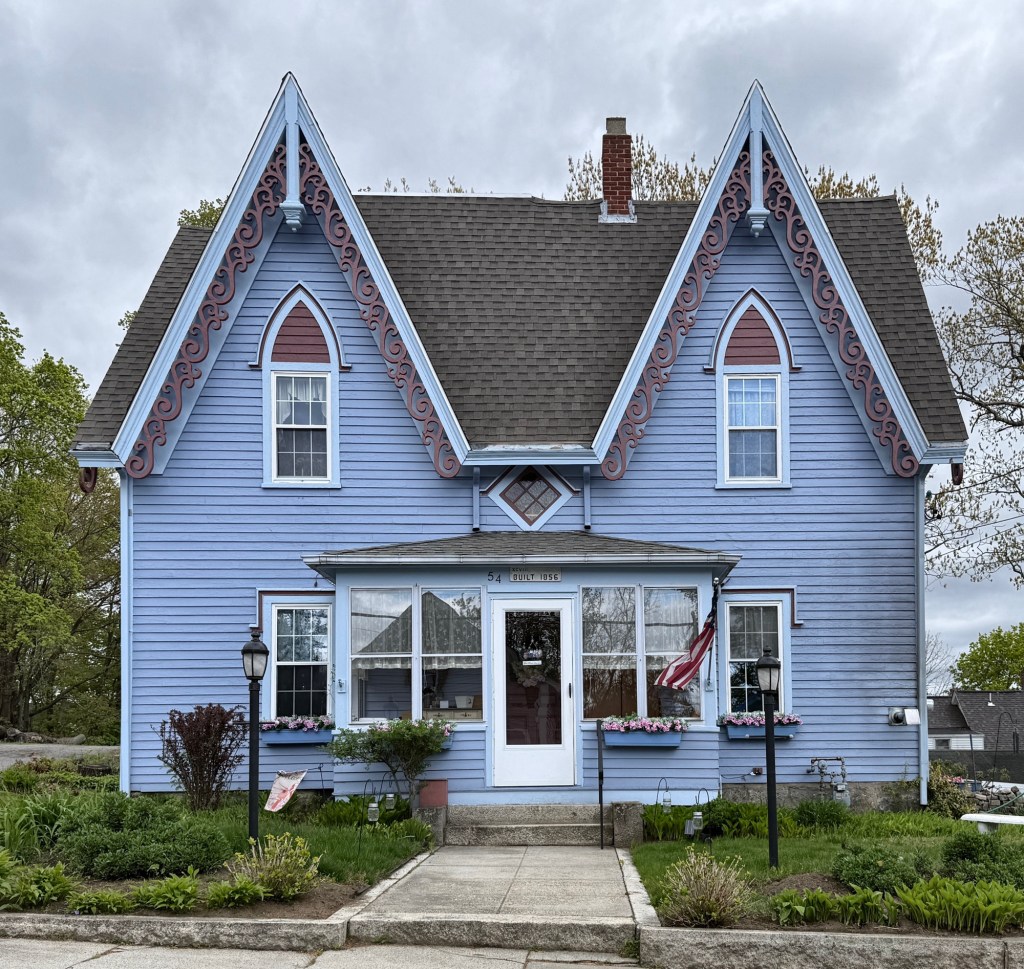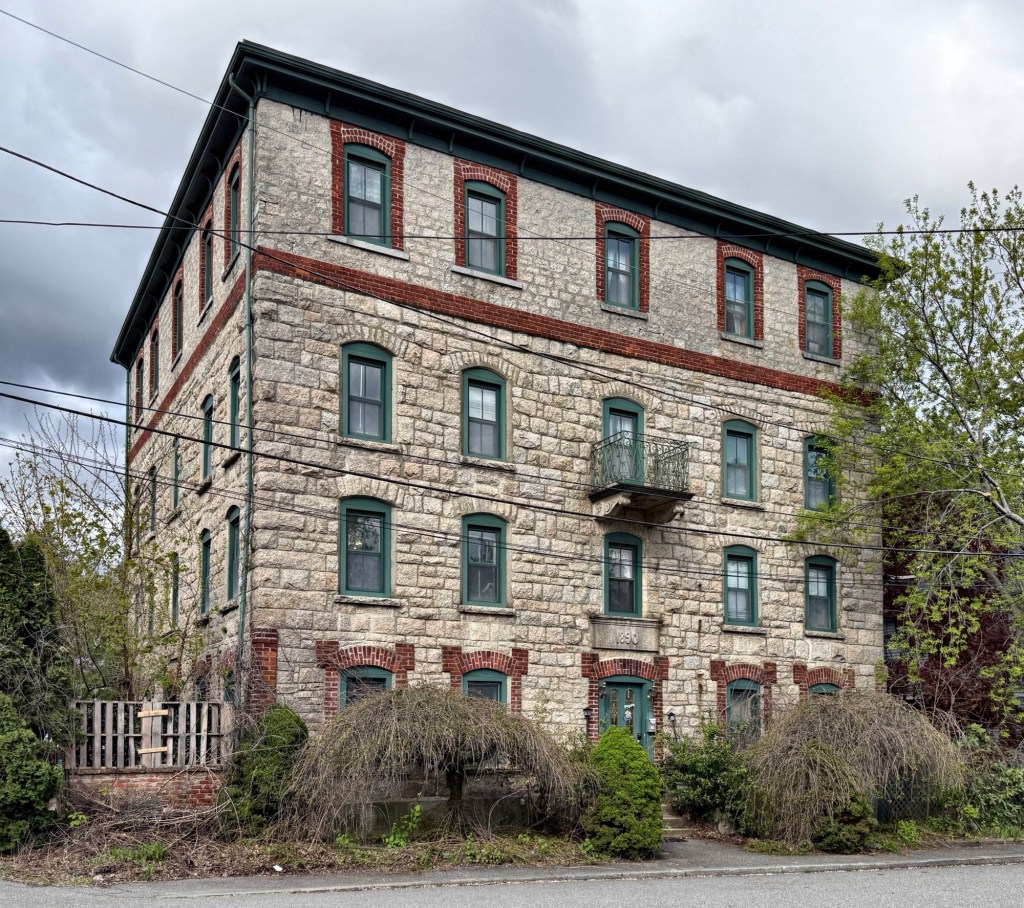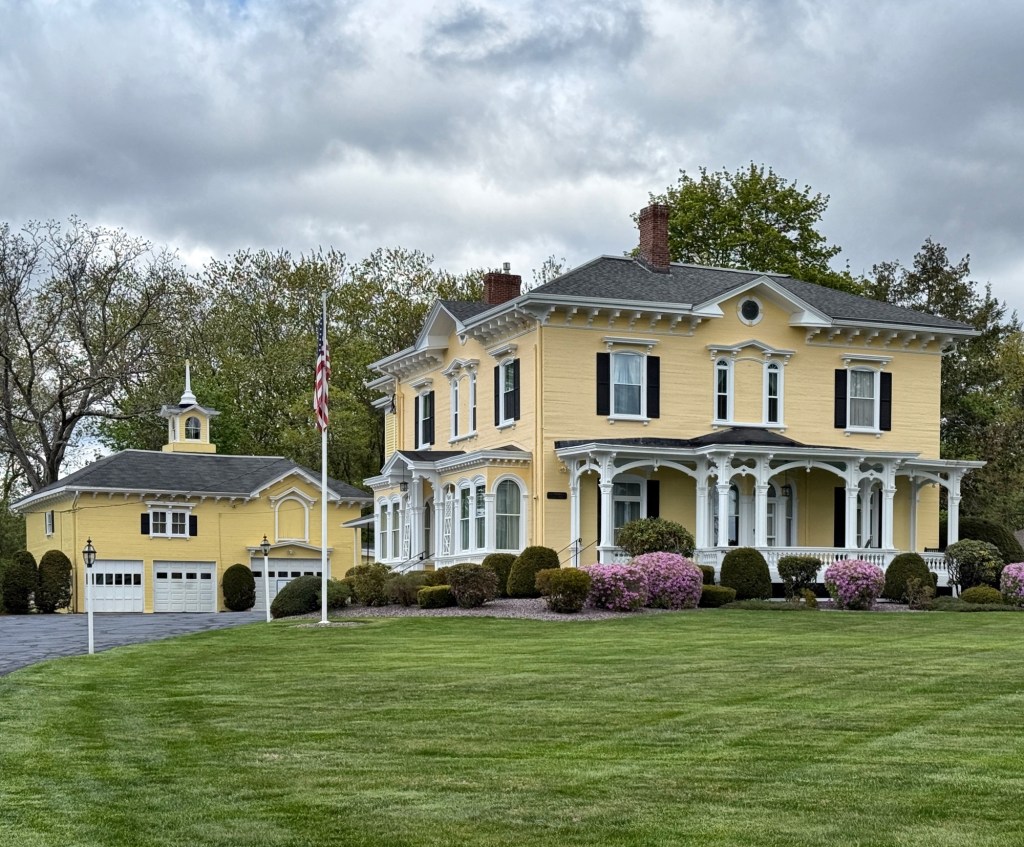
Henry E. Fales Mansion // 1866

The Henry E. Fales Mansion sits prominently on Walnut Street in Milford, Massachusetts, as an intact Second Empire style residence with symmetrical facade and form. The house was built in 1866 and owned by Henry E. Fales (1837-1897) an attorney and state legislator who was heavily engaged in town affairs. Before the home was completed, Henry’s wife, Violet, died unexpectedly and he remained here until his second marriage to Clara Hayward. The Fales Mansion has a notable mansard roof with belvedere, front gambrel gable with ocular window, and window hoods. The property is in need of some work, but retains nearly all of its original detailing.

Luther P. Jones House // c.1868

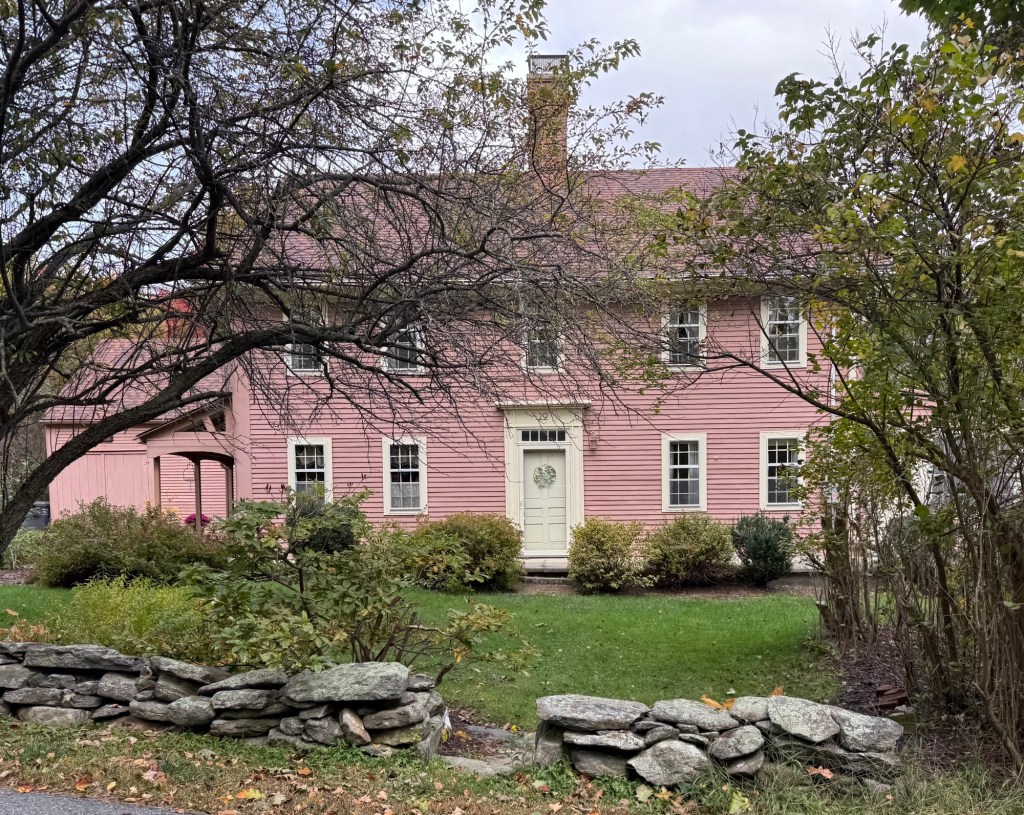
While the town of Milford, Massachusetts is arguably best known for its commercial and institutional architecture, there are some excellent examples of preserved homes of nearly every style and vintage. The Luther P. Jones House on Pearl Street is an interesting example of the Italianate style with unique low-sloped gable roof and typical bracketed cornice, side piazza, and bay window on its facade. While the former arched window has been enclosed and the porch columns have been replaced, the house still maintains its architectural significance as an excellent example of its style. The property was owned by Lydia and Luther P. Jones, a provisions dealer, until their deaths in the early 20th century. 

Milford Armory // 1912 

A source of local pride, the Milford Armory building on Pearl Street in Milford, Massachusetts, is an architectural landmark in the community and shows how adaptive reuse can give old buildings new life. The structure was completed in 1912 and constructed of locally quarried and cut Milford granite, a pinkish-grey granite that covers an area of approximately 39 square miles, centered around present-day Milford. Between the Civil War and WWII, the town of Milford became famous for its “pink” granite as a building material, with over 1,000 men laboring in dozens of quarries supplying the stone for some of America’s most iconic buildings including: the Boston Public LibraryWorcester City Hall, as well as the original Penn Station and Natural History Museum in New York, among many others. Besides being built of local granite, the Armory was also designed by local architect, Wendell T. Phillips, who followed nationwide trends designing the building like a fortified Medieval castle with crenellated towers, with long and narrow windows recessed, emulating the slit windows used in similar medieval structures. Like in many communities all over the country, the need to store firearms and major National Guard trainings declined with some being demolished, others sitting vacant, and others like the Milford Armory, seeing new life. The Milford Armory was slated for closure in 2002 and was ultimately saved when the Town of Milford and the National Guard struck a deal to initially rent the building for a Youth Center and gymnasium and share the space with the Guard.  The armory was home to the popular Youth Center, which needed gym space not available anywhere else. The building was ultimately purchased by the town and underwent a massive restoration, being rededicated as the Milford Youth Center in 2016

Milford Congregational Church // 1819

The town of Milford, Massachusetts, incorporated from its “mother town” of Mendon in 1780 and decades later, after the War of 1812, the young town began discussions to build a new town hall. From 1741 when Milford was set of as a separate precinct, through its incorporation, all governmental functions were held at the meetinghouse, which served both religious and governmental functions. By 1819, it was decided that a new town hall structure would be built in town as residents with other religious affiliations did not want their tax dollars going to a separate institution. The Congregationalists too began construction on a new church, this building, in 1819. The Federal style edifice with towering steeple was largely reconstructed in 1868, when the church was enlarged at the rear, raised to allow a full basement, and the facade “modernized” in the Italianate/Romanesque style with round arched openings. The church was again renovated in the early 20th century, converting it back to the more traditional, New England Colonial Revival style with fanlight transoms and large Palladian window. The congregation today remains active and offers sermons in Portuguese, providing a house of worship for the large Brazilian-born population in Milford.

North Purchase District Schoolhouse // 1832

This single-story, hipped-roof, brick schoolhouse is approximately 30’x24′ in plan and was built in 1832 for the town of Milford, Massachusetts, as one of its district schoolhouses to serve the community. After Milford incorporated in 1780, the town was divided into school districts, where area pupils would attend one of six school buildings based on proximity to their primary residence. This brick building replaced an earlier school building which was lost following a fire in 1830. The town funded construction on this school at a cost of $524. The one-room school remained in use until the 1920s, until consolidated schools and accessibility due to bus and personal automobile made getting to a centralized school building, easier. The old North Purchase District School was briefly used as the North Purchase Community House, a center for area residents to socialize and provided space for local scout groups. The building has been boarded up since at least 2009 and its future looks uncertain.

Milford Town Hall // 1854

The town of Milford, Massachusetts, is somewhat a hidden gem in the region, but it sure does have some architectural landmarks! Located on Main Street, the Milford Town Hall stands as an early American example of the Romanesque Revival architecture style, and is one of the earlier works of ecclesiastical architect, Thomas Silloway, who would design over 400 churches before his death in 1910. The Milford Town Hall has a somewhat ecclesiastical design to it with a pedimented facade, rusticated base, and pilasters breaking up the bays. The elaborately ornamented cupola rises nearly 50 feet in height and contains a round clock and scroll trim on all four sides with round arched openings and surmounted by a gold dome. As the town grew in the late 19th century, a large cross-axial rear addition was designed in 1900 by local architect, Robert Allen Cook, who appears to have also made the facade more Colonial Revival in style, changing some arched windows to pedimented windows and a Palladian in the gable. An interesting feature of the building is that it is built of wood and not the iconic local Milford “pink” granite that the town became known for. The Milford Granite was actually discovered after the Civil War, and the building material was quarried and transported all over the country for large institutional buildings.

Charles F. Roper House // c.1890

Charles Frederick Roper (1847-1916) was a machinist and inventor who moved to Hopedale, Massachusetts, where he found employment from the Draper Corporation. His inventions were important for the company, and included loom machinery, air supply for motors to prevent overheating, and grinding machines. Before his death, Charles Roper had over 100 patents and from his success, he afforded one of the finest Victorian homes in Hopedale. In around 1890, Charles Roper had this Shingle style residence built on Freedom Street from plans by Robert Allen Cook, a Milford-based architect who was a favorite of the Drapers. The residence sits on a rubblestone first floor with cedar shingles above.

Hopedale Unitarian Church // 1898

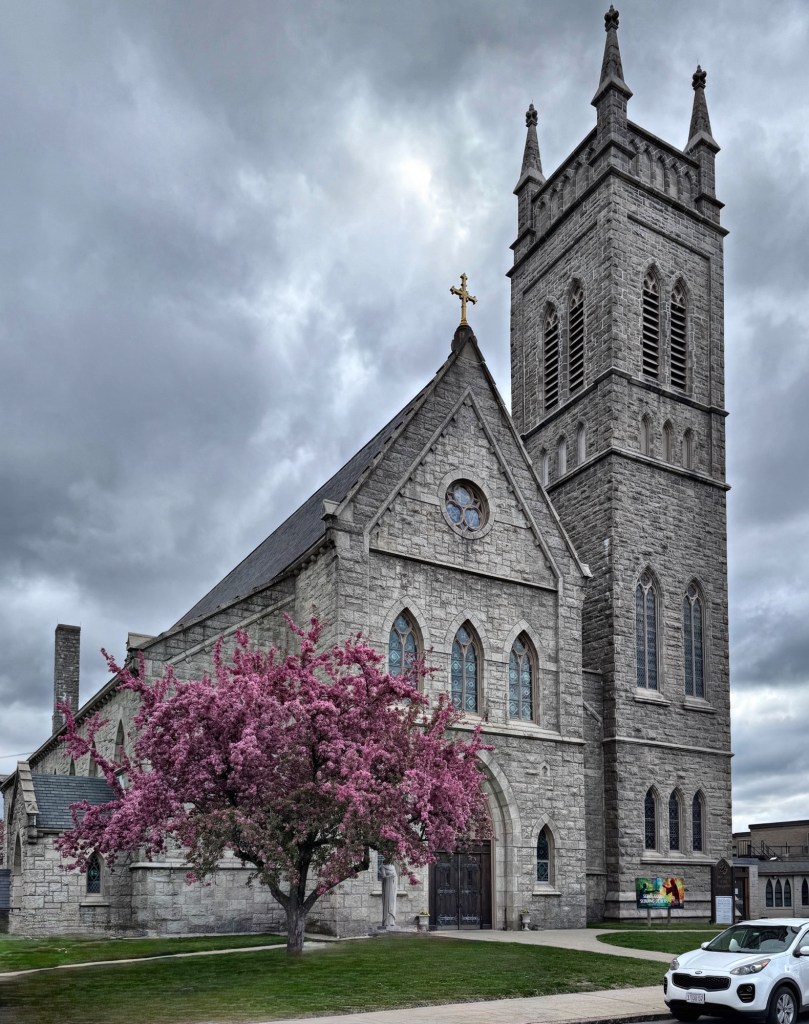
The Hopedale Unitarian Church, also known as the Draper Memorial Church, is located in the former industrial village of Hopedale, Massachusetts, and is one of the finest examples of the Neo-Gothic style in the state. The church was funded by brothers George Albert and Eben S. Draper of the Draper Corporation, the largest employer in town, offering to build the new edifice as a memorial to their parents, George and Hannah Draper. The church replaced an earlier, wood-frame church, built on the site in 1860 by supporters of Adin Ballou, a founder of the Hopedale Community, a utopian community that eventually failed. The Drapers hired Boston architect, Edwin J. Lewis, an active Unitarian who had designed several churches around New England by this time. His plan was “English Gothic of the Perpendicular period” made of Milford granite with Indiana limestone trimmings and a roof of green slate. At the interior, roof trusses were left exposed “as in the old English Parish churches” with oak finishes and flooring and memorial stained glass windows by prominent artists. The church remains a visual and historical landmark for the community with an active congregation who preserve the significant building.

Eben S. Draper Stable // c.1900

Located next to his Tudor Revival style mansion, Eben Sumner Draper’s stable on Adin Street in Hopedale, Massachusetts, is one of the finest examples of the type in New England. It is possibly that the stable was built before the mansion was built in 1926 for Eben Sumner Draper Jr. (1893-1959), the son of Massachusetts Governor and Draper Corporation executive, Eben Sumner Draper. Little is known about this building, which stands at the end of a drive and is accessed over an arched bridgeway. The building has its first floor in stone with half timbering above. Two rounded towers with conical roofs frame the center entry, which may have been used for horses and carriage, or for personal automobiles, of which, Mr. Draper would surely have one of the first in the state. The building has been owned by the Ledges LLC, who operated a community for developmentally disabled adults.

Eben S. Draper Mansion // 1926

Built in 1926 for Eben Sumner Draper Jr. (1893-1959), the son of Massachusetts Governor and Draper Corporation executive, Eben Sumner Draper, this massive Tudor Revival style mansion in Hopedale, provided a secluded country estate for the wealthy industrialist. The home was designed in 1926 by Boston architects Bigelow & Wadsworth, and replaced Eben’s father’s Shingle style country mansion “The Ledges“. The new Draper mansion was highlighted in numerous architectural magazines shortly after it’s construction, which highlighted the amazing brickwork, layout, and interior finishes, all of which remain to today! This spectacular home is over 14,000 square feet and has 17 bedrooms, several located in the staff wing, 10 full-baths and four half-baths, an in-ground swimming pool, gazebo, tennis court, and landscape design attributed to the notable landscape architect Warren Manning. In the 1960s, the home sold out of the family and was used as a home for adults living with developmental disabilities, mental illnesses, physical disabilities, the facility has since sold the Draper mansion and occupies the former carriage house on the grounds.

Hopedale Village Cemetery Tool House // 1894

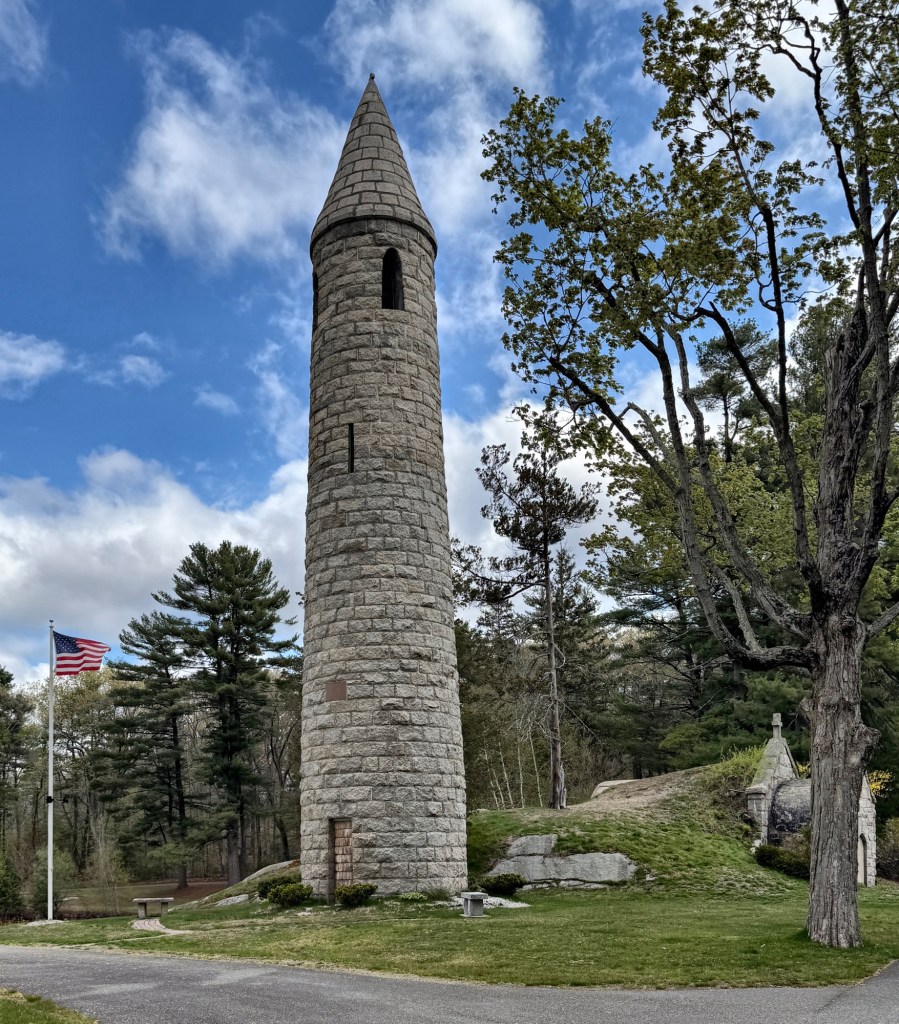
At the heart of the Hopedale Village Cemetery, this diminutive historic tool shed and office showcases that even for functional buildings set within a cemetery, high-quality materials and good design can enhance the landscape. The cemetery was laid out in 1845 in connection with Hopedale’s Utopian settlement, but expanded later in the 19th century as a formal landscaped cemetery in about 1887. The growth and investment of the cemetery coincides with the growth of the community as it prospered with the success of the Draper Corporation factories in town. Landscape architect, Warren Henry Manning updated the landscape here, with scenic vistas and hills, which followed the popular Rural cemetery movement of the 19th century. The cemetery contains many graves and mausoleums of the wealthy factory managers and benefactors of the community, which dot the sprawling landscape. In 1894, architect, Robert Allen Cook, designed this stone tool shed, which may have also contained a small office with cemetery records. The one-story, hip-roofed building features rough rubblestone walls with an eyebrow dormer centered on the façade, and has been preserved by the community for well over 100 years.

Frank J. Dutcher House // 1904

Located on Adin Street in Hopedale, this excellent turn-of-the-century mansion was built for Frank Jerome Dutcher, a manufacturer who worked for his father’s company before selling it to the Draper Corporation, later becoming a wealthy salesman. Blending Shingle, Queen Anne, and Arts and Crafts styles, the Frank J. Dutcher home sits atop a rock ledge and was designed by architect, Robert Allen Cook, who designed other buildings in town for the Draper Corporation and community, behind his original home that burned in 1903. The home features two massive fieldstone chimneys, shingled siding, and a series of dormers and bays that provide a rich dialogue along the long street-facing facade. In the mid-20th century, the property became a nursing home, known as Oakledge Manor. The building was recently bank-owned and it is unclear if the building was converted back to a single-family home, or remains a housing facility.

Warren W. Dutcher House // c.1860

The finest example of the Second Empire style in the industrial village town of Hopedale, Massachusetts, is this stately residence at the beginning of Adin Street, which has been colloquially known as ‘Millionaire’s Row’ as it is lined with many large mansions owned by factory owners and managers. This is the Warren W. Dutcher House, built around 1860 for its namesake, a wealthy and well-connected manufacturer. Square in form, the house is capped by a concave mansard roof in slate, and features a cornice with paired brackets, round-headed dormer windows, and a central entry with door hood supported by oversized brackets all under the full-length porch. Warren Whitney Dutcher (1812-1880) was originally from North Bennington, Vermont, and in the 1850s, he invented a temple that worked better than one used by the Draper Corporation. are adjustable stretchers used on a loom to maintain the width and improve the edges of the woven fabric. George Draper bought an interest in it, and encouraged Mr. Dutcher to move to Hopedale to expand his operations. He moved to Hopedale in 1856, and built this home after a few years of managing the Dutcher Temple Company. After Warren Dutcher died in 1880, the home was inherited by his son, Frank Dutcher, until he built his own house on a lot behind his childhood home.

General Draper High School // 1927

The General Draper Memorial High School is one of the many civic and institutional buildings in Hopedale Village that were donated to the small industrial community by members of the wealthy Draper Family, who operated the Draper Corporation Factory in town. The school was built in 1927 on land donated to the Town by Princess Margaret Bonocompagni, the youngest child of the late William F. Draper, who married Prince Andrea Boncompagni of Italy in 1916. The marriage ended in divorce by 1924 and years later, she had no need for the family home in Hopedale, and bequeathed the site to the community for a new high school in memory of her late father. General William Franklin Draper (1842-1910) was a Civil War veteran who became a politician and managed the Draper company in Hopedale, where he built a massive mansion for his family. The mansion was demolished and replaced by this Colonial Revival style High School, designed by New Hampshire-based architect, Chase R. Whitcher, the handsome structure has since been expanded at the rear to service the growing student population in town.

Urncrest // c.1875

Located on Adin Street, a street of homes formerly owned by factory owners and managers in Hopedale, Massachusetts, you will find “Urncrest”, a stunning Queen Anne Victorian mansion. This home was originally built around 1875 for William Lapworth (1844-1937) an English-born weaving expert, who worked at Hopedale Elastics Co. and patented certain weaving processes for suspenders, boot webbing, and garters. Hopedale Elastics was absorbed by the Draper Corporation in 1890, and Lapworth “modernized” his home with profits from this sale. His formerly modest home was updated with a corner tower, large additions, wrap-around porch with porte cochere, and applied ornament. The detached carriage house was also expanded, where he added a coachman’s apartment.