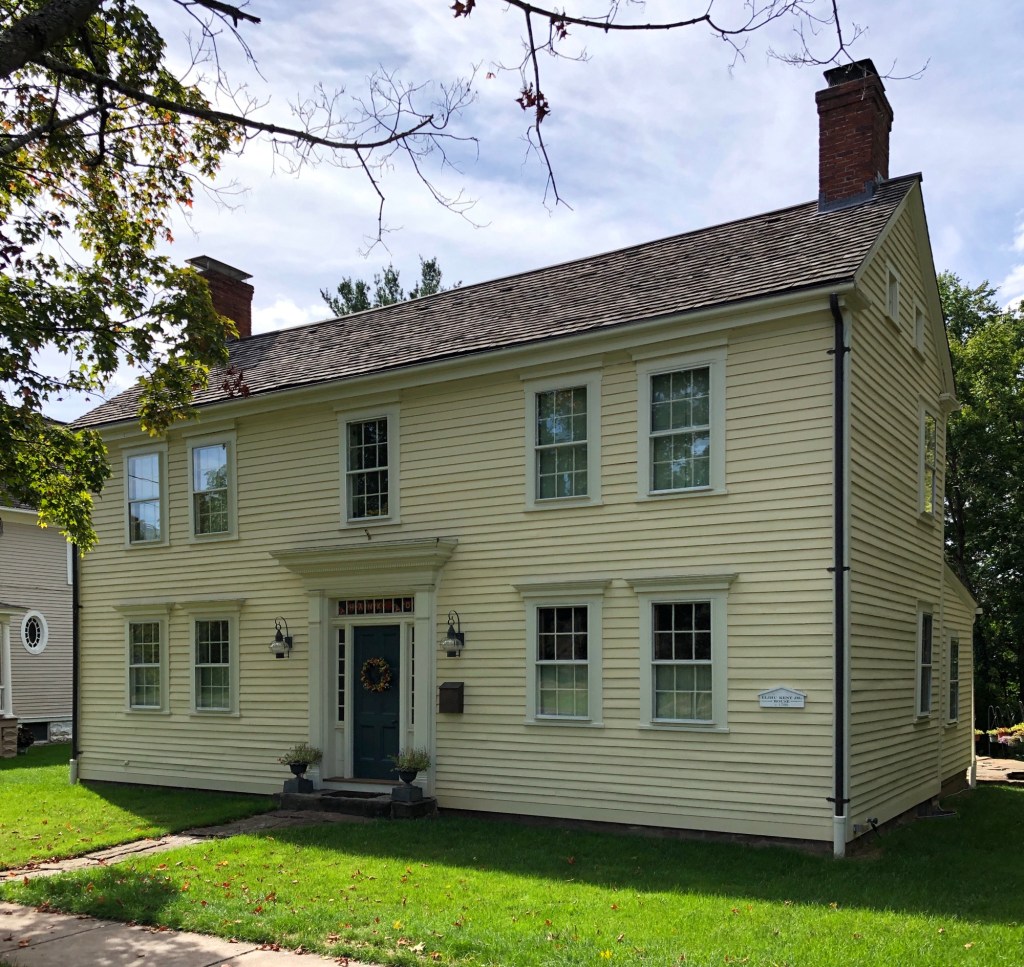
In 1775, when news of the Battle of Lexington reached Suffield, Connecticut, Elihu Kent Sr. (1733-1814) at the age of 42, took command of a local militia of 59 men the next day. The militia, along with his son Elihu Kent Jr. (then 16 years old) and a person whom he enslaved, Titus Kent, marched to Springfield, before heading east to Boston. The troops would end up on Long Island and Elihu Kent Jr. was captured by British forces and confined for a long time as a prisoner of war in the old Rhinelander Sugar House in New York. After his return to Suffield, Elihu Kent Jr. had this Georgian home on Main Street built for his family, where he ran an inn and operated a farm.
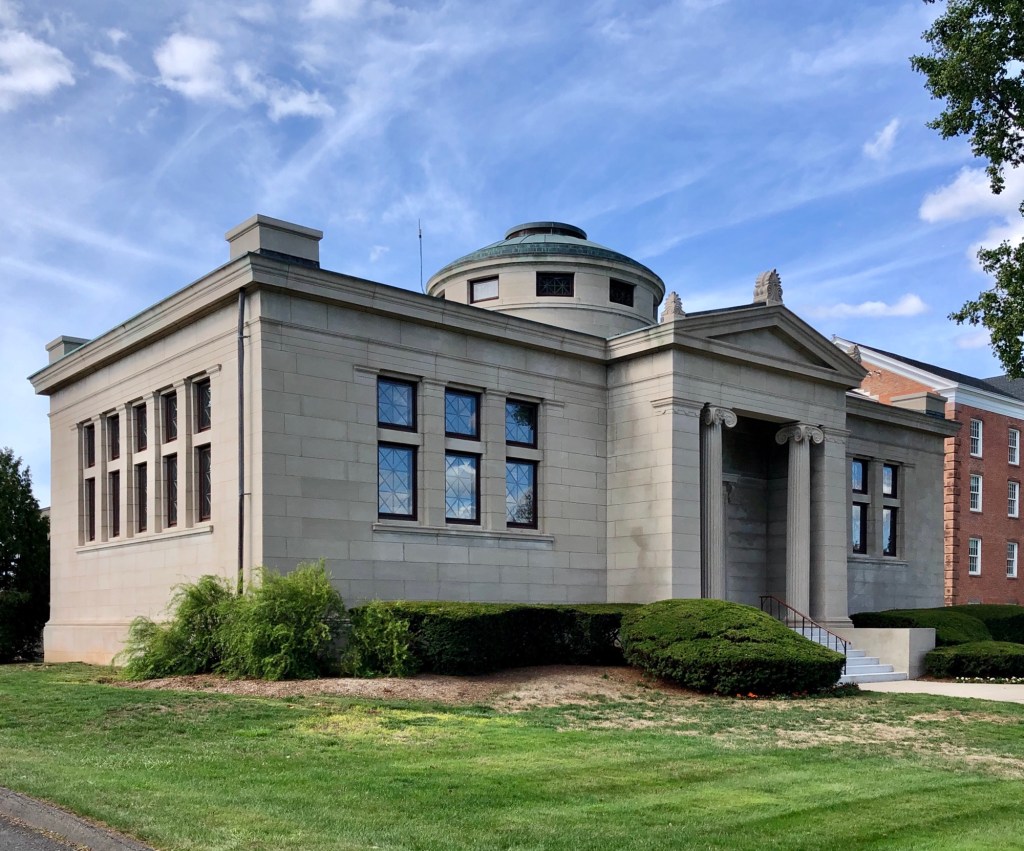
In 1897, Sidney A. Kent (1834-1900), a native of Suffield, Connecticut and later a successful Chicago businessman, sought to gift his hometown a library in the memory of his parents, Albert and Lucinda Kent, who died nearly a half-century earlier. A site was purchased from the Suffield Academy and funding was set aside for the new library before the turn of the 20th century. For the memorial building in Suffield, Sidney Kent hired architectural giant, Daniel Burnham, designer of the famous Flatiron Building in New York, who had also designed Kent’s home in Chicago. The Kent Memorial Library was dedicated in 1899 and is a stunning example of a library built in the Classical and Beaux Arts styles. Executed in smooth, granite ashlar, the facade has a central portico of two Ionic columns in antis and a shallow dome in the center of the copper clad roof. The library would eventually be outgrown and a contemporary library was built nearby on the town’s Main Street. The old Kent Memorial Library was acquired by Suffield Academy and renamed the S. Kent Legare Library.
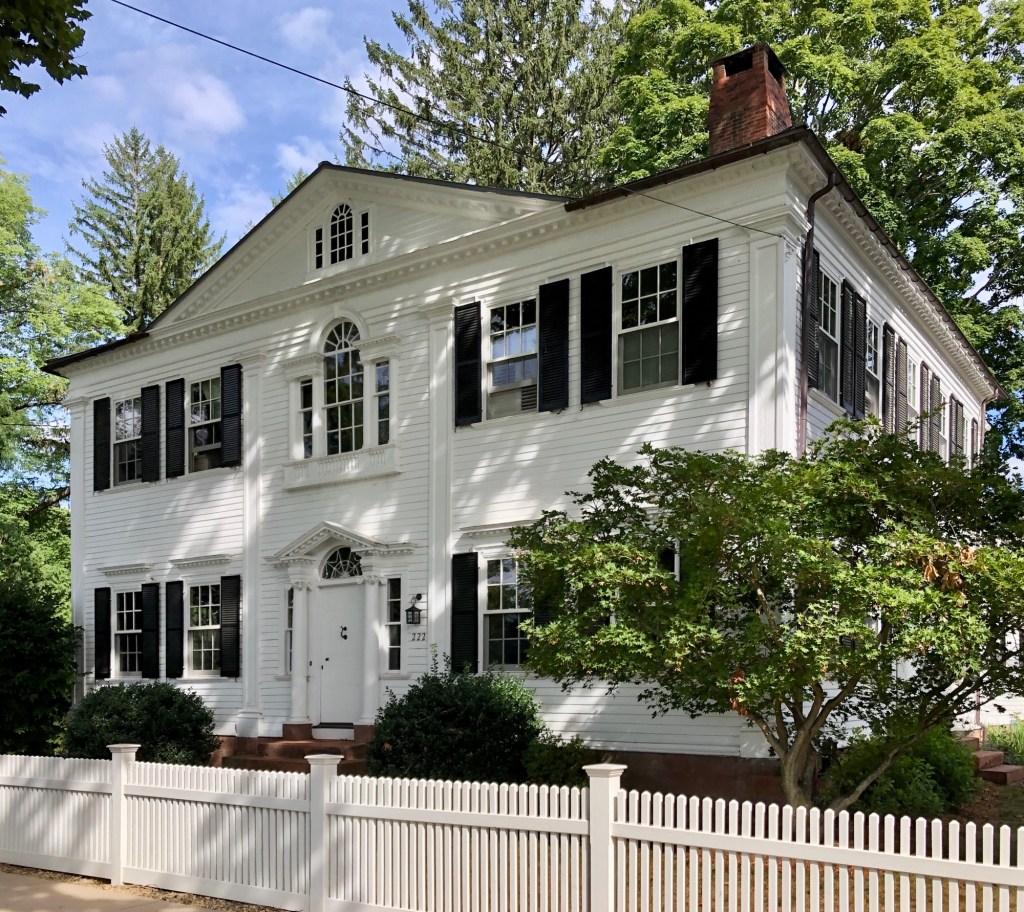
In 1795, Ebenezer King Jr. (1762-1824) bought 26 acres of land on Main Street in Suffield, Connecticut, to build this stately manse. He at the time was at the height of his prosperity and lived lavishly from his new mansion until he sold his property in 1811. King’s estate was purchased by William Gay (1767-1844), a prominent lawyer and the son of Ebenezer Gay, who had been the longtime pastor of the Congregational church and lived nearby. Aside from his law practice, William Gay was also the postmaster of the town for 35 years, and for much of that time the post office was located here in his living room. The home remained in the Gay Family for generations until it was eventually purchased by Suffield Academy for use as the headmaster’s home. The symmetrical Federal style residence features a five-by-five-bay square form with center entrance. The facade is dominated by an elaborate Federal style entry with fanlight transom and Palladian stairhall window on the second floor, which is mimicked with a smaller version in the gabled peak at the roof.
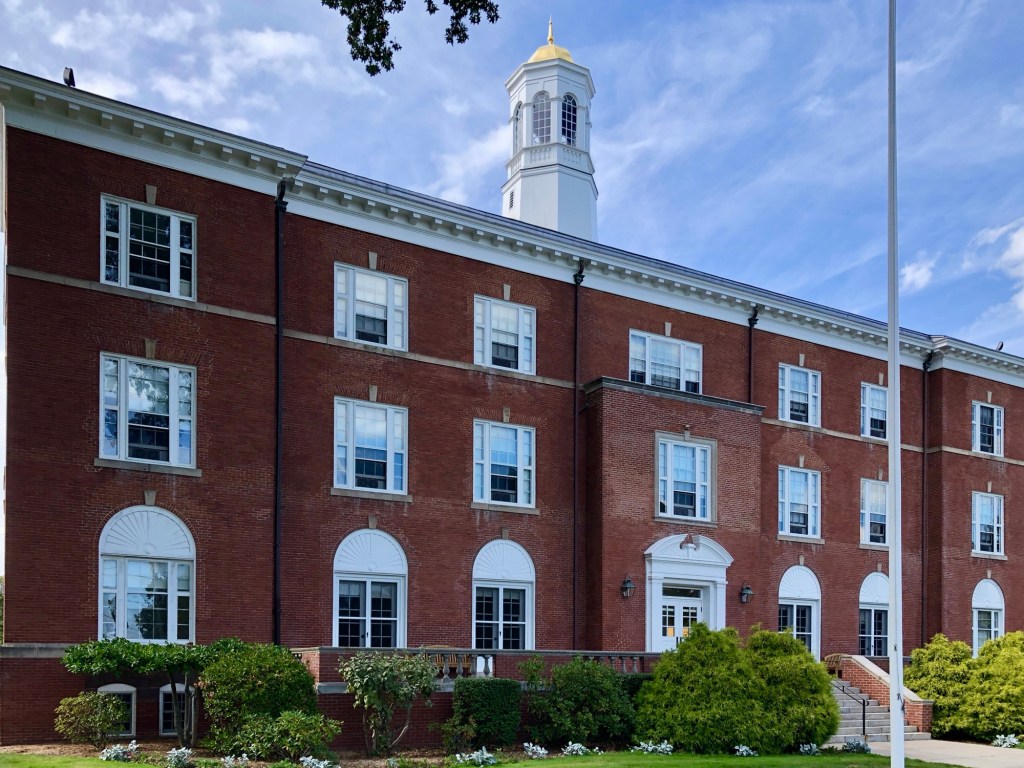
The founding of Suffield Academy began in 1833 with the mission to educate young men for the ministry in the Baptist church. Despite its founding links to the Baptist Church, the institute quickly moved towards a non-denominational model and became the Connecticut Literary Institute. The school later rebranded as Suffield Academy serving as the only high school in town. The school received tax revenue from the community to allow boys outside the Baptist faith to study there. Later, with changing views of women’s right to education, the school allowed women into the school in 1843. Forty years later, the school constructed this building, then known as the ‘Ladies Building’, built next door to the school’s 1854 Memorial Hall. When built, the structure was Victorian Gothic and Second Empire in style but was heavily modified in 1953 in the Colonial Revival style, where the mansard roof and porch were removed and the building becoming a stripped-down version of a Colonial schoolhouse capped by a cupola on the roof.
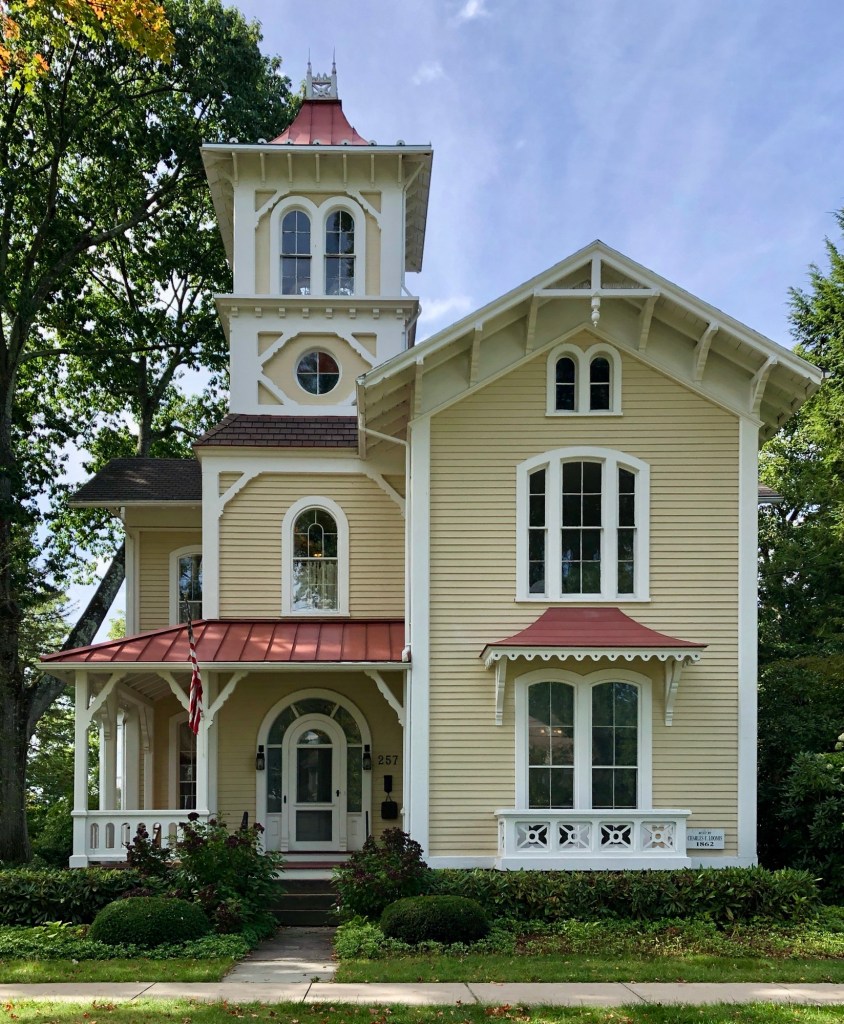
Located on Suffield’s iconic Main Street, this enchanting 19th century residence stands as a testament to the impact and role the tobacco industry had on the community historically. The residence seen here was built for Charles Loomis of the Loomis Family, who made their fortune in the tobacco farming and rolling industry in Suffield, Connecticut. Charles F. Loomis used his tobacco money to have this asymmetrical Italianate Villa constructed in 1862. The home features a prominent three-story tower capped with iron cresting, broad overhanging eaves with brackets and some stickwork, and a gorgeous door with arched transom and sidelights.
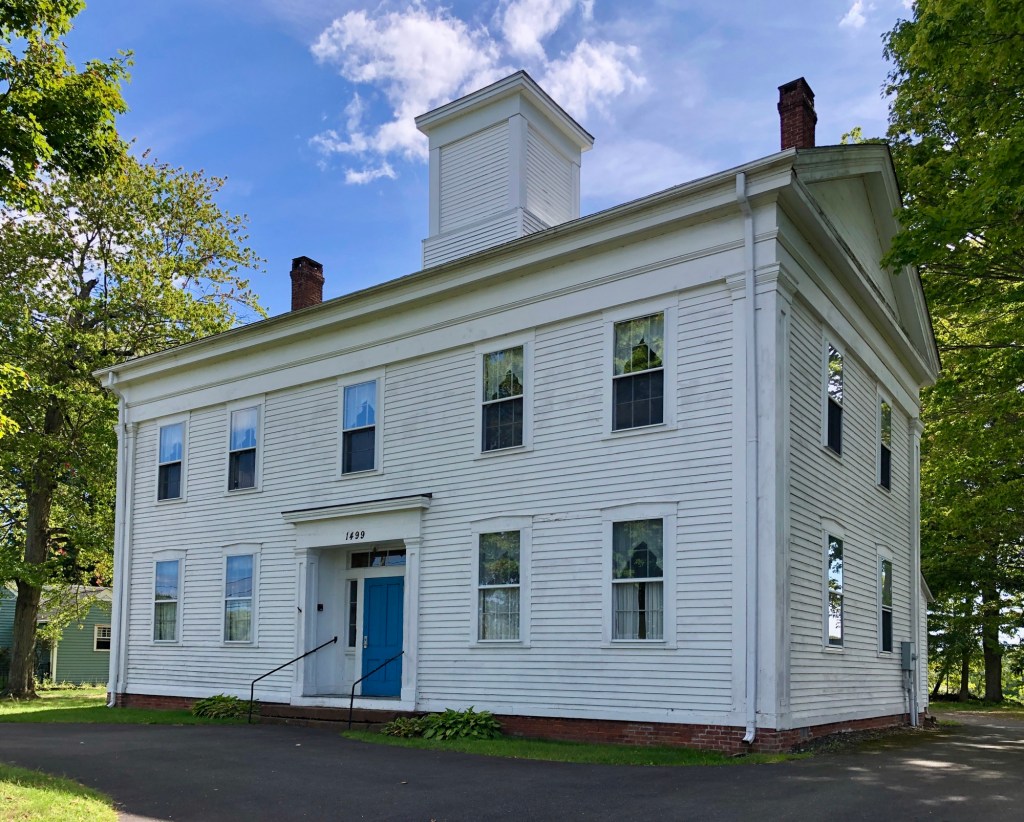
Built in 1855 as the West Suffield Village school, Academy Hall served as one of Suffield’s public school buildings until 1913, when consolidated schools were built in town. Like in many New England communities, the old, wood-frame school building was repurposed, and due to the large agricultural community in Suffield (it was a major grower and exporter of tobacco), the old Academy Hall was occupied by the local Grange club, a social organization that encouraged families to band together to promote the economic and political well-being of the community and agriculture. The handsome structure is owned by the non-profit West Suffield Village Improvement Association, and as of April 2026, the building is leased to the Suffield Historical Society, and is available for events. The structure features a Classical door surround, corner pilasters, entablature, and a large square cupola at the gable roof.
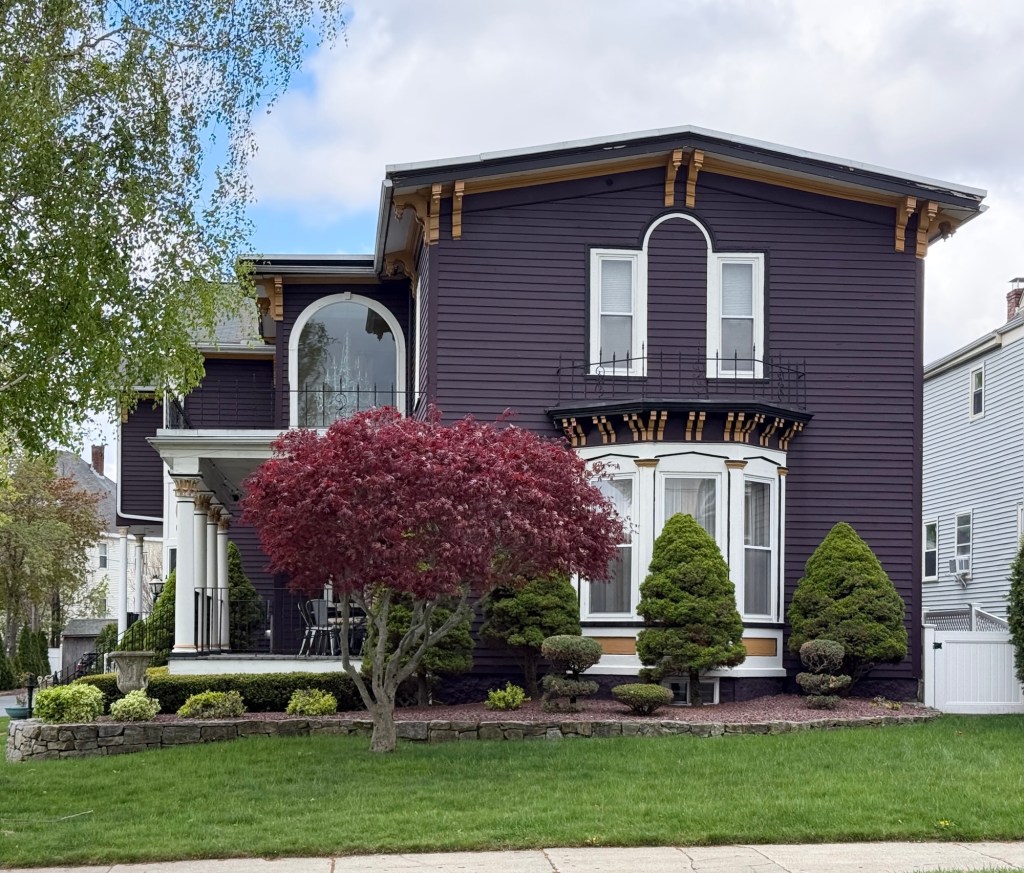
While the town of Milford, Massachusetts is arguably best known for its commercial and institutional architecture, there are some excellent examples of preserved homes of nearly every style and vintage. The Luther P. Jones House on Pearl Street is an interesting example of the Italianate style with unique low-sloped gable roof and typical bracketed cornice, side piazza, and bay window on its facade. While the former arched window has been enclosed and the porch columns have been replaced, the house still maintains its architectural significance as an excellent example of its style. The property was owned by Lydia and Luther P. Jones, a provisions dealer, until their deaths in the early 20th century.
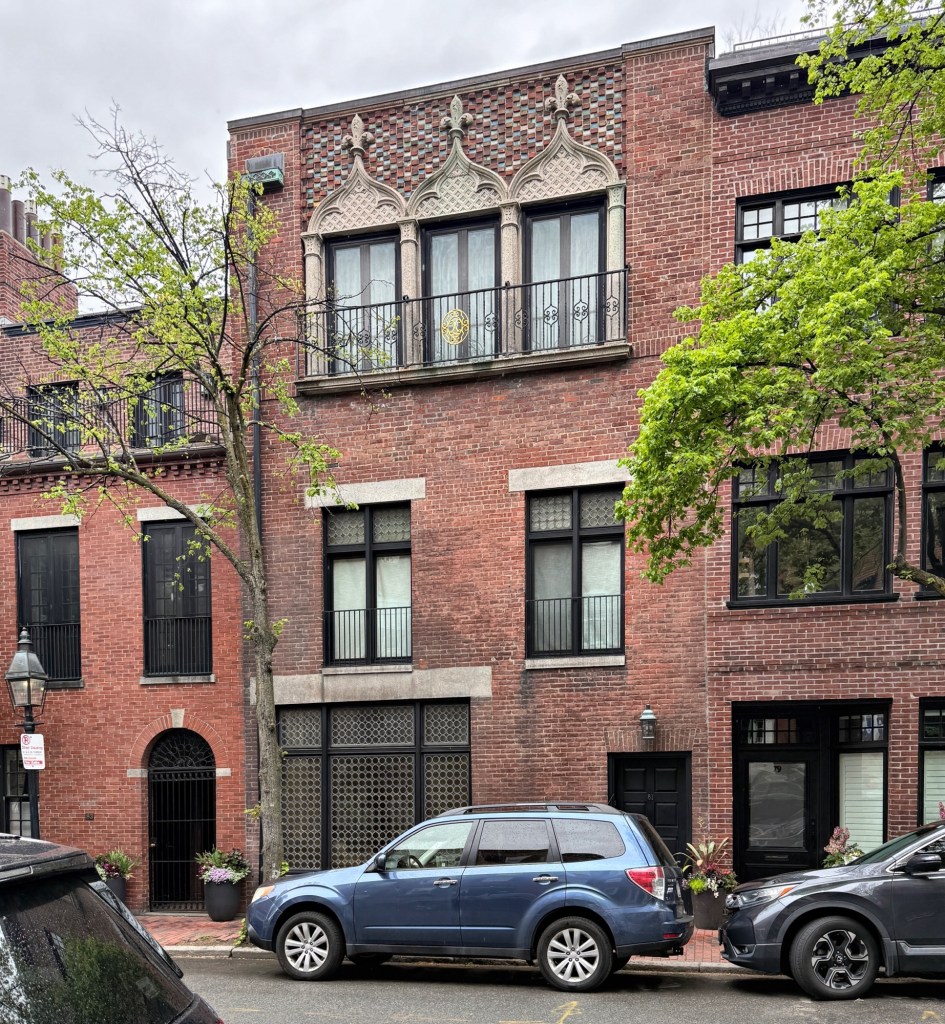
This handsome building at 81 Chestnut Street in Boston, began as a two-story brick stable and was later modernized with an additional floor and renovated for use as an artist’s studio, a perfect encapsulation of the history of the Flat of Beacon Hill from the “horsey end of town” to upper-class enclave and artist community. The stable was built around 1860 for Harleston Parker (1823-1888), the father of the more well-known, architect, J. Harleston Parker, and remained as a stable throughout the 19th century. In the early 20th century, the two-story building was converted to a auto repair shop but changed use in 1916 when owner, Edward H. Noyes hired architect, Harry Browning Russell, to convert the old stable to an artist studio. The second-story windows were enlarged and former carriage door were enclosed with small rounded art glass, likely for and by George Loftus Noyes, a painter who worked for a time at the New England Glass Company. Inside, a central landscaped courtyard flooded the spaces with natural light. In 1936, George Noyes moved to Vermont, divorcing his wife, Maybelle, but leaving her with the Boston studio. Maybelle remarried to George Lee, and soon-after hired architect, Frank Chouteau Brown, to add a third-story to the studio for conversion to a year-round residence. Brown added the unique Moorish arched windows and brickwork at the third floor.
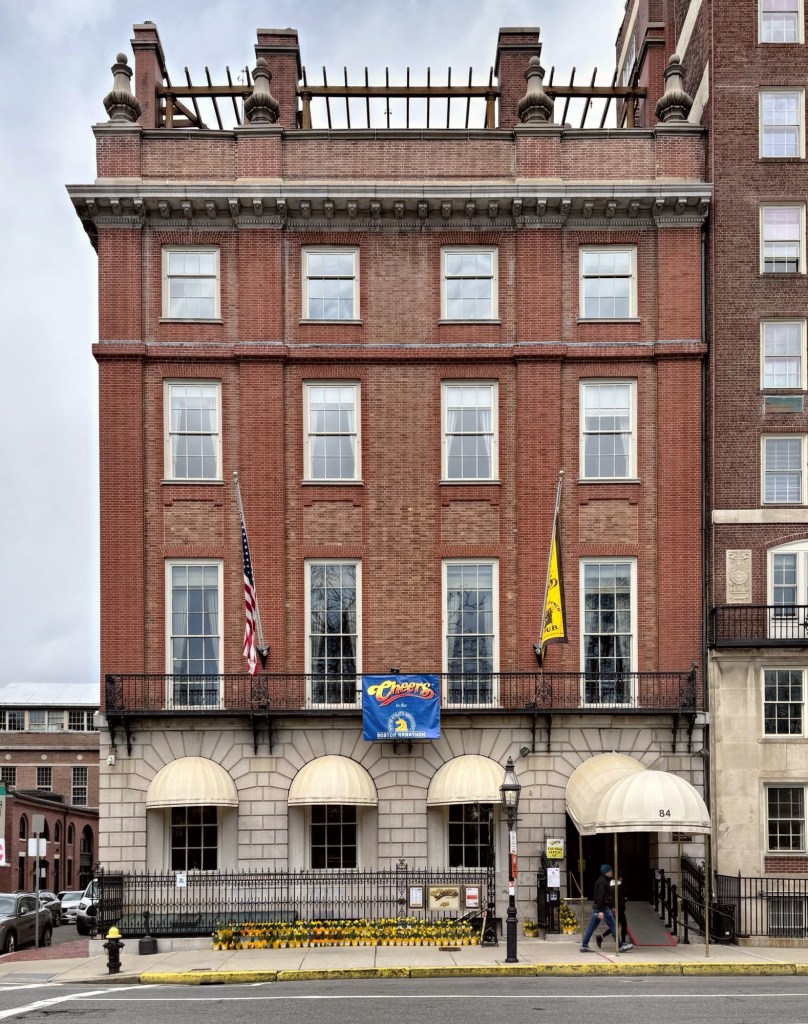
This iconic building at 84 Beacon Street in Boston’s Beacon Hill neighborhood, is best-known for its bar, which in 1982, became world-famous as the locale for the bar in the television sitcom Cheers, one of the most-watched programs in television history; but its history begins earlier. This five-story building was constructed in 1911 as a mansion for Bayard Thayer (1862-1916), who split his time between Boston and his country estate in his home-town of Lancaster, Massachusetts. Thayer hired architect, Ogden Codman Jr., a favorite designer of Boston and New York high-society, to design his Boston mansion, which is an expressive and overscaled example of a Colonial Revival style townhouse. Bayard Thayer died in 1916 and his widow, Ruth Simpkins Thayer, lived here with her granddaughter, Ruth, and nine domestic servants. After Ruth Thayer’s death in 1941, the property was conveyed to the Colonial Properties Trust in 1944, operating the building as a small luxury apartment hotel. From this point on, the hotel became known as Hampshire House. In about 1969, the basement space in the Hampshire House opened as the Bull & Finch Pub, which later became the inspiration of the iconic sitcom Cheers. Pictures of the exterior of the building were used in the show’s credits and scene changes, and the interior was faithfully replicated from the set in Hollywood, where the show was actually filmed. The Bull & Finch Pub has permanently been renamed Cheers Pub and visited by many who wish to visit the place where “everybody knows your name”.
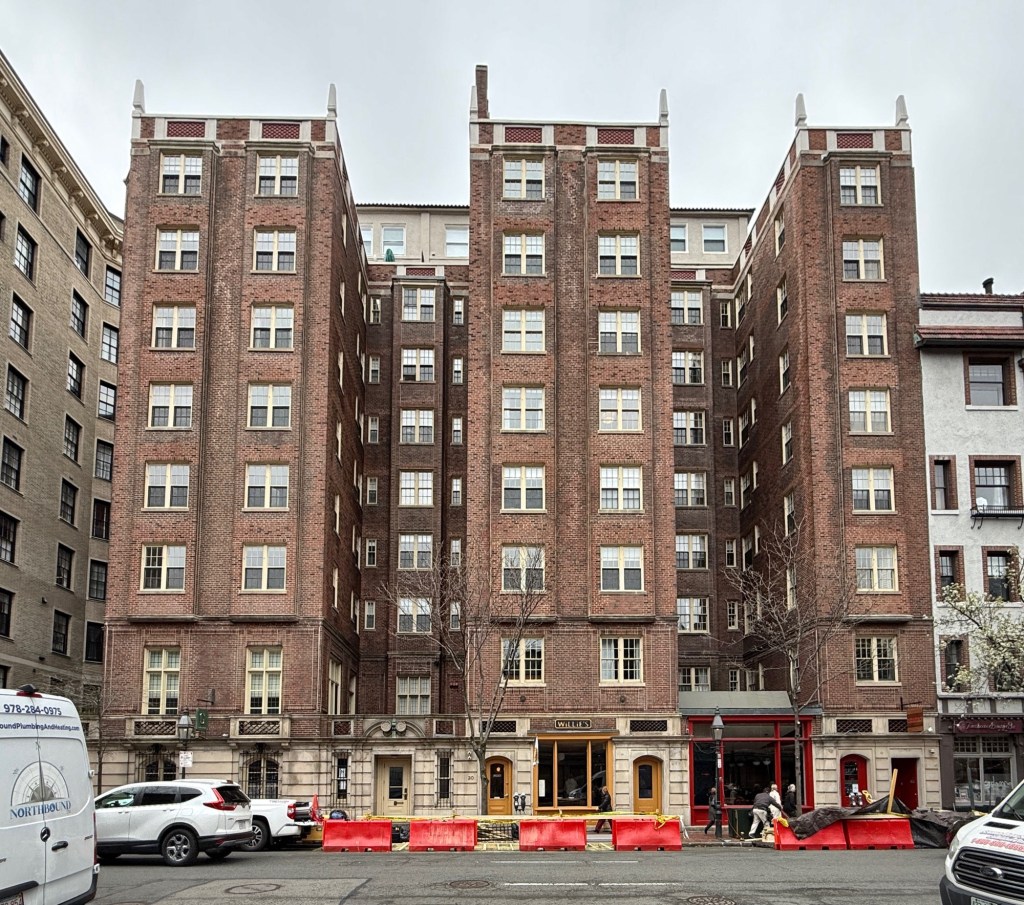
The Hotel Lincolnshire is a stunning eight-story apartment building on the west side of Charles Street in Boston’s Beacon Hill neighborhood. The building was developed in 1924 by William Coombs Codman, a real estate developer and member of the Beacon Hill Associates, a group of preservationists who bought and resold properties in the neighborhood with the aim to limit unsympathetic development. The group helped the Beacon Hill Flat area, which was a higher concentration of former stables west of Charles Street, a gentrified artist and residential enclave. The Hotel Lincolnshire was marketed as a residential apartment hotel, with furnished and unfurnished apartments with greater amenities than a traditional apartment building. Beacon Hill resident and architect, Richard Arnold Fisher, was responsible for designing the building, where he employed the use of courtyards (similar to his design nearby at 101 Chestnut Street) and walls of brick with cast-stone details. Of special interest is the use of perforated terracotta panels laid in half-round forms and the stone pinnacles at the parapet.
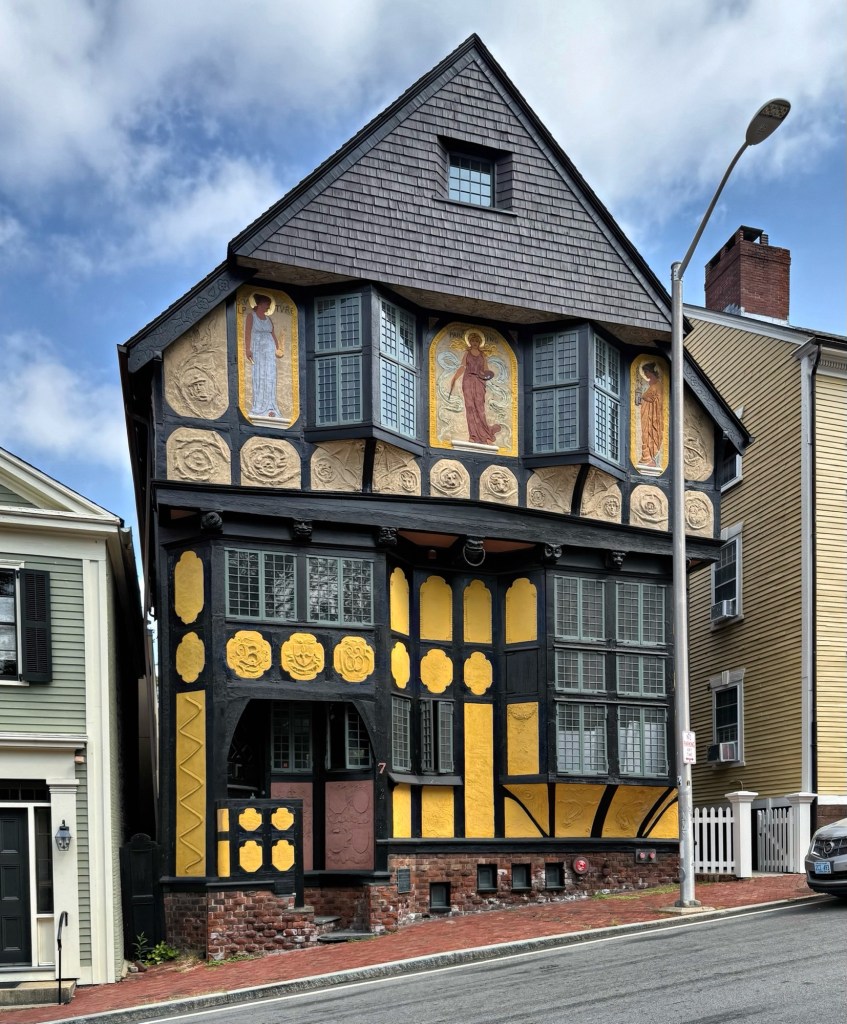
The Fleur-de-Lys Studios is of the most architecturally significant and unique buildings in New England and can be found on Thomas Street in the College Hill section of Providence. Built in 1885 and a vivid expression of the Queen Anne style and showing the emergence of the Arts and Crafts movement movement in America, the handsome building blending is the result of a partnership between artist, Sydney Richmond Burleigh and architect, Edmund R. Willson as a dedicated creative hub for working artists, a purpose it still serves today under the stewardship of the Providence Art Club, who received the deed of the property in 1939 by Burleigh’s widow. Its design draws heavily on medieval English and Tudor Revival influences, with a striking half-timbered façade, stucco panels, carved heads as hanging pendants, and projecting casement windows that break dramatically from the surrounding colonial streetscape. What truly sets the structure apart, however, is its richly symbolic ornamentation—allegorical figures representing painting, sculpture, and architecture adorn the exterior. More than a century later, the Fleur-de-Lys Studios remains both a National Historic Landmark and a living workspace, preserving its original spirit as a place where art and architecture are inseparably intertwined.
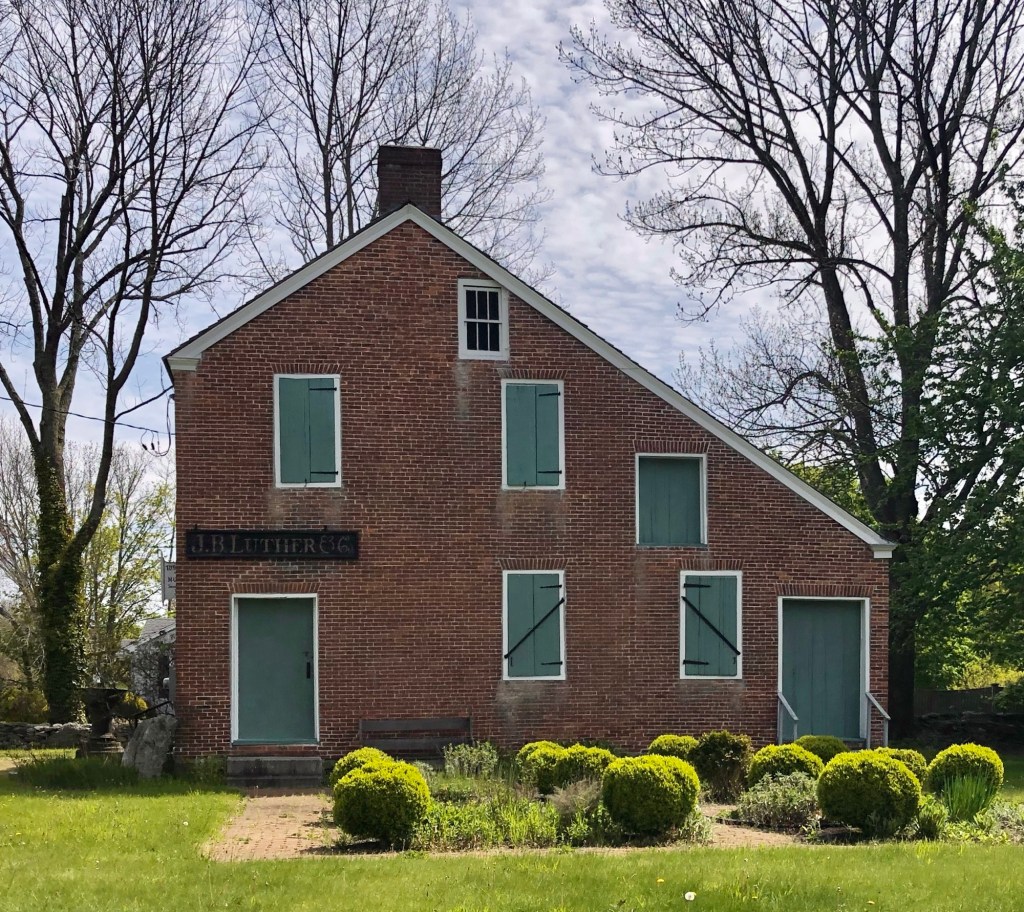
The Luther Store in Swansea, Massachusetts, is a historic commercial building constructed in 1815 and uncommon as a rare brick block with saltbox roof. The structure was built for John Brown Luther, and was operated by the Luther family as a store until 1903. The Luther’s Corner area was in the mid-19th century the economic center of Swansea, and Luther’s Store served as post office and library. The building was acquired in 1941 by the Swansea Historical Society, which now operates it as a local history museum following a restoration by Fall River architect, Maude Darling-Parlin.
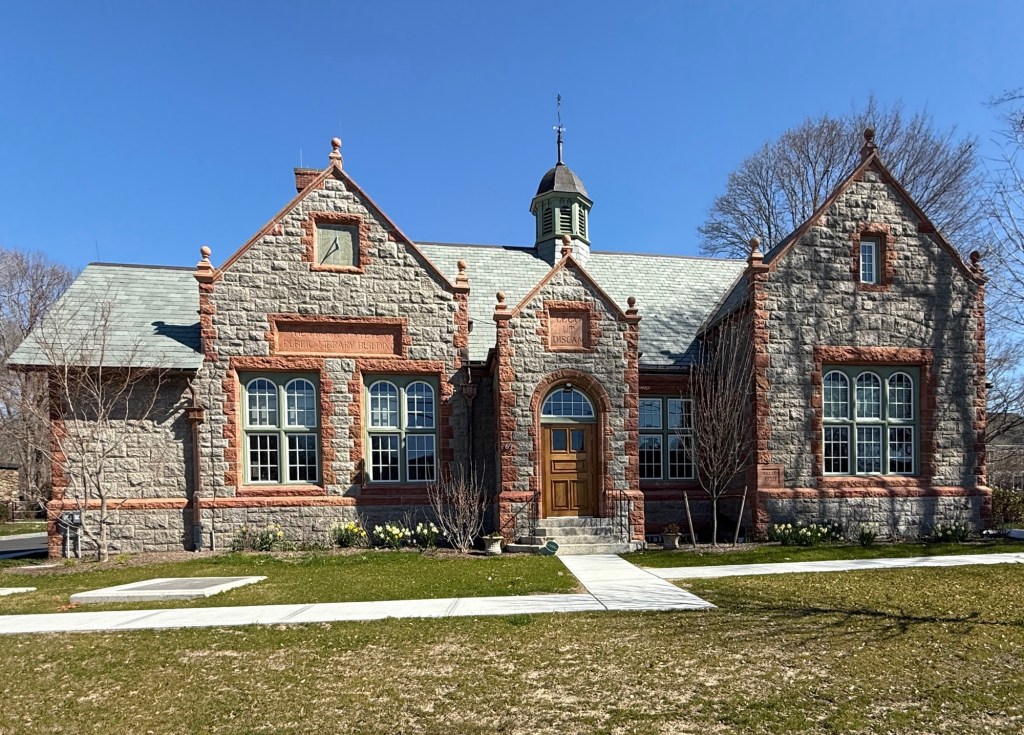
Presented to the Town of Swansea by Elizabeth Stevens as a memorial library of her late husband, Frank Shaw Stevens, the Stevens Memorial Library (also known as the Swansea Public Library) is one of the finest small-town buildings of its kind in Massachusetts. Elizabeth and her husband, Frank Stevens, lived in a large mansion nearby on Main Street and in their older years, began to bequeath their fortune to their community that they made home. The couple funded the Swansea Town Hall, a large church, and schools along with this handsome library. Built in 1900, the Swansea Library was designed by architect, Henry Vaughan, an English-born architect who designed some of the best English-inspired buildings in the United States in the late 19th and early 20th centuries. For the Stevens Memorial Library in Swansea, Vaughan drew upon Elizabethan precedence and employed the use of granite and red Potsdam sandstone to create a warm, yet stately presence on the towns Main Street. With its state roof capped by an octagonal cupola and mullioned windows in arched surrounds, the eclectic building is timeless and has been lovingly preserved by the local community, who also expanded the building to the rear, taking great care to make it less visible from the street and preserve the main building.
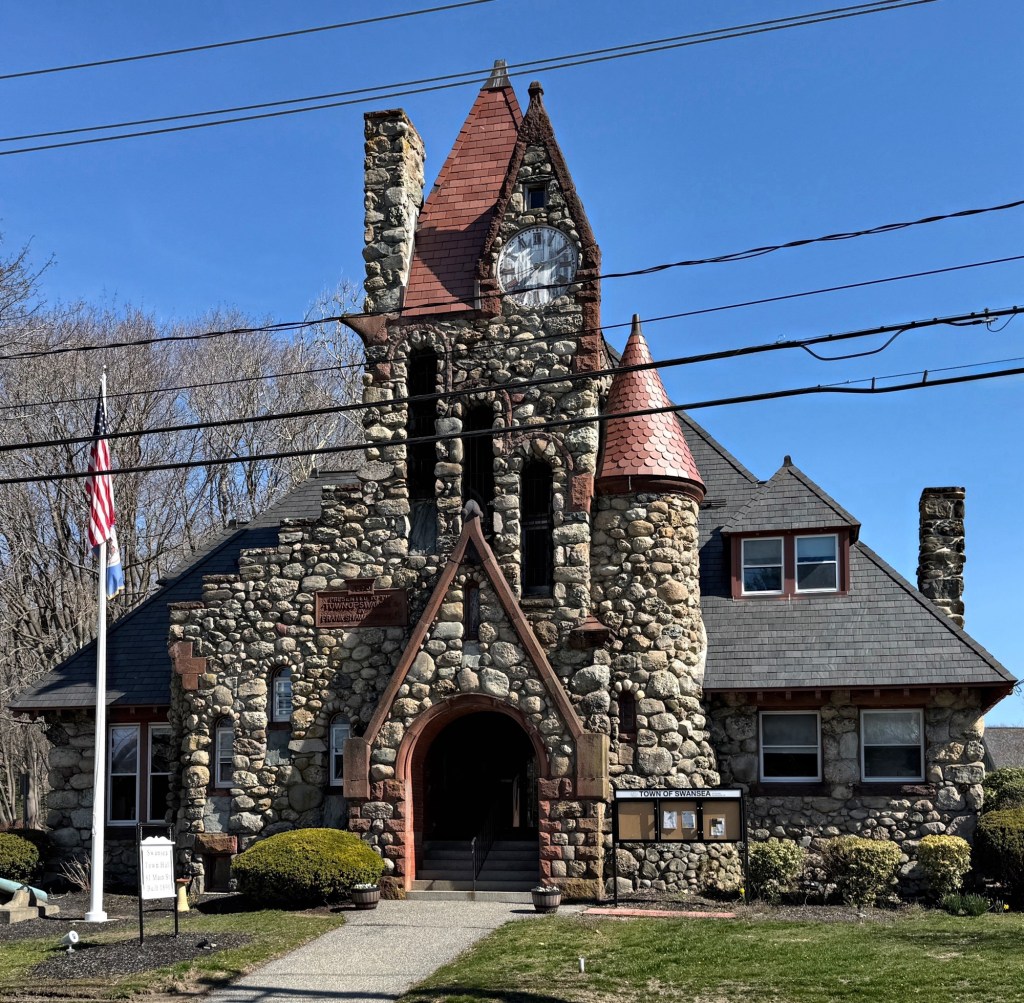
The Swansea Town Hall in Swansea, Massachusetts, is one of the most unusual and architecturally eclectic town hall buildings in New England, and was a gift to the community from a wealthy resident. Built in 1891 from plans by Boston architect, James Merrill Brown, the building is constructed of randomly laid rubblestone with brownstone trim with a massive pyrammidal slate roof and offset turret and tower containing a historic clock. The building was the gift of benefactors, Frank Shaw Stevens and Elizabeth Case Stevens, who lived down the street in the town’s largest mansion. The Stevens’ donated the building with the stipulation that the building was to be available to every and any religious society desiring to hold funeral services there and to also provide space for a public library. The town obliged. The space was outgrown and the Stevens’ would later donate the town’s public library next door and a church, that also held funeral services for the community. The building has been home to the Town Hall since 1891.
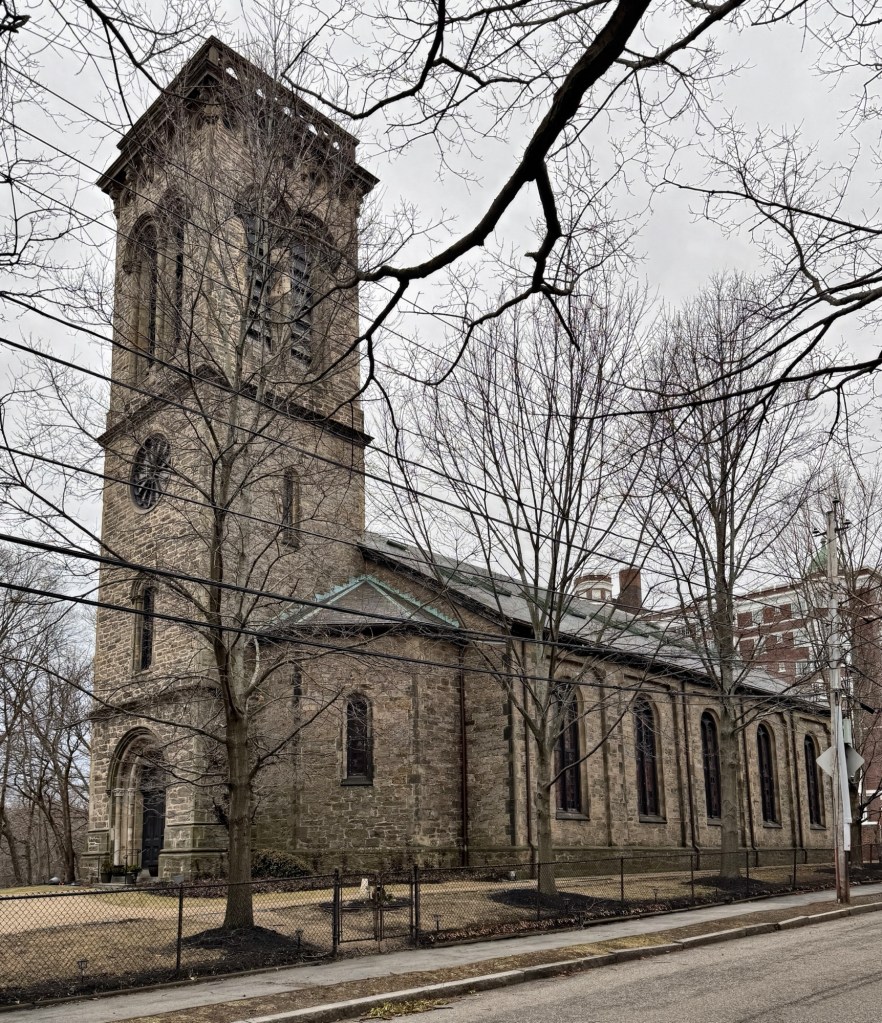
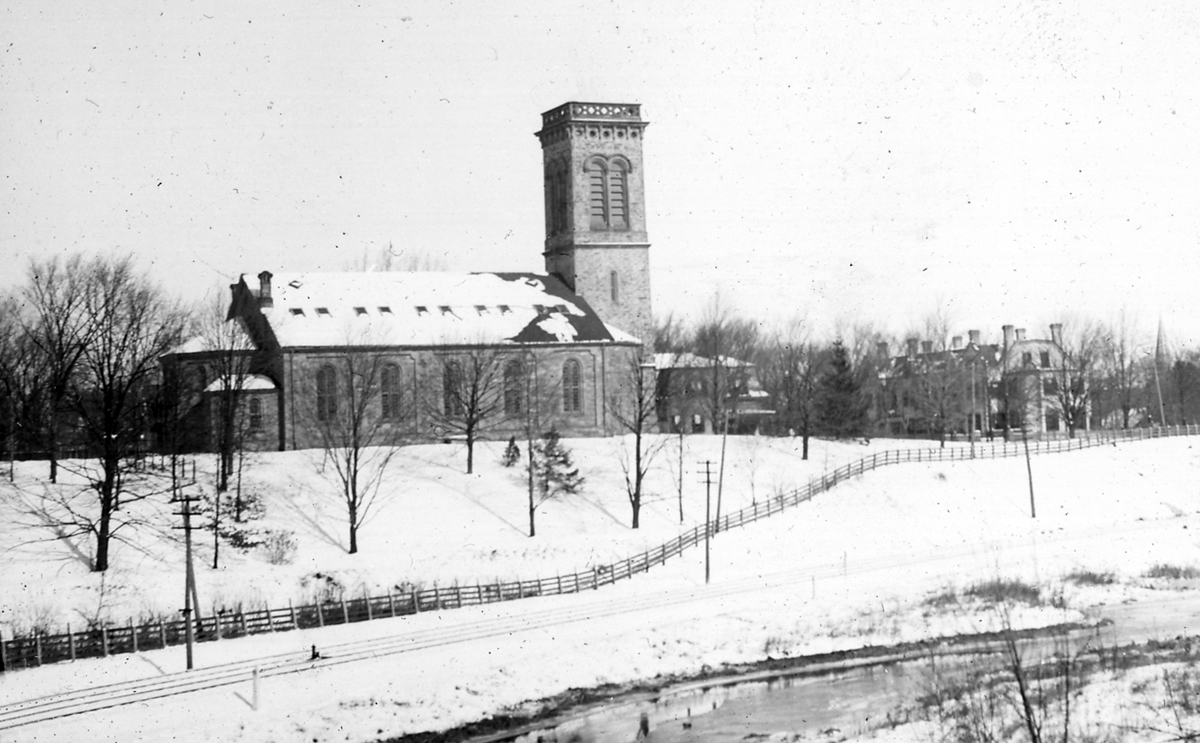
Christ’s Church in Longwood, better known as Sears Chapel, is among the finest ecclesiastical buildings in Brookline and commands its site on a rise overlooking the Muddy River, now the Riverway in the Emerald Necklace park system. The area presently known as Longwood was originally marshland with a few farms until the building of the Mill Dam road out of Boston in 1821 that improved access to Brookline, which opened up its connectivity and development potential. Wealthy Boston businessman, David Sears (1787-1871) recognized this, and began buying the low-lying pasturelands in Brookline near the Boston border. By 1830, some squares were laid out and development began in the Cottage Farm and Longwood sections. He, with associates, began building country estates for friends and family to escape the crowded conditions of Boston. He is said to have named his neighborhood “Longwood”, after Napoleon’s estate on St. Helena where he spent his days in exile. An avid amateur horticulturist, Sears planted some 14,000 trees, many of them imported from Europe, in the course of developing his land. In keeping with his faith, Sears built this house of worship, Christ’s Church, which is said to have been modeled after St. Peter’s in Colchester England, likely giving Colchester Street, where Sears Chapel is located, its name. The Romanesque style church was designed by Boston architect, Arthur Gilman, who designed the building suitable for the Sears Family crypt which is underneath the structure and the burial site of many of the family. The congregation remains active to this day who maintain the significant structure and its many historic stained glass windows.