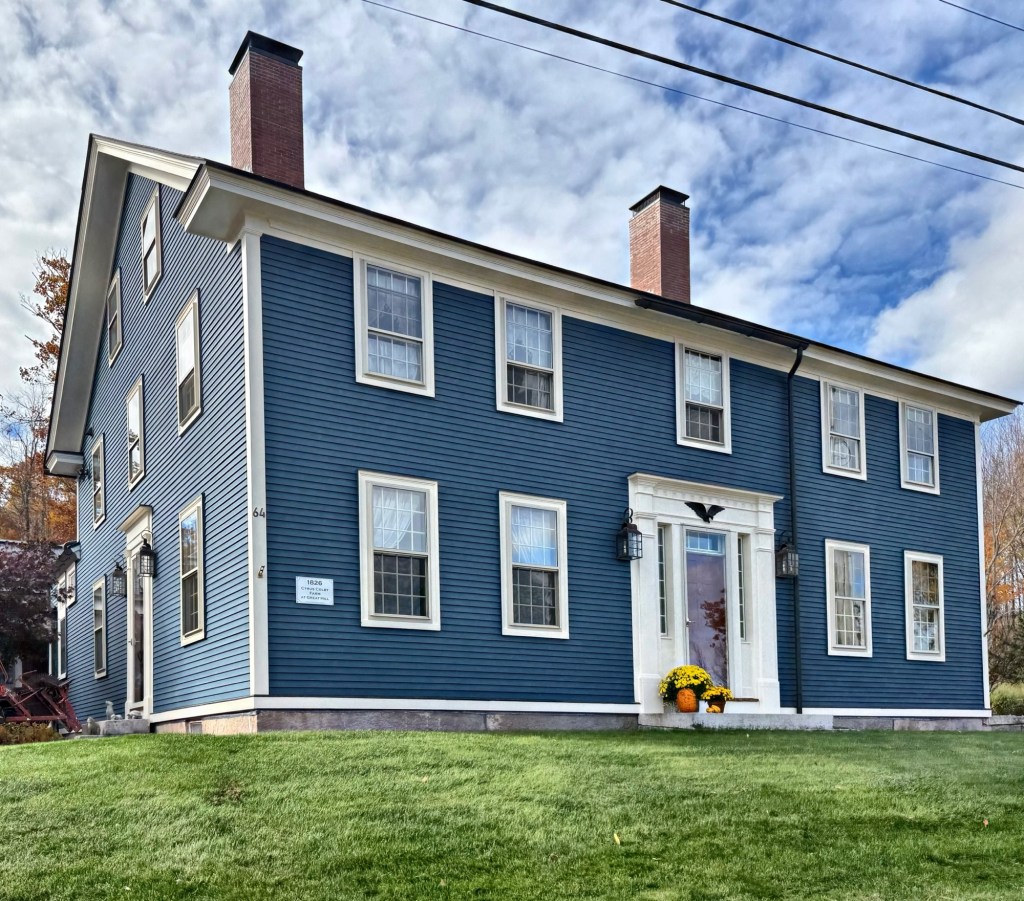
Located in the charming town center of Tamworth, New Hampshire, the Francis and Maria Burleigh House stands as a significant and well-preserved residence from the mid-19th century. The house was owned and likely constructed in by Francis N. Burleigh (1823-1893) and his new bride, Maria (Hyde) Burleigh around the time of their marriage in 1845. Francis worked as a shoemaker and his business did quite well to be able to afford a large home in the center of Tamworth’s village. The house was likely modernized slightly at the end of the 19th century with the two-over-two sash windows and Victorian-period front door, but these changes fit well with the mid-19th century Greek Revival style home. What do you think?
The historic Town House in Tamworth, New Hampshire, was built in 1794 as the meeting house, serving as both the center of religious worship and local government for the community. The Tamworth Town House was built after the community voted to call its first minister in 1792, thirty-two-year-old Rev. Samuel Hidden, who was ordained on a large boulder (ever since known as Ordination Rock), as there was no public building to house the ceremony. Within a year, members of the community voted that the new meetinghouse should be two stories with a porch (stair-tower) on the front of the building, and it was to be built near Ordination Rock. The structure has an impressive hand-hewn timber frame, spacious interior with original gallery columns, and surviving pulpit window showcase the skilled workmanship of early builders. Following the passing of the Toleration Act of 1819 in New Hampshire effectively brought about the separation of church and state. It severed allowed citizens to stop supporting the established Congregational Church in all towns via taxation and instead now support the denomination of their choosing. From this, a new Congregational Church was built in the village and the old Town House was moved to the village and renovated to its present appearance in 1852 in the Greek Revival style. The renovation added updated Classical frieze and pilasters, a redesigned main entrance, and larger windows that complemented the new use as the Tamworth Town Hall.
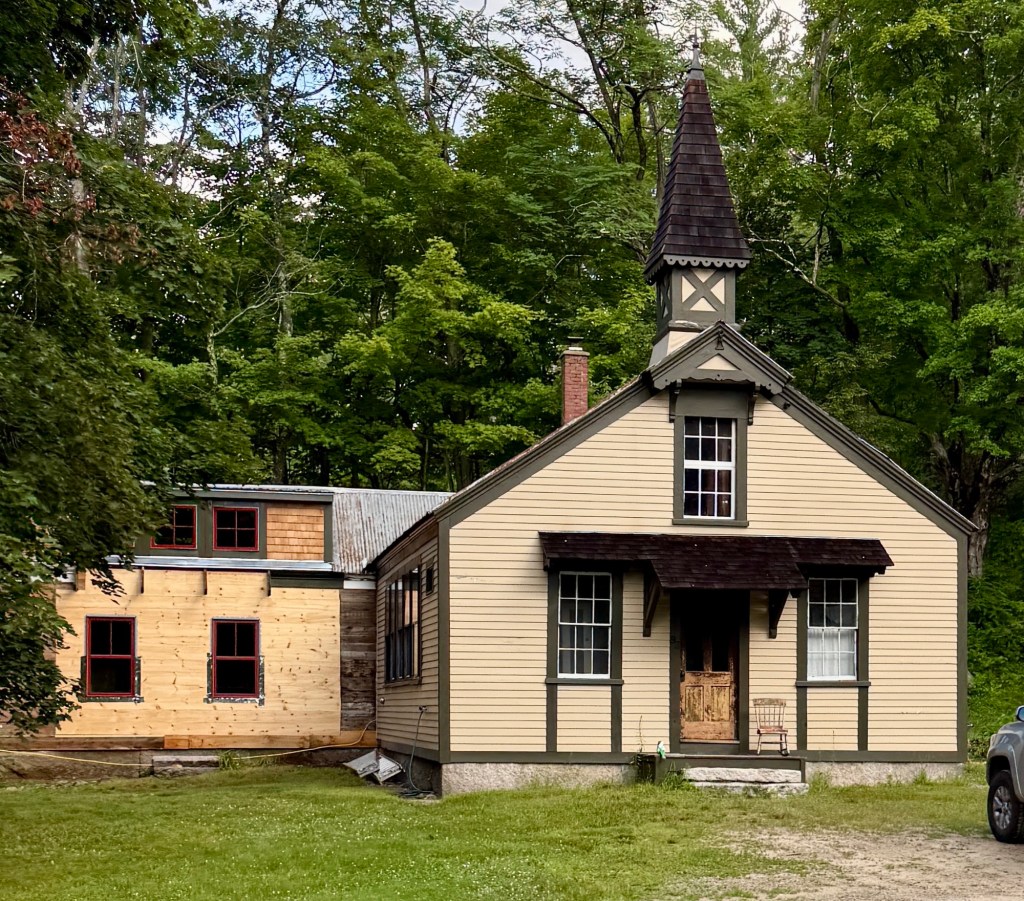
This historic one-room schoolhouse can be found in Chocorua Village in the town of Tamworth, New Hampshire, and is a rare Stick style example of its type. The one-room schoolhouse was built around 1880 for the village and was one about 19 district schoolhouses in the town of Tamworth, all servicing remote villages for area children. The school eventually closed when consolidated schools took over in the 20th century, and this charming Victorian schoolhouse has since been converted to a private residence with rear wings added.
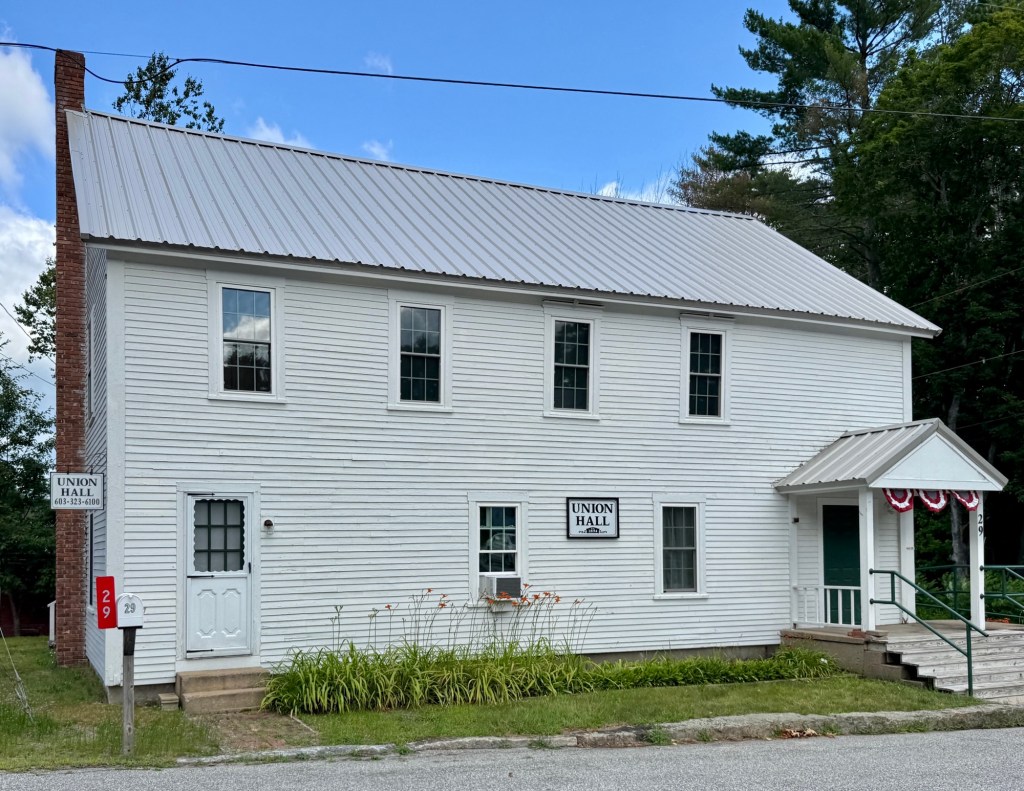
The village of South Tamworth, New Hampshire grew during the 19th century. In 1824, a Methodist Episcopal Society organized, and constructed the South Tamworth United Methodist Episcopal Church in 1832. Lumber mills, homes, a store and blacksmith shop were built and the small hamlet thrived. Also at this time, the local Women’s Christian Temperance Union was active in South Tamworth, and reported that they were, “holding the fort, and trying to keep the boys from drinking cider.” In 1894, 30 South Tamworth residents banded together to establish the Union Hall Association, to “promote the causes of Temperance, Religion, Education and Music among ourselves, our associates and successors, and for the general good of the public.” This structure, Union Hall, was built around the time of the association’s founding in 1894 and is a vernacular example of a New England community building. Since its construction, the South Tamworth Union Hall has served as a vital community space hosting dances, community meetings, and local events. By the late 20th century, the building began to show its age and with little use, the hall was threatened with demolition. A band of area residents fundraised and oversaw a restoration of the building in the 1980s with the Union Hall Association continuing to rent the building to local organizations and for private functions, preserving the important role the structure has played in the history of the local community.
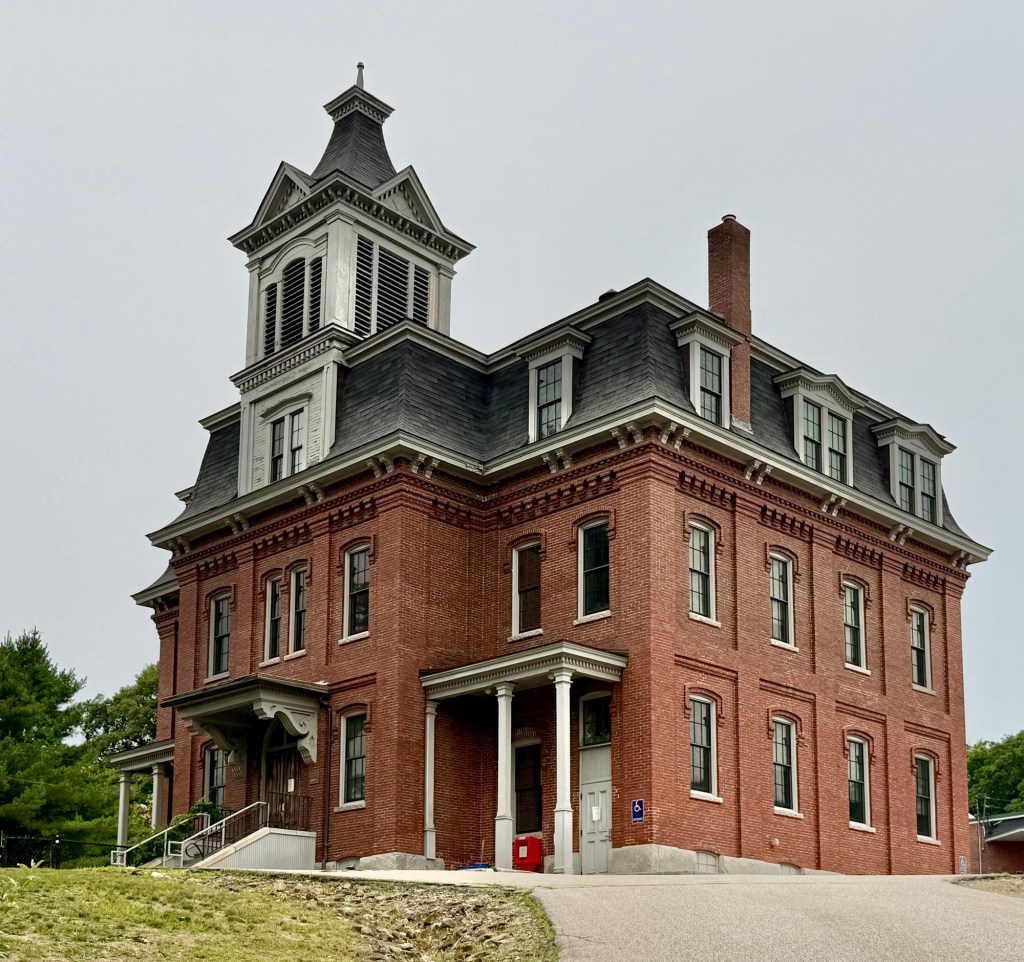
The former Ashland Junior High Schoolstands on a rise overlooking Ashland’s village center, on School Street just east of the entrance to the modern Ashland Elementary School. It is a three-story brick building designed in the Second Empire style and is topped by a mansard roof. The exterior is little changed from its original construction, although the interior has been subjected to period modernization after decades of vacancy and conversion to offices. The school was built in 1877 in response to the poor conditions of Ashland District Schools at the time. The school was closed in 1990, and the town voted to demolish it in 2000. The building was listed in the New Hampshire Preservation Alliance’s Seven to Save in 2007. A community effort rescued the building from that fate, thanks to the Ashland Historical Society which advocated for the sale of the building and subsequent restoration by the Tri-County Community Action Program, which occupies the building to this day. Preservation wins!
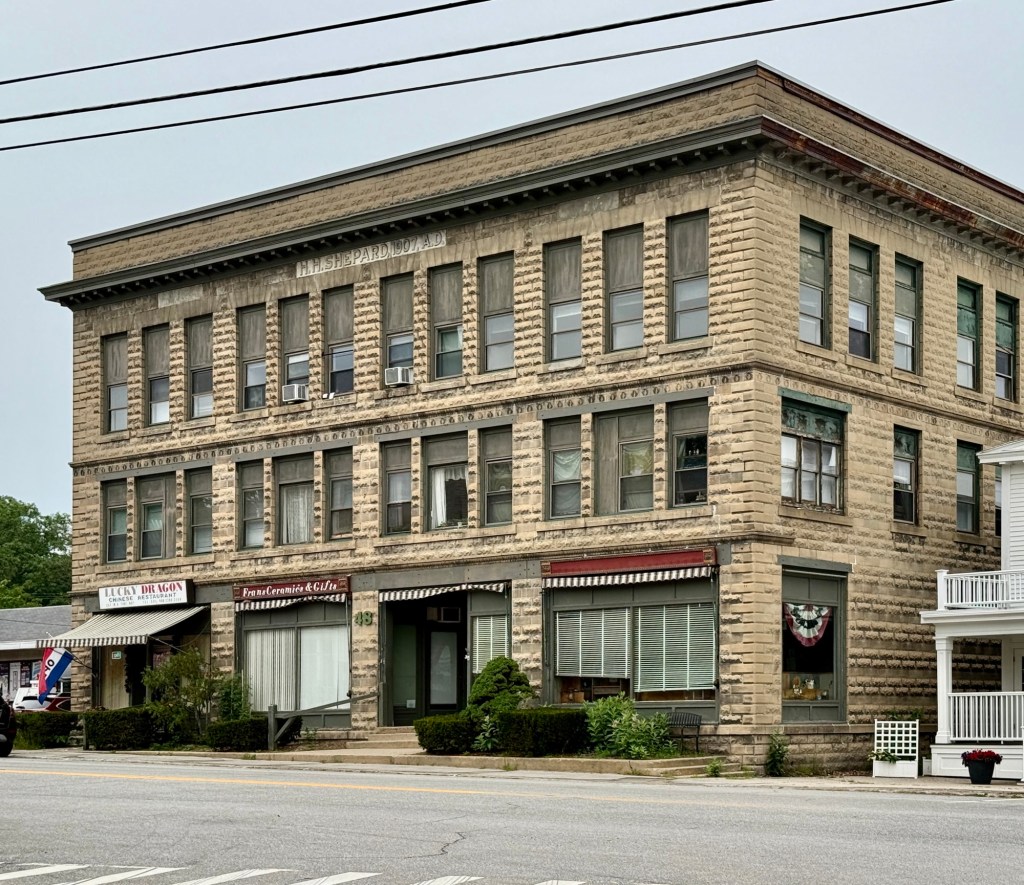
Located on Main Street in Ashland, New Hampshire, the Shepard Block is an architecturally distinctive mixed-use building constructed of a less common building material for commercial buildings, concrete blocks. Now known as concrete masonry units, concrete blocks exploded onto the building scene in the late 19thand early 20th centuries with a flurry of different patents for block designs and production. After Harmon Palmer invented the first commercially successful concrete block machine in 1900, the industry expanded rapidly with multiple manufacturers producing the blocks with their stone-like surface created through either a mold or the use of special aggregates in the concrete mix. Although stonelike concrete blocks were popular for the first quarter of the 20th century, they fell out of fashion following World War II. The Shepard Block in Ashland was built in 1907 by owner, Henry Harrison Shepard who, ironically, made his fortune as a lumber dealer. The upper floor contained a public hall space for the local Mount Prospect Lodge of Masons, and now the building contains 36 apartments and three retail spaces at the ground floor, a great way to provide housing without sacrificing history and character of a Main Street.
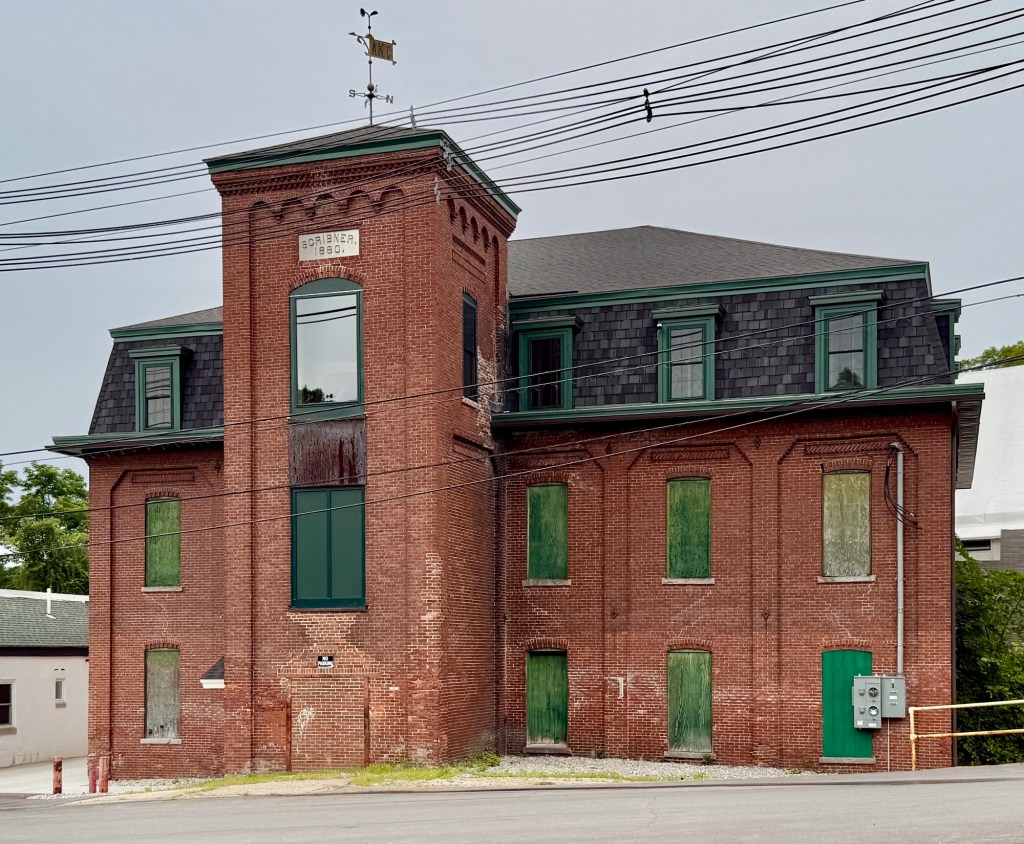
The Scribner Mill building in Ashland stands as an architecturally and historically significant industrial building that tells the story of the community as a manufacturing center of the lakes region of New Hampshire. Built in 1880 by owner Ambrose Scribner, the brick structure served as a hosiery factory and is a late example of a mill building in the Second Empire architecture style. Owners today have spruced up the building which had previously been left vacant, to rent as office and light manufacturing space by Minus33, a merino wool apparel brand, and the purchased helps to reclaiming the important textile heritage of New England. The building retains its iconic mansard roof, brick corbeled cornice and entry tower, though many window remain boarded up.
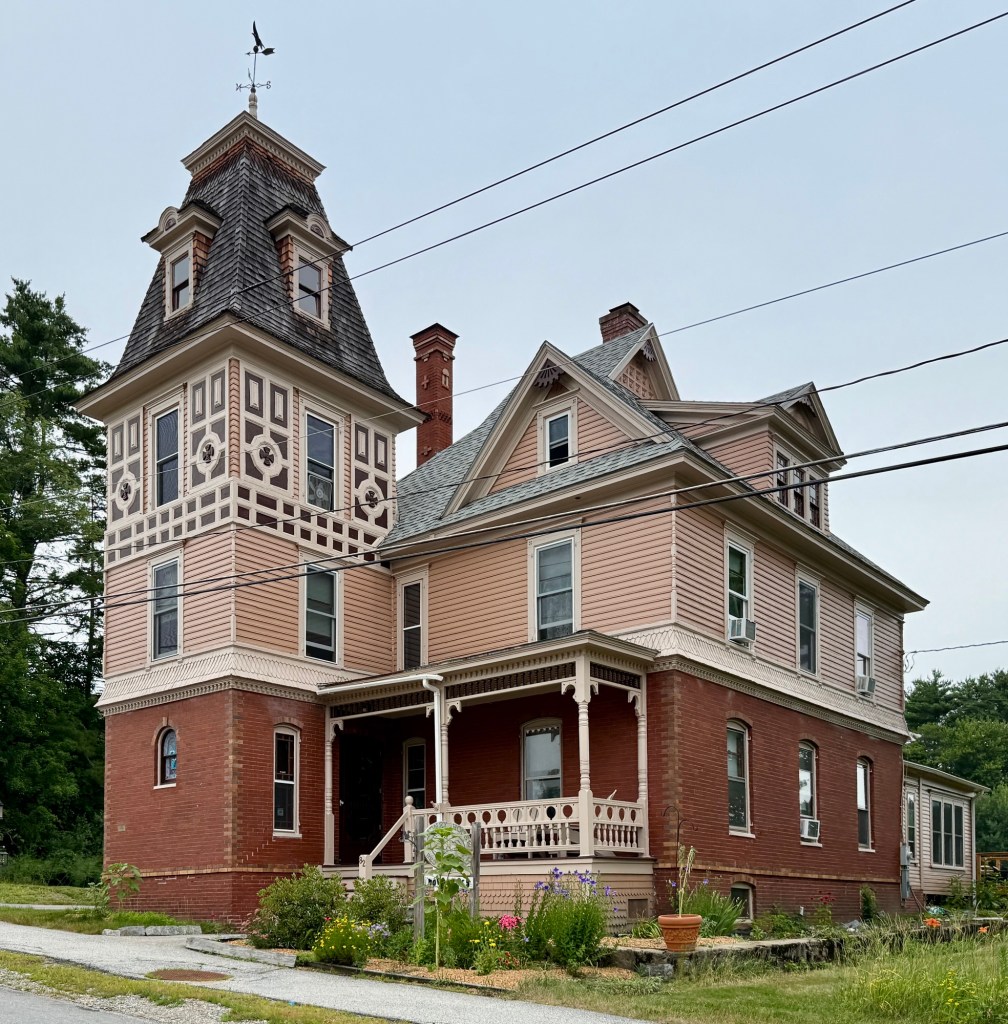
The Dr. Jonathan M. Cheney House in the town of Ashland, New Hampshire, is significant as a well-preserved example of Queen Anne architecture with all the flourish and asymmetry expected in the iconic style. The residence was built around 1895 for Jonathan Morrison Cheney (1863-1918), a prominent physician in Ashland and also served as a member of the General Assembly in 1909 and a member of the State Senate in 1911. Dr. Cheney was the son of Col. Thomas P. Cheney, a well-known New Hampshire politician, and enjoyed his connections and success from family, eventually being able to afford such an ornate mansion in his hometown. While the architect is unknown, the Cheney House stands out for its use of varied materials including a brick ground floor and clapboards above, decorative porch frieze, and the four-story square tower with mansard roof and paneling at the third floor. The residence today serves as a bed & breakfast, appropriately named the Cheney House.
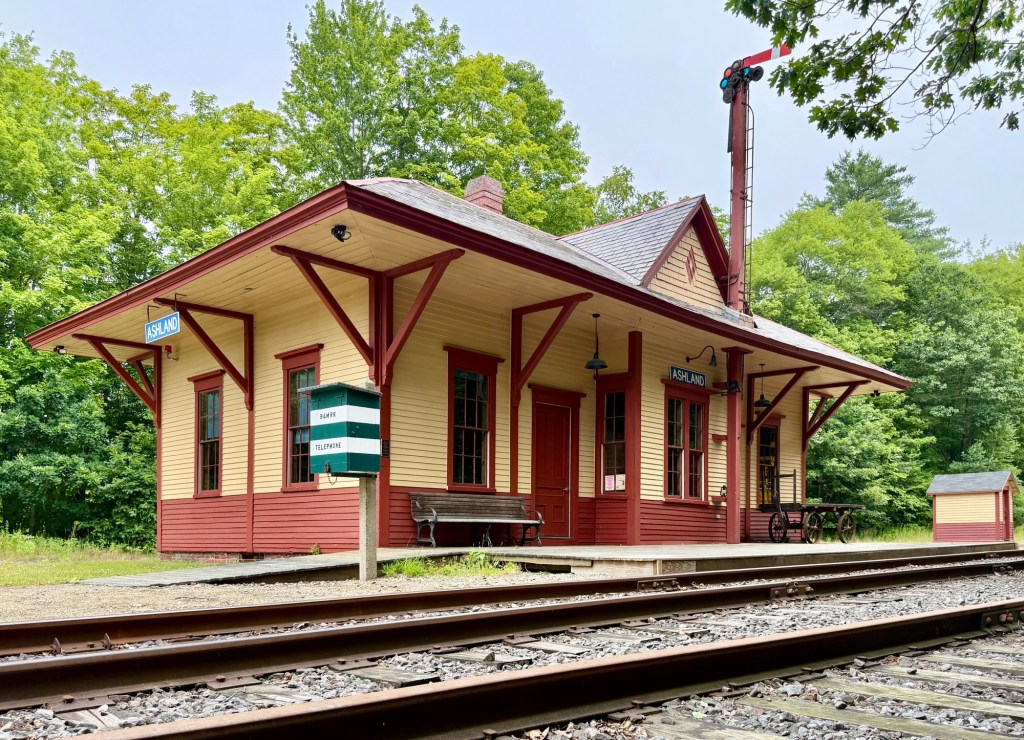
The railroad arrived to Ashland, New Hampshire (then a part of Holderness) in 1849, which connected the industrial village to Concord for both freight and passenger service. The first Ashland Station opened as a combined passenger and freight station of the Boston, Concord & Montreal Railroad, which was chartered by the State of New Hampshire in 1844. Construction of its initial 93-mile track through largely agricultural, rural, and mountainous territory began in 1846 and concluded in 1853, when the railroad reached its terminus in Wells River, Vermont. Over time, the railroad expanded and acquired branch railroads, connecting it to routes all over the northeast. As manufacturing flourished in Ashland, the town grew, which necessitated the demand for a larger passenger station for the railroad. Additionally, in 1869, the original freight and passenger station (built c.1850), was remodeled to handle increased freight. This passenger station was built in 1869 and resembles many other rural New England railroad stations of its period with its rectangular form and low hipped roof with extended eaves supported by brackets to shelter those waiting for the next train to arrive. In 1895, the Concord & Montreal came under the control of the Boston & Maine Railroad and it continued to serve many travelers as the gateway to the town and the popular Squam Lakes Region in summers. Regular passenger service at the Station ended in 1959, and the Boston & Maine Railroad sold the Station to Joseph Curley. In 1980, his widow Vera Curley generously donated the station and site to the Ashland Historical Society, who oversaw a restoration of the building. Today, the building serves as a local history museum and serves as a stop along the Winnipesaukee Scenic Railroad on its popular Fall Foliage Tours.
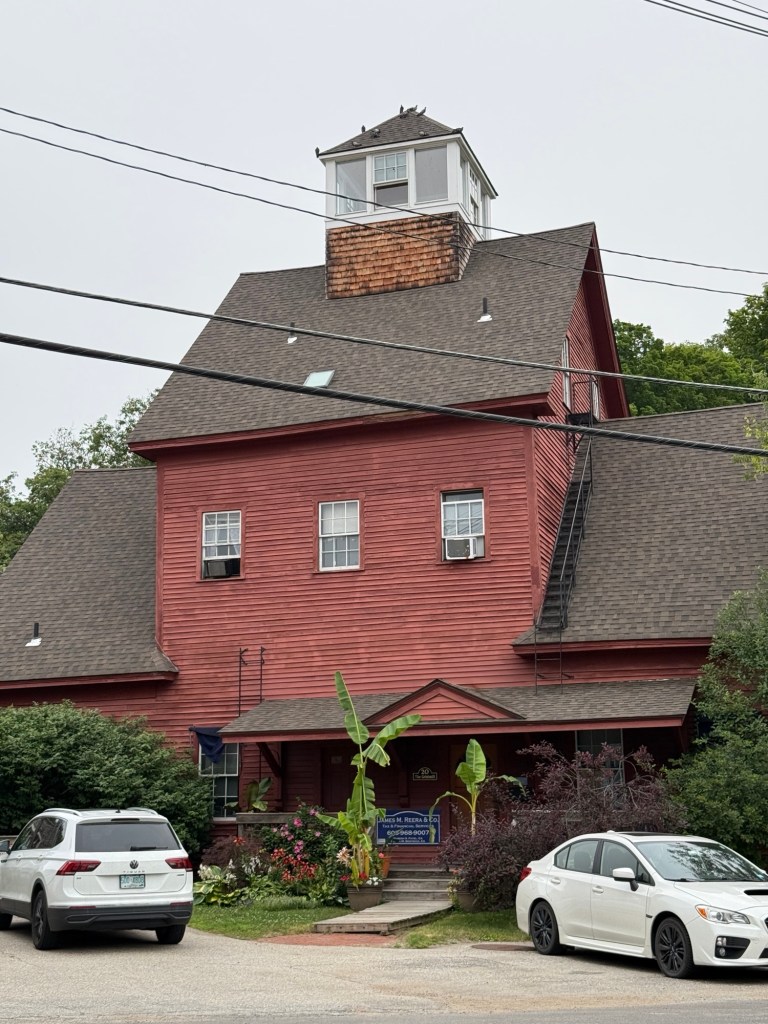
The Ashland Grist Mill stands as one of Ashland, New Hampshire’s most recognizable historic landmarks, reflecting the town’s long tradition of water-powered industry along the Squam River. The present mill was built in 1903 after an earlier gristmill on the site was destroyed by fire, continuing a milling legacy that dates back to the late 18th century when some of the area’s first sawmills and gristmills utilized the river’s strong current. Architecturally, the three-story vernacular industrial building is notable for its massive timber-frame central section flanked by balloon-framed wings, a practical design that absorbed the vibration of the heavy milling machinery while providing ample space for grain storage and flour production. Its attached dam, now a concrete structure replacing the original wooden dam, remains an important feature of the historic landscape, both of which were listed on the National Register of Historic Places. In the late 20th century, the mill was thoughtfully restored and adapted for professional offices, preserving its distinctive exterior and ensuring that this enduring symbol of Ashland’s industrial heritage continues to serve the community while honoring its past.
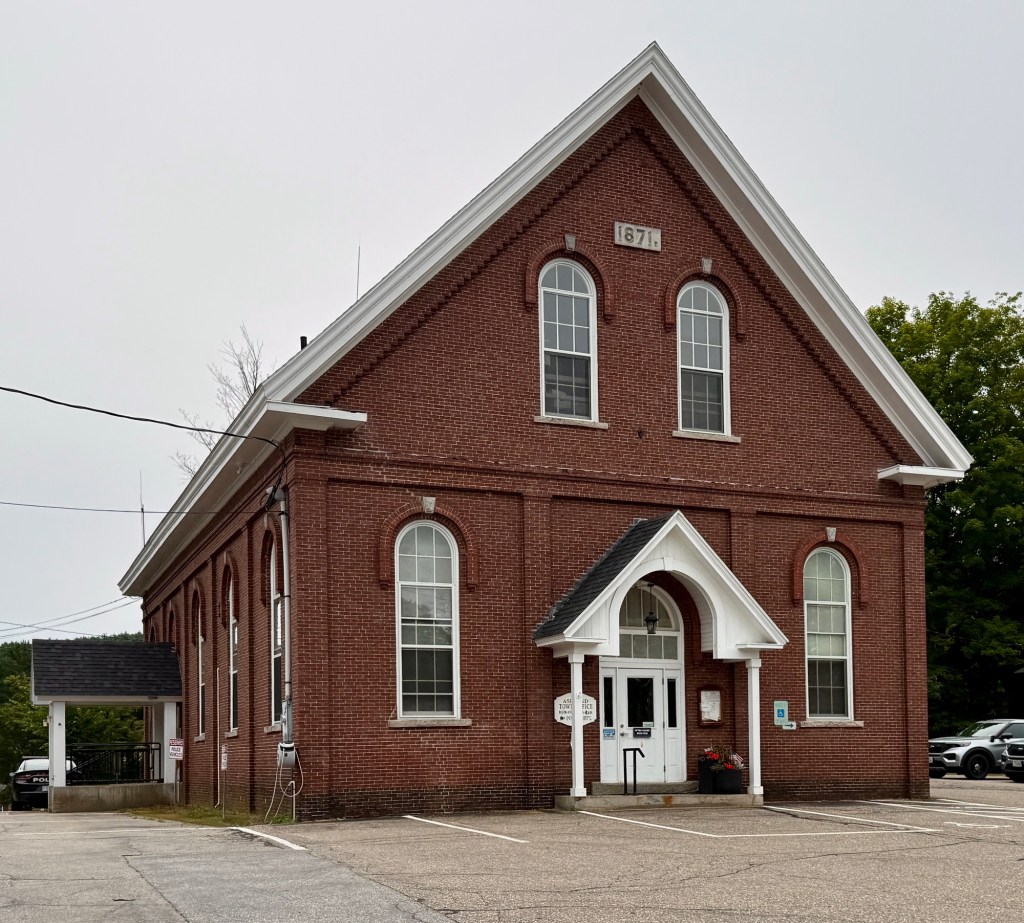
The Ashland Town Hall in Ashland, New Hampshire, was built in 1871, three years after the town separated from Holderness, due to its growing economy as an industrial village compared to its mother-town’s more agricultural character. Constructed of brick, the facade is dominated by its gable roof which reads as a pediment and bays divided by brick pilasters which harkens back to the Greek Revival style; while the use of arched brick mouldings which is a common element in the Italianate style. The handsome, well-proportioned structure was used for town meetings and elections until 1950, and in 1952, the building was used by the school district as the village school. The building returned to municipal functions in 1972 and has since housed the Ashland Town Offices. The Old Ashland Town Hall was listed in the National Register of Historic Places in 1983.
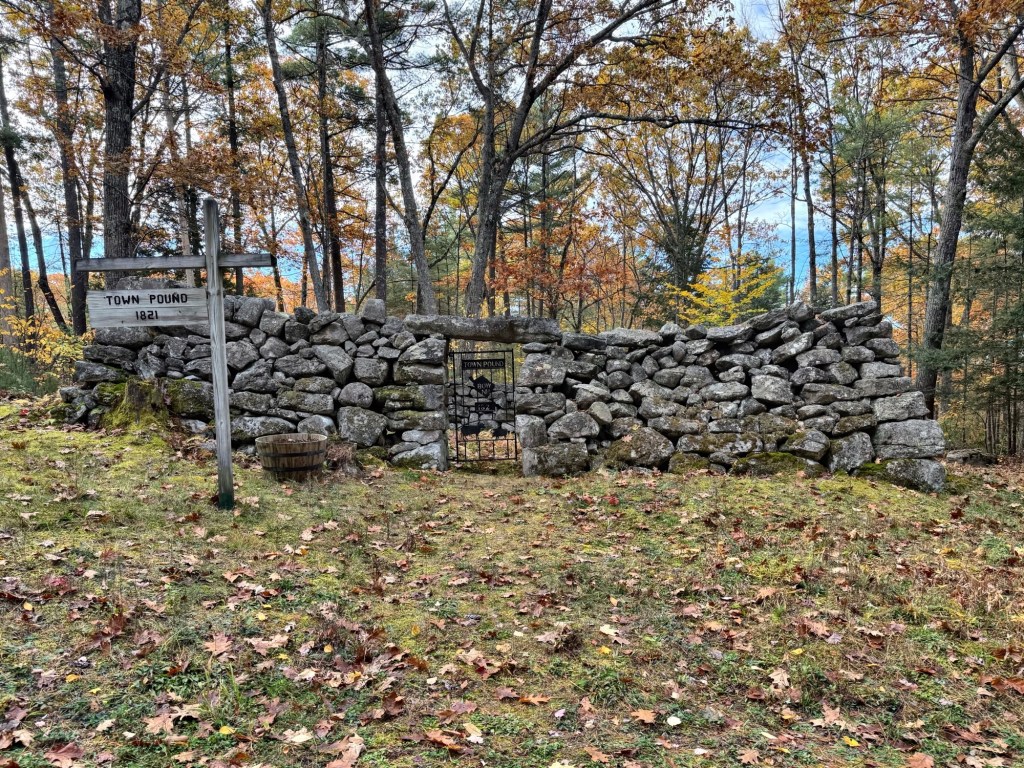
In farming communities all across New England, disputes inevitably arose when one person’s livestock left their land and damaged another person’s crops. New England laws required farmers to fence their fields and keep farm animals from straying, but some inevitably got out. The solution was to build pounds where stray cattle, horses, sheep and swine were rounded up and kept by a town-appointed pound keeper who would round up the roaming animals and keep them there, charging by the day until an owner releases the animal and pays the fee of any damage done. The old town pound in Bow, New Hampshire, dates to 1821 and features tall stone walls, high enough to prevent taller livestock from jumping out. As towns like Bow shifted away from agrarian culture, these structures crumbled back into the earth. Luckily for us, some sommunities preserved their pounds and in Bow, the local community restored the town pound in 2011.
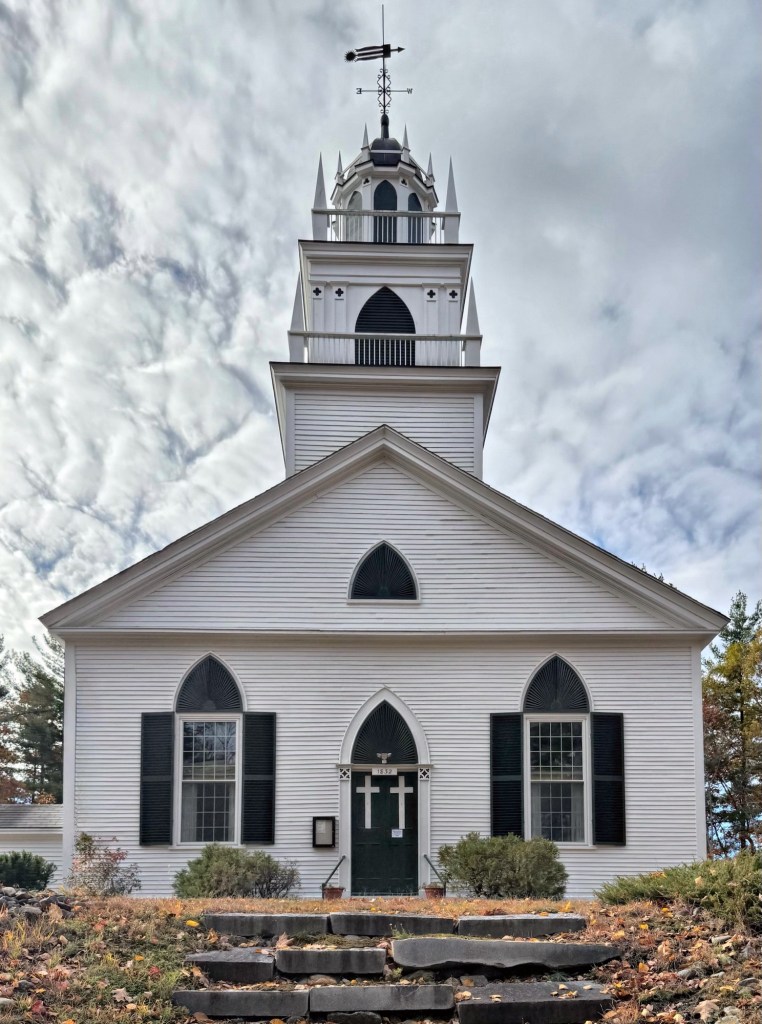
The Bow Baptist Church congregation was established in 1795 and reorganized in 1816. Prior to erecting its beautiful church building in 1832, meetings were held in member homes and the old Townhouse. Designed in the Gothic Revival style with some Greek Revival pilasters in the steeple, the church stands as an important early building for the community. Since its establishment, the congregation has advocated for causes of abolition and temperance and is presently known as the Crossroads Community Church, a non-denominational house of worship. Tragedy struck in 2018, when a lightning-strike hit the steeple, sparking an intense blaze that fire crews managed to prevent from spreading to the rest of the nearly 200-year-old structure. The steeple was completely destroyed, and the interior below sustained heavy water damage. Undeterred, the congregation worked to rebuild the steeple, bringing this nearly 200-year-old church back to her former glory.
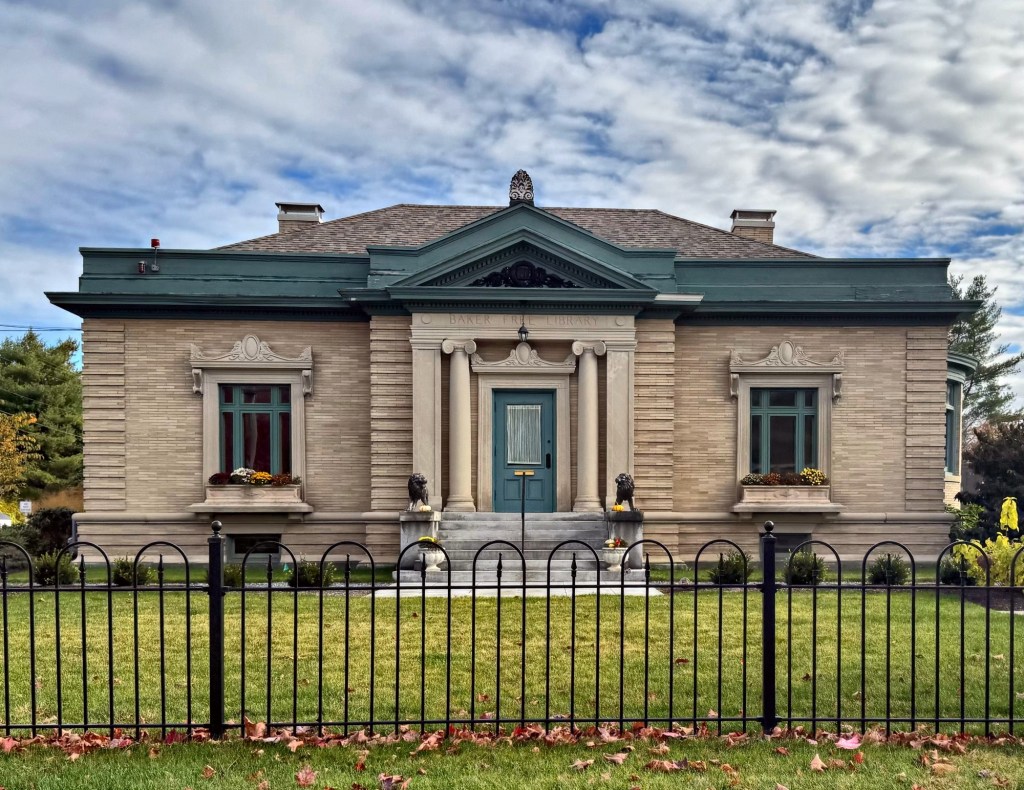
In 1912, Congressman Henry M. Baker, cousin of Mary Baker Eddy, the founder of the Church of Christ, Scientist, left in his will, $10,000 and the land next to his family home to the Town of Bow for the creation of a public library for his hometown. Architect, William McLean formerly of the firm, McLean and Wright, who specialized in library designs of the early 20th century, was selected to furnish plans for Bow’s new library, which employs a sort of Classical Revival/Beaux Arts design, similar to many Carnegie libraries of the time. As the town grew, the library has been expanded.