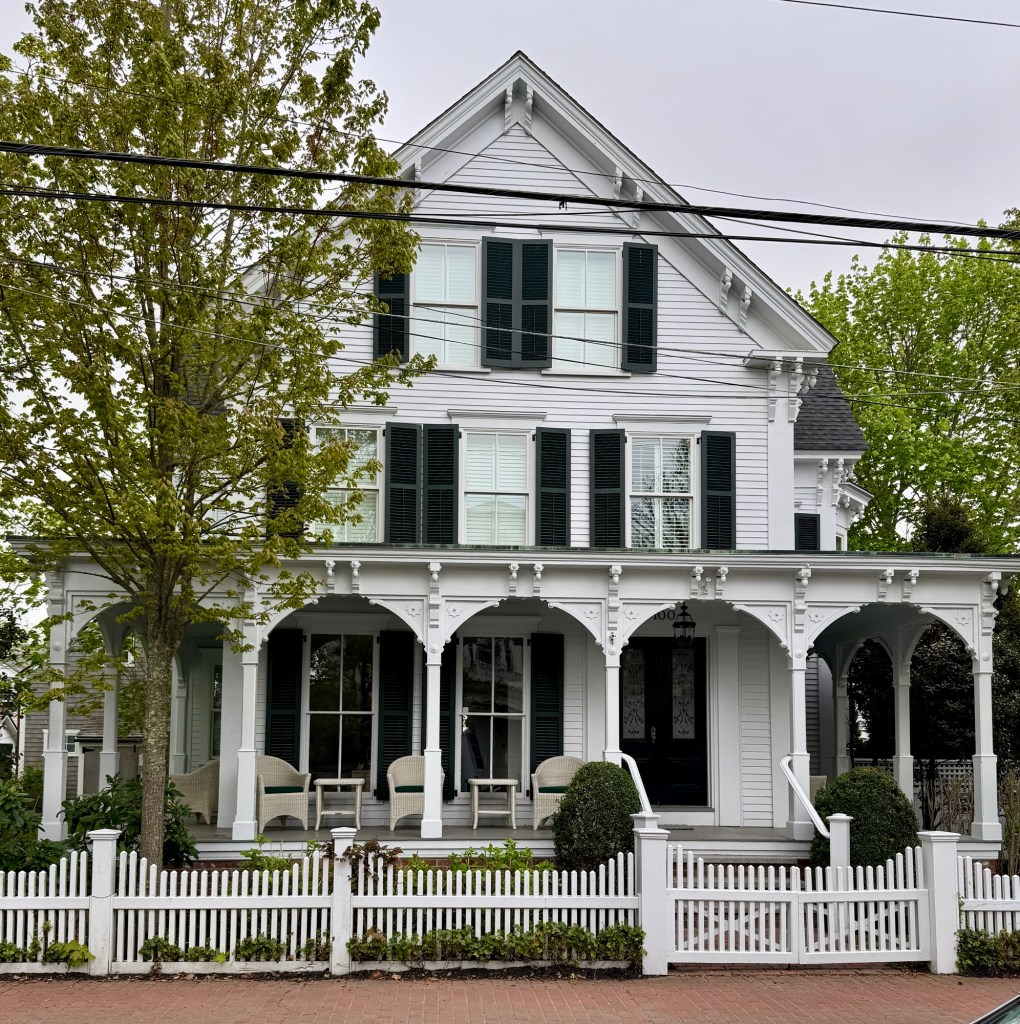
Built circa 1860 for Jonathan Harding Munroe, this stately Victorian house sits on Main Street in the up-scale community of Edgartown on Martha’s Vineyard. Jonathan Munroe was born in Bristol, Rhode Island and moved to Edgartown where he opened a store and worked as a high-end tailor, and became a successful businessman in town where he founded the Martha’s Vineyard Bank of Edgartown, and later financed successful whaling excursions making a large profit on his investments. With his ever-growing net worth, Mr. Munroe likely updated this house towards the end of the 19th century, with the ornate three-sided porch. Most recently, the property has operated as an inn, named after its original owner, the Jonathan Munroe House Inn.
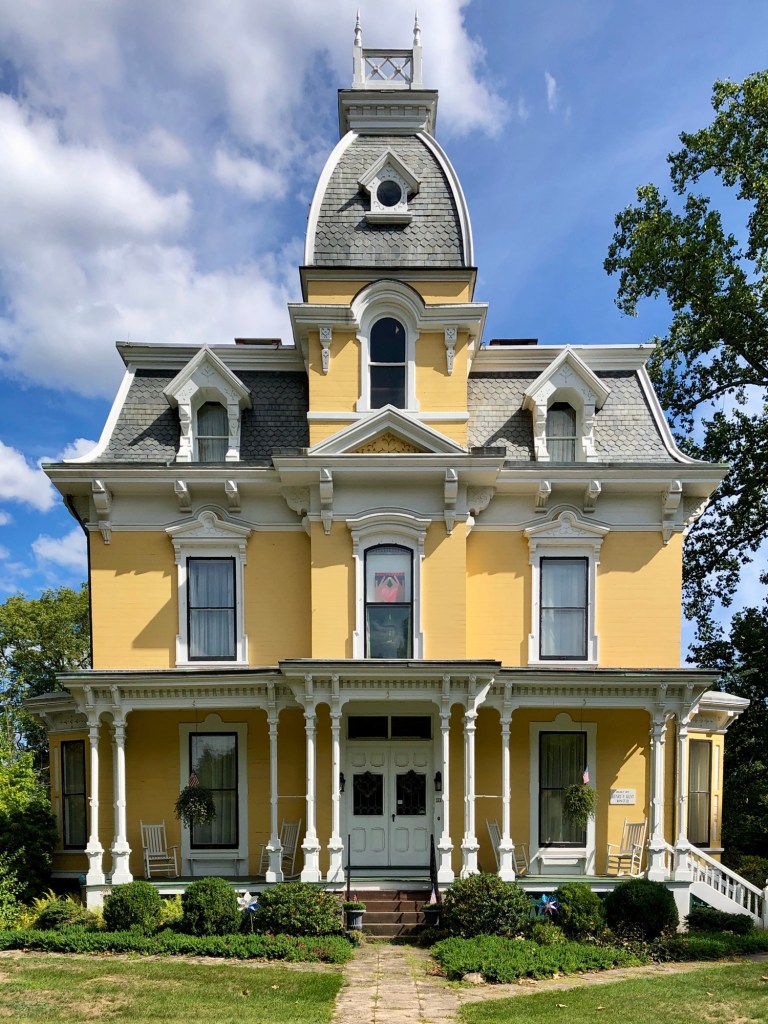
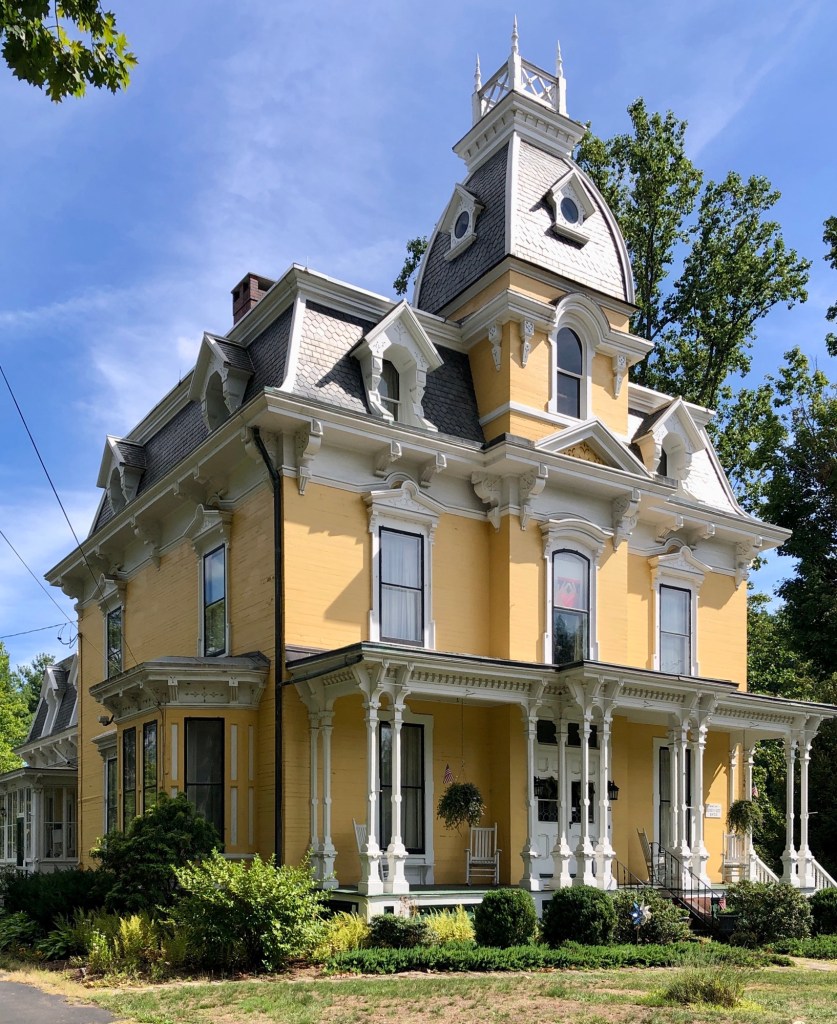
Located on South Main Street in Suffield, Connecticut, this stunning Second Empire mansion showcases the tobacco wealth seen in the town in the mid-to-late 19th century. Local legend states that in the early 1800s, a Cuban man arrived into town and was hired by a local farmer to grow tobacco and roll cigars for sale. Decades later, dozens of farmers in Suffield erected tobacco barns and cultivated tobacco to be rolled in cigars and shipped to communities all over the east coast. One of the first men in Suffield to box the cigars as a pack for shipping and sale was Henry Phelps Kent (1803-1887). With his success, Henry Kent purchased a large lot on the town’s Main Street and hired local architect, John C. Mead, to design a mansion to display his success in business. The large Second Empire mansion features flush-board siding, a full length porch, and a projecting mansarded tower with convex roof. The home was later owned by Samuel R. Spencer, a politician who served as a Lieutenant Governor of Connecticut, the first as a blind man. The home is now operated as a bed & breakfast “Spencer on Main”, named after its second owner.
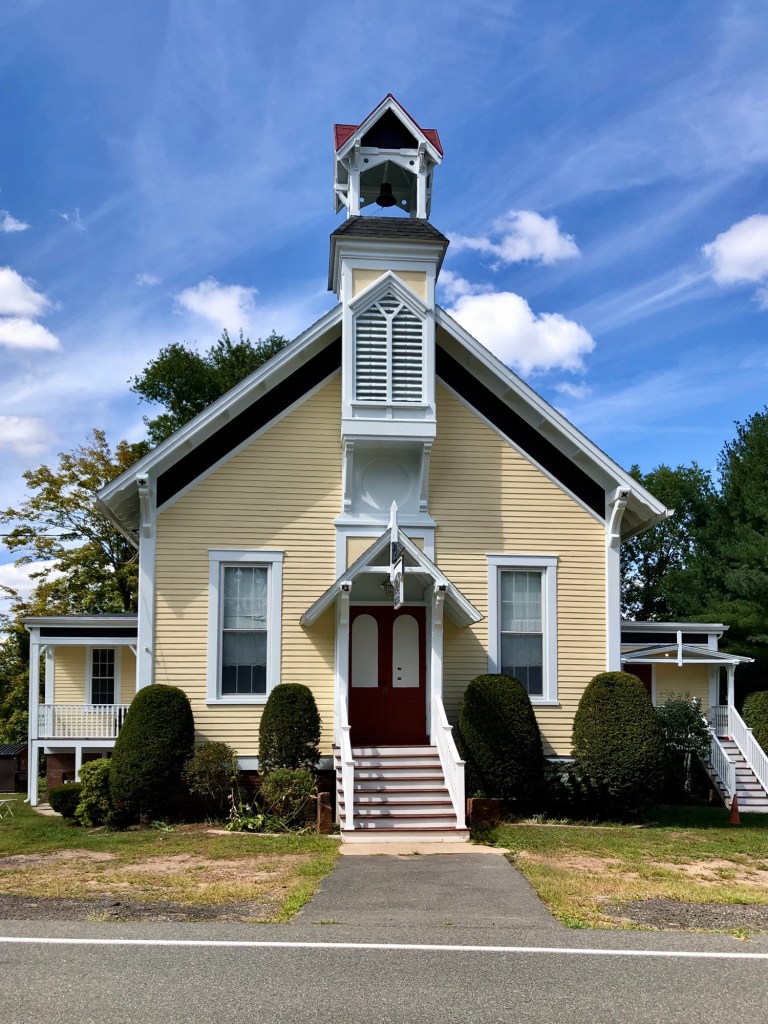
Located on Mapleton Avenue in the historic farming community of Suffield, Connecticut, Mapleton Hall stands as a remarkable testament to the town’s agricultural heritage and success. Originally constructed in 1883 as Central Hall, the building served as a gathering place for farmers’ meetings, civic events, and later the local Grange, reflecting the importance of agriculture in Suffield’s development. As its popularity grew, rear wings were built in 1896, expanding the hall to accommodate larger crowds drawn by community events and meetings. Architecturally, Mapleton Hall is a distinctive example of late Victorian-era rural meeting hall, featuring elements of the Queen Anne Stick/Eastlake styles, along with decorative woodwork, a prominent bell tower, and trussed gable that have been carefully preserved through decades of restoration. The building was sold in 1999 to the Suffield Players, a local theater group, who have preserved the building, using it for their theatrical productions.
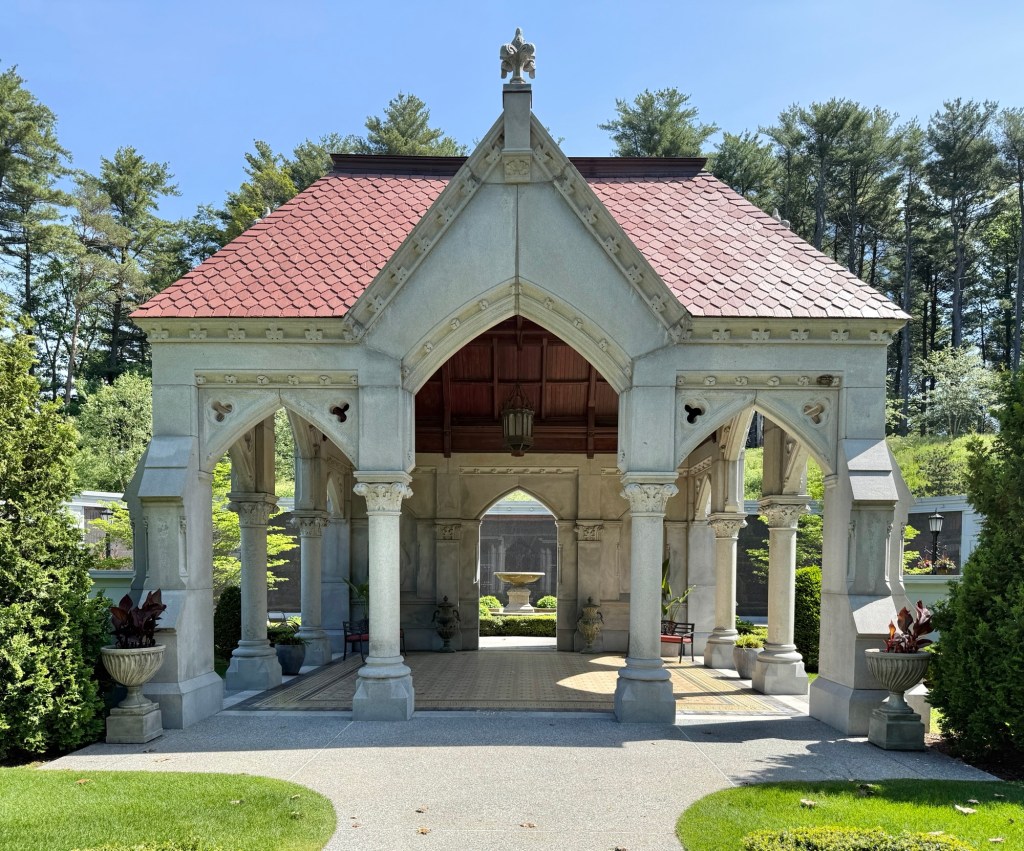
The Gothic Revival receiving tomb at Forest Hills Cemetery in Boston is located not far from the iconic entrance gate and chapel/offices. The structure was built in 1871 and designed by architects, Carl Fehmer and William R. Emerson in the Gothic style, a prevalent aesthetic that the overseers encouraged for the various 19th century buildings constructed on the grounds. Historically, the Gothic Revival structure served as the entrance to underground holding tombs for the temporary storage of bodies awaiting burial or relocation, typically stored when the ground was too frozen for burial. The structure features a granite structure with oak ceiling and painted tile flooring. A massive project began in 2016 to excavate and build a new Garden Mausoleum, built into the landscape with the restored Receiving Tomb serving as the focal point. The tomb portico was adapted as a gateway to an open-air courtyard flanked by walls set into the slope which contain internment chambers for burials, with a restored fountain in front and woman archer statue atop.
This iconic Boston building is threatened with demolition!
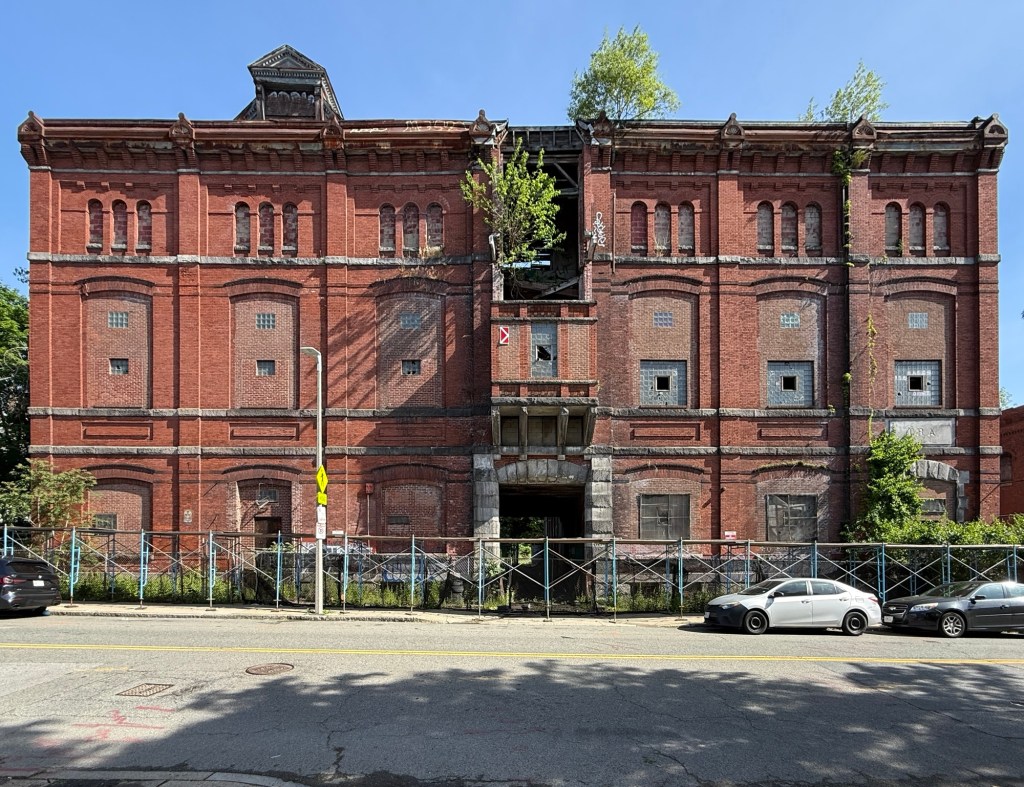
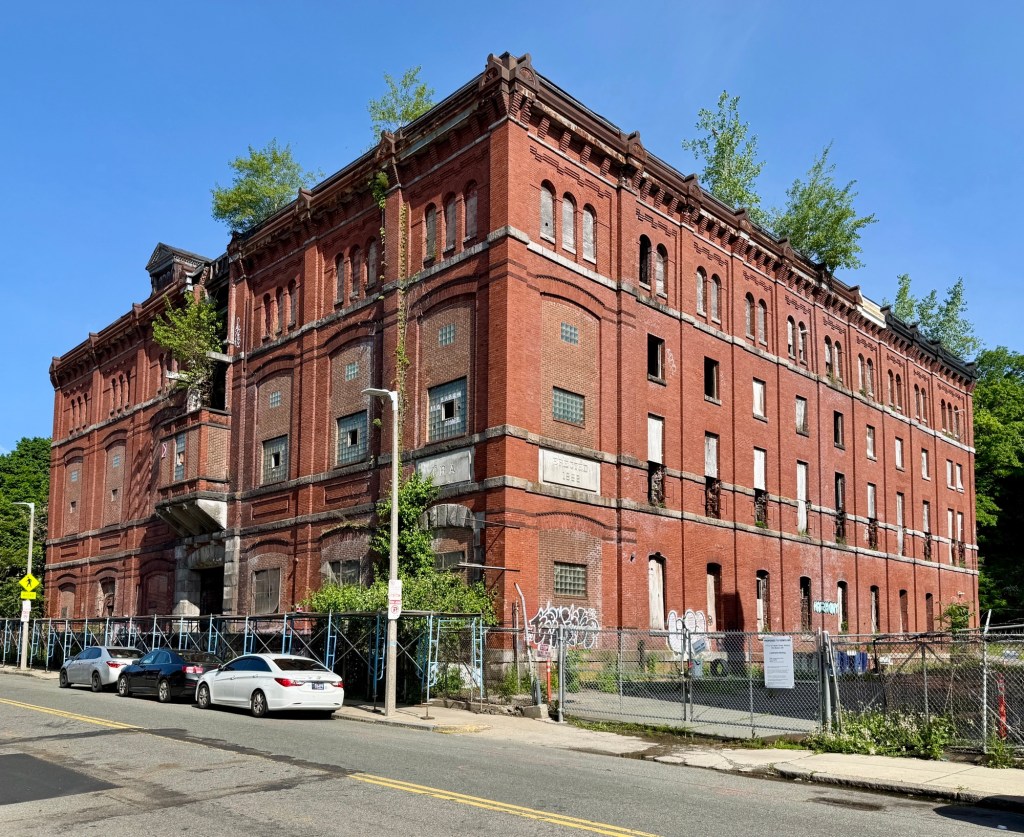
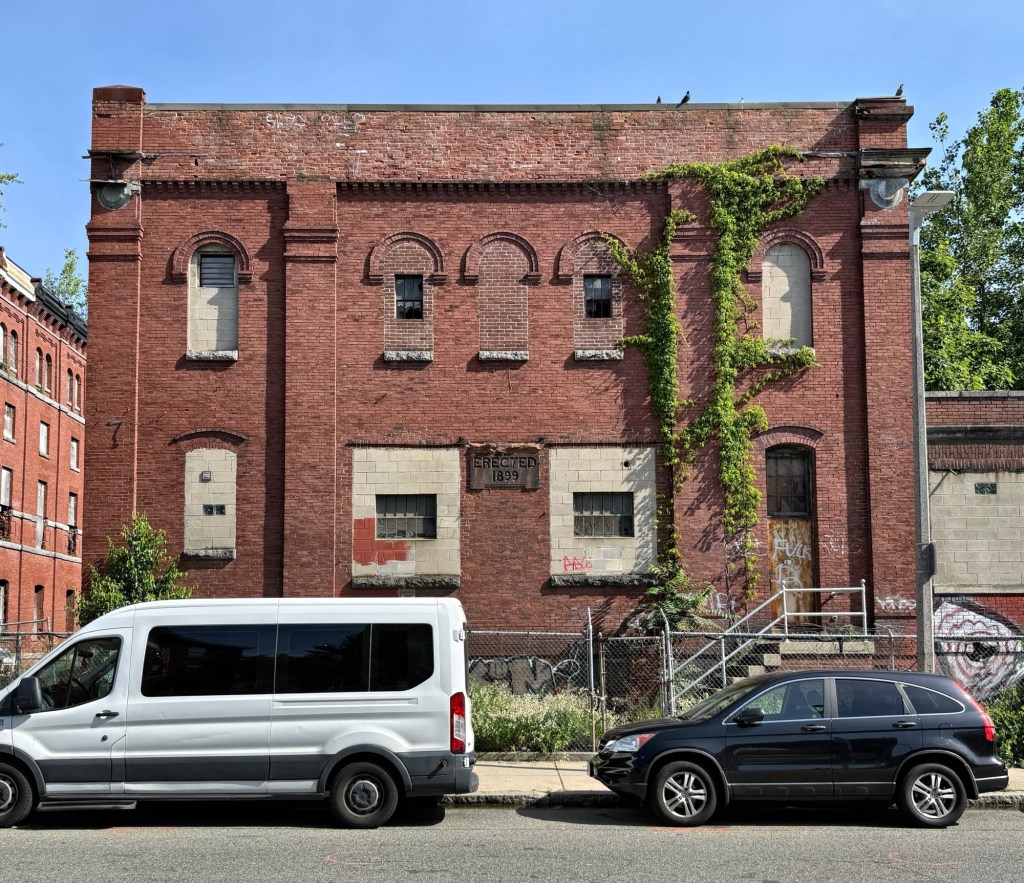
The clock is ticking for the Alley/Eblana Brewery, a historically and architecturally significant building in Boston’s Mission Hill neighborhood. Located on Heath Street, the historic Alley Brewery, also known as the Eblana Brewery, stands as a striking reminder of the city’s once-thriving brewing industry. Founded by Irish immigrant John R. Alley (1822-1888) in the mid-1880s, the brewery produced the popular Eblana Irish Ale, a name derived from the ancient term for Dublin, reflecting Alley’s heritage and the strong Irish influence in the area. John Alley previously co-owned the Highland Spring Brewery nearby, but founded a brewery in his own name in 1885. For his brewery, Alley hired Philadelphia architect Otto C. Wolf, who was the nation’s premier brewery architect and engineer in the late 19th and early 20th centuries. The four-story complex was built in 1886 and showcased some of the most advanced brewing technology of its era while displaying an impressive blend of brick and granite craftsmanship. Its distinctive façade features a dramatic central bay, granite-trimmed arches, rough-faced stone braces, wrought-iron gates, and carved stone plaques bearing Alley’s initials and the date of construction. After John’s death in 1888, the business continued under the ownership of his two sons, Frederick and George. The brothers in 1899, added the adjacent bottling and refrigeration building, which employs similar architectural features and materials to the main brewery. Brewing here ceased with Prohibition and the structure later served a variety of manufacturing uses, when during the 1960s, many windows were filled with brick. The Alley-Eblana Brewery remains one of Boston’s most architecturally significant surviving brewery buildings, embodying Boston’s rich industrial and ethnic heritage, but it is threatened. Developers have owned the building since 2013 and have done nothing to preserve or even maintain the structure, making it a case of demolition by neglect. They are requesting to demolish both structures, but the demolition has been delayed 90-days through the Boston Landmarks Commission Demolition Delay review process. If you want to see the building repurposed and saved, reach out to the Boston Landmarks Commission and advocate for its adaptive reuse, which would provide housing and maintain a significant architectural landmark for the community.
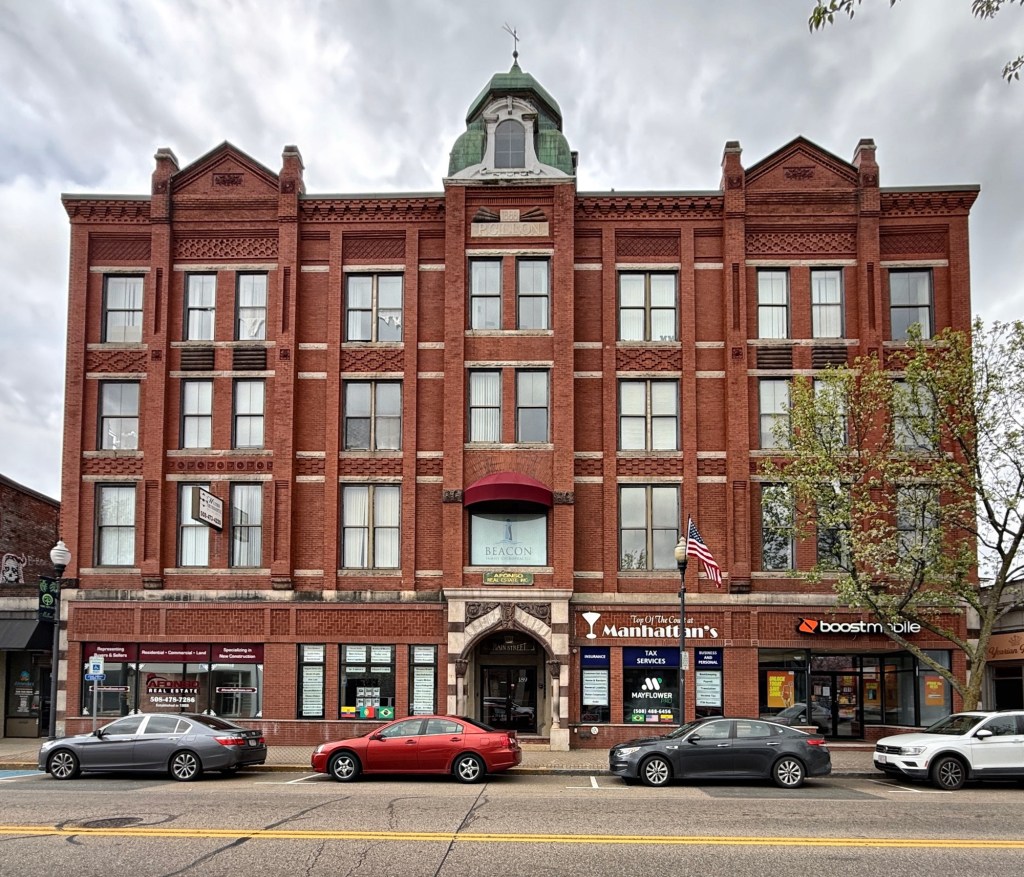
Located on Main Street in Milford, Massachusetts, the stately Gillon Block is one of the town’s finest buildings and an excellent example of eclectic, late Victorian commercial architecture. The block was erected in 1888-9 for owner Patrick Gillon (1843-1899), who inherited his late-father’s distillery and bottling business in Milford, and designed by local architect Rinaldo V. Carey. The panel brick facade is divided into seven sections with a central projecting section topped by a tower capped by a copper onion dome. The four-story block included retail space at the ground floor with offices and meeting halls on the upper stories, rented to tenants and organizations.
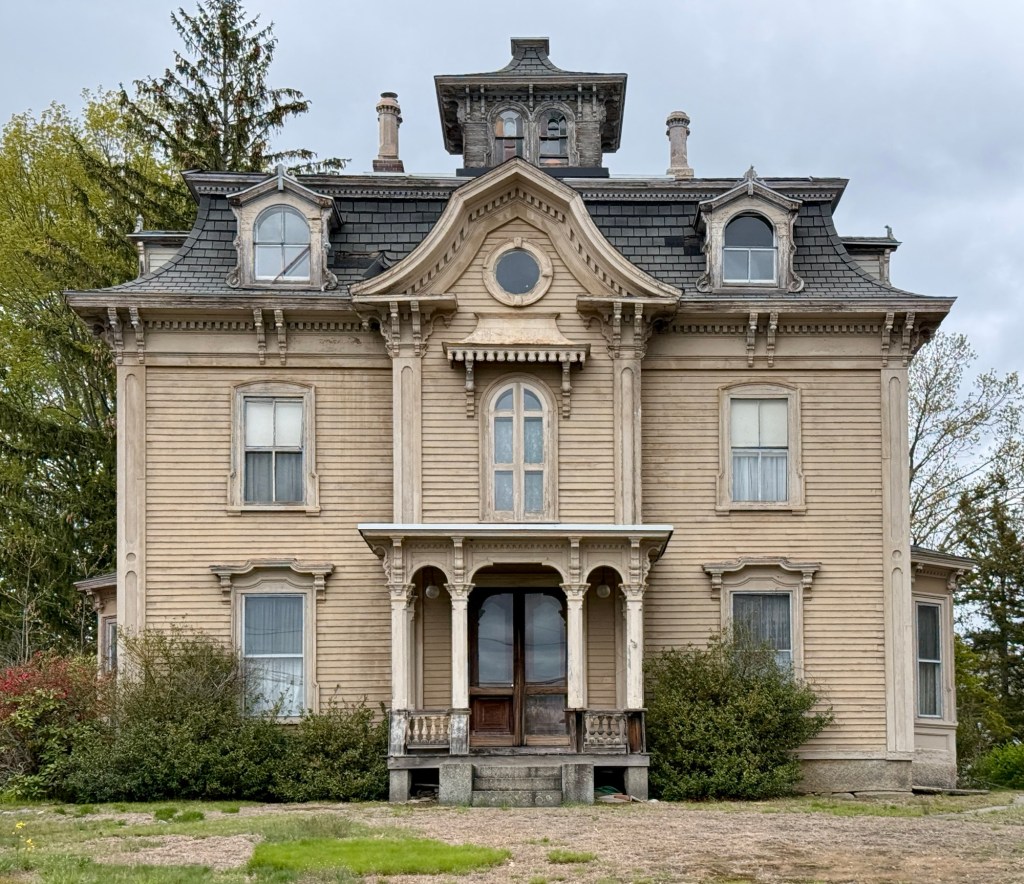
The Henry E. Fales Mansion sits prominently on Walnut Street in Milford, Massachusetts, as an intact Second Empire style residence with symmetrical facade and form. The house was built in 1866 and owned by Henry E. Fales (1837-1897) an attorney and state legislator who was heavily engaged in town affairs. Before the home was completed, Henry’s wife, Violet, died unexpectedly and he remained here until his second marriage to Clara Hayward. The Fales Mansion has a notable mansard roof with belvedere, front gambrel gable with ocular window, and window hoods. The property is in need of some work, but retains nearly all of its original detailing.
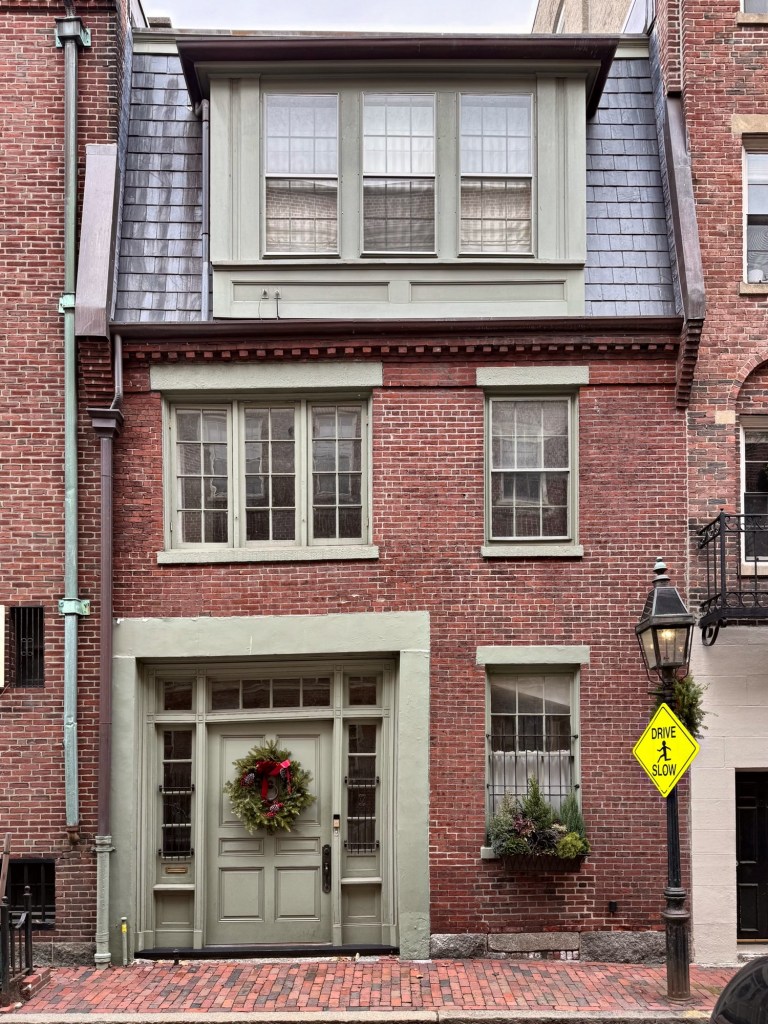
The early ownership is murky, but by the 1870s, this two-story with mansard roof stable was owned by a “Nathan Thayer”, either Nathaniel Thayer Jr. or Nathaniel Thayer III of Lancaster, who also retained city residences in Boston. The building features two portals on the first-floor that originated as doorways, the wider on the left for horses and a carriage, and the smaller for access to residential space for the stable-keeper and likely a hay loft over the carriage door. After the turn of the 20th century, the Flat of Beacon Hill gentrified into an exclusive enclave of residences, antiques shops, and artist studios and the former Thayer Stable was purchased by Frederick Oakes Houghton, an agent for transatlantic steamers. Houghton rented the building to an amateur theatrical group who organized as the Toy Theatre, that was founded in 1911 to present plays that had not been presented professionally in Boston. The founding group consisted of the usual, artistic, high society types, and had seating for 129 with no standing room. Houghton hired architect, Harold Symmes Graves, to convert the building into its theater use, enclosing the former carriage door and hay loft with multi-light windows, and creating a larger space inside for productions. The Toy Theatre did very well (due in part to its membership of upper-class Boston residents) and a new, purpose-built Toy Theatre was built in the Back Bay by 1914. In 1917, the former stable and theatre was purchased by Richard B. Platt, a musician and music teacher, and converted to a residence, a use that has remained ever since.
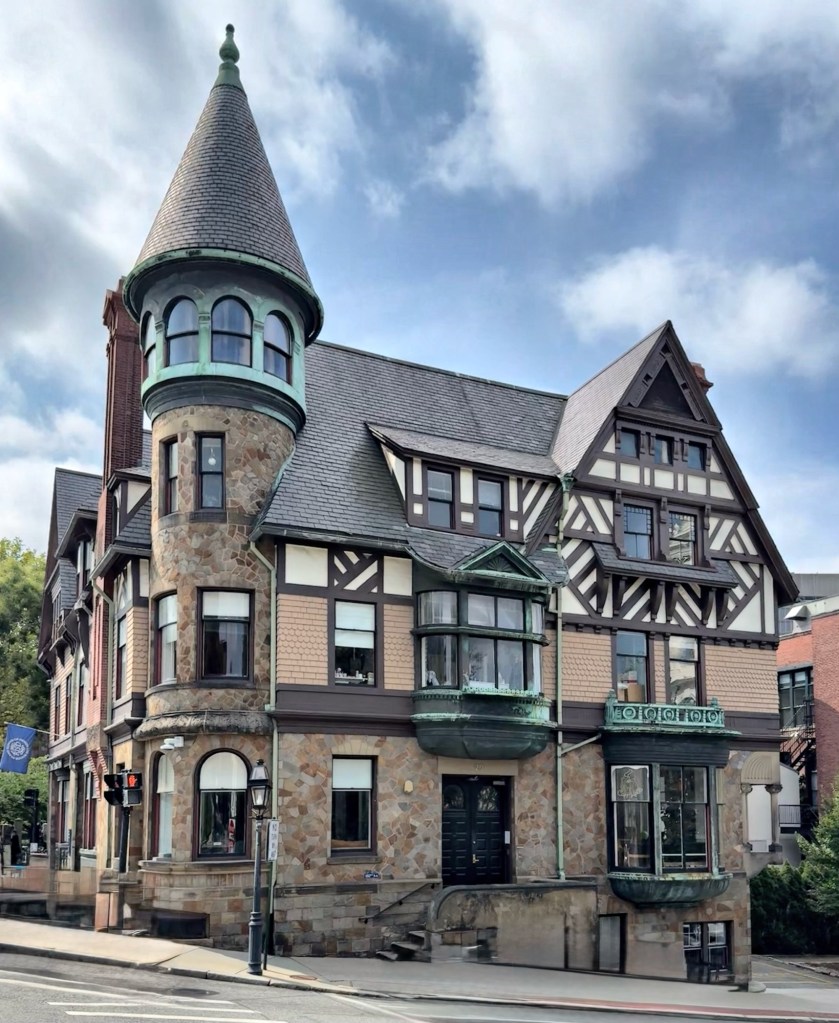
Perched on College Hill in Providence, Rhode Island, the Dr. George W. Carr Mansion at the corner of Benefit and Waterman streets, stands as one of the most attractive and interesting interpretations of the Queen Anne style in New England. The stately home was built in 1885 for George Wheaton Carr (1834-1907) a medical doctor who served as a surgeon during the Civil War and later as head surgeon for multiple Providence-area hospitals. For his Providence home, Dr. Carr hired architect, Edward I. Nickerson, to furnish plans, which resulted in this mansion with irregular plan, four-story corner corner capped with a conical roof, varied materials in stone, wood shingles, half-timbering, and copper bays. The Carr Mansion was purchased by the Rhode Island School of Design (RISD) in 1916, and has served a variety of roles for the school including as student housing and a cafe/lounge.
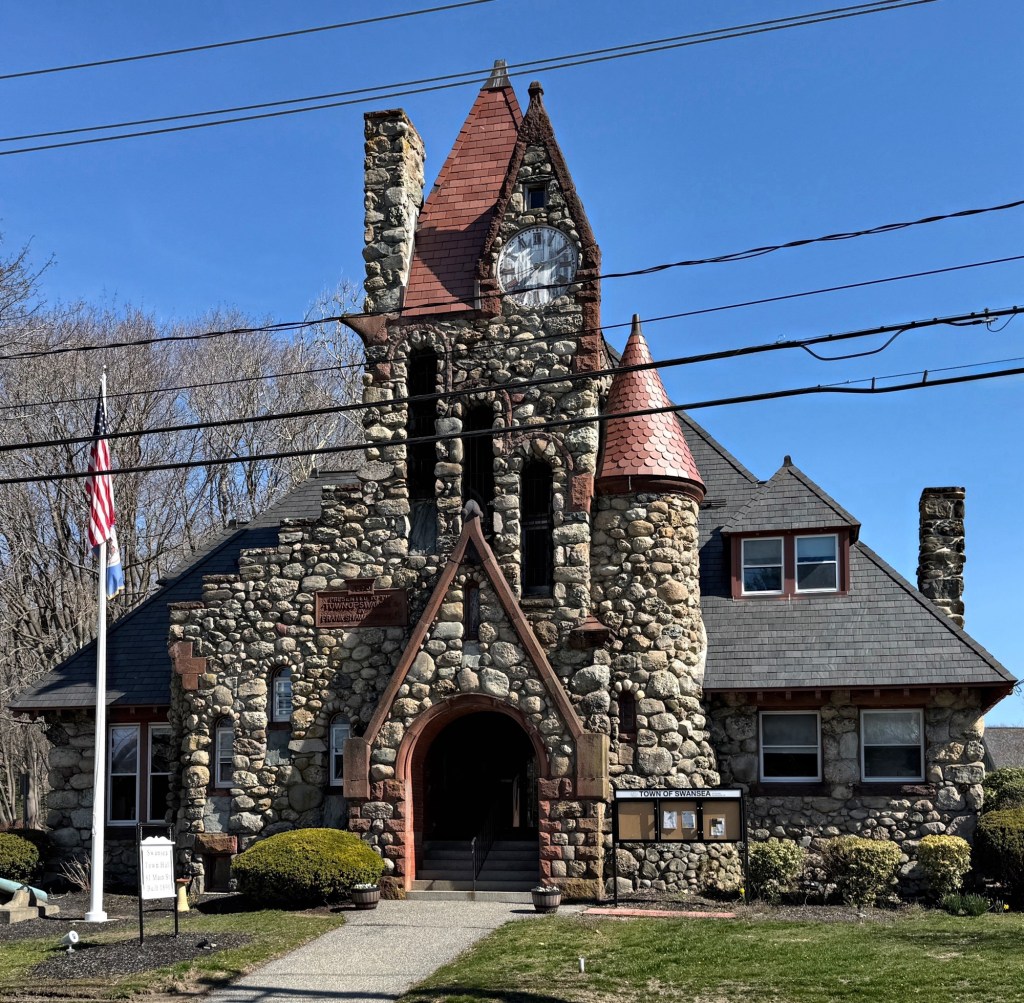
The Swansea Town Hall in Swansea, Massachusetts, is one of the most unusual and architecturally eclectic town hall buildings in New England, and was a gift to the community from a wealthy resident. Built in 1891 from plans by Boston architect, James Merrill Brown, the building is constructed of randomly laid rubblestone with brownstone trim with a massive pyrammidal slate roof and offset turret and tower containing a historic clock. The building was the gift of benefactors, Frank Shaw Stevens and Elizabeth Case Stevens, who lived down the street in the town’s largest mansion. The Stevens’ donated the building with the stipulation that the building was to be available to every and any religious society desiring to hold funeral services there and to also provide space for a public library. The town obliged. The space was outgrown and the Stevens’ would later donate the town’s public library next door and a church, that also held funeral services for the community. The building has been home to the Town Hall since 1891.
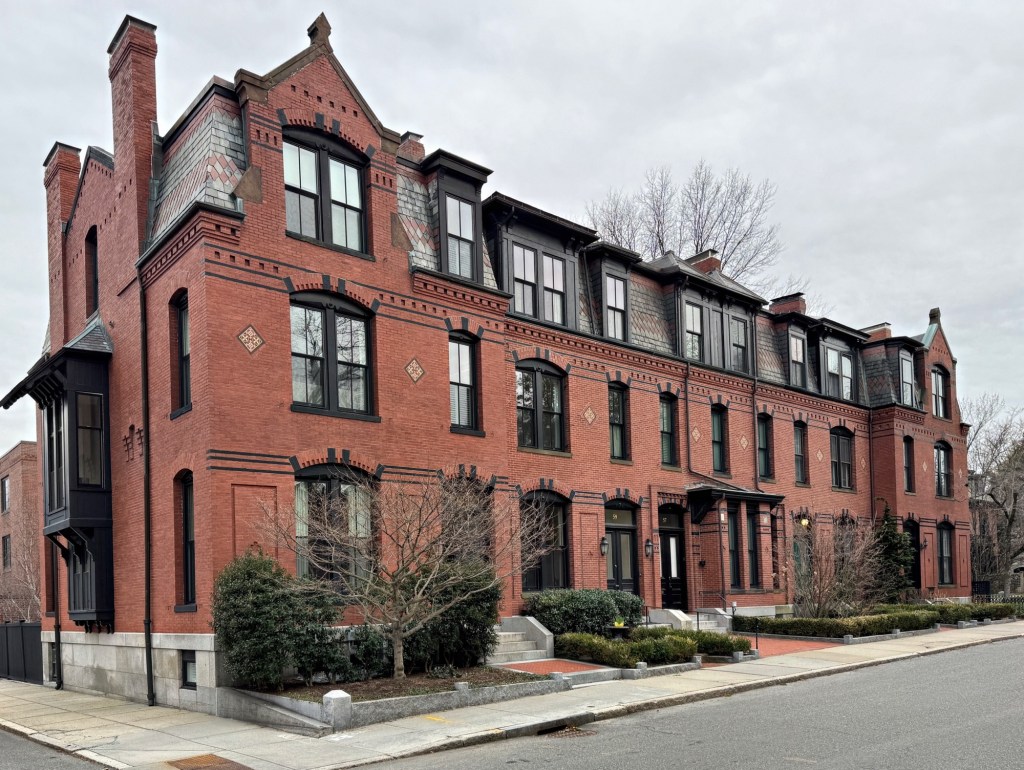
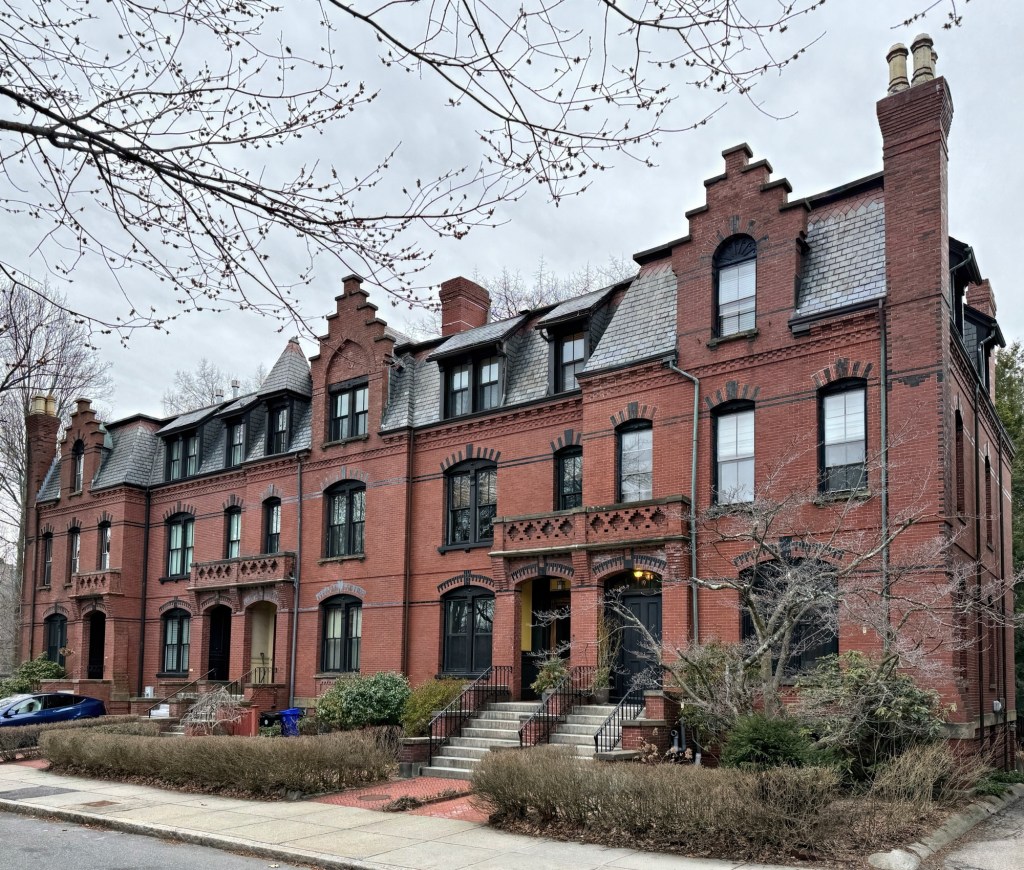
Amos A. Lawrence (1814-1886), a wealthy Boston merchant, owned land holdings in the present-day Longwood neighborhood of Brookline, just over the Muddy River from Boston, and developed the area into a wealthy and high-quality suburb. Lots were laid and Lawrence hired civil engineer, Ernest Bowditch, to plat for multiple sets of distinctive rowhouses surrounding a small green mall, which was later named Monmouth Court. Once the property was laid out, Amos Lawrence hired the Boston architects, J. Pickering Putnam and George T. Tilden, to design rowhouses for rental income. George Tilden was previously employed at the firm of Ware & Van Brunt, a firm that mastered and popularized the panel brick style in the Boston area in the 1870s and 1880s, and he clearly built upon this expertise for the rows for Amos Lawrence in Brookline. All four rows of houses are distinctive, yet compliment eachother stylistically with projecting bays. intricate brickwork, complex rooflines with dormers, and applied ornament. These two rows on the western side of Monmouth Court at 53-61 Monmouth Street and 19-27 Monmouth Court, were also likely the work of Putnam and Tilden, who practiced jointly for a couple years but published their work separately. Stylistically, the two Monmouth Street rows appear to be of the same architect, George Tilden with identical tilework and elements, and the two Monmouth Court rows as the work of Putnam with polychromatic segmental arches over the windows.
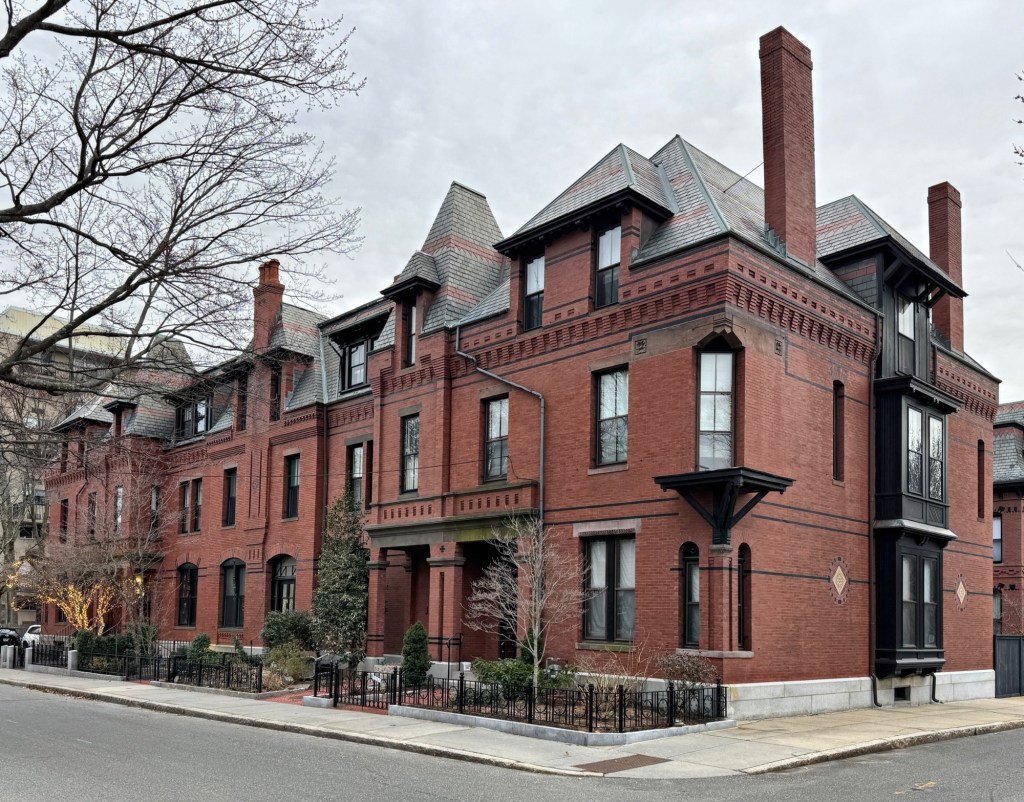
Amos A. Lawrence (1814-1886), a wealthy Boston merchant, owned land holdings in the present-day Longwood neighborhood of Brookline, just over the Muddy River from Boston, and developed the area into a wealthy and high-quality suburb. Lots were laid and Lawrence hired civil engineer, Ernest Bowditch, to plat for multiple sets of distinctive rowhouses surrounding a small green mall, which was later named Monmouth Court. Once the property was laid out, Amos Lawrence hired the Boston architects, J. Pickering Putnam and George T. Tilden, to design rowhouses for rental income. George Tilden was previously employed at the firm of Ware & Van Brunt, a firm that mastered and popularized the panel brick style in the Boston area in the 1870s and 1880s, and he clearly built upon this expertise for the rows for Amos Lawrence in Brookline. All four rows of houses are distinctive, yet compliment eachother stylistically with projecting bays. intricate brickwork, complex rooflines with dormers, and applied ornament. This row at 69-77 Monmouth Street exhibits inlaid tile medallions and small balconets on the chamfered corners that are missing their railings.
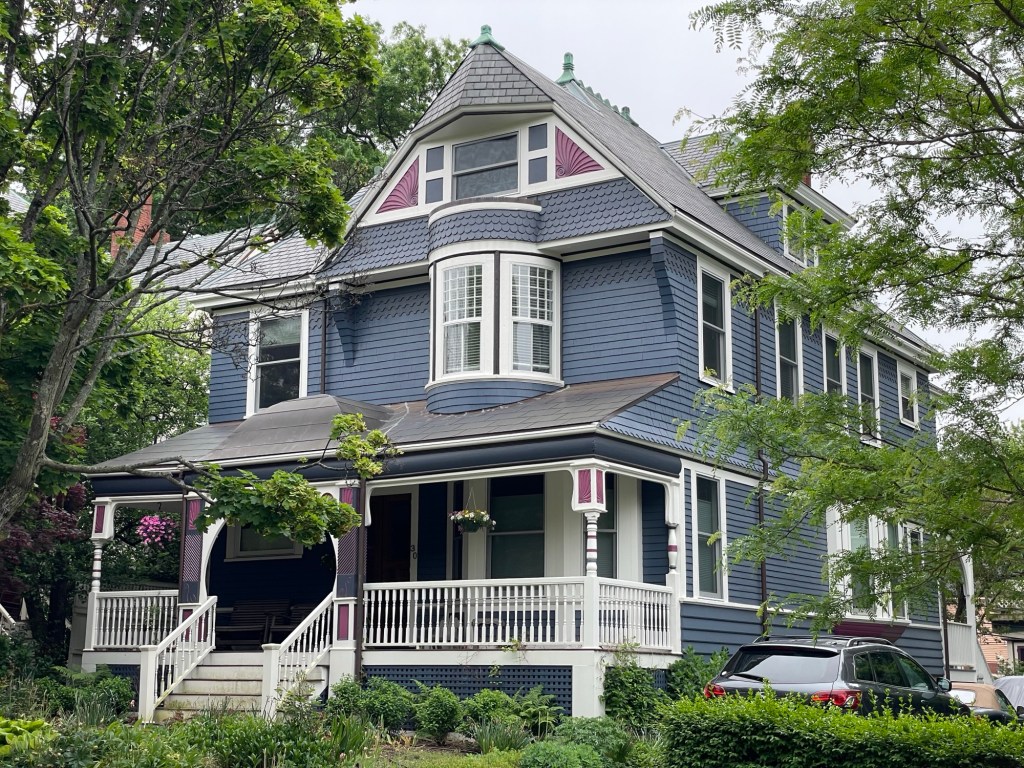
The Harrison Gardner House on Colchester Street in the Longwood section of Brookline is a stunning late Victorian residence that was “modernized” in 1887 to its current configuration. Harrison Gardner (1841-1899) was a Civil War veteran who arrived back in Boston becoming a wealthy dry goods wholesaler, later investing in Massachusetts mills. On January 20, 1871, Harrison was a founder and treasurer of the Boston Red Stockings of the new National Association of Professional Base Ball Players (NABBP). The team’s name changed multiple times, eventually landing on the Boston Braves, which would later move to Atlanta to become the Atlanta Braves in the MLB. With increased wealth and status, Harrison Gardner in 1887, hired the prestigious architectural firm of Hartwell and Richardson, to update his Brookline residence with additions and renovations in the Queen Anne and Shingle styles. Years after his death in 1899, Harrison’s widow, Laura Perkins Harrison, moved out of the large Longwood home and into a new, Arts and Crafts style stucco residence on Amory Street, designed by William Gibbons Rantoul.
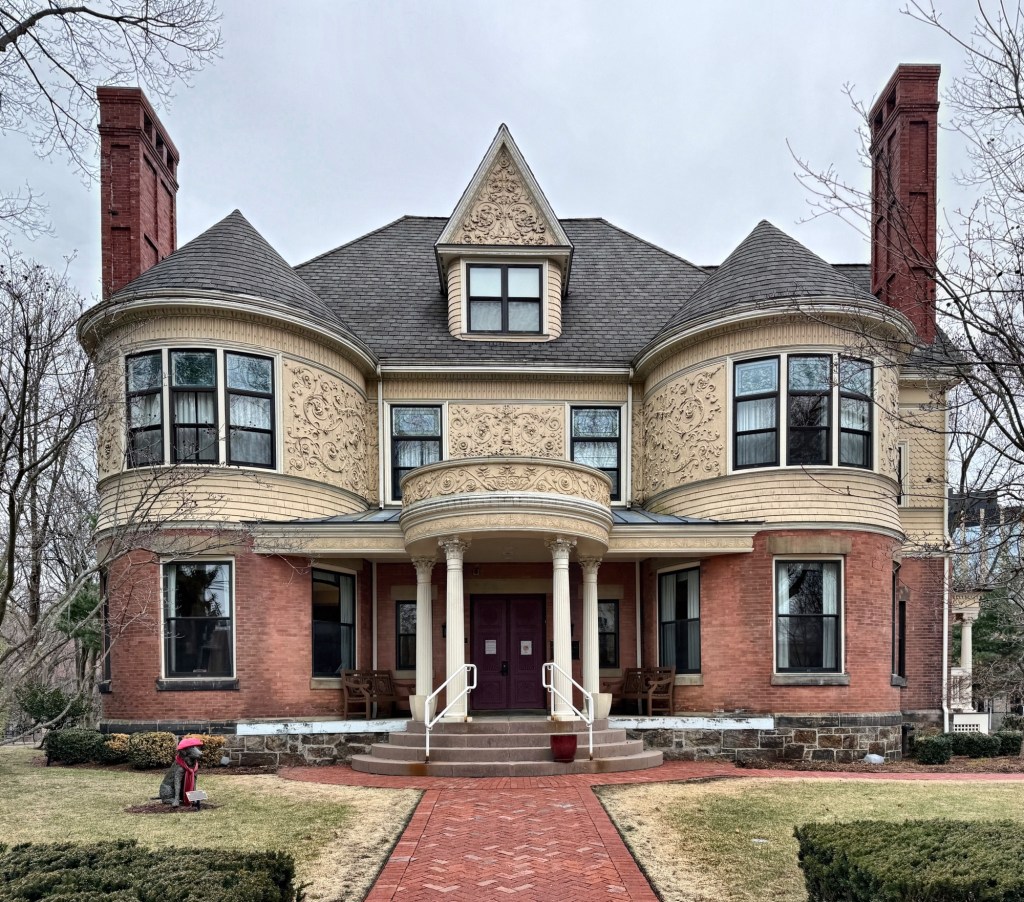
Built on the site of an earlier house at 241 Kent Street in Brookline, this grand, Queen Anne style house has seen a life as a single-family home, fraternity house, and ultimately, the Yawkey Family Inn, a temporary residence for patient families undergoing procedures and treatments at Boston Children’s Hospital. A landmark example of the Queen Anne architectural style, the handsome near-symmetrical residence has paired conical towers at the facade, a brick first floor, paneled chimneys, and elaborate carvings in the entry portico, second-story bays, wall surfaces and gabled dormer. Planning for the new mansion began in 1889 when owners, Harriet and Andrew Jackson Houghton, owner of the Vienna Brewery in Boston, hired architect, James Templeton Kelley, to furnish plans for their new suburban mansion. Sadly, Andrew Houghton died in 1892, shortly after the house was completed, and Harriet remained here until her death in 1925. After this, the property was sold to the Beta Upsilon Association for use as a Fraternity House for the Beta Theta Pi Fraternity of MIT and later as a fraternity house for a Northeastern University frat. In 2009, the property was purchased, renovated and expanded to the rear as the Yawkey Family Inn, ensuring its preservation and remaining as a quieter neighbor to the surrounding residents than its previous use.
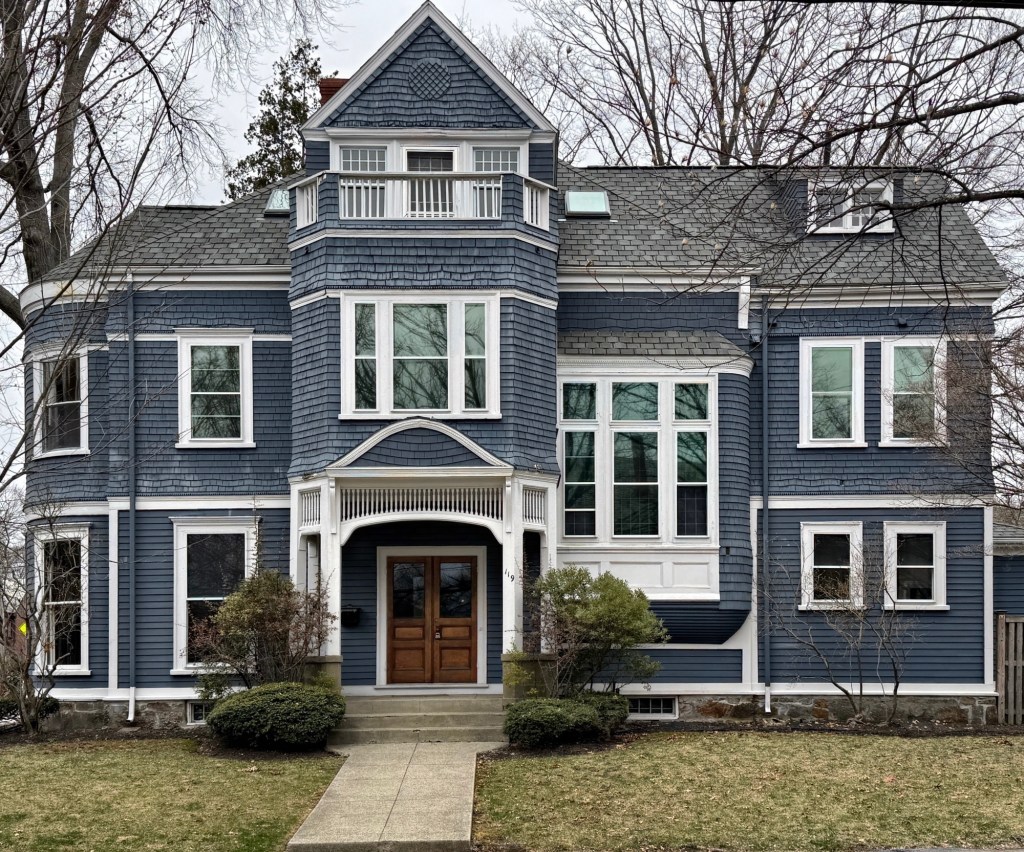
Francis Street in Brookline, Massachusetts, has some of the finest Queen Anne Victorian residences in the Boston area. This is the Potter-Leland House, built by 1888 by William Potter, a wealthy shoe manufacturer and businessman who developed rental housing in the neighborhood not far from his house on Kent Street. Various exterior wall textures, irregular massing, and turned posts on the front porch contribute to the Queen Anne character of this house, but the real showstopper is the rounded bay projection with three, 25-over-2 (yes you heard that right) curved sash windows! The property was later purchased by Herbert M. Leland, a broker.